

A vintage look refrigerator is a new appliance built with modern refrigeration systems but styled to resemble kitchen units from the 1950s and 60s, typically featuring rounded edges, chrome handles, and saturated colors.
Capacity is the constraint: most retro-styled models run smaller than standard refrigerators, with Big Chill’s range topping out at 24.1 cubic feet and some compact options dropping as low as 7.5 cubic feet.
1. Buy a New Retro-Style Refrigerator
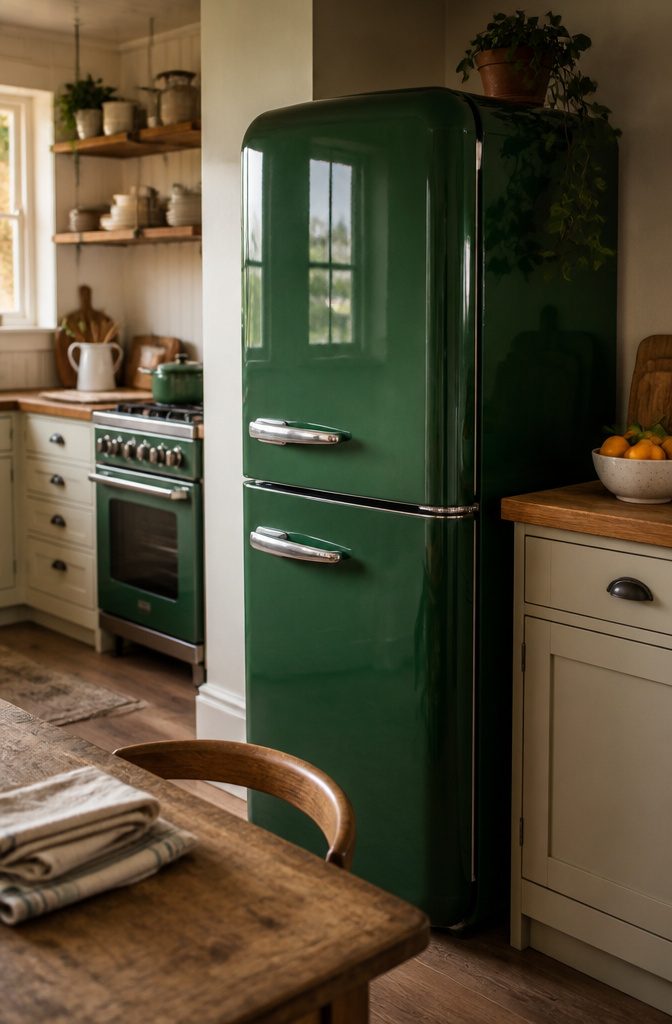
New refrigerators built to look vintage come in four size brackets. Full-size models from Big Chill range from 20.6 cubic feet up to 24.1 cubic feet, with widths around 31 to 33 inches and heights from 65 to 69 inches.
Compact and slim options drop to 13 or 18.2 cubic feet, narrow enough for tight kitchens at 25 to 28 inches wide. Mini fridges round out the category for wet bars or studios.
Big Chill leads the field, but Smeg, Unique Appliances, Galanz, iio, and Frigidaire all make versions in this style.
Big Chill offers up to nine stock colors plus custom paint if you want an exact match, and they pair with matching ranges and dishwashers for a complete retro kitchen.
Unique Appliances keeps the lineup smaller with two sizes and five colors plus white, but throws in a 24-inch convection gas range in several of the same finishes.
The appeal is straightforward: rounded edges and chrome handles from the outside, modern refrigeration and adjustable shelves on the inside.
2. Choose a Custom-Panel Refrigerator for a Period Look
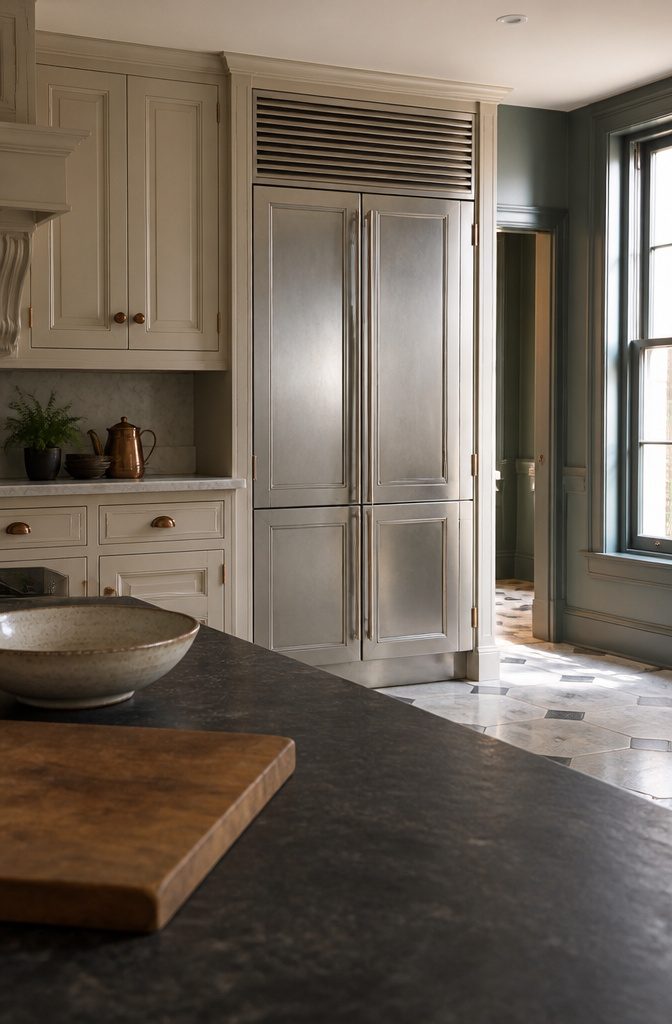
A panel-ready refrigerator lets you dress it in the trim of another era without hunting down a working vintage unit.
Sub-Zero offers the most authentic route: order it panel-ready, spec framed metal panels, add the classic louvered insert grille, and finish with full-length standard handles that tuck beneath the panels.
The result reads as a refrigerator that could have been installed decades ago, because Sub-Zero has been building this way for decades rather than interpreting the look after the fact.
Other refrigerators accept custom color panels if you want a specific vintage shade without the framed panel treatment.
The panel-ready path costs more than paint or vinyl, but it integrates the appliance into the cabinetry in a way surface treatments cannot match.
I’d take this option if the kitchen renovation budget allows and the rest of the cabinetry already commits to a period style.
3. Buy an Actual Vintage Refrigerator
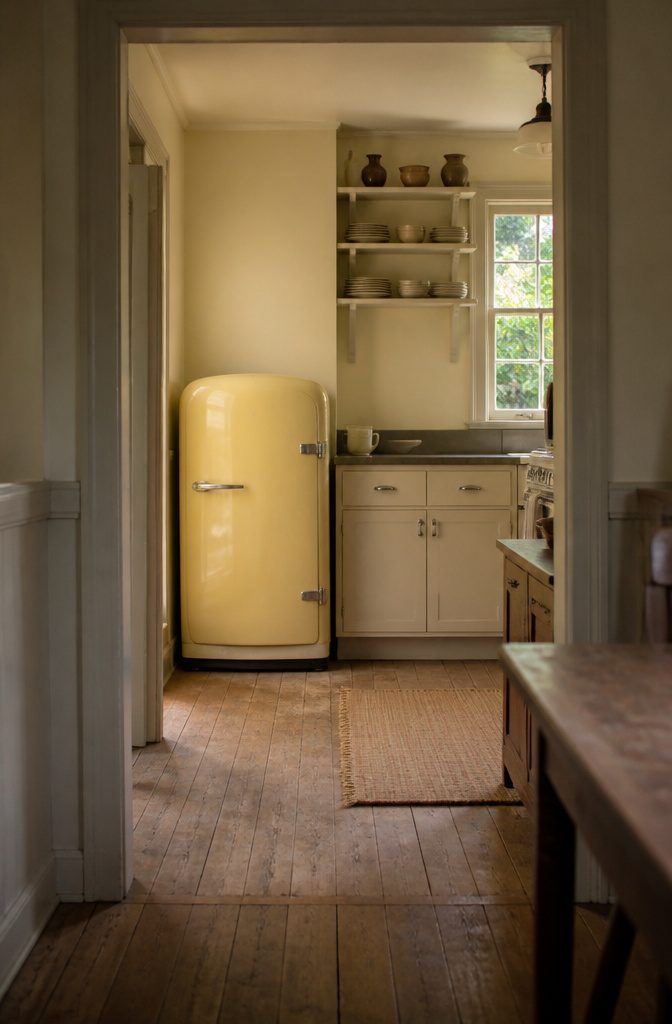
If you want a refrigerator that actually lived through the mid-century, buying and restoring a genuine antique is the most direct route.
Antique Appliances maintains an inventory of models from the 1920s through the 1950s and handles full restoration as part of the purchase, so you aren’t left hunting for someone to make it safe and functional.
Listed prices run $3,400 to $8,900 depending on the model and the finish you choose. Retro Renovation suggests the same path, whether you find a piece yourself or work with a restoration specialist to bring it back.
The appeal is obvious: you get the original stamped hardware, the real rounded corners, the exact proportions that modern retro styles only approximate.
You pay more and get less space. Vintage refrigerators are smaller than what most kitchens run now, and restoration work is specialized enough that it commands a premium over a new appliance.
4. Have an Existing Refrigerator Professionally Painted
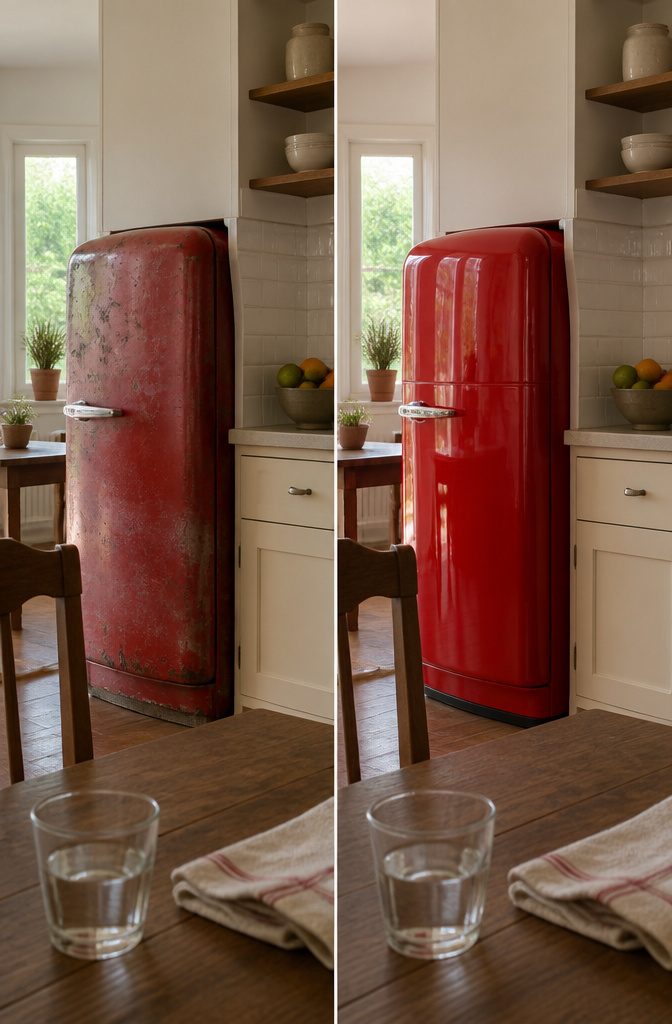
If you want a smooth, durable finish without handling the work yourself, an auto-body or industrial painting shop can spray your refrigerator in the retro color you choose.
These shops exist in most towns and work with online paint color guides to match the shade you’re after.
The advantages stack up: they use very durable paints, operate in dust-free booths so you avoid specks ruining the gloss, and follow environmentally safe practices while someone else does the job.
I’d hand off the fridge and let the shop handle prep, primer, and topcoat.
The booth matters more than it sounds like it should—home painting picks up dust and lint no matter how careful you are, and a professional booth keeps the finish clean.
The durability of their paints means the color holds up under daily handling better than most spray cans manage, and you skip the trial runs that come with doing it yourself for the first time.
5. Paint an Existing Refrigerator Yourself
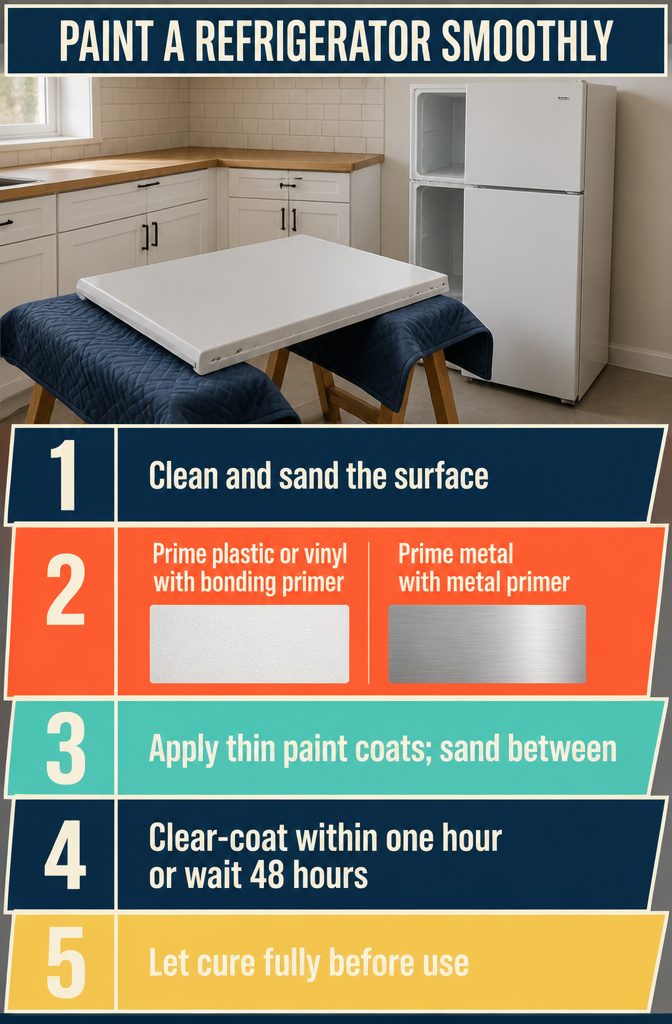
Painting an existing refrigerator costs less than buying new, and the finish holds up if you prep the surface and layer the right products.
Rust-Oleum’s guidance, documented in a report on Retro Renovation, breaks the primer choice into two paths: plastic or vinyl surfaces need a bonding primer, while bare or previously painted metal takes a standard metal primer.
The paint itself goes on in thin coats, and the clear topcoat timing matters more than most DIY instructions admit.
If you’re using Rust-Oleum’s Ultra Cover 2X Clear over the color coats, the window is narrow: apply it within one hour of finishing the paint, or wait a full 48 hours.
Anything in between risks wrinkling or poor adhesion, and a refrigerator door that gets opened twenty times a day will show that failure fast.
Sanding between coats and letting each one cure fully before moving to the next keeps the surface smooth enough to pass for factory enamel from a few feet away, though up close the texture will always read as painted rather than baked.
6. Wrap an Existing Refrigerator in Vinyl
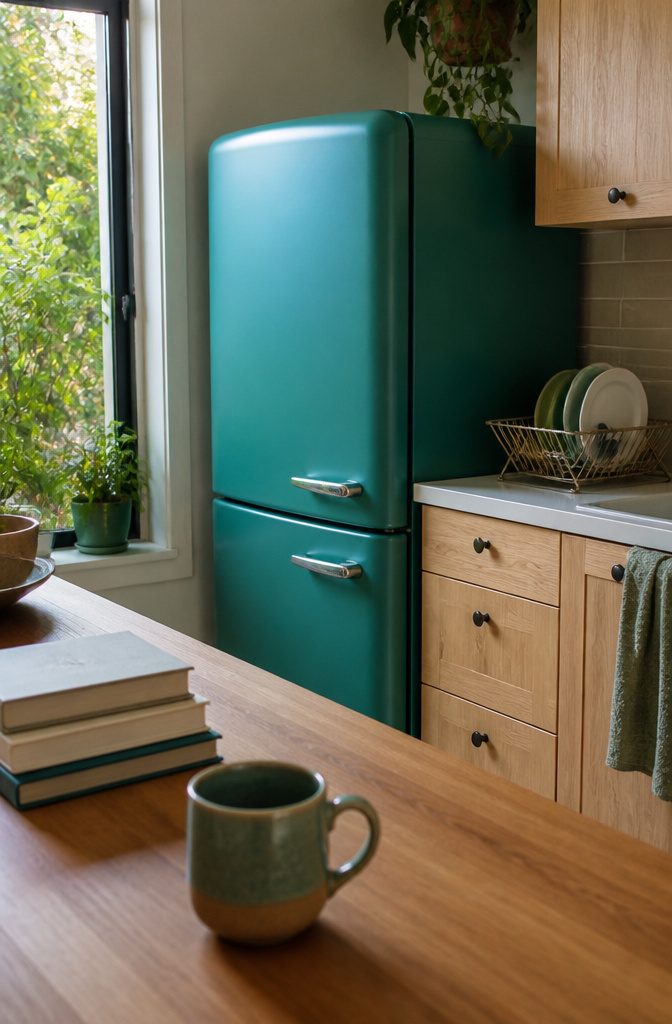
Vinyl vehicle wrap shops can apply the same film they use on cars to an existing refrigerator, giving you a custom finish without replacing the appliance or attempting a home paint job.
Retro Renovation reports that at least one reader-couple went this route and had their refrigerator professionally wrapped by a local automotive wrap company.
The advantage is access to a nearly unlimited range of colors, finishes, and even custom graphics if you want a pattern or a specific shade that no appliance manufacturer offers.
The process treats the fridge like a vehicle panel: the surface is cleaned, the vinyl is measured and applied with heat, and the seams are tucked.
A professional wrap should hold up to the same handling a car gets, which means it survives weather, sun, and repeated contact. Refrigerator doors open and close constantly, so durability matters more than it does on a static wall.
Get a quote and ask how the wrap holds up around door seals and handles before committing, since those are the high-wear zones that show peeling first.
7. Choose a Less Expensive Proxy
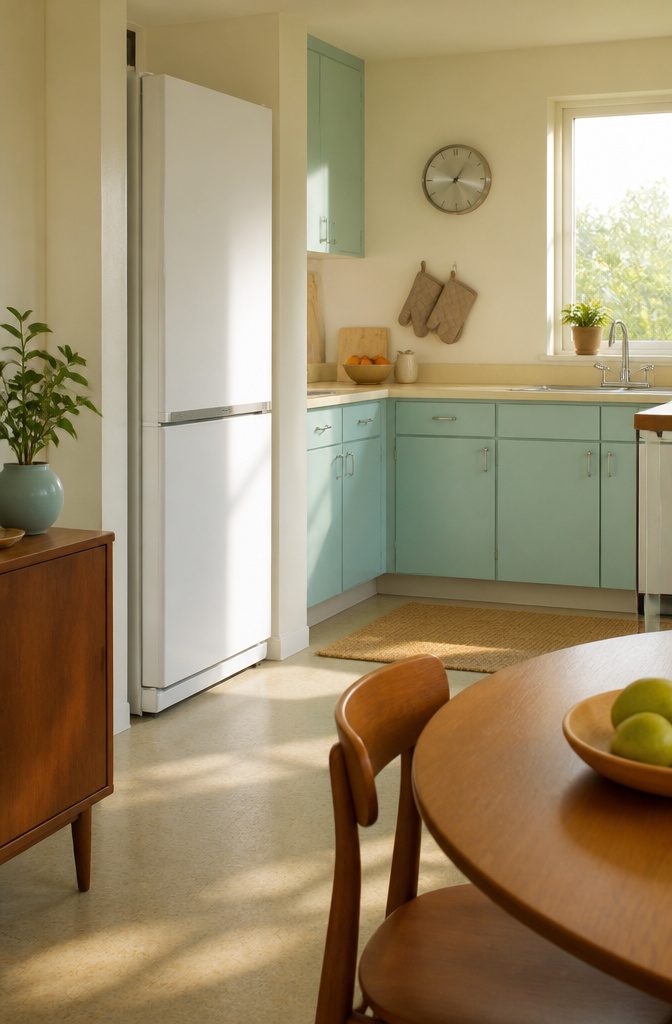
If a full retro-style refrigerator sits outside the budget, a simpler appliance can approximate the look at a fraction of the cost.
A plain white refrigerator, especially a smaller or counter-depth model, gives you the proportions and clean lines that fit mid-century kitchens without the premium price tag.
White reads period-correct in spaces where the original appliances were meant to blend rather than dominate, and if you can find one with chrome trim, the effect lands even closer.
Scale matters more than style here.
Many mid-century kitchens were compact, and a standard-depth 36-inch refrigerator can overpower the room in a way the originals never did. A counter-depth model or a smaller capacity unit restores the proportion, even if the face is completely modern.
You lose some storage, but you gain a kitchen that breathes the way it was designed to. You give up some function to get the look, and whether that works depends on how you shop and how much you store.
8. Keep a Modern Refrigerator and Add Retro Touches Elsewhere
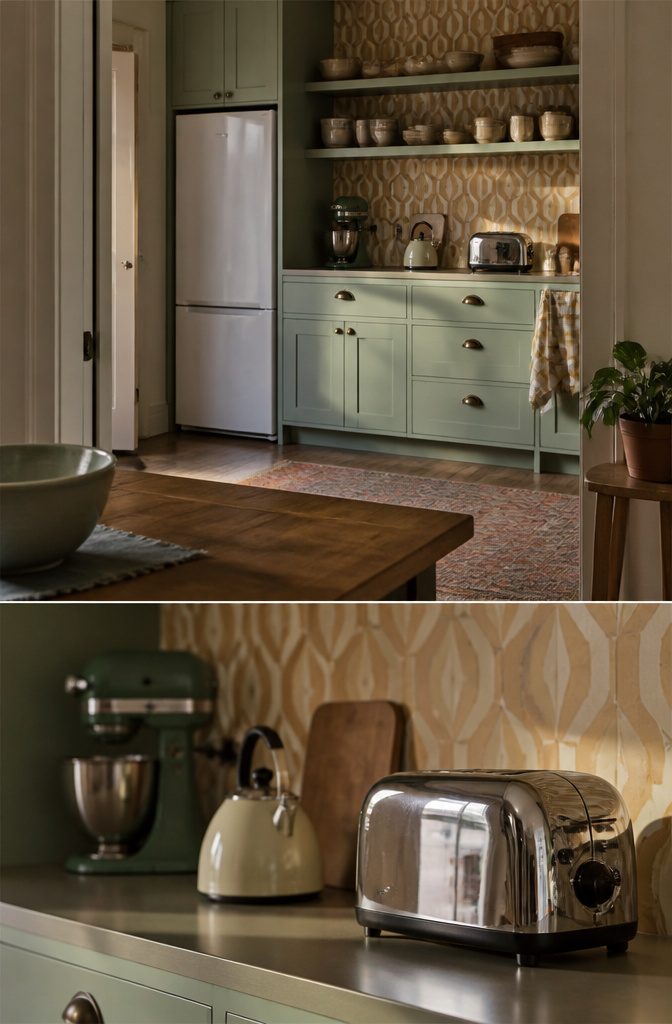
Not every vintage-look kitchen needs a vintage-look refrigerator. When the budget tilts toward a standard stainless or white model, put the era into the room around it instead.
Colorful cabinets in mint, butter yellow, or soft aqua carry plenty of retro weight without the cost or the mechanical risk of an older appliance.
Wallpaper with geometric or midcentury floral patterns fills the same role, and it works especially well behind open shelving where the pattern shows through.
Small appliances finish the picture. A stand mixer in a saturated color, a toaster with chrome curves, and a kettle with a rounded silhouette all read as period pieces, and they cost far less than a statement refrigerator.
The approach works best when the refrigerator itself sits flush in a cabinet run or tucked into a corner where it becomes background rather than focal point.
The eye lands on the color and the detail first, and the appliance recedes.
Vintage Appearance Versus Modern Function
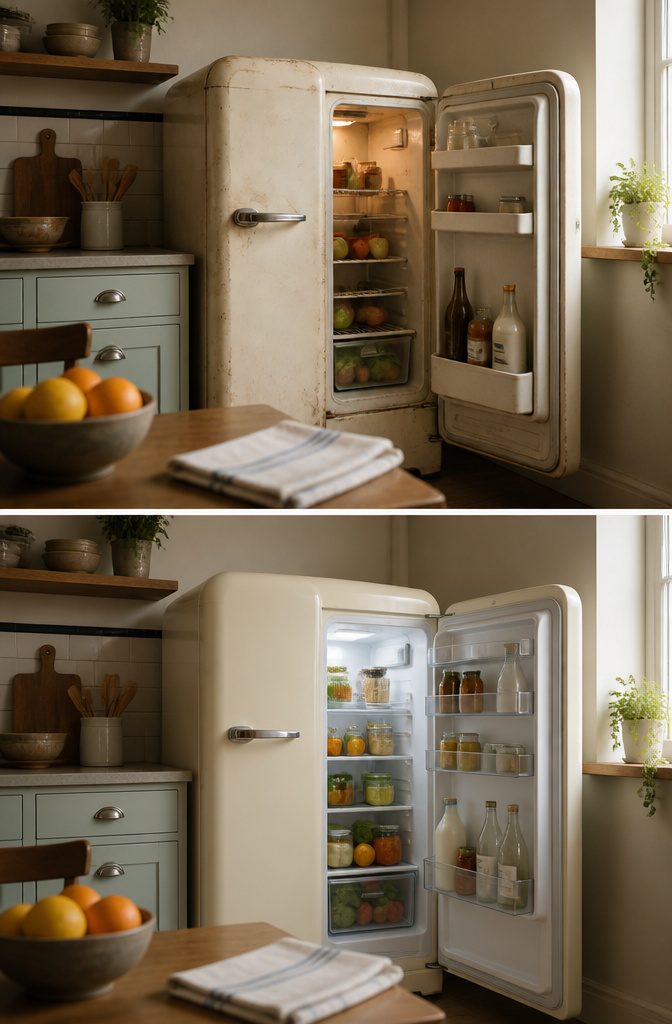
The refrigerators that look vintage today aren’t. They’re new appliances styled to recall the 1950s, built with modern compressors, digital controls, and the insulation standards that dropped energy use by half over the past twenty years.
House Beautiful steers readers toward retro-style models rather than genuinely old units, and the reasoning is blunt:
If you’re in the market for a fridge that recalls an older era, you may want to opt for a contemporary one with an older look. That way, you can enjoy the design without any of the drawbacks of an actual vintage appliance.
The drawbacks they’re referring to include energy use up to five times higher than current efficient models, plus the wiring and refrigerant issues that come with running 60-year-old hardware.
Good Housekeeping’s retro picks all pair nostalgic styling with beverage racks, adjustable shelving, and the capacity figures you’d expect from a current appliance.
Food Republic flags the trade-off worth checking before you buy: some retro-styled fridges sacrifice interior volume for those curved doors and thick walls, so measure what you actually need to store against what the spec sheet says you’ll get.
Size and Storage to Expect
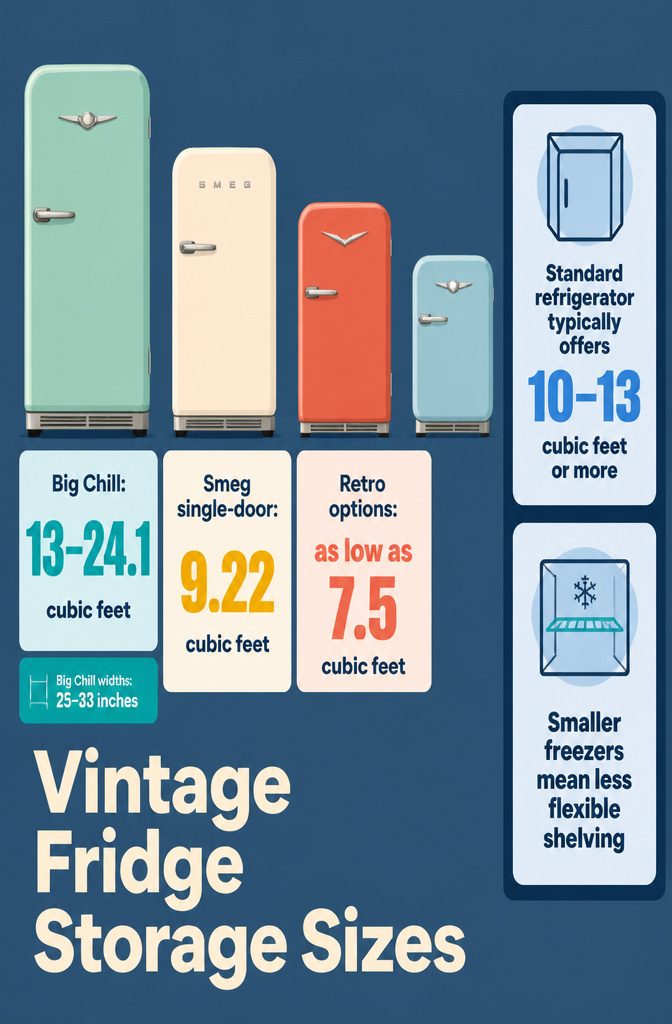
Vintage-style refrigerators tend to run smaller than the standard models most households are used to. Big Chill makes refrigerators from 13 cubic feet up to 24.1 cubic feet, with widths between 25 and 33 inches.
Smeg’s single-door models hold 9.22 cubic feet, while some retro options dip as low as 7.5 cubic feet. For context, a standard refrigerator typically offers 10 to 13 cubic feet or more.
The reduced storage shows up most noticeably in the freezer section, where shelving tends to be less flexible overall.
If you cook often or keep a week’s worth of groceries on hand, that difference adds up quickly. Measure the space where the refrigerator will sit, and check that the interior capacity will actually support how you use a kitchen.
A refrigerator that fits the opening but leaves you short on shelf space is a trade you will feel every time you unload groceries.
Style, Finishes, and Colors
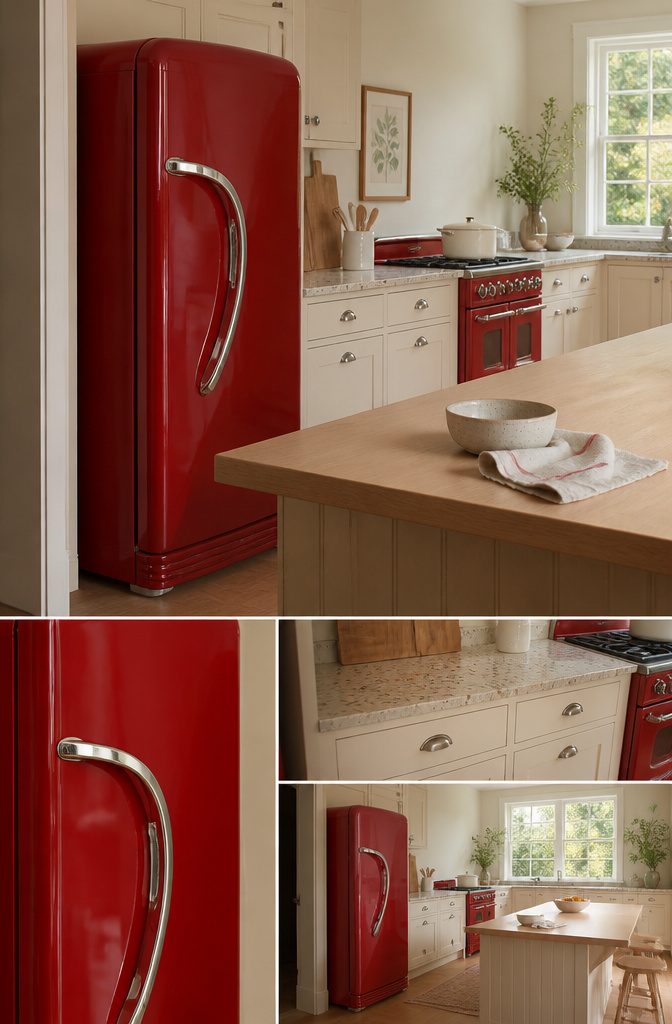
The aesthetic starts with curved corners and sculptural chrome handles that trace straight back to the kitchen appliances of the 1950s and 60s. Smeg leans into that nostalgia with rounded edges and bold color choices: cream, pastel green, cherry red.
Big Chill offers the same era’s forms in glossy or matte finishes, and for four hundred dollars more you can specify a custom color from dozens of options.
Unique Appliances keeps a tighter palette — five colors plus white — but pairs its refrigerators with matching 24-inch convection gas ranges in several of those same finishes.
Some manufacturers take the theme further. House Beautiful featured a Smeg refrigerator wrapped in a Union Jack graphic for $4,300, proof that the retro silhouette can carry themed finishes when solid color feels too safe.
I prefer the simplicity of a single saturated hue, but the range exists if your kitchen calls for it.
Energy and Safety
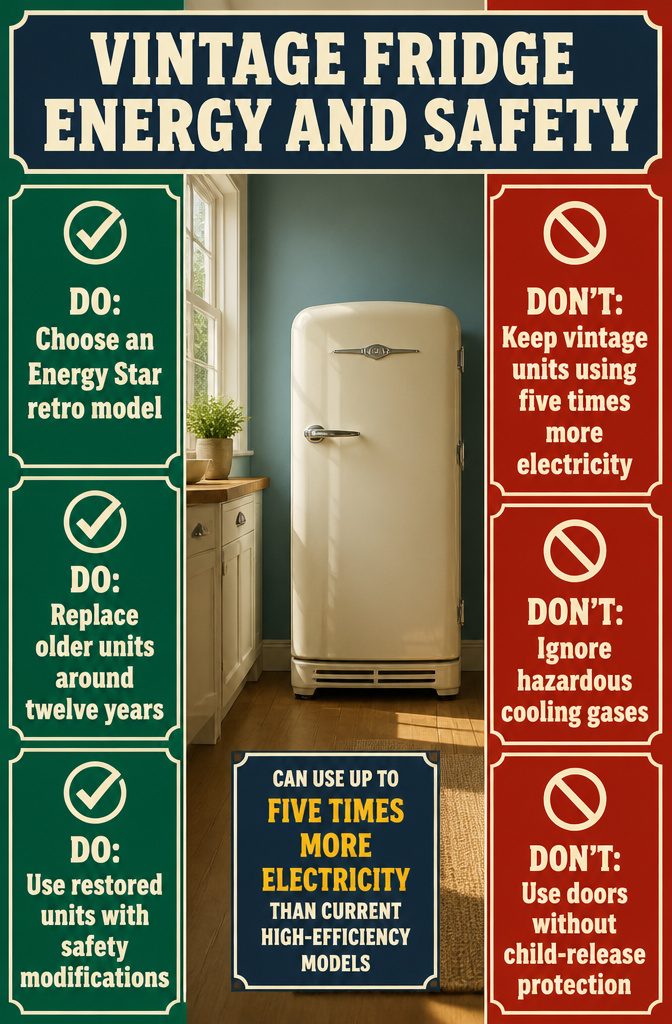
A new refrigerator styled to look vintage operates nothing like an actual older appliance, and the difference matters for both safety and your electric bill.
Vintage refrigerators can use up to five times more electricity than current high-efficiency models, according to House Beautiful.
The gases used in older cooling systems pose fire risks and can contaminate food, and the U.S. Department of Energy recommends replacing these appliances every twelve years or so.
If you want the look without the drawbacks, contemporary retro-style models from iio, Big Chill, Smeg, Unique Appliances, and Galanz carry Energy Star certification, meaning better insulation and lower operating costs.
Restored vintage units sold today meet the Refrigerator Safety Act (15 U.S.C. 1211–1214, enacted August 2, 1956) through modifications like magnetic door seals in place of the original latches, or interior release buttons that glow in the dark and trip the exterior handle on older ice-box-style doors.
Those changes keep a child from getting trapped inside, but the energy penalty and maintenance schedule remain.
Frequently Asked Questions
Where can I buy a vintage look refrigerator?
Big Chill, Smeg, Unique Appliances, Galanz, iio, and Frigidaire all manufacture new retro-style refrigerators. Big Chill offers the widest range with up to 9 stock colors plus custom paint, while Unique Appliances keeps 5 colors plus white.
For genuine antiques, Antique Appliances maintains an inventory of restored models from the 1920s through 1950s, with prices running $3,400 to $8,900 depending on the model and finish.
How do I make my fridge look vintage?
Paint it yourself using a bonding primer for plastic surfaces or metal primer for bare metal, then apply thin coats of color and a clear topcoat.
Have an auto-body shop spray it professionally for a more durable finish, or hire a vinyl vehicle wrap shop to apply custom-color film the same way they wrap cars.
You can also order a panel-ready refrigerator and dress it in framed metal panels with a louvered grille for a period look that integrates with your cabinetry.
What brand makes vintage-style refrigerators?
Big Chill leads the field and offers the most color options, including custom paint to match any shade.
Smeg makes single-door models with rounded edges and bold colors like cream, pastel green, and cherry red. Unique Appliances, Galanz, iio, and Frigidaire also produce retro-styled refrigerators with modern features inside.
Are vintage fridges safe?
Genuinely old refrigerators are not safe by modern standards. They used gases to cool the interior that can cause fires or contaminate food, and the U.S. Department of Energy recommends replacing these appliances every 12 years.
New retro-style refrigerators styled to look vintage operate with modern compressors and Energy Star certification, giving you the design without the fire risk or food contamination issues.
Do vintage fridges use a lot of electricity?
Yes, actual vintage refrigerators can use up to 5 times more electricity than current high-efficiency models.
New retro-style refrigerators from iio, Big Chill, Smeg, Unique Appliances, and Galanz carry Energy Star certification, meaning better insulation and lower operating costs. Restored vintage units still carry the same energy penalty even after modification.
What size are vintage look refrigerators?
Big Chill makes models from 13 cubic feet up to 24.1 cubic feet, with widths between 25 and 33 inches.
Smeg’s single-door models hold 9.22 cubic feet, while some retro options drop as low as 7.5 cubic feet. Full-size models from Big Chill range from 20.6 to 24.1 cubic feet, with widths around 31 to 33 inches and heights from 65 to 69 inches.