Teak holds up to weather longer than softer woods, eucalyptus and acacia offer a mid-range price, and plywood or pallet builds keep the cost down if you make them yourself.
If you need a chair that drains after rain, slats beat solid planks because water runs straight through instead of pooling on the surface.
Adirondack chairs sit low with a fixed recline, mid-century frames pair wood with upholstery or leather for indoor use, and chaises with wheels roll across a deck so you can follow the sun without lifting the frame.
1. Teak Patio Chaise Lounge
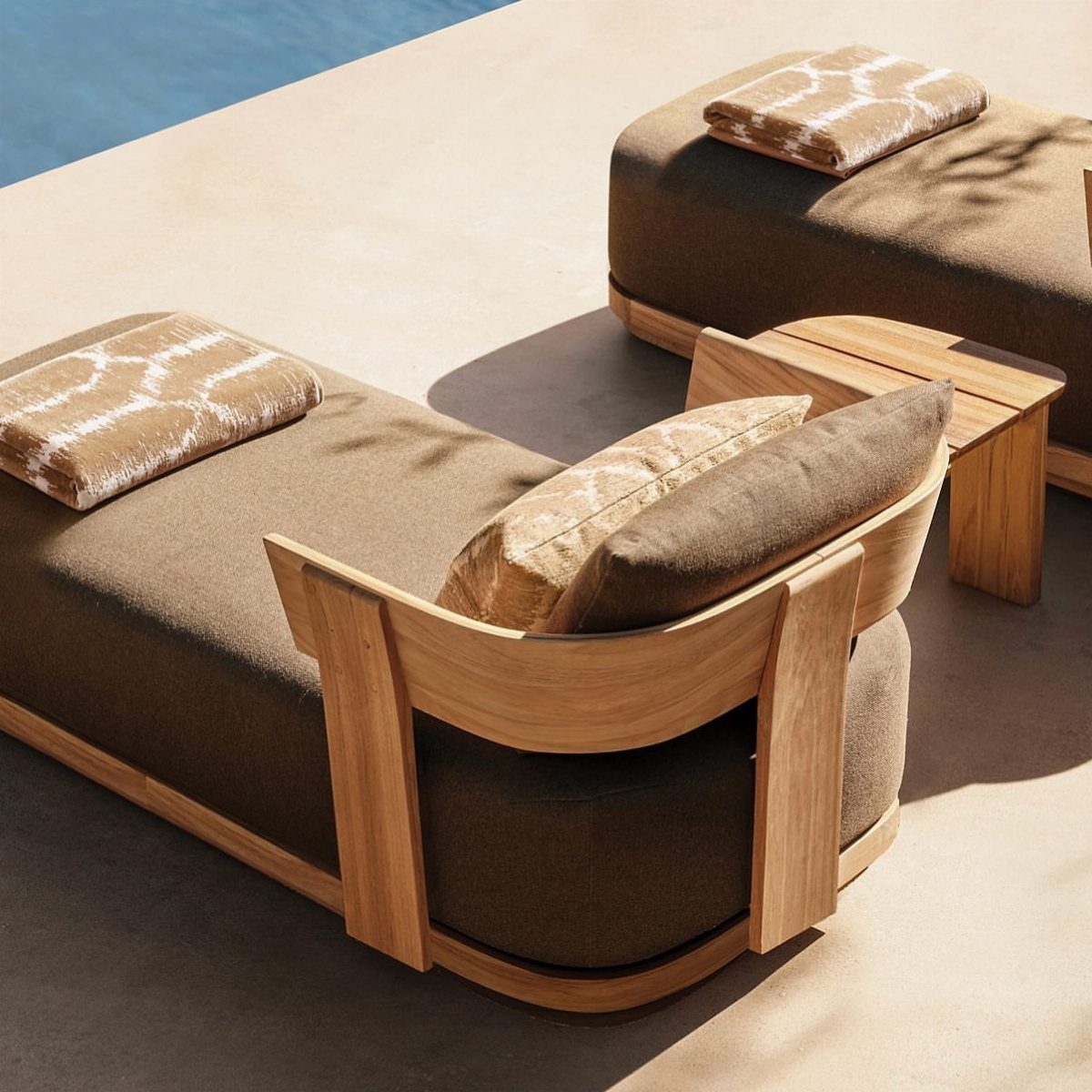
A teak chaise built for the patio, with a back that adjusts between sitting upright and lying flat.
The adjustable back locks into multiple positions, so you can read, nap, or sit up with a drink.
If you add cushions, look for outdoor fabric rated to dry fast and resist fading, since even teak can’t shade the cushion from sun and rain.
2. Eucalyptus Patio Chaise
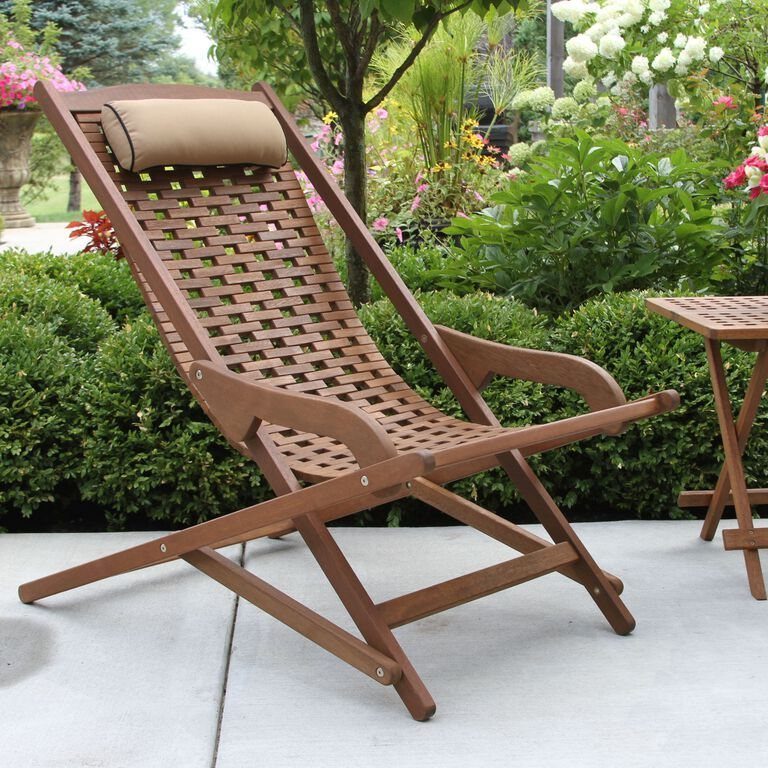
Eucalyptus gives you a lighter wood that still handles outdoor exposure, and it costs less than teak.
The grain is tighter and the color runs closer to honey than the deeper brown of teak, but it weathers to the same silver-gray if you leave it untreated.
This chaise reclines and uses woven slats across the seat and back, which let water drain instead of pooling. The headrest cushion adds comfort without covering the whole chair, so you can skip washing cushions every few weeks.
3. Acacia Patio Chaise
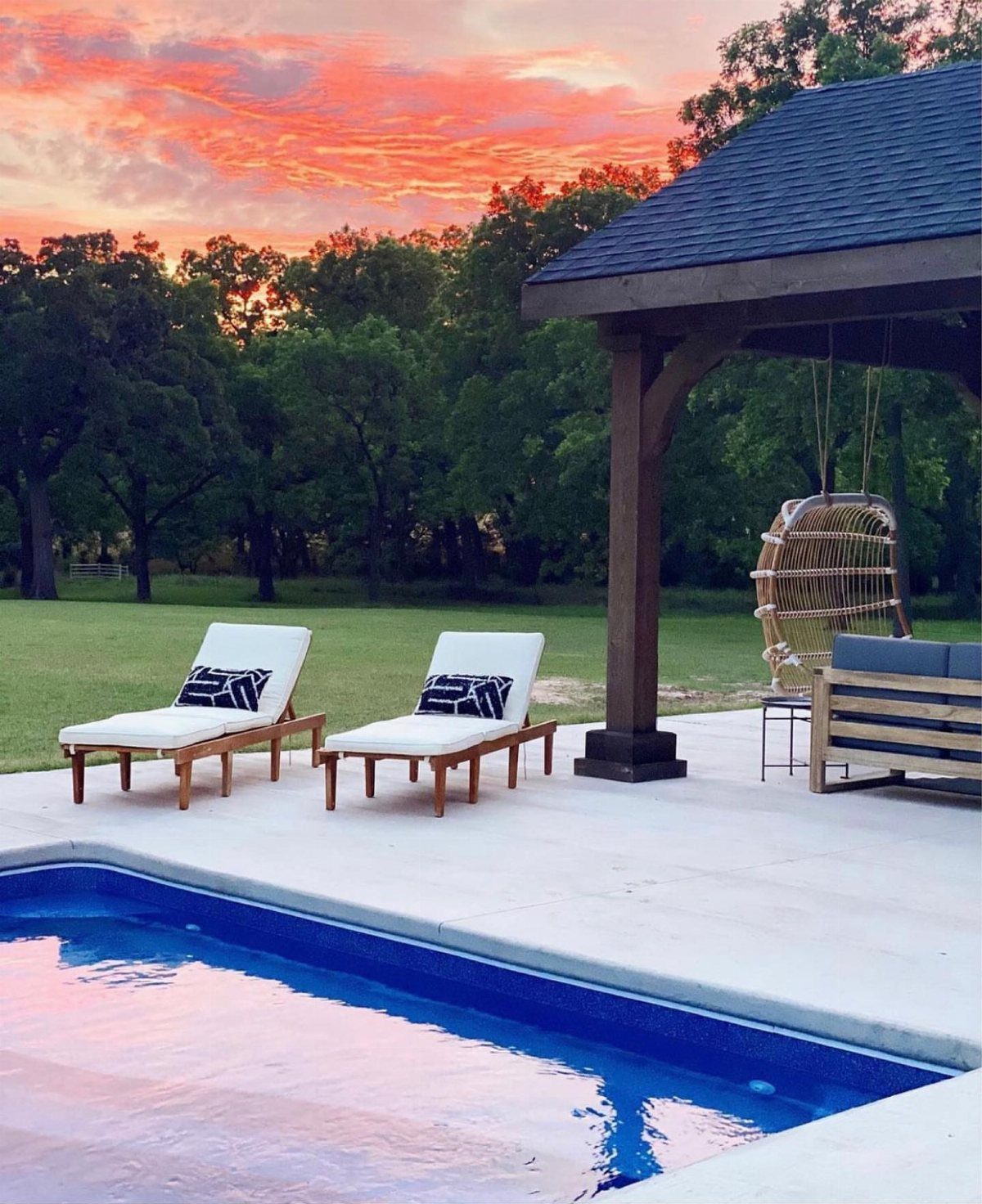
Acacia offers a dense hardwood that resists rot and insect damage, and it costs less than teak while still holding up to full sun and rain.
Pair it with cushions thick enough to smooth out the slats, especially if you plan to nap on it.
White or light gray fabric shows the wood’s warmth, but any outdoor cushion will need occasional washing when it sits by a pool.
4. Cushioned Teak Lounge Chair
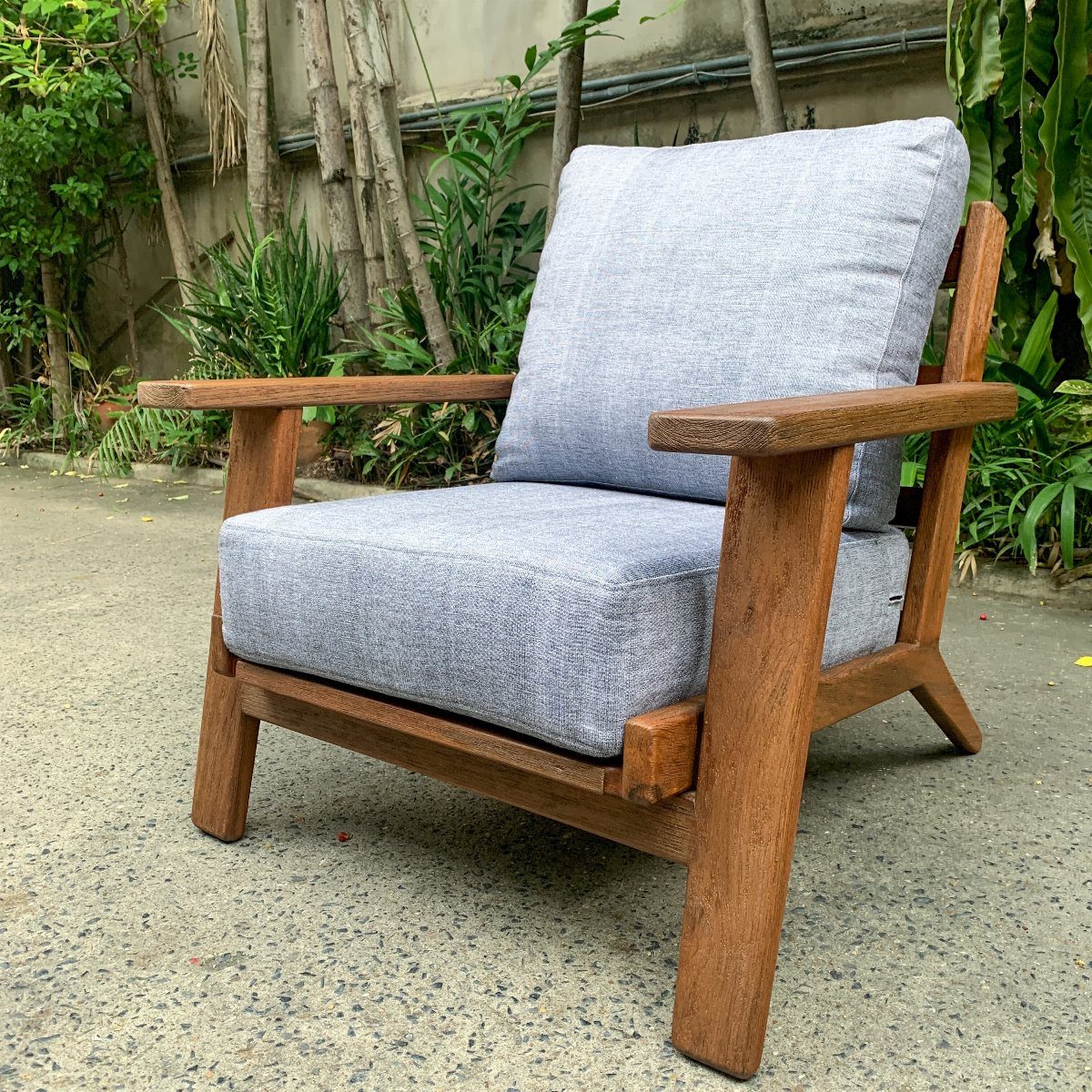
Thick cushions turn a simple teak frame into something you can sink into for hours. The wood gives you structure that lasts, and the fabric adds enough padding that you don’t feel the slats underneath.
Gray works because it hides dirt better than white and doesn’t fade as fast as darker colors. Look for cushions with removable covers and foam that drains, since even a covered patio gets humid.
The teak can stay bare or take a coat of oil once a year if you want to keep the brown instead of letting it silver.
5. Slatted Wood Chaise
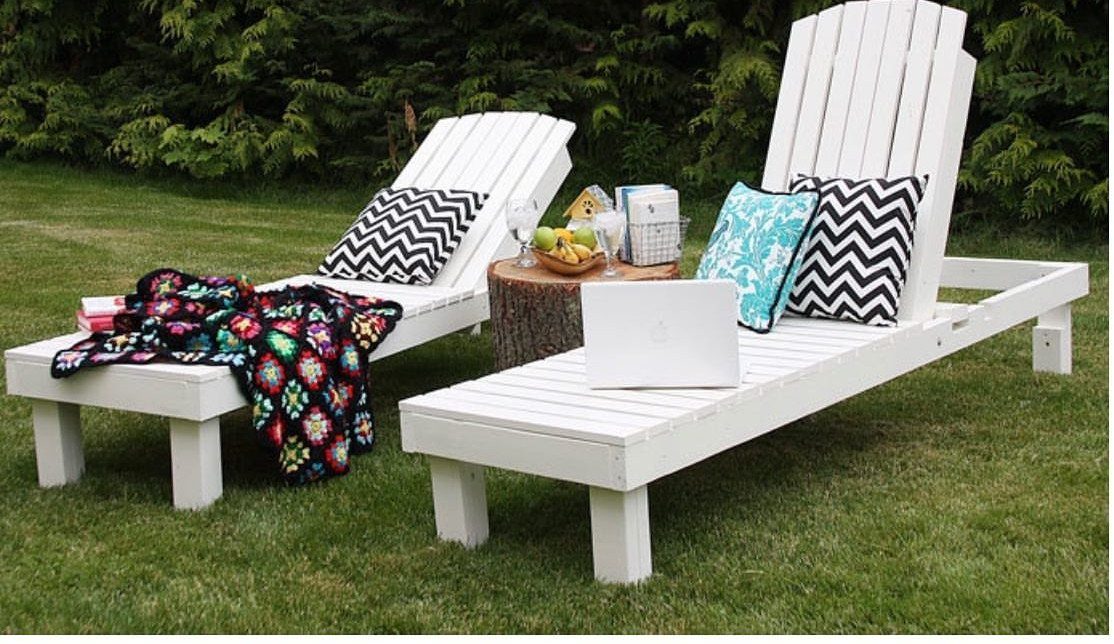
Slats run the full length of the seat and back, so water drains straight through and the wood dries between rains. Painted white, the frame stays cooler in the sun than bare wood and shows less dirt than darker colors.
The recline adjusts, usually with notches along the side rails, so you can sit up to eat or lie flat to tan.
Add cushions for padding or leave it bare if you want a chair that needs no maintenance beyond hosing it down. Softwood like pine works if you paint it; hardwood like teak lasts longer but costs more.
6. Wood Adirondack Chair
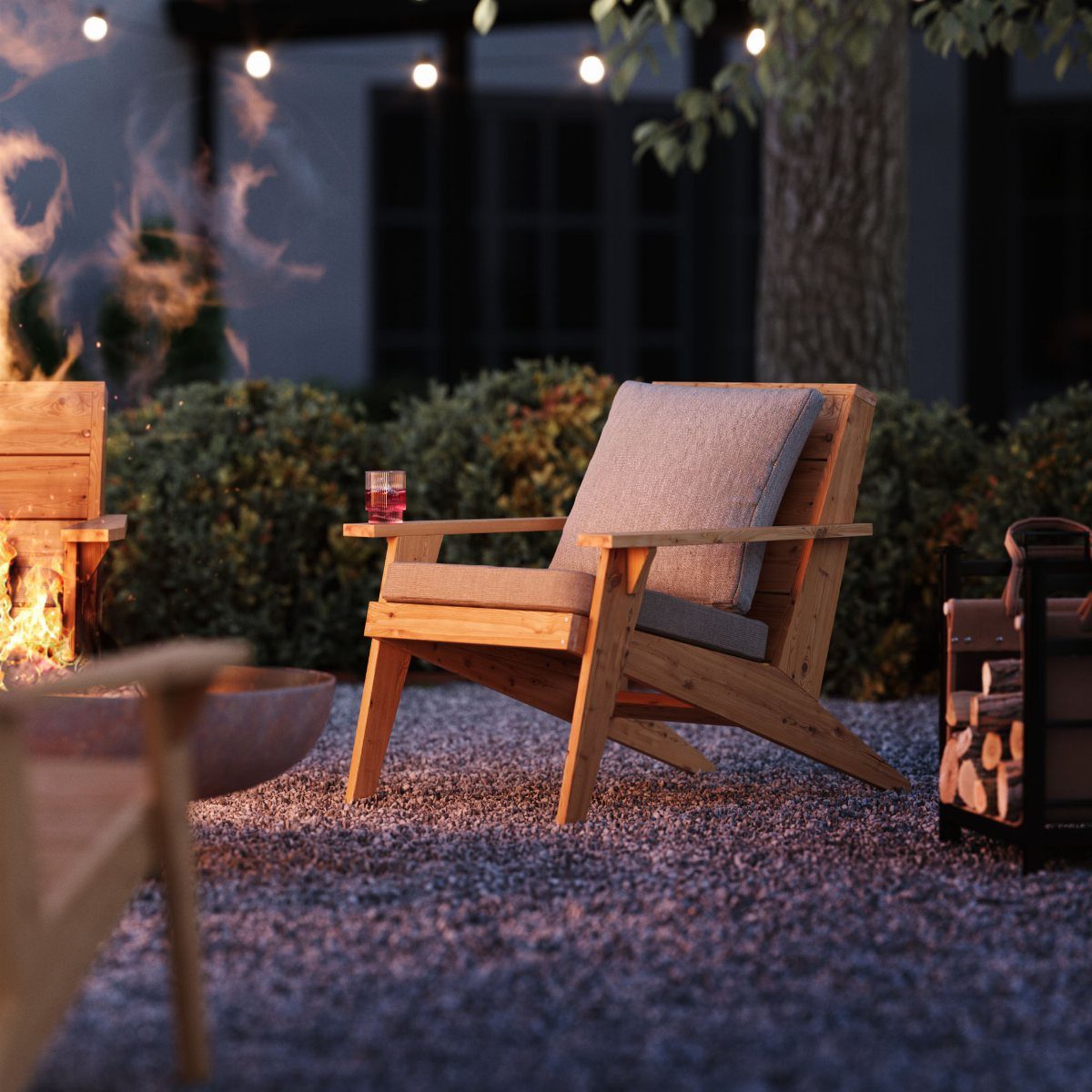
Adirondack chairs sit low and lean back at an angle that keeps you looking up at the sky instead of straight ahead.
The wide arms are flat enough to hold a plate or a glass, and the slatted back curves to fit your shoulders.
This one sits on gravel next to a fire pit, which is the original use: a chair you settle into for an hour or more without shifting.
A cushion helps if the slats feel hard, but the angle does most of the work. Cedar and pine are the usual woods; both take stain or paint, or you can leave them to weather gray.
7. Plywood Lounge Chair
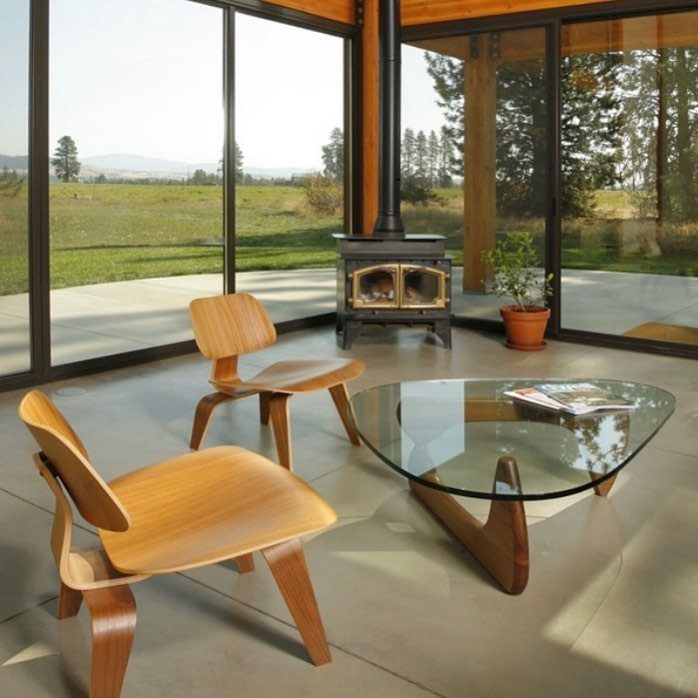
Curved plywood sheets form the back, seat, and arms in one continuous bend, so the chair supports your body without joints or cushions. The shape holds because the plywood is laminated in layers and molded while the glue sets.
Leave the wood bare to show the grain, or finish it with oil if you want protection from fingerprints.
The curve alone makes it comfortable enough for an hour of reading, but you can add a thin cushion if the seat feels hard after longer sitting.
8. Walnut Fabric Lounge Chair
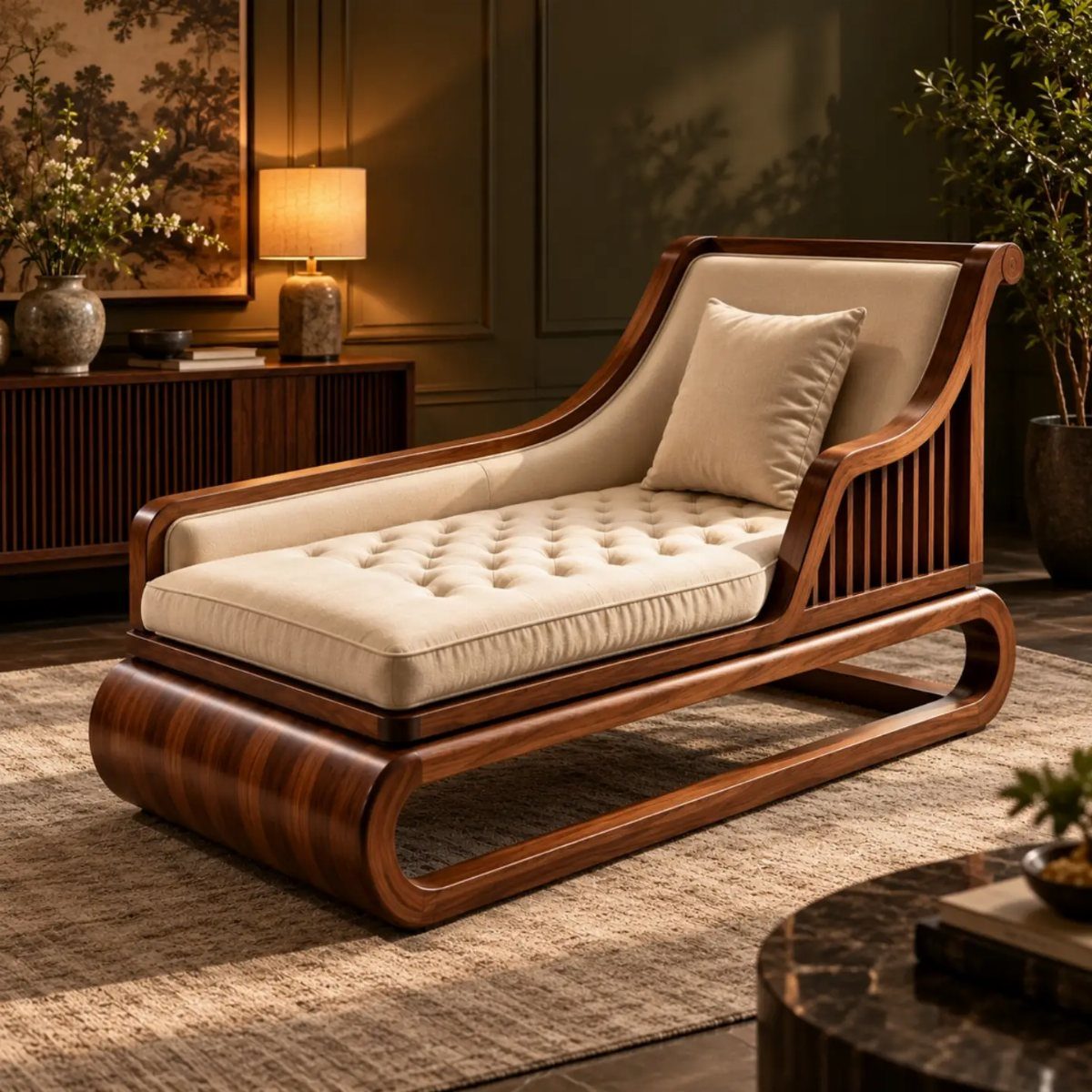
Sculpted walnut gives you a frame with visible grain and rounded edges, paired with fabric cushions on the seat and back. The wood shows at the arms and legs, and the fabric covers everything else.
Cream or light gray fabric lets the walnut stand out, while darker upholstery blends the 2 materials together. The cushions usually button or tuft to hold the padding in place, and removable covers make cleaning easier when spills happen.
9. Wood Leather Lounge Chair
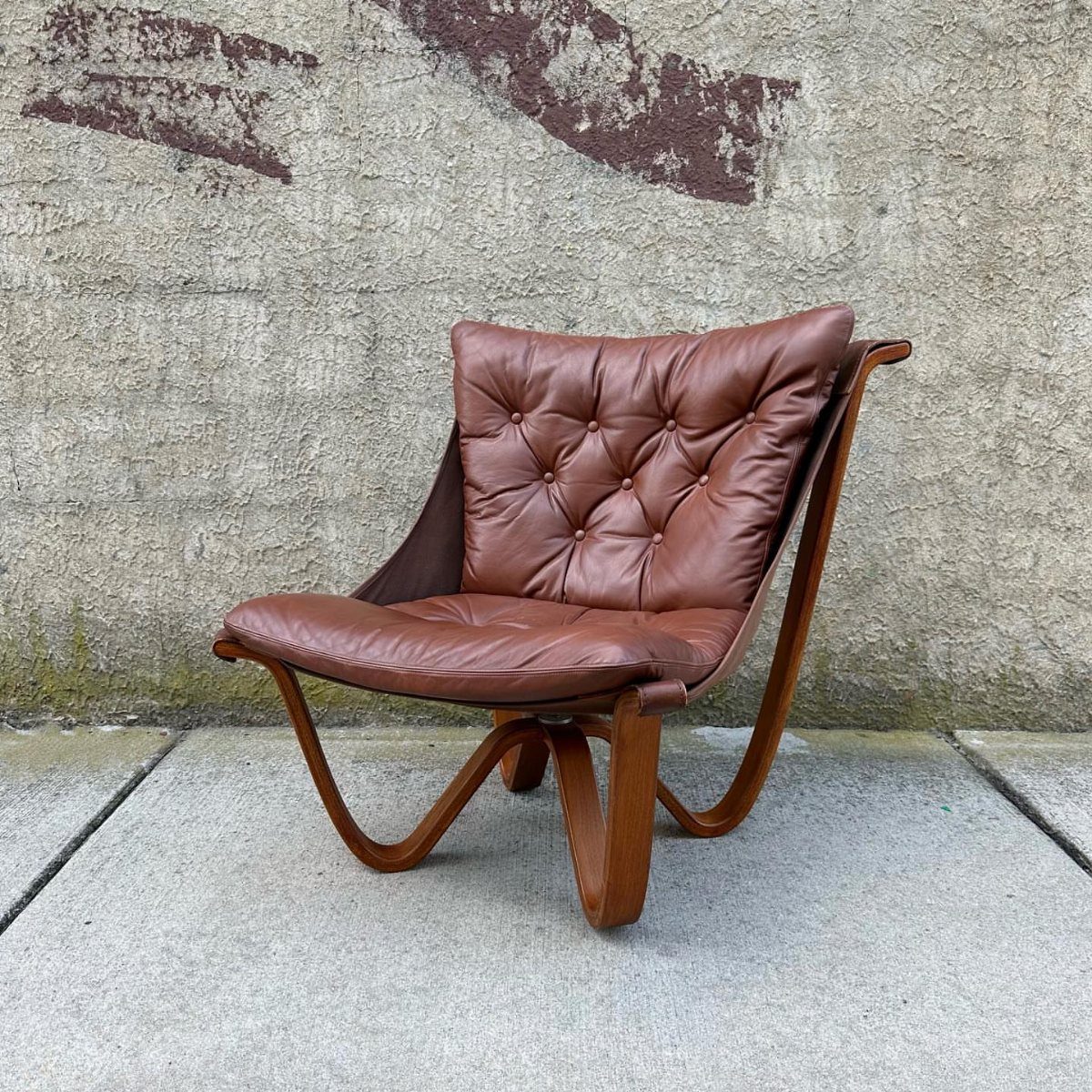
A curved wooden frame paired with leather seating gives you a chair that softens as the leather breaks in.
The tufting holds the padding in place and keeps the surface from sagging, and brown leather shows less wear than lighter colors.
The wood usually bends into a shell shape, so the leather wraps around the curve instead of sitting on top of flat slats.
This works indoors or on a covered patio, but full sun will dry out the leather faster than it ages naturally.
10. Wood Chair Ottoman Set
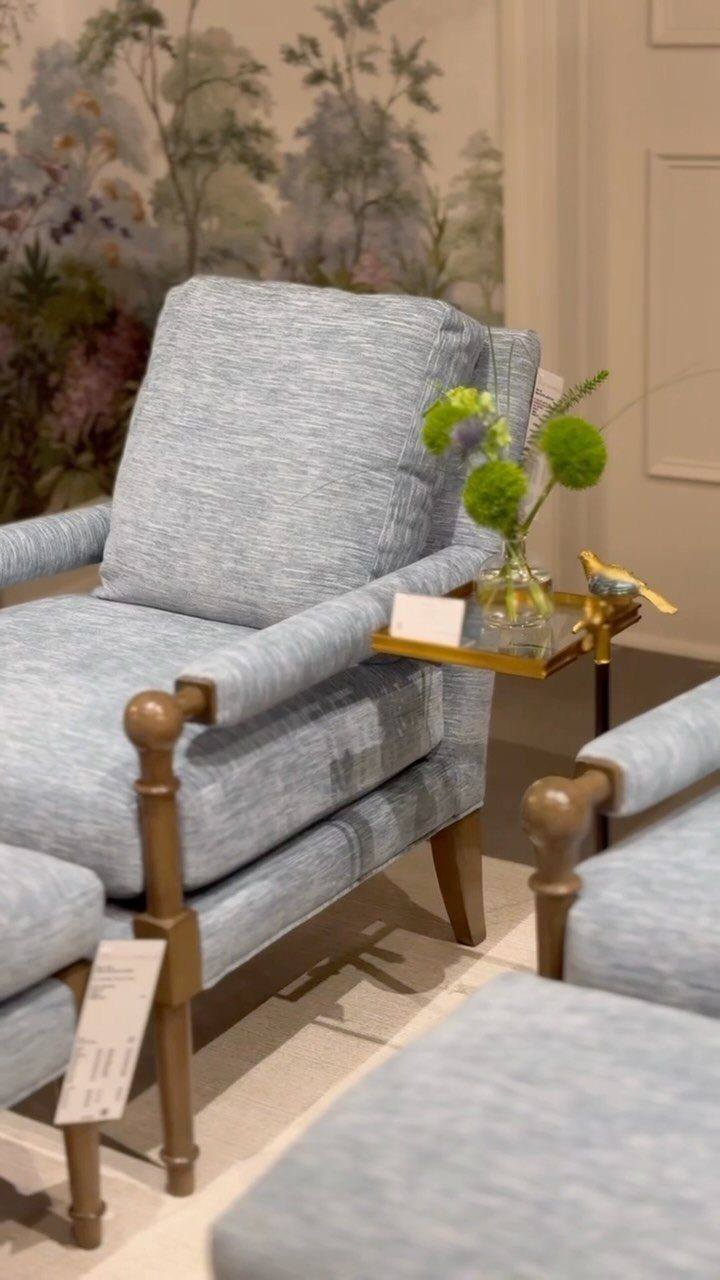
A lounge chair and ottoman together let you stretch out fully without needing a chaise. The ottoman matches the chair in wood finish and upholstery, so the 2 pieces read as a set.
Fabric that covers both the seat and back makes the chair soft enough to sit in without adding loose cushions.
The ottoman sits at whatever distance you need, so you can pull it close or push it aside when you stand up.
11. Swivel Lounge Chair
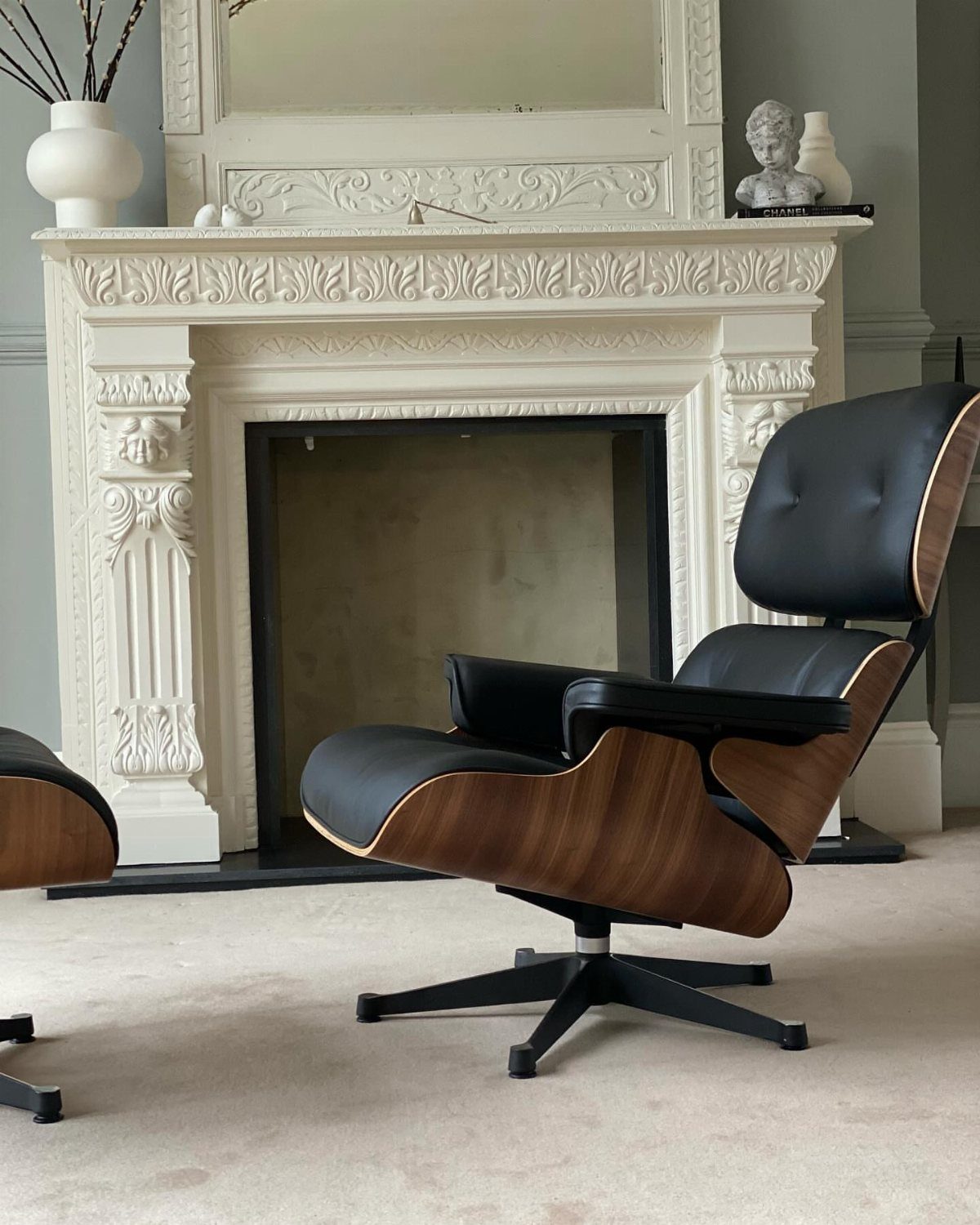
A wood shell mounted on a swivel base lets you turn to face the room or the window without dragging the chair.
The shell curves to fit your back, and the swivel mechanism sits low enough that the chair stays stable when you shift your weight.
Leather cushions add padding without hiding the wood, and black or dark brown keeps the focus on the shell’s shape.
The swivel works on carpet or hard floors, but it will scratch wood unless you add felt pads under the base.
12. Cedar Chaise Lounge
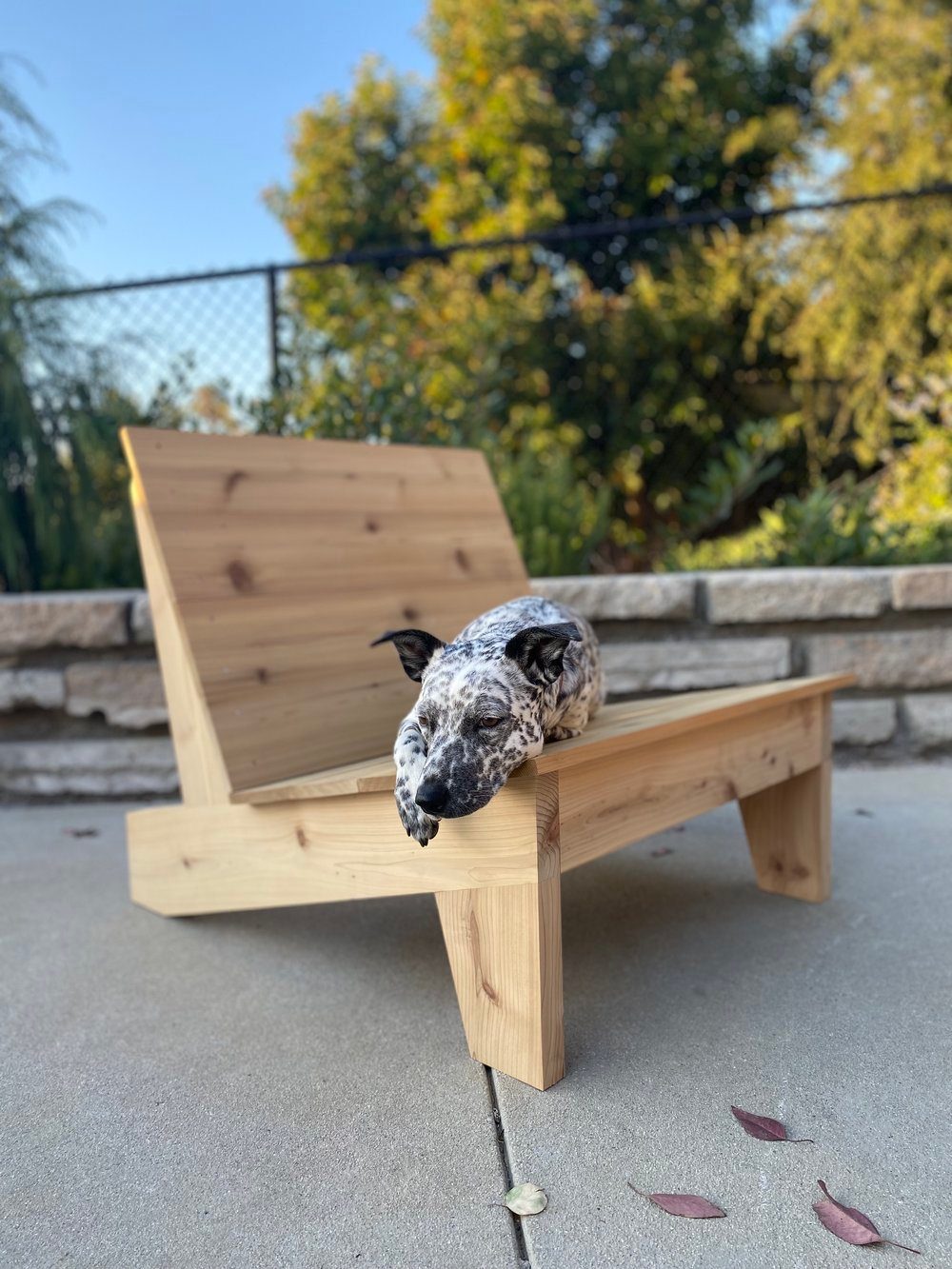
Cedar planks build a chaise that resists rot and insect damage without needing a finish, so it can sit on a patio or deck with no maintenance beyond an occasional rinse.
The back reclines or stays flat, depending on how you build the hinge. Cedar starts out pale and weathers to gray over a season or two, or you can seal it with oil to hold the original color longer.
13. Cedar Outdoor Lounge Chair
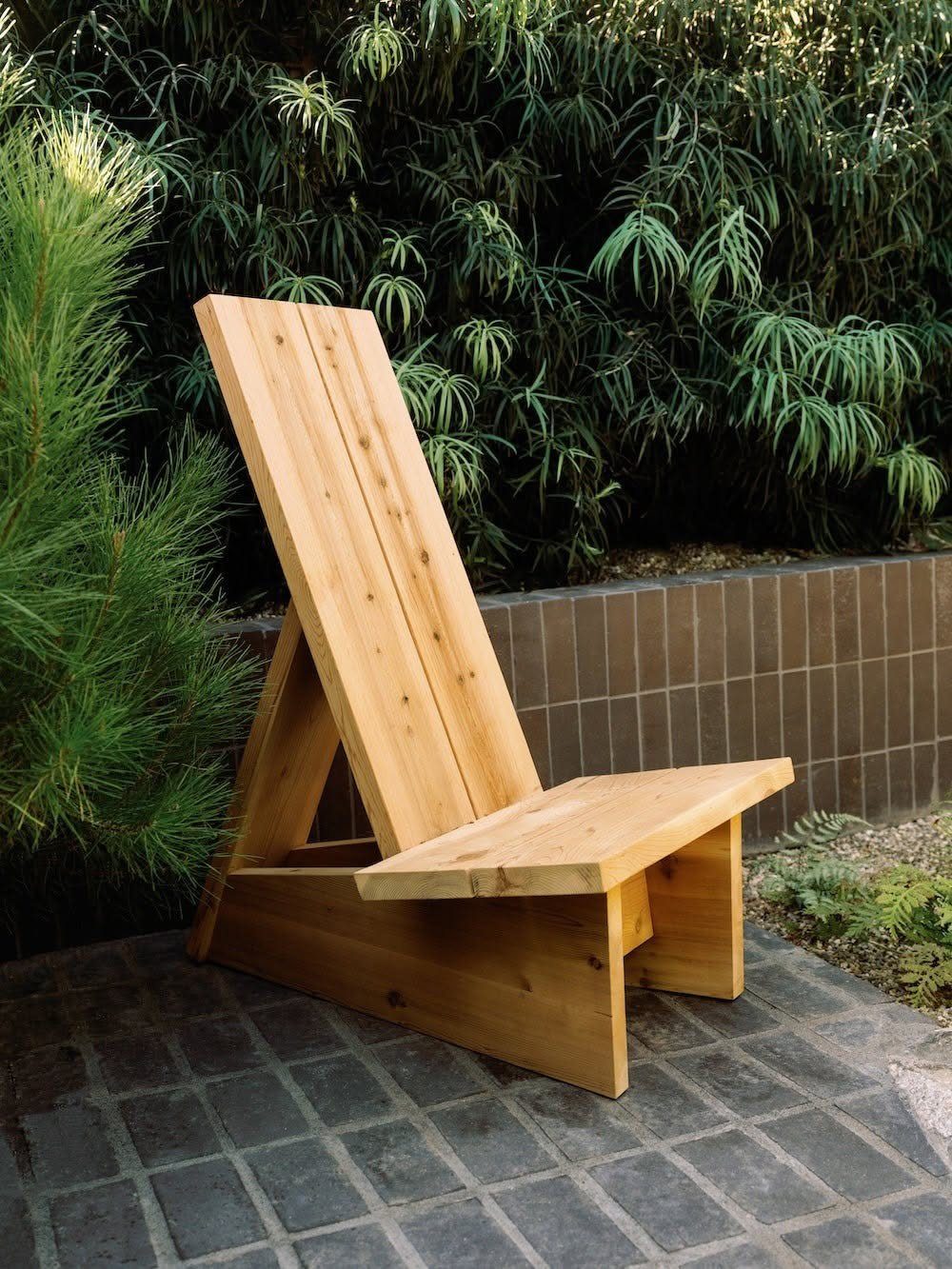
Slatted cedar planks stack vertically to form the seat and back, with a higher back than most patio chaises. The slats let water drain and air circulate, so the chair dries fast after rain.
Cedar holds up outdoors without staining or sealing, though it will gray over time if left untreated. The high back supports your shoulders when you sit upright, which makes this better for reading than lying flat.
14. Wheeled Reclining Chaise
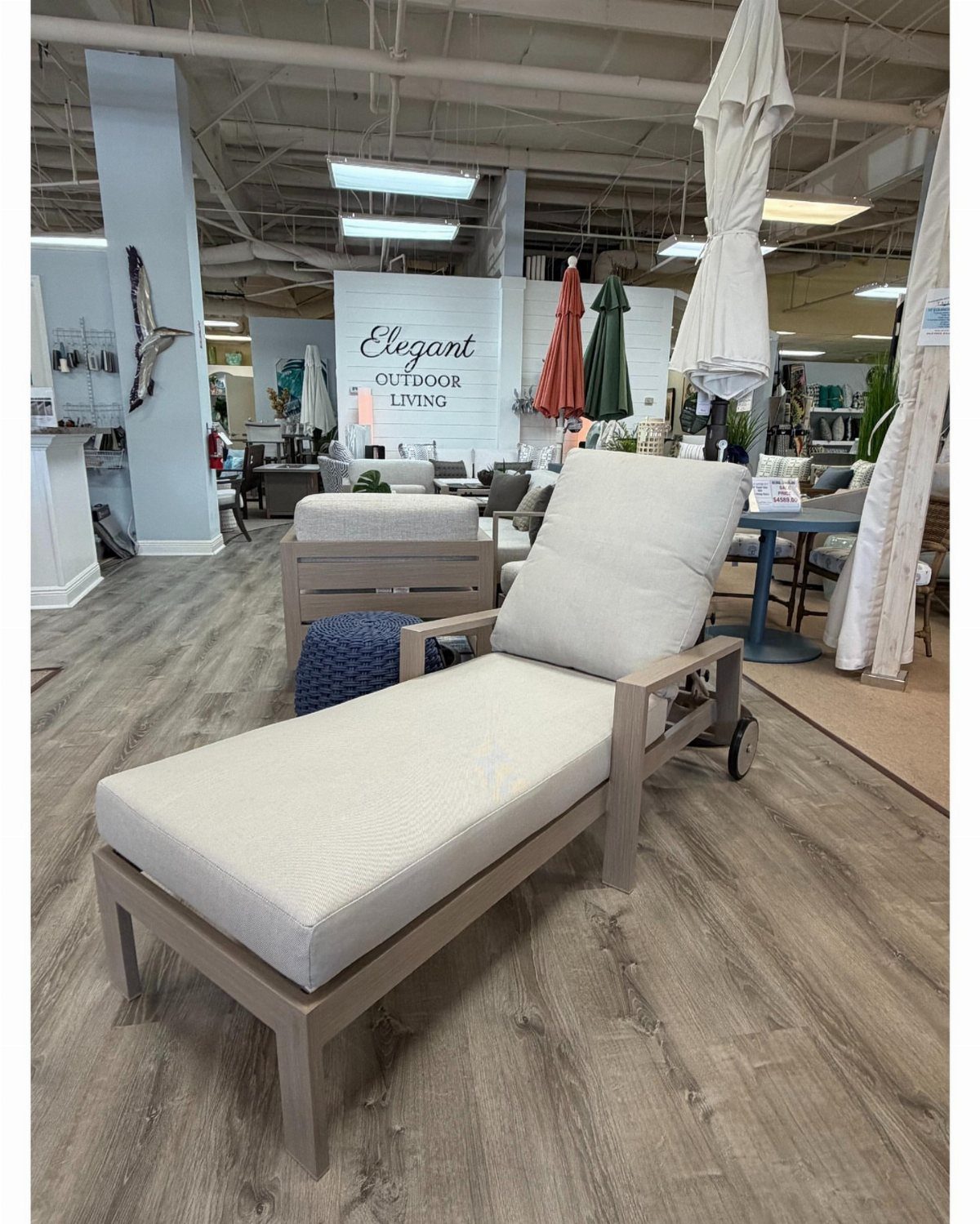
Wheels mounted to the base let you roll the chaise into sun or shade without lifting it. The back adjusts between upright and reclined, with a cushion that runs the full length of the seat and backrest.
White cushions show dirt faster than darker colors but reflect heat better in full sun. Look for wheels wide enough to roll smoothly over deck boards or patio pavers without catching in the gaps.
15. Wood Slat DIY Chair
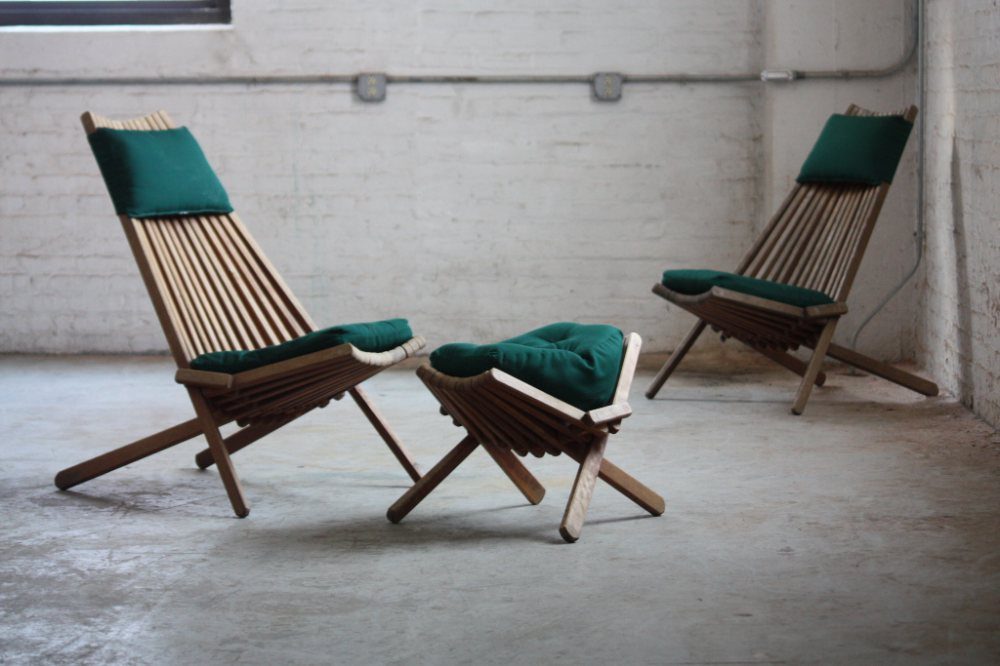
Horizontal slats span a simple frame, with legs angled back to hold the recline without adjustment hardware. The green cushions tie the seat and back together, so you sit on padding instead of bare wood.
This design uses straight cuts and basic joinery, which makes it approachable if you own a saw and drill. The footrest matches the chair’s angle and height, so your legs stay level when you stretch out.
16. Deck Lounger with Carriage Bolts
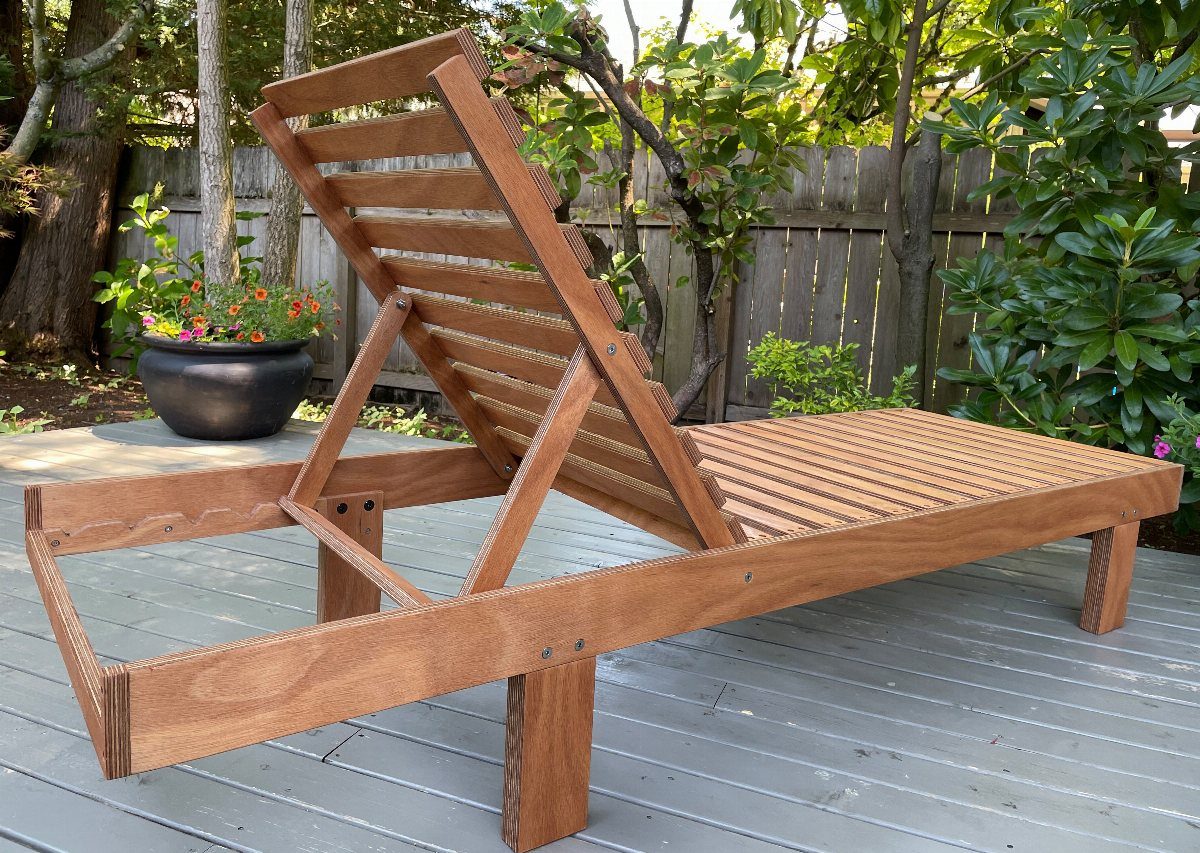
Carriage bolts fasten the slats to the frame, leaving round heads visible on the surface. The bolts make assembly straightforward since they don’t require countersinking, and they hold tight enough that the chair stays solid without glue.
The backrest adjusts by sliding along the side rails, locking into notches cut at different angles. Pressure-treated lumber works for outdoor use, or you can build it from cedar if you want wood that weathers without splitting.
17. Pallet Wood Lounge Chair
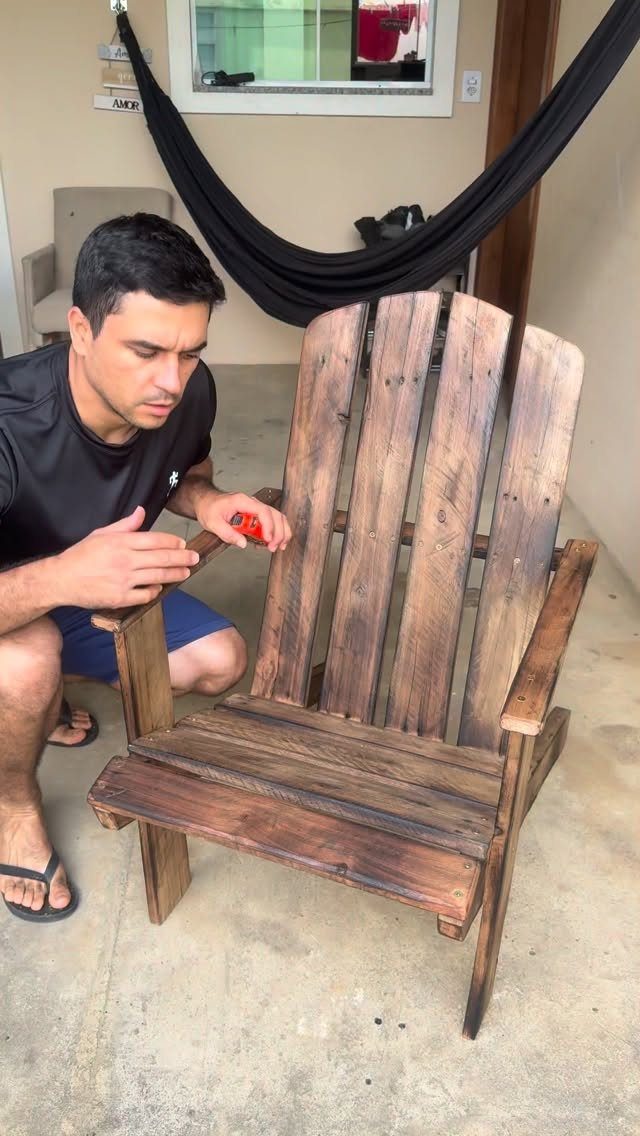
Pallet wood gives you material that costs little or nothing, and the dark stain hides the stamps and weathering that come with reclaimed lumber. The slats run lengthwise, salvaged from pallet decking, with thicker boards forming the frame.
The back reclines at a fixed angle, so you lie back rather than sit upright. Sand the boards smooth before assembly to remove splinters, and check that the pallets were heat-treated rather than chemically treated before cutting into them.
18. Mid-Century Wood Chair
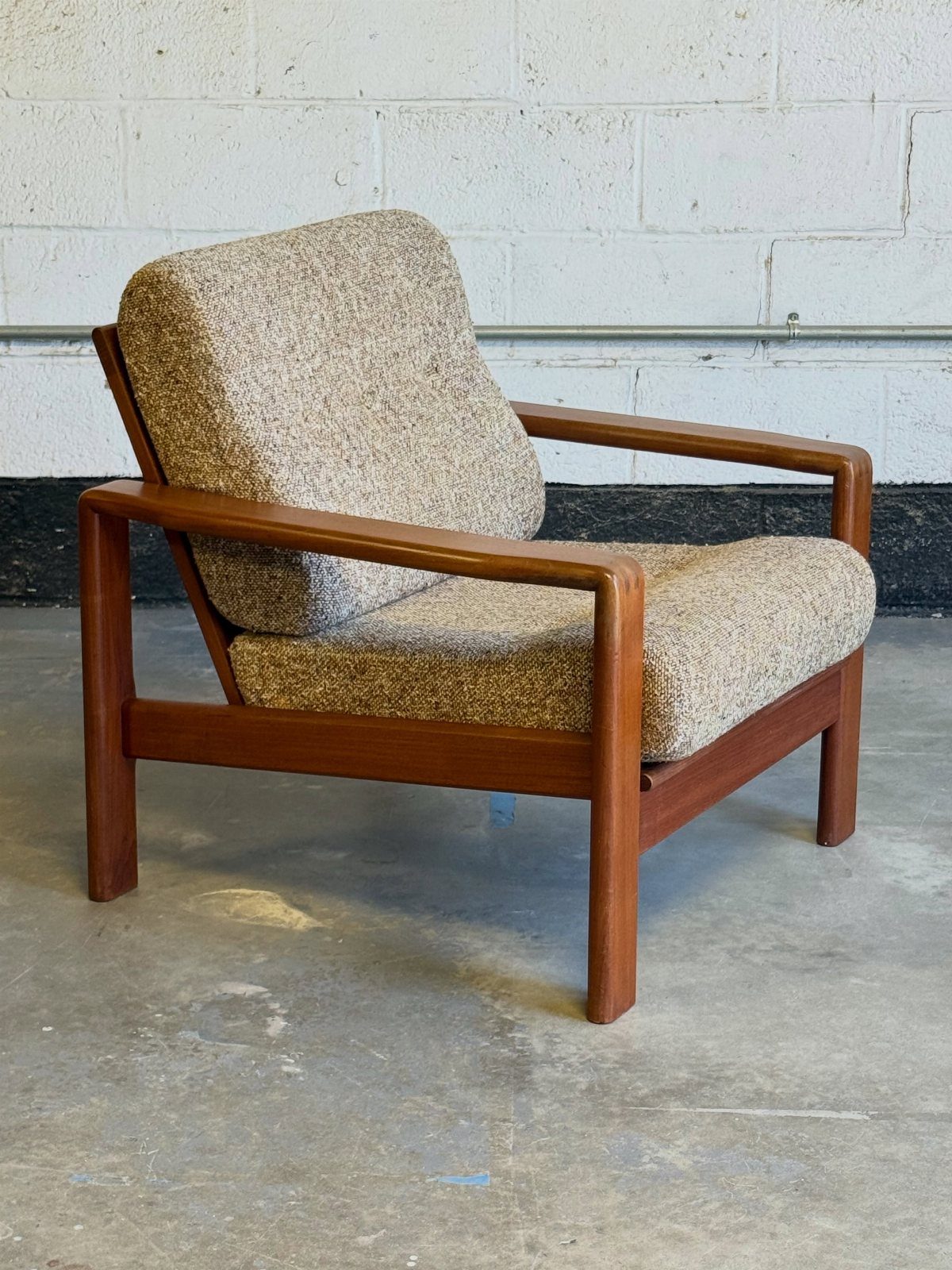
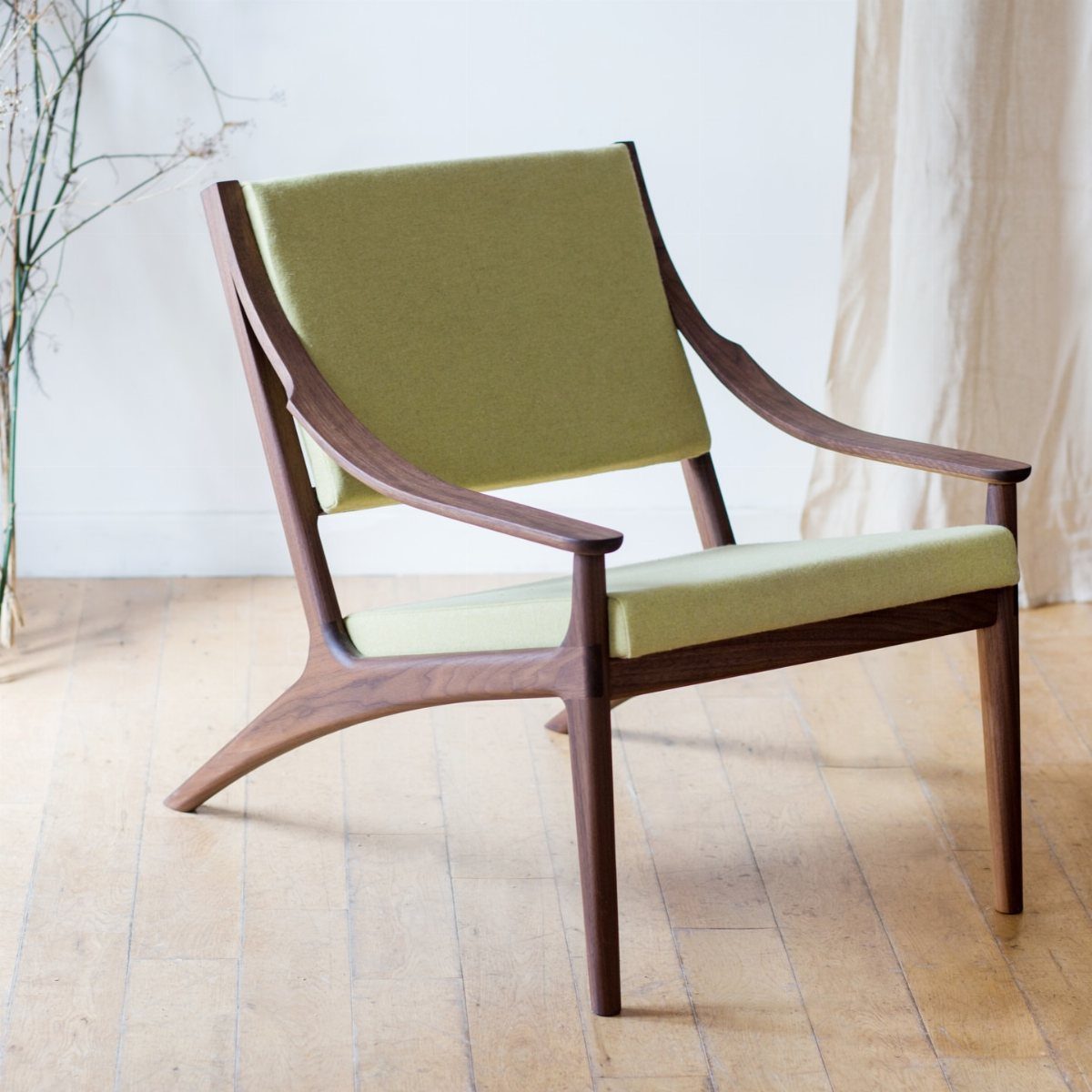
Angled arms and tapered legs mark the mid-century shape, paired with beige cushions that cover the seat and back. The wood frame shows at the edges, so the grain stays visible even with upholstery.
The low profile sits closer to the floor than a standard chair, which makes it easier to get into than higher lounge chairs but harder to stand up from if your knees protest.
Fabric with texture holds up better than smooth weaves, since it hides wear and pilling longer.
19. Wood Cane Lounge Chair
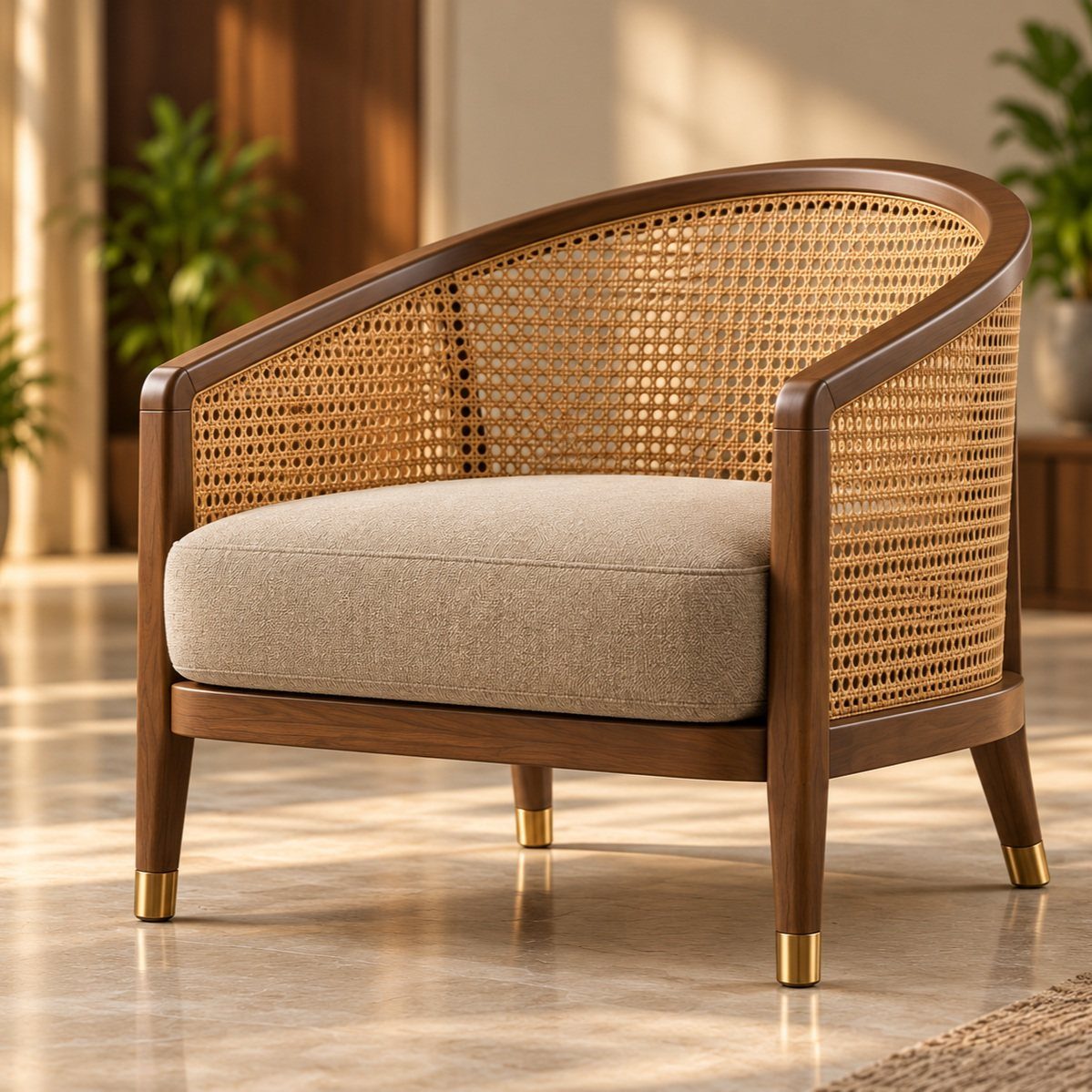
Woven cane panels form the sides and back, letting air move through the frame while the cushion gives you something soft to sit on.
The cane holds its shape better than fabric and shows less wear than solid upholstery, though it can snag if you drag sharp objects across it.
A beige or neutral cushion keeps the focus on the cane’s texture, and the wood frame at the arms and legs adds warmth. The cane needs indoor use or a covered patio, since rain will loosen the weave over time.
20. Plank Outdoor Chair
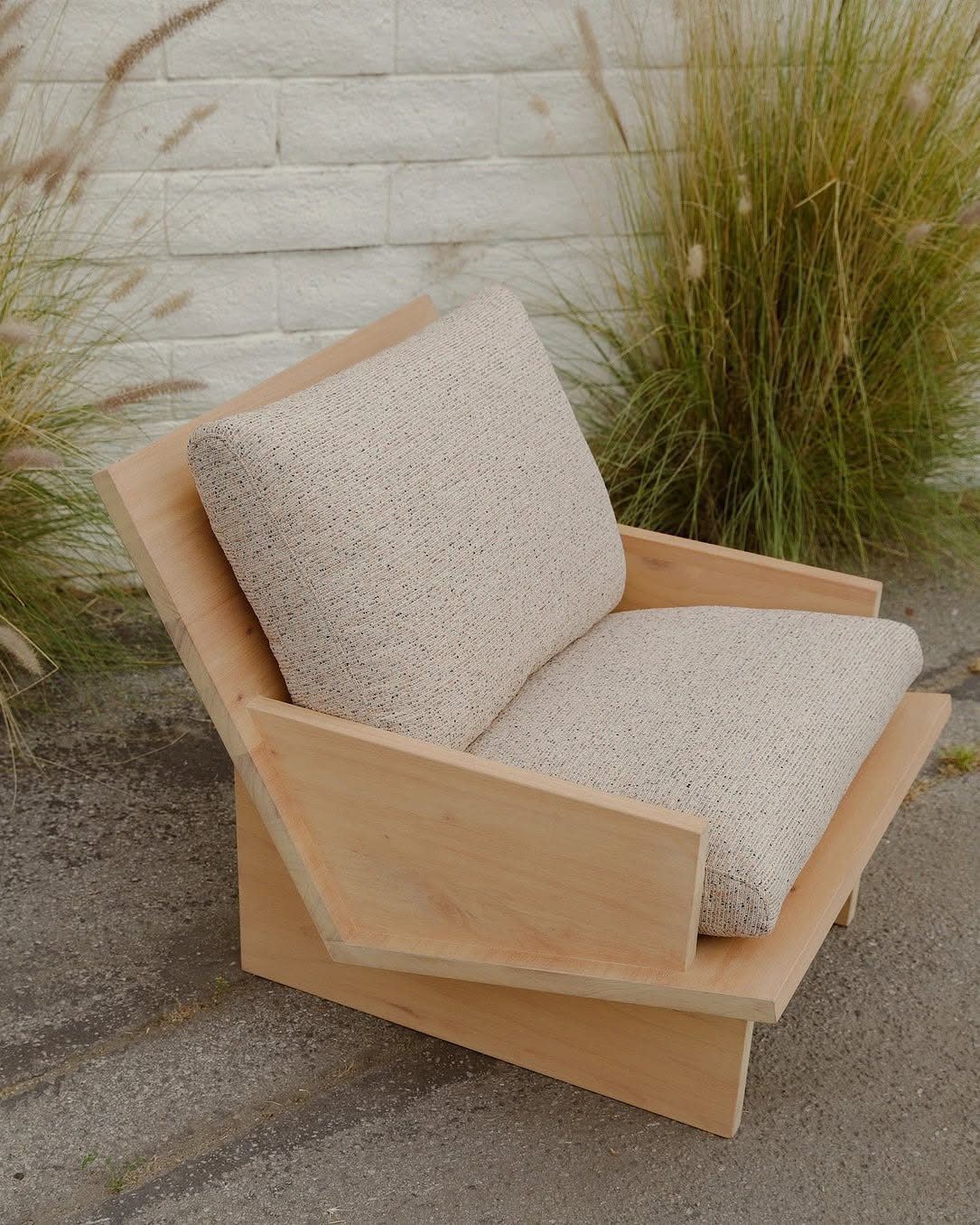
The seat and back are made from flat cedar boards, placed horizontally and held by angled legs. The wood grain shows through a clear finish or light stain, and the angular base keeps the chair low to the ground.
Cream or beige cushions soften the planks without covering the wood completely.
The frame stays rigid without joinery that shows, so the planks meet cleanly at the edges. Cedar handles outdoor exposure without sealing, though a coat of oil will slow the graying if you want to keep the lighter color.
21. Chunky Wood Chair
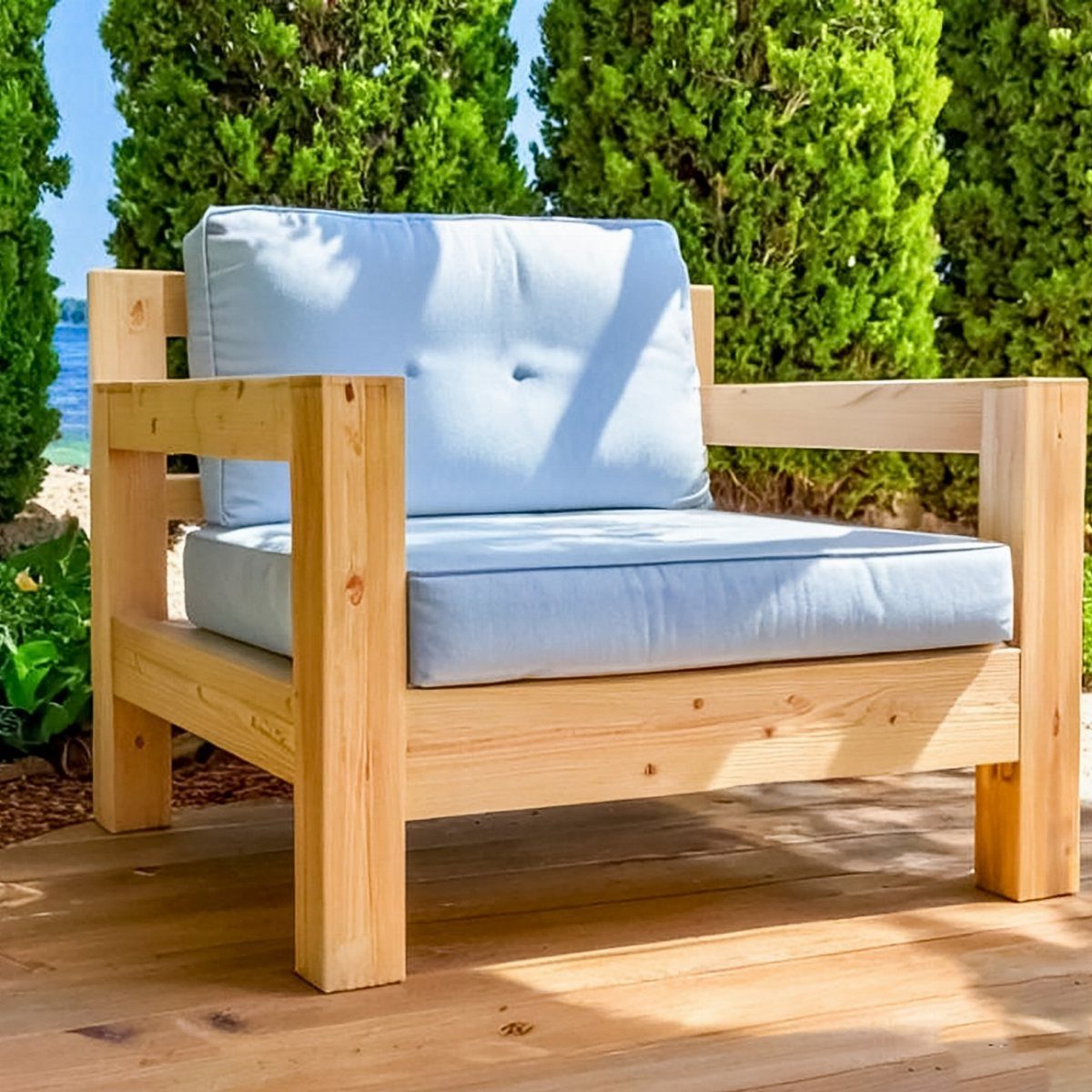
Thick wood blocks form the frame, with each piece cut wide enough to read as solid rather than slender.
The blocky shape gives you a chair that feels substantial, and the light blue cushions add padding where the wood would otherwise press into your back and legs.
The chunky build works outdoors because the wood has enough mass to stay stable without bracing. Light wood like pine or cedar keeps the chair from looking too heavy, while darker stains make the blocks stand out more.
22. Wood Chair with Bouclé
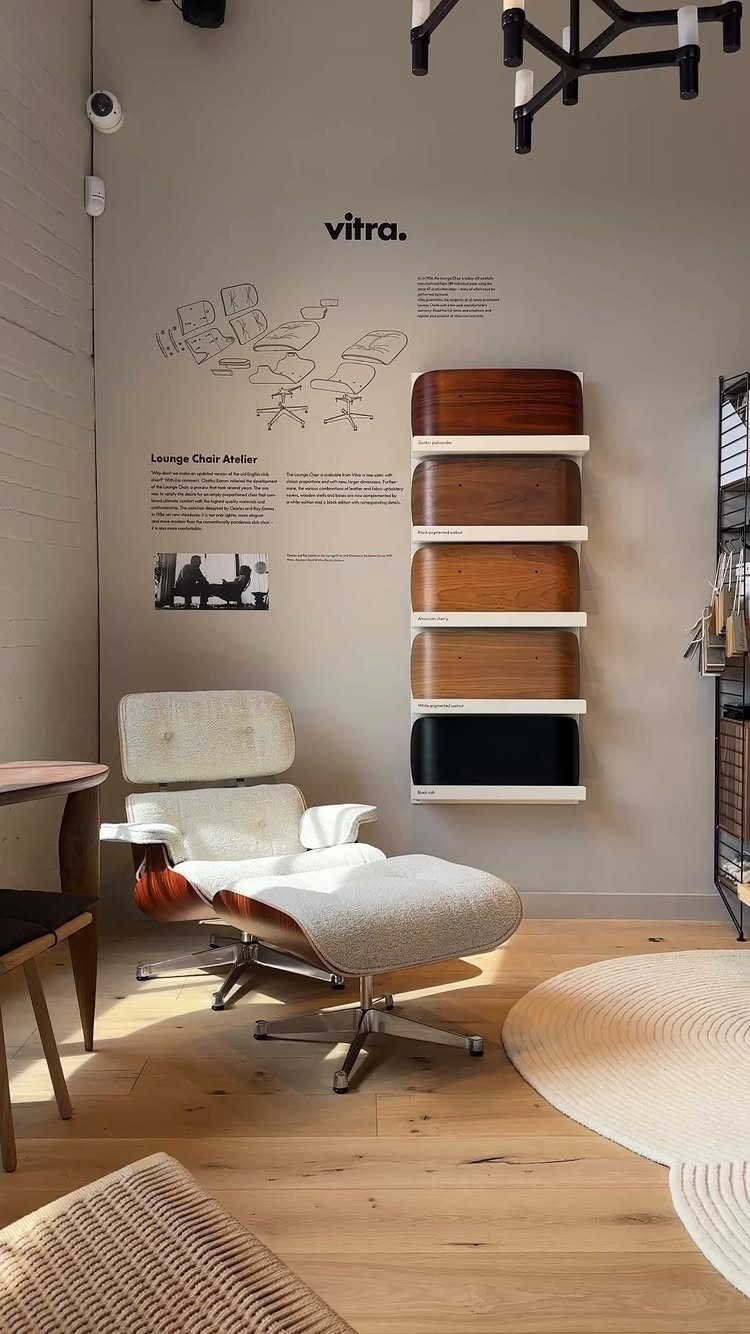
Bouclé fabric covers the seat and back, with a walnut frame that curves around the edges. The texture gives you something softer than smooth upholstery, and the loops in the weave hide minor wear better than flat fabric.
White or cream bouclé shows the walnut’s grain, while darker colors blend the fabric and frame together.
Add the ottoman and you have a full-length lounger, no chaise required. Bouclé sheds dirt when you vacuum it, but spills soak in faster than treated fabrics.
23. Wood Chair with Cream Cushion
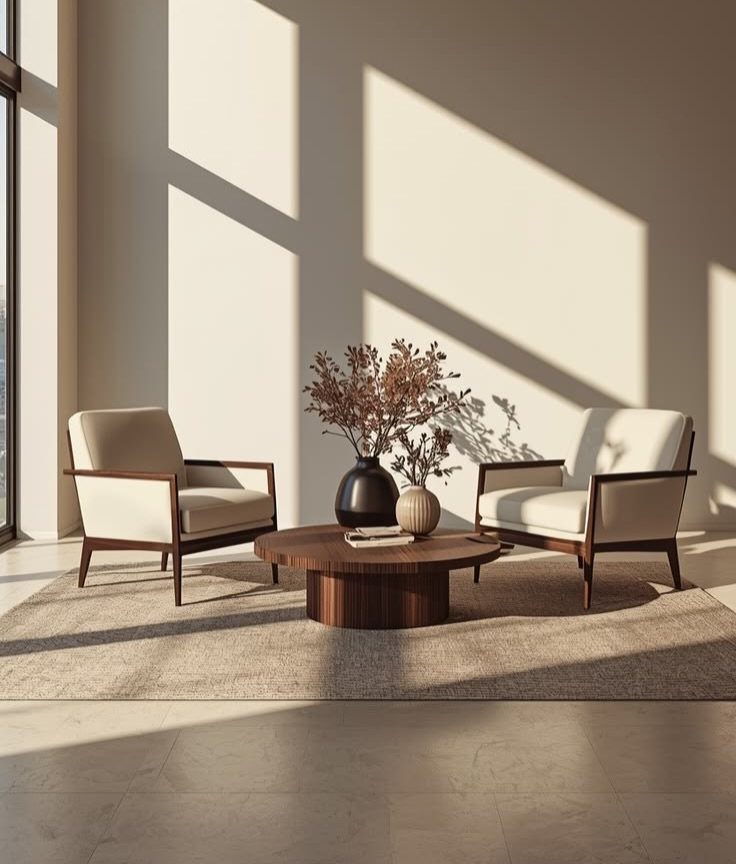
Dark wood paired with a cream cushion gives you contrast that makes both materials stand out. The cushion sits directly on the frame, so you feel the support of the wood underneath without it pressing through.
Walnut or espresso-stained wood works because the grain stays visible even at a dark finish, and the cream fabric reflects light instead of absorbing it.
2 chairs facing each other across a low table make a seating area that feels balanced, since the matching frames tie the space together.
24. Wood Chair with Leather Straps
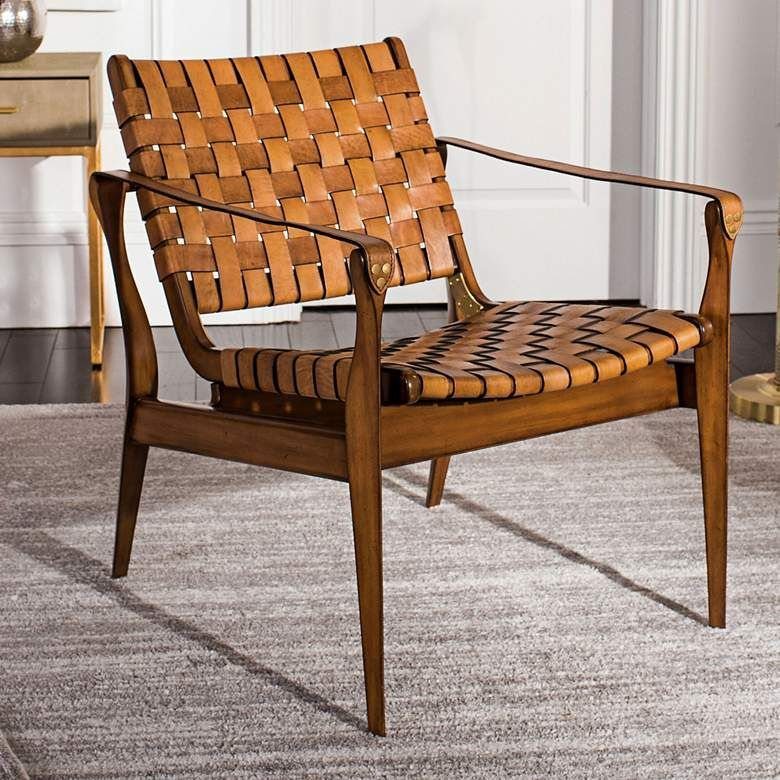
Leather straps weave across the seat and back, secured to the frame with screws or tacks. The straps give under your weight, so you sink in slightly without needing cushions, and the leather softens as it breaks in.
Tan or cognac leather shows the wood’s dark finish, while black straps blend into walnut or espresso frames. The weave holds tight for years, but the leather will stretch over time and need tightening or replacing.
Oil the straps once a year to keep them supple, and tighten any that sag by adjusting the screws at the attachment points.
Have bought many wicker lounge chairs over the years, which hold up in the weather and elements fine for 2-3 years and then need replacing.
25. Wood Lounge Chair with Metal Frame
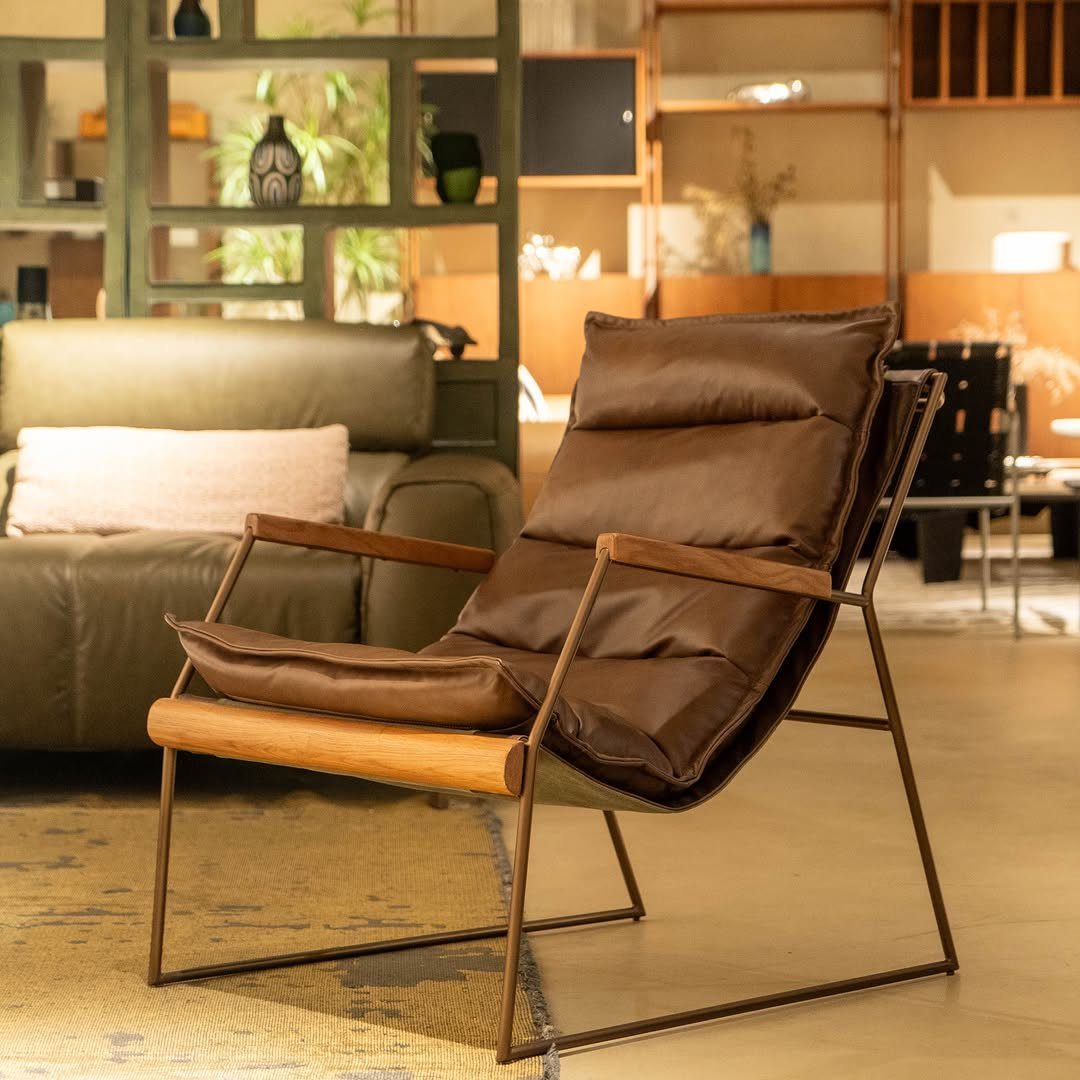
Metal legs and side rails support an upholstered seat and backrest, with the frame doing the structural work while the padding shapes where you sit.
The metal shows at the base and sometimes wraps around to the arms, so the chair reads as industrial rather than purely wooden.
Brown leather cushions pair with dark metal and warm-toned wood, or you can skip cushions entirely if the wood curves to fit your back. The metal frame stays rigid without the thickness wood would need to hold the same weight.
26. Wood Chair with Footrest
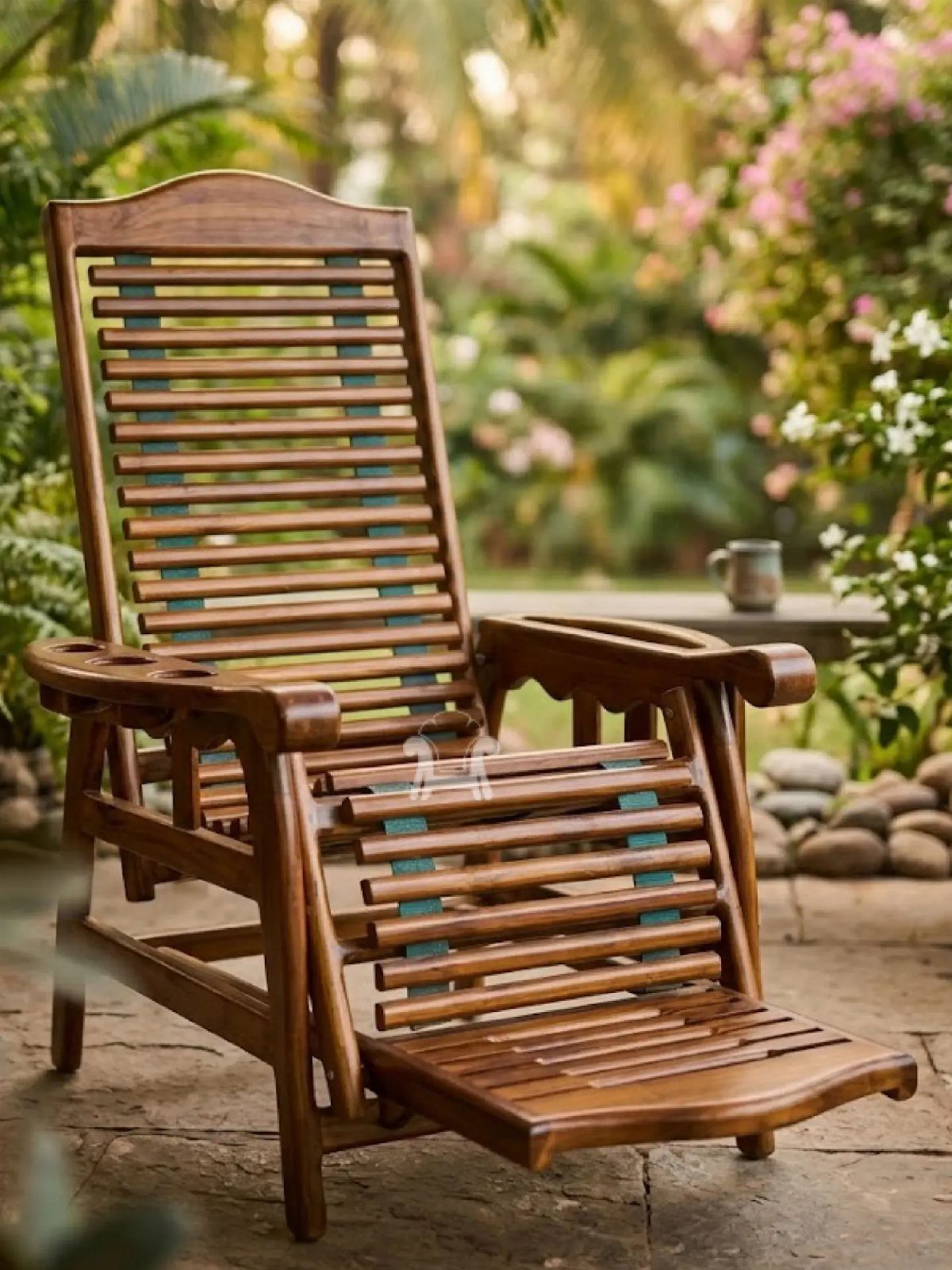
A footrest built into the chair extends out when you want to stretch your legs and folds back under the seat when you stand up.
The slats run horizontally across both the seat and footrest, so the grain lines up when the footrest is extended.
The armrests here include recessed cup holders, which keep drinks from tipping when you shift your weight. Cedar or pressure-treated wood holds up outdoors, and the footrest slides on rails or pivots on hinges, depending on the design.
27. Mid-Century Wood Lounge Chair Set
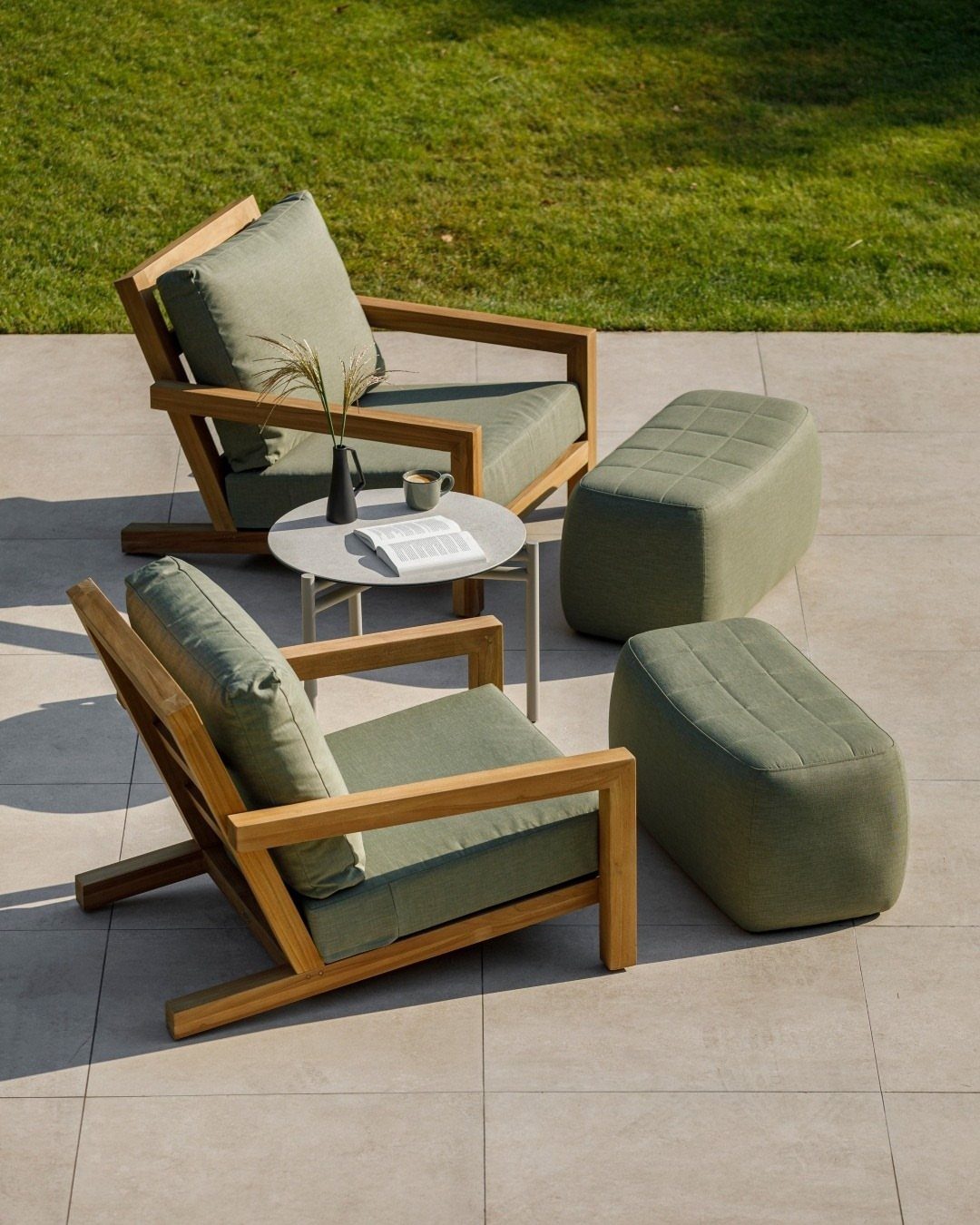
Two chairs and two ottomans give you matching pieces that face each other or sit side by side.
The olive cushions tie the set together, and the low profile keeps the chairs from blocking the view when they sit on a patio.
A small side table between the chairs holds drinks or books in a tight footprint.
The wood frames match in finish and shape, so the set reads as intentional rather than pieced together. Cushions in a single color unify the look, while mixed colors make each chair feel separate.
28. Wood Chaise with Wheels
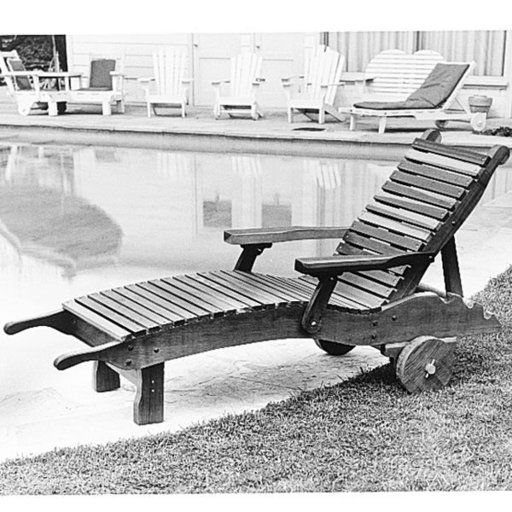
Wheels let you roll the chaise across pavers or decking to follow the sun or move it out of the way when you need the space.
The back adjusts to different angles, or it stays flat if you want to lie down. Teak and eucalyptus both hold up outdoors without sealing, though teak costs more and weathers slower.
Frequently Asked Questions
What is the most comfortable lounge chair for long hours of sitting?
Chairs with thick cushions over the full seat and back work best for long sitting, since they distribute pressure without letting the frame press through.
Look for wood frames paired with high-density foam cushions in fabric or leather, or choose a curved plywood shell that supports your body without needing padding.
Adjustable backs let you shift position, which matters more than thickness alone when you sit for hours.
What is the difference between a club chair and a lounge chair?
A club chair sits upright with a high back and squared arms, built for sitting rather than reclining.
A lounge chair leans back at an angle or adjusts to let you recline, with a lower profile and often an ottoman or extended seat for your legs.
Club chairs sit low with deep seats and wide arms, while lounge chairs are made for stretching out.
What are the best wooden chairs for home use?
Walnut or mid-century frames with fabric cushions give you chairs that last indoors and look finished in a living room.
Plywood shells curved to fit your back need less padding and show the wood’s grain, while chunky frames in light wood or stained finishes handle daily use without looking delicate.
Pair any of them with cushions thick enough that you don’t feel the wood underneath after an hour.