
Most extendable kitchen tables add 1 or 2 leaves that grow the surface by 12 to 24 inches, enough for 2 to 4 more chairs.
The right mechanism depends on how often you extend the table: sliding and self-storing leaves stay attached so you skip finding storage space, while removable leaves let you control length but need a closet or spot under a bed between uses.
Pedestal bases keep the floor open around the table even when extended, rectangular shapes stretch to seat more with added leaves, and oval tables hold their proportions better than round ones when a center leaf goes in.
1. Sliding Leaf Table
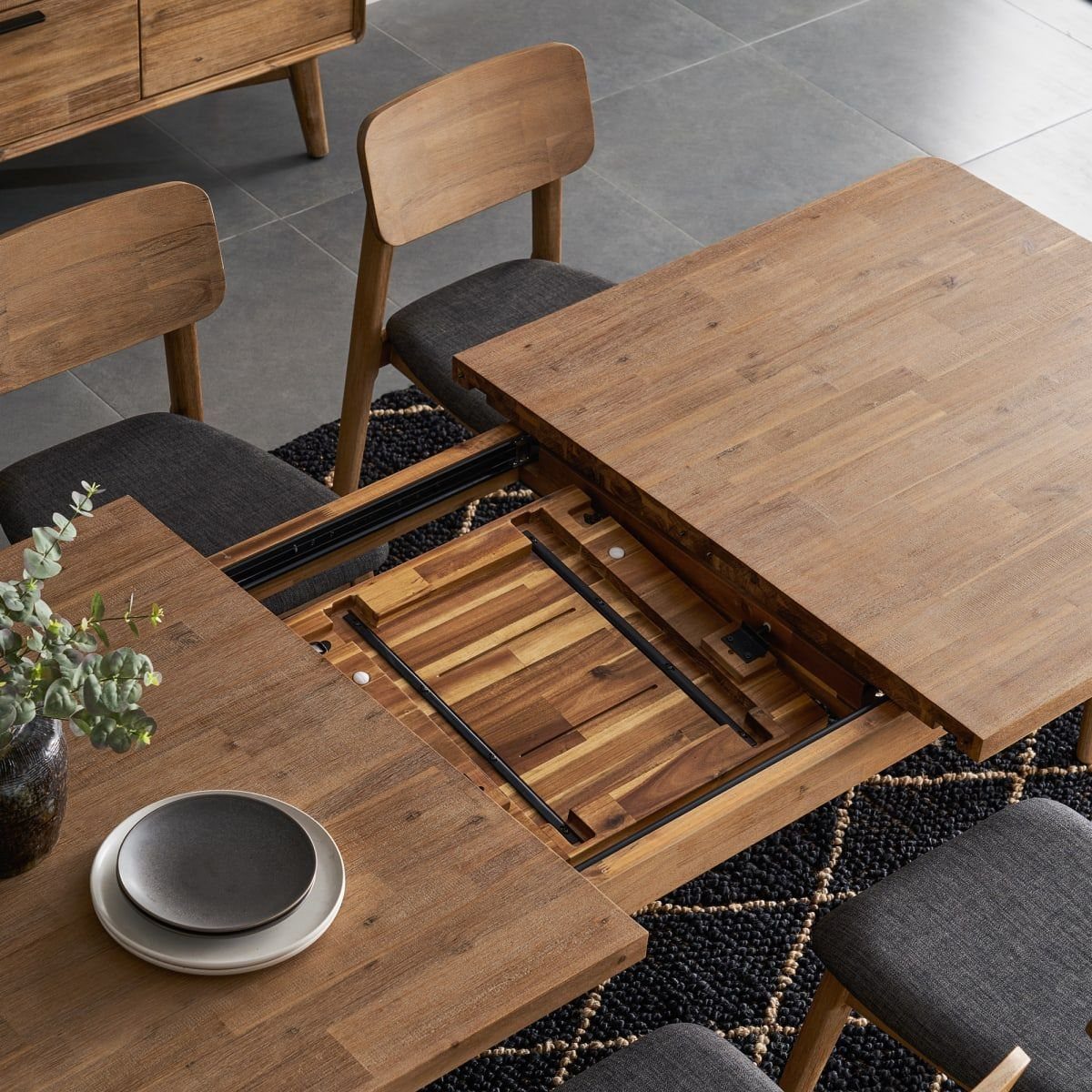
The leaf slides along a track built into the frame, so you pull the ends of the table apart and the hidden section rises to fill the gap. No separate piece to store or lift into place.
This works well in a kitchen where you want the option of a longer table without keeping track of a loose insert. The mechanism handles the alignment, so the surface stays level once it locks.
Sliding leaf tables typically give you more surface when you need it and collapse back down when you don’t. Look for a design with a smooth track and a leaf that sits flush when closed.
2. Removable Leaf Table
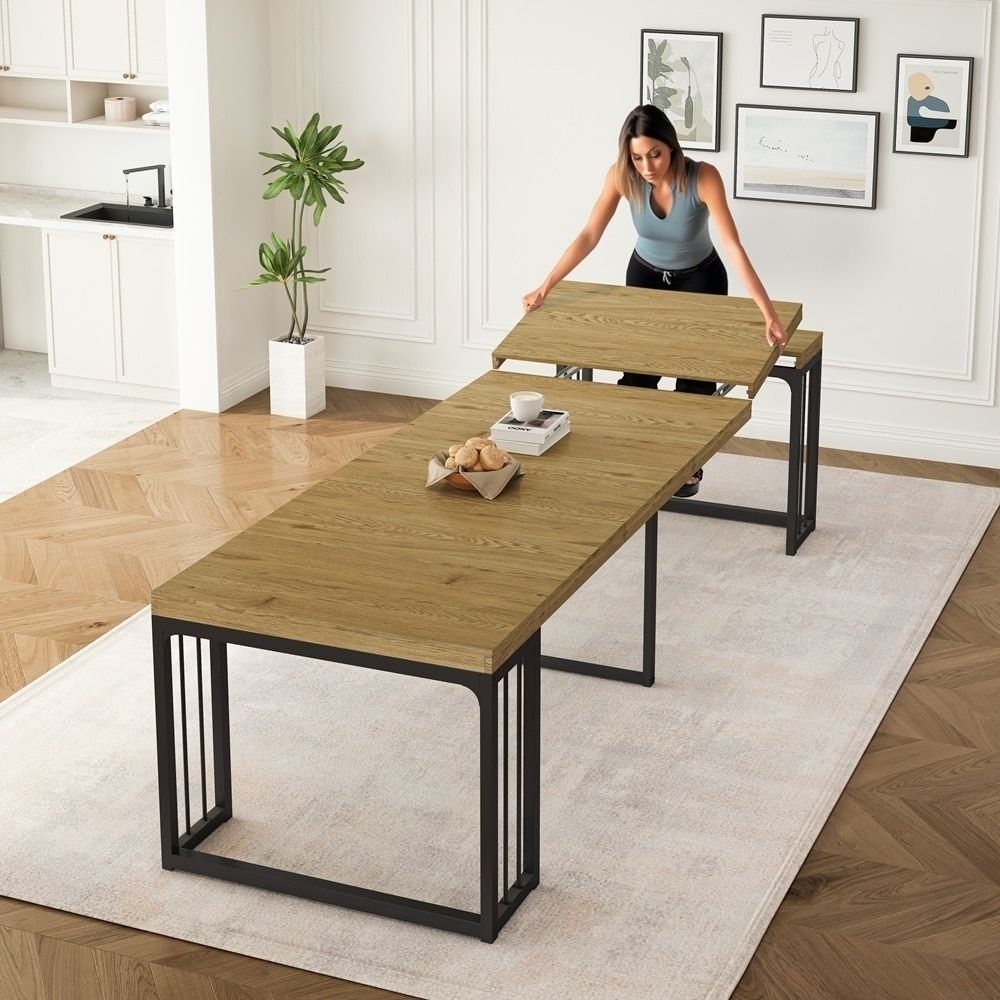
A separate leaf lifts out and gets stored somewhere else between uses. You pull the table ends apart, drop the leaf into the gap, and push the ends back together to lock it in place.
This gives you full control over the table’s length, but you need a spot to keep the leaf when it’s not in use.
A closet, under a bed, or leaning behind a dresser all work if the leaf is thin enough.
The joint where the leaf meets the table shows a seam, so if that bothers you, a self-storing or sliding option hides it better. For occasional use, though, this is straightforward and easy to replace if the wood ever warps.
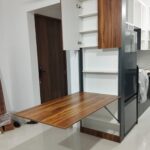
3. Built-in Kitchen Extension
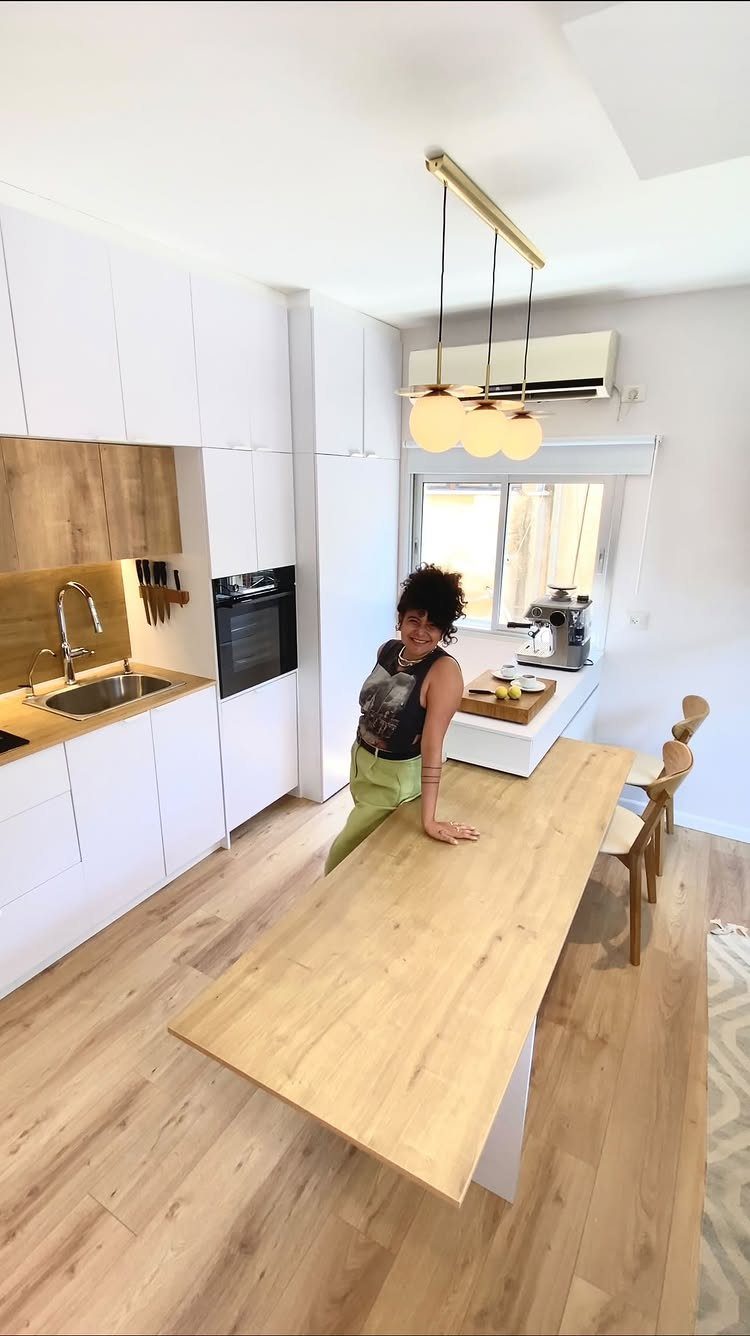
A table surface pulls out from the island or cantilevers from its side, giving you a spot to eat with no separate furniture footprint. Some versions slide out on a track, others fold down when not in use.
This makes sense in a small kitchen where a freestanding table would crowd the floor. The height usually matches the island, so you’ll need counter-height stools rather than standard dining chairs.
If the extension is narrow, it works better as a breakfast bar than a full dinner table. Check the support structure before you lean on it or load it with dishes.
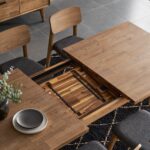
4. Self-storing Leaf Table
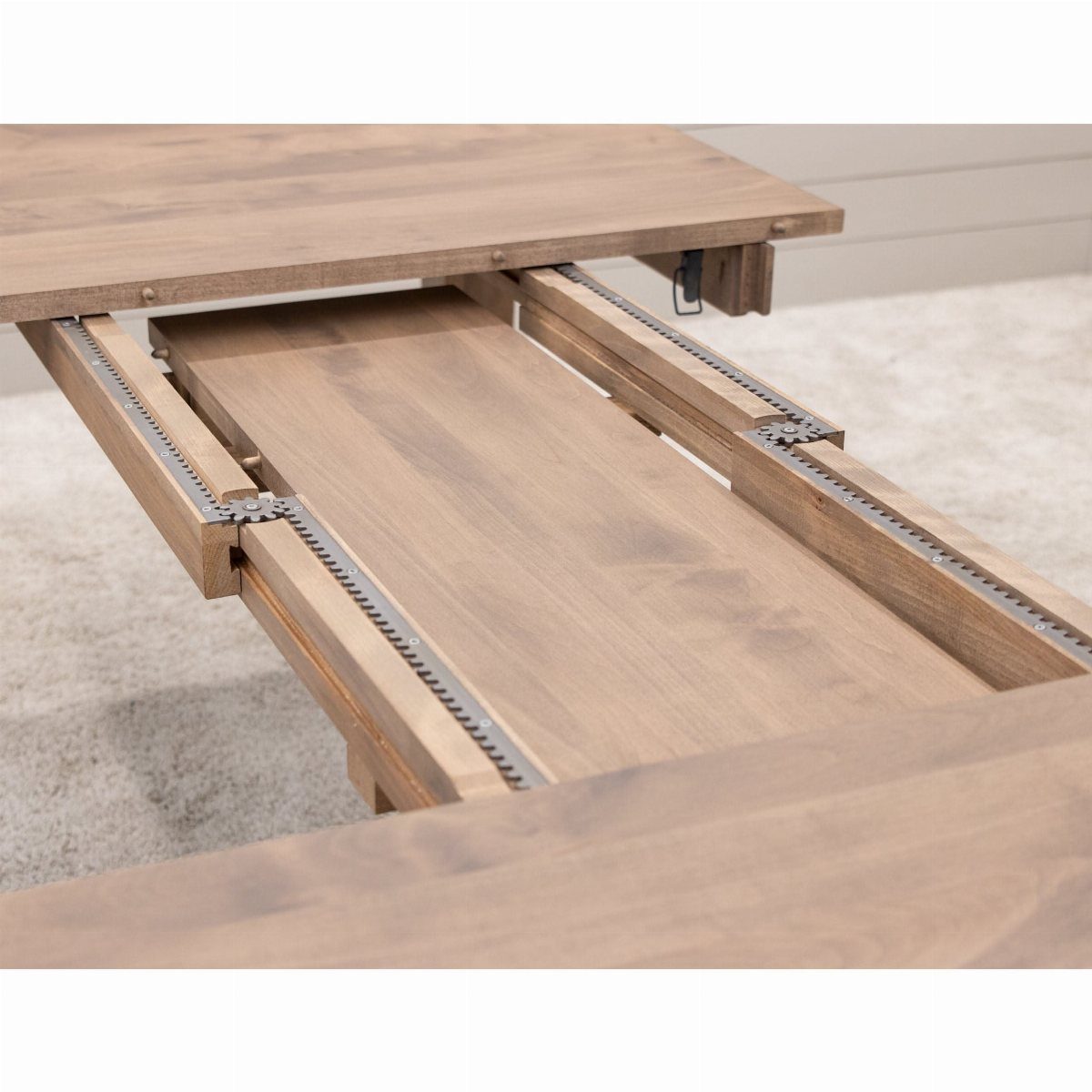
The extension leaf tucks into a compartment under the table, so when you need it, you slide the top apart and lift the leaf out from the center. No hunting for a piece you stored somewhere else.
This keeps the mechanism compact and avoids the need for a closet or garage spot. The table stays at one width most of the time, and the leaf is there when you have extra people over.
Most self-storing designs add one leaf and extend the table enough for a couple more seats. The hidden compartment adds a little weight, so these tables tend to sit heavier than a simple fixed design.
5. Expandable Rectangular Table
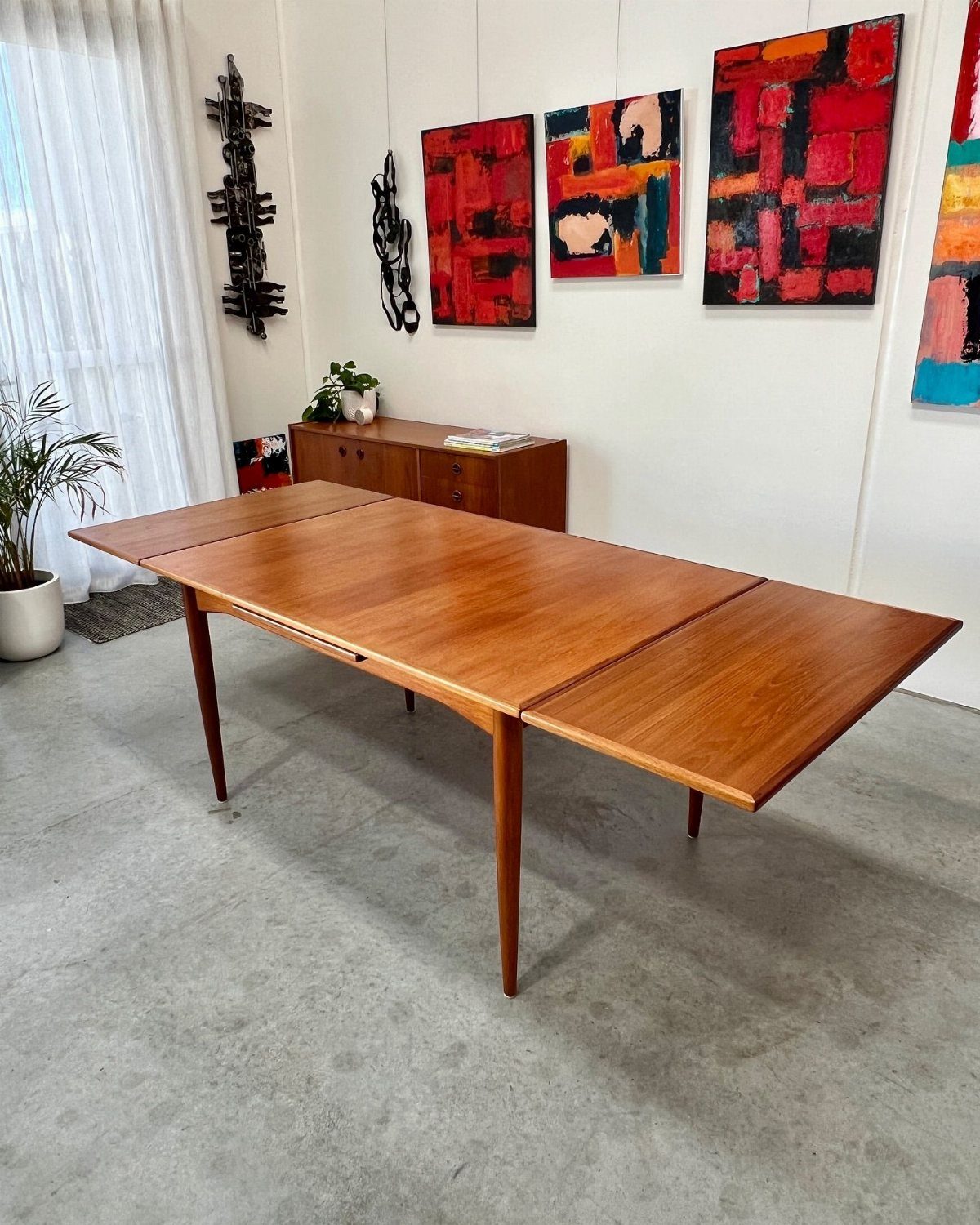
A rectangular table with leaves that extend from both ends or insert in the middle gives you a longer surface without changing the shape. The extended version keeps the same clean lines, just stretched to fit more chairs.
This suits a dining room or kitchen where you want a table that can handle a dinner party but doesn’t take up the whole room the rest of the week.
Rectangular shapes fit against a wall or in the center of the room without wasted space.
Most expandable rectangular tables grow with each leaf you add, giving you room for more chairs. If you need seating for 8 or more, look for a design that accepts 2 leaves.
6. Farmhouse Extension Table
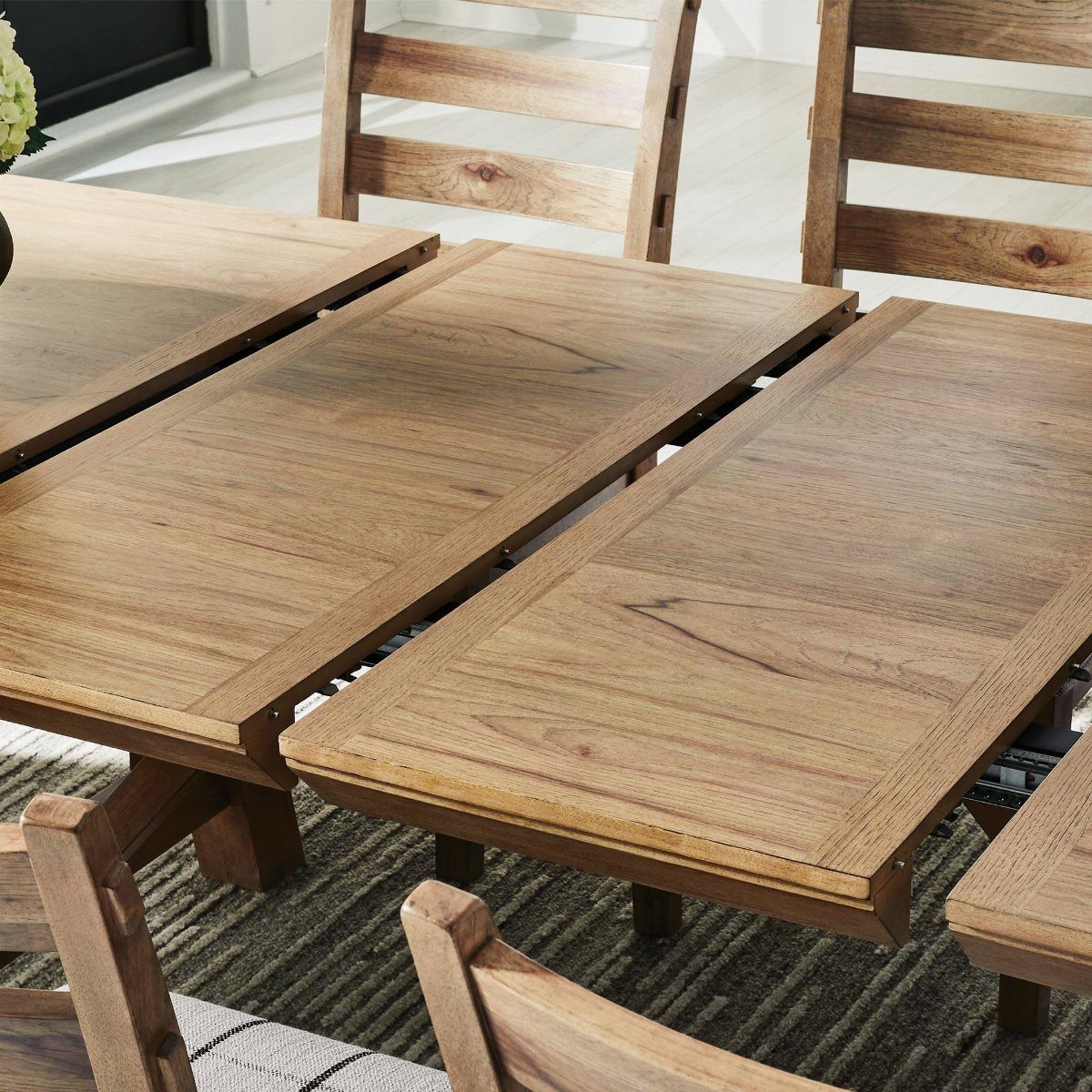
A farmhouse table with an extension mechanism gives you the turned legs and plank top of a traditional design, but with leaves that expand the length when you need more seating.
The wood usually has a lighter finish, and the legs stay visible even when the table is extended.
This fits a casual kitchen or dining room where you want the farmhouse look without committing to a table that’s always oversized.
The extension keeps the proportions balanced, so the legs don’t look too far apart when the leaves are in.
Most farmhouse extension tables use a removable or self-storing leaf. The joint where the leaf inserts will show a line across the top, which is typical for this style and less obvious on a distressed or matte finish.
7. Oak Extension Table
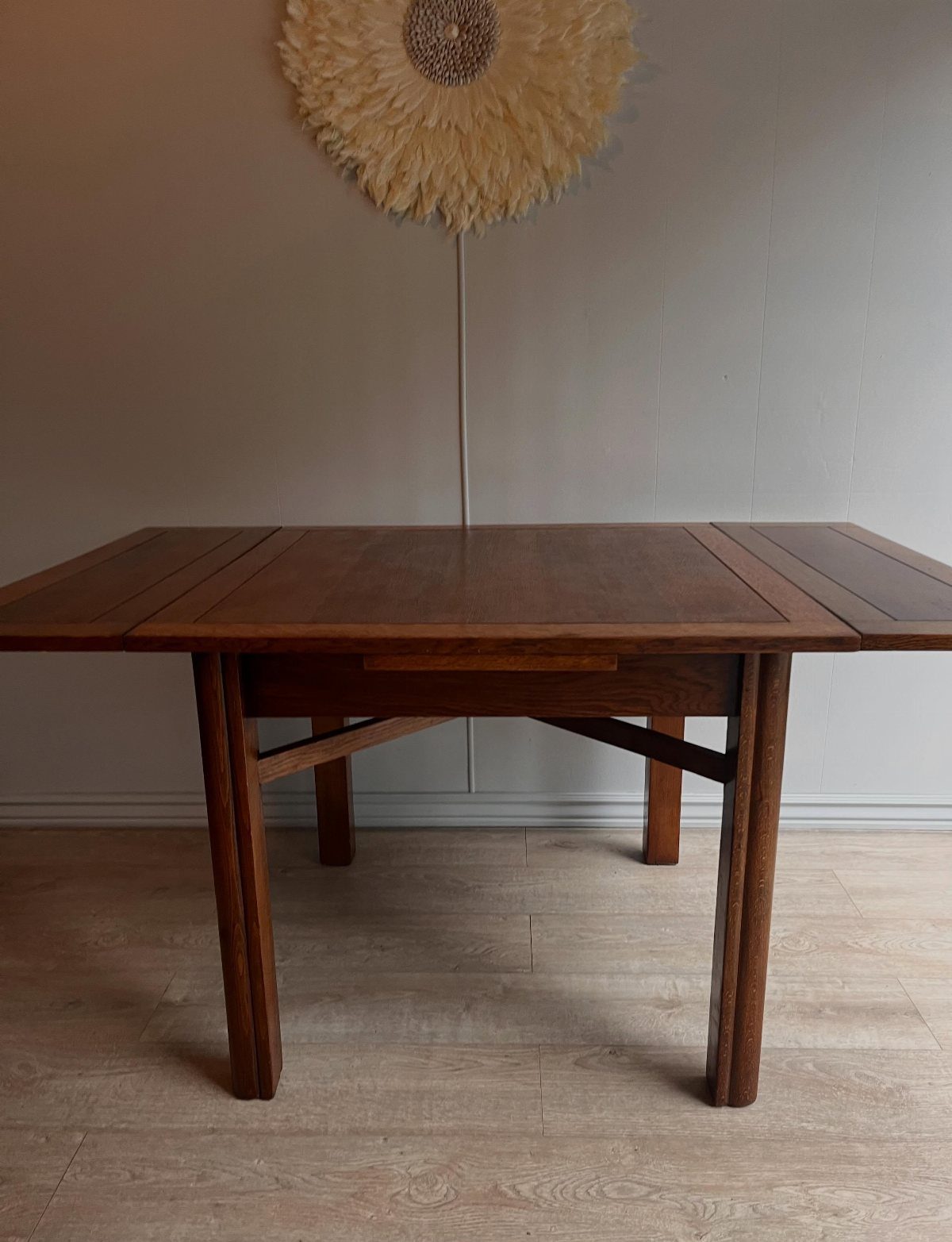
Oak gives you a durable surface with visible grain, and with an extension leaf, the table grows to fit extra chairs without losing the wood tone.
The grain pattern will shift slightly where the leaf meets the fixed sections, but that’s typical for any solid wood extension.
Most oak tables use a removable or self-storing leaf. The wood is heavy enough that the table stays stable when extended, and the finish holds up to daily use better than lighter woods.
If you want a table that can handle years of meals and still look solid, oak is a good choice.
8. Marble-look Table
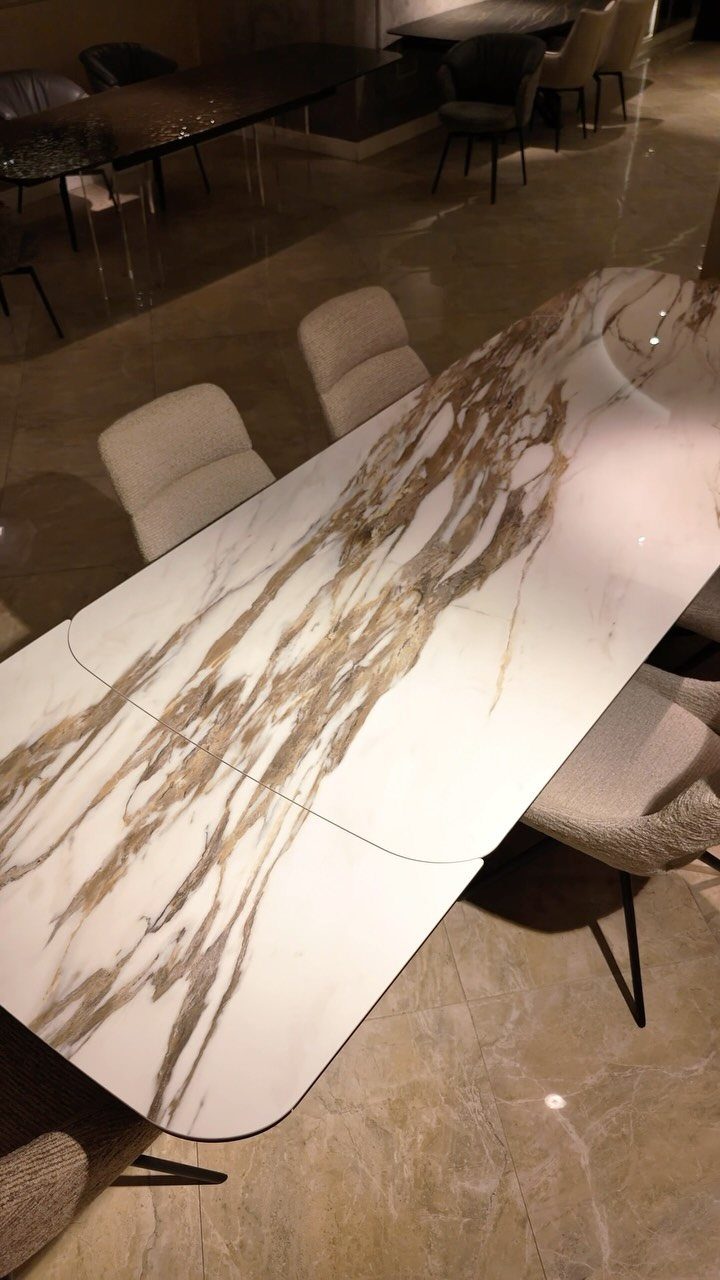
A marble-look top on an extendable table gives you the clean surface of stone without the weight or cost of real marble. The veining pattern usually continues across the leaf, though the match isn’t always perfect where the sections meet.
This works in a kitchen or dining room where you want a modern look that can expand for guests. The surface wipes clean easily, and the light color keeps the table from feeling heavy even when fully extended.
Most marble-look tables use a laminate or porcelain top over a lighter base material.
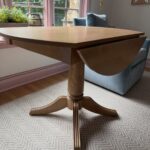
9. Pedestal Extension Table
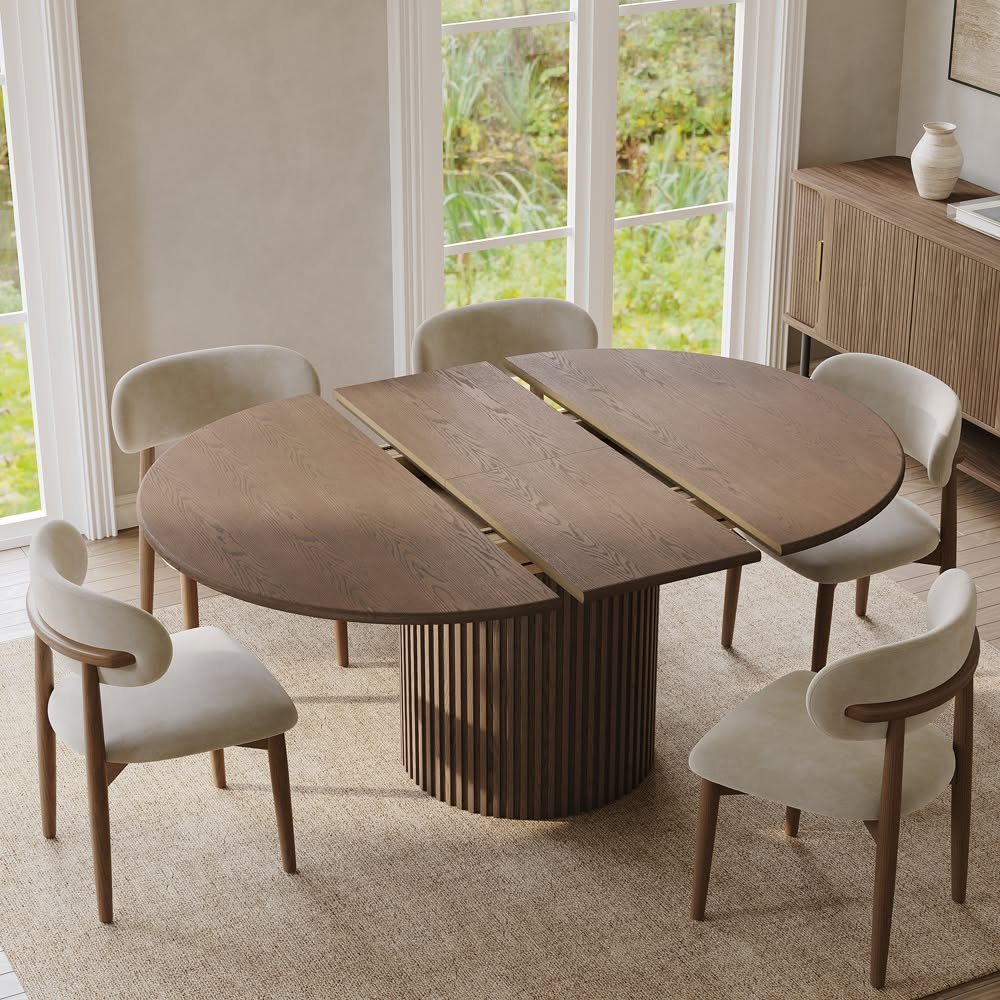
A single center pedestal lets you fit chairs around the table without running into corner legs, and when you add an extension leaf, that open space stays.
The base needs to be wide or heavy enough to keep the table stable once the top is extended.
This suits a smaller dining area where you want flexibility without extra legs taking up floor space. The leaf inserts in the center, so the pedestal stays centered under the extended top.
Most pedestal extension tables add one leaf, which is enough for 2 more chairs.
10. Pull-out Island Table
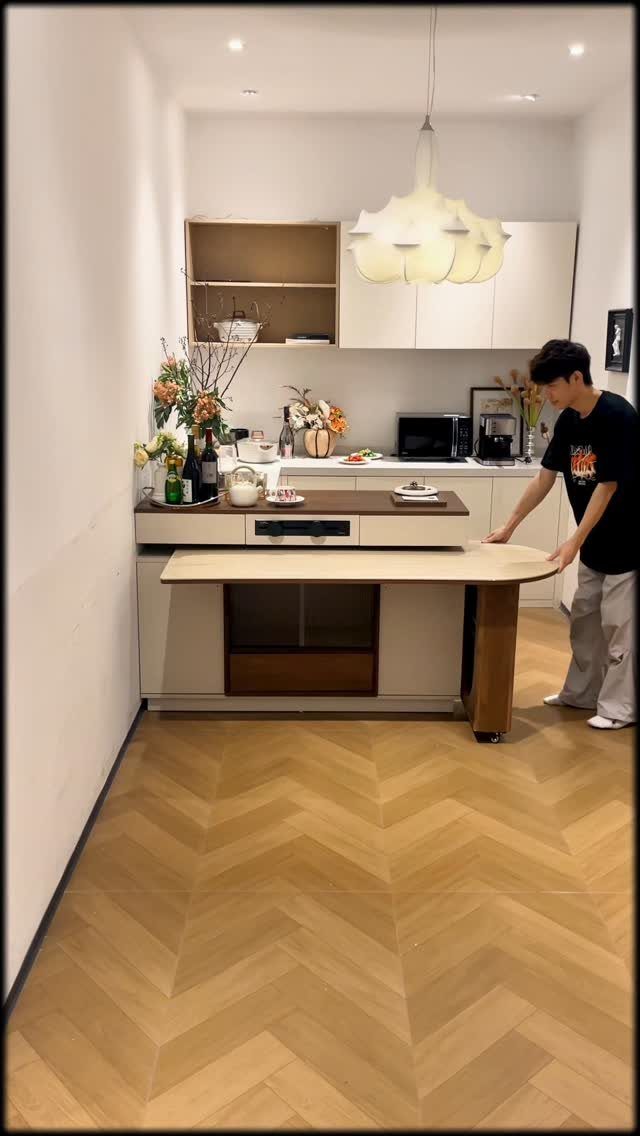
The table section rolls out on casters when you need it and tucks back under the island when you don’t, so you get extra surface without a separate piece of furniture taking up the room.
The casters let you move the table out easily, and the island hides it when it’s not in use.
Check that the casters lock once the table is in place.
11. Oval Dining Table
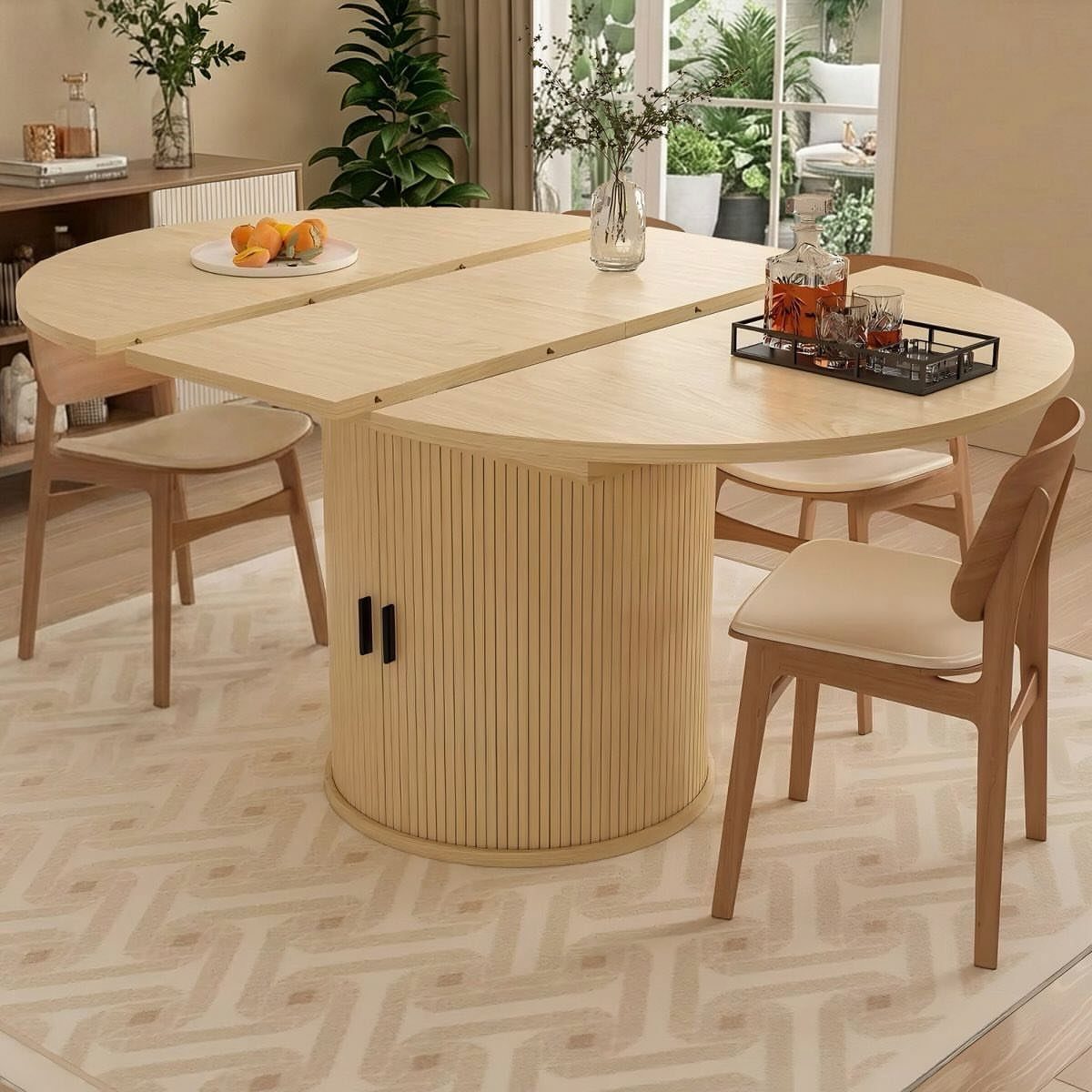
When the table extends, the oval proportions stay balanced, so the ends don’t look stretched.
This works in a dining room or kitchen where you want a table that feels less boxy but still seats multiple people along each side.
The curved edges make it easier to move around in a tight space, and there are no sharp corners to catch on.
Most oval tables extend with a center leaf that keeps the shape symmetrical.
12. Round Leaf Inserts
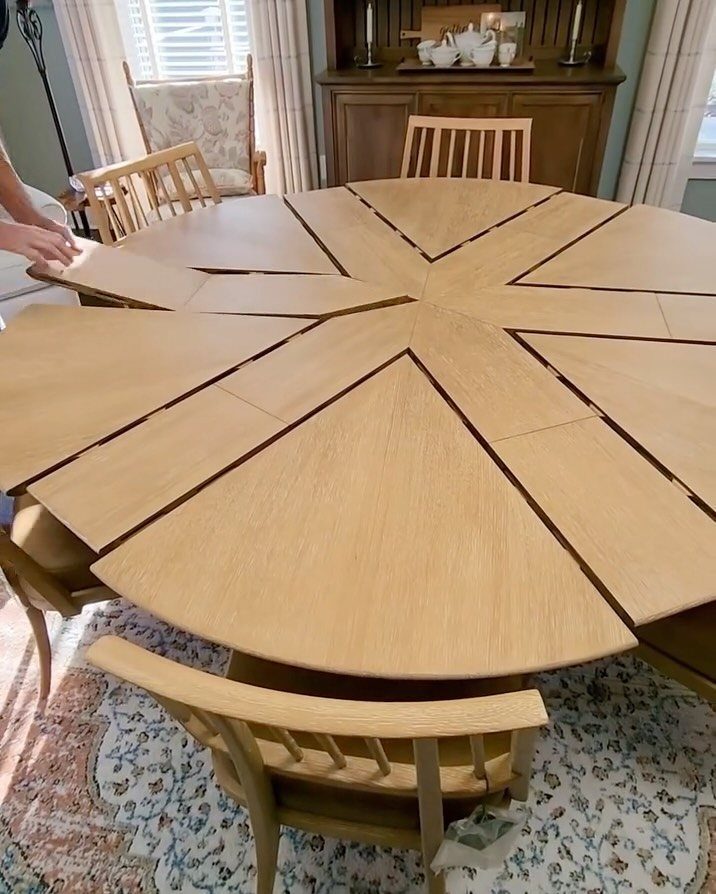
Wedge-shaped inserts fit into a round table to expand the circle into a larger round or an oval, depending on how many pieces you add.
Each wedge slots into place between the table sections, so the surface grows outward from the center.
This lets you adjust the size of a round table without losing the shape entirely. The seams where the wedges meet the table will show, but they’re less obvious on a wood finish with visible grain.
Most round leaf systems let you add one or more wedges to fit the crowd.
13. Sliding-leaf Extension Table
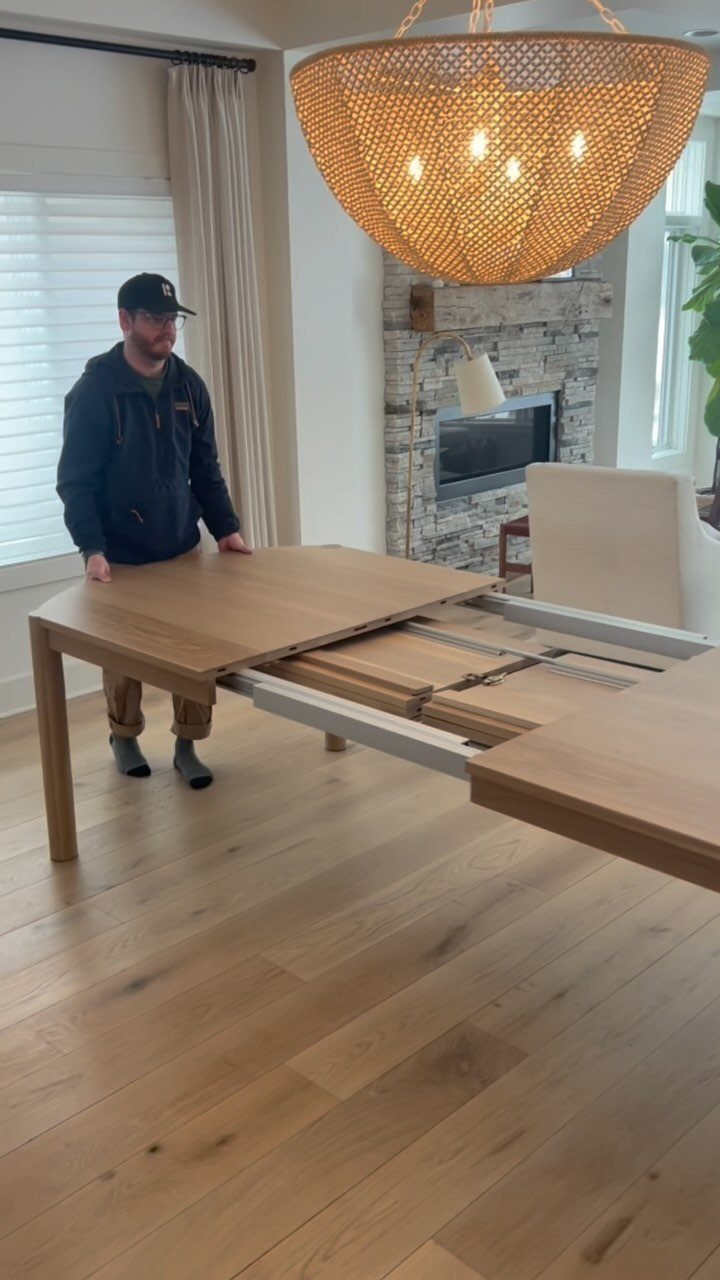
The table is pulled apart to show the center leaf stored inside the frame, ready to lift into place. The mechanism keeps the leaf hidden until you need it, so there’s no separate piece to track down.
This lets you see how the sliding frame works before you buy one. The leaf sits between the 2 halves of the table and locks in once you push the ends back together.
Most sliding-leaf tables add length for 2 more chairs. The track should feel smooth when you pull the table apart, with no catching or wobbling once the leaf is in.
14. Pedestal Table with Sliding Extension
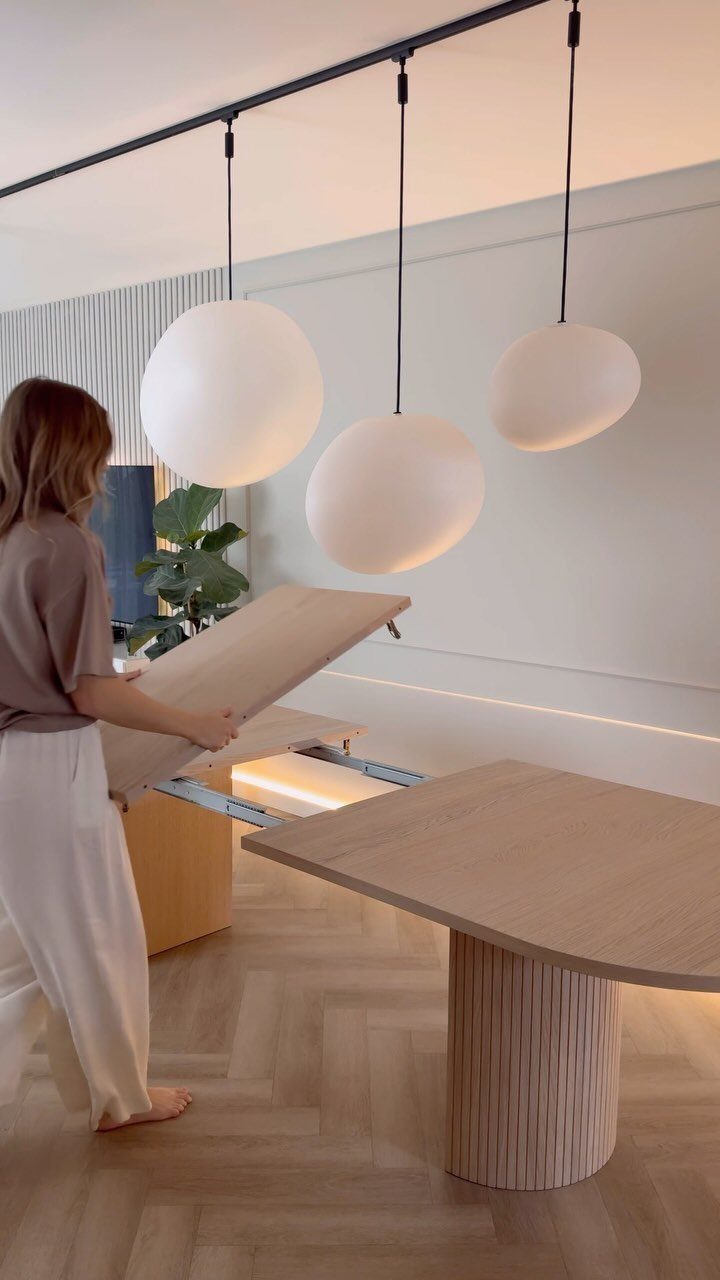
The pedestal stays centered under the table as the top slides apart, so you can fit chairs all the way around without corner legs blocking knee space. The extension leaf lifts out from the center and drops into the gap.
This works when you want the open floor space a pedestal gives but still need room for extra chairs.
Look for a pedestal with a solid connection to the top. A wobbly base when the table is fully extended means the pedestal isn’t wide or heavy enough for the extended length.
15. Round Table with Center Leaf
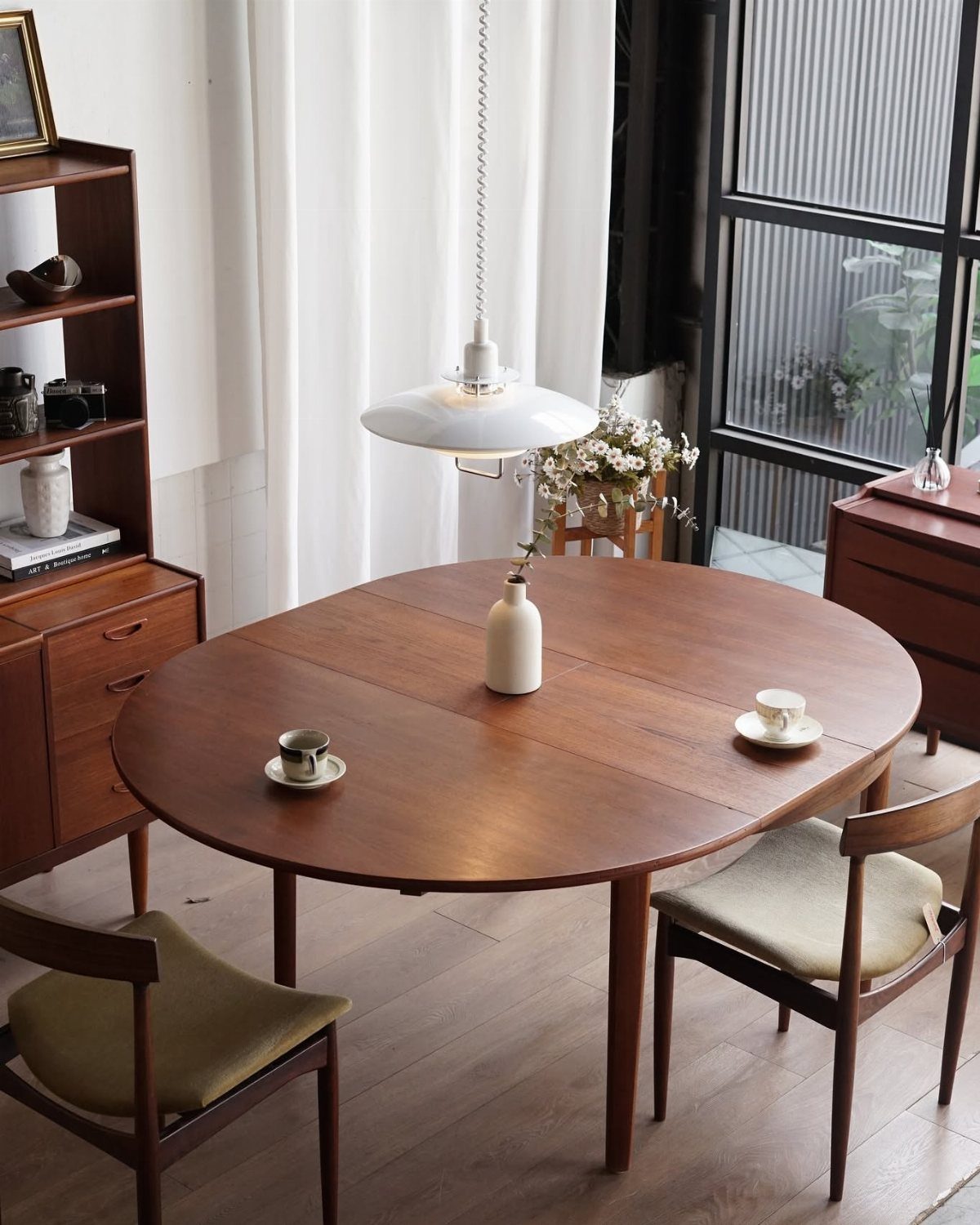
This suits a dining area where you want a round table most of the time but need more surface for a dinner party.
The round shape keeps the table compact against a wall or in a corner when the leaf is out.
16. Light Wood Extendable Table
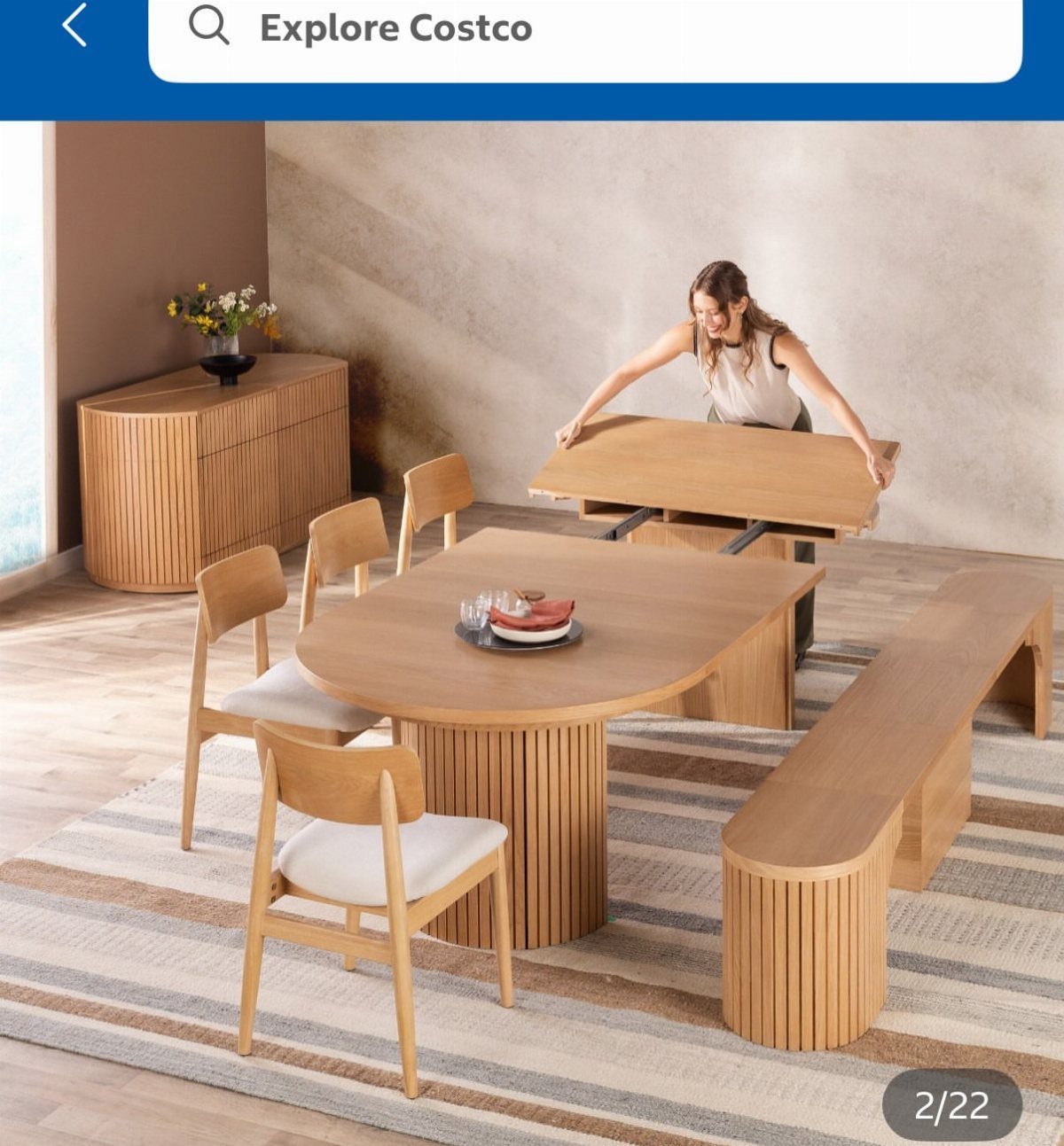
Light wood keeps the table from looking heavy even when fully extended, and the finish shows less wear than a dark stain.
The extension mechanism is usually a removable or self-storing leaf, so the table grows to fit more chairs and collapses back down when you’re done.
The light finish works with most chair styles, so you can mix seating without clashing.
If the wood has a natural or matte finish, scratches and water rings will show less than on a glossy surface.