

Carved wood, brass accents, and patterned textiles layer tradition into a room without needing a full renovation, while warm lighting and colorful cushions shift the mood fast on a rental budget.
If you have blank walls and neutral furniture, start with patterned textiles and wall art to establish color before adding carved pieces or brass accents.
Low floor seating works in dedicated lounging areas where you can give up floor space, but carved furniture and decorative mirrors suit everyday rooms where you need the surface to function.
This list runs from patterned textiles and carved wood furniture through brass accents, wall art, and warm lighting to tassel garlands and fairy-light curtains, with materials and placements pulled from real rooms.
1. Patterned Textiles
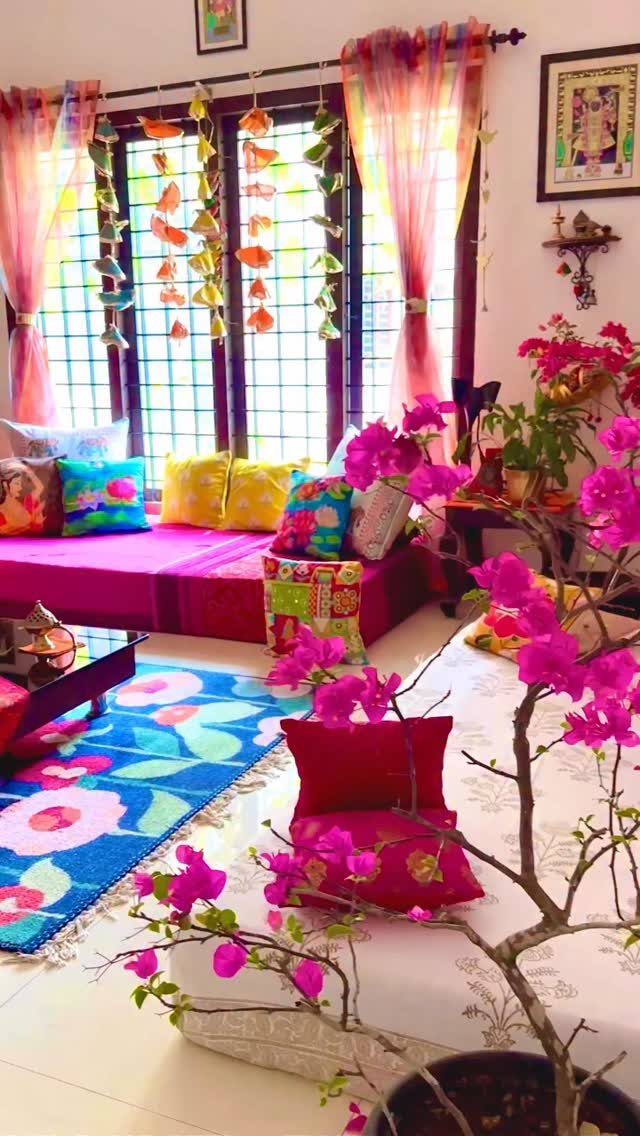
Patterned textiles layer color and detail across a room without needing structural changes. Mix block prints, ikats, and florals in cushion covers, bedspreads, and throws, keeping a loose palette so the patterns complement rather than clash.
Start with one main fabric for a large surface like a bed or sofa, then add smaller pieces in coordinating colors. Silk, cotton, and lightweight blends work well for cushions and drapes, while heavier cottons suit upholstery.
This approach works especially well in rental spaces, where you can shift the look entirely by swapping textiles rather than repainting or replacing furniture.
2. Carved Wood Furniture
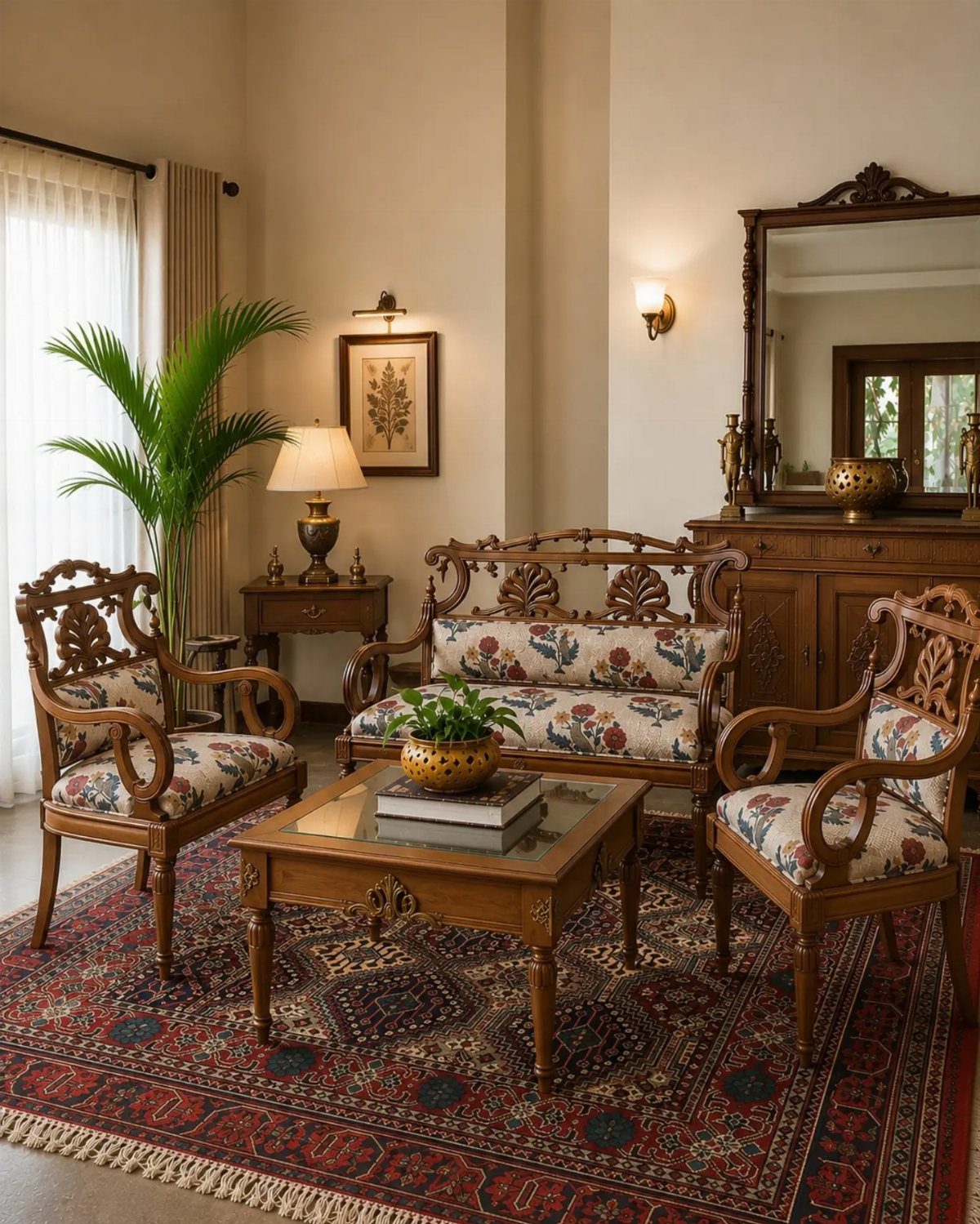
Carved wood furniture anchors a room with traditional detail and weight. Sofas, chairs, and sideboards with hand-carved frames bring pattern and texture into the structure itself, not just the fabric.
Look for pieces with florals, paisleys, or geometric relief carved into the arms, legs, and backs. Teak and sheesham are common choices, though mango wood offers similar warmth at a lower price.
Pair carved frames with simple cushions so the woodwork stays visible. A full set reads formal; one carved piece mixed with plainer furniture balances tradition with everyday comfort.
3. Indoor Plants
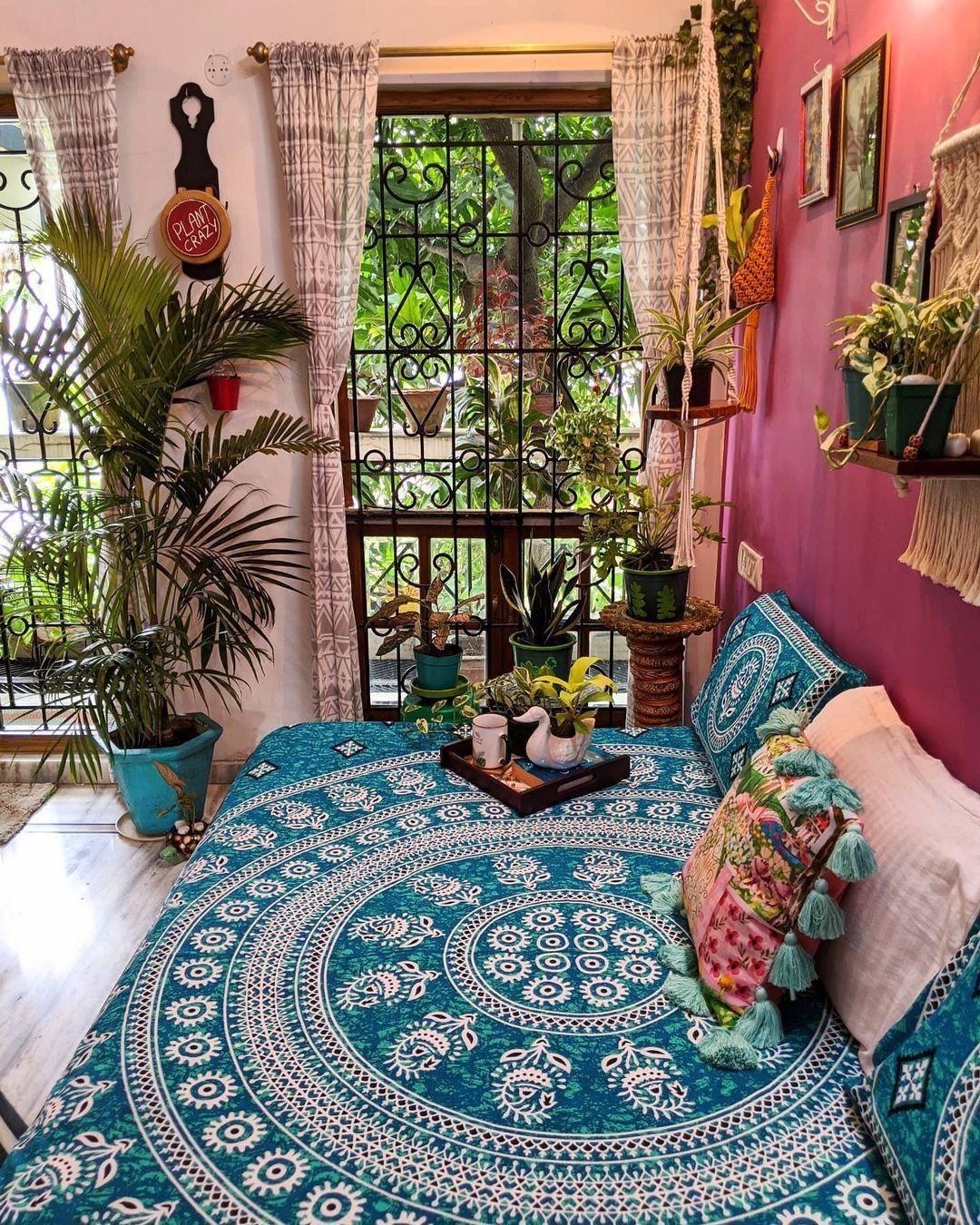
Indoor plants soften patterned rooms and bring a natural accent into spaces filled with color and detail. Palms, pothos, and snake plants add height and greenery without competing with textiles or carvings.
Group plants at different heights using floor stands, wall shelves, and tabletops. Terracotta and brass planters tie into Indian decor materials, while woven baskets keep the look relaxed.
Plants thrive in bright, indirect light near windows. In smaller rooms, vertical arrangements save floor space and still fill the view with green.
4. Indian Wall Art
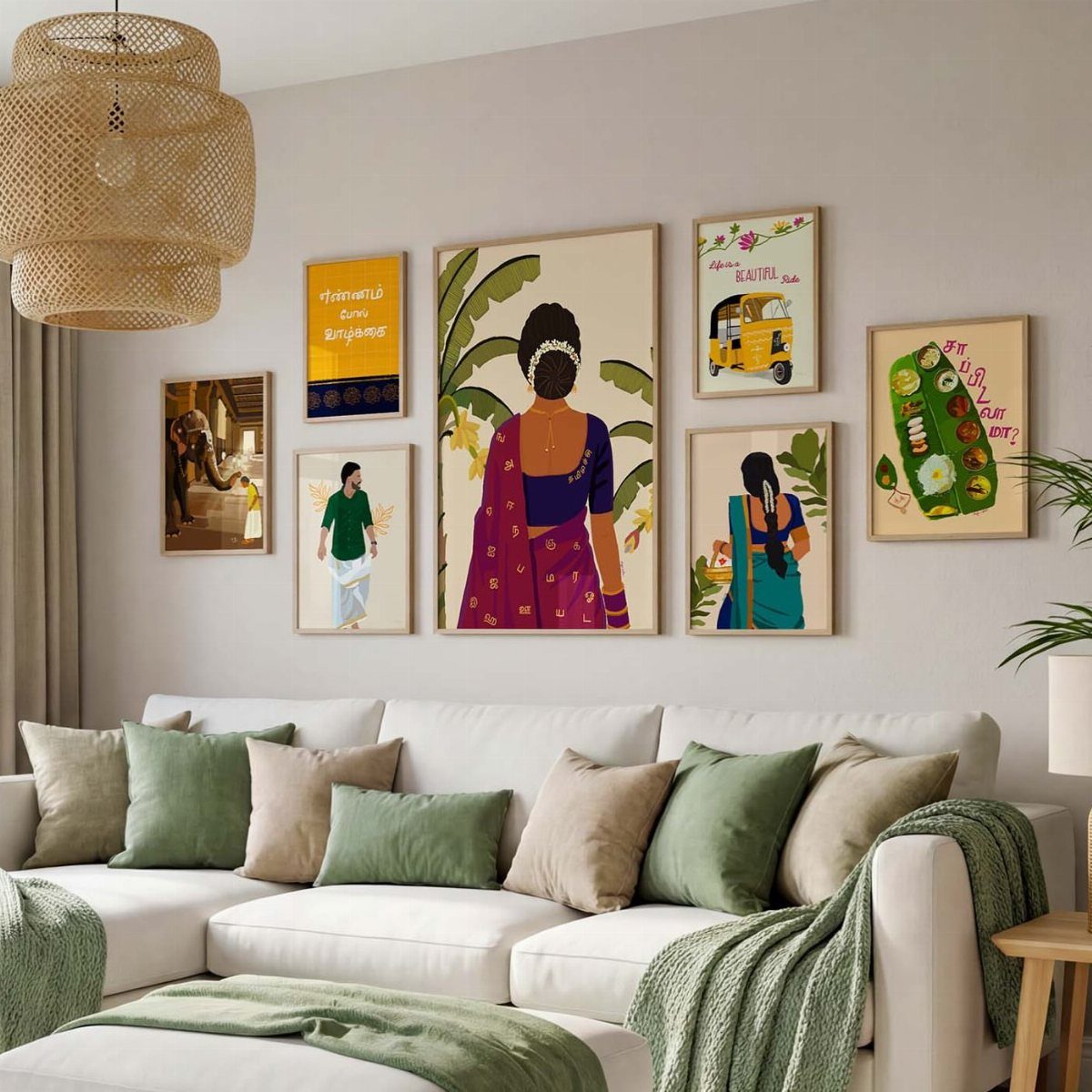
Indian wall art gives a room a cultural anchor and leaves the floor clear. Prints, paintings, and framed textiles featuring traditional motifs, figures in regional dress, or street scenes establish the theme from eye level.
Group pieces in a gallery layout for a collected look, or center one large work over a sofa or bed. Matted prints and slim frames keep the focus on the image rather than heavy borders.
Etsy and local Indian markets carry affordable reproductions of Madhubani, Warli, and miniature paintings. Framing your own textiles, like sari borders or block-printed fabric, gives you custom art at a fraction of gallery prices.
5. Warm Lighting
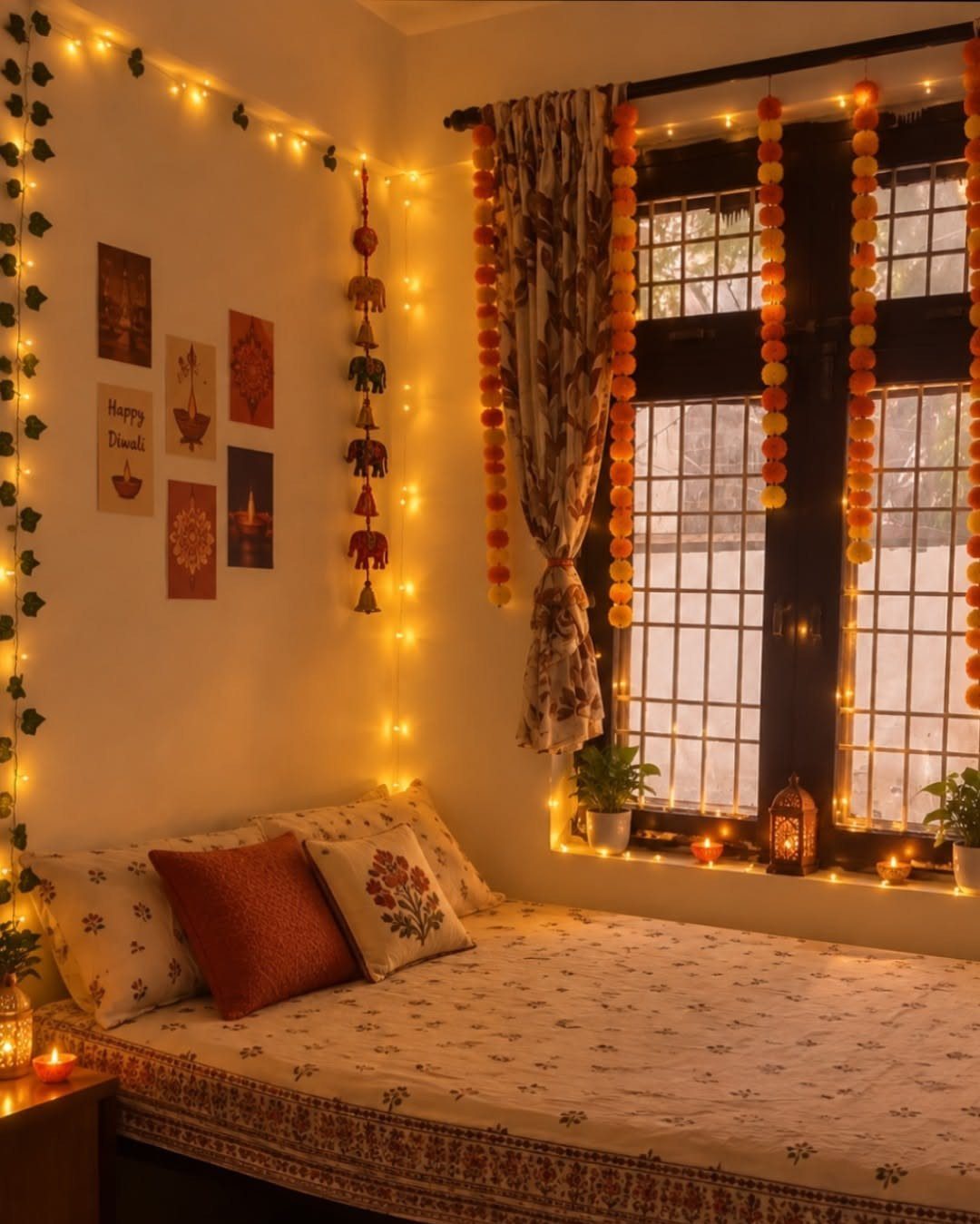
Warm lighting turns bright rooms into cozy spaces after dark. String lights, lanterns, and low-wattage lamps cast a soft glow that highlights textiles and carvings without the harshness of overhead fixtures.
Drape string lights along walls, around windows, or across the headboard of a bed. Brass or pierced metal lanterns add detail while filtering light into patterns.
Warm LED bulbs (2700K) mimic the glow of traditional oil lamps. Battery-operated string lights work in rentals where you can’t rewire, and timers let you set the mood without hunting for switches.
6. Colorful Cushions
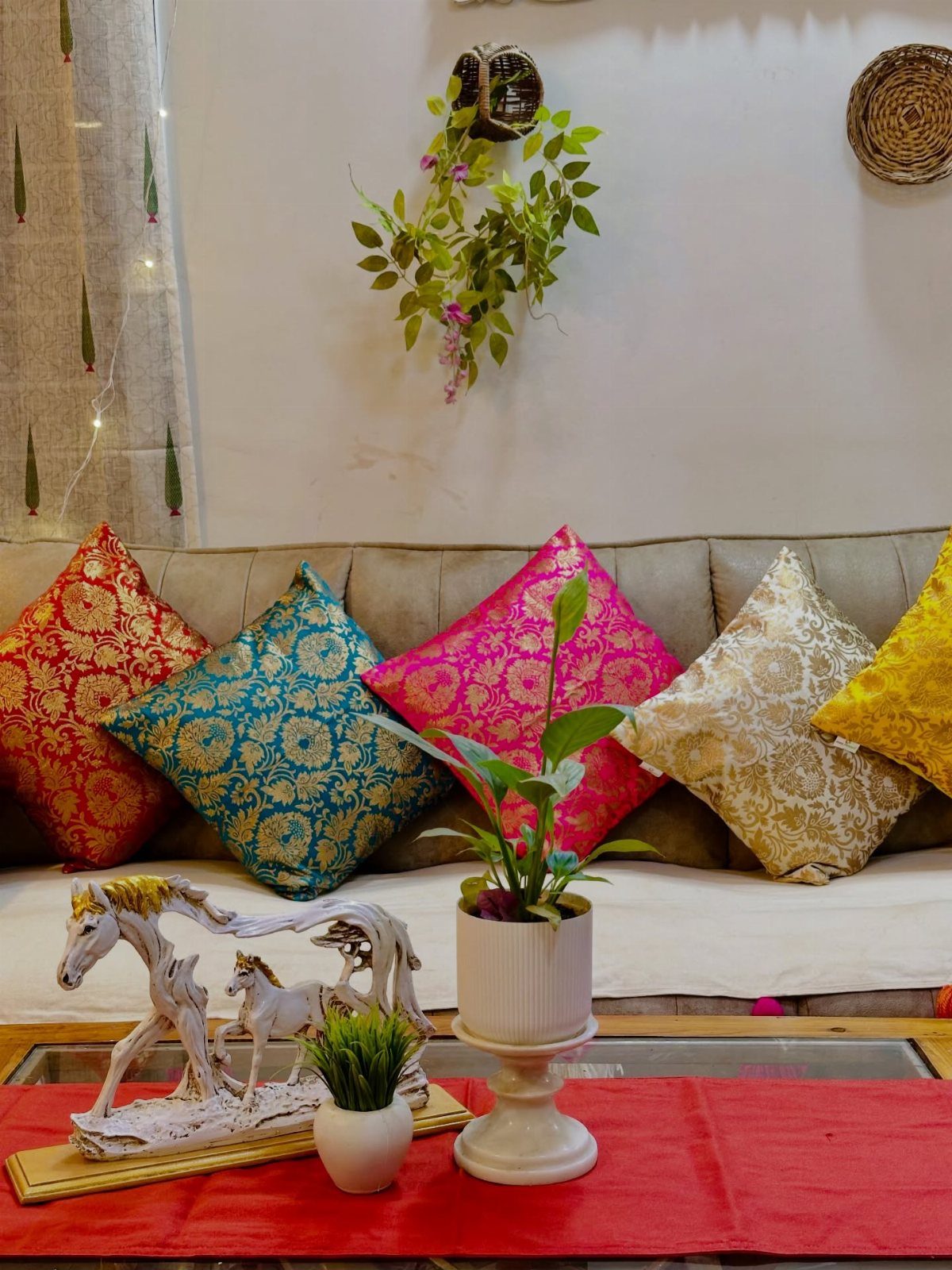
Colorful cushions shift the palette of a neutral sofa or bed in minutes. Silk, brocade, and embroidered cotton covers in jewel tones add both color and texture, and you can swap them seasonally or for a different mood.
Mix sizes and shapes: square Euro pillows behind smaller rectangular or round bolsters. Keep colors within a related range, like reds and oranges or blues and greens, so the mix feels deliberate rather than random.
Covers with tassels, pom-poms, or mirror work add extra detail.
7. Brass Accents
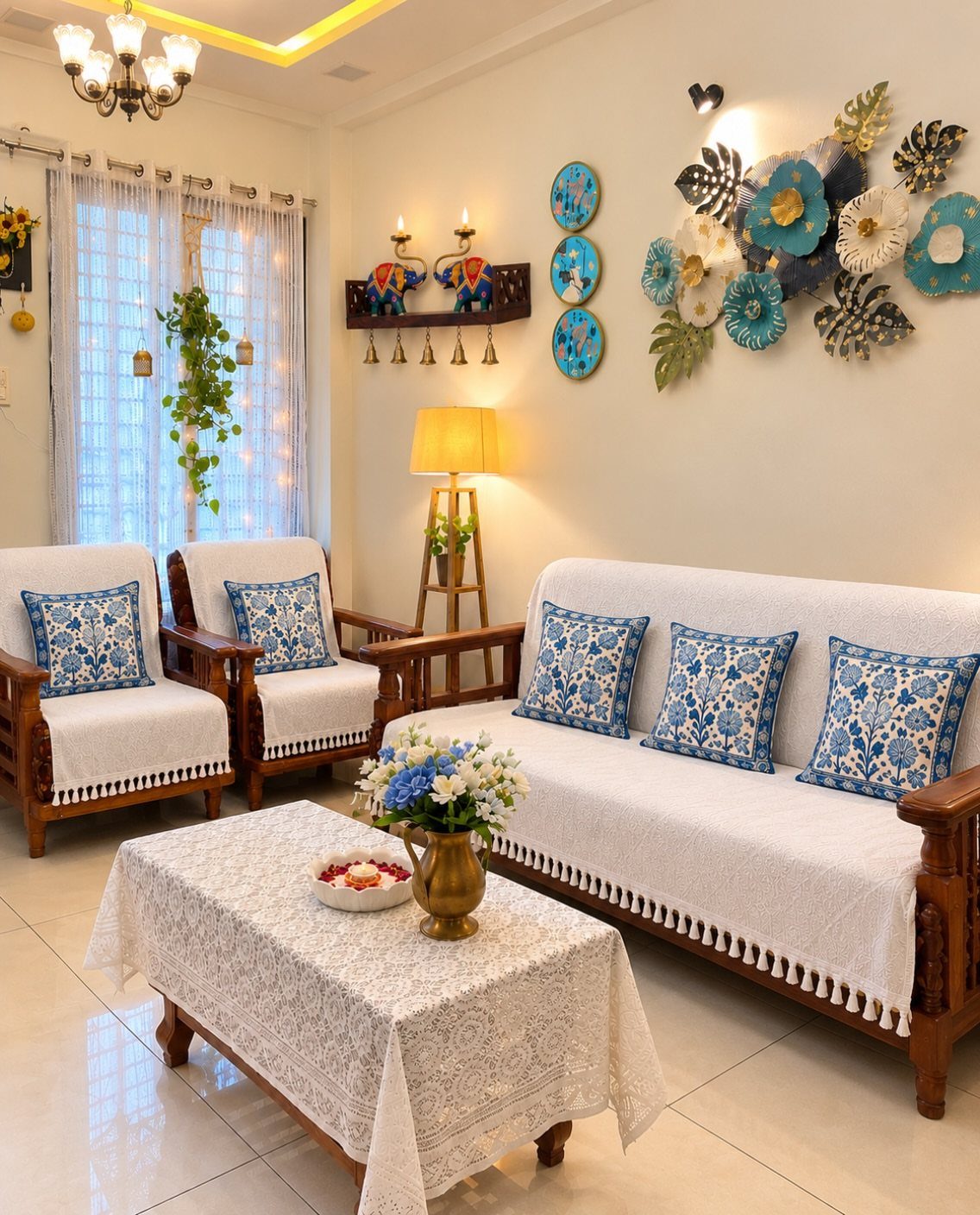
Brass vases, candleholders, and wall hangings bring warmth to a room filled with cooler whites and blues. The metal catches light without the glare of chrome, and small pieces layer in easily.
Start with one or two functional pieces like a lamp or a tray, then add decorative objects. Unlacquered brass develops a patina over time, which suits traditional decor; polished brass stays bright and reads more formal.
Brass works especially well in rentals, where you can add metal accents without changing fixtures.
8. Colorful Rugs
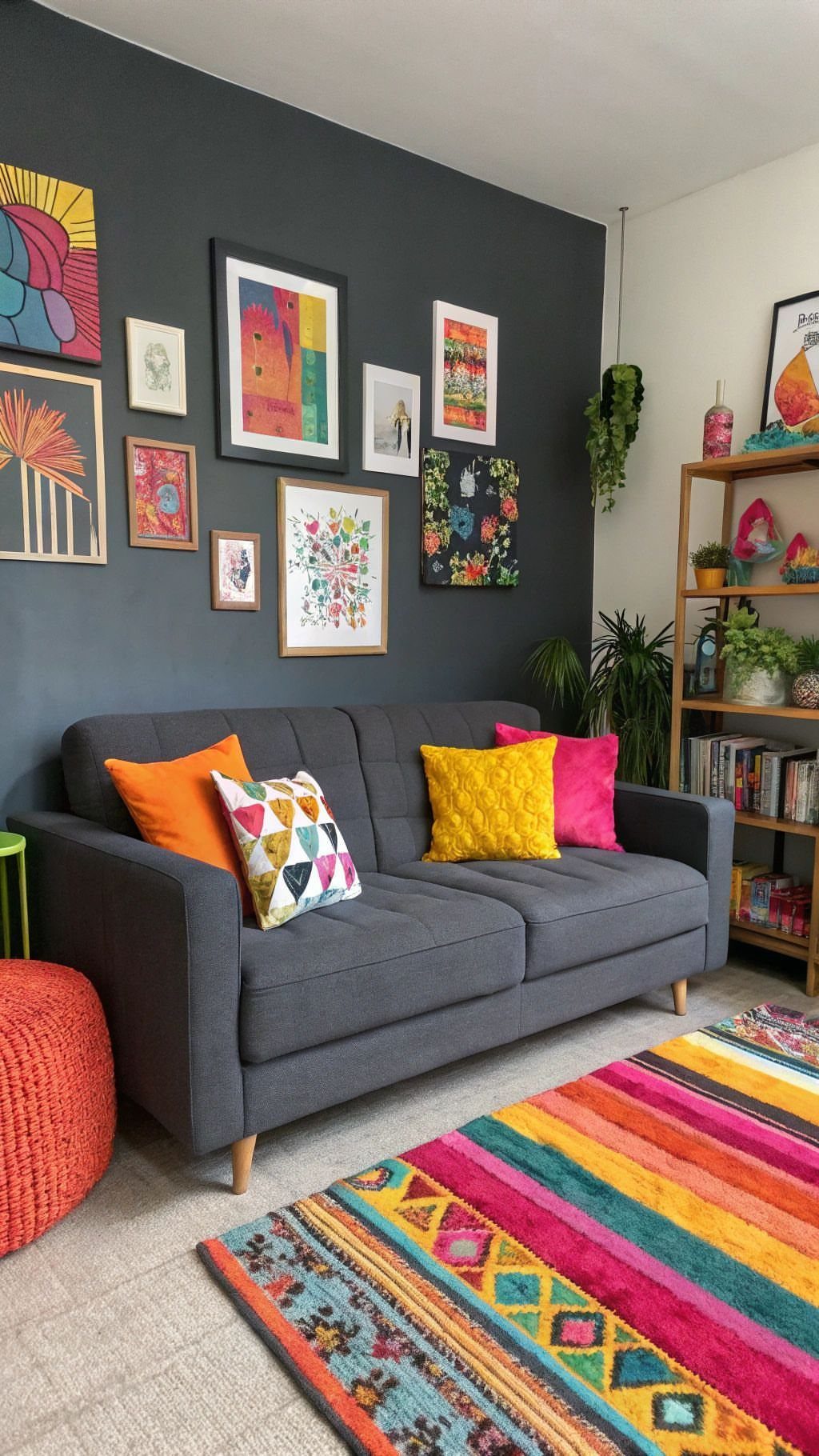
A patterned or striped rug pulls colors from cushions and wall art down to the floor. Bold stripes, florals, or geometric designs fill the center of a room with color and define the seating area.
Size the rug so the front legs of sofas and chairs sit on it, or let it run under the full footprint of smaller furniture. Cotton dhurries and flat-weave kilims stay budget-friendly and work in high-traffic areas.
Rugs with multiple colors give you flexibility to shift pillows and throws without starting over.
9. Earthy Color Palette
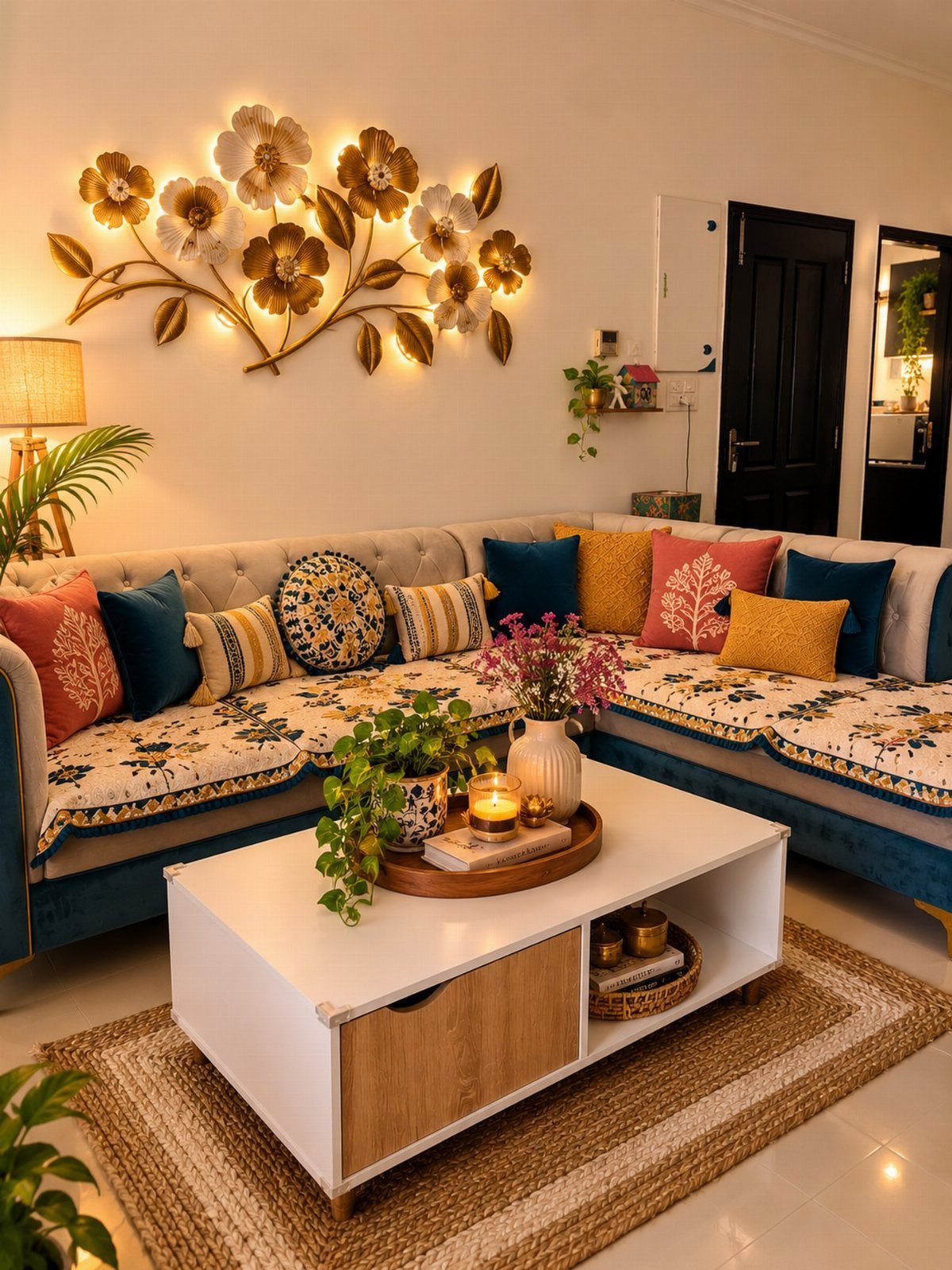
Terracotta, ochre, deep blue, and natural wood tones build a room that feels grounded rather than stark. This palette suits spaces that mix traditional textiles and carvings with everyday furniture.
Use the warmest tones on larger surfaces like walls or sofas, then layer in brighter accents through cushions and art. Jute rugs and woven baskets keep the natural feel consistent.
This approach works in both small and large rooms, and the colors photograph well in low light.
10. Low Floor Seating
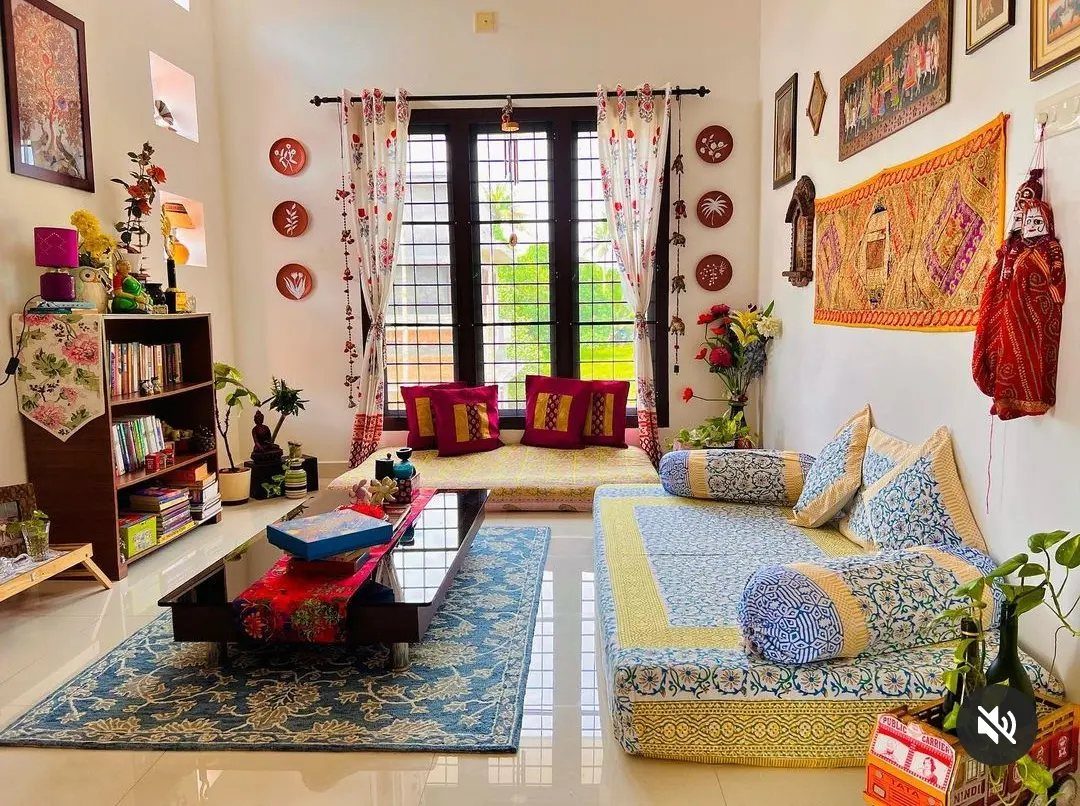
Low seating arranges cushions, bolsters, and thin mattresses on the floor for a relaxed gathering space. It suits rooms where you want flexibility and a traditional look without buying full furniture sets.
Layer a base rug, add floor cushions or a low mattress, then pile on smaller cushions for back support. A low coffee table keeps everything within reach.
This setup works best in spaces dedicated to lounging, since it takes up floor area and does not convert easily for other uses.
11. Decorative Mirrors
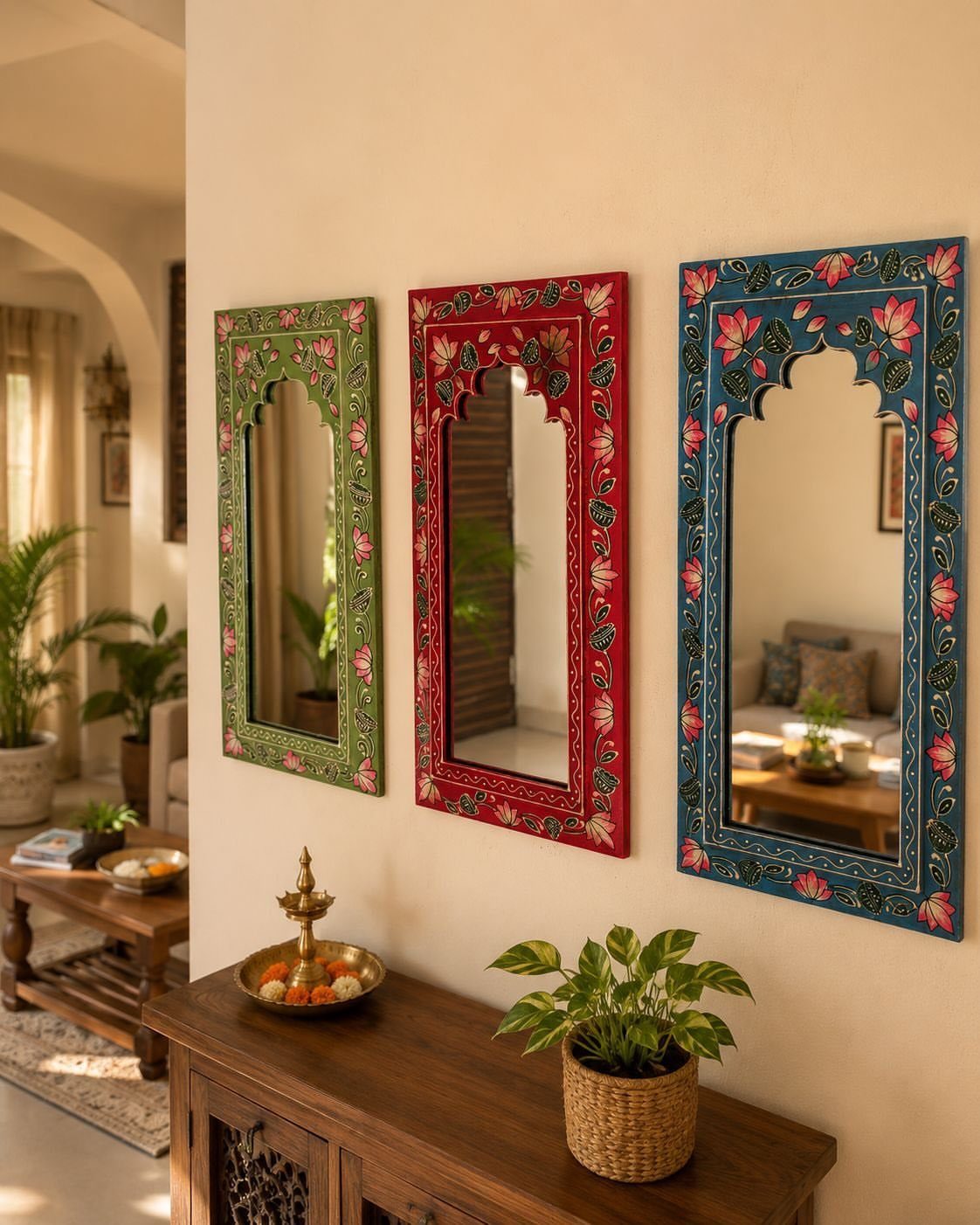
Ornate mirrors with carved or painted frames act as wall art that also reflects light. Frames in bright colors, gilded finishes, or detailed relief add pattern without needing a full gallery wall.
Hang mirrors individually or group them in odd numbers. Placing them opposite windows bounces natural light deeper into the room.
Mirrors with traditional motifs tie into carved furniture and patterned textiles, and they work in narrow entryways where full furniture will not fit.
12. Warm Bedroom Decor
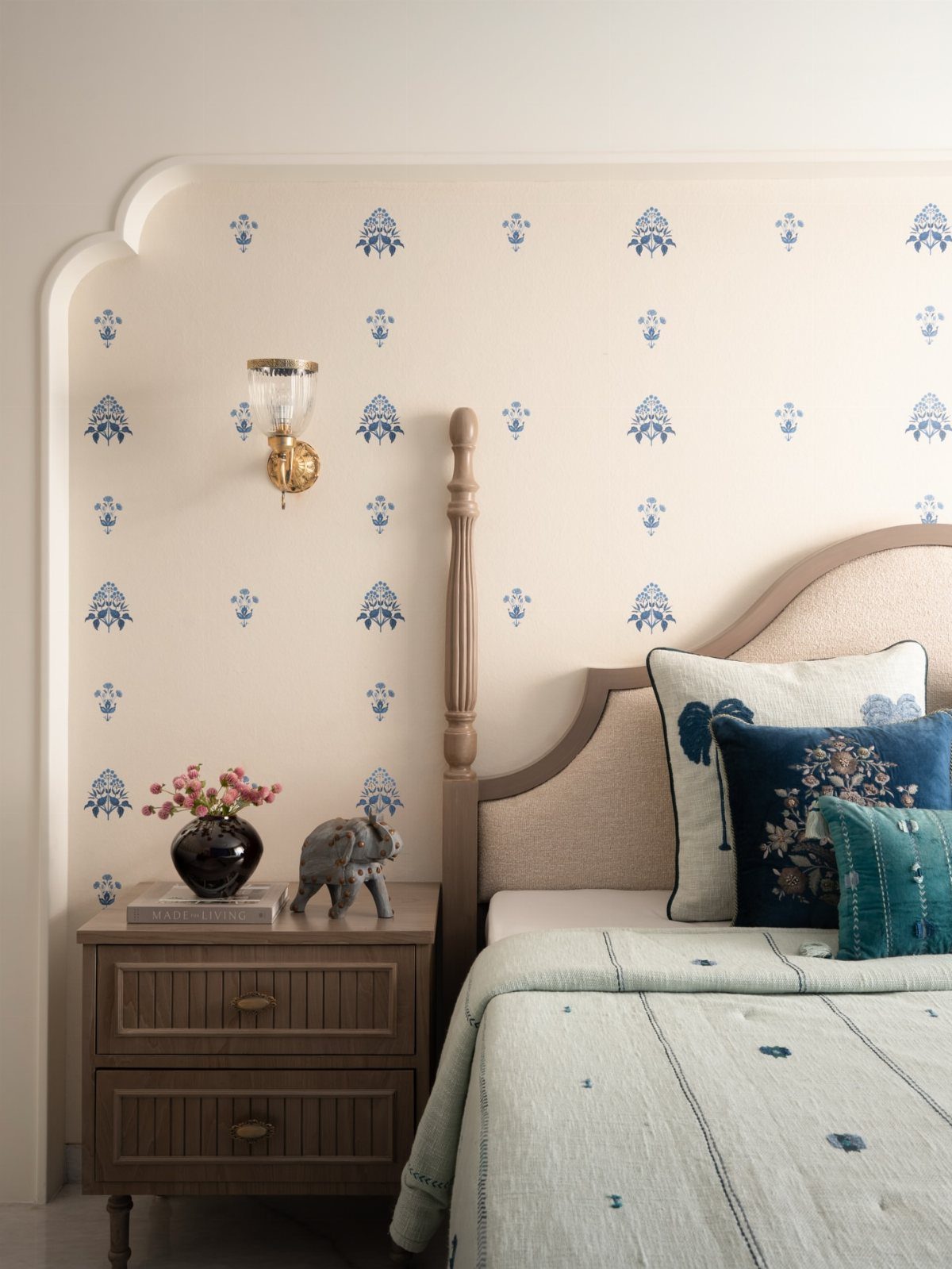
A bedroom with layered textiles, warm lighting, and a few traditional details reads as intentionally calm rather than sparse. Patterned bedding, wooden furniture, and soft lighting build the look.
Start with a quilt or duvet in blue, terracotta, or mustard, then add cushions in coordinating prints. A brass or ceramic lamp on the nightstand keeps the lighting low and warm.
Wallpaper or a painted accent wall behind the bed adds color without cluttering surfaces, which suits smaller bedrooms where floor space is tight.
13. Decorative Wall Hangings
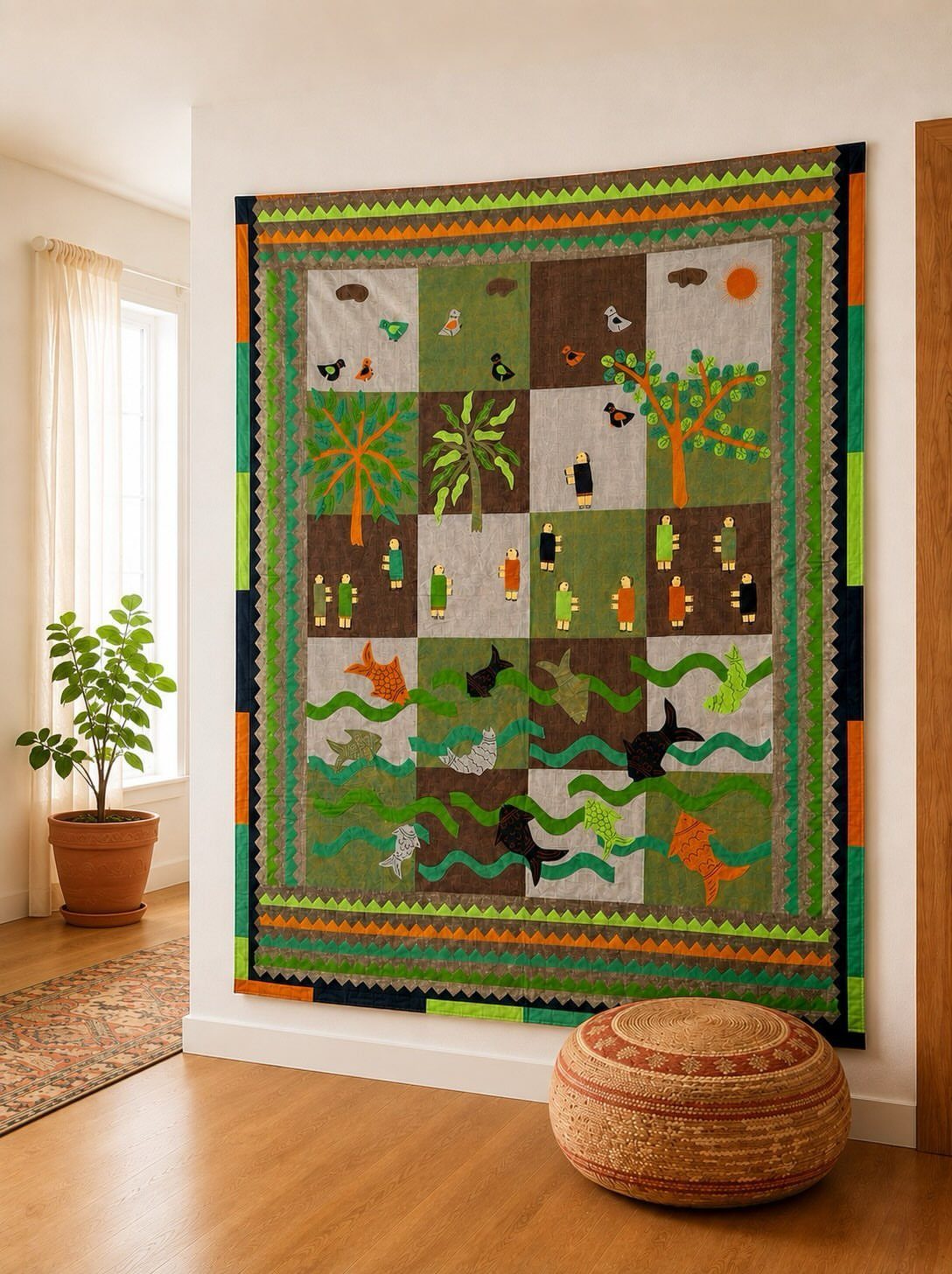
Fabric wall hangings bring color and handmade texture into a space without needing frames or hardware beyond a rod or a few nails. Block-printed textiles, embroidered panels, and folk-art pieces work equally well, and you can rotate them seasonally.
Hang large pieces alone as a statement or group smaller ones at varying heights. A dowel threaded through a sewn pocket or sleeve keeps fabric taut and makes hanging simple.
Textiles add warmth to rooms with hard surfaces and fill blank walls in rentals where paint is off-limits.
14. Carved Wooden Details
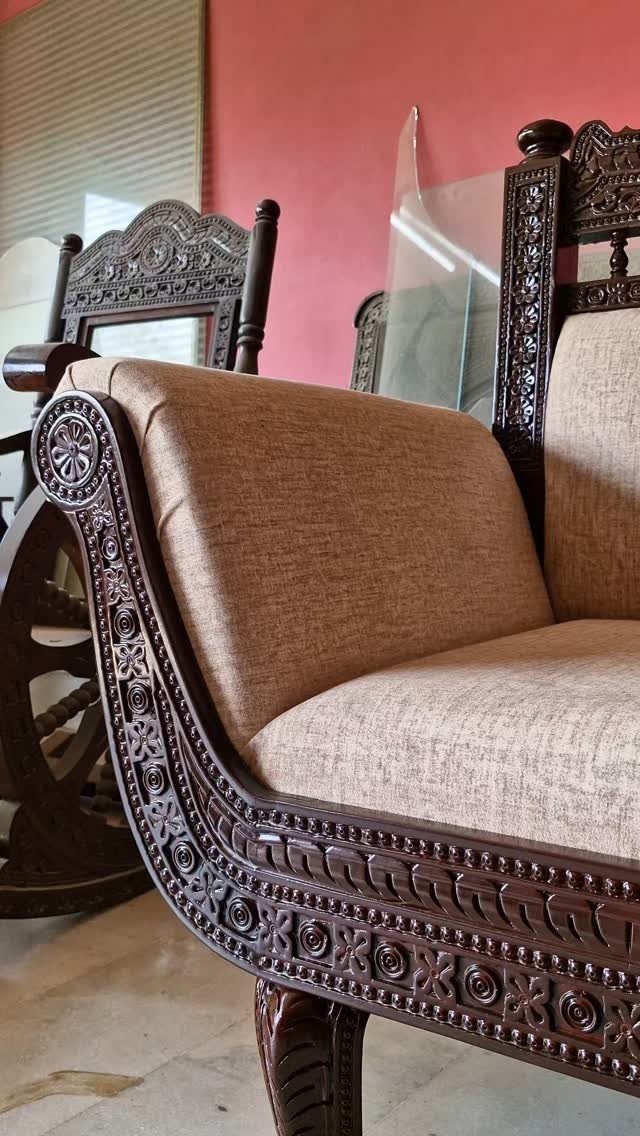
Carved detail on furniture frames adds pattern and dimension where plain wood would disappear. Arms, legs, and backs with relief carving in florals or geometric motifs catch light and give a room weight.
Teak holds detail well and develops a deeper tone over time. Pair carved pieces with solid-colored upholstery so the woodwork stays the focus rather than competing with patterned fabric.
One carved sofa or chair balances a room filled with textiles; a full set of carved furniture reads formal and suits larger spaces.
15. Traditional Indian Wall Decor
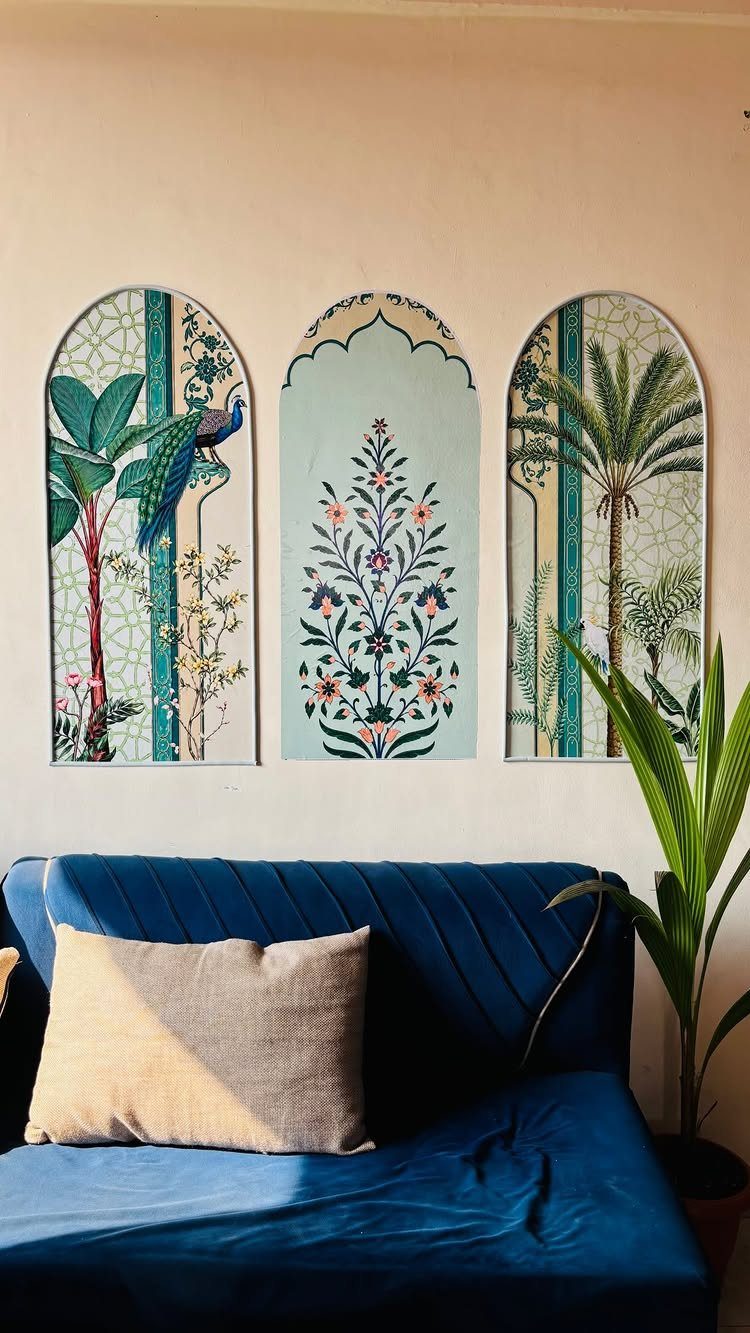
Arched panels, carved plaques, and framed textiles arranged together create a focal wall without needing a single large piece. Group items by theme or color rather than matching frames, and leave space between pieces so each one reads clearly.
Panels with traditional motifs work above sofas, beds, or console tables. Brass, wood, and painted panels mix well as long as the scale stays consistent.
This approach suits renters, since you can rearrange or remove pieces without patching walls, and it fills vertical space in rooms with low furniture.
16. Floral Textiles
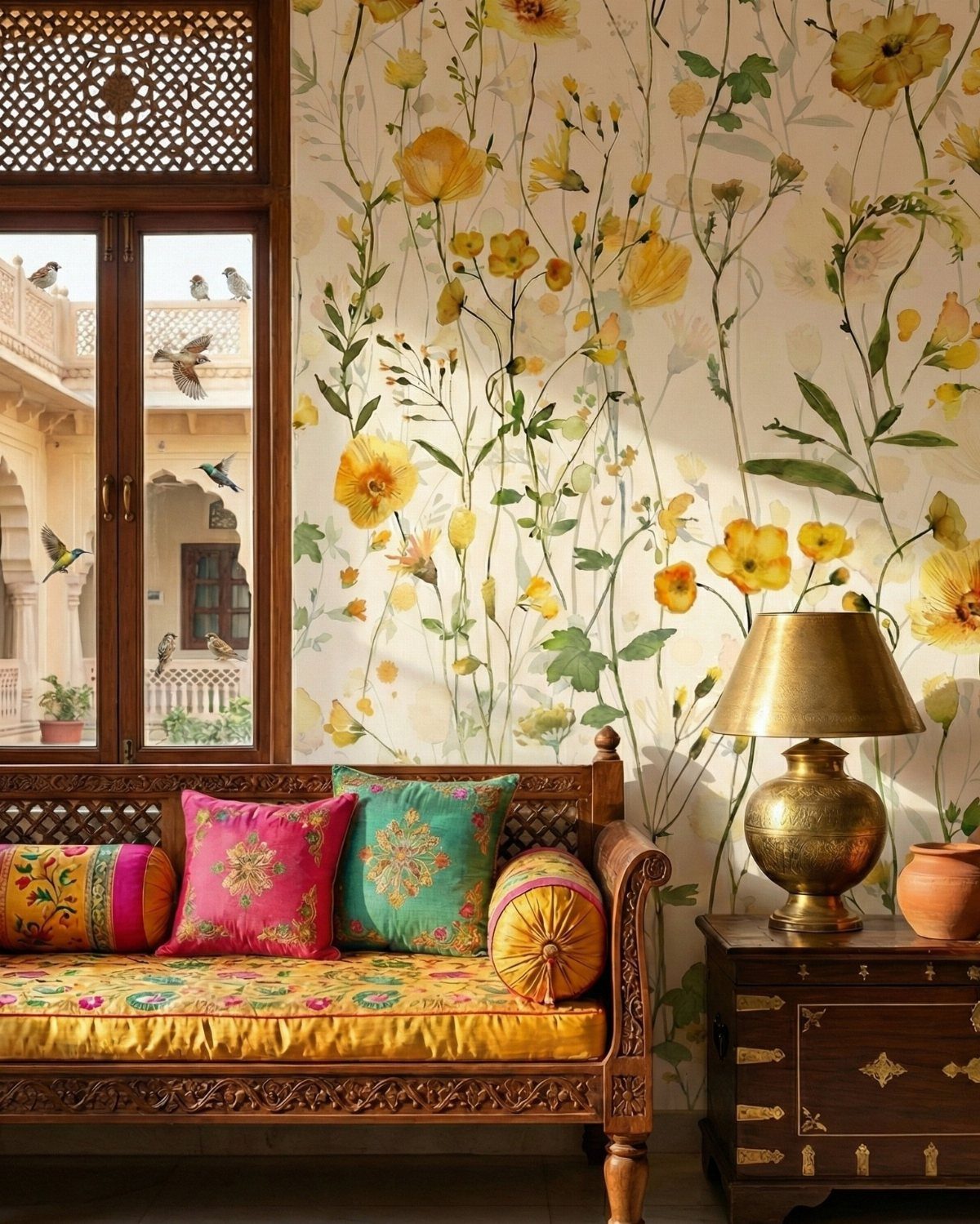
Floral prints layer color and softness into seating and sleeping areas. Use them on cushion covers, bedspreads, and curtains, keeping the base furniture neutral so the pattern does the work.
Large-scale florals suit sofas and beds; smaller prints work on accent cushions and bolsters. Cotton and linen hold up to washing, while silk and brocade add sheen for pieces that see less handling.
Coordinate floral textiles with your wall color. Yellow, blue, and pink prints stand out against white or cream walls, while deeper tones suit painted backgrounds.
17. Tassel Garlands

Tassel garlands loop across walls, windows, or headboards with color that moves. String them where you want a playful accent without committing to paint or wallpaper.
Buy premade garlands or make your own by knotting yarn tassels onto twine. Spacing the tassels close enough to feel full but far enough apart that each one stays visible gives the strand weight without crowding.
Garlands work especially well in bedrooms and entryways, where they add warmth above eye level. Swap colors seasonally or leave one up year-round.
18. Decorative Plates
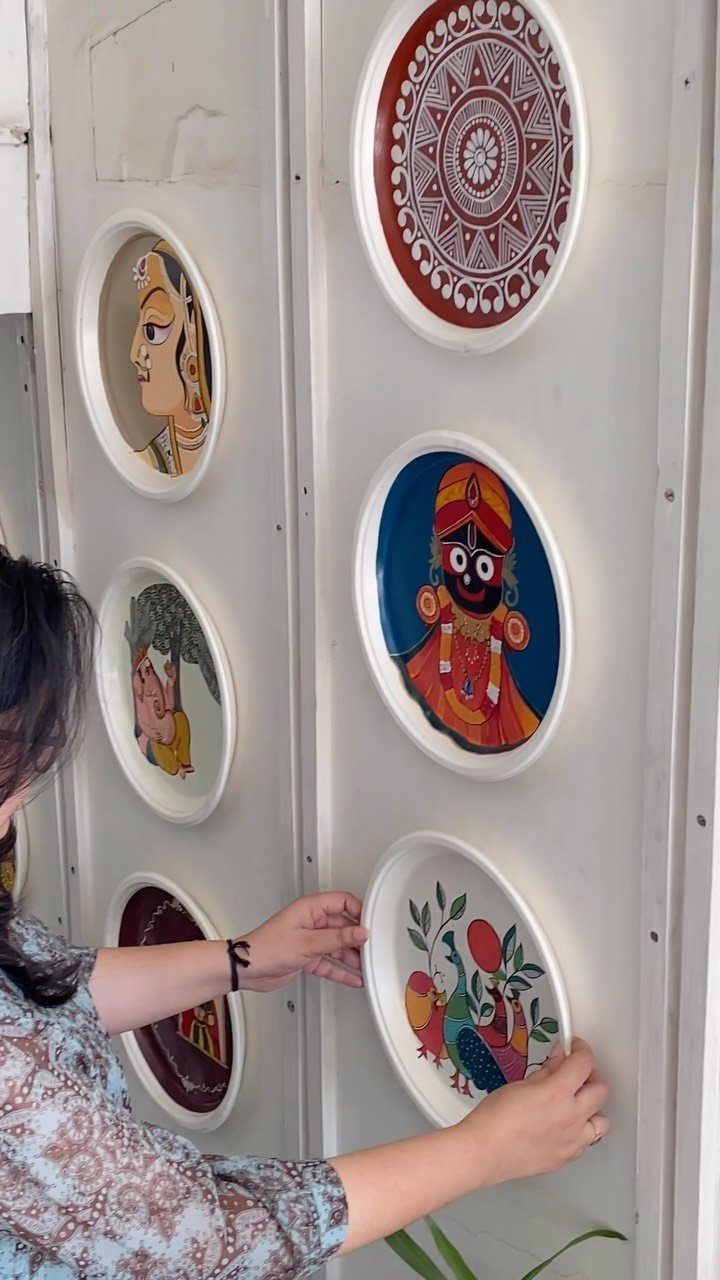
Decorative plates arranged on a wall function as low-relief art. Painted ceramics with traditional patterns, regional scenes, or bold colors fill a wall grid without heavy frames.
Hang plates using adhesive disc hangers that stick to the back, or use plate hangers with spring clips. Arrange them in a cluster, keeping odd numbers and varied sizes for a collected look rather than a perfect grid.
Plates suit narrow walls, entryways, and dining areas. They add color at a lower cost than framed prints, and you can rearrange them without new holes.
19. Patterned Curtains
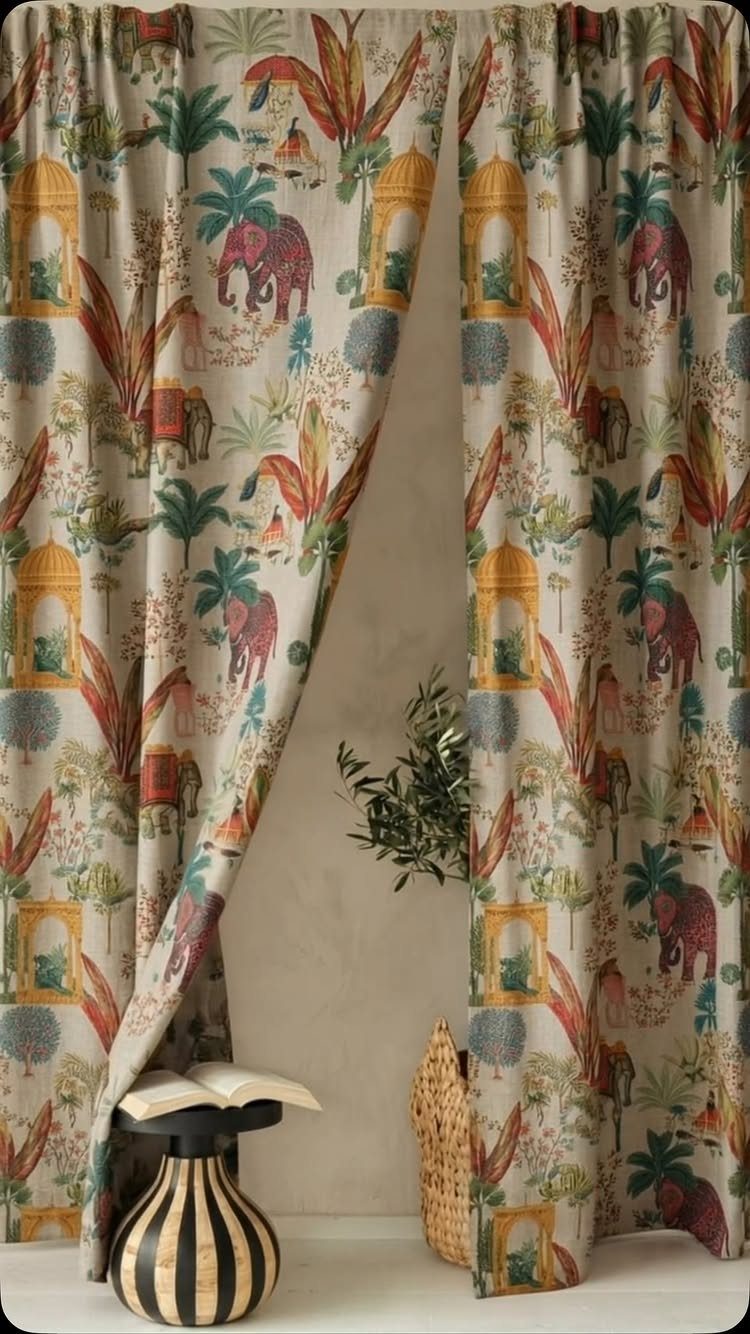
Patterned curtains carry color and motif across the width of a window, softening the light and framing the room’s palette. Prints featuring elephants, florals, or architectural details give you pattern without covering every surface.
Cotton and linen blends hold up to washing and drape well without needing lining. If the curtains will close regularly, make sure the rings or grommets slide smoothly on the rod.
Pair patterned curtains with solid walls so the print reads clearly. For renters, curtains add color without touching the walls, and you can swap them when the mood shifts.
20. Wooden Shelves
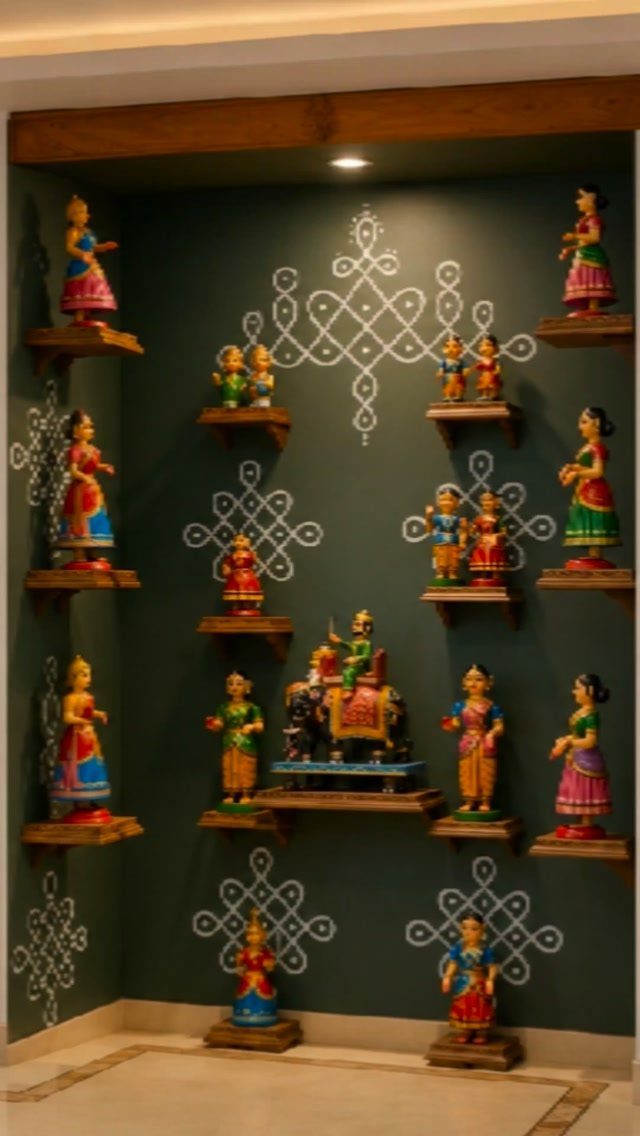
Floating shelves let you arrange small objects at eye level and leave the floor clear. Use them to hold plants, books, or decorative pieces that would get lost on a crowded surface.
Install shelves at varying heights rather than a straight line; the staggered layout feels less rigid and gives each object its own space. Dark wood stands out against painted walls, while lighter finishes blend in.
Keep the display edited. A few well-chosen pieces read better than a packed shelf, and you can rotate items seasonally without buying new furniture.
21. Handmade Wall Decor

Handmade pieces carry texture and color that factory production cannot match. Paper, fabric, and painted wood pieces shaped into figures, signs, or hangings add personality to blank walls.
Look for handmade decor at local markets, craft fairs, or online shops that support artisans. Pieces with uneven edges, visible stitching, or hand-painted details show the process, which suits rooms where you want warmth over polish.
Hang handmade pieces near entryways or above side tables, where you pass close enough to notice the detail. They pair well with plants and other natural elements.
22. Colorful Wall Decals
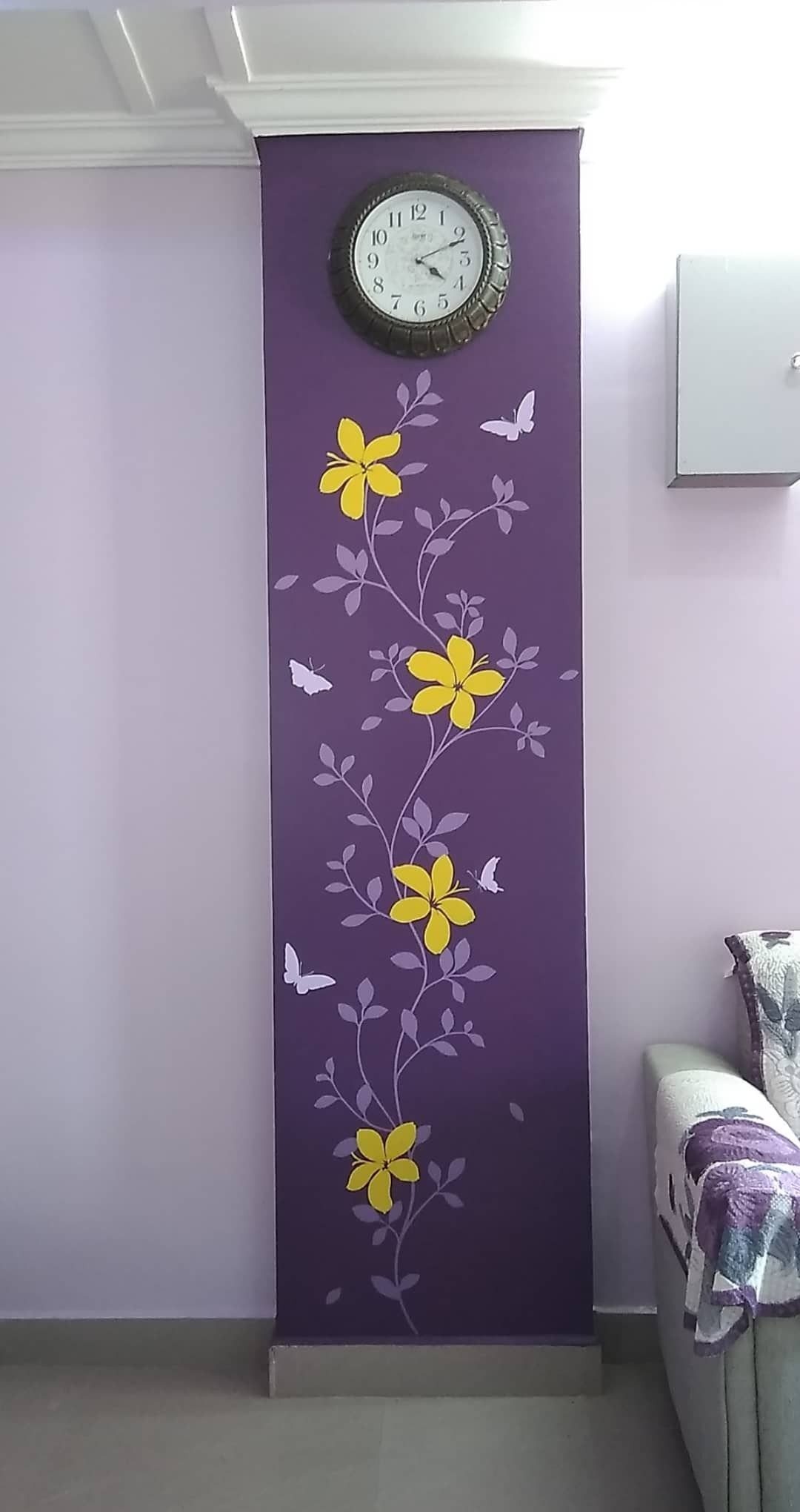
Wall decals in floral, bird, or butterfly motifs add color to painted walls without committing to wallpaper or stenciling. Peel-and-stick versions go up fast and come off clean, which makes them ideal for renters.
Place decals in corners, along edges, or clustered in one area rather than scattering them evenly. Grouping them gives the design weight and keeps it from looking tentative.
Decals work best on smooth, matte-painted walls.
They lift from textured surfaces, and glossy paint can interfere with adhesion. If you are painting first, let the walls cure before applying decals.
23. Fresh Marigolds

Fresh marigolds strung into garlands bring color and scent to doorways, windows, or wall hooks. The bright orange and yellow petals stand out against painted walls and wooden trim, and they suit both everyday styling and celebrations.
String premade garlands from local florists or Indian grocery stores.
They last a few days in cool, indirect light. For longer display, switch to faux marigold garlands in silk or foam, which hold their color indefinitely.
Drape garlands in loose swags rather than pulling them taut, so the flowers stay full and visible. Real marigolds wilt quickly in heat, so keep them out of direct sun.
24. Diya on Dresser
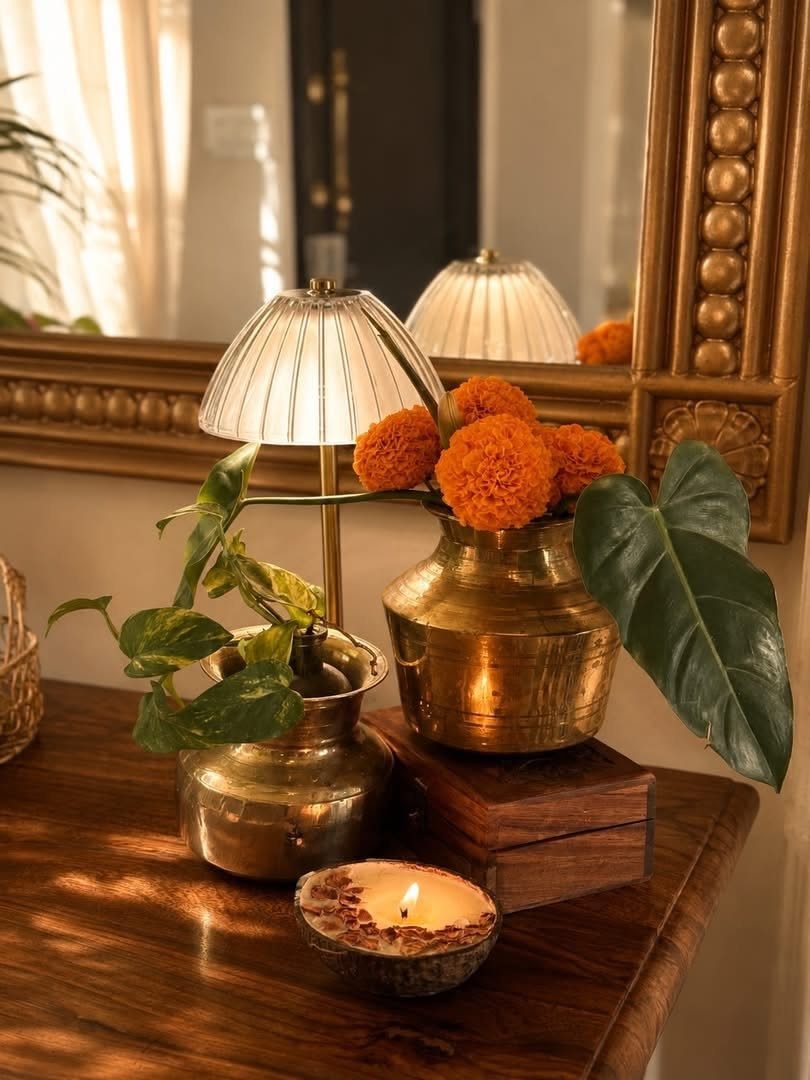
A lit diya on a dresser or side table adds a small, warm glow that suits evening routines. The low flame catches brass and mirrors nearby, and the simple clay form fits traditional and contemporary rooms alike.
Fill the diya with oil and a cotton wick, or use a tea light insert if open flame is not allowed. Place it on a small tray or plate to catch drips.
Diyas work best on stable surfaces away from curtains and paper. Pair them with flowers or brass pieces for a styled vignette that feels intentional rather than accidental.
25. Carved Wooden Elephant
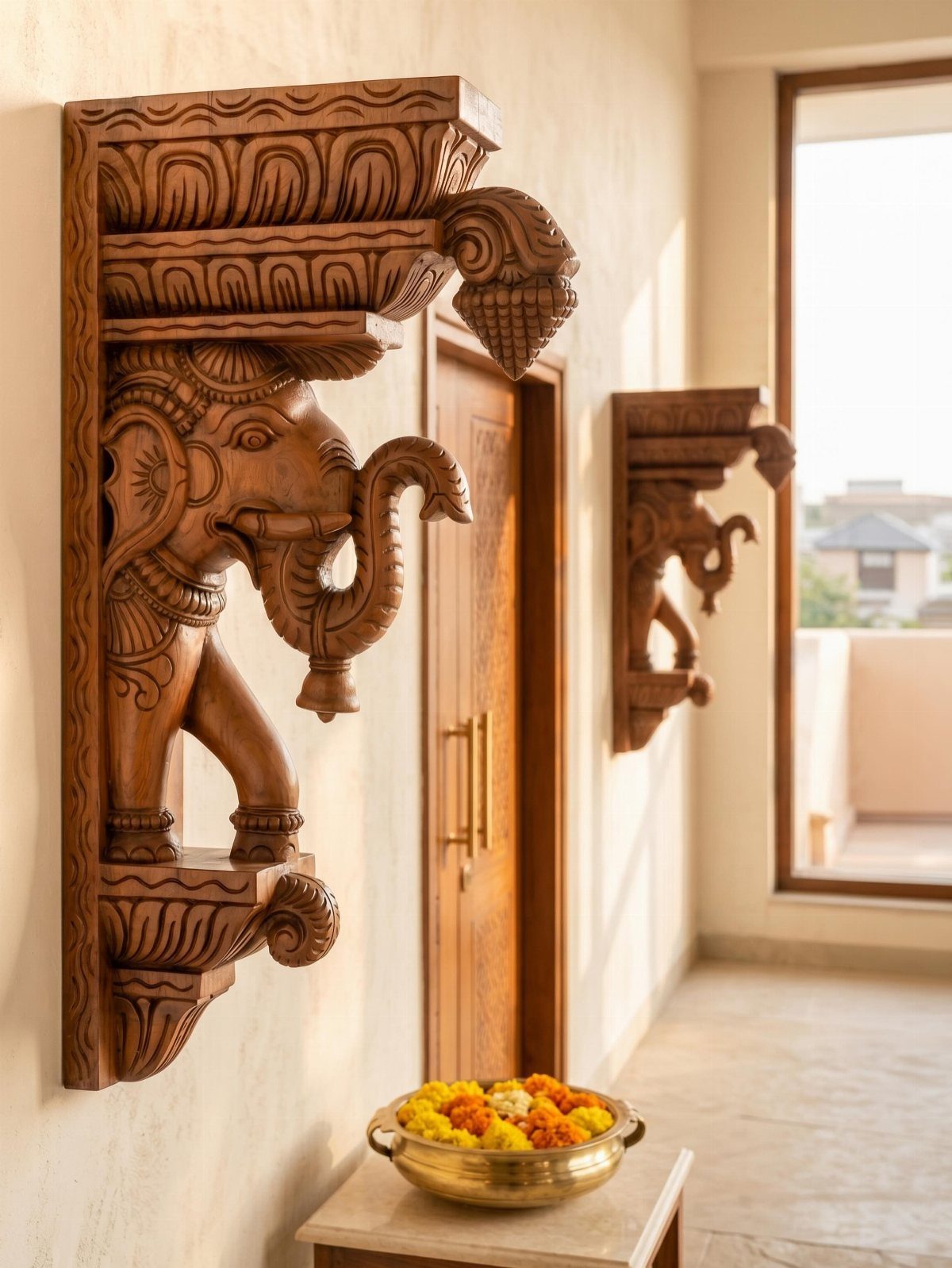
Carved wooden elephants mounted on the wall add sculptural detail at eye level. Use them as decorative brackets that hold a small shelf, or hang them on their own as figures that catch light and shadow.
Teak and sheesham hold fine carving and age well. Pair carved elephants with a simple wall color so the detail stays visible, and place them near doorways or entryways where you pass close enough to notice the work.
One elephant reads as an accent; a pair flanking a shelf or window feels more formal and suits rooms with other carved furniture.
26. Peacock Relief Art
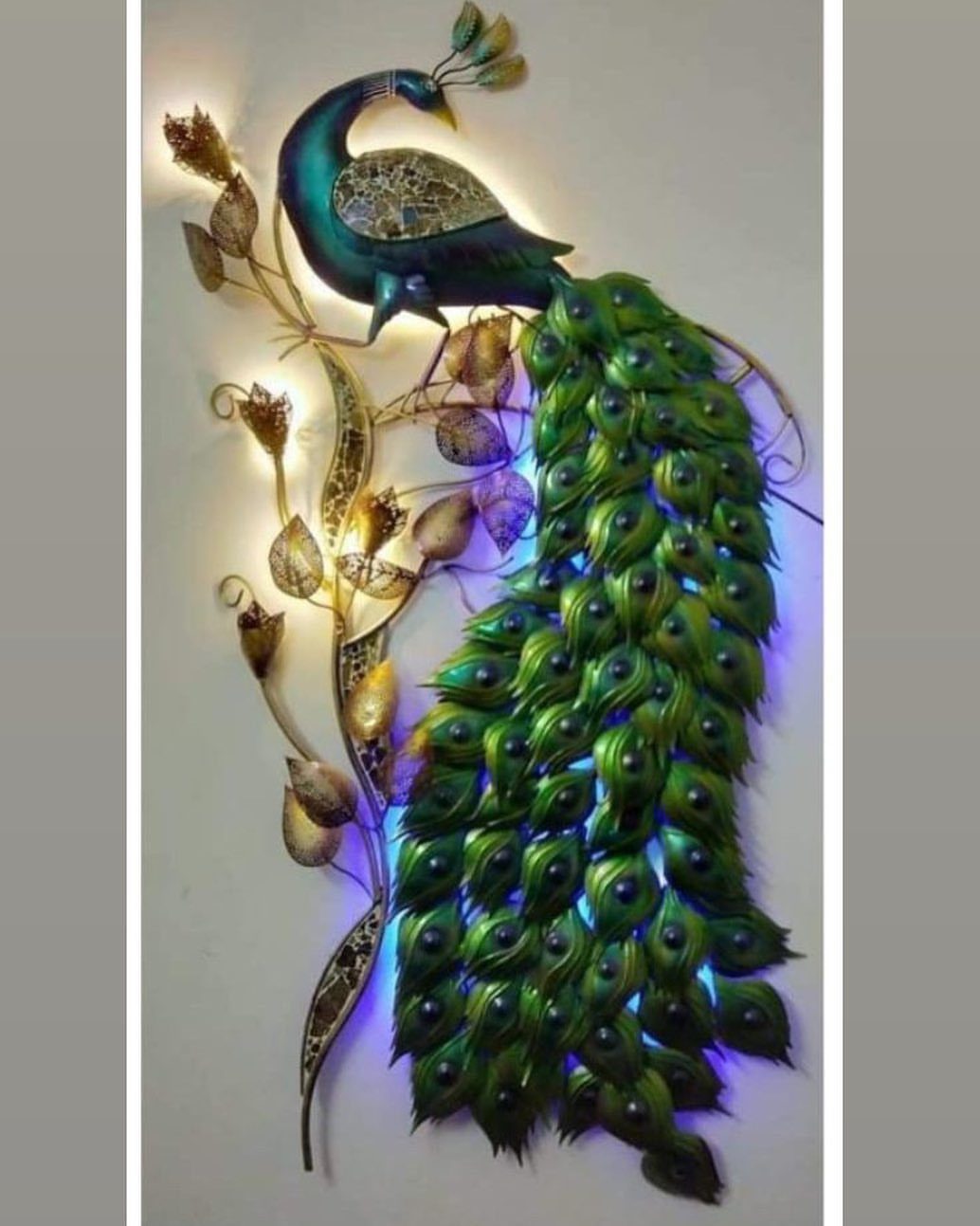
Relief peacock sculptures bring color and dimension to a plain wall. The raised form casts shadows that shift with the light, and the layered feathers in green, blue, and gold give you pattern without needing framed art.
Mount the piece alone on a feature wall or above a console table. Backlighting with a small fixture highlights the relief and adds drama in the evening.
Peacock art suits living rooms and entryways. The scale works best on walls with space around the piece, so the full shape reads clearly without crowding.
27. Textured Pottery Art
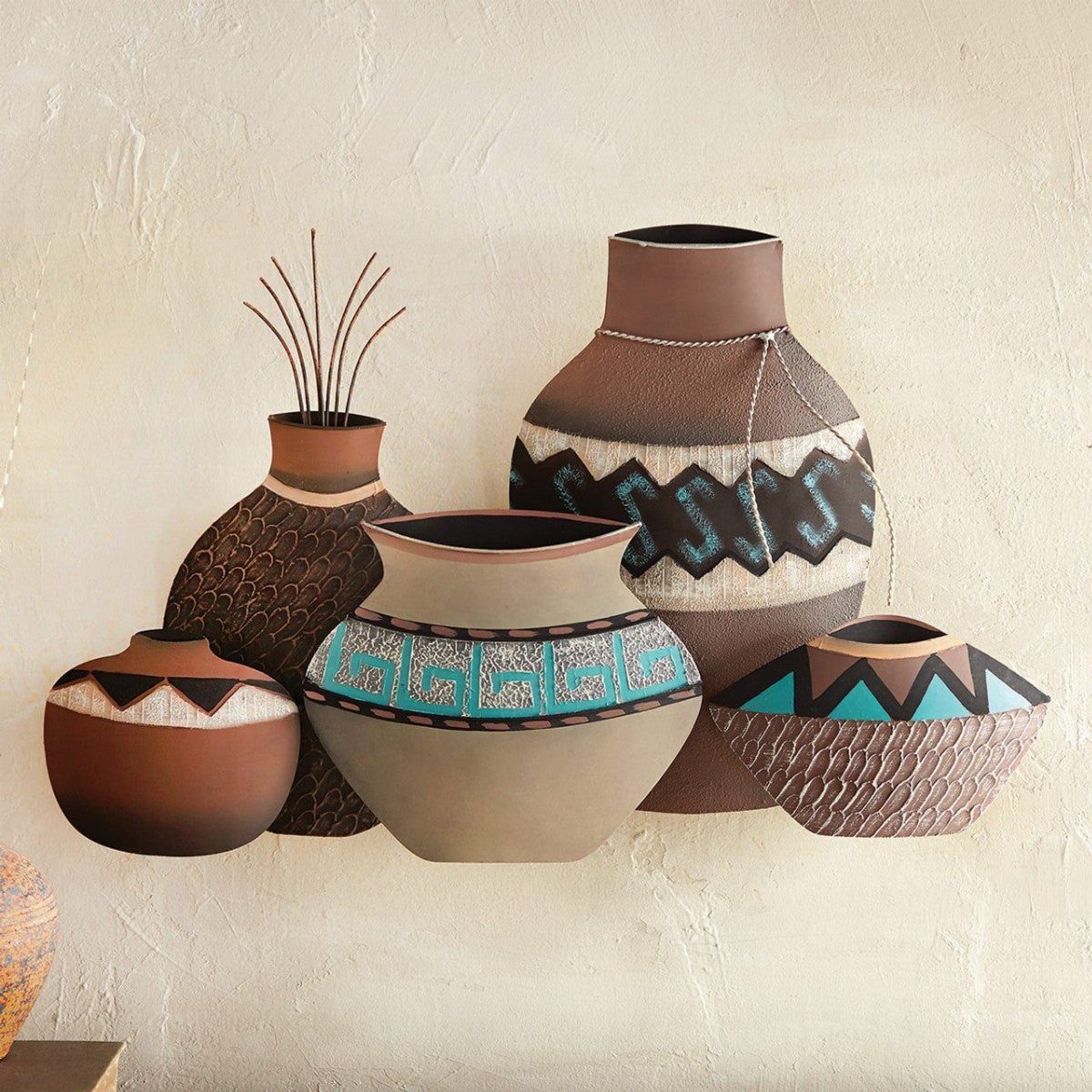
Wall art shaped like pottery vessels brings texture and earthy color to smooth walls. The sculptural panels in brown and turquoise mimic the look of handmade ceramics without the weight or fragility of real pots.
This approach suits renters, since the panels go up with standard picture hardware and leave small holes when removed.
28. Brass Wall Bells
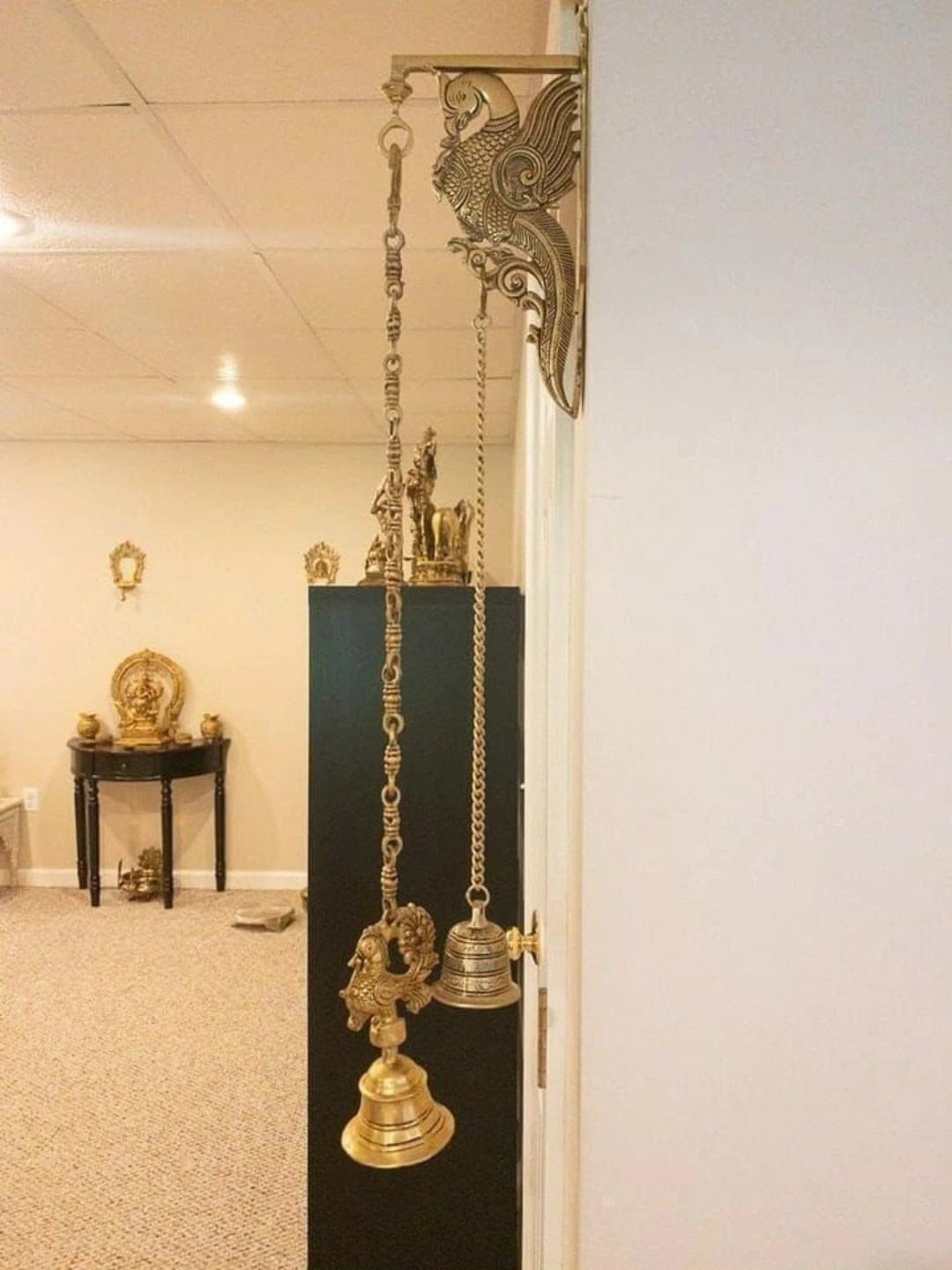
Brass bells hung from a decorative bracket add sound and shine near doorways or stairways. The bells ring softly when air moves through the space, and the metal catches light during the day.
Mount the bracket at a height where the bells hang freely without hitting the wall. Brass develops patina over time; polish it if you want the shine, or leave it to darken naturally.
Bells work best in high-traffic areas where the movement adds to the atmosphere rather than interrupting quiet rooms.
29. Yarn Wall Hangings
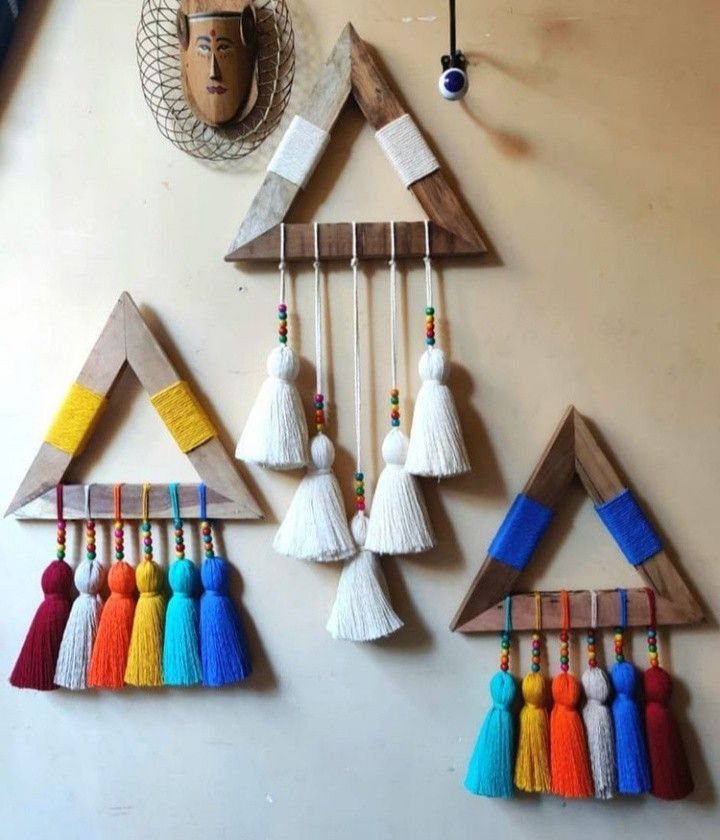
Yarn-wrapped wooden frames with tassels bring color and handmade texture to walls. The geometric shapes in bright yarn stand out against neutral backgrounds, and the tassels add movement below each piece.
Make your own by wrapping yarn tightly around a triangle or diamond frame, then knotting tassels along the bottom edge. Spacing the wraps close together hides the wood and keeps the color solid.
Group frames in odd numbers at varying heights. The look suits bedrooms and casual spaces where you want color without the formality of framed prints.
30. Desk with Floating Shelves
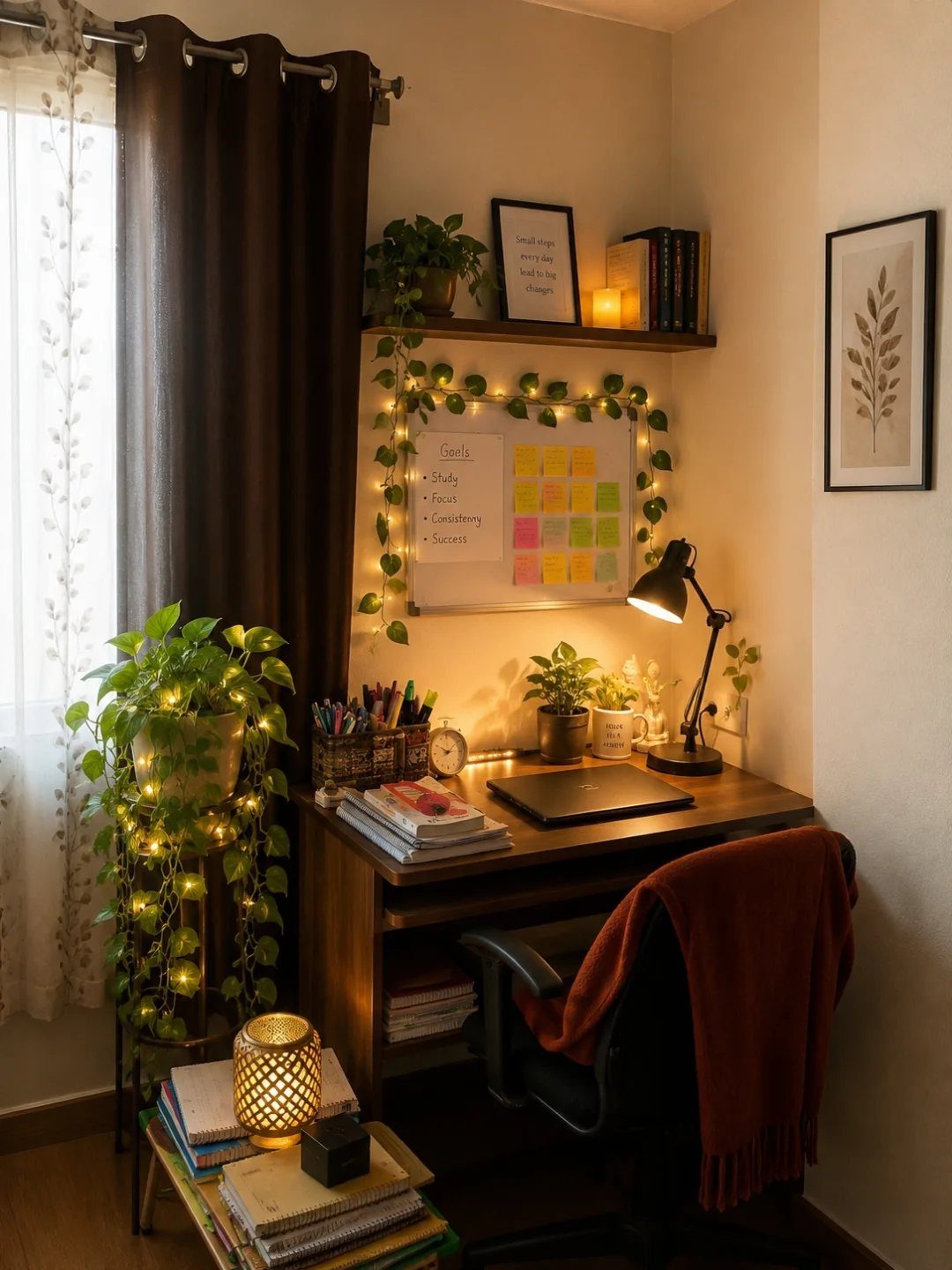
A desk styled with floating shelves above it keeps supplies and decor within reach while leaving the floor clear.
Add plants, fairy lights, and a small board for goals or quotes to make the workspace feel personal without crowding the work surface.
Hang shelves at a height where you can reach them from your chair. Lights strung along the shelf edge add soft glow in the evening, and plants soften the hard lines of the desk and shelves.
This setup suits small rooms where floor space is tight and you need storage that does not block light or movement.
31. Decorative Wall Elephants
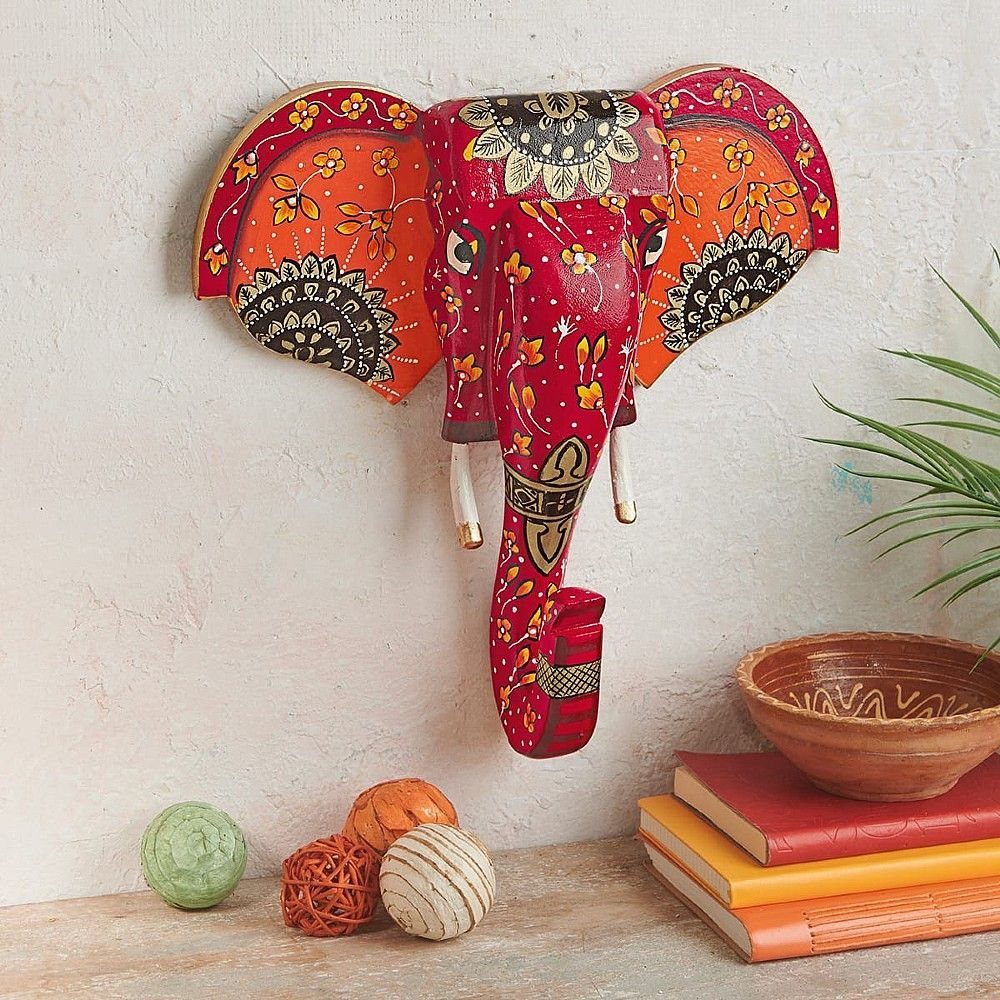
Painted elephant heads in bright reds and oranges add sculptural color to blank walls.
Mount one piece centered above a shelf or console, or hang a pair flanking a doorway. The painted finish stands out best on white or cream walls, where the color reads clearly.
Look for pieces with carved or molded detail rather than flat cutouts. The dimension makes them read as decorative objects rather than prints.
32. Ganesh Wall Hanging
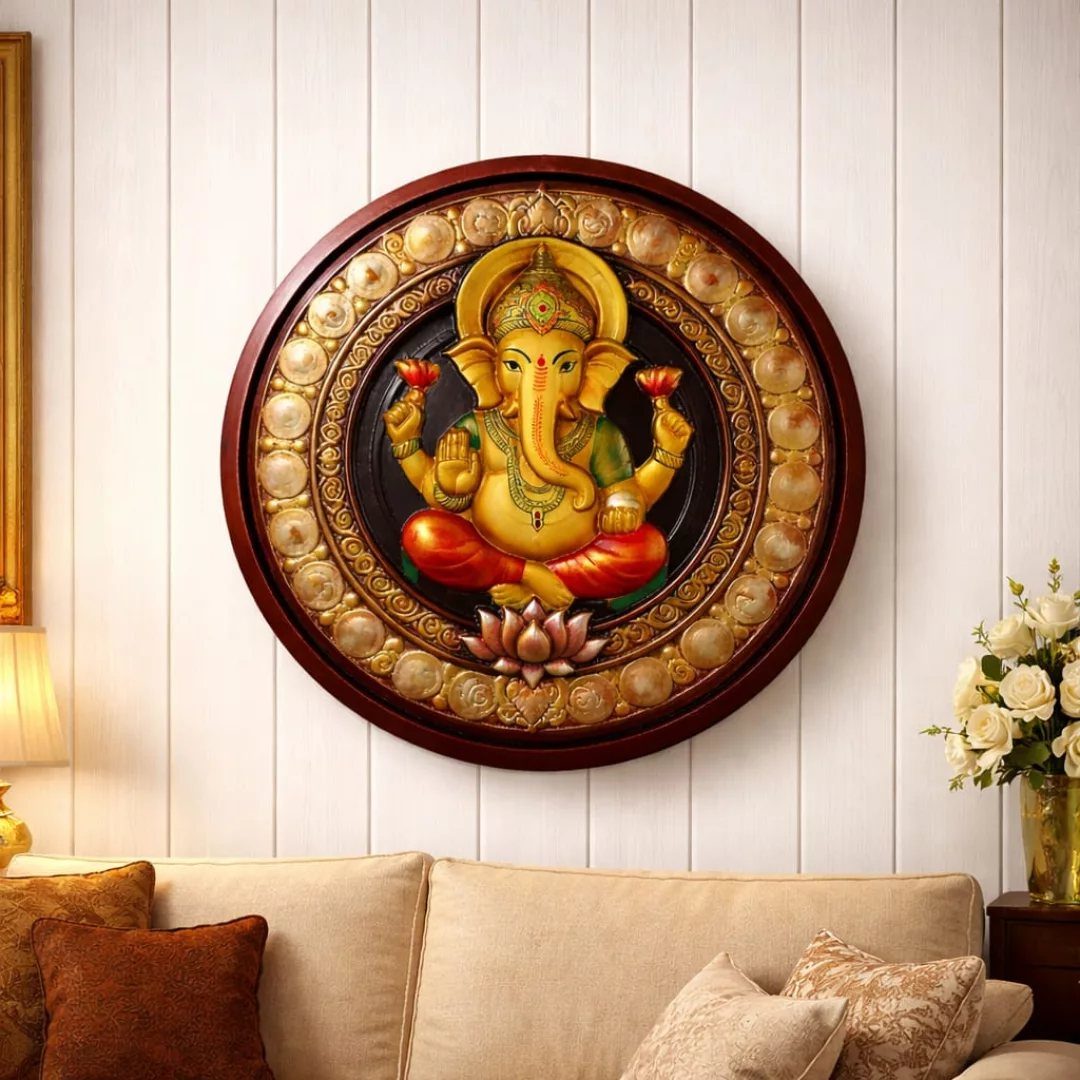
A circular Ganesh relief brings spiritual significance and decorative detail to living rooms and entryways. The carved figure in a wooden frame brings texture and color to the wall.
Hang the piece at eye level on a wall with room around it, so the full circle reads clearly. Gold accents in the carving catch light and pair well with brass or warm wood furniture nearby.
This works especially well above seating areas, where the piece stays visible without competing with taller furniture or shelving.
33. Colorful Wall Fans
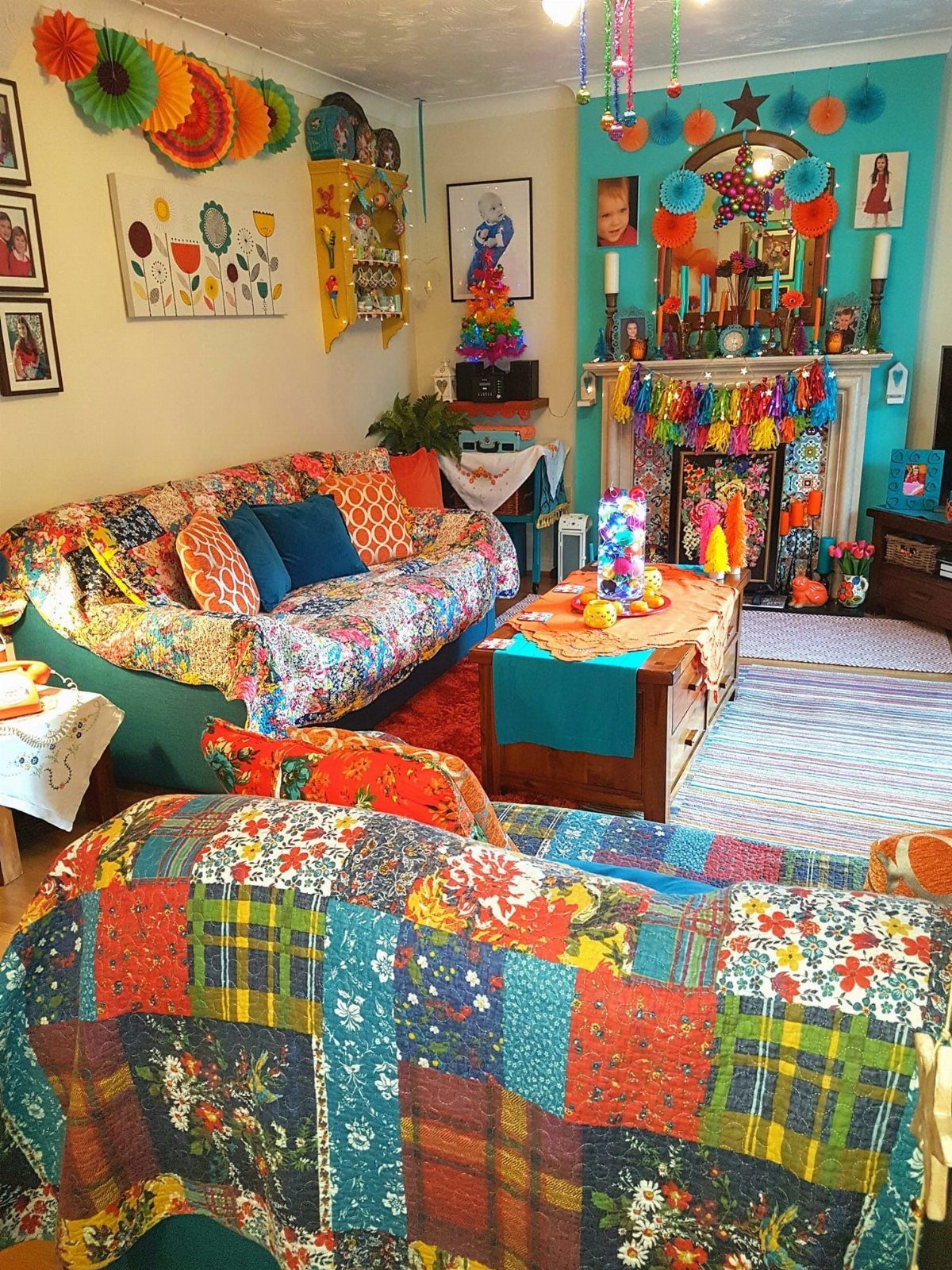
Paper fans hung in a row across the upper wall add color and pattern above eye level. The pleated rounds in solid colors layer well in eclectic rooms where you already have patterned textiles below.
Space the fans evenly along the wall, using small nails or adhesive hooks. Varying the sizes keeps the line from looking too rigid, and odd numbers feel more balanced than even.
Fans suit rooms with high ceilings, where the color fills vertical space without crowding.
34. Colorful Wall Clock
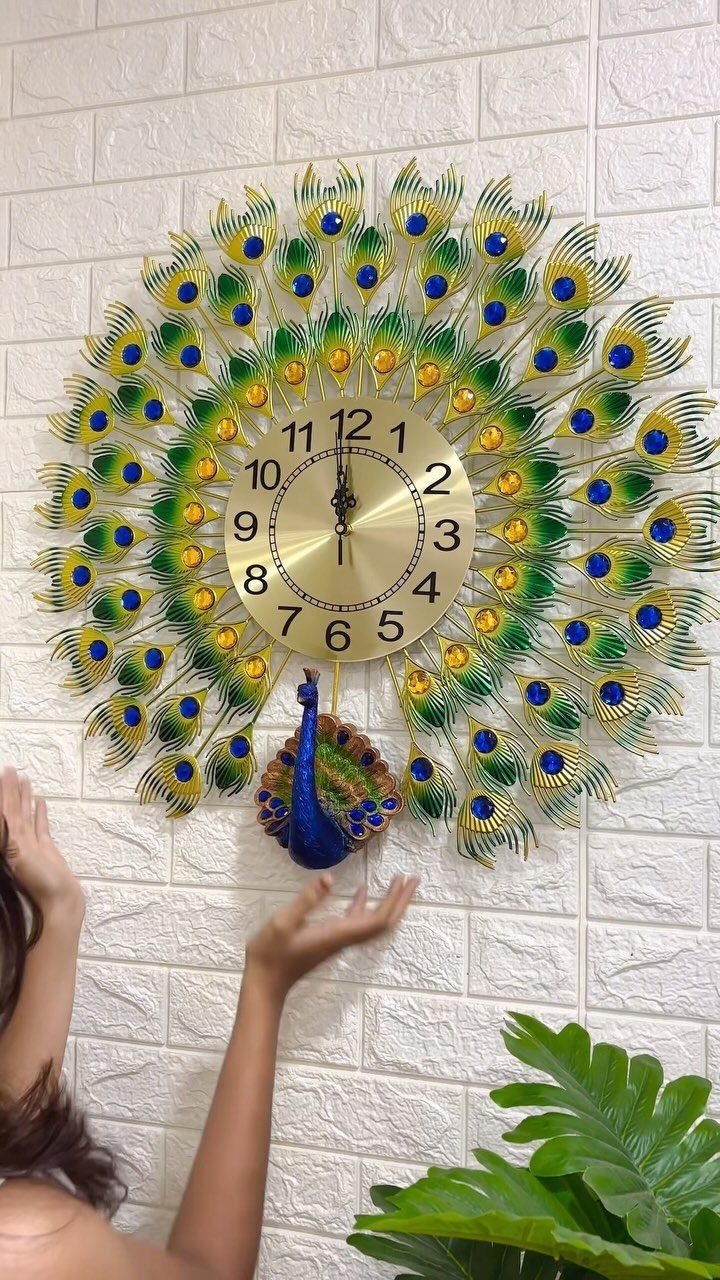
A clock shaped like a peacock or lotus adds color and function to a blank wall. The decorative form turns a practical item into a focal point, and the hands stay easy to read if the face is simple enough.
Mount the clock where you check the time and fill a blank stretch of wall. Entryways, living rooms, and home offices all suit decorative clocks, especially when the surrounding walls stay neutral.
Battery-operated clocks go up with standard picture hardware and skip the need for outlets near the mounting spot.
35. Rattan Furniture
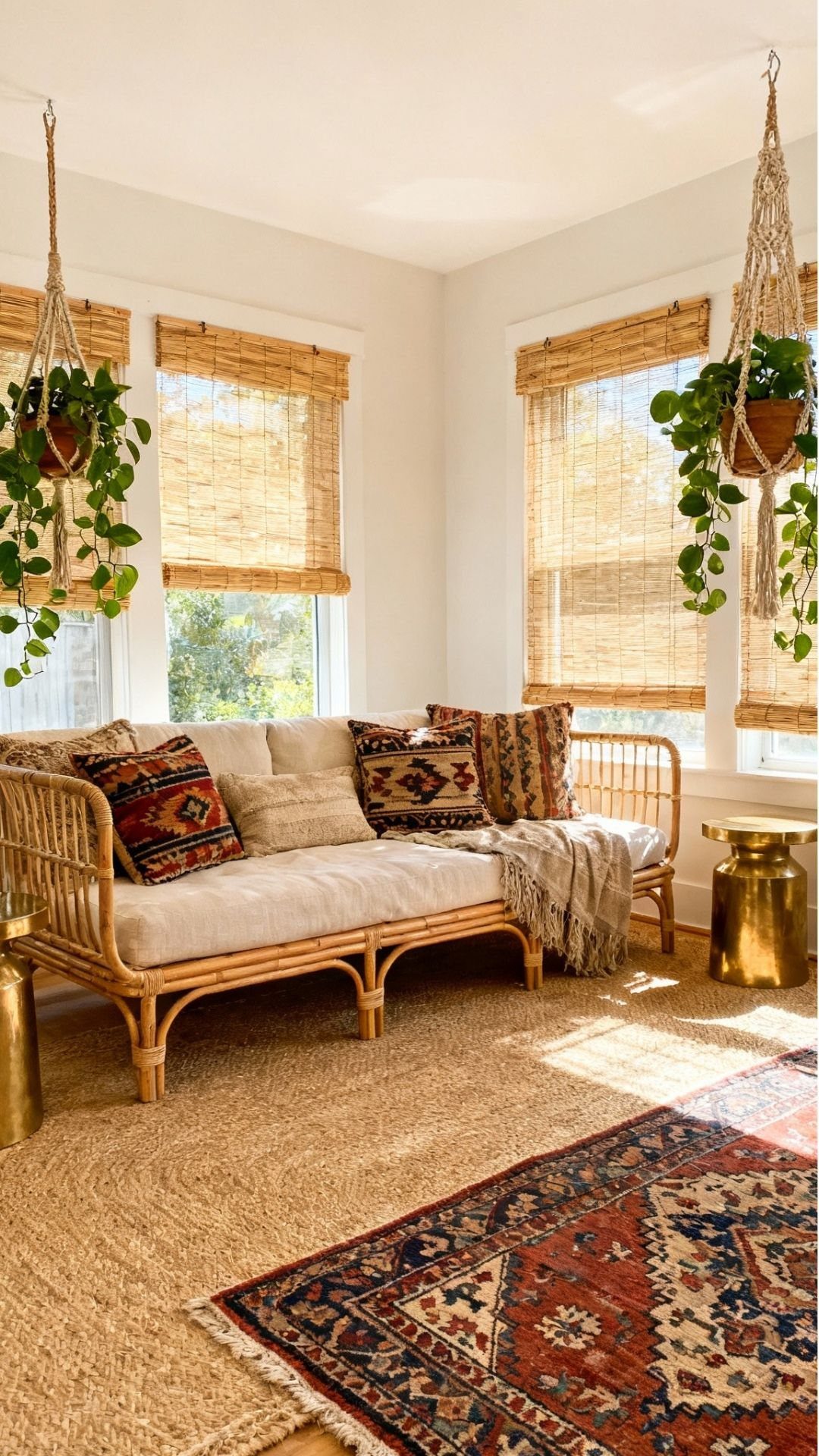
Rattan furniture in natural or honey tones brings texture and warmth to living rooms and bedrooms. The woven cane lightens the visual weight of seating without sacrificing structure, and it pairs well with colorful textiles.
Start with one piece, a chair or a small sofa, and layer patterned cushions and throws on top. The neutral base lets you swap colors seasonally without replacing furniture.
Rattan works in small spaces because the open weave keeps the piece from feeling heavy. It scratches less easily than painted wood and ages well with use.
36. Patchwork Bedding
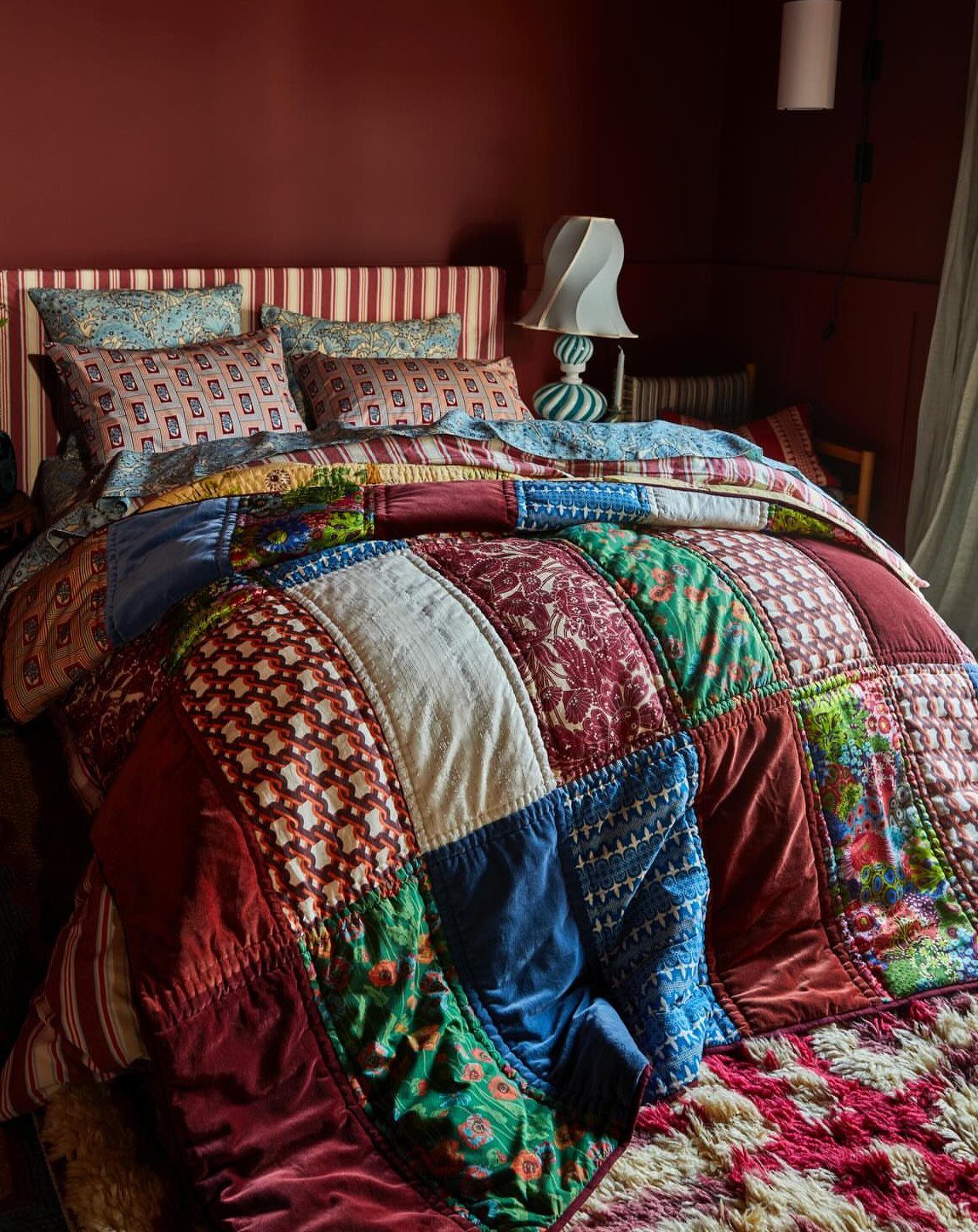
Patchwork quilts layer pattern and color across a bed without committing to one print. Each block carries a different fabric, so the quilt pulls together multiple colors in your room and gives you flexibility with pillows and walls.
Cotton quilts hold up to washing and get softer over time. Pair the quilt with solid or small-print pillows so the patchwork stays the focus, and keep the headboard and walls simple.
Vintage patchwork quilts show up at thrift stores and estate sales. New ones from Indian textile shops often use hand-block prints in each square.
37. Fairy-light Curtains

String fairy lights vertically behind sheer curtains to turn a window into a soft light source after dark. The curtain diffuses the points of light into a warm glow that fills the room without glare.
Battery-operated string lights attach to the curtain rod or wall above the window with small clips or adhesive hooks. Space the strands evenly across the width of the curtain, keeping them taut so they hang straight.
Sheer fabric works better than thick curtains because it lets the light through. A remote control makes it easy to turn the lights on and off without reaching behind the curtain.
Frequently Asked Questions
What colors are traditional in Indian bedroom decor?
Deep jewel tones like red, saffron, mustard, forest green, and terracotta form the traditional palette, often set against dark carved wood and brass.
These warm colors create a grounded feel that suits both textiles and furniture. Pair them with natural materials rather than cool grays or stark whites.
How do I make Indian decor feel modern?
Use traditional textiles and one carved piece as focal points, then keep everything else simple.
White or cream walls, plain bedding, and minimal lighting let the patterned fabrics and detailed woodwork stand out without the room feeling heavy. This balance works in small spaces where too much pattern overwhelms.
Can I mix Indian and minimalist styles?
A single carved wooden piece against white walls and simple fabric keeps the room calm without losing the detail.
The carved wood provides traditional detail, while the clean surroundings keep the room calm and uncluttered. This mix suits anyone who wants cultural anchors without filling every surface.