
Pieces from this period range from affordable reproductions to authentic vintage finds, and the right pick depends on whether you need the furniture to work hard or just look right.
If you’re furnishing a room where people actually sit and eat and lean back to read, condition and comfort matter more than the maker’s mark; if you’re collecting or want one statement piece, rarity and authenticity set the price.
1. Eames Lounge Chair
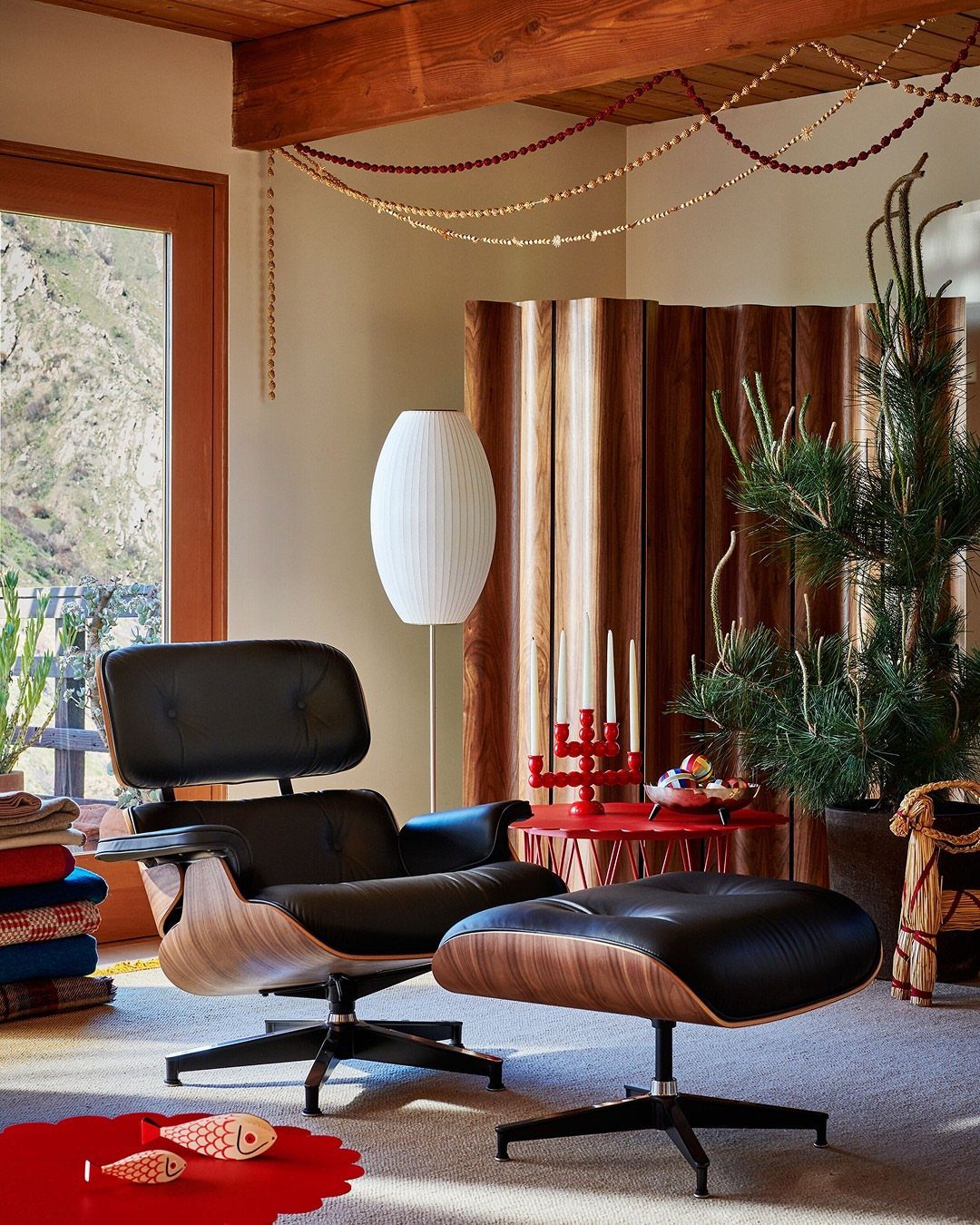
Black leather reads formal, brown feels warmer, and the molded plywood shell comes in walnut, rosewood, or Santos palisander depending on age and maker.
The chair sits low and tips back, so it needs space behind it and works best where you actually lean back to read or listen rather than where you perch to talk.
2. Clean Lines
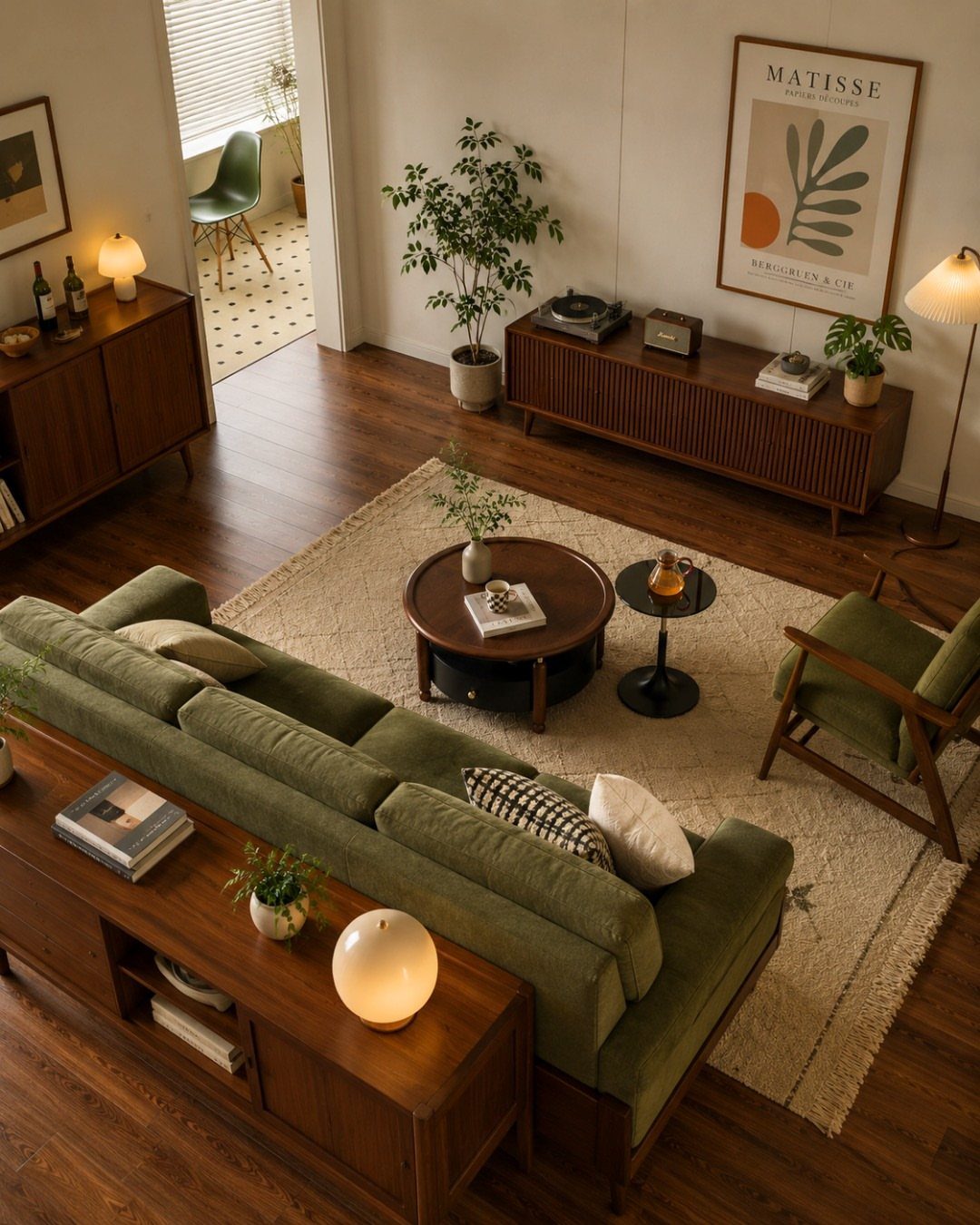
Straight edges, flat surfaces, and forms that do exactly what they need to without extra detail keep a room from looking busy.
Furniture sits on slim legs or low platforms instead of heavy bases, and storage hides behind smooth cabinet doors rather than open shelves piled with things.
This approach works especially well in small spaces because the unbroken lines make the room feel larger.
It also means you can get away with fewer pieces: a sofa, a coffee table, a credenza, and a chair can furnish an entire living room without the space feeling empty.
3. Smart Pops of Color
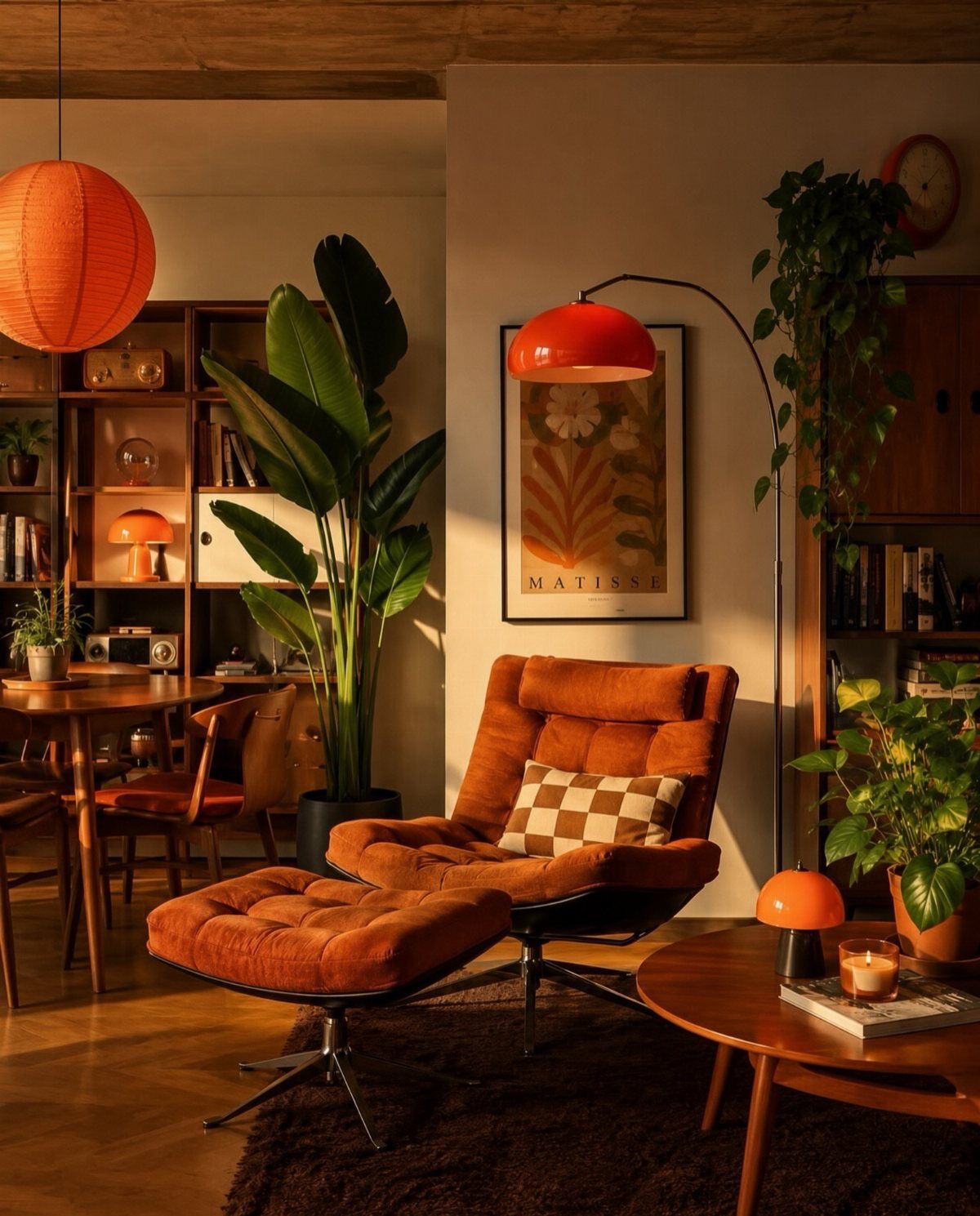
One saturated color in a room of neutrals pulls focus without overwhelming the space. An orange chair, a red lamp, or a mustard pillow gives the eye somewhere to land while the rest of the room stays calm.
Less goes further. Pick one bold color and use it in two or three places at most, then let wood tones, white, black, and gray fill the rest.
This lets you swap the accent pieces when you want a different feel without repainting or replacing major furniture.
4. Mid-Century Table
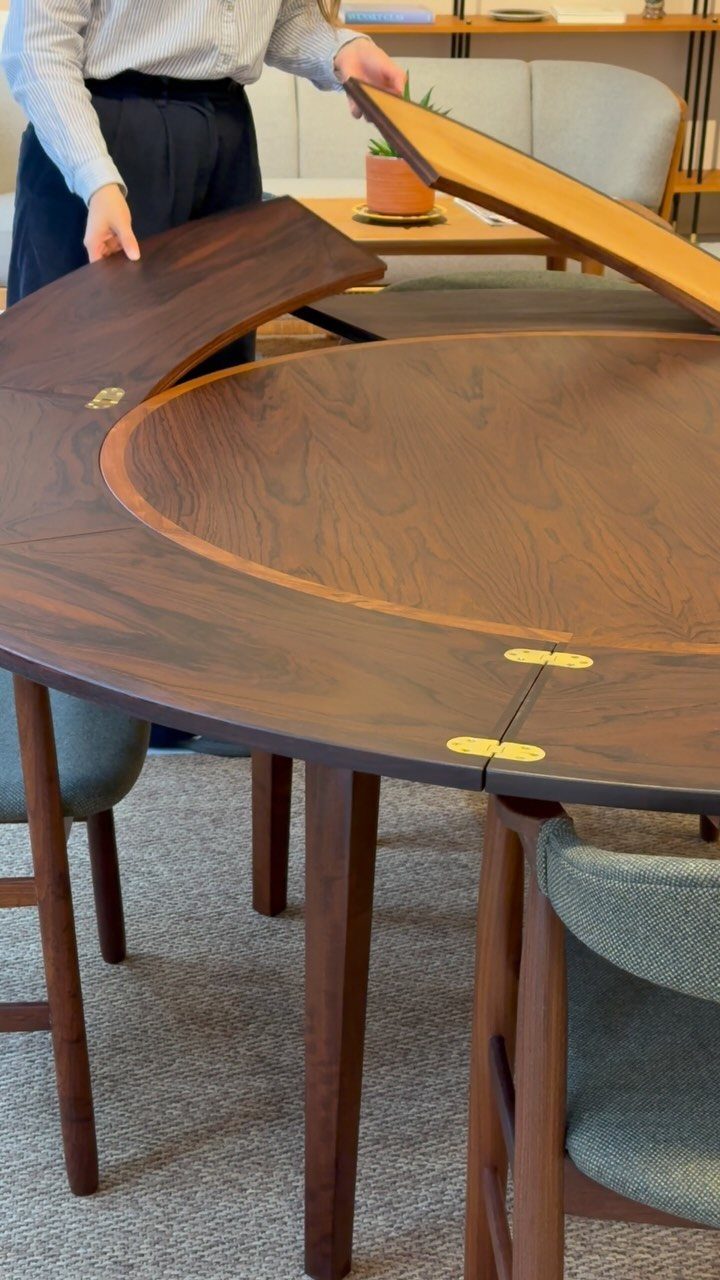
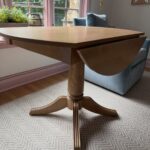
A round table with tapered legs and a walnut or teak finish fits plenty without corners cutting into traffic flow.
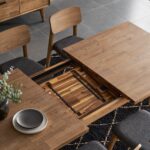
Many mid-century designs include a leaf that slides or lifts into place, turning a compact daily table into one that handles dinner guests.
Look for solid wood or a veneer over hardwood if you want something that lasts. Expandable models usually store the leaf underneath the top or inside a split frame, no closet required.
5. Starburst Clock
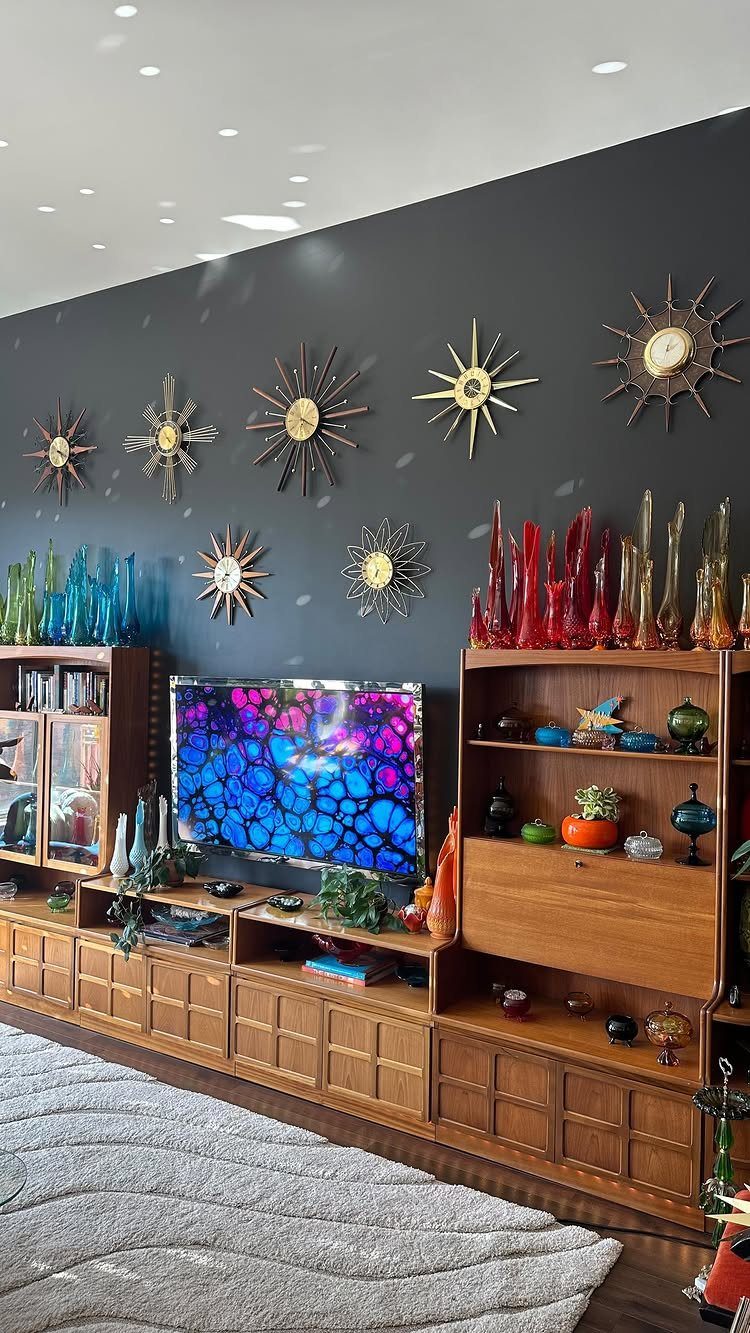
Metal spokes radiate from a central clock face, turning a functional timepiece into wall sculpture. The arms usually end in small balls or points, and finishes range from brass and gold to black and walnut-tipped versions.
Mount it where the spokes have room to breathe, at least a foot of clearance on all sides.
6. Natural Wood Interior
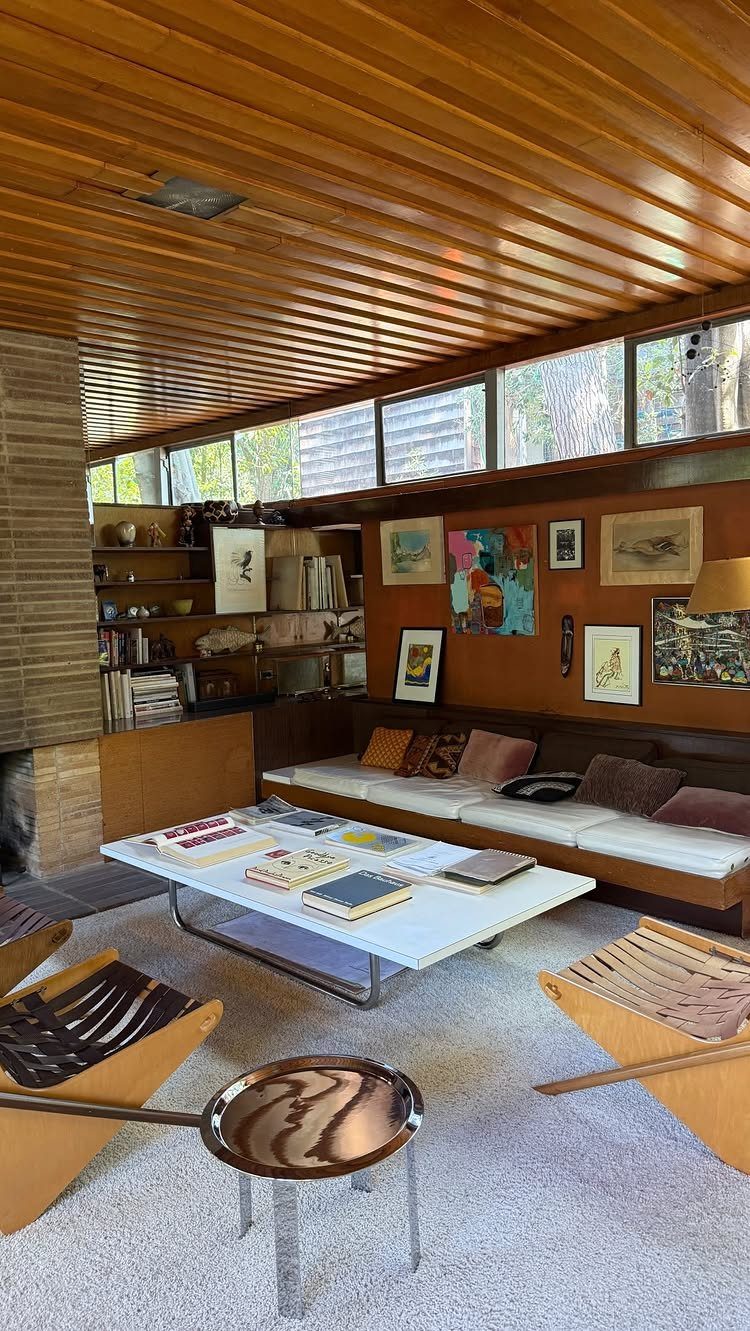
Wood ceilings, paneled walls, and exposed beams bring warmth without adding pattern or color. The grain itself provides texture, and the material ages well instead of looking dated after a few years.
Horizontal slats on a ceiling make a room feel wider, while vertical paneling on one wall draws the eye up.
Keep the wood tone consistent or layer 2 similar shades, lighter on the ceiling and darker on the walls. Pair it with white or neutral furniture so the wood stays the main event instead of competing with other finishes.
7. Sputnik Chandelier
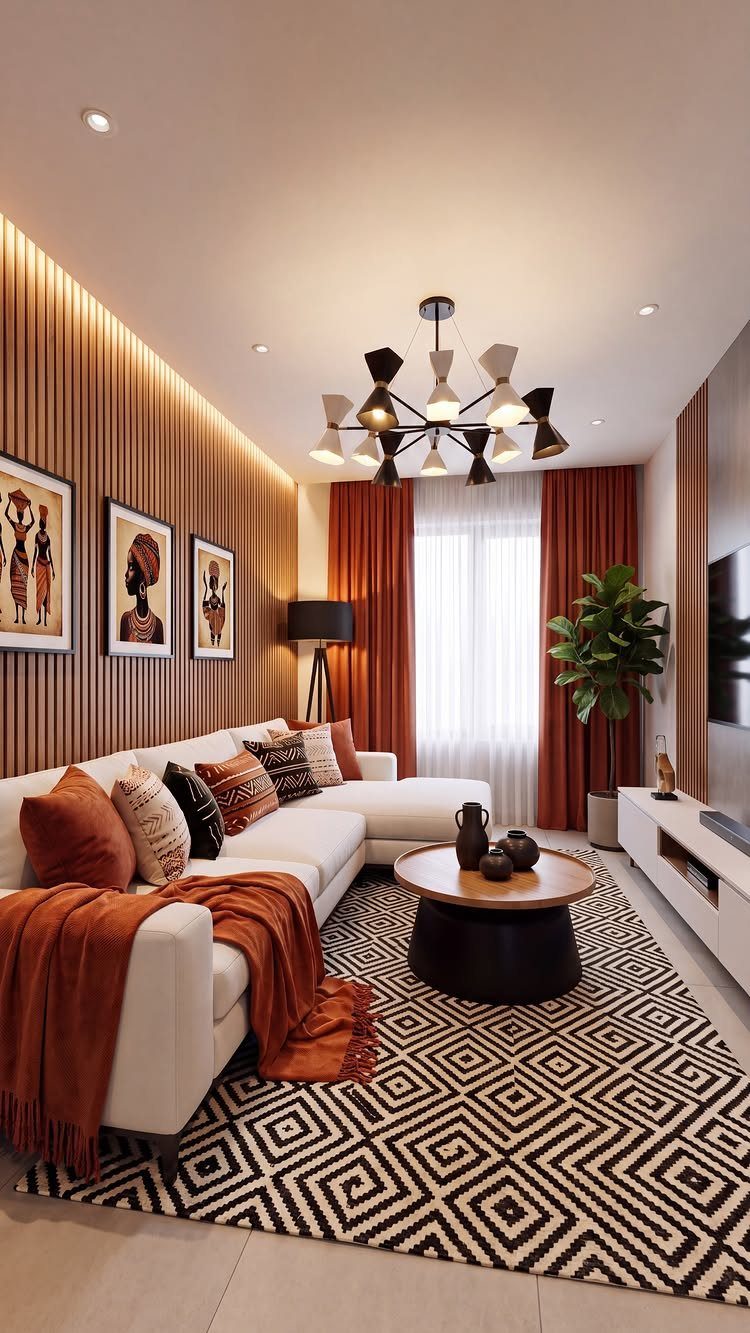
Arms branch out from a central sphere, each ending in a bulb that casts light in every direction.
The fixture works best in a room with high ceilings where it can hang low enough to anchor the space without anyone walking into it.
Arm count and finish vary.
Black or brass finishes pair well with wood and neutral furniture. The fixture needs a dimmer if you plan to use it in a room where you watch TV or want softer evening light.
8. Hairpin Legs
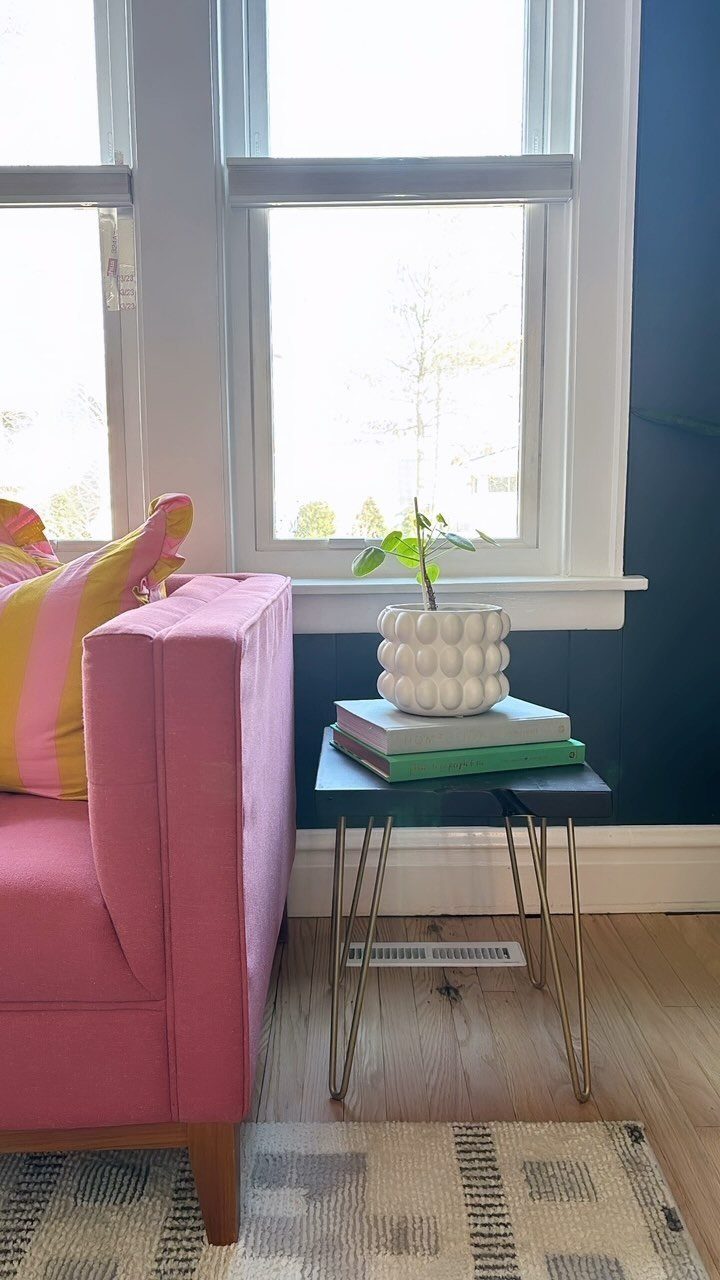
Three thin metal rods bend into a single leg, lifting tables, benches, and credenzas just high enough to tuck a basket or shoes underneath.
The rods taper at the base, so the furniture looks lighter than it would on a solid leg.
You can find them already attached to tables and side pieces, or buy sets of four to bolt onto a slab or a custom top.
Some versions come powder-coated in colors, so a black table can sit on gold or white legs if that suits the room better.
9. Womb Chair
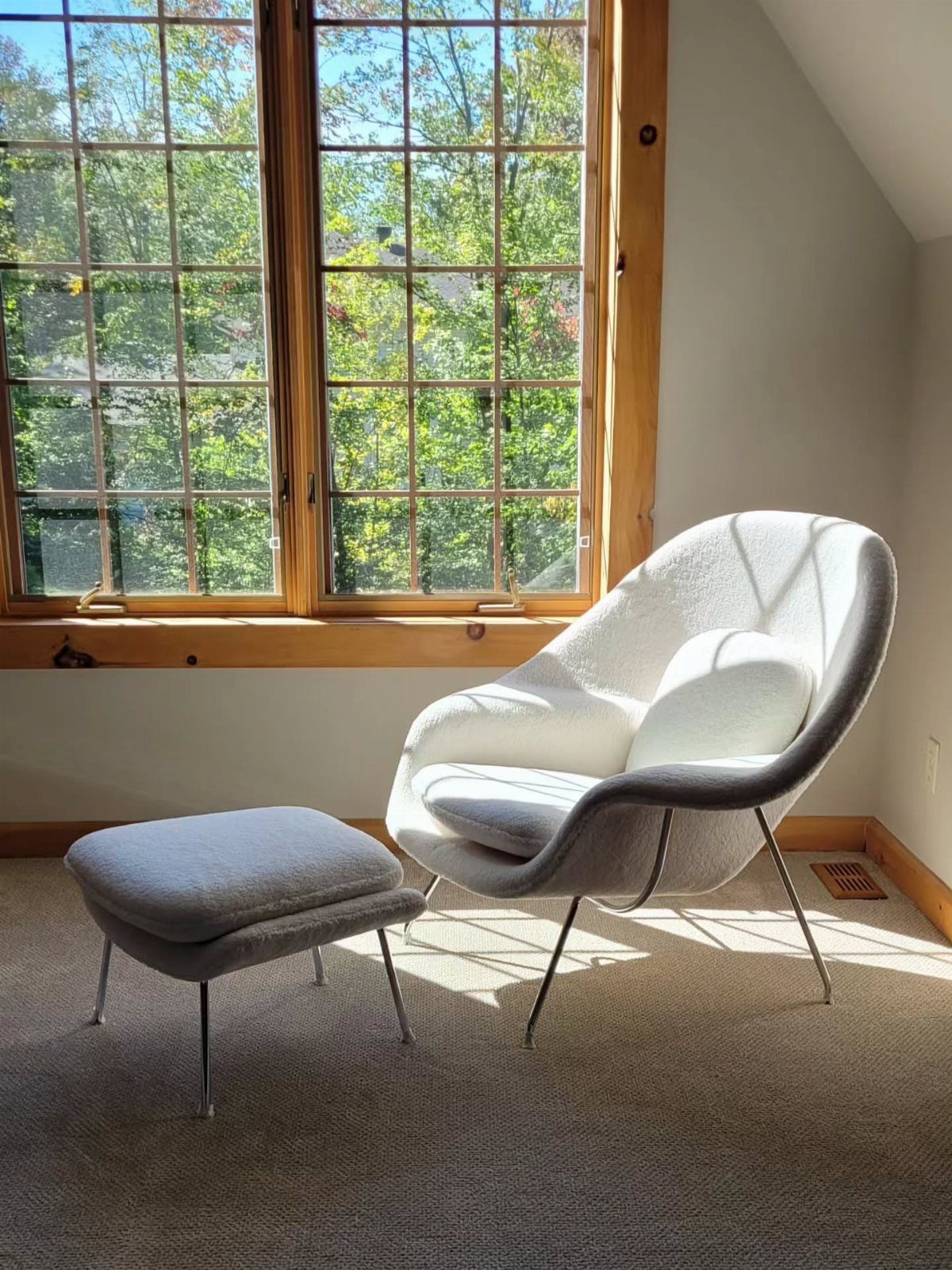
The shell curves around you on 3 sides, high enough to rest your head and wide enough to sit cross-legged. A matching ottoman turns it into a place to nap or read for an hour without getting up.
The original sits on a steel base, upholstered in fabric or leather.
Reproductions cost less but vary in depth and cushion firmness, so try one in person if you can. Place it where you have room to tilt back without hitting a wall or a window frame.
10. Mid-Century Chairs
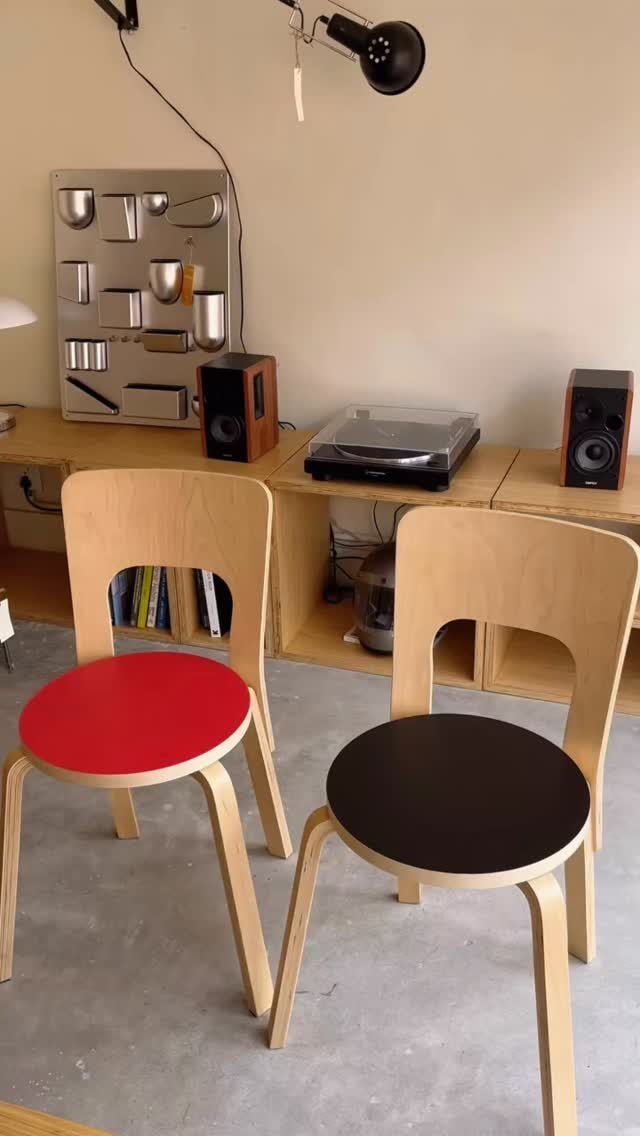
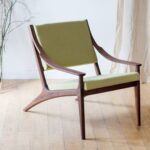
Dining chairs, side chairs, and lounge chairs from this period turn up at estate sales, vintage shops, and online in every price range.
Bent plywood frames, tapered legs, and molded seats show up across dozens of makers, so you can match a look without buying a full set from one source.
Condition matters more than brand for everyday use. Check joints, refinish or reupholster if needed, and mix finishes or colors if you want a less formal look around the table.
11. Mixed-Material Furniture
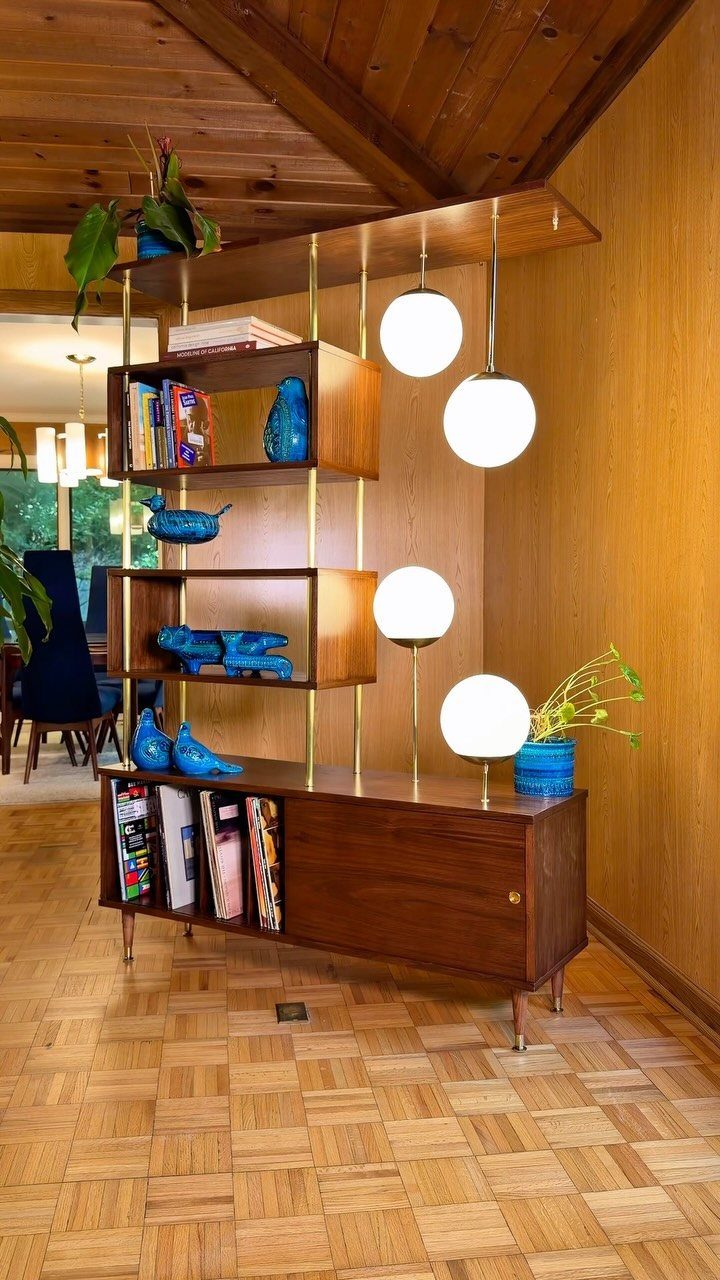
Wood shelves sit on brass poles, a walnut cabinet front gets steel drawer pulls, or a teak credenza holds cane-paneled doors.
Mixing materials in one piece adds texture without pattern, and the contrast between warm wood and cool metal keeps the design from feeling too uniform.
Look for pieces where the materials share a function instead of one being purely decorative. Metal legs support the structure, glass shelves let light through, and cane panels ventilate enclosed storage while hiding what sits behind them.
12. Geometric Curves
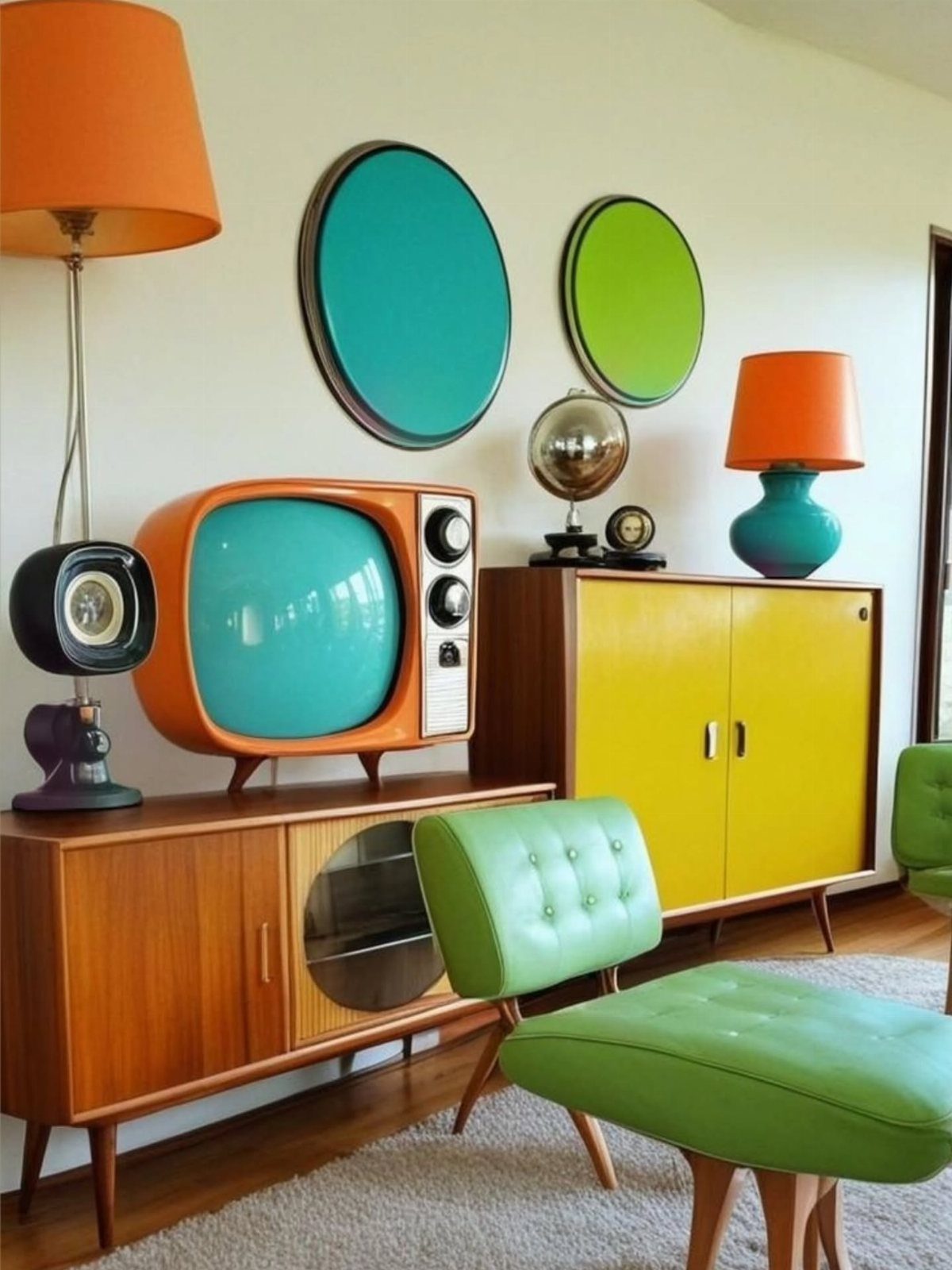
Furniture frames stay angular, but seat backs curve, table edges round over, and cabinet faces bulge slightly outward. The combination softens the look without losing the structure that makes mid-century pieces feel clean.
You can mix straight and curved pieces in one room. A boxy sofa works next to a kidney-shaped coffee table, and a rectangular credenza pairs with round wall art or a curved floor lamp.
The curves come in where you interact with the furniture directly, sitting or reaching, while the straight lines organize the room.
Mixing Styles and Avoiding Overuse
If you mix mid-century modern with other styles, pick one shared element to tie them together.
Wood tones bridge mid-century and Scandinavian pieces, metal finishes connect industrial and mid-century furniture, and a neutral palette lets Victorian chairs sit across from a walnut credenza without clashing.
The problem with any popular style is that a room full of it can look like a showroom instead of a place someone lives.
Add things that matter to you but don’t fit the period: a quilt your grandmother made, a painting you bought on a trip, books you actually read. The style works as a frame, not a rule for everything you own.
Stop adding mid-century pieces when the room starts to look staged. If every object was made in the same 2 decades, you’ve gone past furnished and into decorated.
Collectible Value and Authenticity
Condition, rarity and how well a piece works still set its price. A table or bedroom piece in good shape can sell for a couple hundred dollars or run into the thousands, depending on those factors.
Authentic designs from known makers cost more than most people budget for furniture.
Reproductions and pieces inspired by mid-century forms give you the look at a lower price, and for daily use in a home rather than a collection, they often make more sense than hunting down an original.
Check joints, try drawers, and sit in chairs before buying anything secondhand. A piece that needs repair costs less up front but may cost more once you pay someone to fix it.
Frequently Asked Questions
What are some good mid-century modern decor items?
An Eames lounge chair, a starburst clock, a Sputnik chandelier, and furniture on hairpin legs all bring mid-century style into a room.
Is mid-century modern decor still in style?
Yes, mid-century modern remains popular because the clean lines, functional forms, and wood tones don’t look dated the way trend-driven styles do.
You can furnish an entire room this way or mix a few pieces with what you already own without the styles clashing.
What are mid-century modern materials?
Wood (walnut, teak, rosewood), metal (brass, steel), molded plywood, and cane show up across mid-century furniture. These materials often appear together in one piece: wood shelves on brass poles, teak cabinets with cane-paneled doors, or plywood chairs on steel bases.
What is mid-century modern?
Mid-century modern is a design approach from the postwar period that favors clean lines, slim legs, flat surfaces, and furniture that does what it needs to without extra detail.
The style uses wood tones, mixed materials, and simple forms instead of heavy bases or ornament.
What years are considered mid-century modern?
The mid-1940s through the late 1960s or early 1970s mark the period when mid-century modern furniture and decor were designed and produced. Pieces from these decades share the clean lines, slim legs, and mixed materials that define the style.
How do you authenticate mid-century modern collectibles?
Check for stamps, labels or tags that name the maker, the designer, or the production run. These stamps usually appear underneath tables, near chair legs, or inside drawers and cabinets.
Where can you find mid-century modern furniture?
Estate sales, vintage shops, antique malls, flea markets, and online listings turn up mid-century chairs, tables, and storage pieces in every price range.