
The space above a refrigerator ranges from a flat surface that holds baskets to a full cabinet surround with pull-out shelves, and the option that works depends on the height you have from fridge top to ceiling and whether you need closed storage or quick access.
If you have the clearance and wall space beside the fridge, a glass-front cabinet or tall shelving unit fits. For smaller gaps, side-mounted storage or a single floating shelf makes use of the room without custom carpentry.
Wire under-shelf baskets hook onto existing cabinet edges and hold lighter items, while built-in fridge cabinets require measuring your appliance dimensions before the install.
1. Vertical Tray Dividers
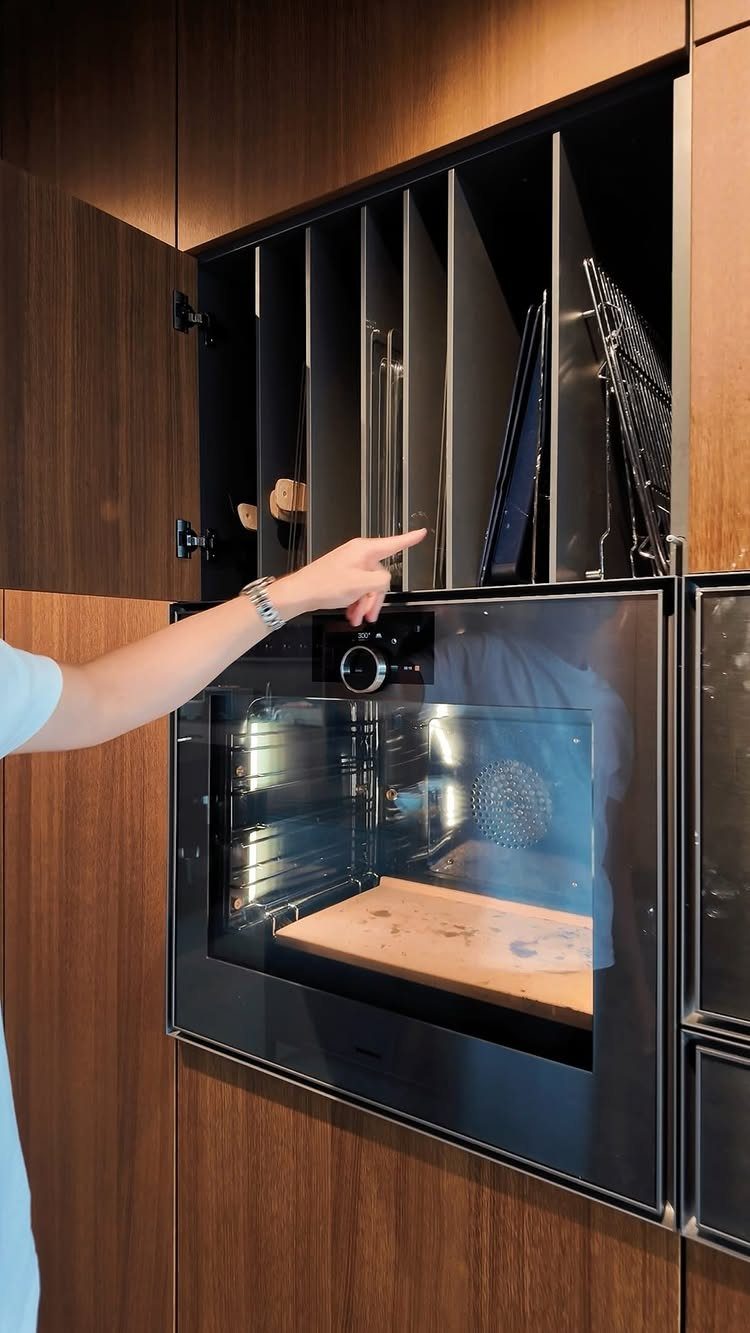
Vertical dividers let you store baking sheets, cutting boards and trays upright so you can see and grab what you need without unstacking the pile.
They fit above the fridge, above an oven or inside any cabinet tall enough to hold flat items on edge.
Most are adjustable wire inserts or slim wood dividers with narrow spacing between slots. Install them in a cabinet shelf or stack them freestanding if the space allows it.
2. Floating Shelves
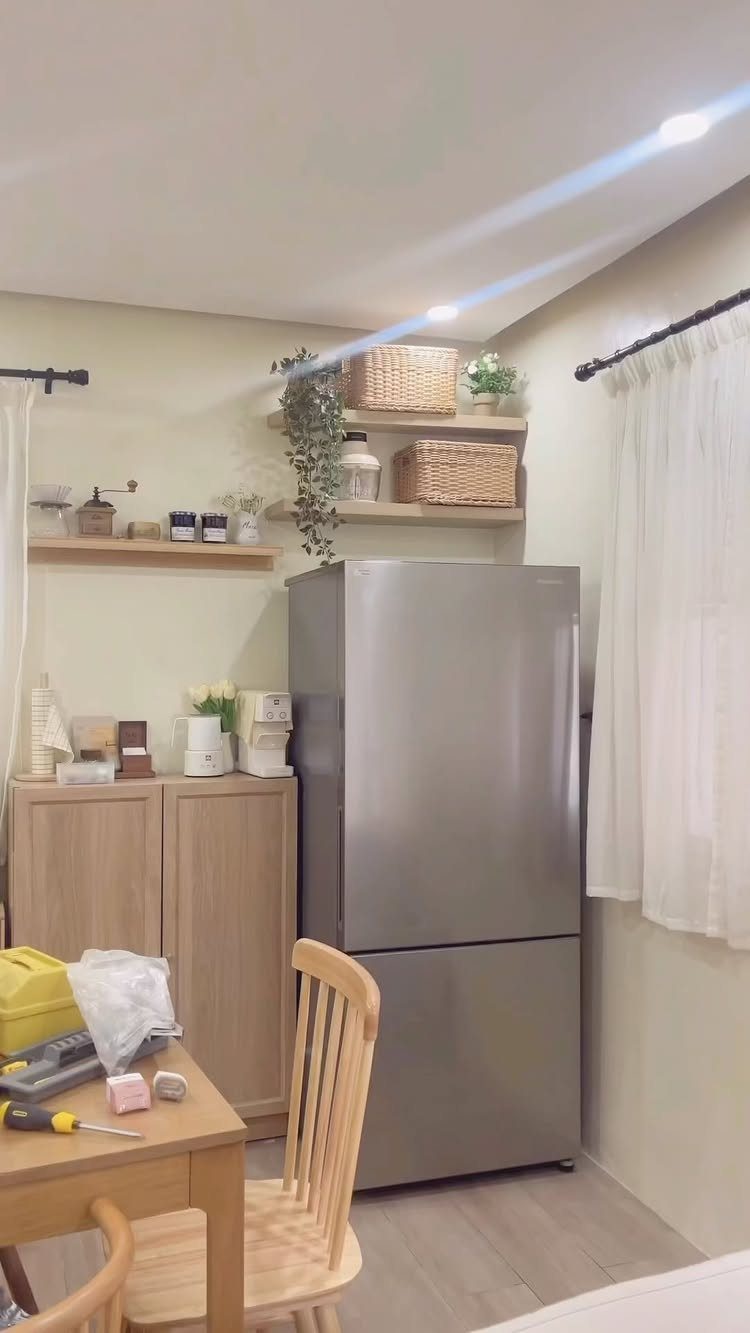
Open shelves give you a place to store baskets, plants or items you reach for often without committing to a full cabinet install.
Mount them to the wall above the fridge at whatever height your ceiling leaves and load them with bins that corral smaller items.
Brackets hold the shelf to wall studs, so locate the studs before you drill. Wood shelves are lighter and easier to mount than glass or metal.
3. Built-in Fridge Cabinet
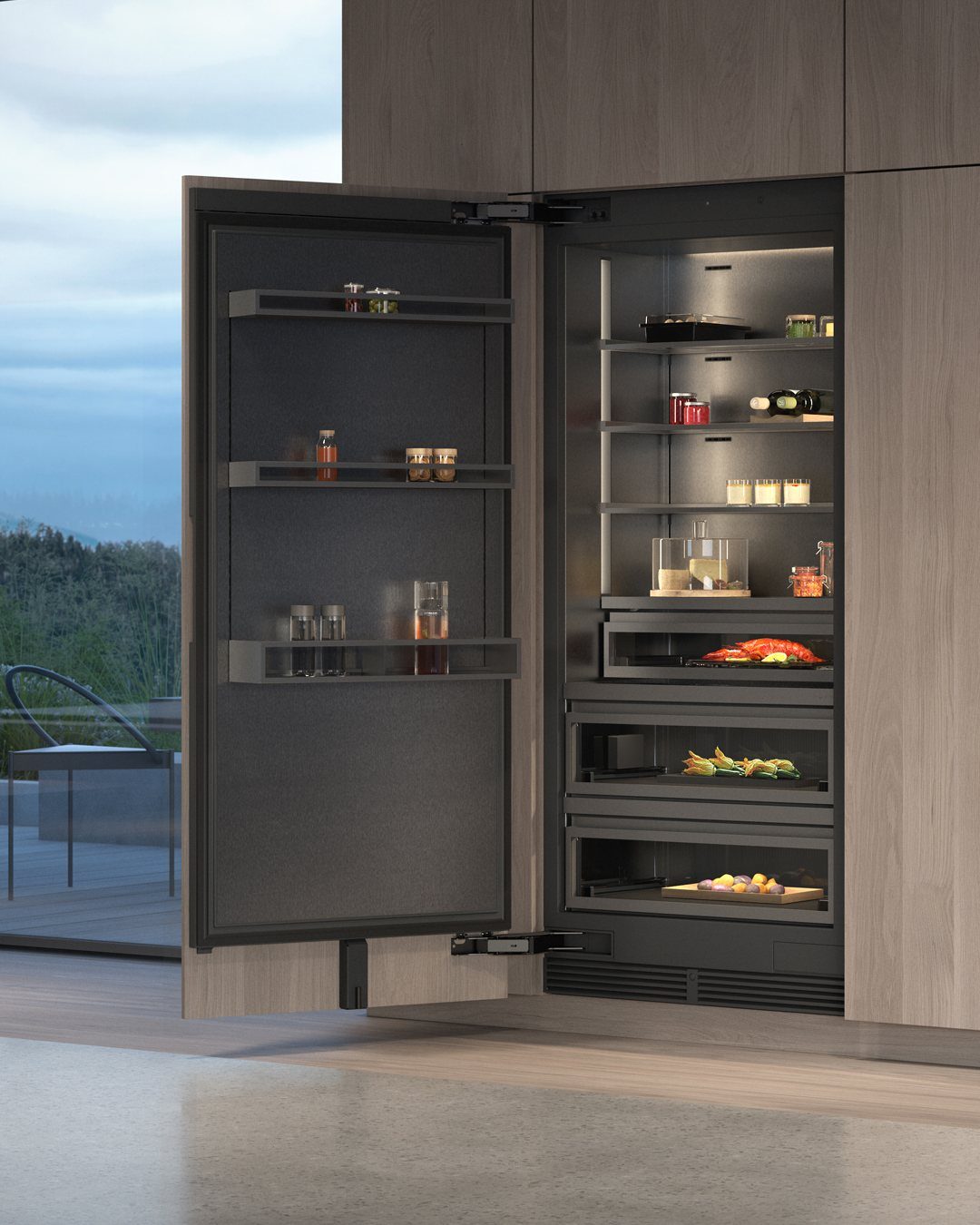
Surrounding the fridge with cabinetry turns an appliance into part of the kitchen and adds closed storage in the same move. Cabinets sit above and on either side, with the fridge set into the opening.
This option works best when you are renovating or designing a new kitchen, since it requires custom cabinetry built to your fridge dimensions.
The cost runs higher than a simple shelf, and you lock in that fridge size unless you rebuild the surround.
4. Labeled Containers
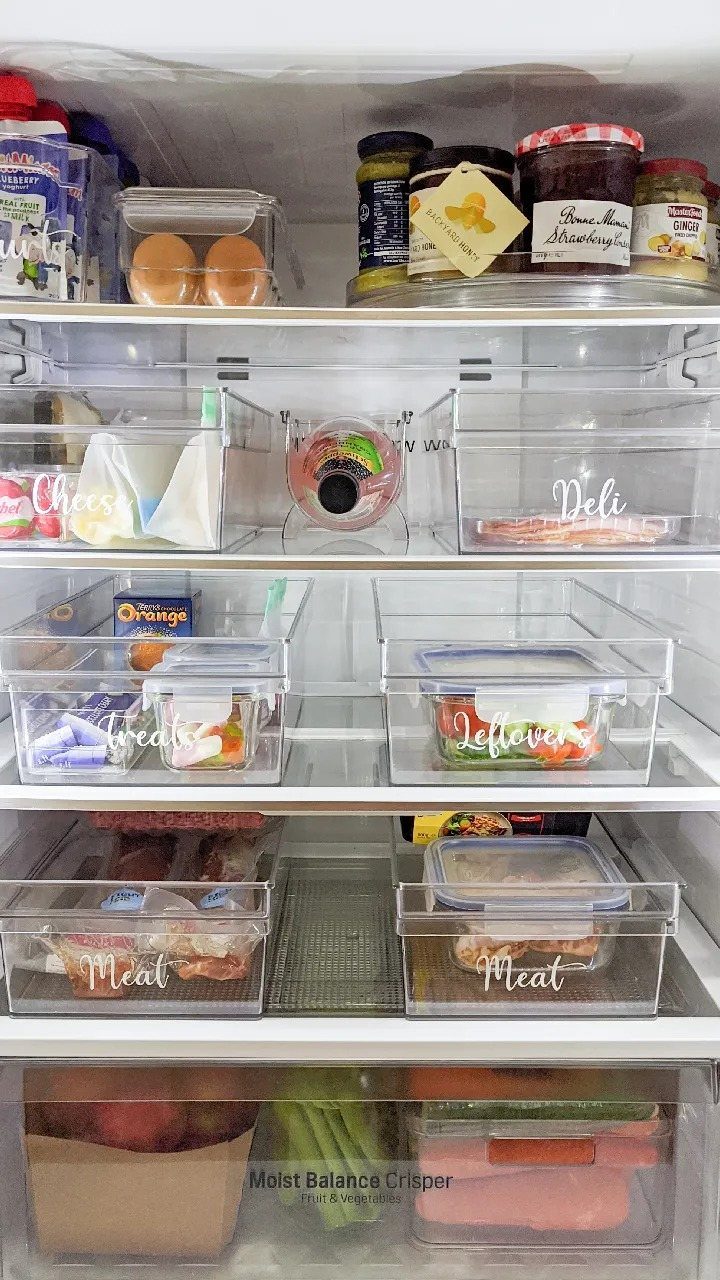
Labeling bins inside the fridge makes it faster to find cheese, leftovers or deli meat without opening every container. Clear bins let you see what is inside while the label identifies the category.
Stick-on labels or a label maker both work. Group similar items in each bin and stack bins on fridge shelves or in the door.
5. Side-mounted Storage
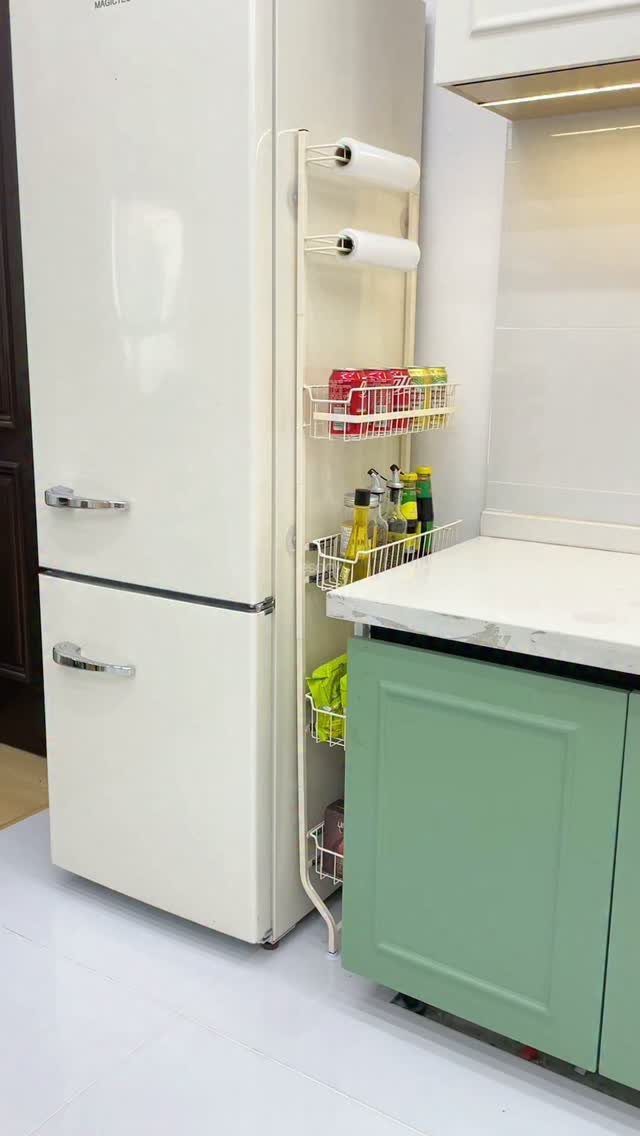
Magnetic racks and adhesive hooks attach to the side of the fridge for hanging storage that holds paper towels, foil, plastic wrap or cleaning supplies. A magnetic rack keeps condiments or spice jars in reach without taking up counter space.
This option works best in kitchens where the fridge side faces out rather than sitting flush with a wall. Check that the metal on your fridge will hold a magnet before you buy.
6. Glass-front Cabinets
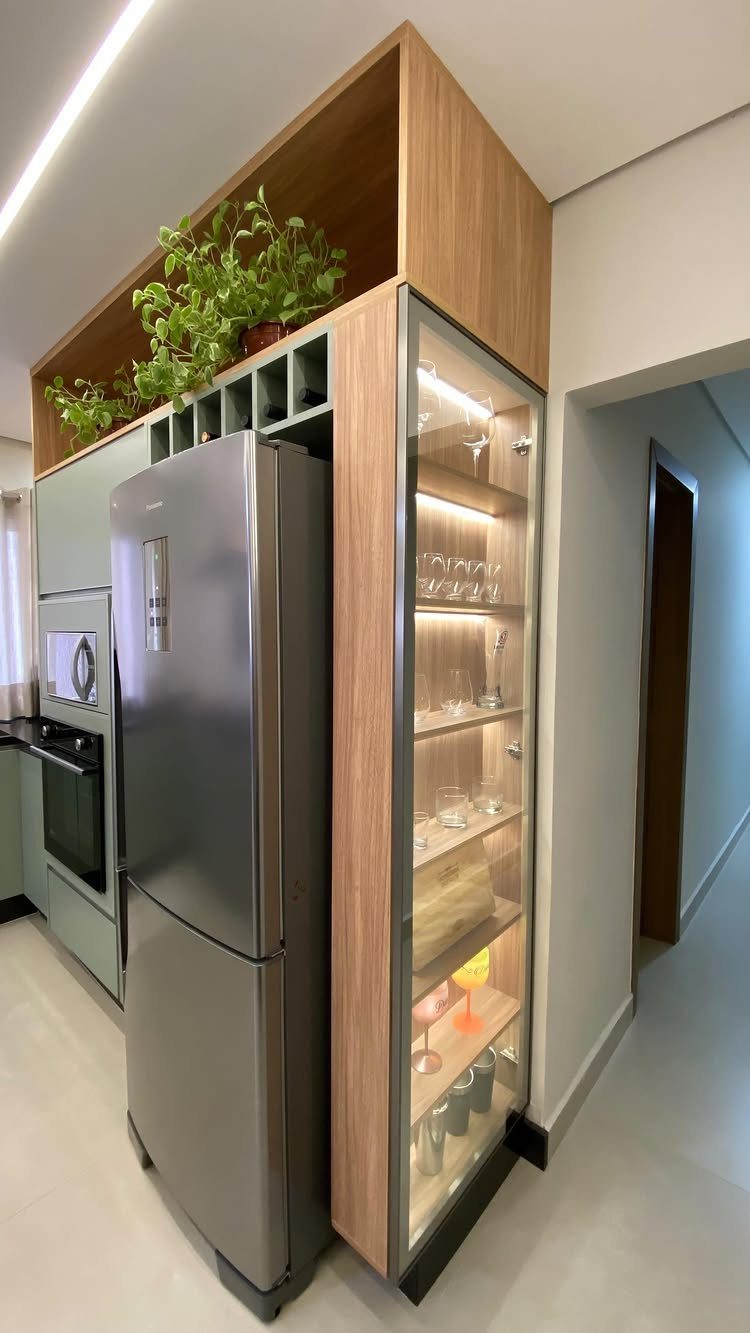
A glass-front cabinet next to the fridge stores glassware, dishware or pantry items you want visible. Interior lighting makes the display easier to see and adds a finished look.
This setup requires a tall cabinet, either built in or freestanding, and works best when you have wall space beside the fridge rather than above it. Choose lighter items for upper shelves to avoid strain when reaching.
Not super useful when you have to climb on top of the fridge to get to it!
7. Wine Rack
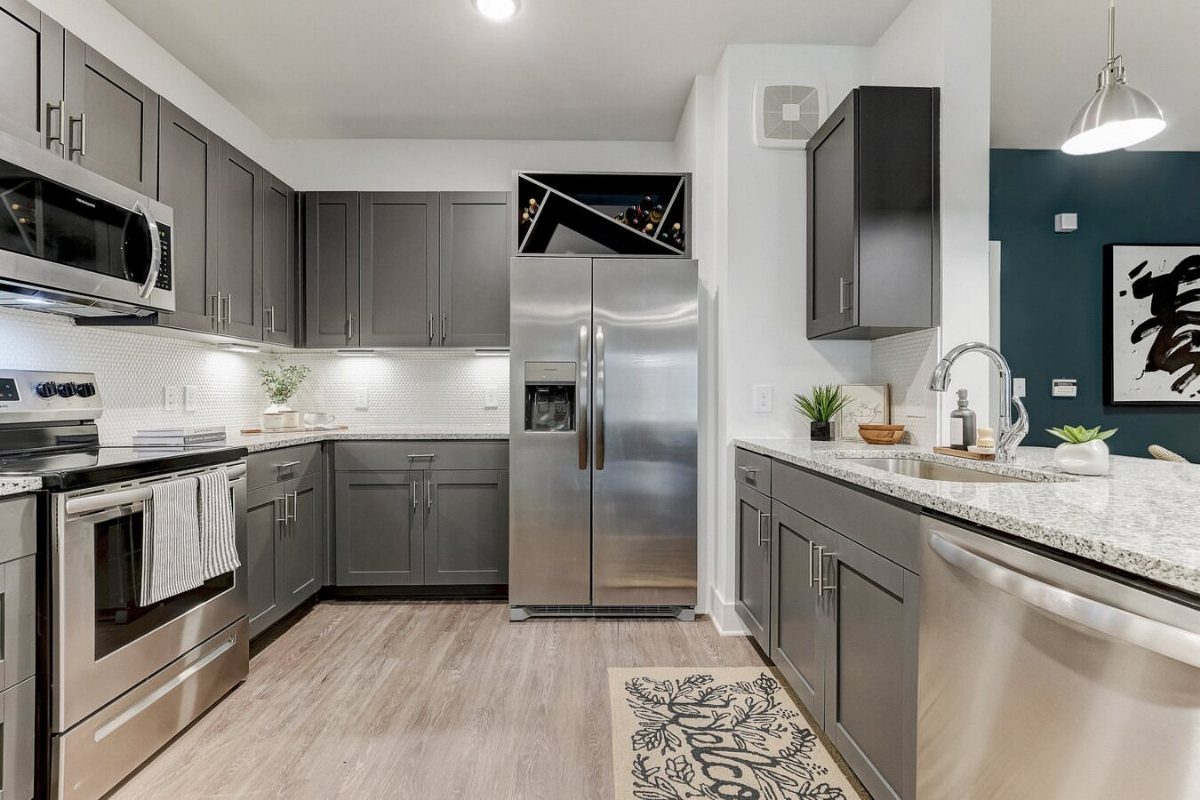
A wine rack mounted in a cabinet above the fridge holds bottles upright or angled, though the heat rising from the compressor makes this spot better for everyday bottles than anything you’re saving.
Install one inside an upper cabinet or leave the front open if you prefer the bottles visible.
Most built-in racks are wood or metal inserts that fit standard cabinet widths.
Bottles store horizontally to keep corks moist, so angle the rack if long-term storage matters. For everyday wine, upright storage works fine.
8. Under-shelf Baskets
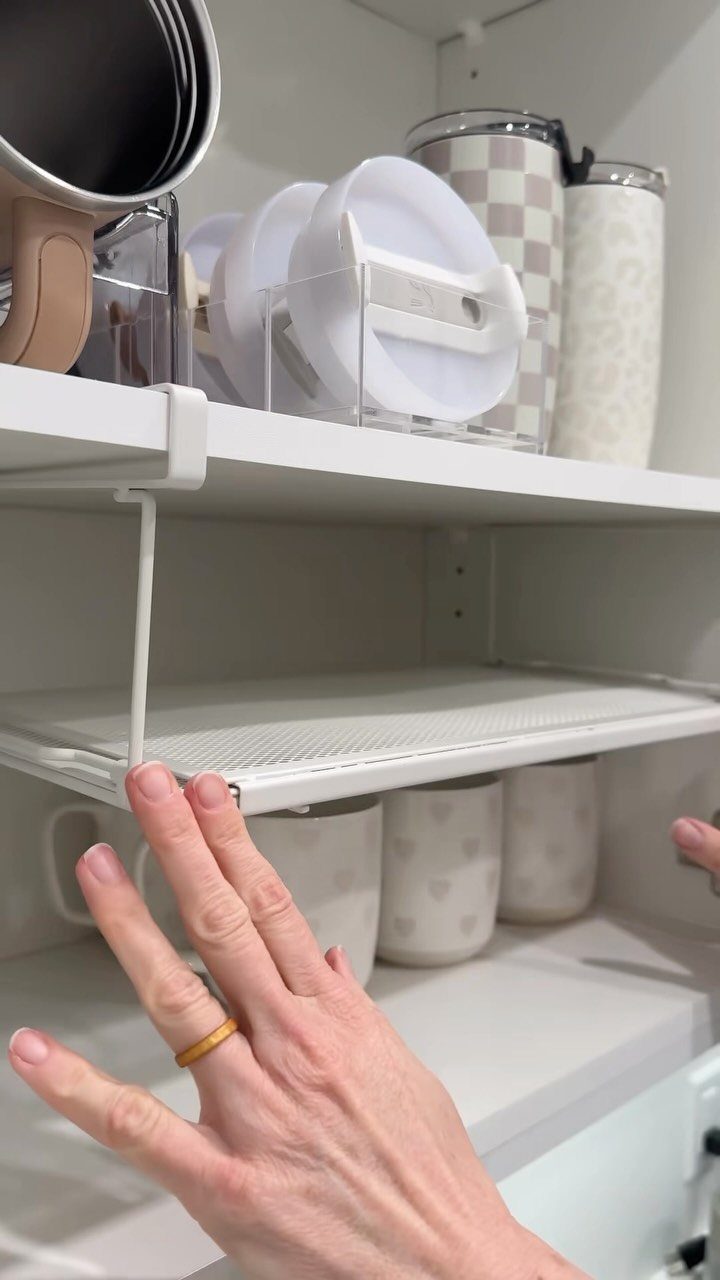
An under-shelf basket hangs from the bottom of a cabinet shelf to hold mugs, small containers or pantry items that would otherwise sit stacked on the shelf below.
Hook the basket over the existing shelf edge and slide it out when you need what is inside.
Wire baskets fit most standard shelf thicknesses and hold lighter items best. Check the basket depth against your shelf spacing so it does not block what sits below.
9. Tall Shelving Beside Fridge
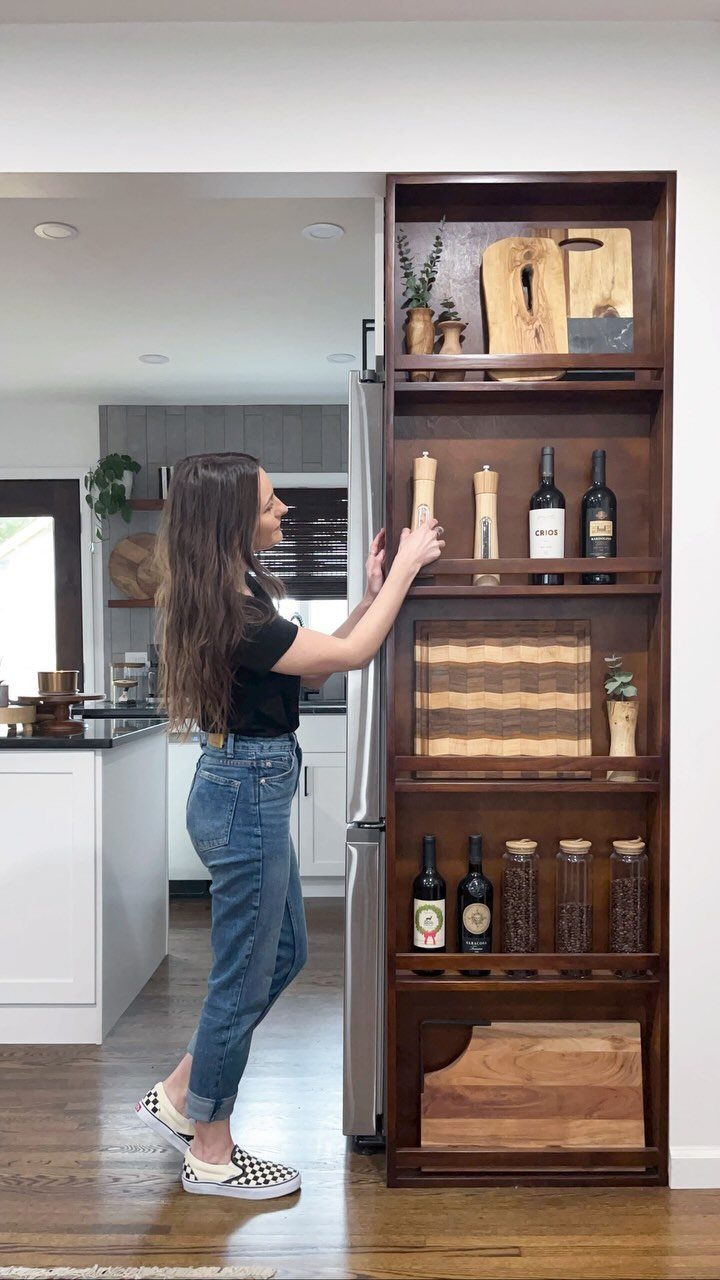
A freestanding shelving unit next to the fridge adds vertical storage for cutting boards, jars, bottles or kitchen tools without mounting anything to the wall.
Open shelves let you reach items quickly and change what you store as your needs shift.
Choose a unit tall enough to match or exceed fridge height so the top shelf stays within reach. Wood units hold heavier items than wire, and a narrower footprint works better in tight kitchens.
10. Over-fridge Shelving Unit
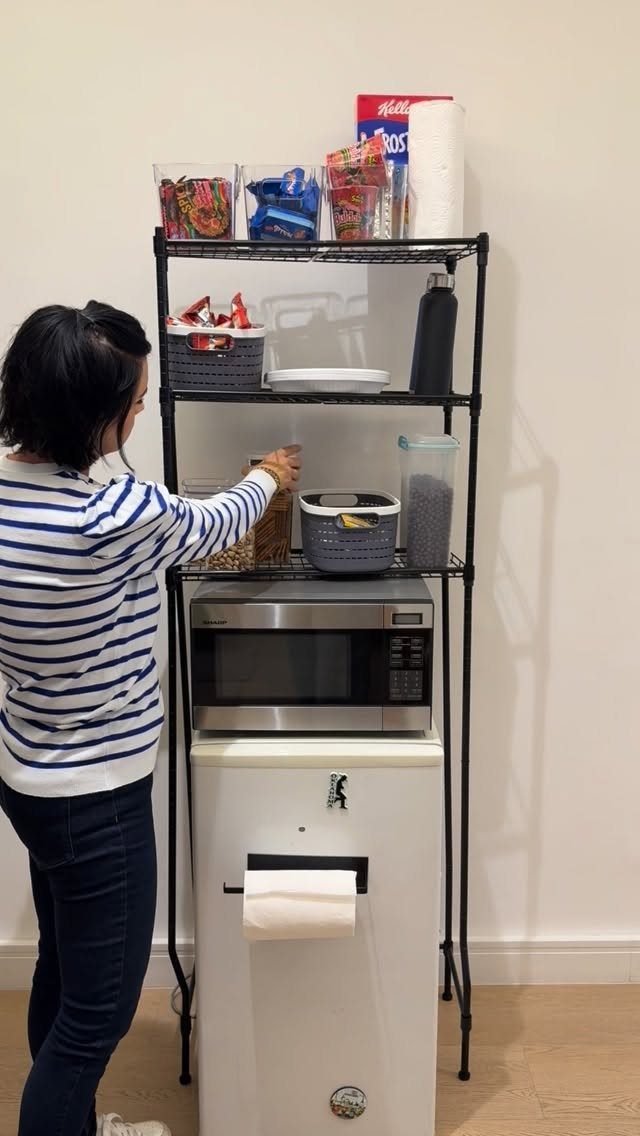
A metal shelving unit placed over a mini-fridge creates multiple levels of storage for snacks, small appliances and bins. The fridge sits on the floor, the shelves rest on top, and you stack what you need on each level.
This setup works best in dorm rooms, offices or small apartments where a full-size fridge is not an option. The unit supports the weight of a microwave and several bins without tipping.
11. Pull-out Cabinet Shelves
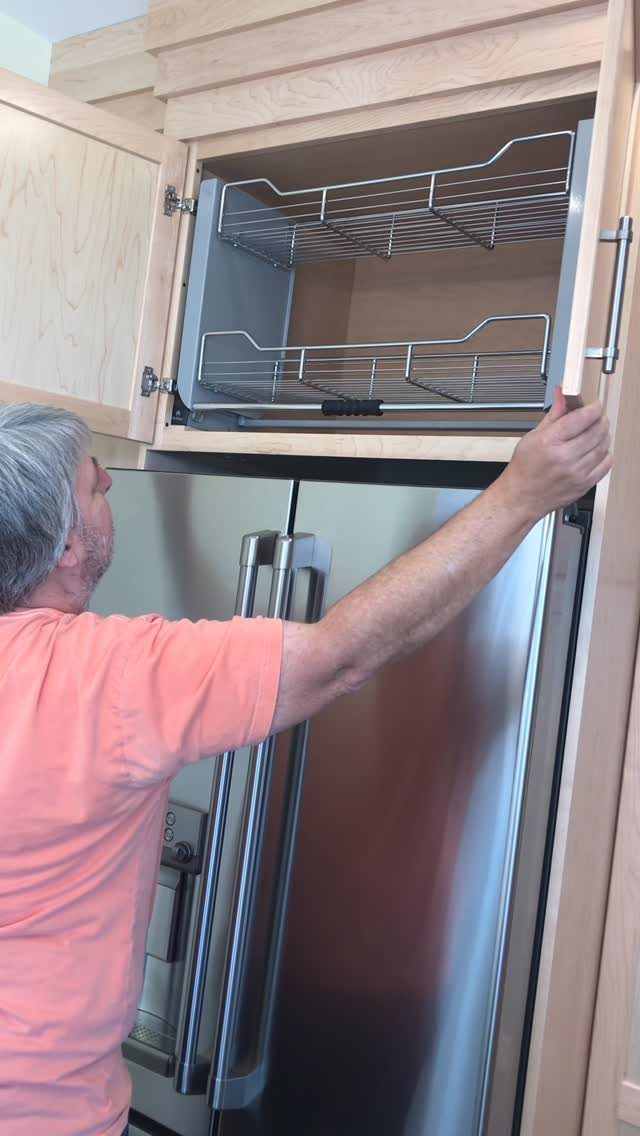
Pull-out shelves in a cabinet above the fridge slide forward so you can reach stored items without climbing or pulling everything out front.
Mounting hardware attaches to the inside of the cabinet box, and the shelves glide on tracks. Measure the cabinet depth first so the shelves pull out past the door frame when you need them.
12. Use the Space Above
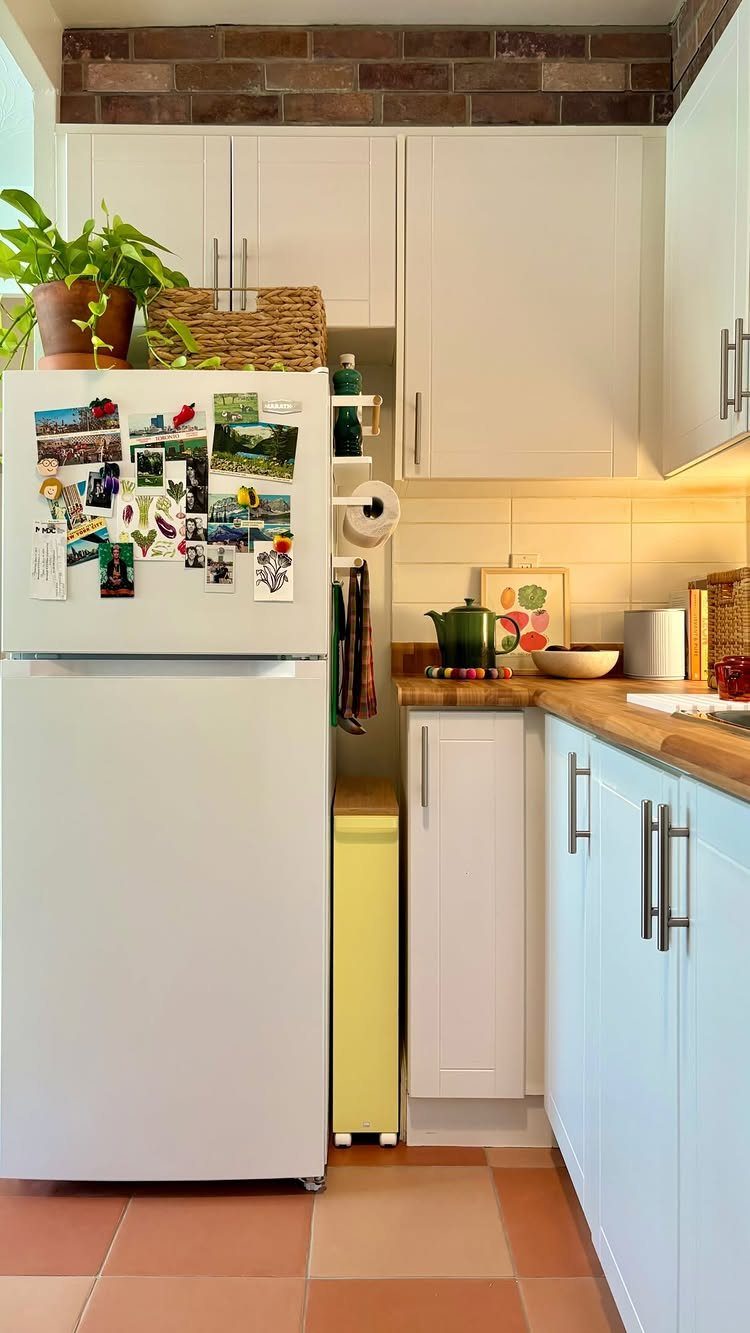
The flat top of a refrigerator holds baskets, plants or items you do not reach for daily. A woven basket corrals smaller items, and a potted plant adds greenery without requiring counter space.
Choose lightweight items if your fridge sits below upper cabinets, since you will need to reach overhead. Dust accumulates quickly on top of the fridge, so store items that can be wiped down or moved easily when you clean.
Measure and Allow Ventilation
Measure the height from the top of your fridge to the ceiling before you buy shelves or cabinets.
Account for the door swing if the fridge sits near a corner, and check that bins or shelves will not block the opening arc.
Refrigerators need airflow at the back and sometimes along the top to keep the compressor cool.
Leave clearance behind any cabinet or bin you install so air can circulate. Blocking vents forces the motor to run longer and can shorten the appliance’s life.
If your fridge sits inside a cabinet surround, verify that the original install left room for ventilation.
Safe Access and Loading
Store lightweight items like empty baskets or dish towels on high shelves above the fridge. Keep glass, ceramic or anything heavy below shoulder height so you are not lifting it overhead.
A foldable step stool kept in the pantry or beside the fridge gets you to the upper shelves without standing on a chair.
Choose one narrow enough to tuck into a gap and sturdy enough to hold your weight on the top step.
Bins on top of the fridge slide easily, so push them toward the back wall or choose containers with textured bottoms that grip the surface. Avoid stacking items more than one layer deep where you cannot see what sits behind.
Frequently Asked Questions
What can I do with open cabinets above my refrigerator?
Store decorative baskets, display cookbooks upright, install tray dividers to hold baking sheets on edge, or mount a wine rack for bottles.
If you add lighting inside, the cabinet turns into a display for items you want visible rather than hidden storage.
Can the front of my refrigerator match the cabinetry above?
If you want the fridge to disappear into the cabinetry, a panel-ready model lets you attach doors that match the rest of the kitchen. The panels attach to the fridge doors and create a uniform look across the kitchen.
Would an open cabinet with lighting for decorative items over my refrigerator look good?
An open lit cabinet works well if you are not using the space for everyday storage. It gives you a spot to display favorite pieces, and the lighting finishes the look while keeping the items visible from across the room.
How do I organize the top of my refrigerator?
Group similar items in baskets or bins so they stay contained rather than spreading across the surface.
Is it safe to store food or wine on top of the fridge?
Heat from the compressor raises the temperature on top of the fridge, which can spoil perishable food and degrade wine or oils. Store only non-perishables like trays, linens or empty containers in that spot.
How deep should the fridge cabinet be?
Most counter-depth fridges measure 24 to 30 inches deep, so size the cabinet accordingly. A shallower cabinet holds a counter-depth model, or go deeper and let the fridge sit back so its face lines up with the cabinet doors.
What’s the best way to handle cabinet height and future fridge replacements?
I leave a few inches of clearance above the fridge, targeting around 73⅜ inches total, so a taller replacement fits down the road and air has room to move.
Fill the gap with a grille or trim piece that looks finished but still lets heat escape.