
An old secretary desk can run from a painted or refinished piece to a rare Biedermeier or bombe example in original condition.
The form you choose depends on how you plan to use it: a drop-front or slant-front works if you need a desk that closes completely, while a kneehole secretary lets you sit and work without folding anything down.
Check the writing surface and fitted interior before you buy, since worn leather and loose veneer are expensive to repair, and measure the height when the desk is open to confirm it lands at a comfortable working position.
1. Biedermeier Secretary
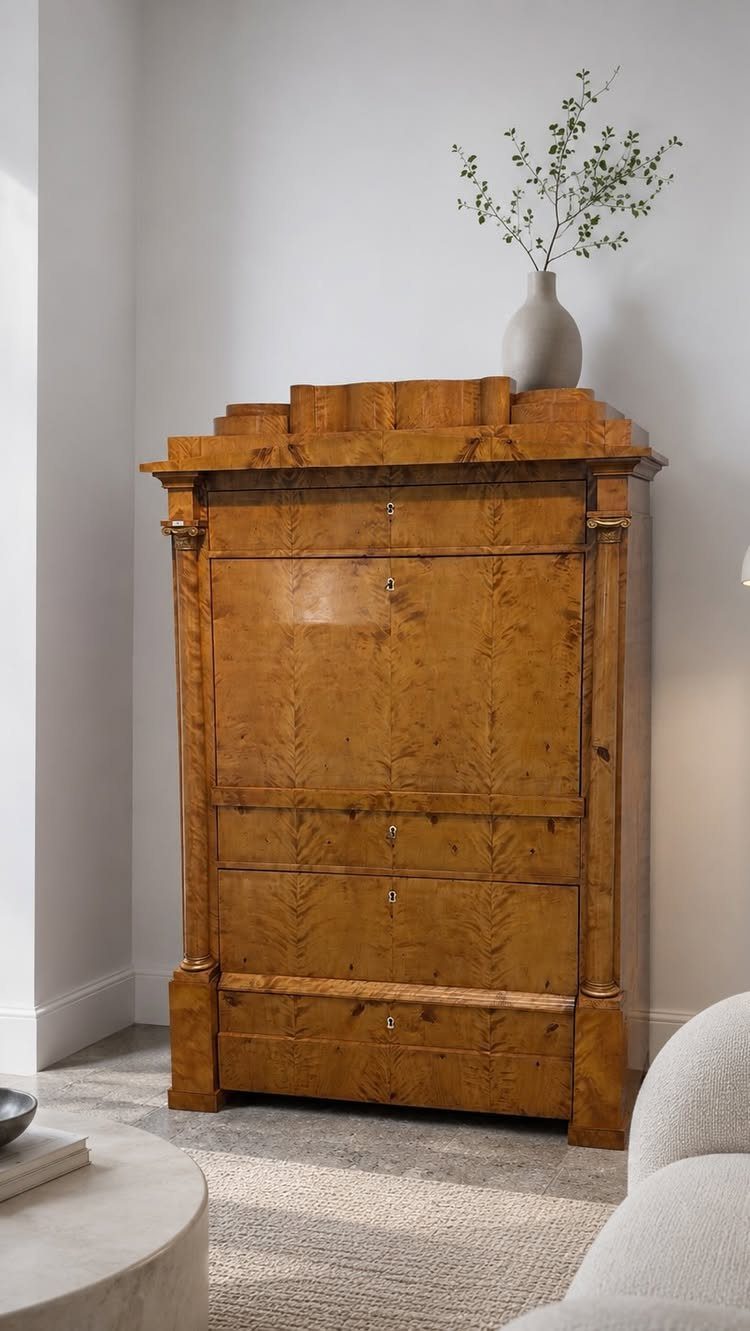
A Biedermeier secretary brings geometry and warmth together in one piece. The figured veneers, usually fruitwood or birch, catch light across the surface and give the desk character without adding carved ornament.
The stepped top and clean lines fit well in a small room where a heavily carved piece would feel too large.
If you want something practical that still reads as an antique, this style delivers storage and a writing surface without the bulk of an Empire or Victorian secretary.
The light wood works in a room with modern furniture, which most secretary styles do not.
2. Chippendale Secretary Desk
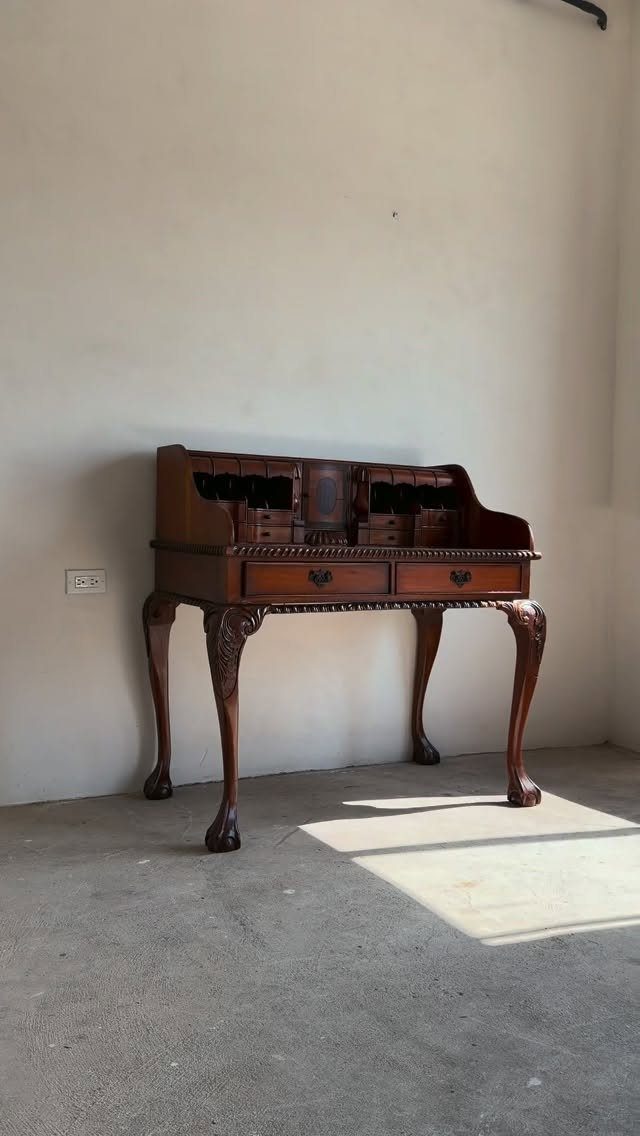
A Chippendale secretary gives you the carved details and cabriole legs that define the style, scaled down into a piece that fits against a wall.
The small drawers in the upper section hold paperwork or supplies, and the writing surface drops or pulls out depending on the desk’s configuration.
If you like 18th-century furniture but need something narrower than a full desk, this form works. The legs lift the piece off the floor, which makes a small room feel less crowded than a desk with a solid base.
Look for intact hardware and a writing surface that still locks. Those are the first things to wear out.
3. Slant-Front Desk
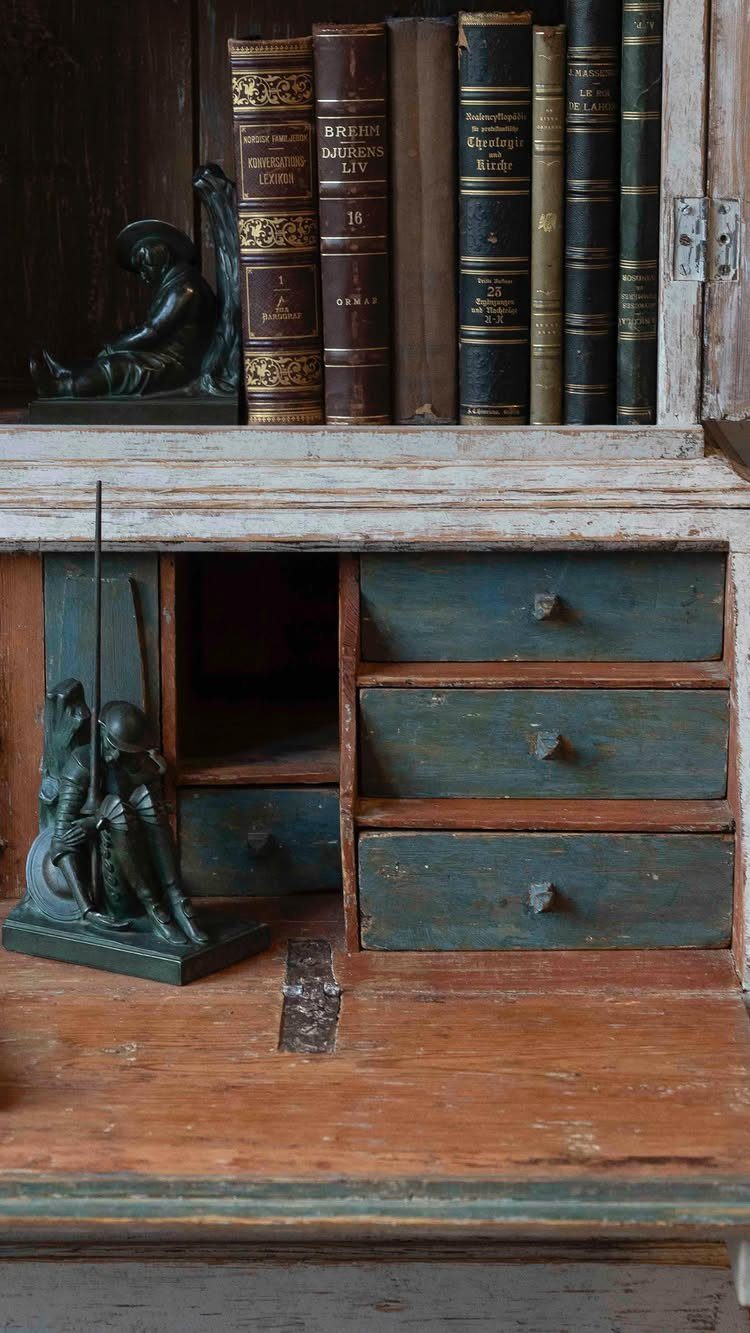
A slant-front desk tucks its fitted interior behind a hinged lid that folds down to form the writing surface. Inside, small drawers and cubbies hold letters, receipts, and whatever else needs sorting.
This form shows up in Colonial, Federal, and Victorian secretaries, so the outer case can look plain or highly decorated depending on the period.
The shelf holds books and objects, turning the desk into a display piece when the lid is closed.
Check that the lid hinges still work smoothly. If they bind or drop too fast, the desk will need repair before you can use it safely.
4. Empire Secretary
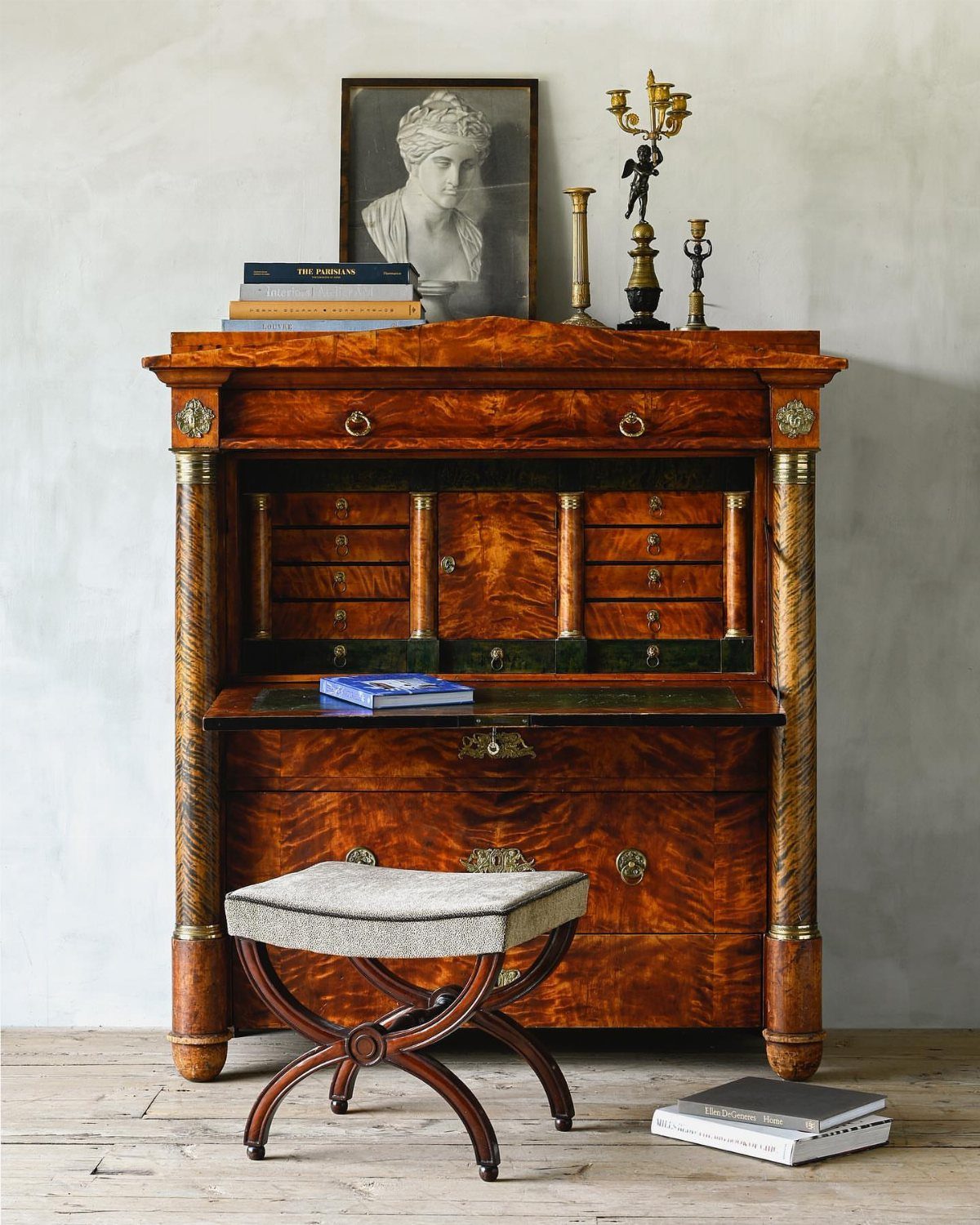
An Empire secretary takes its cues from neoclassical architecture: symmetrical columns, a formal silhouette, and surfaces that stay flat rather than carved. The writing area sits between the columns, and drawers or doors flank it on either side.
This style reads as grand even in a smaller piece, so it anchors the space rather than blends in. The matching stool is typical of Empire furniture, which was often sold as a set.
If the piece feels too formal, the portrait and books soften it. A secretary like this one benefits from styled shelves that balance its weight.
5. Antique Secretary Bookcase
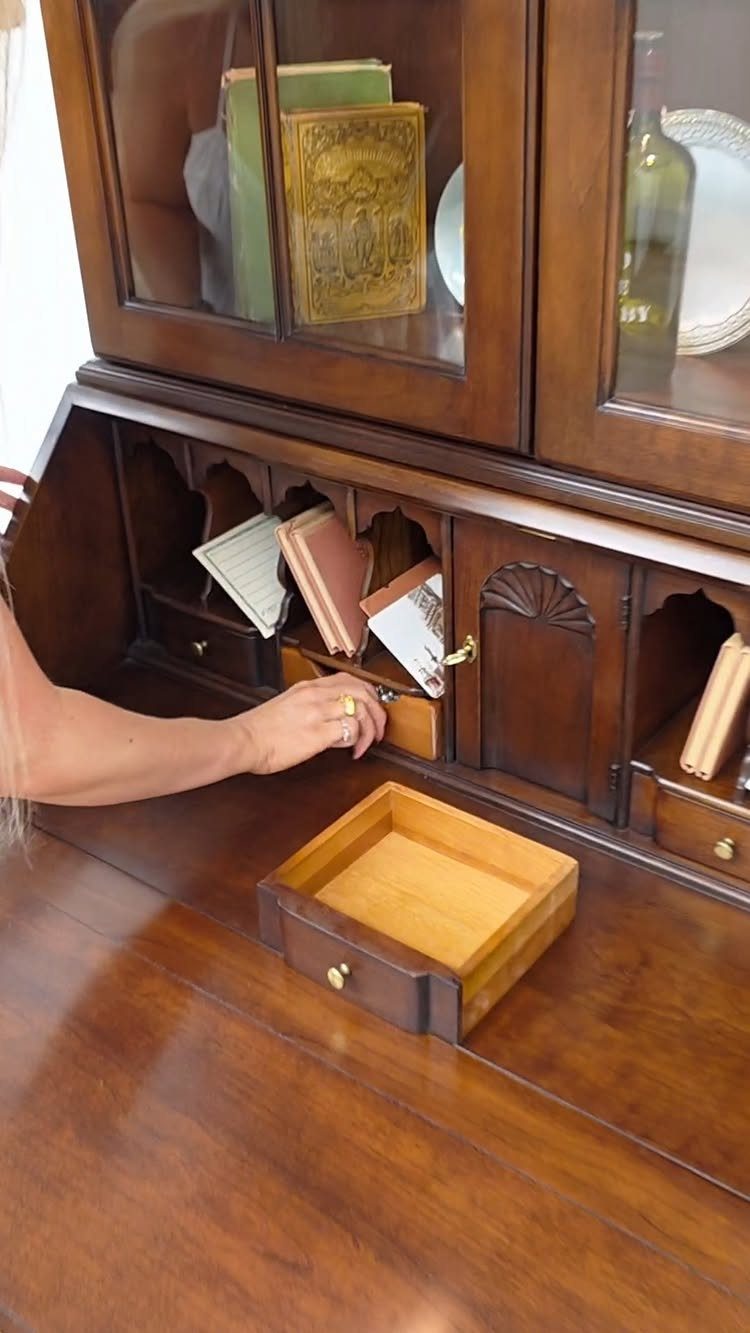
A secretary bookcase stacks a writing desk and a bookshelf into one vertical piece, which saves floor space in compact layouts.
The upper section holds books, decorative objects, or glassware behind doors or open shelves, and the lower section provides the writing surface and storage drawers.
This combination works well if you need both a desk and a bookcase but only have room for one piece of furniture. The pull-out drawers and glass-door upper cabinet are a standard configuration in Victorian and Edwardian examples.
Look for a piece where the upper and lower sections match in wood and finish. Mismatched halves were sometimes paired later and lose value.
6. Antique Secretary Hutch
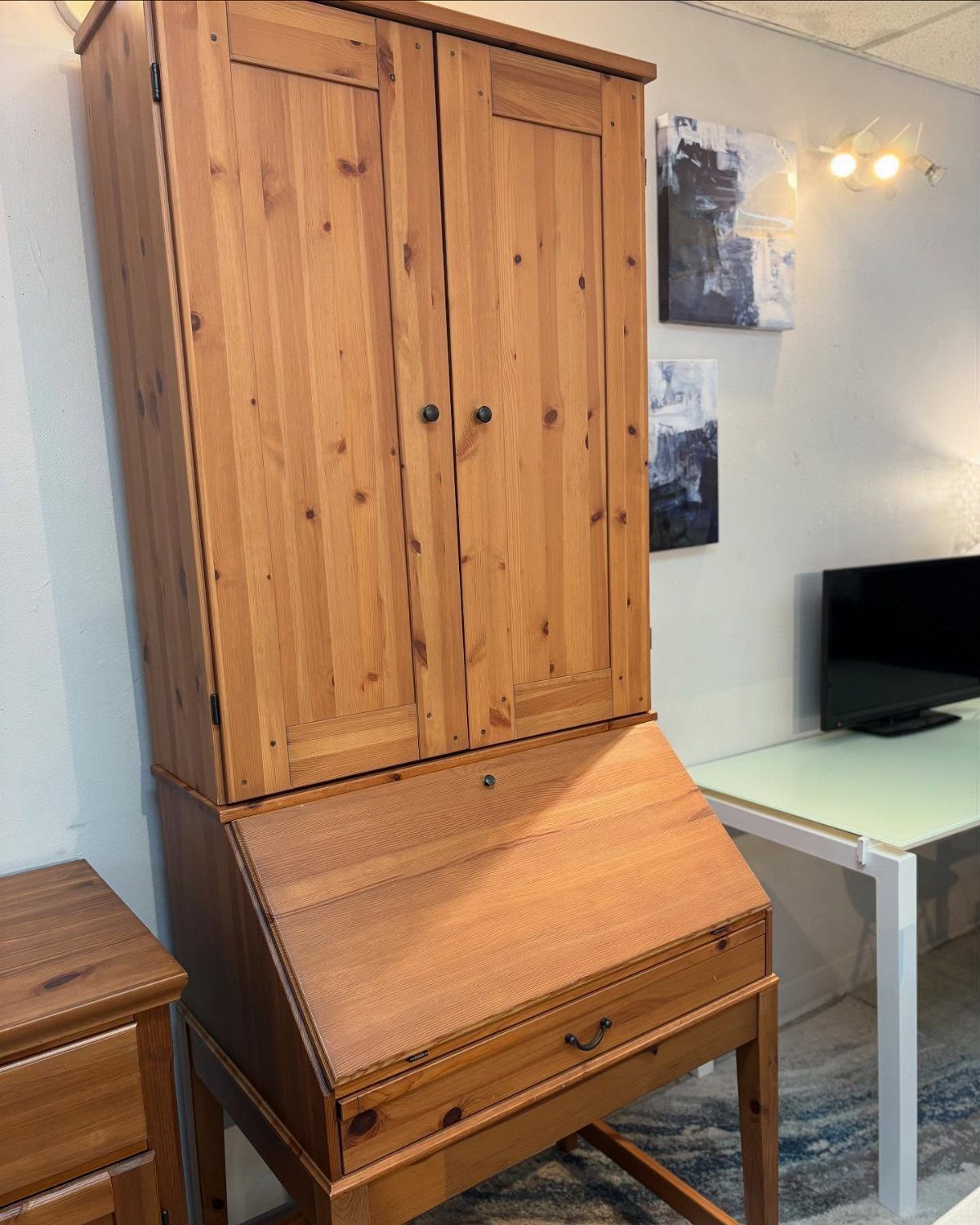
A secretary hutch pairs a drop-front or slant-front desk with an upper cabinet that extends the full width of the piece.
The hutch usually adds closed storage, sometimes with glass doors, and gives the desk a taller profile that fills a wall while leaving the floor open.
This style works in a room where you want a single piece to handle both display and storage. The tall upper section can hold dishes, books, or linens, and the desk below stays available for writing or paperwork.
If the hutch feels too heavy, remove or replace the doors. Some versions have solid wood doors that make the piece look closed off.
7. Cylinder Roll Secretary
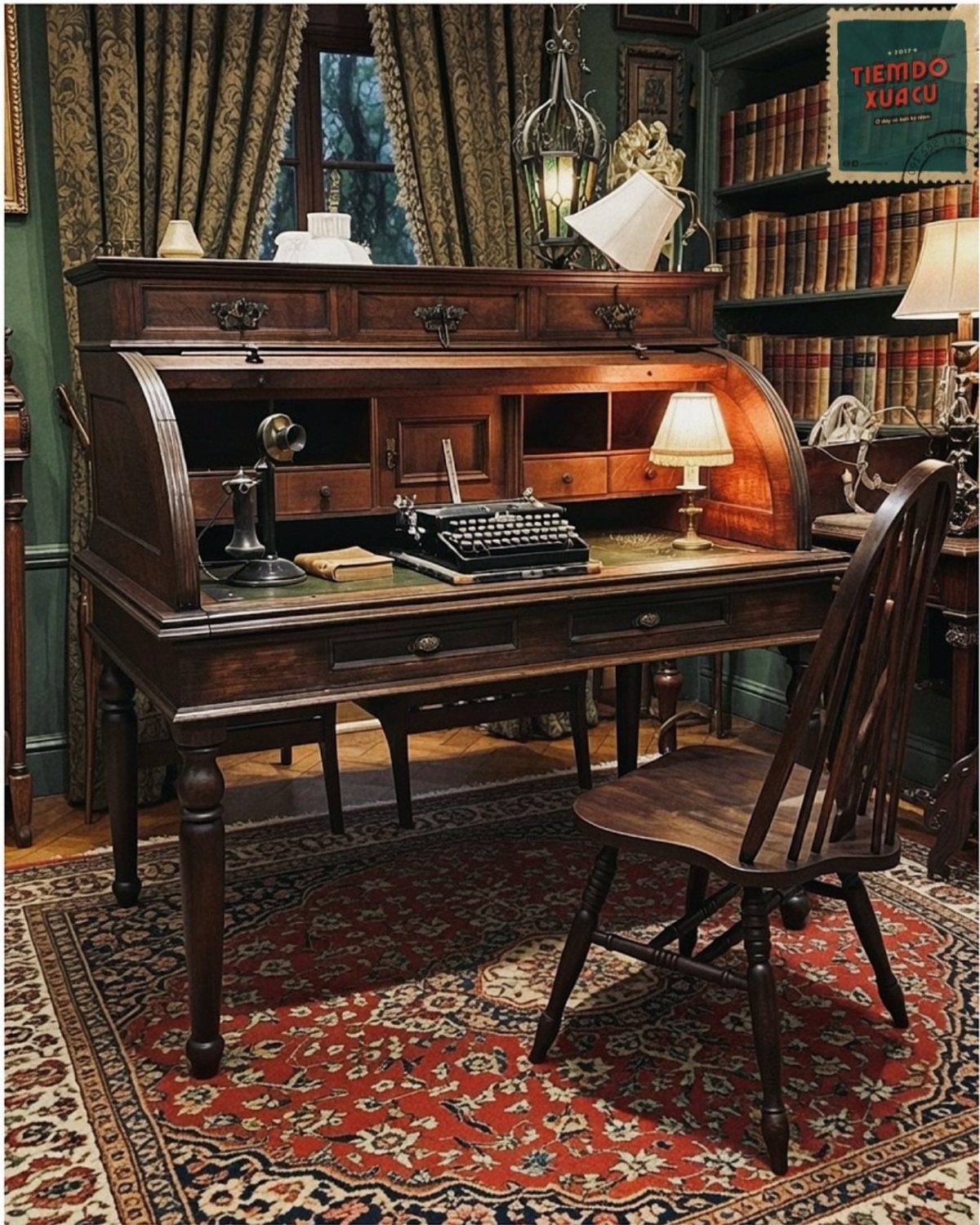
A cylinder roll secretary closes with a quarter-round tambour that slides down to cover the writing surface and the fitted interior.
The curved front disappears into the desk body when open, which keeps the profile clean and saves the space a drop-front would need.
This closure is easier to operate than a flat roll-top and less likely to jam. If you need a desk that closes completely but don’t want the bulk of a slant-front, this form works.
The fitted interior behind the roll usually includes small drawers and slots for organizing paperwork. Check that the tambour tracks smoothly before you buy.
8. Queen Anne Secretary
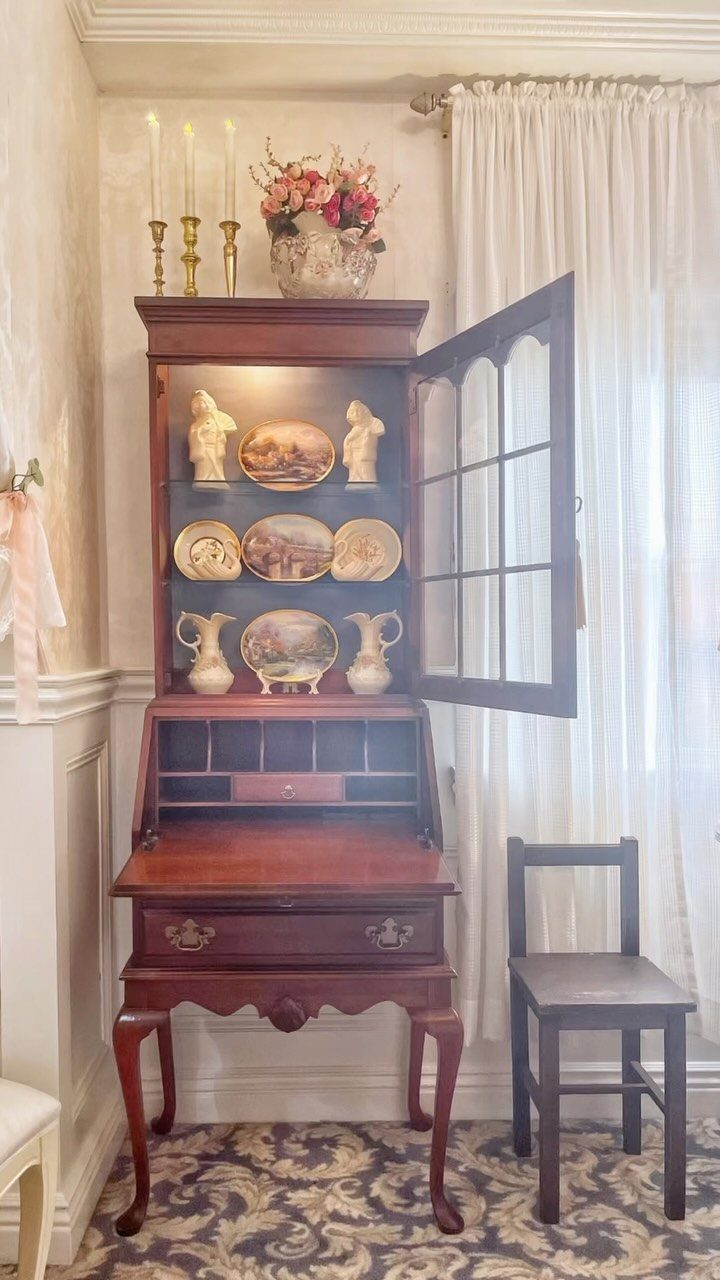
Cabriole legs raise the case high enough that the floor shows beneath it, and that gap gives the form a visual lift a flat-footed base cannot match. The arched top and shaped hardware follow the curves that define the style.
In a compact space, this form holds its own without crowding the walls or the sightlines. The open upper section displays plates, books, or objects without the closed feel of a glass-door cabinet.
The cabriole legs are the first place to check for damage. Repairs at the ankle or knee are common and affect value.
9. French Louis XV Secretary
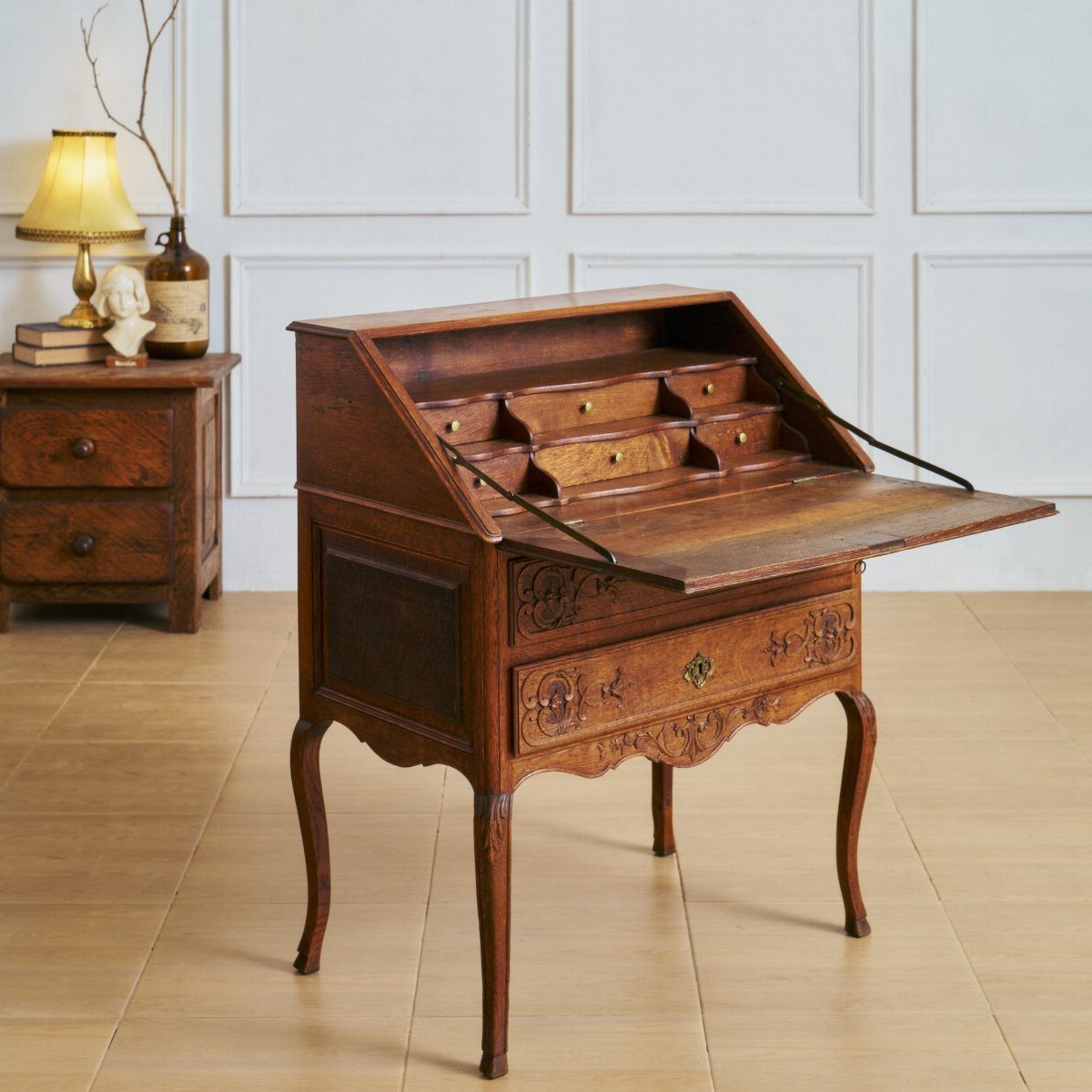
The slant-front opens to a fitted interior with drawers and cubbies, and the light wood finish keeps the piece from reading too heavy.
This style suits a bedroom or a formal living room where you want something decorative that still functions as a desk. The carved apron and shaped legs give the piece character without the bulk of an Empire or Victorian secretary.
The curved legs are prone to breaks at the joint. Look for stable legs and original hardware before you commit.
10. Danish Modern Secretary
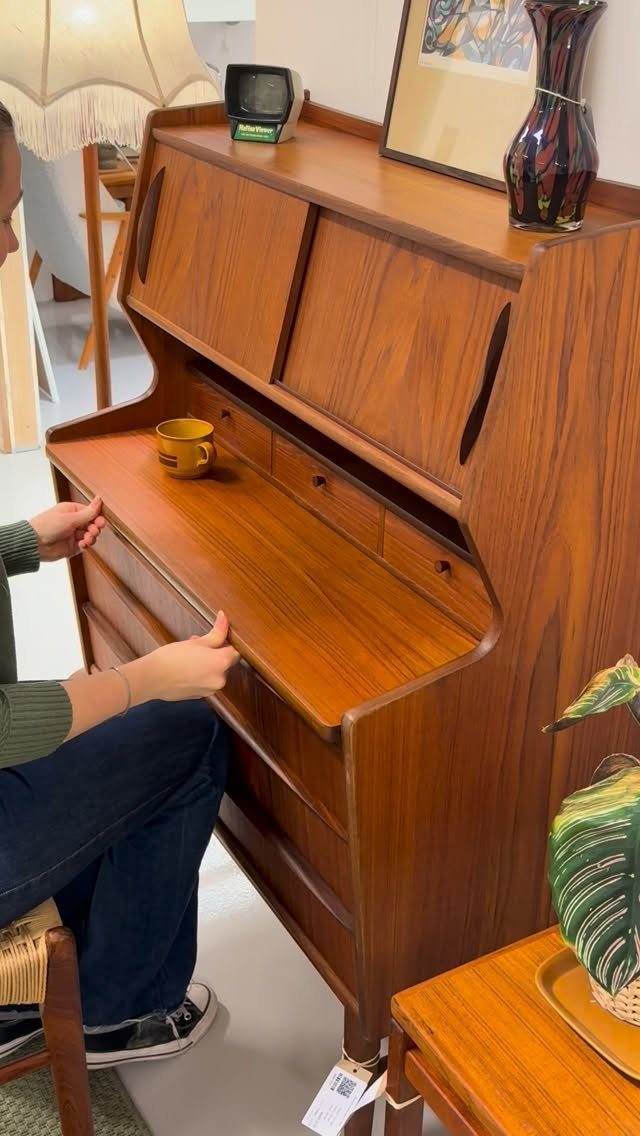
A Danish Modern secretary strips the form down to clean lines, teak veneer, and a fold-down writing surface that disappears when closed.
The upper drawers and lower storage fit paperwork and supplies into a narrow footprint, which makes this style practical for a small home office or a bedroom.
The light wood and simple hardware blend with mid-century furniture, and the piece reads as functional rather than decorative. If you want a secretary that doesn’t announce itself as an antique, this is the one.
Teak veneer chips easily at the edges. Check the fold-down surface and drawer fronts for intact veneer before you buy.
11. Painted Secretary Desk
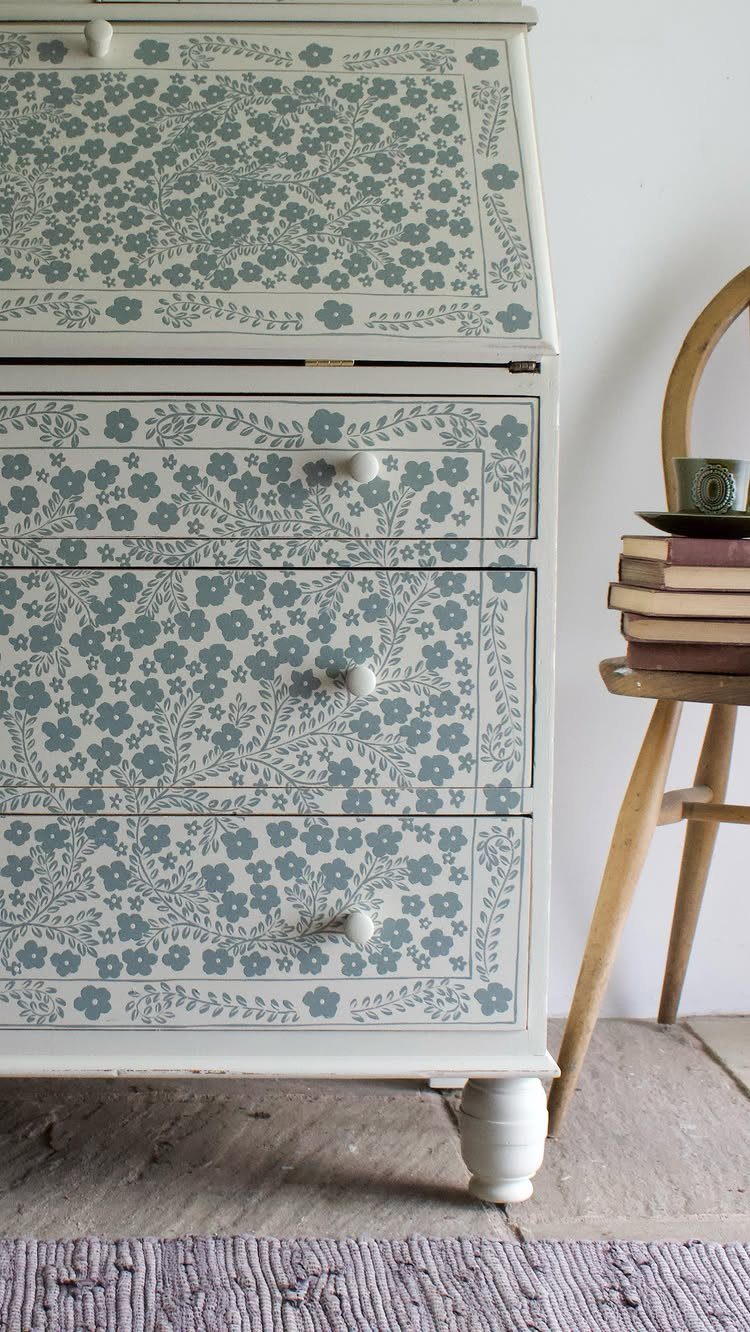
A painted secretary adds pattern and color to a form that can otherwise feel too dark or formal.
The painted panels on the drop-front and drawers turn the desk into a decorative piece, and the lighter finish works in a room where a dark wood secretary would feel too heavy.
This treatment shows up on both antique and refinished pieces. If the paint is original, the desk holds more value, but a well-done repaint can still look good and cost less.
Check the painted surface for chips and wear, especially on the drop-front, which opens and closes frequently. Touch-ups are easier on flat panels than carved details.
12. Living Room Secretary
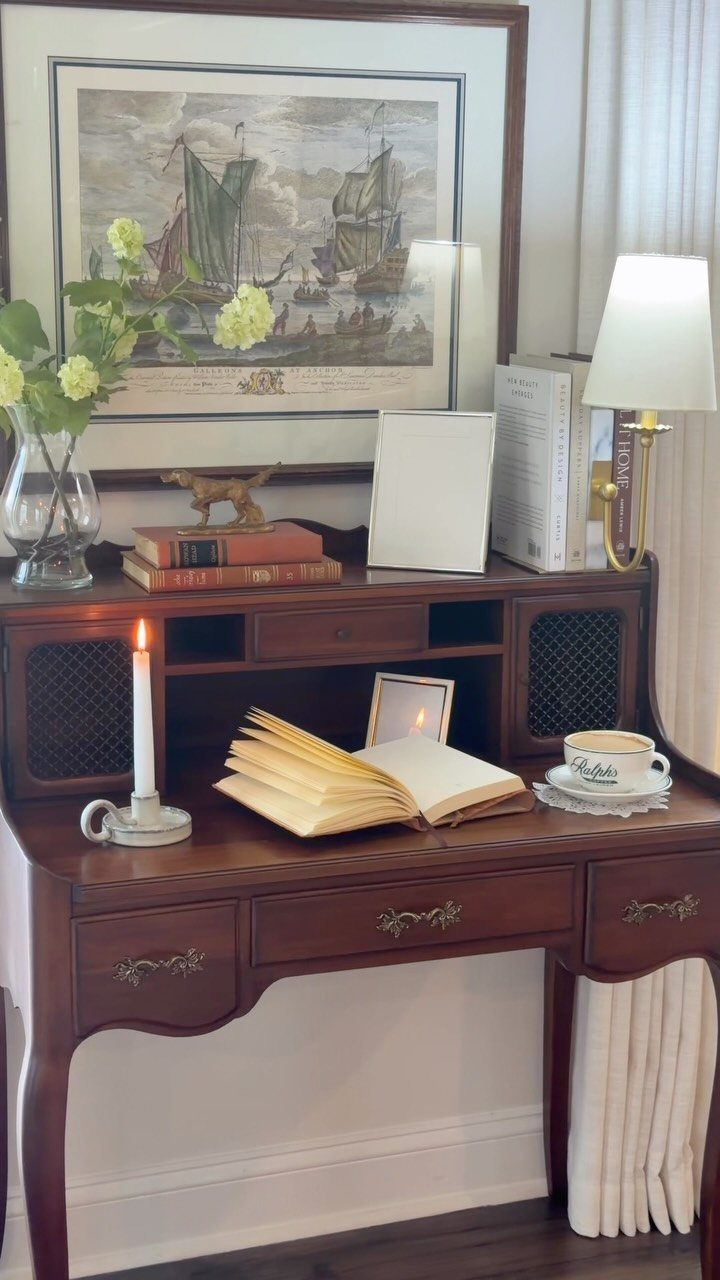
A secretary in the living room gives you a surface for display and a place to handle paperwork without dedicating a room to a desk.
The upper shelves hold books, art, or objects, and the writing surface drops down when you need it and closes when you don’t.
This placement works if you don’t have space for a separate office but still want a desk that looks like furniture rather than equipment.
Style the shelves with items that match the room, which keeps the piece from reading as leftover office furniture.
Choose a secretary that suits the room’s scale. A tall secretary bookcase can anchor a wall, while a smaller slant-front fits next to a sofa.
13. Bedroom Secretary
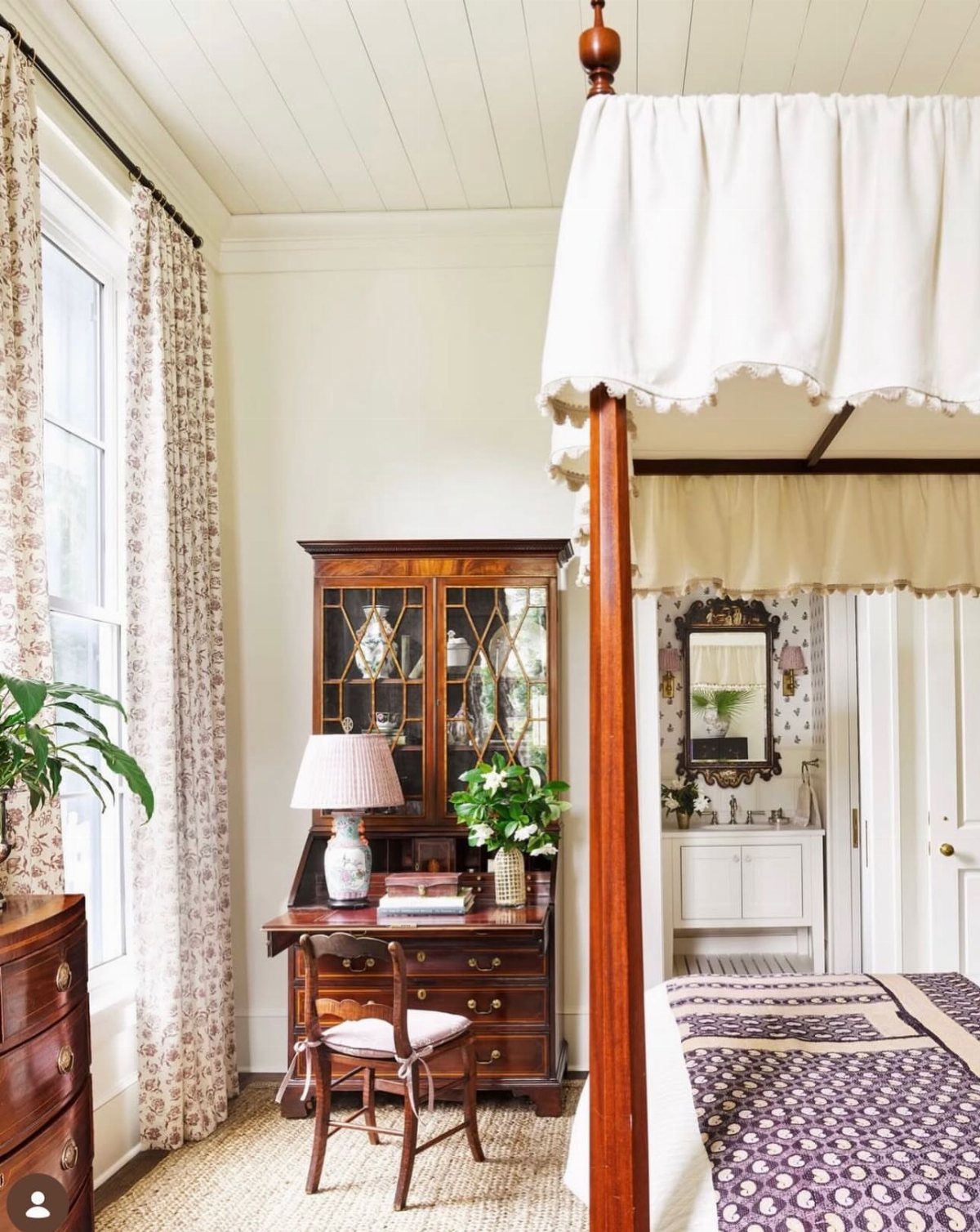
A secretary in a bedroom gives you a writing surface and storage in the footprint of a single piece.
This setup works in a small bedroom where floor space is tight. The secretary reads as furniture rather than office equipment, which keeps the room feeling like a bedroom.
Choose a piece that matches the room’s finish. A painted or light wood secretary fits better in a bedroom than a dark formal piece.
14. Instant Bar
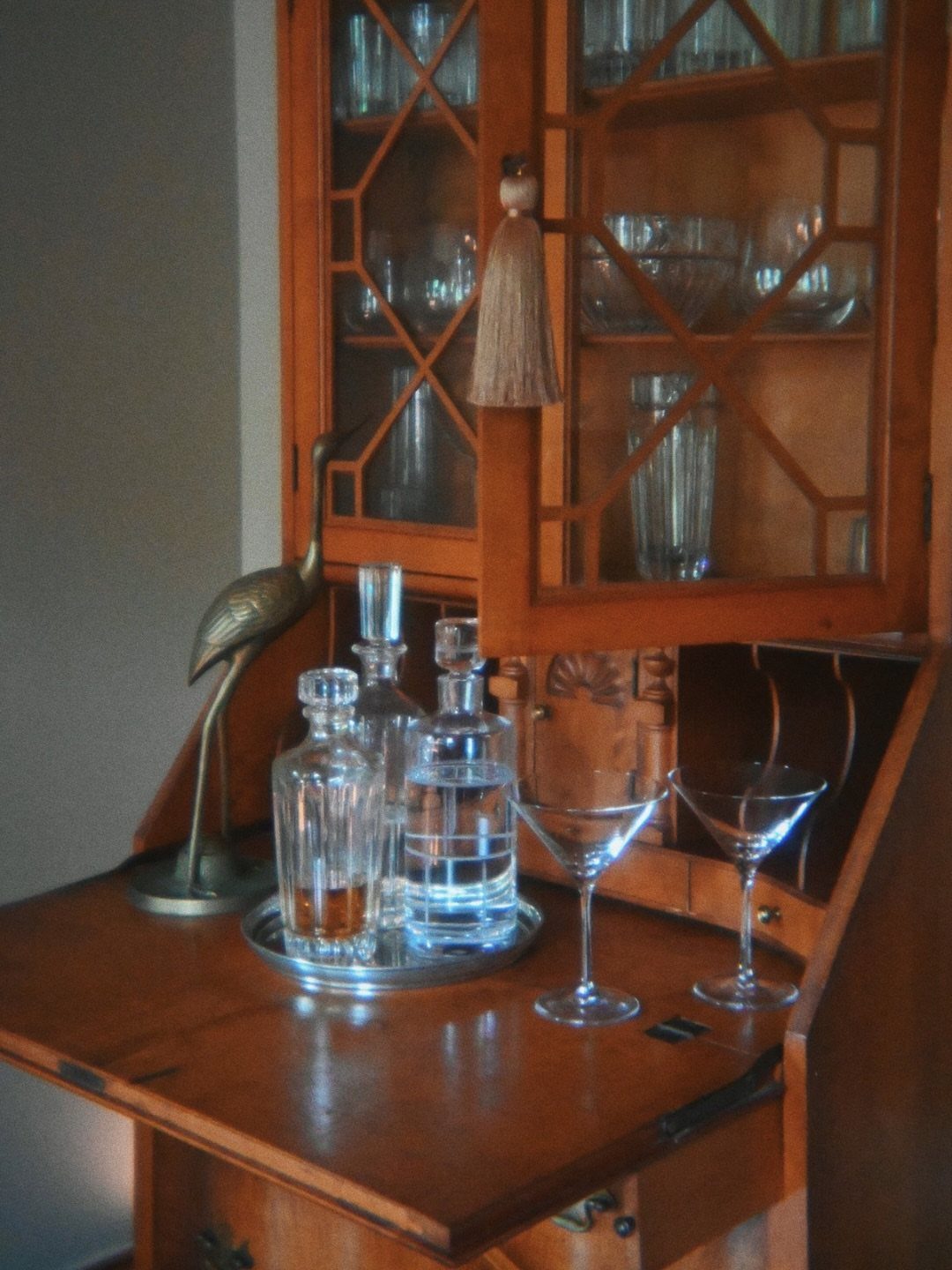
The drop-front surface holds bottles and glassware when you’re serving, and the whole thing closes up when you’re not. The fitted interior organizes bottles by height, and the upper cabinet stores glassware where it stays visible.
This works if you entertain occasionally but don’t want a permanent bar cart occupying your living room. A secretary bar looks like furniture when closed, which makes it easier to place in a living room or dining room.
Stock the interior with what you actually pour. A few bottles and matching glasses look better than a crowded cabinet.
15. Bombe Secretary
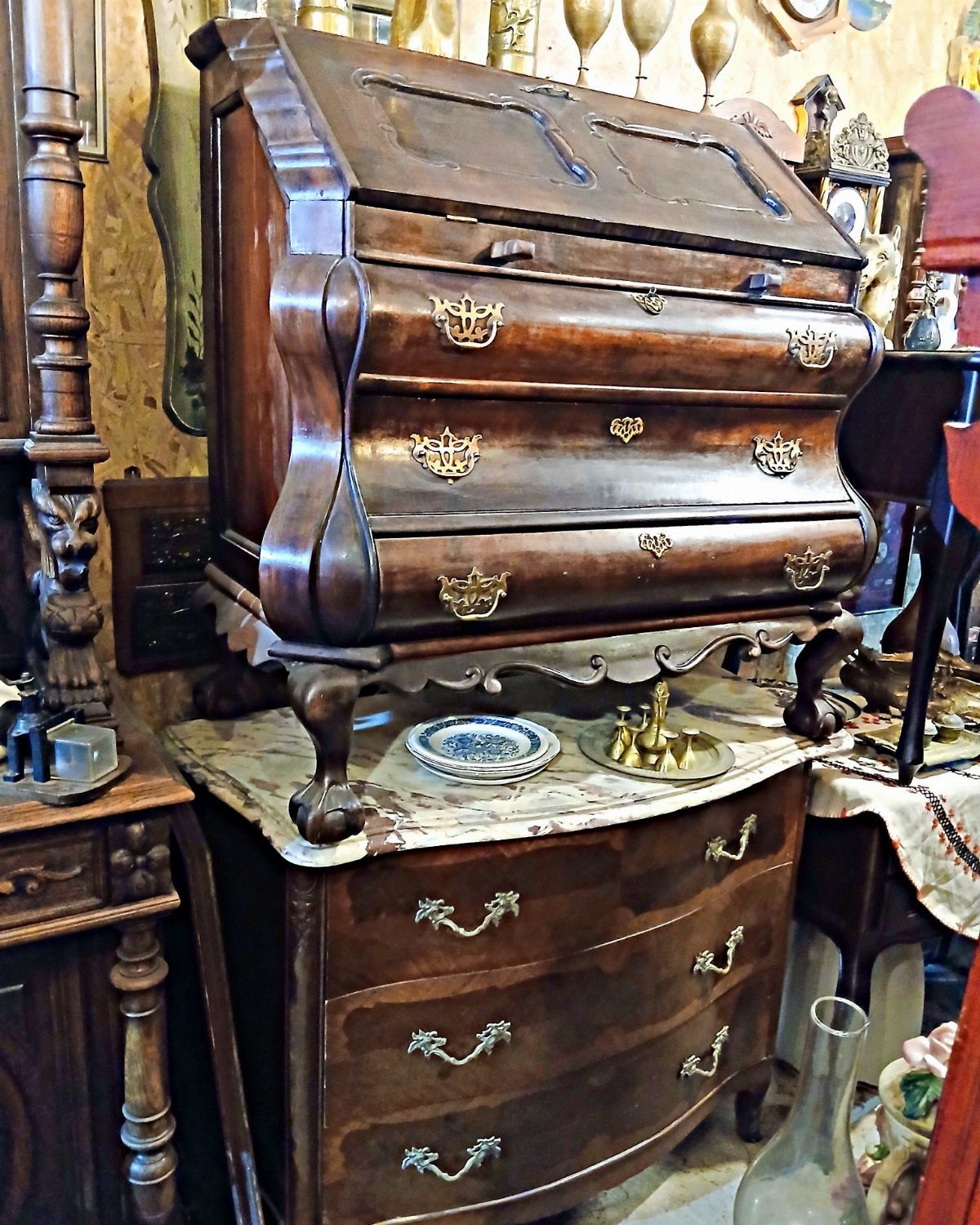
The outward curve at the front gives the piece volume and makes it stand out in a room full of flat-fronted furniture.
This form comes from 18th-century French and Italian design, and the swelled shape shows up on both the secretary top and the chest base.
A bombe secretary takes up more visual space than a flat-front desk, so it works best as a focal point rather than a background piece.
The curved drawers are harder to repair than straight ones, so check that they open smoothly before you buy.
The form pairs well with other curved furniture but can look out of place in a room with only straight lines.
16. Vargueno Desk
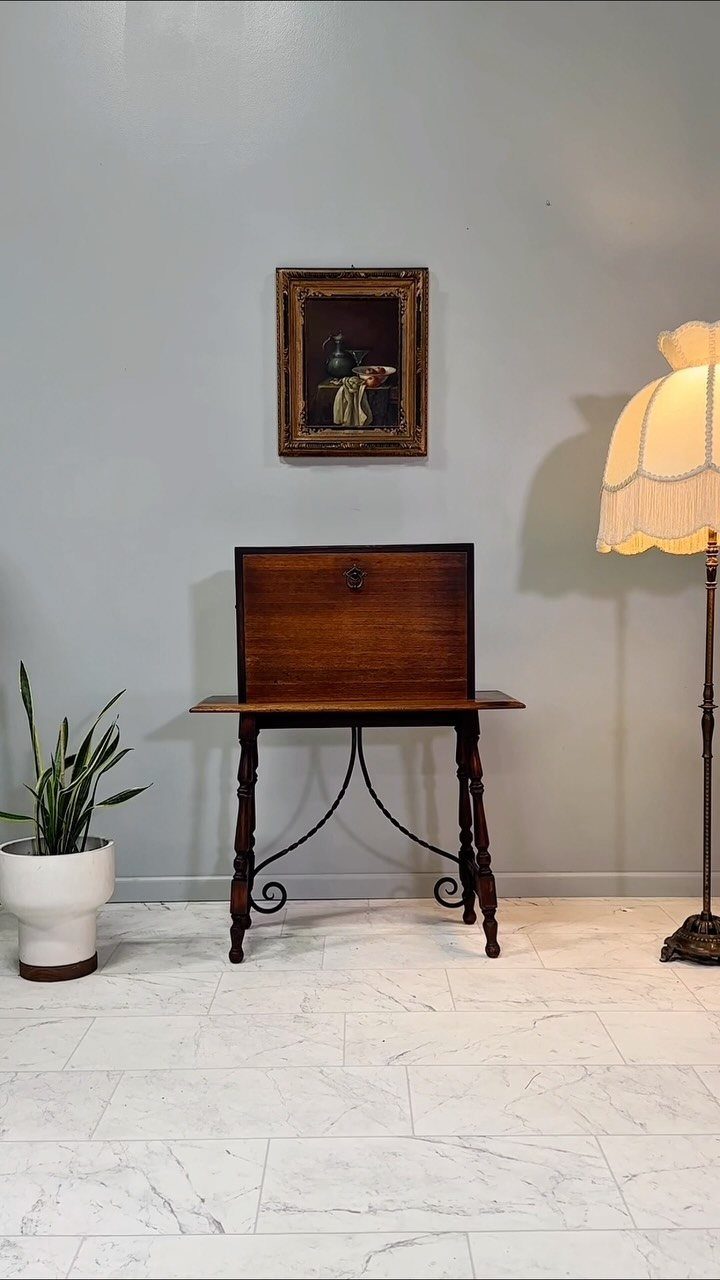
The upper chest sits on a separate stand or base, which means you can replace the support if it breaks or doesn’t fit the space.
The drop-front opens to reveal a fitted interior with small drawers and compartments, often decorated with inlay or metalwork.
This form works if you want a portable desk that doesn’t depend on its base. The metal hardware and iron legs are typical of Spanish colonial furniture, and the combination reads as more rustic than a French or English secretary.
Mismatched pairs lose value.
17. Kneehole Secretary
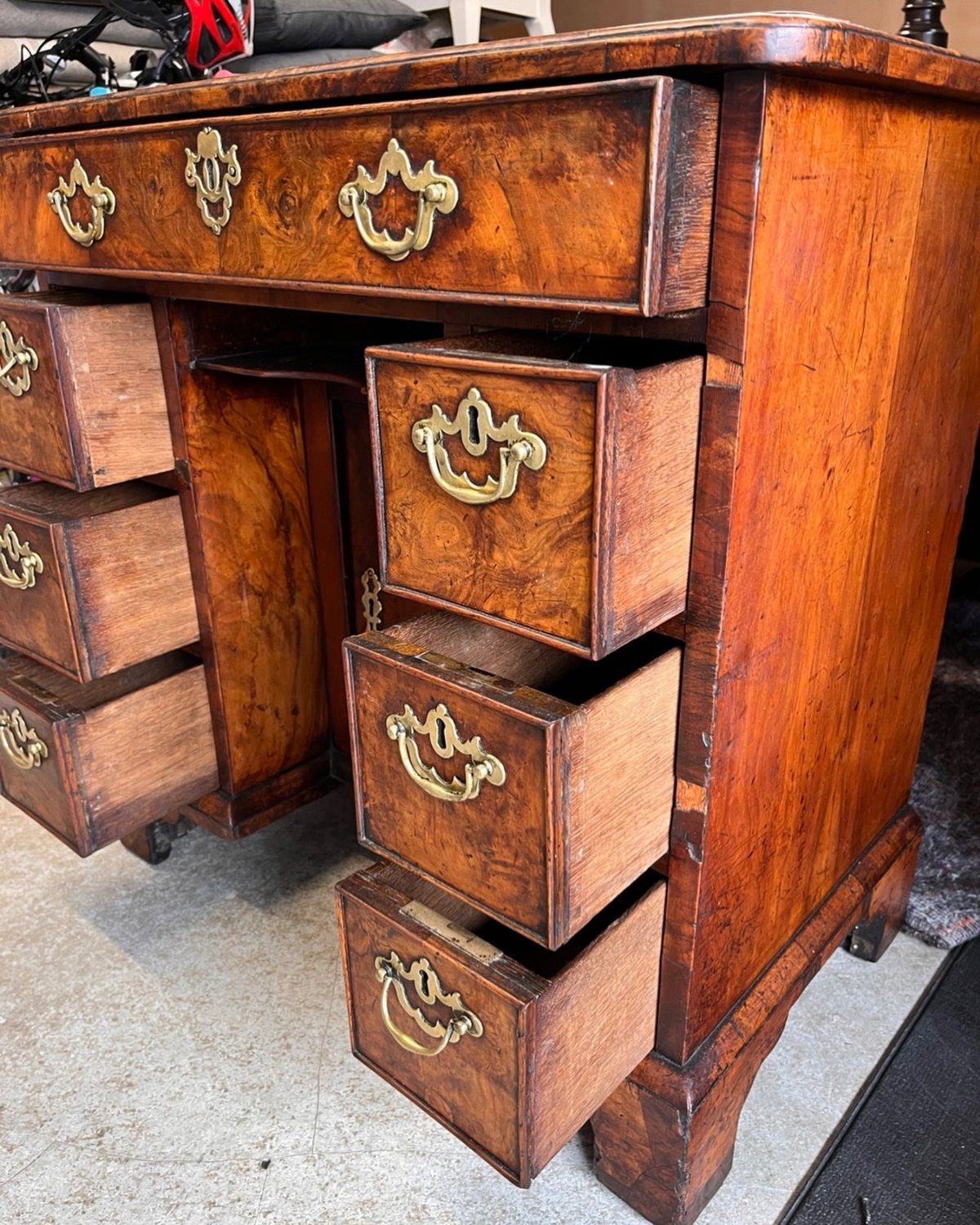
The open space beneath the writing surface lets you sit at the desk the way you would at a dining table, with your legs tucked under rather than angled to the side.
This form usually includes drawers flanking the kneehole, which keeps storage accessible without blocking leg room.
A kneehole secretary works better as a working desk than a drop-front, since you can leave papers out and sit down without opening or closing anything.
The setup suits someone who needs a desk that functions like a desk, not just a display piece.
Check that the kneehole is wide and deep enough for your chair and legs. Some antique examples are narrower than modern office furniture.
18. Legged Secretary
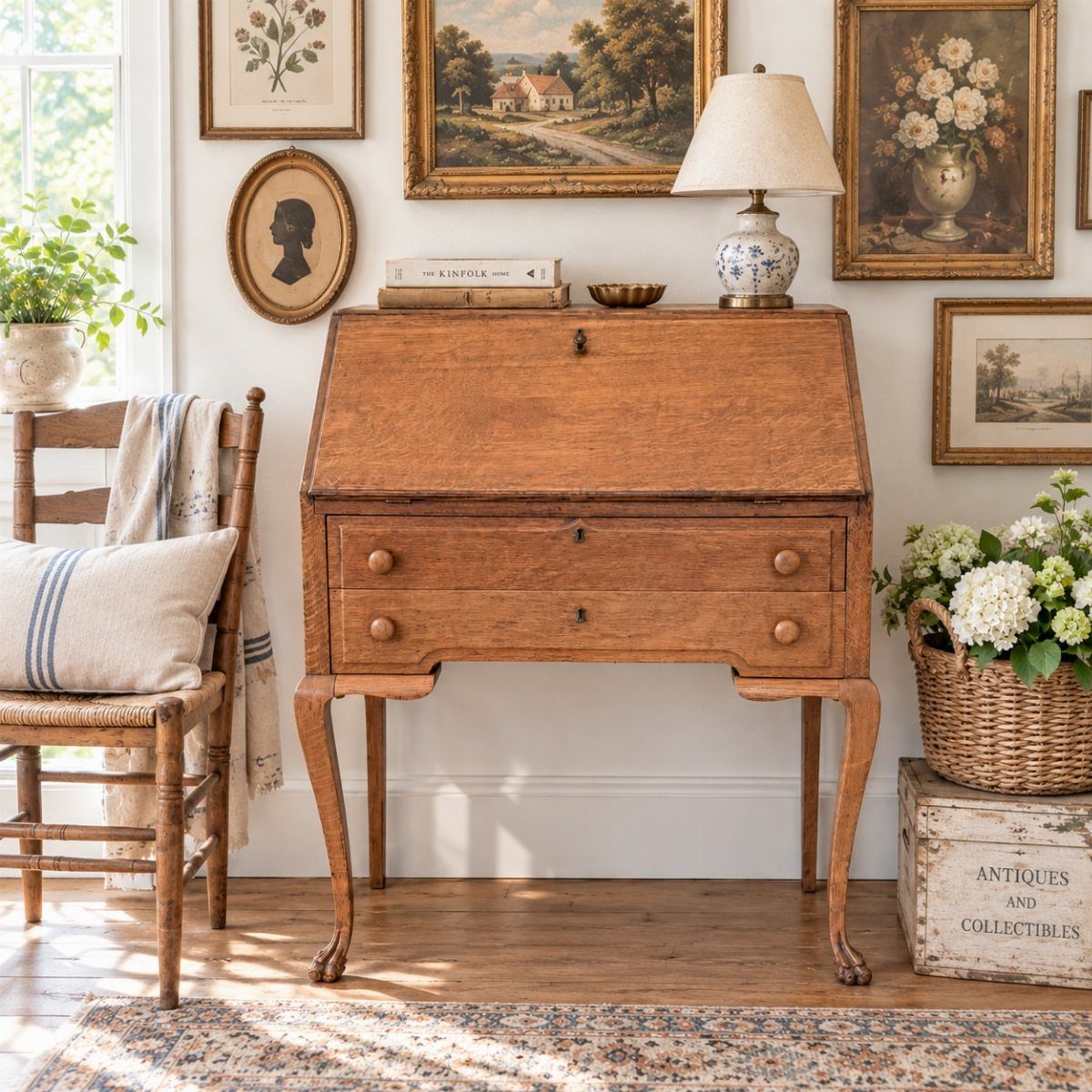
Raising the case on legs opens up the floor beneath it and gives the piece a lighter profile than a secretary with a solid base or chest of drawers below.
The slant-front still provides the same fitted interior and writing surface, but the whole piece takes up less visual weight in the room.
This form works in a small space where a tall, heavy secretary would feel too imposing. The legs also make it easier to clean underneath, which matters if you place the desk against a wall you can’t easily reach.
Look for sturdy legs with intact joints. A legged secretary puts more stress on the lower frame than a chest-base secretary does.
19. French Provincial Secretary
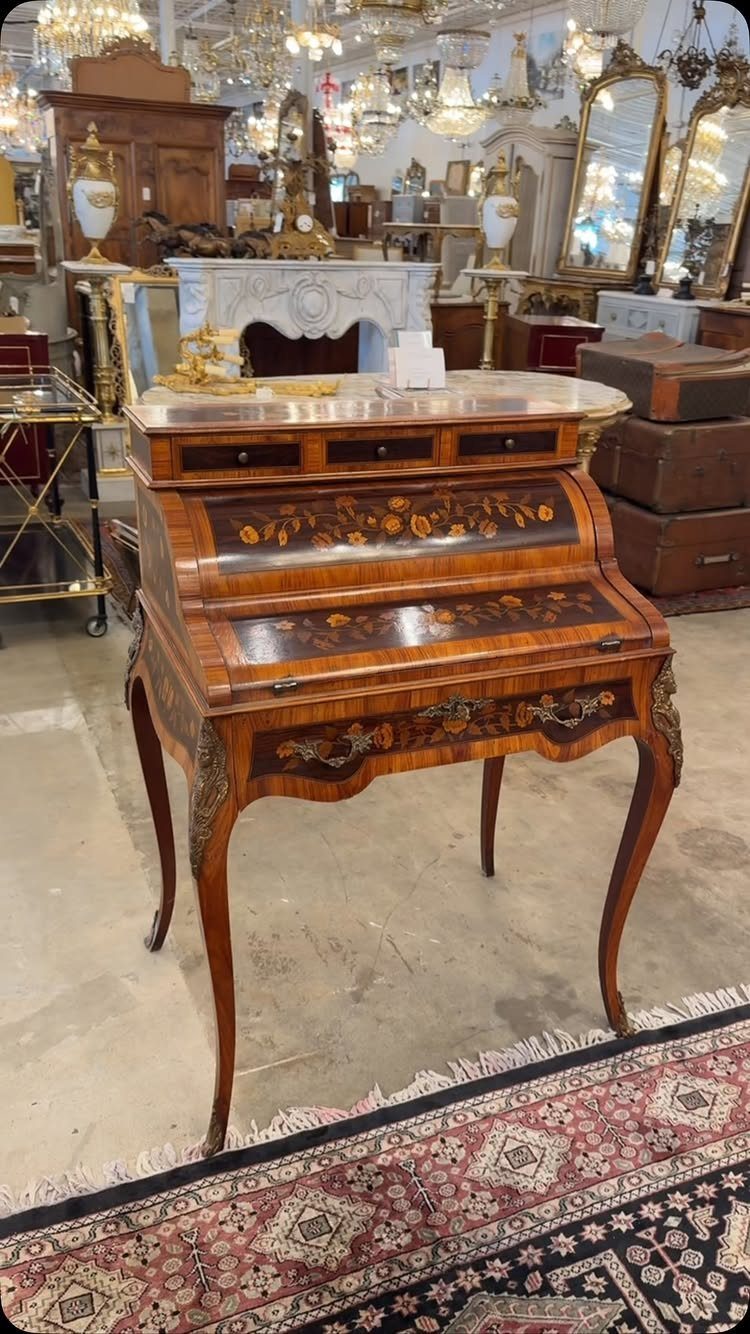
The fruitwood finish and cabriole legs mark this as French Provincial, a style that uses lighter wood than formal French pieces and fits in a bedroom or a breakfast room without feeling too grand.
The floral marquetry on the drop-front and drawer faces adds detail without the formality of gilt bronze mounts. The marble top protects the surface from wear and gives the piece weight.
If you need actual workspace but still want the carved detail and curved legs, this is the version to look for. Run your fingers over the inlay before you hand over cash; loose veneer is expensive to repair.
Condition, Repairs, and Originality
Ask about repairs before you buy. Replaced veneers, new drawer runners, or reproduction hardware all affect what the piece is worth, and a seller who knows the desk well should be able to tell you what’s been touched.
Minor restoration is normal on older pieces. A repaired joint or a refinished surface doesn’t disqualify a desk if the work was done properly and the price reflects it.
Check the writing surface for condition. Worn or cracked leather shows up often and costs money to replace.
Look at drawer interiors and the fitted compartments for loose veneer or missing parts. A 1920s French secretary with minor broken parts still sells, but you’ll pay less than you would for an intact example.
Cost, Size, and Practical Use
Antique secretaries run from hundreds to thousands of dollars depending on age, style, and condition. The oldest and rarest pieces can be investment-grade, but most fall somewhere in the middle.
Measure the space before you commit.
You need accurate height, width, and depth, and you need to know that the writing surface will land at a comfortable height when you sit down. A desk that’s too tall or too short won’t get used.
Large pieces often require local pickup or freight shipping, which adds cost. If the listing specifies pickup only, factor in a truck rental or delivery service before you agree to the price.
Frequently Asked Questions
How do you date a secretary desk?
Look at the shape, wood type, interior layout, leg style, and hardware.
A curving bombé front usually means early 18th century, straight symmetrical lines lean Empire or Biedermeier. Cabriole legs skew earlier, and intact period hardware backs up the date.
Why is it called a secretary desk?
The name comes from the French secrétaire à abattant, meaning a writing desk with a drop leaf.
Jean-François Oeben likely created the first secrétaire à abattant in the 1740s, and the form caught the attention of Madame de Pompadour and King Louis XV’s court. Secretary desk and secretaire both come from that French term.
What else can a secretary desk be used for?
A secretary can serve as a bar when the drop-front holds bottles and glassware and the upper cabinet stores glasses. In a living room, the shelves display books and objects while the writing surface handles paperwork.
What is a secretary desk?
A secretary stacks a writing desk and storage into one vertical piece, usually with a chest of drawers or cabinet below and shelving or a hutch above.
The front panel drops to give you a writing surface and exposes a fitted interior: small drawers, slots, cubbies. The whole piece closes up to look like a cabinet when not in use.