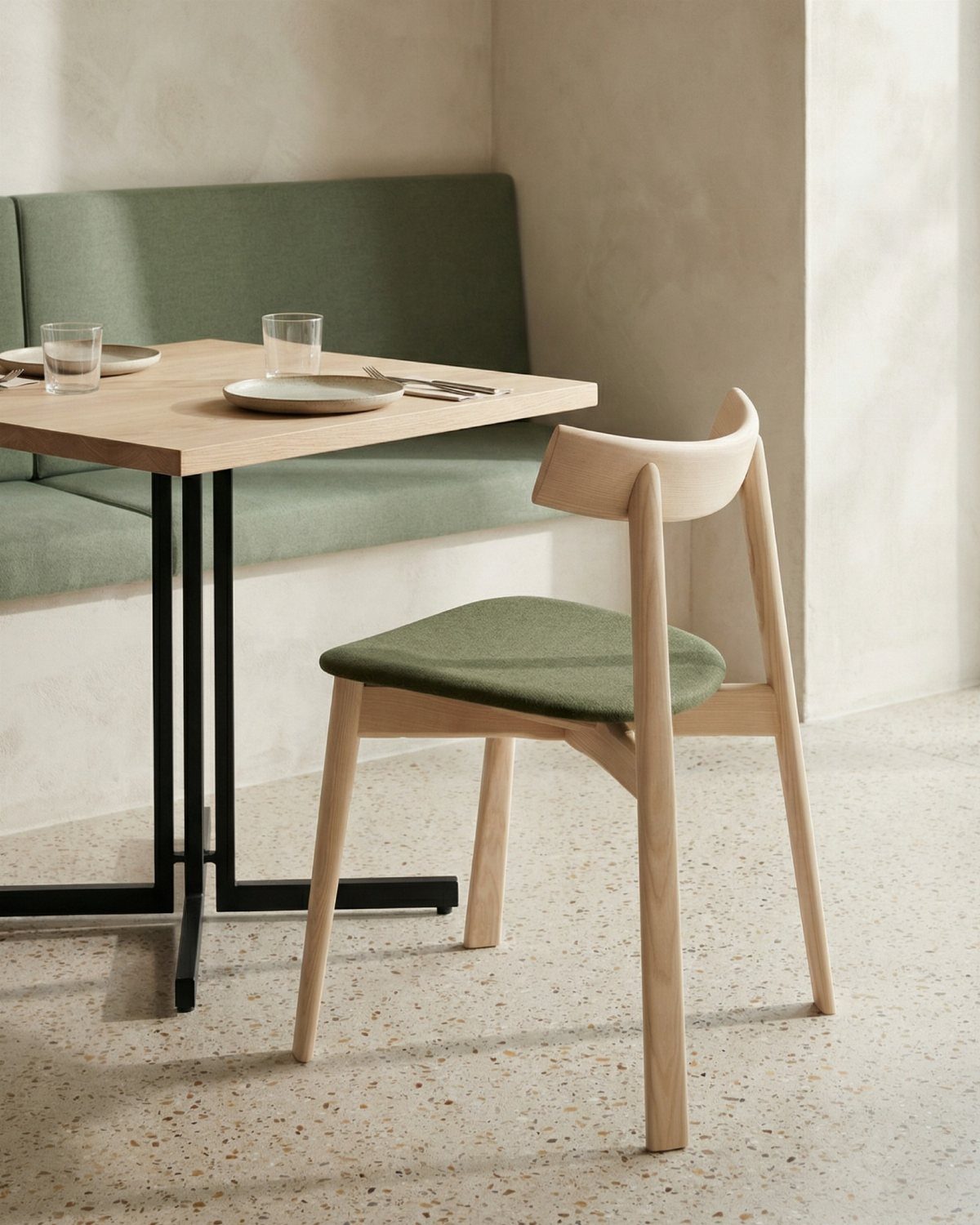
Ash is a wood that bends cleanly into curved backs and thin spindle turnings that softer species can’t hold, which puts it at the center of dining chair design across a wider style range than most single woods cover.
The 9 ideas here run from rush-woven seats and cane backs that suit a warm, casual kitchen to a matched upholstered set where the fabric choice is already made for you.
Ash’s density is what puts it in the same category as commercial-grade furniture.
1. Upholstered Ash Chair
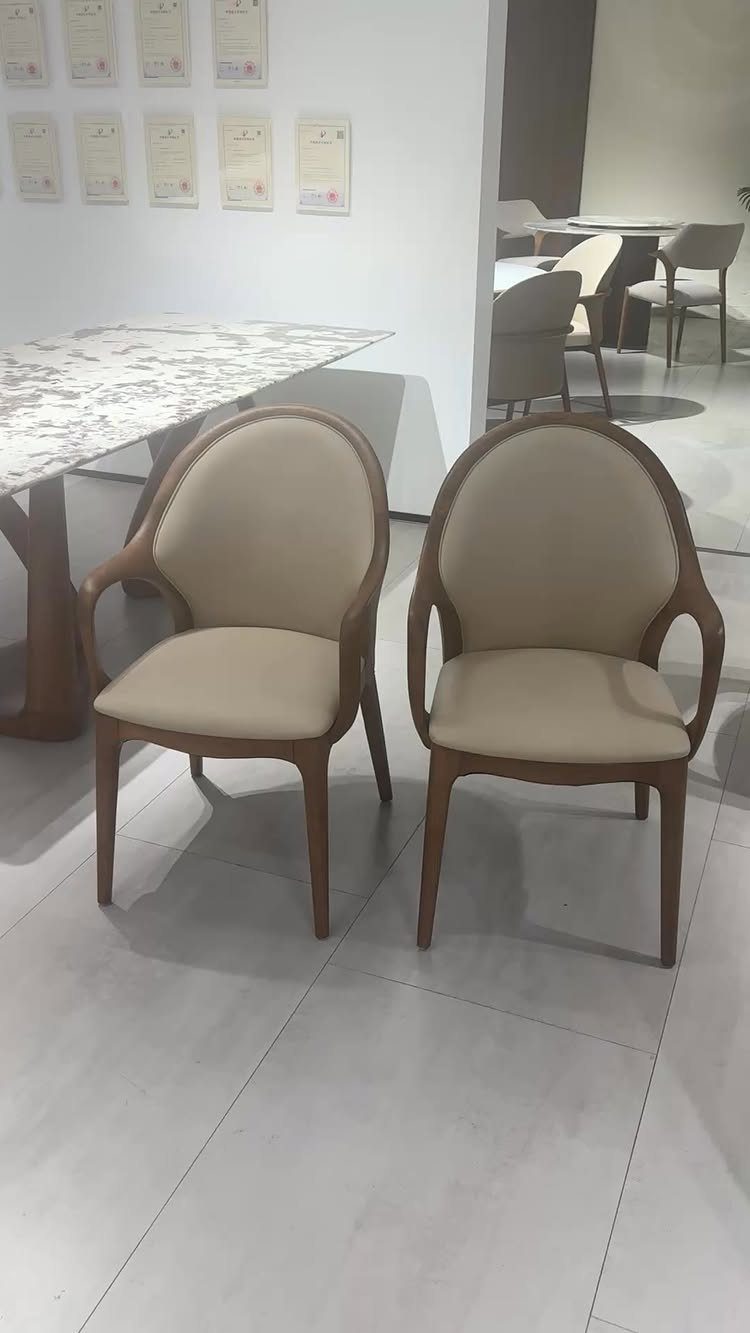
Upholstering an ash chair means the seat and back both carry fabric or leather, so the frame’s natural grain stays visible while the sitting surface gets soft.
Ash bends well, which is why the curved backs on those chairs look almost effortless.
For a dining room that gets daily use, a tightly woven fabric or vinyl holds better than a loose weave.
If the room already has a lot of pattern, a solid neutral seat like the beige here gives the wood somewhere to breathe.
2. Ash Restaurant Chairs
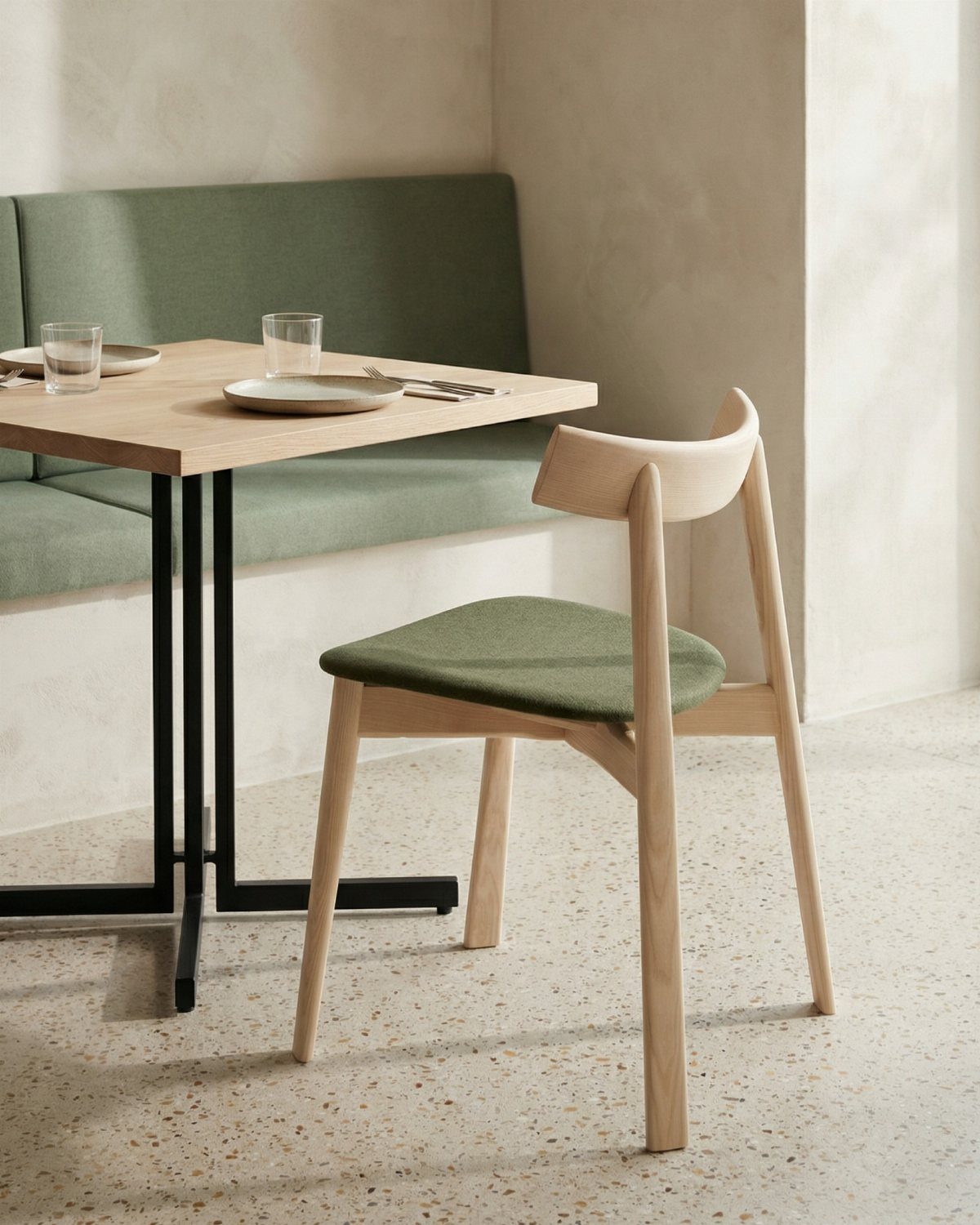
Ash’s density is what makes it a serious candidate for restaurant seating, where chairs take the kind of daily punishment that softer woods simply don’t survive.
Matching the seat color to the banquette fabric is a clean way to pull seating together without forcing the materials to match exactly.
In commercial settings, seats are usually drop-in pads or slip covers so the fabric can be swapped when it wears.
For a home dining room that sees a lot of people, the same logic applies. A chair built to restaurant spec will outlast one that isn’t.
3. Modern Ash Dining Chairs
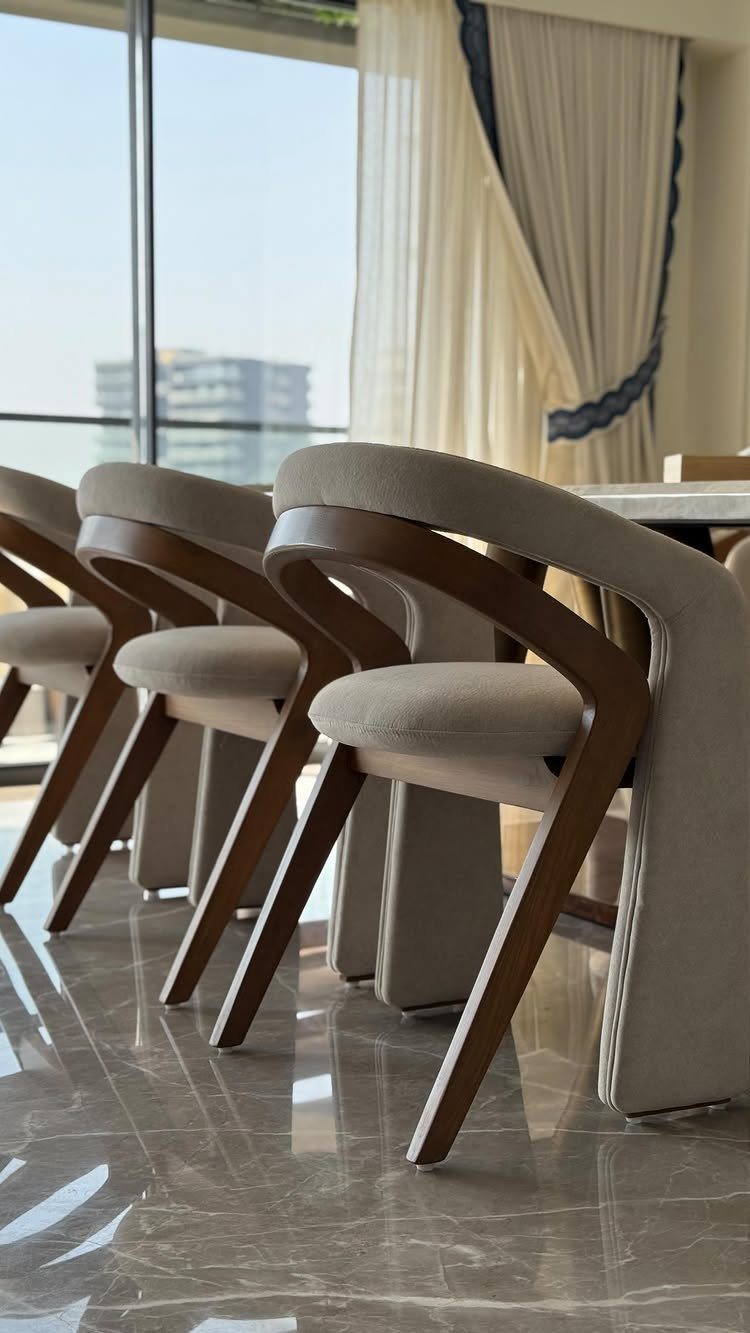
Curved frames and upholstered backs are where ash earns its place in modern interiors: the wood bends into shapes that harder species crack trying to hold.
White ash in particular has a tight, consistent grain that reads as refined rather than rustic, which lets a simple silhouette like these carry a room without added detail.
The maker notes that white ash is valued for both strength and its grain pattern, and that tracks with how well it ages compared to softer woods used for the same shapes.
Against marble floors and light walls, the warm tone of bare ash does a lot of work.
4. Ash Chairs in a Dining Room
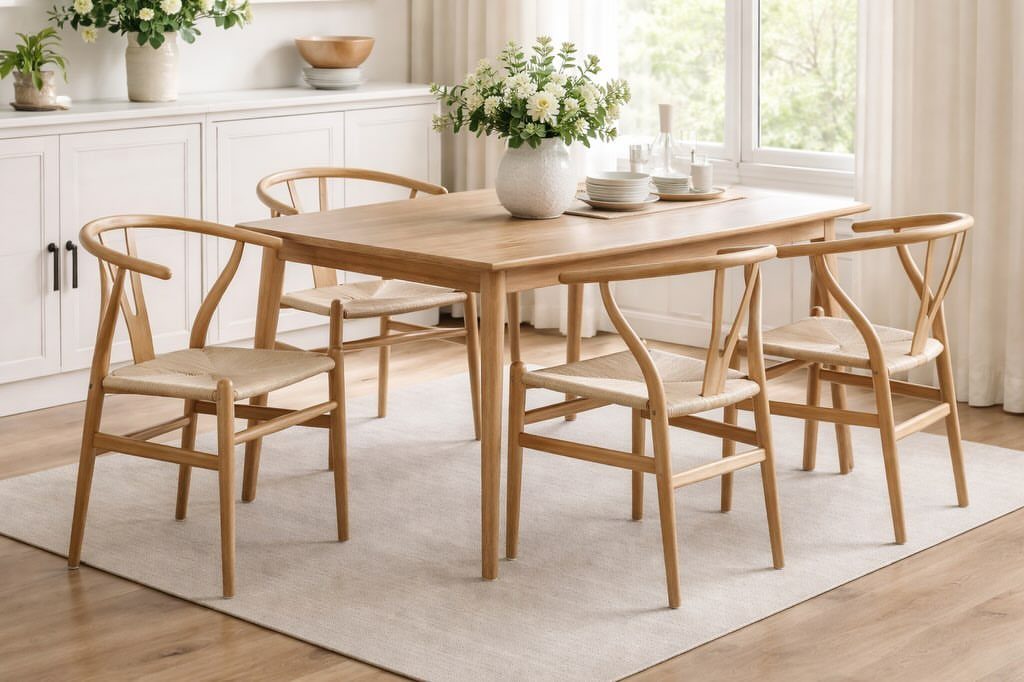
Wishbone-style backs are one of the shapes ash does best, because the bent Y requires steam-bending a single piece of wood cleanly, and ash takes that process without splitting.
The rug underneath defines the dining zone, which matters in an open-plan room where the table can otherwise float.
If the chairs and table are close in tone, a slightly darker or textured rug underneath is usually what keeps the whole arrangement from washing out.
5. Ash Spindle-Back Chair
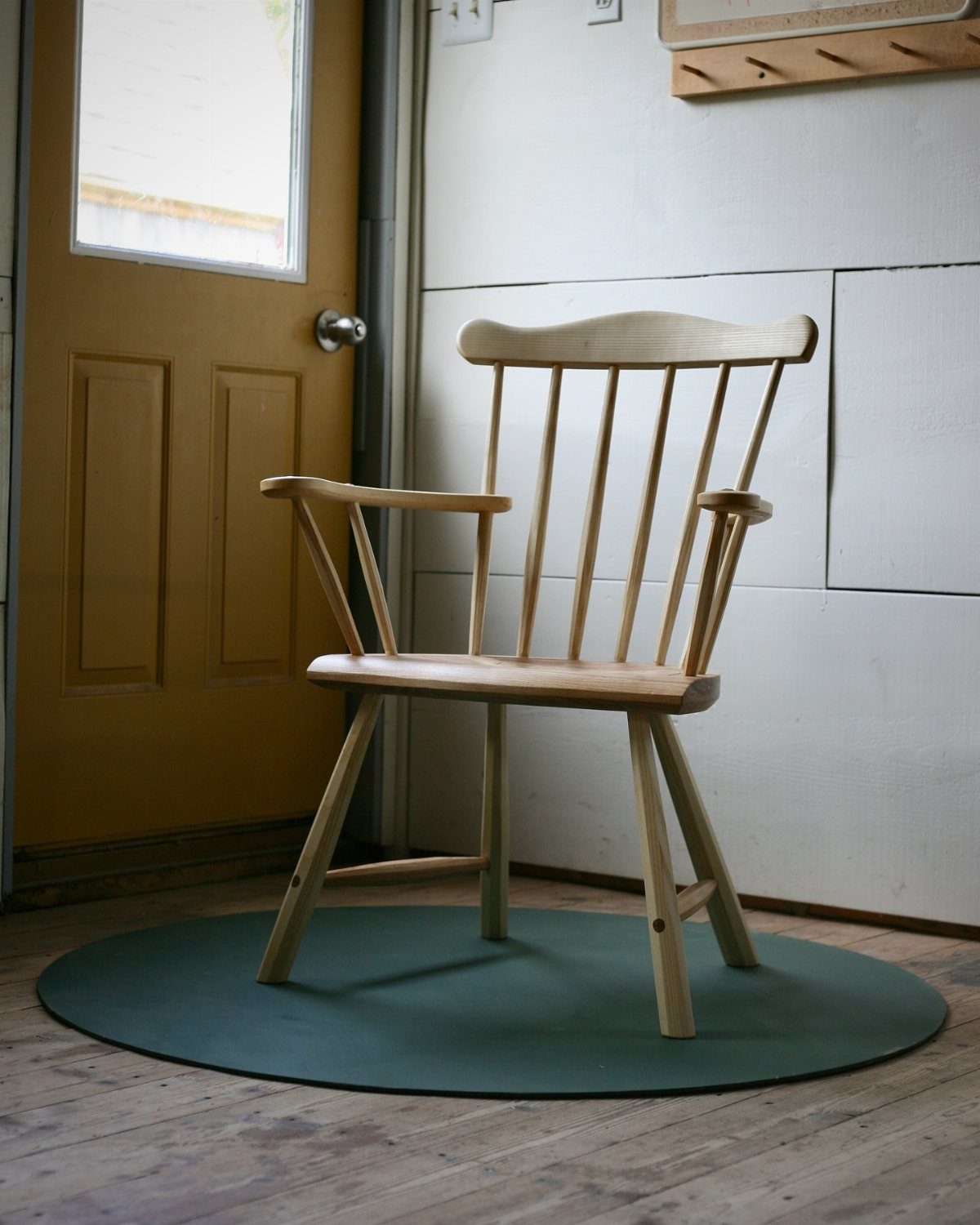
Spindle backs are one of the older chair forms, and ash is the wood that kept them in production: light enough to lift, hard enough to hold the thin turnings without splitting over time.
Armrests change how a spindle chair reads.
Without them, the design reads as casual and stackable. With them, as on this one, it sits somewhere between a dining chair and a proper side chair, at home in a room that mixes furniture styles.
The yellow door here is doing a lot, and the pale ash holds its own beside it without competing.
6. Cane-Back Dining Chair
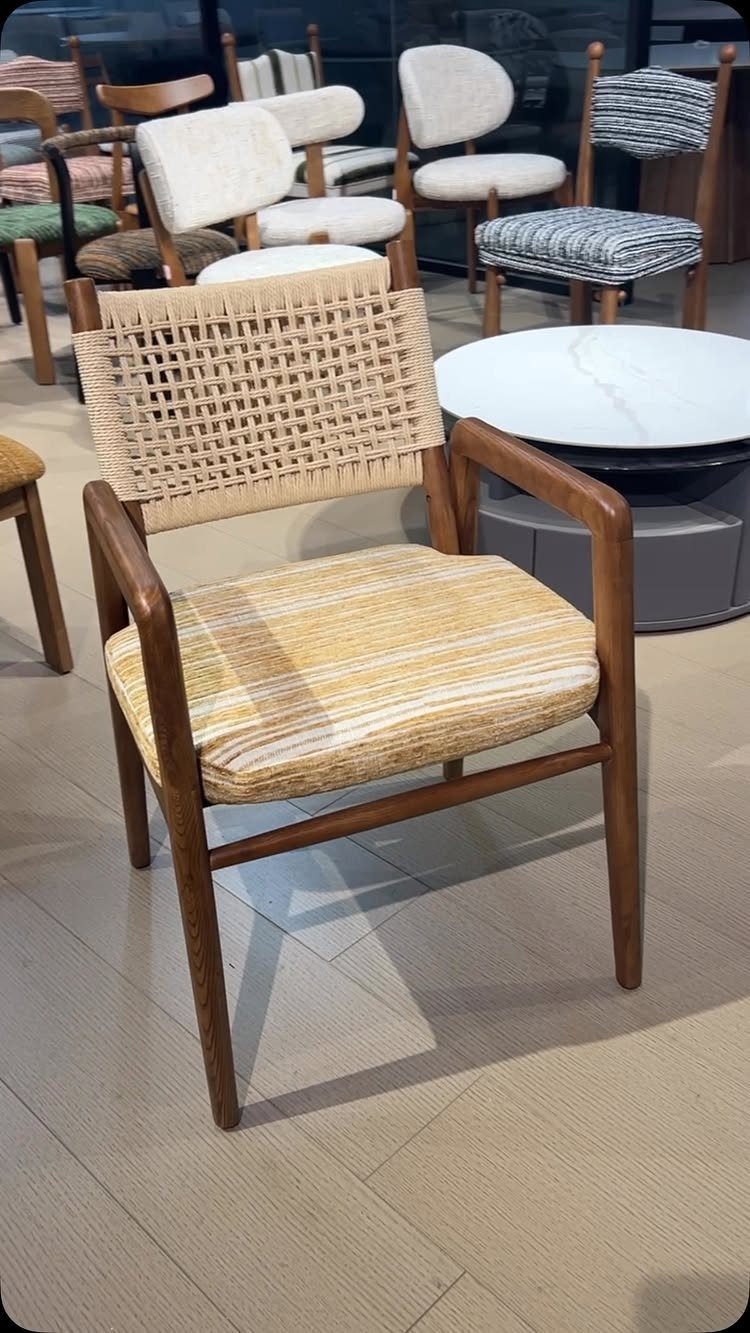
Cane backs have been paired with wood frames for centuries because cane is light, breathes in warm rooms, and ages into a slightly deeper honey tone that usually looks better than new.
The striped fabric seat here does something worth copying: it pulls a second color into the chair without painting or staining the frame. Swapping a seat pad is easy; refinishing a frame isn’t.
For a dining room that already has pattern in the rug or curtains, a solid seat fabric is the safer call. But if the room is plain, the stripe earns its place.
7. Woven Rush Dining Chairs
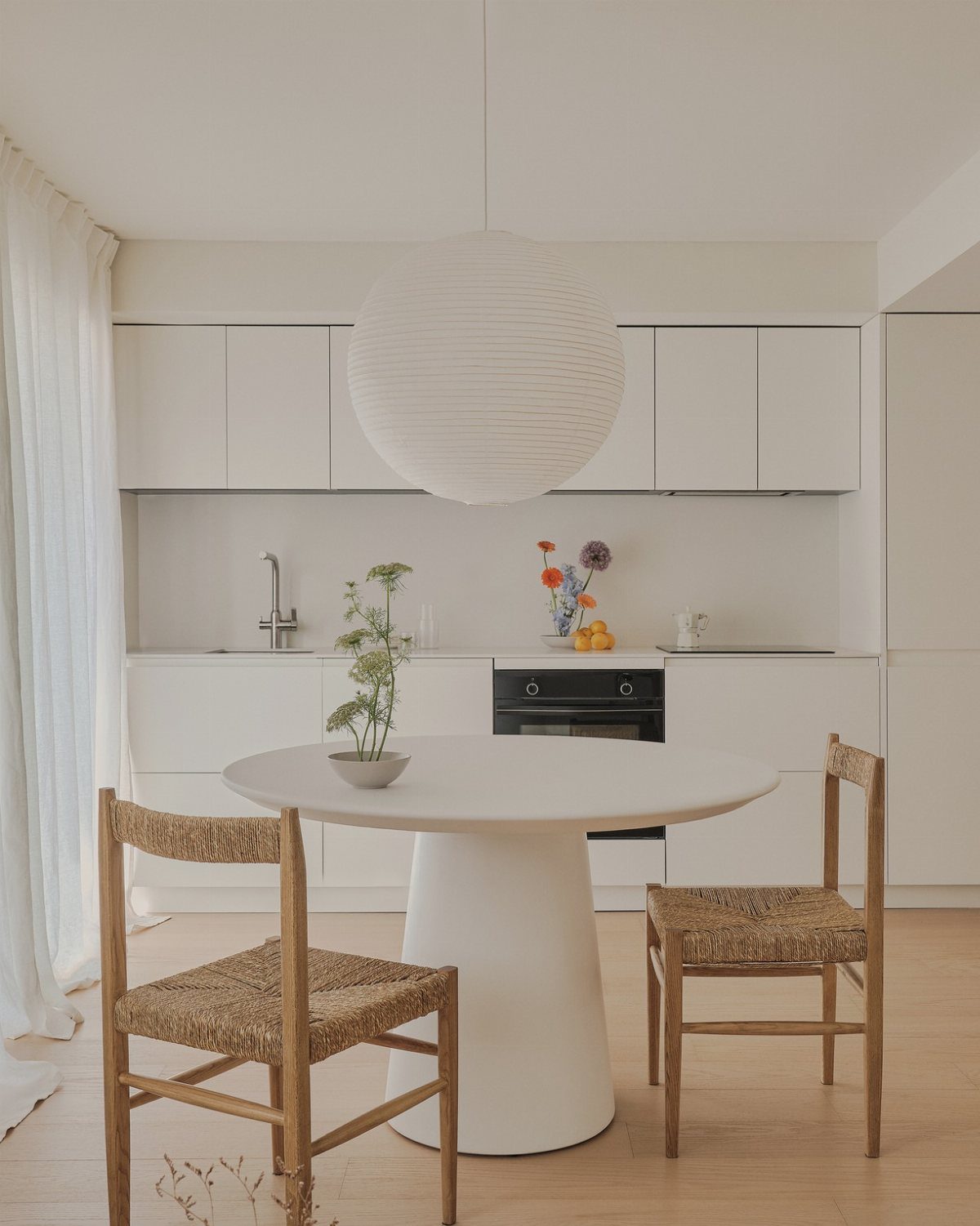
Rush seats and backs together change the chair’s weight entirely: the woven surface lets air move through, which matters in a kitchen where warmth builds up fast.
Pairing them with a white pedestal table keeps the arrangement light without making it cold.
The natural tan of rush sits between warm and neutral, so it reads with wood floors, white walls, and pretty much any table finish without clashing.
Rush does show wear at the edges before it shows it anywhere else. A chair that gets heavy daily use will start to fray at the corners first, so factor that into how many you buy at once.
8. Ash Chairs with Woven Seats
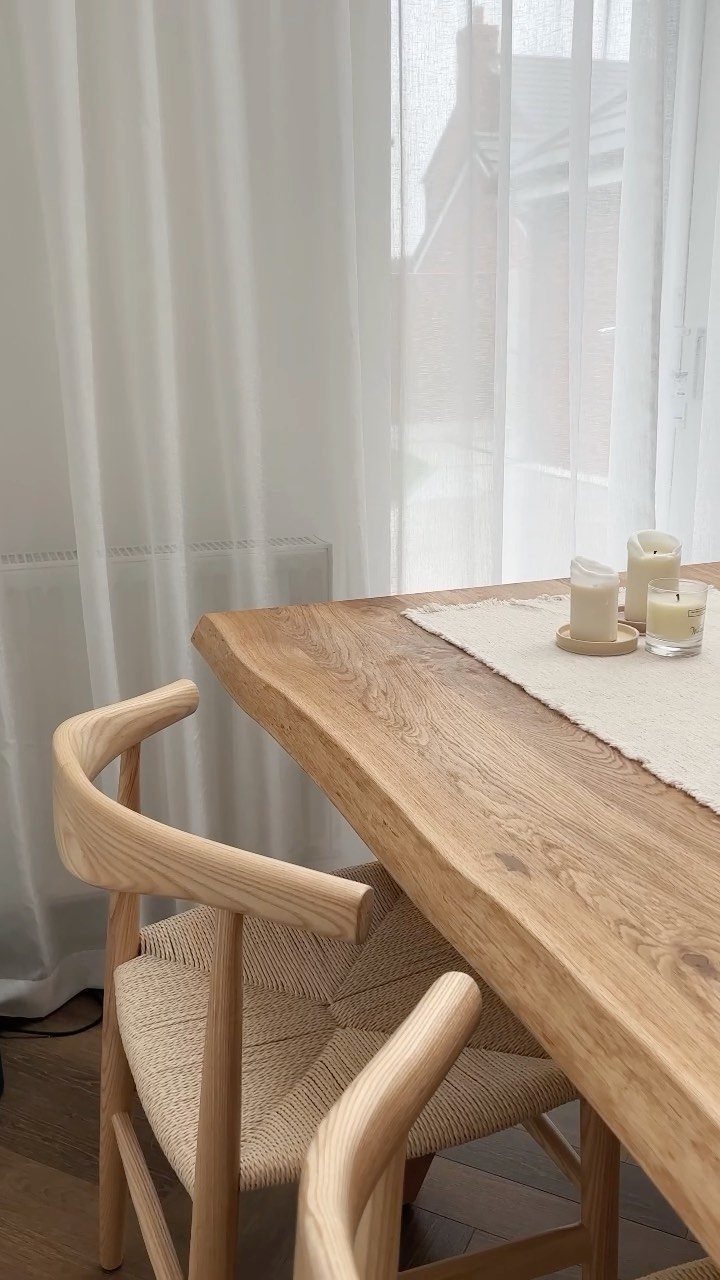
A woven seat paired with an ash frame is one of the quieter combinations in dining furniture: the texture of the weave and the grain of the wood come from the same natural register, so they sit together without effort.
Next to a live-edge table, that pairing makes sense. Both materials show their origin, and neither one tries to smooth it away.
Woven seats do have a limit: they need air circulation to stay intact, so prolonged exposure to moisture shortens their life. For a dining room that gets spills, a seat cushion laid on top gives protection without hiding the weave.
9. Upholstered Ash Dining Set
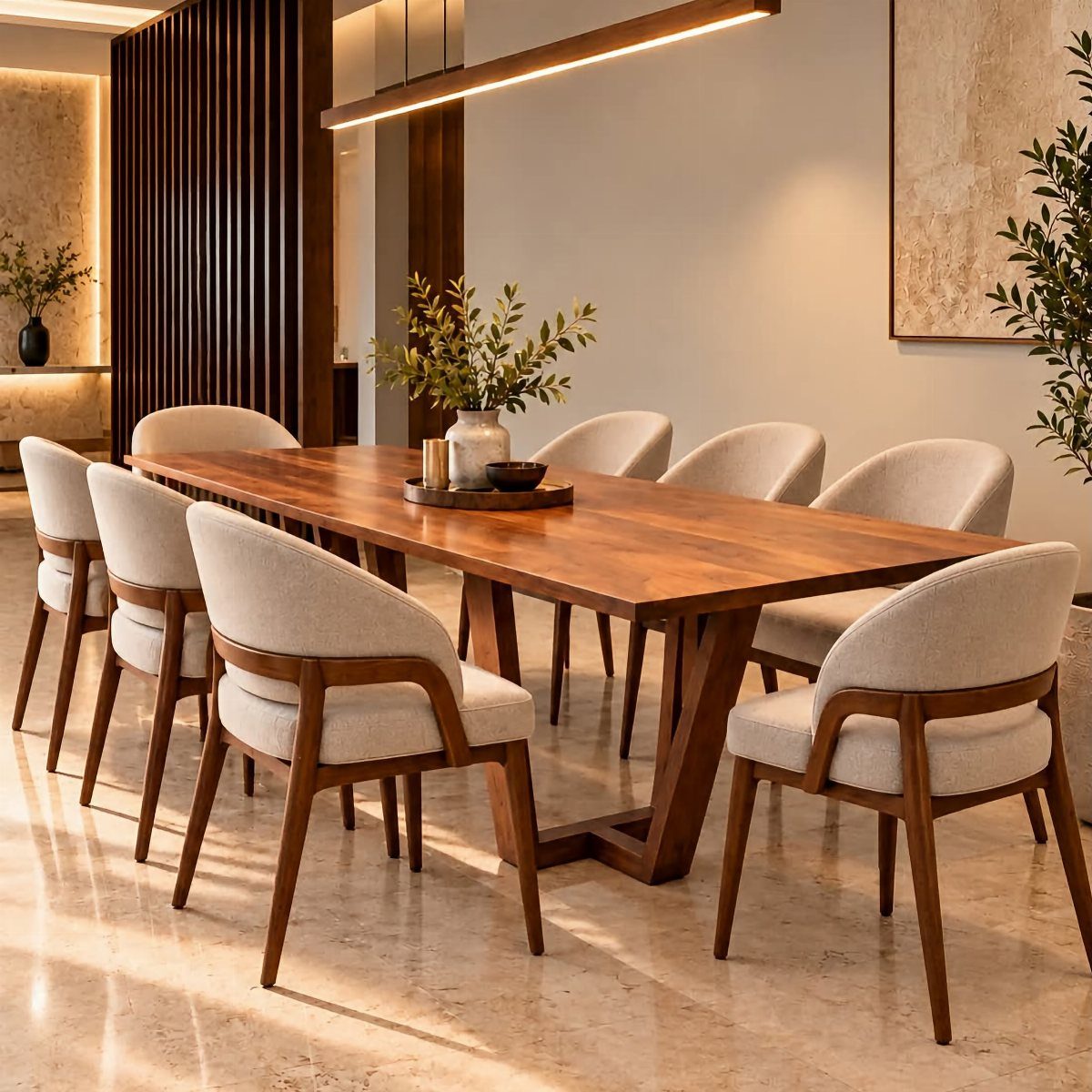
Buying chairs and table as a matched set is the one time the upholstery color is already decided for you, which removes the hardest part of furnishing a dining room.
The beige here reads neutral against the ash frame, so the wood grain carries the visual weight rather than the fabric.
That balance holds across most flooring and wall colors, which is part of why sets like this photograph well and also live well.
For a table this size, seating 8 means the chairs have to stack or store somewhere when the room isn’t full. Worth thinking through before the set arrives.