
The right yard tool storage idea depends on whether you have wall space, floor space, or neither.
A scrap-wood rack clears a corner in twenty minutes if you have studs to hit; a mailbox behind a shrub costs under twenty dollars if you do not.
1. Wall-Mounted Tool Racks
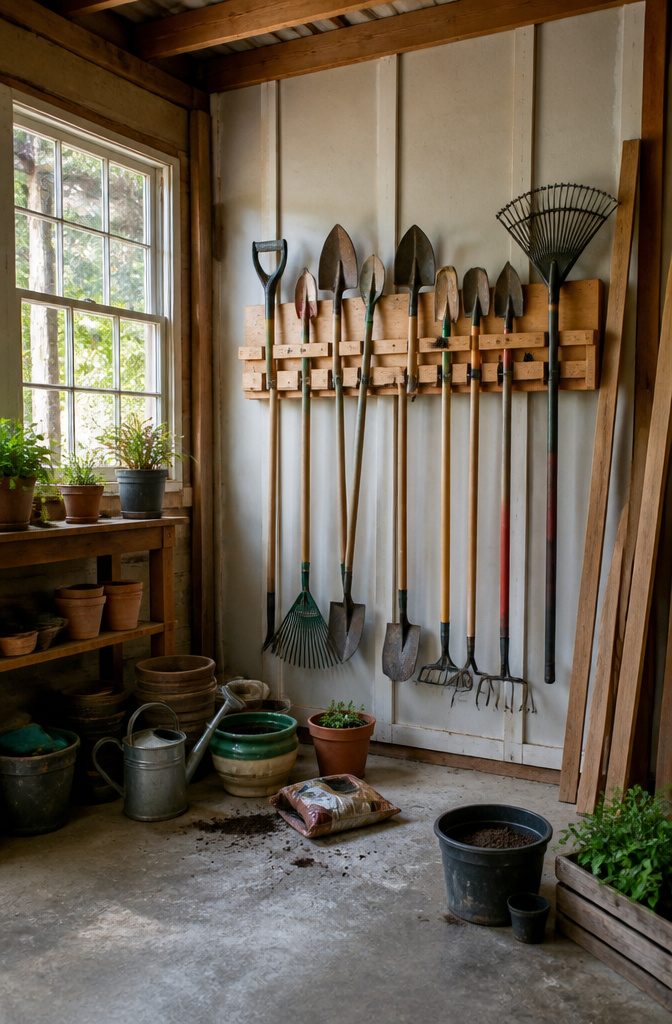
Scrap wood wall-mounted racks are the first thing I reach for when floor space disappears under pots and half-empty bags of soil.
A few leftover plywood pieces, some dowels or heavy hooks, and twenty minutes of assembly will clear the corner where shovels have been tripping you for months.
The real advantage is customization. Your rake collection is not my rake collection, so slots cut to the actual width of your tool heads keep everything from sliding sideways.
Sand and seal the wood if it will live in an open garage, or paint it to match whatever wall already exists.
Start the rack low, around knee height, and run it to just above eye level so you are not stretching for the pruning saw.
Keep heavier tools on lower hooks; lighter ones can ride higher without stressing the mount. Wall mounting keeps tools visible, off the floor, and easy to grab on the way out the door.

Wall-Mounted Garage Tool Organizer-Reclaim floor space with 17.5"x4" horizontal wall design—secures shovels, rakes & brooms vertically. Ideal for garages/sheds with exposed studs, keeps long-handled tools accessible yet tangle-free

Versatile Wall Storage System: Upgrade your 48-inch garage storage with this heavy-duty wall-mounted tool rack for flexible storage layouts and extra free floor space. Ideal for garages, gardens, sheds and workshops, it provides abundant hanging space for all long-handled tools
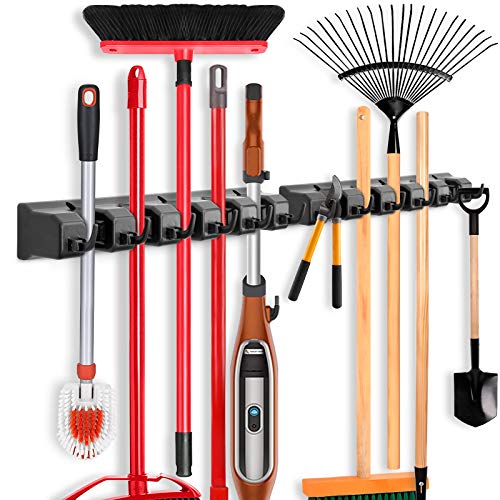
Tidy Your Home: 5 ball slots and 6 hooks design, organize your annoying cleaning tools within small space
2. PVC Pipe Storage
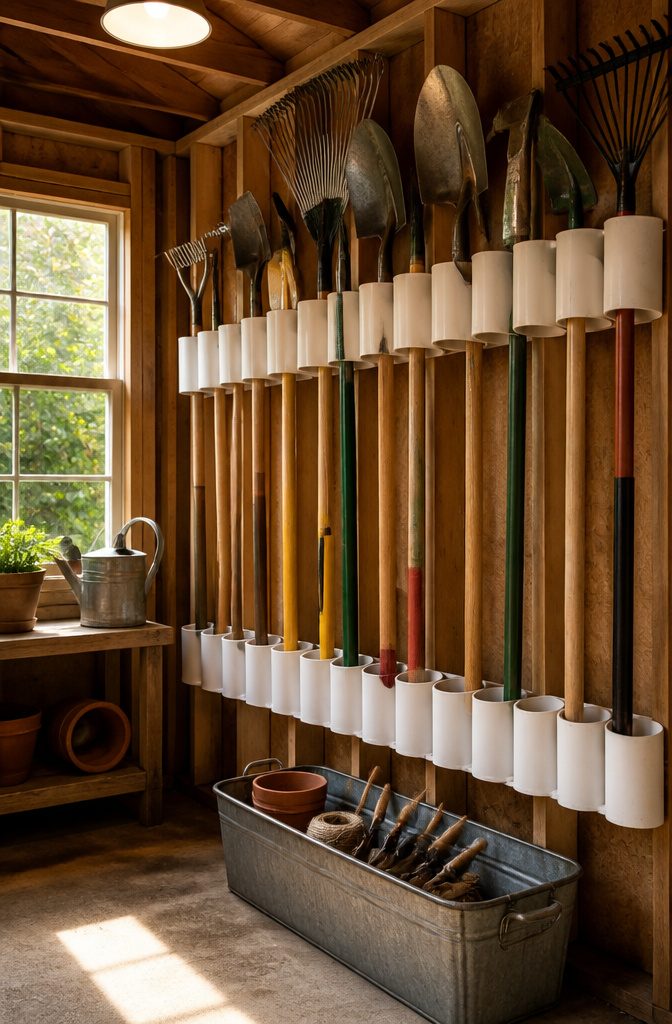
PVC pipe is cheap, available at any hardware store, and cuts cleanly with a basic saw.
I like it for yard tool storage because the diameter does the gripping for you. A 2-inch pipe fits most rake and shovel handles snugly without extra hardware inside.
Cut the pipe to length and mount the pieces to create individual slots for handles.
Family Handyman’s approach is more involved: they notch a 2-inch-diameter pipe lengthwise and drill 1/8-inch holes behind the notch for 1-1/4-inch drywall screws into a 2×4 backer.
Ronixtools keeps it simpler, lining up pipe sections and nailing them to wood strips. Either way works; the notched version keeps tools from rotating, while the plain tube is faster to build.
Cost stays low either route.
Scrap pipe from plumbing jobs works fine, and even buying new, you are looking at a few dollars per foot. The real limit is wall space.
PVC holders work best for long-handled tools you use weekly. For anything shorter, the pipe wastes vertical space that a pegboard or shelf would use better.

Horizontal Wall Organizer: the horizontal design of the garden tool rack wall mount make it easy and convenient to organize and access tools; Its open structure allows for easy visibility, enabling to find the tools you need quickly, improving workflow efficiency; It is recommended to stagger the tool heads or tilt them to get better storage effect

[Game Changer] Yard trimmers are notoriously terrible for storing awkwardly. No more tripping on it as it’s hanging up now! Iulrtba weed eater rack helps securely holds the tool in a vertical position, providing a highly practical solution for organizing a range of items, including weed wackers, chainsaws, aerators, rakes, shovels, brooms, mops, drills, ladders, cables, cords, hoses, bicycles, leaf blowers, skateboards, dumbbels, sports equipment, etc

Metal Garden Tool Caddy: Xbopetda garden tool holder is made of high-quality durable powder coated galvanized steel metal. Sturdy construction of this garden tool organizer stands up to tools and ensures long-lasting performance and stability.
3. Mailbox Storage
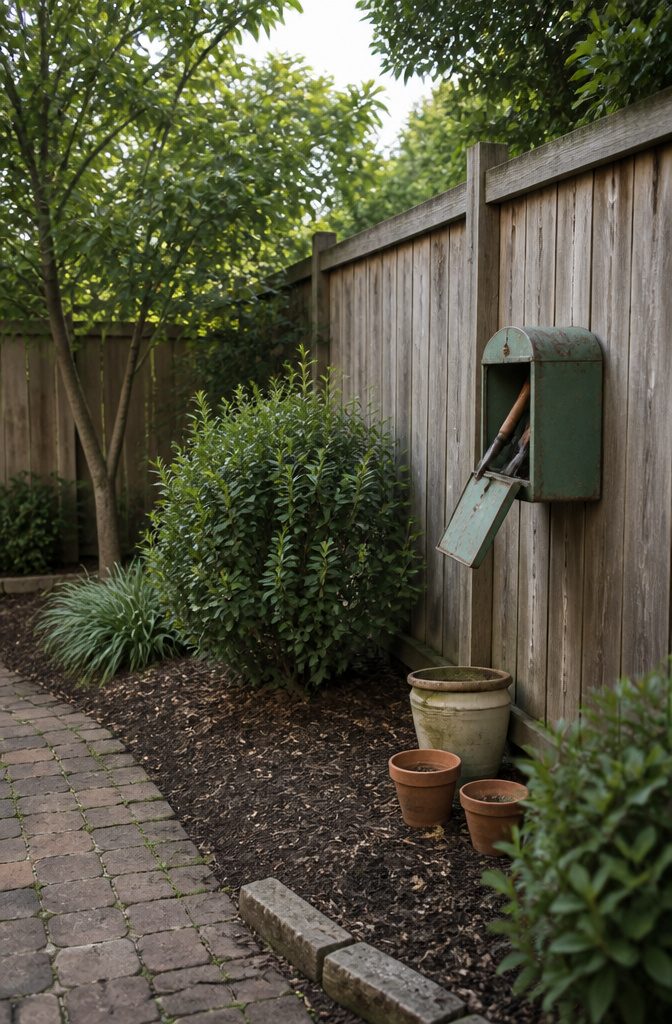
A small mailbox mounted behind a shrub or near a garden bed gives hand tools a dry, grab-and-go home for less than $20 at hardware stores and home centers.
The door keeps rain off trowels and pruners, and the narrow box means you only store what you actually reach for daily, so nothing gets buried.
I like this setup because it removes the excuse of walking back to the garage. Mount it at handle height on a fence post or driven stake, somewhere the door opens toward your planting area rather than away from it.
The metal shell outlasts plastic bins left in sun, and the flag, if yours has one, can mark when you have borrowed shears to return.
Paint it if the standard green or white bugs you, though I would test the latch after, since a thick coat can gum up the works.

Generous Storage Capacity: The garden tool storage is equipped with 35 square slots, which are suitable for I-handle tools such as shovel and rake; garden tool rack equipped with 11 hooks, it is easy to hang accessories such as water pipes, pruning shears, axes, etc

Efficient Storage Solution: Modify 6-inch diameter pipe with the conduit carrier kit to provide extra and effective storage for your fishing rods, tubes, hoses, and various items; Designed to be mounted on the ladder rack for trucks and keep your belongings secure and out of the elements

FLOOR SPACE SAVING: If you need something for a garage remodel to tidy up, this garden tool wall organizer is exactly what you need. Perfect for hanging tools with rod shaped items like mops, spades, brooms, shovels, rakes, and other garden tools. An easy way to organize your tools up off the ground, this is definitely the space saving garage wall organizer
4. Tool Caddies and Bags
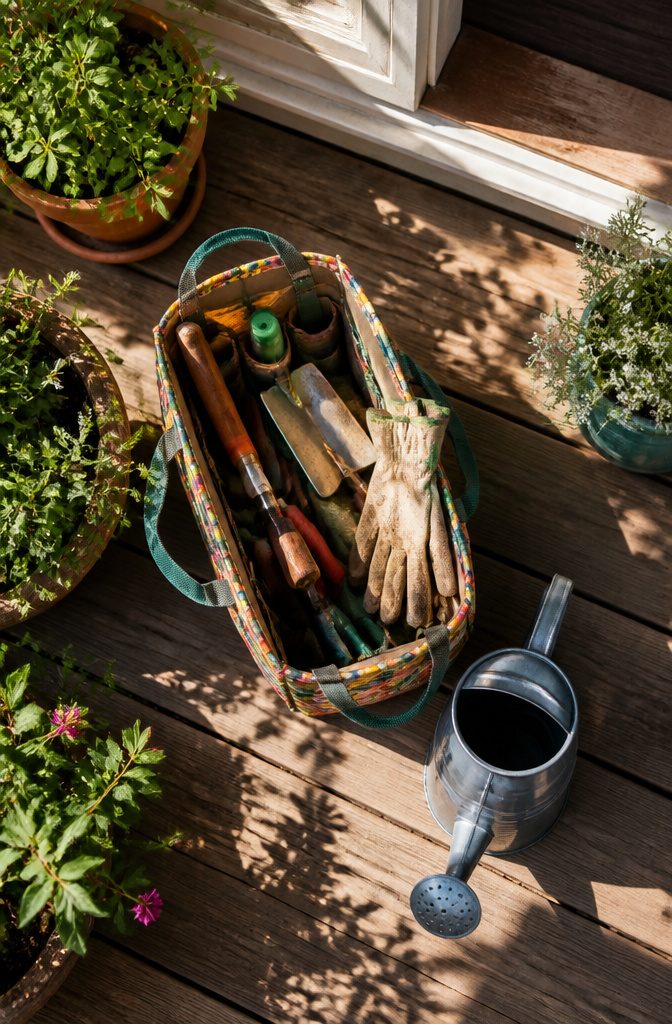
A yard tool caddy keeps the six tools you actually use within arm’s reach, and that is the whole point of going portable.
Mine started because I was tired of walking back to the garage for the hand trowel I had forgotten again.
The bag lives by the back door now, packed with pruners, a soil knife, a small hand rake, gloves, and a spray bottle.
Anything longer than eighteen inches stays on the wall rack where it belongs; shovels and rakes have no business flopping around in soft-sided storage.
The distinction matters more than I expected. Caddies work for the tools that follow you bed to bed, especially if you garden a rental or split time between a community plot and home.
What goes in is the kit for deadheading, weeding, and spot watering, not the heavy excavation gear.
I have seen gardeners overload a caddy until the handles strain and the pockets sag, which defeats the purpose entirely. The right load is light enough to carry in one hand while you balance a watering can in the other.

Conveniently and securely holds rod grip sizes up to 1 ¾ inches in diameter Keeps rod ready when needed while minimizing onboard clutter Rugged, durable white PVC...
5. Shelving Units
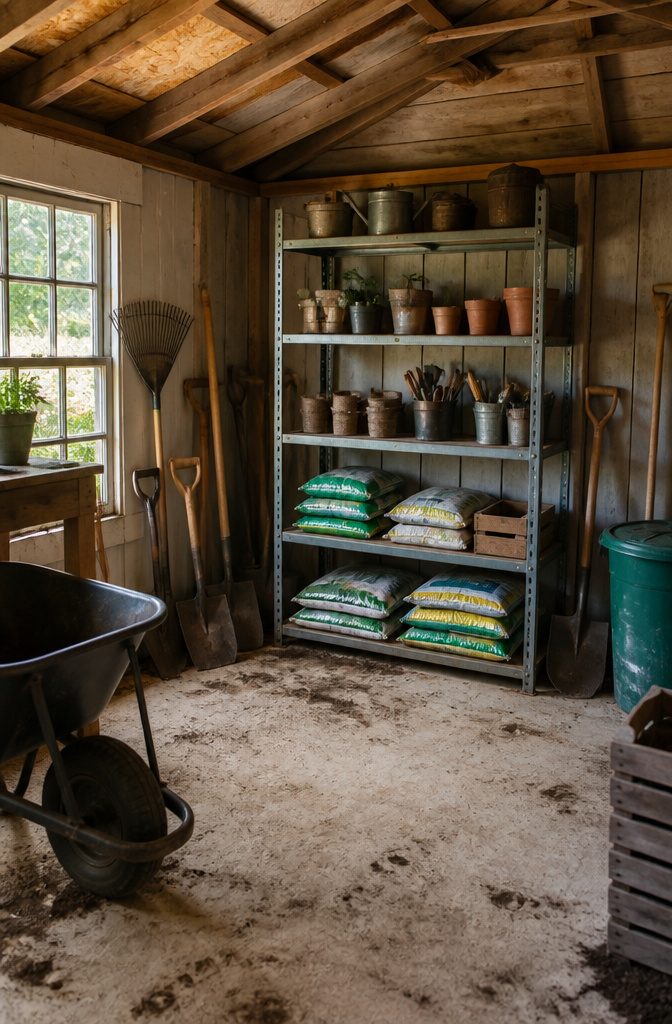
Freestanding shelves let you move the whole system when your layout changes, which matters more than you’d think the first time you trip over a potting tray that used to fit somewhere else.
I learned to check the weight rating before loading the bottom tier; a bin of wet soil averages thirty to forty pounds, and not every resin shelf is built for that.
Metal units hold up better in damp sheds, while wood looks fine in a garage that stays dry year-round.
Fixed shelving mounted to studs makes sense for the heavy stuff: bags of fertilizer, half-full planters, the ceramic pots you collect and never seem to thin out.
Labels turn this into a map you can read without opening every bin. Name the shelf for what you actually do with it, "watering" or "soil," and the habit of putting things back follows without thinking.
What hangs on the wall and what lives on the shelf is a judgment call I got wrong once. Long-handled tools look neat on hooks until you own more than six and the wall turns into a bristling hedge.
Bulky items that do not hang well, the wide watering cans, the stackable nursery trays, belong on shelves where gravity does the organizing for you.

Gardening Supplies Storage – The Afton Wall Organizer combines a rock-solid wall shelf and hanging hooks for storage of your outdoor tools and supplies. Perfect for your garden shed or garage.

Sturdy Construction- The Berry&Bird garden tool storage is crafted from premium rust-resistant metal, ensuring durability and no color fading. The unique green color scheme, adds a charming and nature-inspired touch to this garden tool basket, making it a delightful accent piece for any setting. This garden caddy provides a sturdy and long-lasting solution for organizing your gardening supplies with ease.

An Ingenious Snap-fit Connection: Unlike conventional threaded joints, this post hole digger manual uses a spring-loaded locking mechanism with double-layer reinforcement at the connection. It effectively withstands lateral pressure during digging, greatly reducing the risk of the pole bending or loosening over time. The all-stainless-steel shaft also stands up to rainy or humid conditions without issue
6. Pegboards
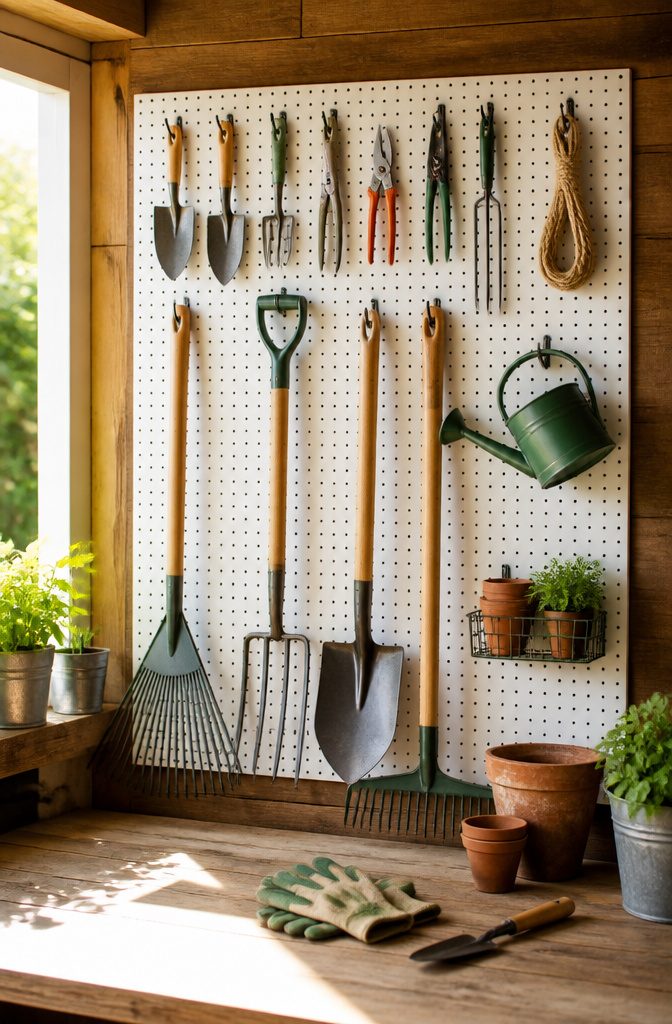
A pegboard keeps tools visible, which sounds obvious until you spend ten minutes digging through a corner for the hand fork you know is back there somewhere.
I mounted mine on the stud wall of a garage years ago, starting around knee height and running up to just above eye level so everything stayed reachable without stretching.
The hooks matter more than the board itself; heavier shovels and rakes need sturdy lower hooks, while lighter trowels and pruners can hang higher without straining the hardware.
Spacing is the part you get wrong once and fix forever: standard pegboard hooks sit too close together for wide rake handles, so I leave extra holes between them and keep narrower hooks for the smaller stuff clustered where the spacing fits.
Start the storage area low and keep heavier items on lower hooks saves both the pegboard and your shoulders.
A ready-made pegboard rail works if you do not want to cut a full sheet, though the sheet version lets you cover more wall and rearrange as the tool collection shifts over seasons.

MULTIPLE STORAGE OPTIONS: Features 5 slots and 6 hooks supporting up to 7.5 pounds per slot, perfect for organizing various cleaning tools efficiently

Versatile Functionality: The garage organizer is equipped with six double-layer hooks and three rails. Every rail is engineered to fit the standard 16-inch on-center stud spacing, well suited for garages, sheds, and workshops in need of robust organization

HEAVY-DUTY GARAGE TOOL ORGANIZER: Revolutionize your garage with this wall-mounted storage hero! Designed to hold shovels, brooms, power tools, and more, it can support up to an impressive 300 lbs.
7. Upcycled Items
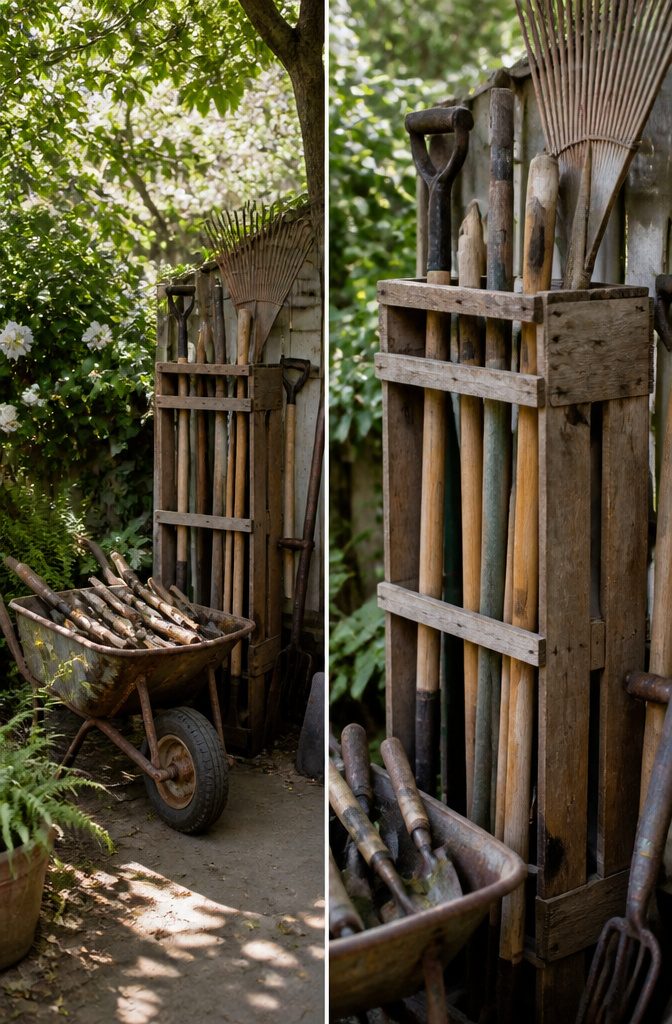
Old crates and a retired wheelbarrow have lived in my garage longer than some of my tools.
Last spring I finally put them to work. The crates, stacked two high and screwed together at the corners, became a freestanding rack for long-handled shovels and rakes.
A single crate mounted on the shed wall now corrals hand tools and gloves where I can actually see them. The wheelbarrow sits flipped against the fence, its basin catching weeders and trowels, its handles draped with the hose.
None of it cost anything but an hour. A five-gallon bucket does the same job for smaller spaces; an old golf bag keeps long-handled tools upright on a balcony.
The sustainability part is just a side effect. What matters is that these things are already weathered, already scarred, so you stop worrying about rust rings and muddy drips.
The crate that held oranges from who-knows-where ten years ago holds my pruners now, and that history is what makes it better than anything from the storage aisle.

【VERSATILE GARAGE ORGANIZER】Demimy's heavy-duty wall mount tool organizer efficiently stores various garden equipment including string trimmers, hedge trimmers, brooms, rakes, and mops, keeping your garage, shed or workshop neatly organized with tools within easy reach whenever needed

[Game Changer] Yard trimmers are notoriously terrible for storing awkwardly. No more tripping on it as it’s hanging up now! Iulrtba vertical weed eater rack helps securely holds the tool in a vertical position, providing a highly practical solution for organizing a range of items, including weed wackers, chain saws, aerators, rakes, shovels, brooms, mops, drills, ladders, cables, cords, hoses, bicycles, leaf blowers, skateboards, dumbbels, sports equipment, etc

Declutter Your Space: Get garden tools, folding chairs, ladders, and more off the floor and onto the wall. This tool storage rack frees up valuable garage space while keeping everything neatly organized
8. Custom DIY Organizers
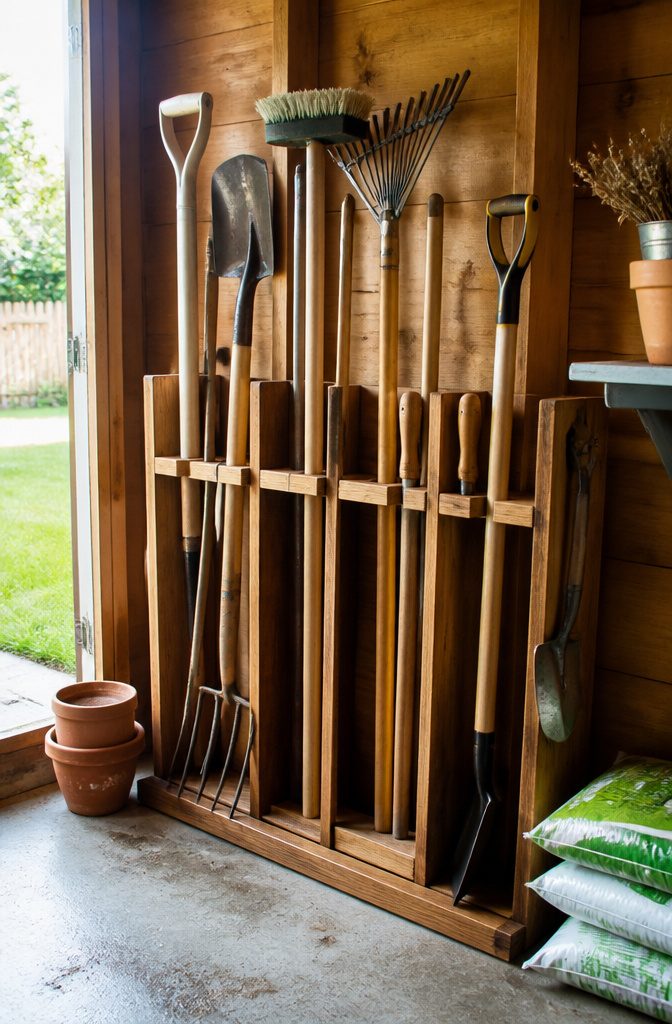
Scrap wood builds win when your tool collection is odd-sized or your wall space is broken up by a door frame or a window.
A standard store-bought rack assumes a 48-inch span and handles spaced every six inches; if your longest shovel has a 52-inch handle or your only open wall is 34 inches between studs, the off-the-shelf unit leaves you drilling extra holes or leaving tools out.
Plywood scraps from a previous project can become a custom yard tool storage rack in about twenty minutes, with slots or hooks placed exactly where your rake and shovel handles actually fall.
One approach is to cut a backboard to the full width of your available wall, then screw on small blocks or dowels at the heights that keep metal heads off the floor and wood handles from touching concrete.
Another is a freestanding holder built from planks and nails, sized to sit in the ground beside a garden bed so the tools you use there never travel back to the garage.
The finish matters more than the look. Sanding and a coat of exterior paint or sealant keeps repurposed lumber from drawing moisture onto the handles it holds.
A store rack is faster, but the custom build fits the space you have, not the average of a hundred garages.

All Metal Material: Our garden tool organizer, both backboard and hooks are made of iron, which makes it more durable and solid.And its load-bearing capacity far exceeds other usual ABS material tool hooks. It is deal for various tools like shovel, rakes, bikes, broom, mop, trust that what you get is what you see,any dissatisfaction please contact our customer service team

Durable Material: The garage tool organizer wall mount is made of superior material. The rails and pegs are made of ABS plastic, the hooks are made of galvanized steel, and the surface treatment is anti-slip. You can expect it to be used indoors and outdoors for a long time.

Holds up to 25 tools for maximum storage and organization
9. Gardening Stations
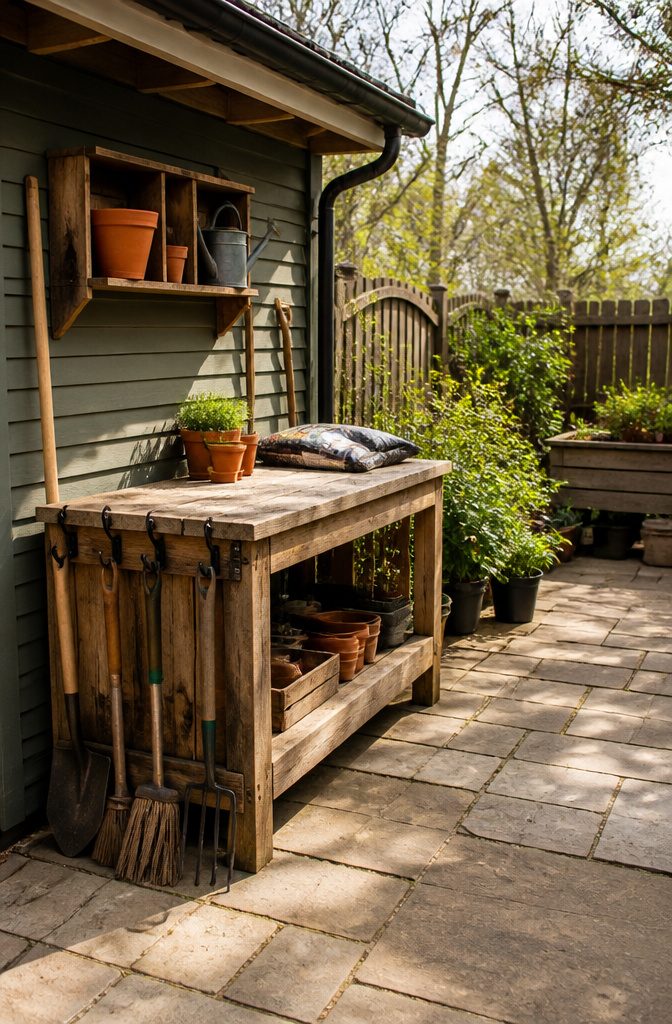
A sturdy table with shelves and hooks becomes the center of gravity for everything that happens before and after you step into the beds. The tabletop takes the beating: soil gets sifted, pots filled, seedlings moved from tray to ground.
Hooks along the edges or underneath carry the long-handled tools, rakes and shovels and hoes, where they stay clean and ready instead of leaning in corners.
Shelves below hold the smaller stuff, the hand tools and labels and twine, so the surface stays clear for actual work.
What belongs at the station versus what lives elsewhere is the real distinction. Potting, dividing, any task that makes a mess stays at the table.
Pruning shears and harvest knives migrate with you, because stopping back at base to cut a tomato stem wastes the afternoon. The station is for preparation and cleanup; the field is for doing.
Why Organized Tools Last Longer
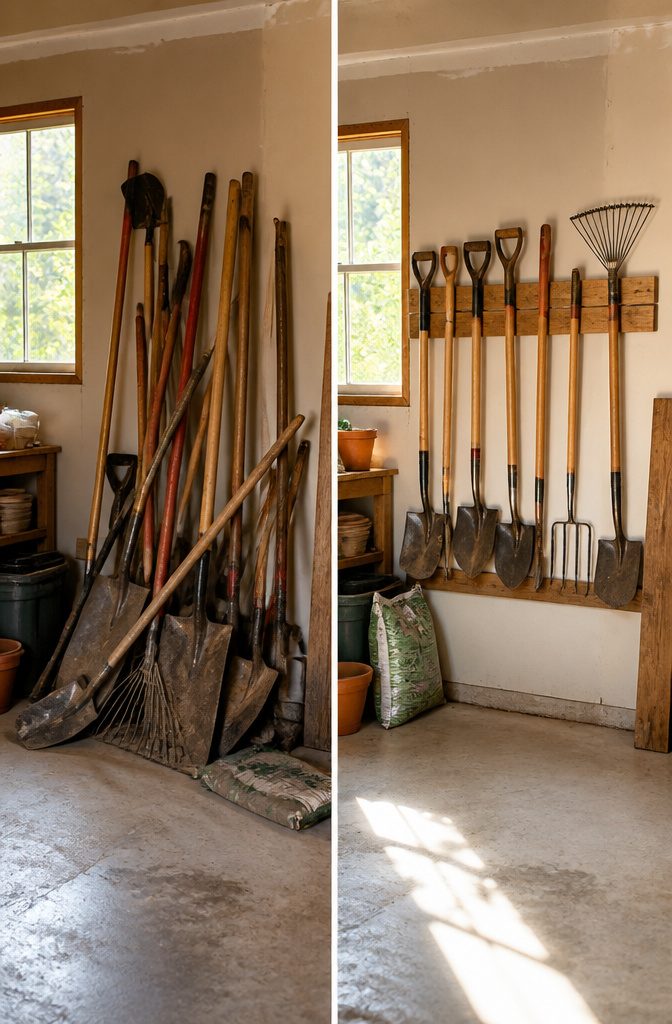
The pile of shovels in my garage used to cost me about twenty minutes every Saturday, not counting the times I nearly turned an ankle on a handle I hadn’t seen.
Once I finally hung them on a scrap-wood rack, that tangle stopped dulling the blades against each other. Metal left to knock against metal chips and loses its edge fast; organized storage keeps edges apart and finishes intact.
What surprised me more was the money. A single replacement shovel runs roughly what I spent on the whole organizer, and I had been replacing handles every couple of years from rot where the pile trapped moisture against the wood.
The rack let air circulate, and the tools dried after use instead of sitting in a damp heap.
The real payoff, though, was mental. Walking into the garage and seeing each tool in its place meant I started projects instead of avoiding them.
The 20-minute build Shara Woodshop Diaries describes is about right for a basic wall mount, and that small investment flipped how I felt about the space. No more frustration, no more hunting, just grab and go.

Premium material and Durability: Crafted from high-quality material, this St Patrick's Day magnetic mailbox cover is tear-resistant and weatherproof, ensuring long-lasting use and vibrant colors season after season

【70-Gallon Massive Capacity for Effortless Organization】 Boasting a spacious 70-gallon (approx. 9.4 cubic feet) interior, this outdoor storage box waterproof design keeps your belongings dry and protected. It easily holds up to 8 standard patio cushions, 4 chaise lounge pads, or a full set of gardening tools. It keeps your patio storage box tidy by neatly storing pool floats and BBQ accessories.

【Huge Capacity】Organize Everything in One Place With massive of interior space, this outdoor storage box easily accommodates 8-10 patio cushions, large pool toys, garden tools, barbecue supplies, and even package deliveries. Keep your deck, patio, or backyard clutter-free and beautifully organized. Perfect for seasonal items and everyday essentials.
Seasonal Tool Rotation
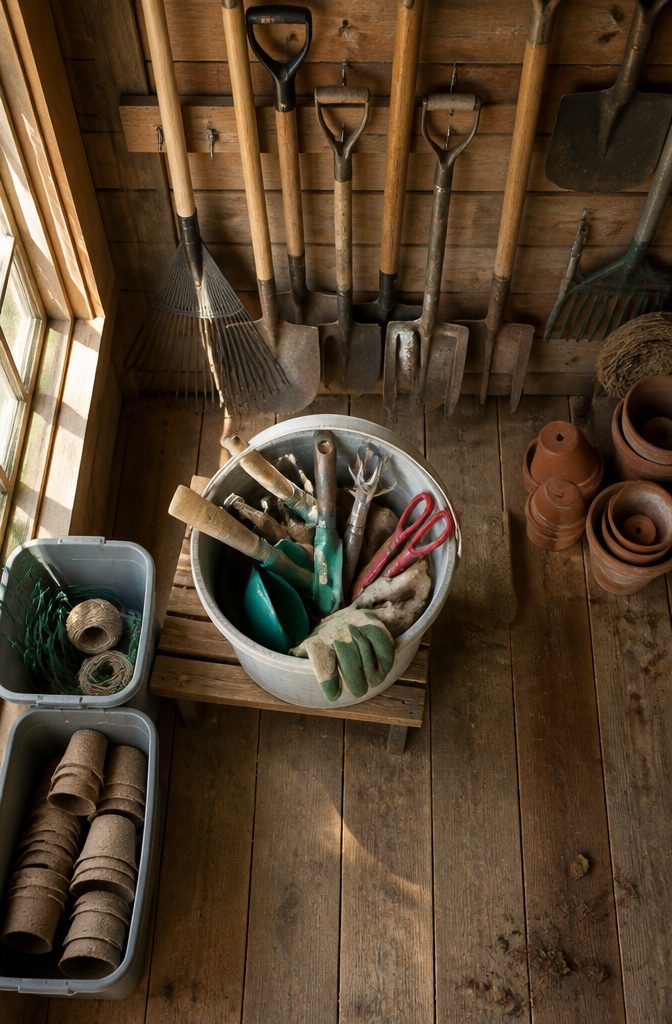
The tools I reach for in April are not the ones I need in October, and pretending otherwise wastes the limited space most renters have. A seasonal rotation keeps the everyday kit lean and the rest out of the way.
My spring and summer lineup lives in a grab-and-go bucket: trowel, hand fork, pruners, gloves, plant ties, and a permanent marker for labeling.
That bucket sits on the lowest shelf or by the door where I can lift it without thinking.
The long-handled tools, the ones I use weekly in those months, hang on wall hooks at a height where the handles clear my shoulder, nothing lower that I would trip over.
Come late fall, the bucket empties. The trowel and pruners get a quick wipe, dry fully, and move into a labeled bin on a higher shelf or into deeper storage if I am tight on space.
The long-handled shovel and rake swap places with the winter ones, the snow shovel and ice chopper, which have been stored overhead since March. The summer bucket itself flips and stacks inside another to keep floor space clear.
This only works because the storage system is split by access, not by tool type.
Pegboards and rails hold the active rotation; bins and cabinets hold the rest. If everything mixed together, I would dig past the bulb planter I use once a November to find the hand fork I need now.
Old Furniture as Storage
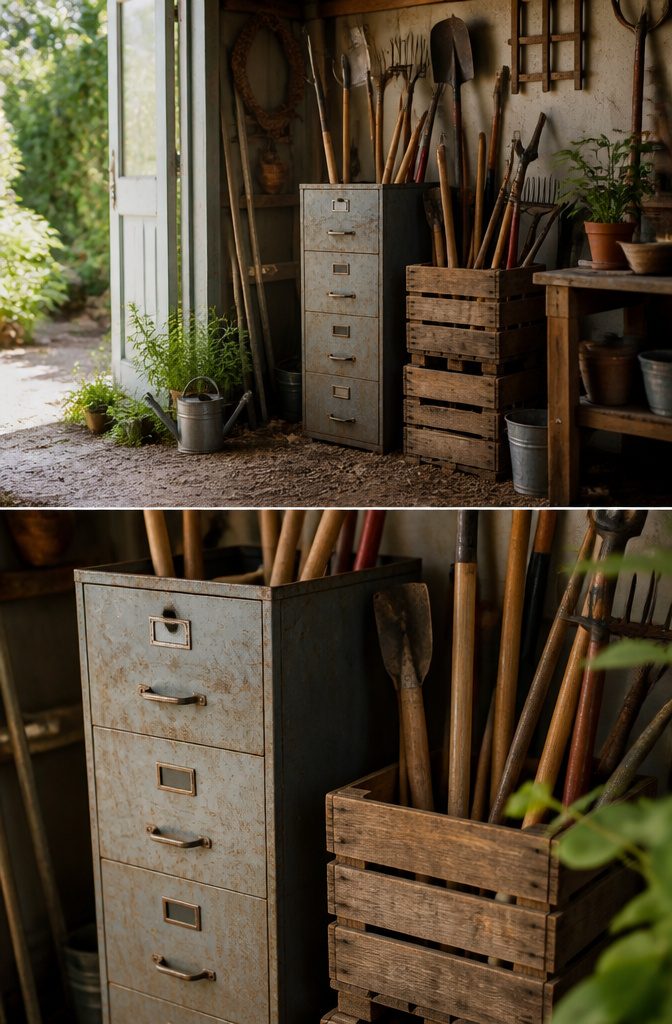
A dented two-drawer file cabinet sitting on a curb last spring got me thinking about what actually holds up outside.
Metal file cabinets already come with drawers that shed rain if you angle them slightly backward, and the weight keeps tall shovels from tipping.
The one to grab is the older steel kind, not the newer aluminum models that dent if you look at them wrong.
A pegboard screwed to the side turns the blank panel into real estate for hand tools, though you will want to seal the board edges so moisture does not wick in.
Wooden crates are lighter and easier to stack or mount at an angle against a wall. The slats let air through, which matters more than it sounds for tools that go in damp.
Check that the bottom boards are still nailed tight; a full crate of hand tools can weigh thirty pounds, and a split base dumps the whole load.
Whether you are working with a cabinet or a crate, the legs or base need to sit flat on uneven ground, or the first hard shove while raking sends the whole thing sideways.
Sand any repurposed wood and seal it, or the grain opens up after two wet seasons and the nails loosen.
Vertical Gardening With Tool Storage
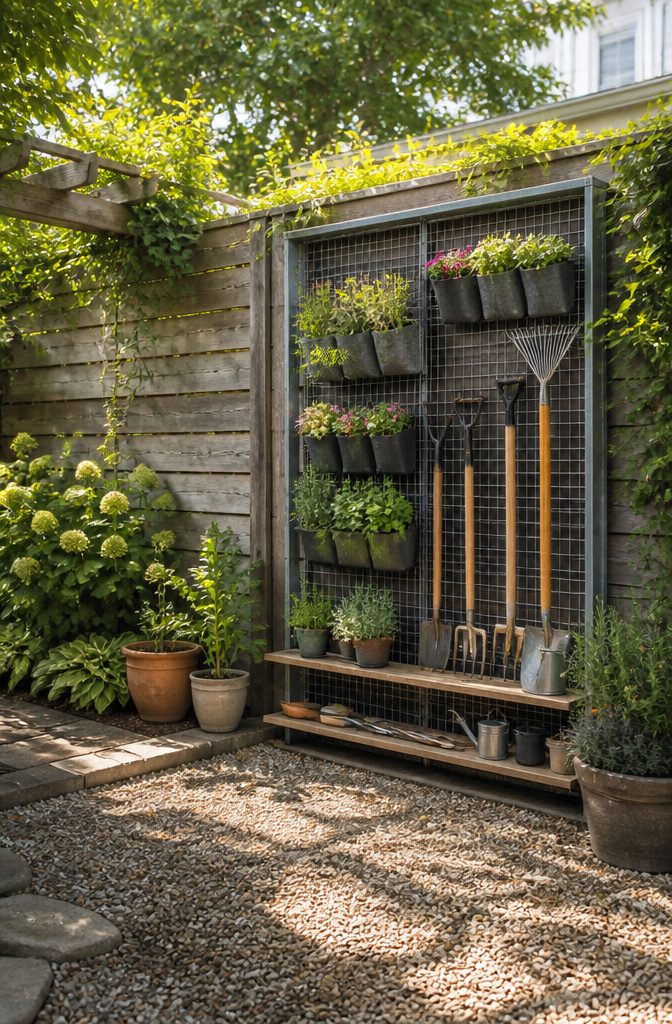
A vertical garden wall that doubles as tool storage works best when you stop treating it like a tool rack that happens to hold plants.
The difference matters in daily use. Pure tool storage puts everything at arm height for quick grabs; mixing in living plants means some pockets sit higher, some lower, and the soil blocks direct access to whatever hangs behind it.
I learned this the hard way after mounting a wall of canvas pockets and trying to wedge my hand trowel into the same row as trailing strawberries.
The trowel handle caught soil every time. The best tools for this setup are long-handled ones that hang from S-hooks on the frame itself, not from the planting pockets.
Think rakes, hoes, and a collapsible watering wand. Short tools with soil on them go in a separate strip of narrow shelves at waist height, below the green wall.
What you gain is square footage back from the garage.
A six-foot frame against a fence or the side of a house holds maybe a dozen plants plus five or six tools in the same footprint that would otherwise store only tools.
The plants soften the visual clutter, which matters if your storage sits where you actually see it while drinking coffee on the patio.
The catch is maintenance.
Living pockets need water, and water plus steel tools means rust unless you wipe them down before hanging. I would skip this arrangement entirely in a damp climate, or switch to aluminum and plastic tools only.
Frequently Asked Questions
What is the best way to store garden tools?
Group tools by task, assign each group a dedicated spot, and use vertical space with pegboards, rails, or hooks so heavier items hang lower and lighter ones higher.
Give long-handled tools a fixed parking spot to stop them from falling or tangling. Label shelves and bins before filling them so everyone knows where to return things.
How do I prevent my garden tools from rusting in storage?
Clean off soil and sap, let tools dry completely, and store them in a dry spot with air circulating around the handles and heads.
Hanging tools instead of piling them keeps moisture from trapping against wood and metal. Wipe steel tools before hanging them near living plants that get watered regularly.
What are the types of garden tool racks?
Pegboards, wall-mounted scrap-wood racks with custom slots, PVC pipe holders, freestanding shelving units, portable caddies and bags, and upcycled items like old crates or wheelbarrows. Corner tool holders and standing garden organizers also work well for specific spaces.