The difference between a raised bed that lasts one season and one that lasts twenty comes down to material choice before you ever lift a tool.
Cedar boards two inches thick buy you a decade of silvery weathering; galvanized steel pushes past that with almost no maintenance but becomes semipermanent once filled.
What decides the right build is whether you need to move it when the lease ends, or leave it standing for decades.
1. Wooden DIY Raised Garden Beds
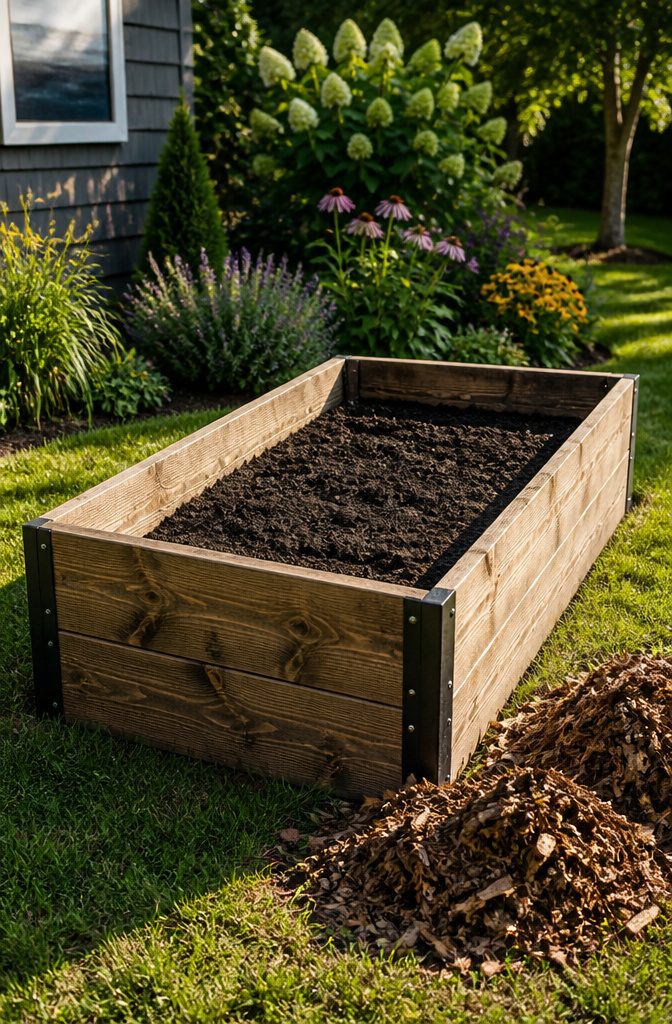
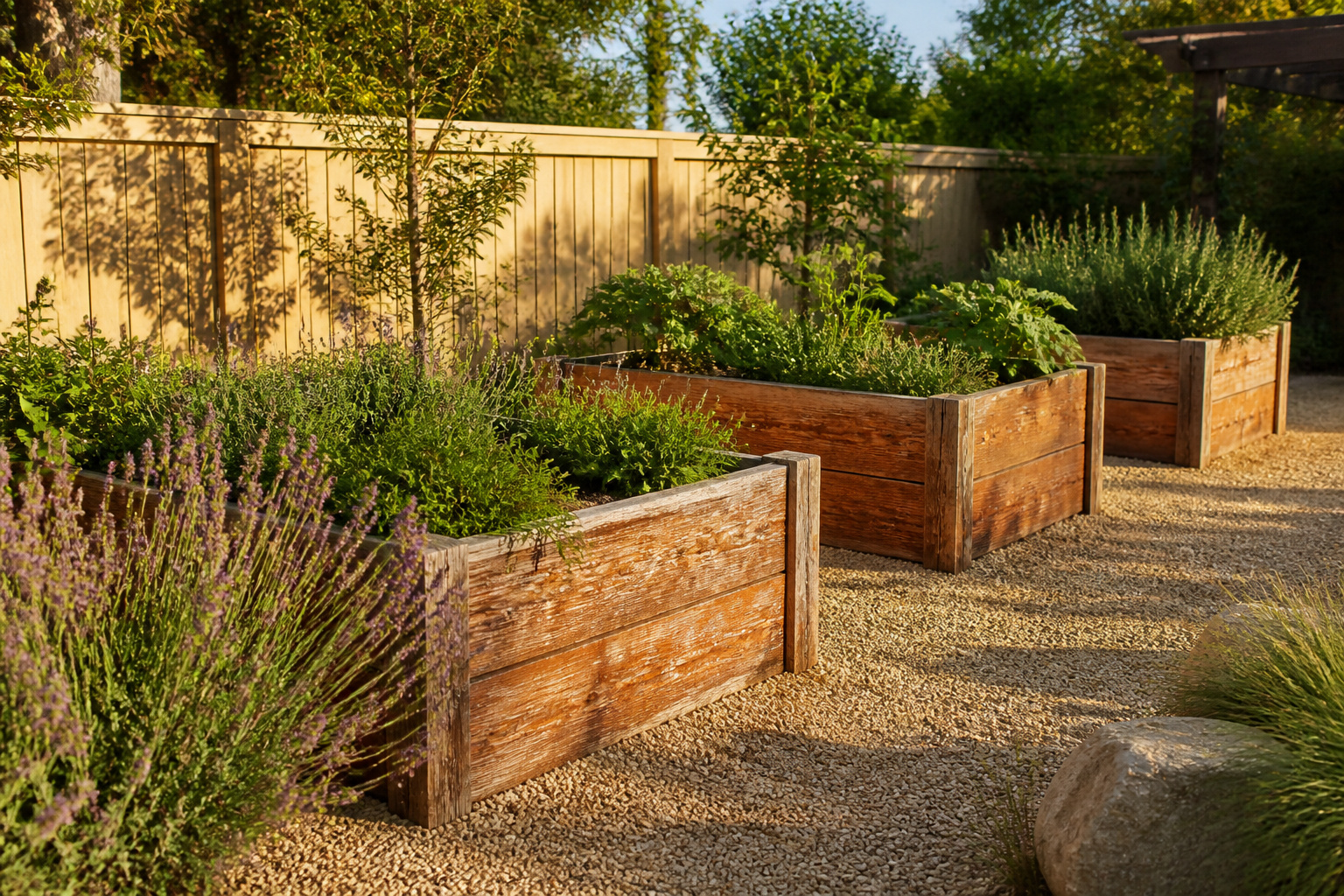
Cedar boards at least 2 inches thick will buy you a decade instead of a season.
The standard 4-by-8-foot footprint fits most rental plots and first-lawn layouts without fighting the property line, and it is narrow enough to reach the center without stepping in.
Wood stays the most approachable material for a reason. A drill and a rubber mallet are enough to assemble the Gardener’s Supply Company Deep Root Cedar Raised Bed, which runs about $215 and measures nearly 15 inches deep.
That depth handles most vegetables, though it falls short for true deep-rooters like zucchini or rhubarb that want 18 inches or more. The corner brackets are powder-coated aluminum, and once the bed is loaded with soil the hardware does not budge.
Rot resistance is the case for cedar specifically, not pine or spruce. The boards age to a silvery-gray over 10 to 15 years, which is either a feature or a warning depending on whether you wanted that warm orange tone to last.
For renters, the appeal is that a wooden bed can be built in a morning, moved with a friend, and left behind without the landlord mourning a slab of concrete.

SPACIOUS GROWING SPACE WITH EXTRA PLANTING DEPTH:Measuring 91.5" L × 47.3" W × 22.06" H, this galvanized raised garden bed holds approximately 412 gallons of soil, providing generous planting space and extra depth for vegetables, herbs, flowers and fruits. The spacious design allows roots to grow naturally while supporting tomatoes, peppers, cucumbers, broccoli, beans, lettuce, carrots, potatoes and other popular garden plants. Ideal for backyard gardening, raised vegetable gardens and outdoor planter box projects.

Elevate Your Garden - Opt for a brilliantly engineered raised garden bed to revolutionize your gardening. Its spacious design, measuring 48x24x30 inches, allows for the cultivation of multiple vegetable varieties alongside a plethora of herbs, optimizing your gardening space for ease and diversity.

100% Cedar Wood: Our garden bed is constructed using sustainably sourced cedar wood, known for its durability against the elements.
2. Galvanized Tubs and Cattle Troughs
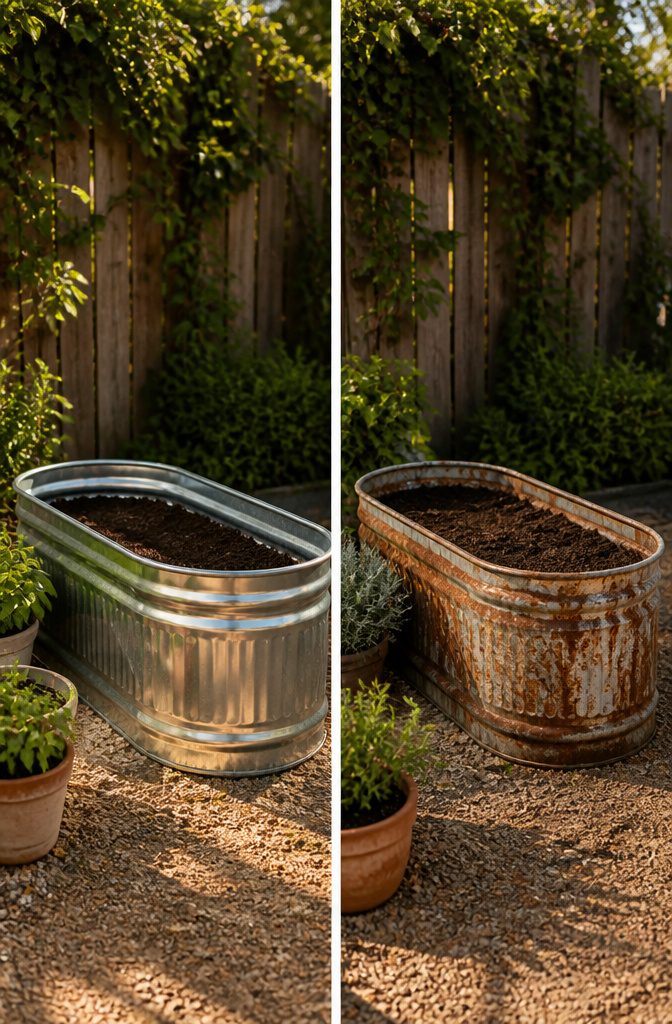
Stock tanks and galvanized tubs turn into raised beds the moment you set them down and fill them.
The metal sides warm soil earlier in spring and hold heat later into fall, which extends the growing season for salad greens and herbs.
A food-safe steel trough with holes drilled every couple of inches across the bottom solves the drainage problem most stock tanks arrive with; without that modification, roots sit wet and rot.
The industrial look reads as rustic-elegant in a suburban yard and fits naturally in rural ones.
Galvanized steel carries a 20-plus year lifespan with almost no maintenance, outlasting cedar’s 10 to 20 years and far surpassing untreated lumber that tends to rot within about five.
Modern alloy-coated options like ZAM or Aluzinc push corrosion resistance even further, theoretically lasting decades.
Weight is the real consideration for renters. A filled 4-by-8-foot trough becomes semipermanent fast; one person can assemble a modular metal bed in under an hour, but moving it later takes planning.
Casters with brakes, added to a smaller tub, let you roll the whole planter when the lease ends. For larger setups, lining the bottom with galvanized hardware cloth stops tunneling animals without adding much weight.
Manufacturers of metal garden beds claim these types have impressive lifespans of 20-plus years. Galvanized steel has long been revered for its excellent durability.
That durability means the upfront cost spreads across decades rather than seasons, which matters when you are gardening on a real budget and do not want to rebuild every few years.

Each raised metal garden bed size: 4×2×1ft ,7.14Cu

Overall dimensions: 4ft(L) x 2ft"(W) x 0.9ft"(H), 2 sets in one package.
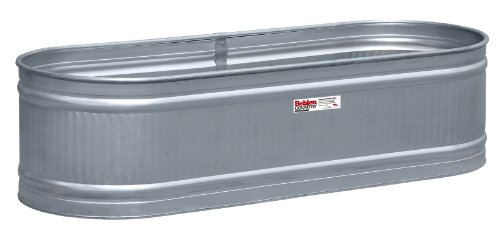
3. Corrugated Metal Raised Beds
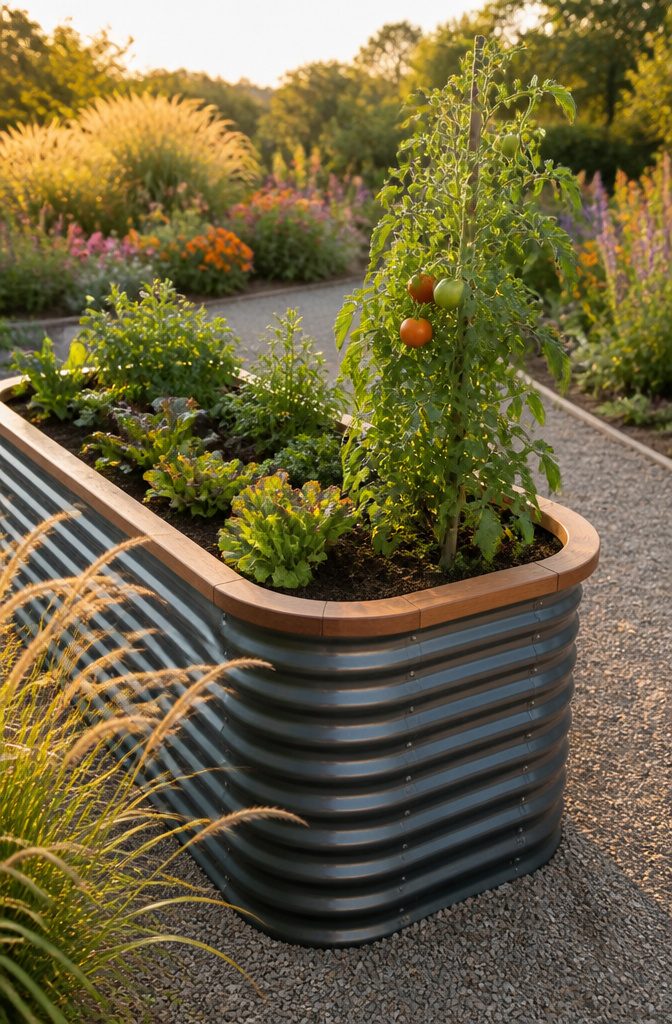
Corrugated metal sides give a raised bed that modern ranch or farmhouse look that keeps showing up in my Pinterest feed, usually paired with wood trim or steel corner posts for the frame.
The panels themselves are thin enough that they bow once the soil goes in, so that outer support is not decorative; it is structural.
I have seen builds that bury corner posts in the ground and screw the panels straight into them, using almost no lumber beyond a stained top cap for the finished edge.
The clean lines photograph well, but the metal conducts heat. Soil in these beds warms more than it does in wood, which speeds up spring planting in cooler zones but can stress roots once summer peaks.
Most kits run 15 to 17 inches tall, with modular panels that bolt together in under an hour using a cordless drill.
The Birdies Large Modular kit, around since 2009, uses galvanized steel hot-dipped in aluminum, zinc, and magnesium; Vego Garden adds stainless hardware and corrosion-resistant alloy at a slightly higher price point. Both claim decade-plus lifespans.
A 15-inch bed limits root depth for deep growers like tomatoes or carrots, so match the height to what you actually plant.
The taller 29-inch option exists for no-bend gardening, but filling it takes far more soil than most weekend budgets allow.
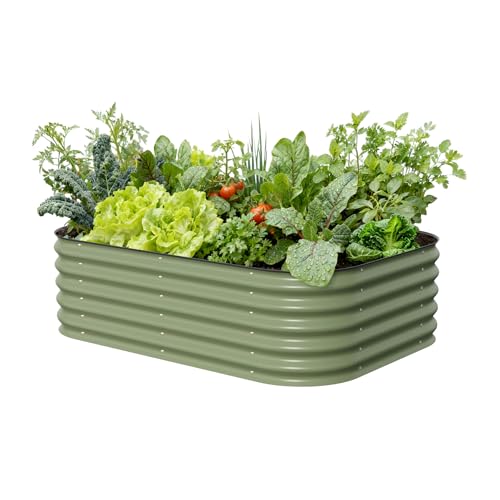
Modular Design: Vego Garden raised bed kits feature an innovative modular design, which means you can assemble a kit into various configurations that fit any backyard or garden space in a 6-in-1 kit, you can build one of 6 possible configurations to fit your garden plans

【24'' Growing Depth】Measuring 48"(L) x 24"(W) x 24"(H), the metal raised garden bed holds 144 gallons of soil and provides extra large growing space for vegetables, fruits, flowers and other plants.

Modular Design: Vego Garden raised bed kits feature an innovative modular design, which means you can assemble a kit into various configurations that fit any backyard or garden space in a 4-in-1 kit, you can build one of 4 possible configurations to fit your garden plans
4. Cinder Block or Brick Raised Beds
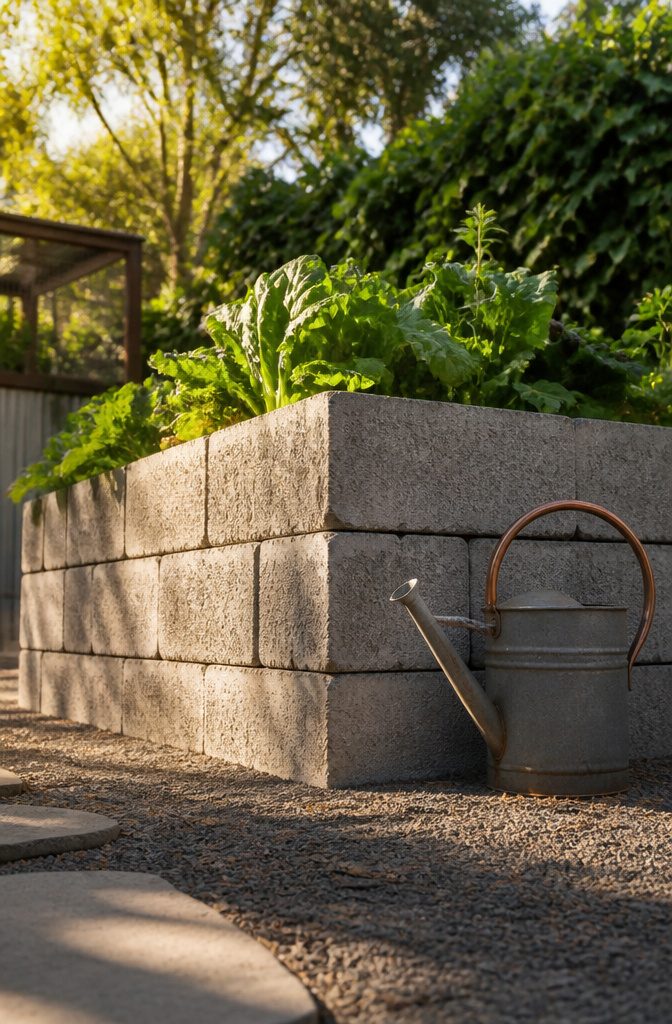
Dry-stacking cinder blocks or bricks for a raised bed means no mortar, no mixing, and no waiting to cure.
The hollow cells can stay empty or get filled with soil, turning each block into a tiny planter for trailing herbs or shallow-rooted greens.
The real advantage here is thermal mass. Concrete and brick absorb heat through the day and release it after sundown, which keeps the root zone warmer when nights turn cold.
That buffering can add a few weeks to either end of the growing season, enough to get a second crop of lettuce past the first frost.
This is a build for owners, not renters.
A full bed of concrete block weighs several hundred pounds and leaves marks on any surface it sits on for more than a season. Moving it means disassembly, not lifting.
Material cost stays low if you have a source for reclaimed brick or surplus block, but the labor is where you pay.
Leveling each course by hand, checking for square, and backfilling the cores adds hours that lumber beds skip entirely.
My suggestion: rent a plate compactor for the base if your soil is soft. Skipping that step is where most first-timers end up with a wall that leans by July.

【Premium Metal Construction for All-Weather Durability】: Crafted with heavy-duty rust-resistant metal, this elevated raised garden bed outdoor is built to withstand rain, sun, and outdoor elements for years of use. Unlike flimsy plastic planters, the sturdy frame ensures stability even when filled with soil and plants—perfect for growing vegetables, herbs, and flowers. Ideal as a metal raised garden bed for patio or balcony, it combines durability with a sleek design that complements any outdoor space.

High-Quality PE Material with Drainage Hole: Crafted from durable and flexible PE material, these grow bags are built to withstand outdoor conditions without cracking. The bottom drainage hole provides essential airflow to roots and prevent overwatering and root rot, ensuring your plants thrive in a well-aerated environment.

[ Solid Fir Wood Garden Box ]: Made by ScienGarden from solid fir wood, this wooden planter box features a smooth water-based paint finish for a cleaner, sealed surface. The natural wood look makes it suitable for outdoor garden decor, patios, porches, balconies, and backyard spaces.
5. Elevated or Standing Planter Boxes
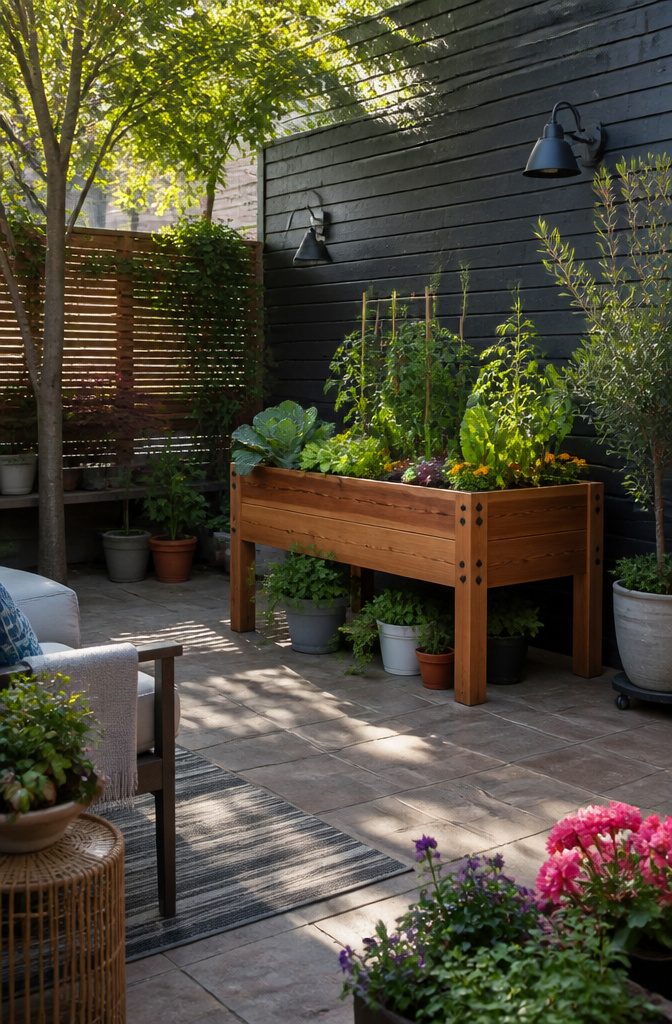
Waist-high boxes change the whole experience of growing food. Bending disappears, which matters more with each season, and the frame keeps soil warmer and better drained than ground-level beds ever manage.
Most vegetables need 18 to 24 inches of soil depth once the bed is raised off the ground; anything shallower locks you into lettuce, radishes, and herbs while tomatoes and peppers sulk.
The legs are where builds go wrong. Cedar holds up against rot but still flexes under 400 pounds of damp soil, so cross-bracing or a lower shelf matters more than the wood species.
Powder-coated aluminum legs stay rigid, though the hardware loosens over a few seasons and needs checking.
A 48-inch cedar box with legs runs under $100 if you buy prefab, closer to $250 for sturdier framed versions, and building your own costs about the same once you price the lumber and the afternoon of harder joinery that a raised bottom demands.
These boxes suit three situations best: patios with no dirt access at all, gardeners already managing back pain or knee trouble, and anyone trying to outsmart the local rabbits.
The tradeoff is water; raised soil dries faster, so the daily check becomes non-negotiable.

SELF-WATERING WICKING SYSTEM – Never overwater again. Built-in reservoir feeds roots on demand. Lower soil stays moist while surface looks dry. Less watering, healthier plants.

SELF-WATERING WICKING SYSTEM – Never overwater again. Built-in reservoir feeds roots on demand. Lower soil stays moist while surface looks dry. Less watering, healthier plants.
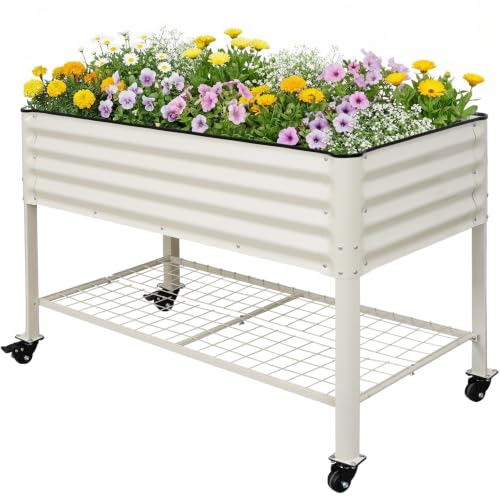
【Effortless Mobility & Secure Locking】 Move your garden effortlessly with our 4 smooth-rolling wheels, designed for various surfaces. Raised garden bed with locking wheel brakes securely hold your planter in place, preventing unwanted movement and ensuring stability on patios, balconies, or decks
6. Repurposed Items
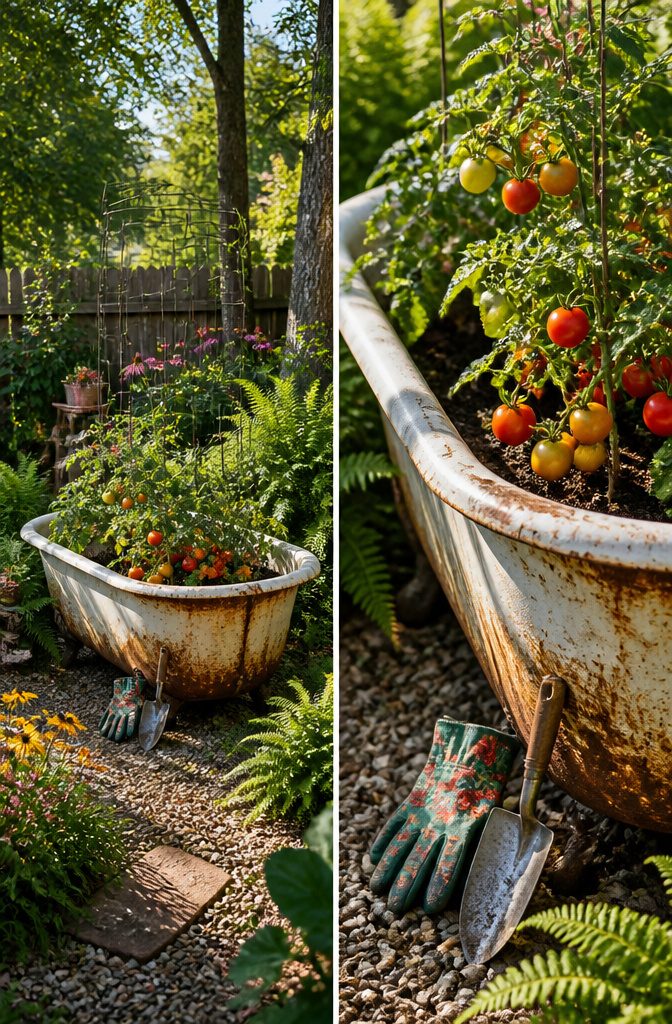
Old bathtubs, stacks of bricks left over from a patio job, pallets pulled from behind a grocery store: free material has a pull that prefab kits never match.
I have spent Saturdays chasing that pull, and the math usually shifts somewhere around hour three.
A cast-iron tub is already a container, already deep enough for tomatoes, already a statement piece. Drill drainage holes in the bottom before anything else, or the roots sit in water and rot within a season.
The enamel chips, the exposed iron rusts, and rust is iron oxide, not a contaminant anyone worries about in a vegetable garden.
Old paint inside the tub is a different problem; lead was common before 1978, and a chip of it in your soil is not worth the free find.
Pallets build fast if the wood is heat-treated, marked with an "HT" stamp.
Chemically treated pallets, the ones marked "MB" for methyl bromide, leach into soil and into anything you would eat. The risk is real, easy to avoid, and easy to miss if you grab the first stack you see.
I have misread stamps in bad light and hauled a pile home that sat in my driveway for a month before I admitted it was not worth the uncertainty.
The weekend cost is where these projects turn. A bathtub weighs enough that moving it is a two-person job, minimum, and leveling it on uneven ground takes another hour you did not schedule.
Free stops feeling free when Sunday evening arrives and you still have no plants in the ground. The satisfaction is genuine, though: a thing discarded becomes something growing, and the story of it lasts longer than the harvest.

🪵 Solid American Cedar: Crafted from untreated 100% solid American cedar boards, it is ideal for growing vegetables, herbs, and flowers.

DEEP PLANTER FOR MAXIMUM YIELD: With 16" of soil depth and a spacious planting area, this elevated bed supports healthy root vegetables like carrots, beets, and radishes while allowing more crops per bed, boosting overall harvest and garden productivity

Generous Planting Space: Ample bed space provides your plants and vegetables with room to thrive, promoting healthy growth and robust yields.
7. Tiered or Vertical Garden Beds
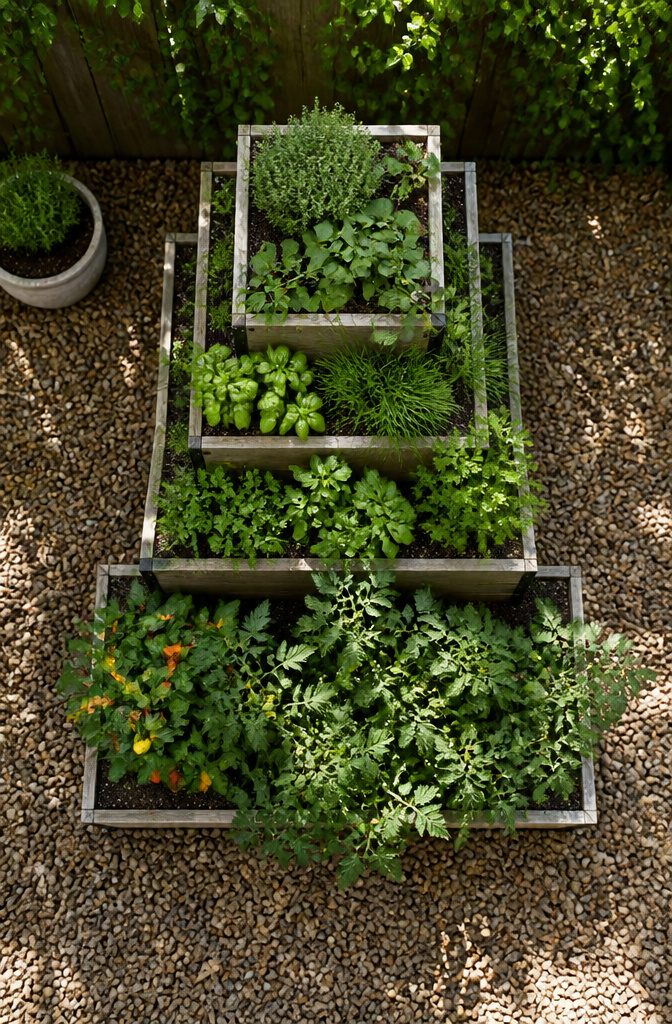
Pyramid and staircase beds turn a flat footprint into something that reads intentional from the sidewalk, which matters when your outdoor space is the size of a parking spot.
I spent a long afternoon sketching a three-tier corner pyramid before I understood the real constraint: soil volume drops fast as you climb.
My top tier would have held maybe six inches of mix, enough for thyme or a struggling strawberry, while the bottom sat at nearly two feet, prime real estate for a tomato that sends roots sideways longer than the bed is tall.
Tomatoes go low, herbs go high is less a planting tip than a structural rule. Ignore it and you are watering a root-bound pepper in a glorified window box.
Wall-mounted planters are the extreme end, and the gap between the photo and the build is widest here.
A cedar box that looks weightless on a feed is, in material reality, a few hundred pounds of wet soil trying to pull screws through siding.
I would not mount anything larger than a kitchen herb rail unless I hit studs, and even then I would keep the depth under eight inches.
The visual payoff is real; the engineering is what separates the post that ages well from the post that gets quietly deleted.
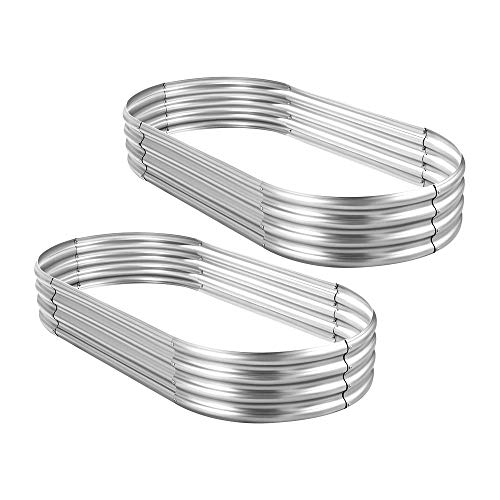
Each raised metal garden bed size: 4×2×1ft , 7Cu

Galvanized Metal: Get a garden going anywhere outside; our outdoor planter lets you set down soil even if you don't have a yard. Also, it's built with 0.6mm thick galvanized steel so that it won't warp or deform due to moisture.

Enhance your storage, decor, and functionality with this versatile 16-gallon round galvanized steel tub.; Adaptability and durability make it an ideal solution for various requirements
8. Themed Garden Beds
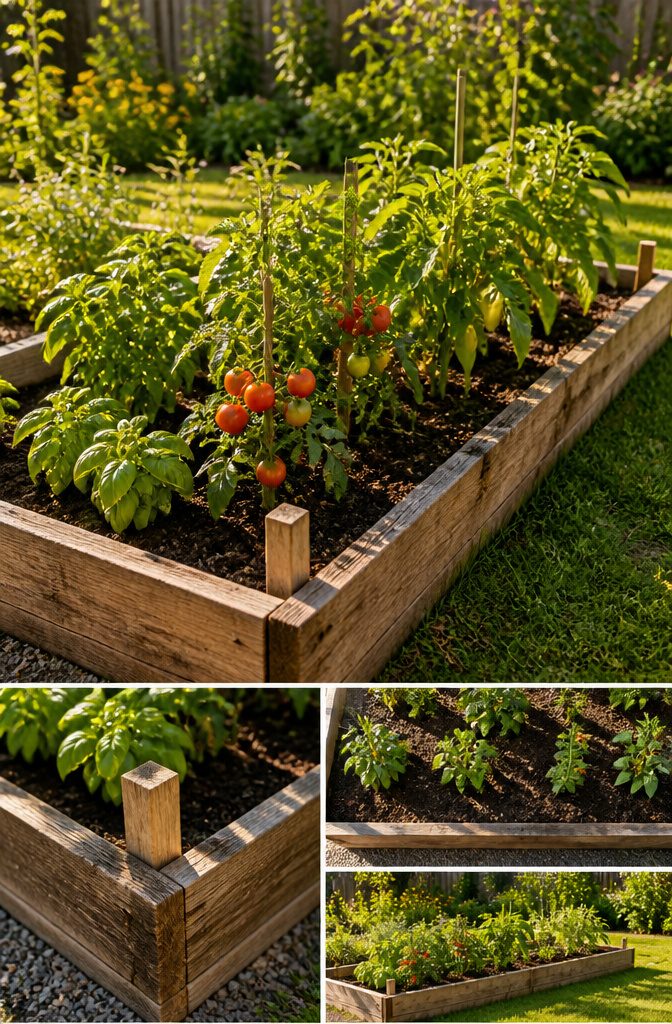
A pizza garden was the first themed bed I ever laid out, and the decision-making practically stopped the moment I narrowed the list to tomatoes, basil, peppers, and onions.
The same four-by-eight foot box that had felt overwhelming with a seed catalog suddenly felt obvious. Narrowing the plant list is what makes a raised bed look intentional instead of accidental.
Salsa gardens and salad gardens work the same way.
Hot peppers, onions, cilantro, and garlic share a bed naturally because they share a purpose. A salad garden of loose lettuces, arugula, radishes, and chives stays harvestable longer when everything wants the same cool soil and consistent water.
Beginners especially benefit from the guardrails. A theme tells you what belongs and, just as usefully, what does not.
Herb spirals take the idea vertical.
The spiral shape creates microclimates, dry at the top for rosemary and thyme, moisture-retentive at the base for parsley and mint. The structure itself becomes the organizing principle, so the bed reads as designed rather than accumulated.
The real payoff is restraint. Themed beds resist overplanting because the theme itself sets the limit.
You fill the space, then you stop. That finished look, the one that reads as beautiful from across the yard, comes from knowing when the bed is full.

Modular Design: Vego Garden raised bed kits feature an innovative modular design, which means you can assemble a kit into various configurations that fit any backyard or garden space in a 9-in-1 kit, you can build one of 9 possible configurations to fit your garden plans
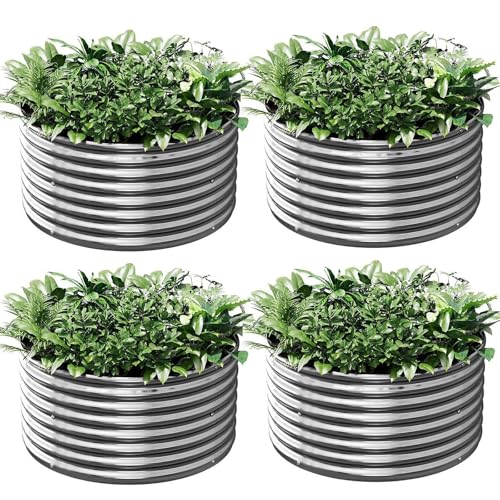
Durable planter box: The round galvanized raised garden bed allow to expose to sun, rain, snow and so on for a long time.

Smart-Soil Efficiency: 12" height is ideal for herbs, lettuce, strawberries, and other shallow-root vegetables. Improves drainage, warms soil faster, and requires less soil to fill than deeper beds, helping reduce setup cost. Perfect for beginners and small garden setups
Building Steps
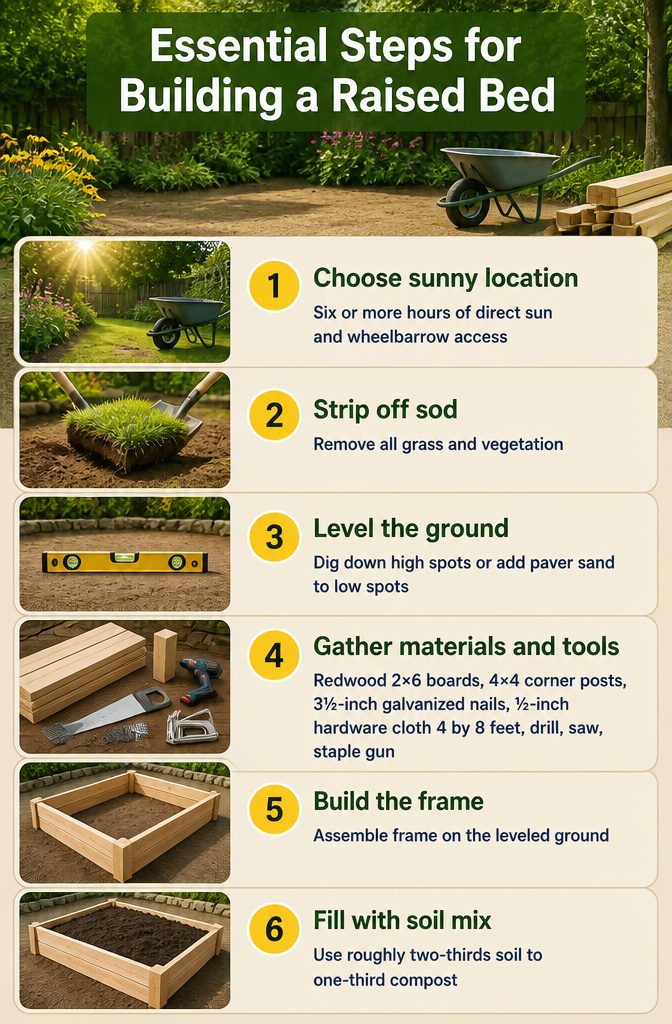
A raised bed only works if you can actually reach the middle of it, so I keep the width to 4 feet or less. That is the measurement that saves you from climbing into the soil every time you weed.
- Choose a spot with six or more hours of direct sun and a path wide enough for a wheelbarrow. I have watched too many beds become neglected because hauling compost past a narrow gate turned every refill into a chore.
- Strip off the sod or existing vegetation. Grass will find its way up through 18 inches of soil if you leave the roots in place.
- Level the ground beneath the frame. My first beds sat on a slight slope, and by midsummer the soil had washed to the low end and the boards were pulling apart. Dig down the high side or spread paver sand to raise the low side.
- Gather materials and tools. Redwood 2×6 boards, 4×4 corner posts, 3½-inch galvanized nails, and a sheet of ½-inch hardware cloth 4 by 8 feet will build one standard bed. A drill, saw, and staple gun cover the cutting and fastening.
- Build the frame on the flattened ground. Do not sink the corner posts; the weight of the soil holds the box steady, and buried wood rots faster.
- Staple hardware cloth across the bottom if gophers or voles are common where you live. It drains and lets roots through, but stops the critters.
- Fill with a mix of topsoil and compost. I aim for roughly two-thirds soil to one-third compost by volume.
- Plant seeds or seedlings at the depth and spacing the packet recommends.
- Water thoroughly after planting, and keep a hose or soaker hose within reach. Beds dry out faster than ground soil, and carrying water by the can gets old by July.

[ Fir Wood Raised Garden Bed ]: Made by ScienGarden, this raised garden bed is crafted from fir wood for a sturdy yet lightweight structure. The polished wood surface is finished with water-based paint, giving this elevated garden bed a natural look while helping protect the planter box during outdoor use on patios, balconies, decks, porches, and backyards.


Spacious planting space: Raised garden bed with legs, 43x24x32 inches, 48 gallons, 400 capacity
Material Comparison
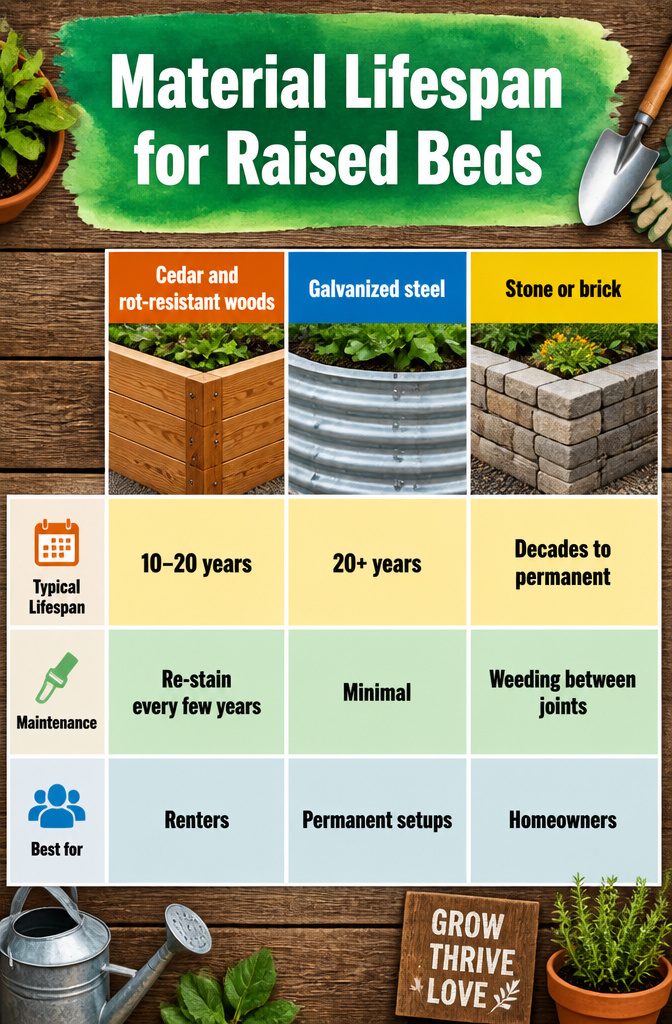
The first raised bed I ever built was cedar, and the rot set in faster than I expected because I cheaped out on lumber that wasn’t actually rot-resistant.
That mistake taught me to start any comparison with how long the material honestly lasts.
| Material | Typical Lifespan | Maintenance | Best For |
|---|---|---|---|
| Cedar and other rot-resistant woods | 10–20 years | Re-stain or seal every few years | Renters who may want to disassemble and move |
| Galvanized steel or alloy-coated (ZAM / Aluzinc) | 20+ years | Minimal | Permanent setups; modular kits reconfigure for odd yards |
| Stone or brick | Decades to permanent | Weeding between joints | Homeowners staying put; highest upfront cost |
Cedar carries that classic warmth and smells good while you work, but untreated SPF lumber rots in about five years. Galvanized steel skips the rot entirely, and modern alloy-coated options push past traditional corrosion issues.
Stone or brick outlasts everything and looks expensive because it is: swapping a wood bed for stone dresses up a yard in a way paint never matches, though you will not be relocating it.
For a weekend build with a few hundred dollars, wood or a metal kit wins. Stone demands masonry skill or hired labor.
Metal kits often go together in under an hour with a screwdriver. Wood takes longer but leaves you free to adjust dimensions.
If you rent, bolted wood or modular metal come apart. Mortared stone stays where you poured it.

Plants Are Lush And Thriving: This galvanized raised garden bed & metal raised garden bed has sealed metal trays to stop leaks and messes. The mesh pads and geotextile bags ensure great drainage and airflow, fostering healthy roots for thriving plants. A great pick among raised garden beds outdoor and large outdoor planters.

SELF-WATERING WICKING SYSTEM – Never overwater again. Built-in reservoir feeds roots on demand. Lower soil stays moist while surface looks dry. Less watering, healthier plants.

SELF-WATERING WICKING SYSTEM – Never overwater again. Built-in reservoir feeds roots on demand. Lower soil stays moist while surface looks dry. Less watering, healthier plants.
What to Grow and Where
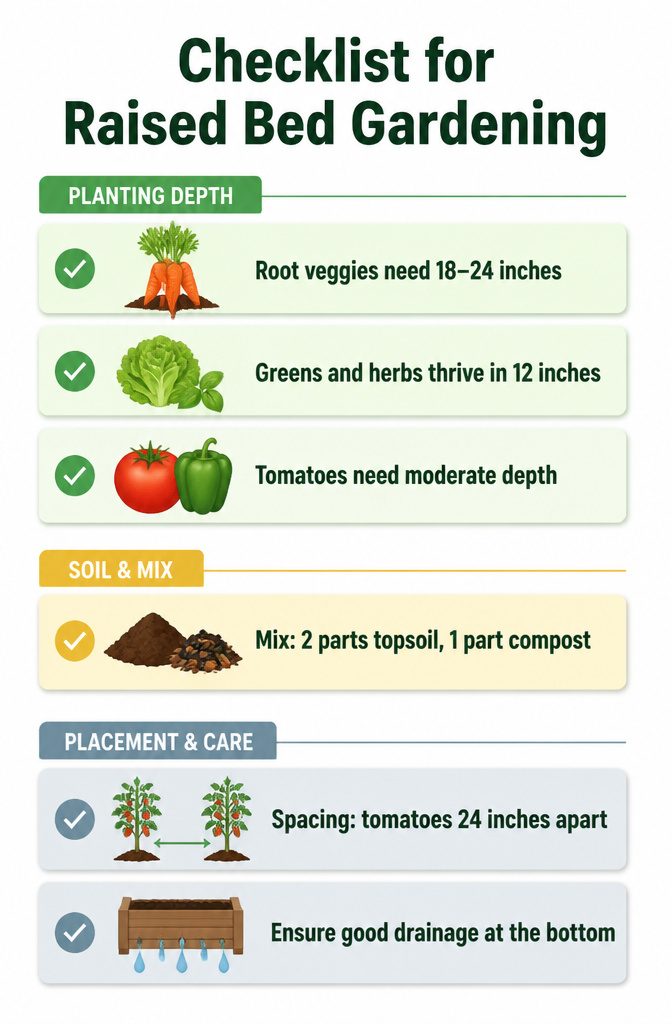
A raised bed is only as useful as what you can actually grow in it, and the depth decides that for you.
- Root vegetables need 18–24 inches of loose soil to grow long and straight; carrots in shallow soil fork and twist instead of forming a usable root.
- Greens, strawberries, and most herbs manage with far less; a 12-inch bed handles lettuces and leafy crops without the extra soil cost or construction height.
- Tomatoes and peppers fall in the middle; they want enough depth for root spread but do not demand the full two feet that carrots or parsnips require.
- Topsoil plus compost is the mix most beds run on, roughly two parts topsoil to one part compost; the compost feeds the season, the topsoil gives the structure.
- Spacing in a raised bed can run tighter than row gardens because you are not walking between plants; still, a full-size tomato wants 24 inches of its own, while lettuces squeeze in at 6–8 inches on center.
- Drainage holes matter even in deep beds; most edibles rot where water pools, so the bottom needs an exit even when the sides are tall.
Maintenance After Planting
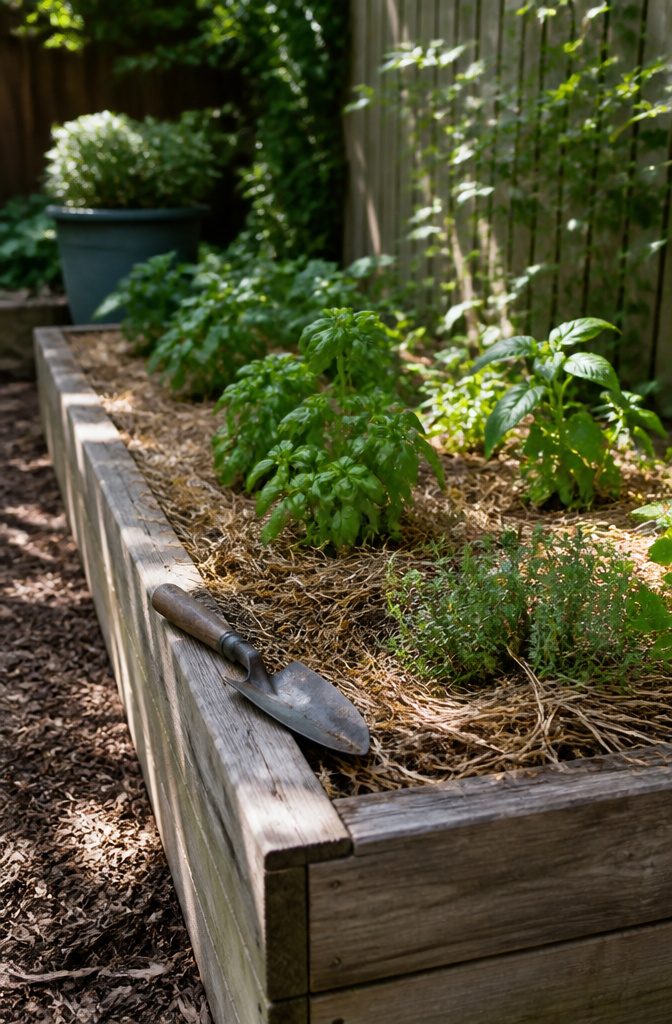
Raised beds dry out faster than ground soil, so the watering rhythm matters more than the plant tag suggests. I check mine by pushing a finger past the mulch; if the top two inches are dusty, it is time.
A heavy mulch layer, two to four inches of straw, wood chips, or even grass clippings, buys you a day or two of forgiveness by blocking the evaporation those exposed walls accelerate.
Weeding stays manageable if you show up weekly.
The frame itself slows weeds from the lawn, and the mulch blocks light to the soil surface. When one germinates anyway, the loose raised-bed soil lets the root slide out whole.
For pest management, the same compact space works against you; an infestation spreads fast. I walk the beds every morning coffee in hand, looking for the first chewed leaf or cluster of eggs.
When a bed empties in fall, you have three paths.
A cover crop of clover or winter rye fixes nitrogen and keeps the soil structure intact. A thick layer of mulch left to break down feeds next spring.
Or you can leave it be, though the soil will compact some and weeds will find a foothold. The cover crop wins if you are planting tomatoes there next year; the mulch wins if you are still deciding.
Common Mistakes
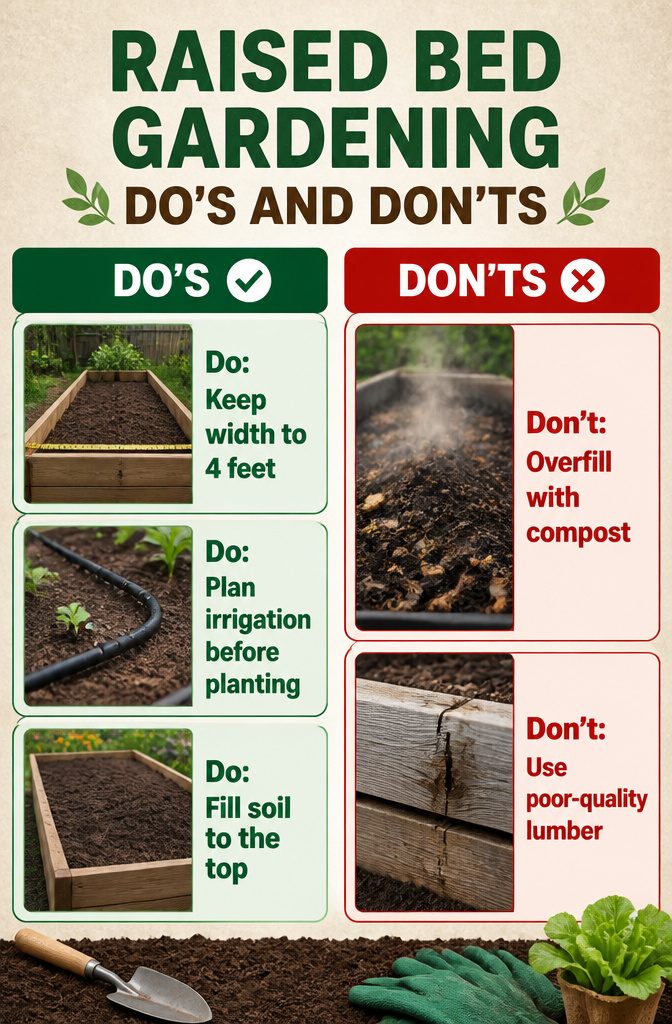
The mistakes that cost you a season usually show up in the first weekend. These are the ones that stuck with me:
- A bed wider than 4 feet means you are stepping on soil to reach the middle, compacting what you just built. The 4-ft. width exists because most people can comfortably reach about 24 in. from either side. I ignored this once and ended up with a 5-ft. bed I could only tend from the edges.
- Irrigation needs a plan before the plants do. Drip lines or soaker hoses are simple to run empty; threading them through mature tomatoes is not. I have watched beds go dry in a July heat wave because I assumed I would "figure out watering later."
- Soil settles. My first bed looked full on Saturday and sat 3 in. low by Wednesday. Filling to the absolute top leaves you with a dip that pools water.
- Overfilling with unfinished compost cooks the roots. I learned the temperature gap between "looks like dirt" and "actually is dirt."
- Construction-grade lumber with knots warped within one season on me. The boards twisted so badly the soil spilled out the gaps. Redwood held up; the cheap pine did not.
Frequently Asked Questions
Why should I use a raised bed?
Raised beds give you full control over soil quality instead of fighting whatever clay or sand sits in your yard.
They drain better, warm up faster in spring, and cut down on back strain because you are not bending to ground level.
The framed structure also makes it simple to attach hoops, netting, or shade cloth for pest and weather protection.
What should I grow in raised garden beds?
Tomatoes, peppers, lettuces, herbs, and compact perennials are the most reliable choices. Root vegetables like carrots and parsnips need 18 to 24 inches of loose soil to grow straight; lettuces and herbs manage with 12 inches.
Themed beds, such as a pizza garden with tomatoes, basil, peppers, and onions, help beginners limit their plant list and keep the bed looking intentional.
Where’s the best place to put my raised bed?
Pick a level spot with at least six hours of direct sun and a path wide enough for a wheelbarrow.
South-facing beds work best with the shortest plants on the north side and tallest on the south so nothing gets shaded out.
Leave 30 to 36 inches between beds for comfortable access, and place them where you will walk past daily so maintenance does not slip your mind.
What is the ideal size of a raised garden bed?
Four feet wide by eight feet long is the standard that lets you reach the center from either side without stepping in and compacting soil. Keep the width at four feet or less even if you adjust the length.
Depth depends on what you plant: 12 inches handles greens and herbs, 15 to 17 inches suits most vegetables, and 18 to 24 inches is the minimum for root crops and deep-rooted plants like zucchini or rhubarb.
What are raised garden bed mistakes to avoid?
Making the bed wider than four feet is the most common error; you will end up climbing into the soil to weed.
Skipping irrigation planning is another, since raised beds dry out faster than ground soil and threading drip lines through mature plants is frustrating.
Also avoid filling to the exact brim because soil settles, and never use unfinished compost that can heat up and cook roots.