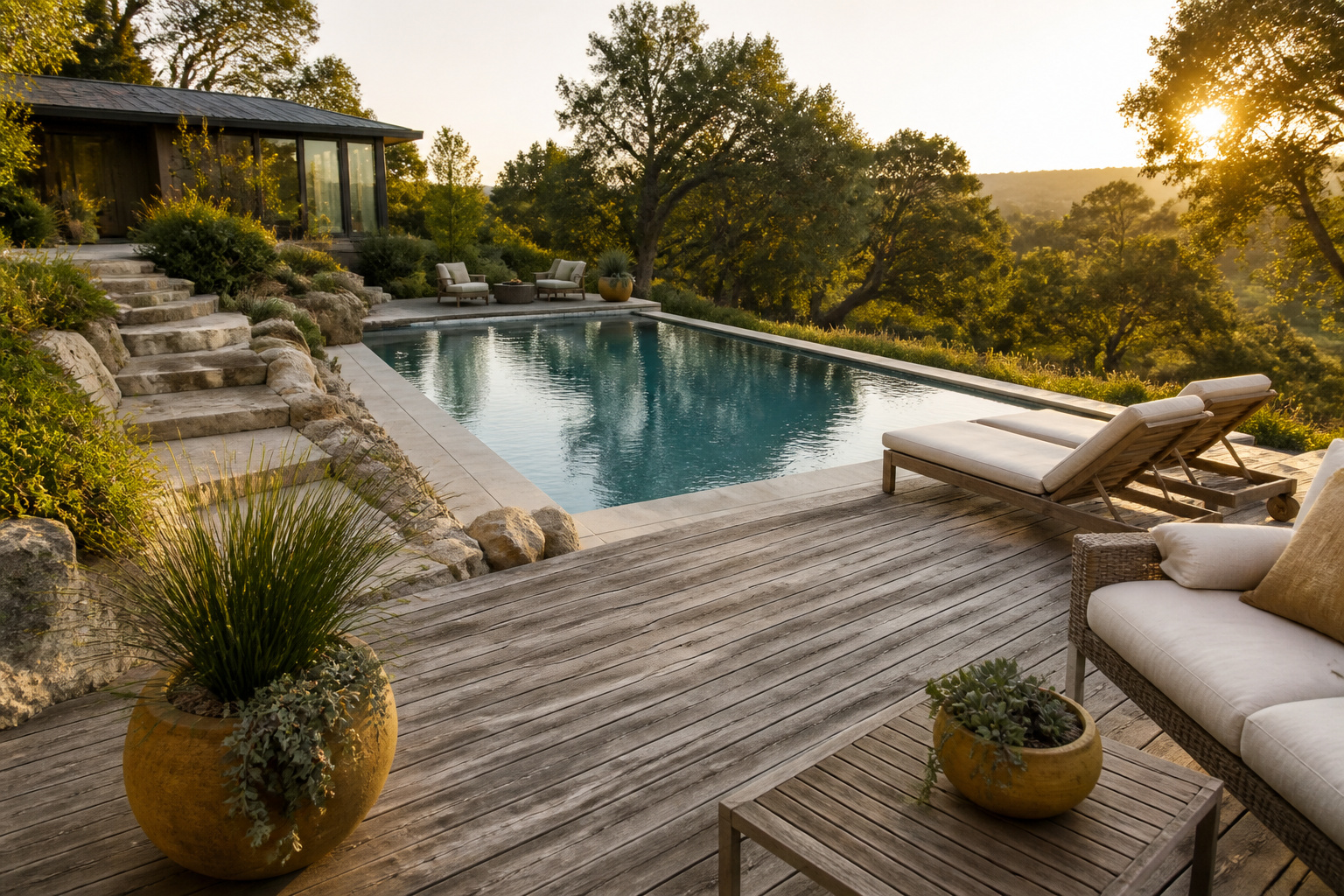
A backyard with pool design is the arrangement of water, hardscape, and planting that turns a residential lot into usable outdoor space.
The catch is that placement relative to your sightlines from the house determines whether the result feels like a retreat or a display; point the longest dimension toward what you actually want to look at, not what the property line dictates.
On sloped lots, enclosing an above-ground pool in a simple wood deck levels the usable surface while the water follows the grade beneath it, a trick that costs far less than grading the entire yard flat.
Framing the View
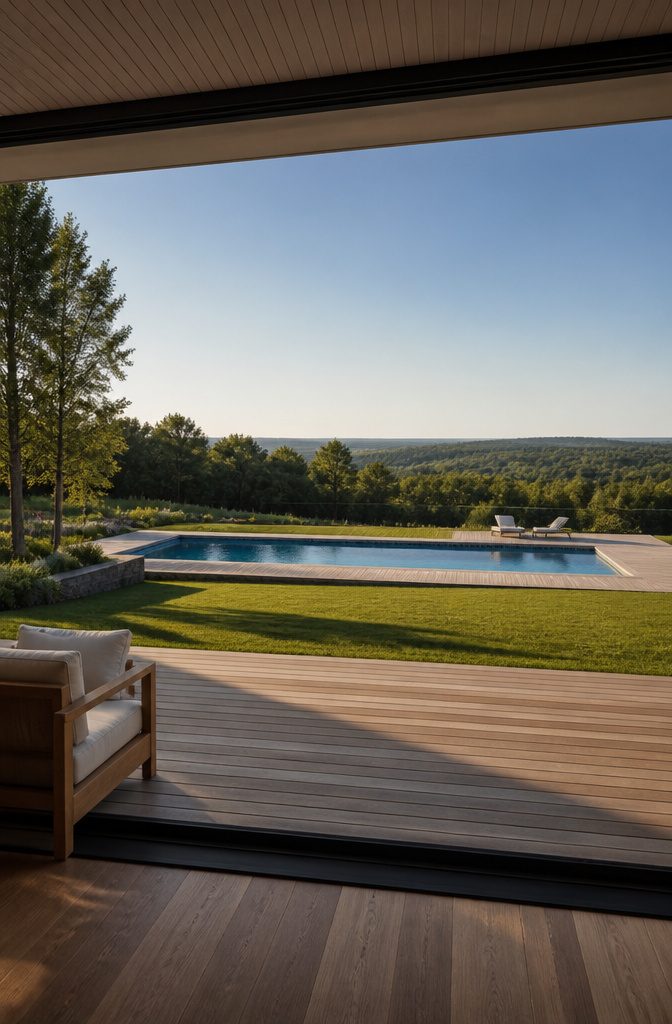
The pool’s placement relative to your sightlines from the house shapes whether the backyard feels like a retreat or a display. On my own lot, the view from the kitchen window matters more than the view from the lawn.
Position the water so the longest dimension runs toward whatever you actually want to look at: a stand of trees, a slope, the open sky.
For small lots, a single vanishing edge positioned toward the best view creates depth without eating the footprint that seating and circulation need.
Sloped sites flip the problem. A steep grade in Playa Del Rey or San Diego can swallow a standard pool whole, which is why enclosing an above-ground pool in a simple wood deck works.
The deck levels the usable surface while the water follows the grade beneath it. The same slope that ruins a flat installation becomes the sightline itself: the pool reads as an in-deck plunge pool, the horizon dropping away behind it.
One practical limit catches most people. Property lines and setbacks push the water toward the center of the lot, which often points it straight back at the house.
When that happens, the retreat feeling collapses. The fix is usually a partial screen of planting or a raised spa with a spillway that redirects the eye outward.
It costs space, but the alternative is a pool that performs for the neighbors instead of the people who paid for it.

Ideal Fit Pool Liner: Designed to fit φ10 ft round pools, this swimming pool liner delivers a snug, wrinkle-free installation that enhances comfort. No more folds or leaks—quick, hassle-free setup saves time and effort while keeping a professional look
✅ Flat Profile Design for a Sleek Fit – Flat liner coping strips sit snugly under the top rail, helping secure your overlap liner in place.

Durable Protection: Crafted from durable geotextile material, our 12 ft round pool liner provides a strong barrier against punctures, tears, and abrasions, safeguarding your pool liner from damage caused by sharp objects or rough surfaces.
Water Features
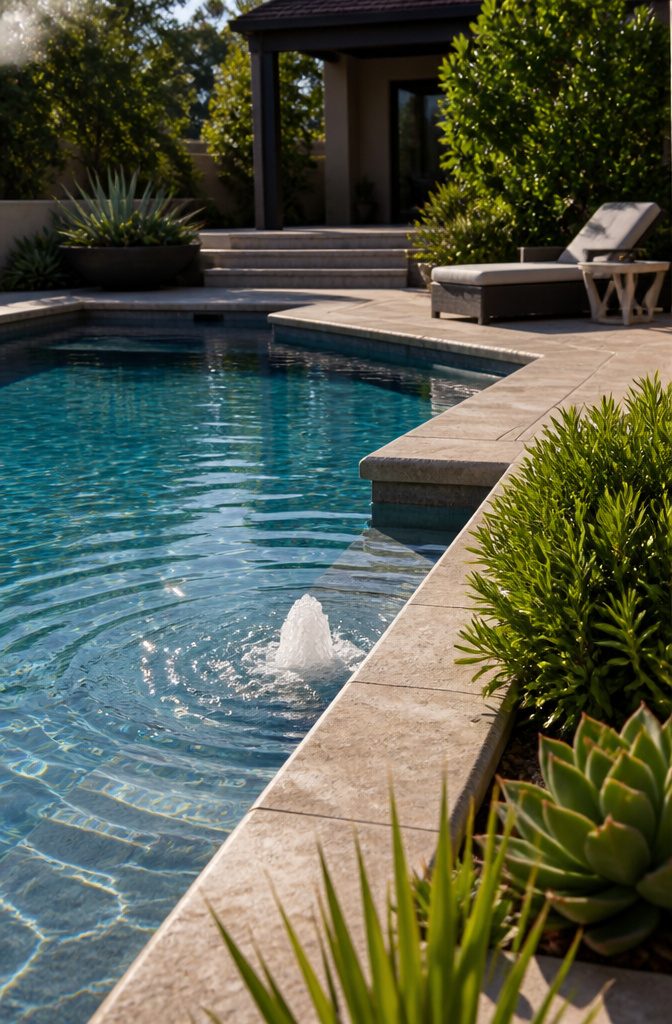
Still water gets old fast. After a few afternoons by the pool, the silence becomes the thing you notice, and not in a good way.
A basic bubbler fountain threaded into an existing return line runs a few hundred dollars and an afternoon of work. The pump taps what is already there, so you are not trenching for new electrical.
Sound carries farther than you would expect: six inches of broken surface turns a whole corner of the yard into something you stop noticing and start hearing.
A rock waterfall is a different project entirely.
The build starts around $5,000 for a modest stack-and-mortar wall with a catch basin and dedicated pump, and it climbs fast once you add stone delivery, equipment pads, and the grading to handle the splash.
Pool projects already run $50,000 to $120,000 or more depending on type and materials; the waterfall can eat ten percent of that total without trying hard.
If the budget is tight, the bubbler wins. It gives you the murmur and the ripple without the second mortgage.

⭐【Compatibility】Universal fit that works with most pool covers. Confirm dimensions to ensure proper installation.

⭐【Compatibility】Universal fit that works with all pool covers whether inground or above ground.

⭐【Compatibility】Universal fit that works with all pool covers whether inground or above ground.
Tropical Oasis
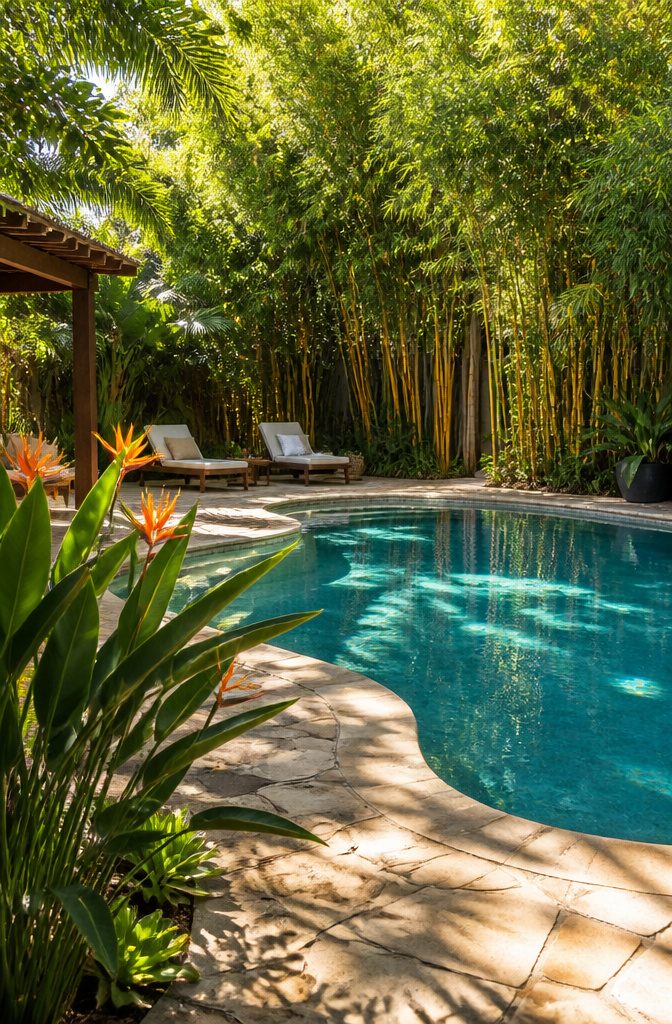
The first year I tried to build a tropical feel around my pool, I planted elephant ears right at the coping edge.
Reflected heat off the water and occasional splashes of chlorinated water turned the leaves to paper within six weeks.
Move tropical-looking plants at least three feet back from the waterline, or stick with species that tolerate both chemicals and heat stress.
Bananas and cannas held up better in that middle zone, though the cannas needed replacing every other season in my zone 8 yard.
What actually thrived as a backdrop was clumping bamboo placed five feet out, where it got reflected light without the direct oven effect off the pavers.
I also learned to skip anything with delicate foliage. Ferns in hanging baskets looked lush for about ten days, then fried; replacing them with bird of paradise gave the same vertical green without the constant replacement cost.
For lower layers, jasmine ground cover survived where impatiens and coleus melted.
The jasmine also handled an accidental over-chlorination weekend when my floater jammed open. That kind of resilience matters more than the catalog photo when you are maintaining this yourself on a Saturday.

SOLAR POWERED FOUNTAIN PUMP: Mademax solar birdbath fountain only needs 3 seconds to operate automatically in direct sun, with a spray height of 4–27.5 inches (10-70cm). No electricity or battery needed. (Solar fountains does not store energy, can not work on cloudy days or night, please make sure the product is used in direct sunlight, and it is recommended to use it in clean water, which will prolong the life of the product

Two Installation Options – Choose between Knock-In (Press Fit) for quick, tool-free installation or Threaded for a secure, screw-in fit.

Environment-Friendly Design: This solar fountain is an extremely competent Solar Water Pump. This fountain is controlled by solar power completely. The Outdoor Submersible Fountain needn't any battery or electricity.This fountain does not store energy and is powered entirely by direct sunlight;It will stop working on cloudy, rainy days.
Fire Pit
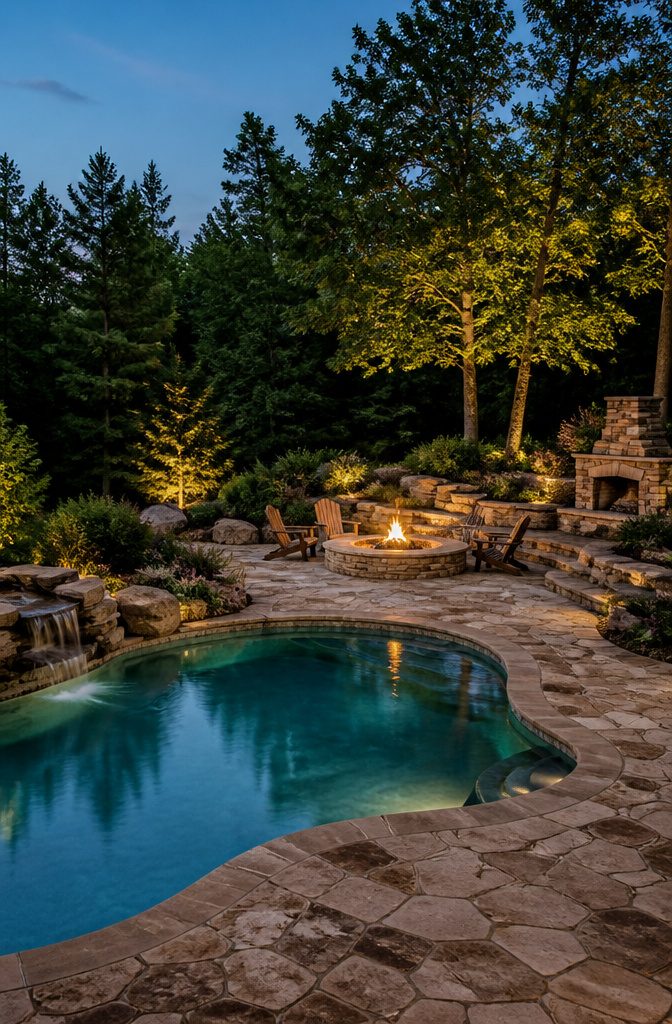
A fire feature turns a pool area from a daytime-only space into something you use after sunset and deep into fall.
I learned the hard way that ten feet of open clearance between the pit edge and anything combustible is not a suggestion.
My first setup sat seven feet from a fence rail with overhanging oleander, and the county inspector made me relocate the whole thing before he’d sign off on the gas line.
Ready-to-finish kits run about half what built-in stone costs, and they ship with the burner, pan, and ignition already assembled. You provide the veneer or brick to match your patio.
Propane tanks hide easier than natural gas trenches, but a 20-pounder needs swapping mid-party. Natural gas costs more upfront for the line run and loses portability, though you never run cold when guests are still holding sticks.
Wood is the cheapest to install and the most work to tend. Pellet-fed and gas options trade crackle for control, which matters when swimmers are dripping wet and the wind shifts.
A stone mason built me a proper wood pit for the far end of the yard, past the ten-foot line, and I kept the propane kit near the seating wall where we actually gather.

COLLECT STORMWATER RUNOFF ON PROPERTY WITH ALL-IN-ONE KIT: Capture and direct water to drain pipe to help prevent property damage; kit includes catch basin drain with 2 side openings and cutout guide for bottom opening; 2 outlet adapters, 1 plug, and square plastic grate

Relaxation Pool Waterfall: This pool waterfall will bring a gorgeous and stylish view to your pool, the water of the fountain is consistent and smooth, which gives you a sense of calm and relaxation, you can enjoy the soothing sounds and sights of the flowing water, enjoy a happy time in your pool

COLLECT STORMWATER RUNOFF ON PROPERTY WITH ALL-IN-ONE KIT: Capture and direct water to drain pipe to help prevent property damage; kit includes catch basin drain with 2 side openings and knockout for bottom opening; 2 outlet adapters, 1 plug, and square plastic grate
Privacy Solutions
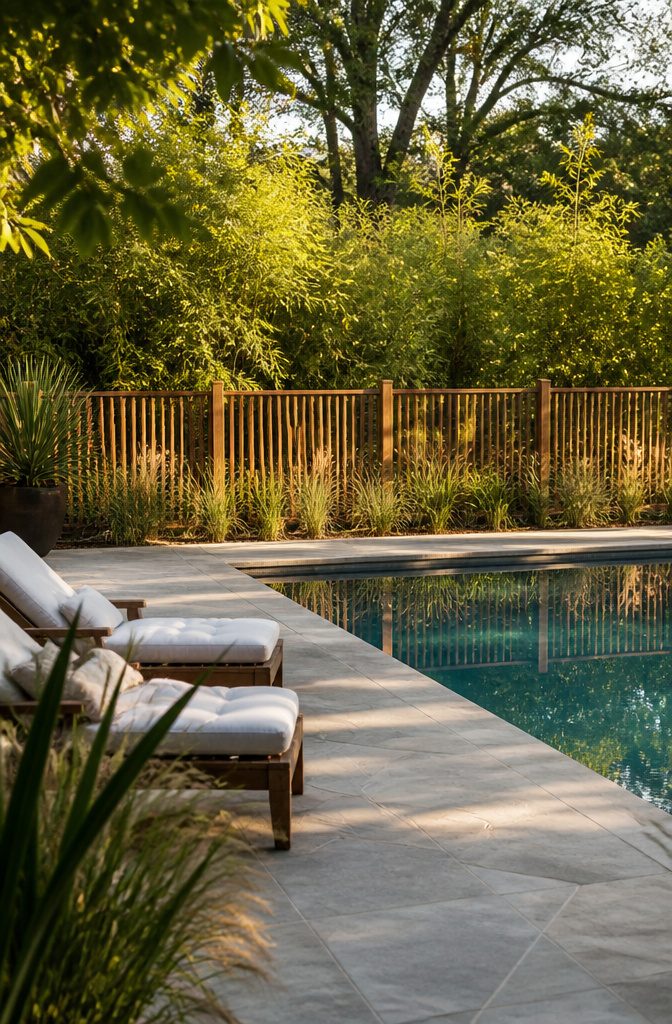
A solid fence around a pool area can feel like a prison yard if you are not careful about the height and material.
The 4-foot rule for decorative fencing versus 6-foot for solid barriers is the first decision that shapes everything else.
A 4-foot open picket or lattice panel keeps sight lines moving and the space feeling generous, while a 6-foot solid wall blocks sight lines completely and tends to make a standard suburban lot feel boxed in.
I would only go to 6 feet if the neighbor’s second-story windows are the actual problem you are solving.
Landscaping buys you privacy without the hard edge. Fast clumping bamboo fills a 6- to 8-foot hedge in about two full growing seasons, which is quicker than most people expect but not instant.
The clumping varieties stay where you put them; running bamboo is a weekend project that turns into a decade of regret. I would plant it on a raised berm if drainage is slow, since wet feet rot the roots.
For renters or anyone waiting out a lease, large planters with arborvitae or tall grasses give you a movable screen. A 24-inch pot with a 5-foot grass plant costs less than one panel of decent fencing and travels with you.
The gap between pots is where the breeze comes through, and that matters more than most people think until they stand in a fully enclosed yard in July.


PURPOSE BUILT FOR THE POOL: The original Splash Hoop PRO, specially engineered for pools unlike repurposed driveway hoops that can rust and tip over; Includes 1 hoop, 2 inflatable water basketballs, and pump for the ultimate swimming pool party game

WATER FLOW CONTROL -- The GROWNEER water pump features a control knob to adjust the flow of water, allowing you to achieve the desired water pressure. The maximum flow rate is 550 GPH (2000 L/H). Note: It's recommended to use a residual current protection socket or circuit breaker when using outdoors
Resort-Like Feel
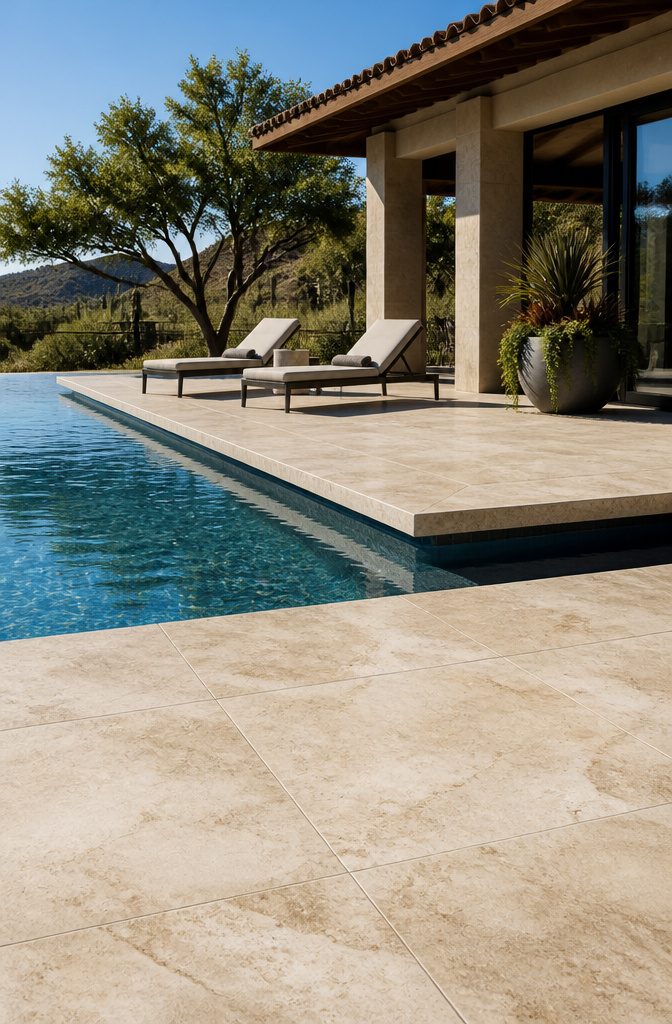
Hotel pools taught me that luxury lives in the edge, not the size.
A cantilevered coping that extends past the waterline gives even a basic rectangle that floating-deck look you see at resorts, and you can build it with concrete pavers rather than poured concrete if the forms feel intimidating.
For my above-ground build, I faked an infinity line by running the deck board flush to the pool rim so water meets hardscape at one sightline.
It reads as vanishing-edge from the angle you approach, and it cost nothing extra in materials.
Stone-look porcelain tile carried the look from there. Travertine and slate patterns are printed right onto porcelain now, and the ones rated for exterior use handle freeze-thaw better than the natural stone they mimic.
I found mine through a local paver supplier who ordered from a national stone-look line; the pieces were 24-by-24 inches, thick enough that the edges didn’t chip underfoot.
Two summers in, the color hasn’t shifted where the natural travertine on my neighbor’s deck has already dulled.
The catch: porcelain that thin needs a rigid base.
Any flex in your sand bed cracks the glaze. Compact in lifts, screed flat, and lay it once.

【ULTIMATE POOL LINER PROTECTION】Our 12-foot x 24-foot rectangle above ground pool liner pad provides reliable rock protection against punctures from sharp objects, effectively blocks grass weeds and unwanted growth, and greatly extends your pool liner life

【2026 Upgraded Thickened Above Ground Pool Mat】WLLEYAY rectangular pool liner pad is made of high-density, heavy duty black industrial geotextile,Compared to the 200g thinner pool liner pad on the market,Our unique double-density weave pool ground pad upgraded to 300g thickened pool liners,double the density of comparable products,which acts as an effective weed barrier, preventing weeds from growing through the pad and into your pool, keeping the pool water clean and free of debris

🌊 Locks Your Liner in Place – Keep your overlap pool liner snug and secure with durable, high-grip coping strips made for round above ground pools.
Lighting
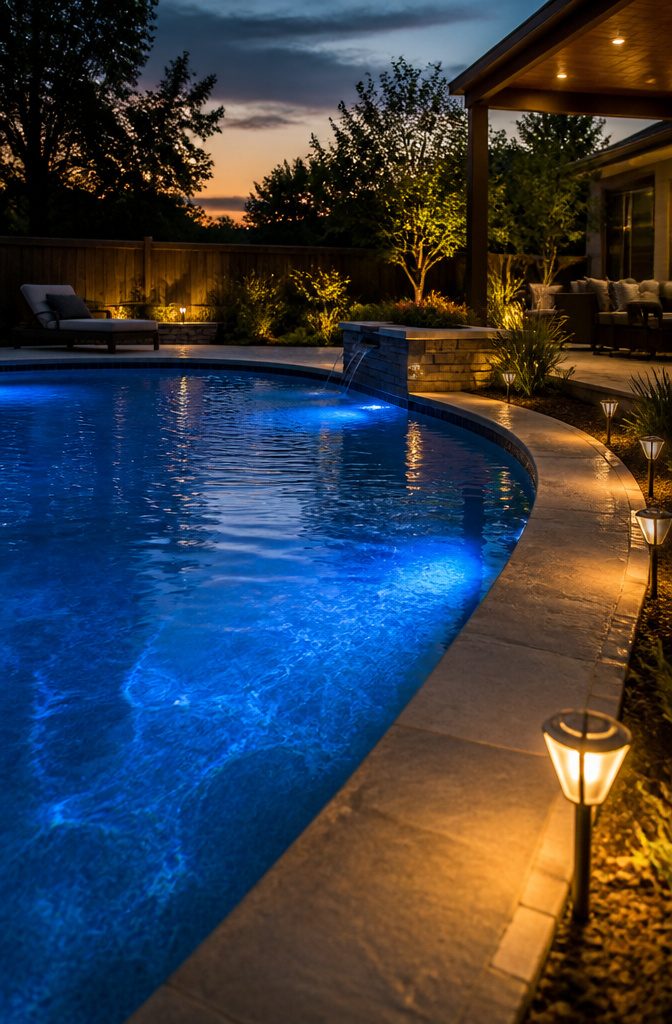
LED retrofit bulbs for existing pool niches run about $30–$50 each and snap into standard housings without a full fixture swap.
The payoff is immediate: you go from a single blinding incandescent to a grid of blue-white points that actually let you see the bottom at night.
Solar path lights along the coping were the experiment I expected to fail, but a set of black aluminum post lights from a big-box store held up three seasons before the batteries weakened.
The ones that died first were the decorative glass globes I tried first; moisture got in every time.
My real mistake was ordering 5000K LEDs for the umbrella of poolside spots.
Everything turned the color of a convenience-store parking lot. Skin looked sick, water looked flat, and the stone coping went gray.
2700K to 3000K is the range that reads as evening, not interrogation. I swapped them out after one party’s worth of complaints and have stayed warm ever since.


Wet-Area Ready, No Sealing Required: Pre-finished with cured linseed oil — a natural plant-based wood finish — these tiles install straight from the box — no sealant, no prep, no waiting. Raised base channels water underneath for patios, balconies, pool surrounds, and shower floors

HEAVY DUTY STEEL BUILD: Crafted from rust-resistant stainless steel, this above ground pool ladder provides dependable support for outdoor use. Weather-resistant construction suits seasonal or year-round setups.
Family Gathering Areas
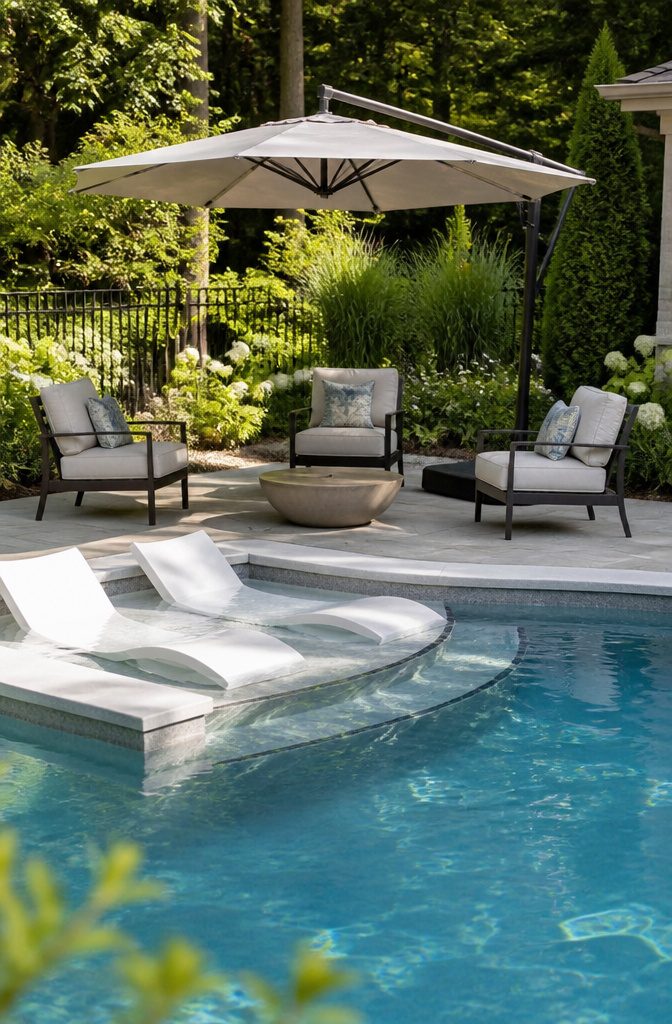
A shallow bench built into the pool’s entry serves two jobs at once. The water comes up to seat height, so three or four people can sit with their legs in the pool without anyone needing to swim.
Toll Brothers uses this at Tracy Lakes, and the setup keeps conversation natural because nobody is floating away or standing over anyone else.
For shade, I went with a movable umbrella base on wheels rather than a fixed pergola. It cost a fraction of a build, rolls where the sun is, and stores in the garage when the weekend wraps up.
A 200-square-foot pad fits a bench, two chairs, and that umbrella with walking room left for six people comfortably, eight if someone perches on the edge.
The mistake I nearly made was assuming more seating meant more use.
What actually gets used is seating that faces each other, not the view. Arrange the bench and chairs in a shallow arc so everyone can talk without craning their necks.
Skip the separate patio. The pool coping itself, widened to eighteen inches, becomes the table surface for drinks and plates.

LATEST 1W SOLAR POWERED FOUNTAIN: The solar birdbath fountain only needs 3 seconds to operate automatically in direct sun, with a spray height of 4–27.5 inches (10-70cm). The most important this will attract a lot of hummingbirds to your garden! Solar-powered fountains only operate when exposed to direct sunlight

SINGLE ATTACHMENT: This listing is for one 3/4 inch pool fountain attachment for home pool owners who want a decorative water feature for summer backyard use.

Pool Bubbler 1-1/2" Grey
Poolside Seating
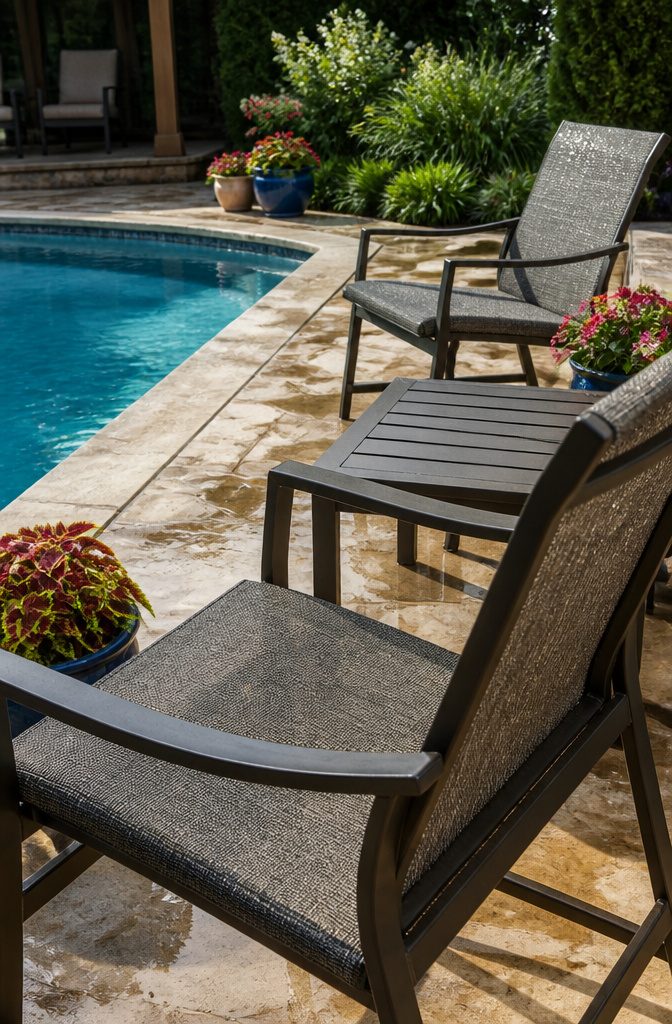
Chlorine and full sun destroy poolside furniture faster than any patio spot in the yard.
The $300 resin wicker set looked fine the first season, then the arms started spiderwebbing by year two, which is exactly why I skip that category now.
Aluminum frames with mesh sling fabric have held up four summers without the chalky fade or the brittle crack that sends resin to the landfill.
I looked hard at the inflatable lounger trend, the kind that pack down for storage and run under a hundred dollars.
The hassle of dragging the pump out, the puncture risk from the concrete edge, and the way they sit low to the ground where splashing happens most convinced me they are pool toys, not seating.
Someone lounging with a drink needs a frame that dries in an hour and does not need reinflation every third use.
The replacement was a used restaurant-grade set from a local patio reseller, aluminum with Textilene mesh, around $450 for two chairs and a small table.
The mesh lets water through instead of pooling, and the seat height keeps you above splash range without perching like a barstool.
For a weekend project budget, that price stings next to the big-box resin sets, but buying twice costs more.
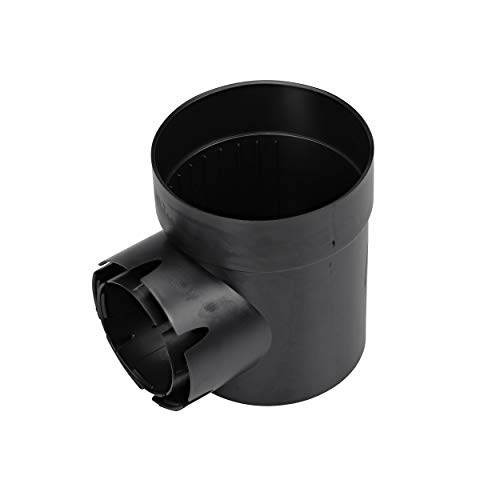
COLLECT STORMWATER RUNOFF ON PROPERTY: Capture and direct water to drain pipe to help prevent property damage

Water feature and décor for most in-ground pools (check fitting size)
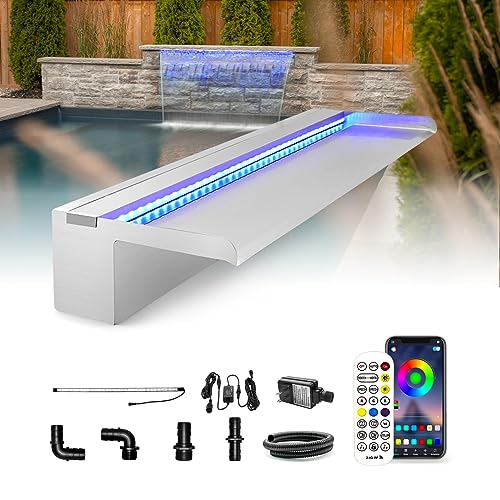
Please be advised that if you encounter any missing parts or have difficulty with the assembly process or light don't work issue or wrong adapter, kindly email us in the first time. We will promptly send you the new working light or the missing components, as well as a video tutorial guiding you through the proper usage and installation procedures. Your satisfaction is our top priority, and we are committed to ensuring you have a seamless experience with our product.
Natural Sanctuary
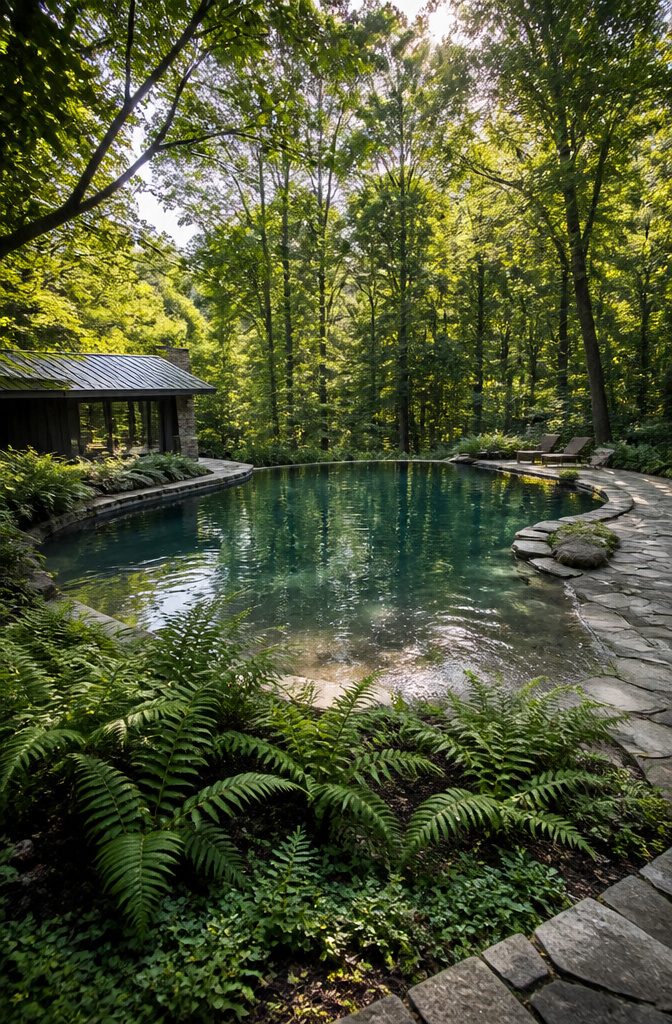
A mature oak sat exactly where the pool had to go, and cutting it was never on the table.
The root zone extended roughly one and a half times the drip line, so I shrank the footprint to a freeform shape that curved around the critical area and left the roots undisturbed.
The liner color was the make-or-break choice: I went with a dark gray-blue that reads as pond water rather than pool water, especially where leaves fall and sit for a day before I skim them.
Darker finishes hide debris and deepen the illusion that the water belongs there.
I stopped clearing undergrowth at the pool’s edge rather than pushing back into the wooded perimeter. Dense planting right up to the coping, with native ferns and shade-tolerant ground cover, lets the built shape disappear into what was already growing.
The beach entry helped; the gradual slope reads as shoreline, not steps, and the rock waterfall I added runs off the same pump as the main return, so the plumbing stayed simple.
The result feels carved out rather than dropped in, which was the whole point.

【PERFECT AFTER-SALES SERVICE】If for any reason you are not completely satisfied with your purchase, or encounter any problems during use,you can click the "contact seller" button to send an email to us, and We will provide you with a satisfactory solution within 12 hours.

DURABLE 304 STAINLESS STEEL SPILLWAY: Made from premium 304 stainless steel for excellent corrosion resistance and long-term outdoor durability; ensures a clean, smooth water curtain every time

Practical Landscaping
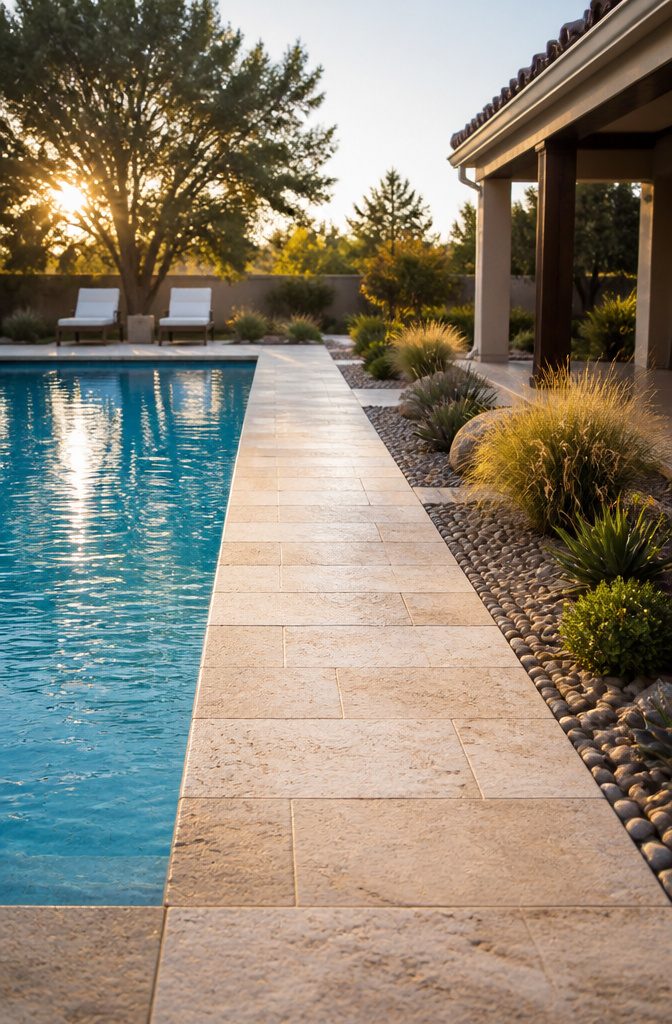
Travertine stays cooler underfoot than concrete pavers, which matters when barefoot kids are sprinting from pool to grass and back. I learned this after watching dark concrete turn a July afternoon into a hop-scotch routine across the deck.
The lighter color and natural porosity of travertine let water drain through rather than pool on top, though that same porosity means it stains if you spill sunscreen and let it sit.
Eight feet from the waterline is where grass goes to die. Splashing, dripping bodies, and the occasional overfilled pool turned my Kentucky blue into a muddy slip hazard within one season.
I swapped it for river rock in that band, which drains fast and never needs mowing around the fence line where the robotic cleaner lives.
Maintenance reality shapes every plant choice here. Low hedges that look sharp in a magazine photo collect chlorine-burned leaves and require weekly trimming to keep from blocking the equipment pad.
Succulents and ornamental grasses handle the reflected heat and occasional salt better, and they do not drop debris that clogs the skimmer basket every three days.
Plunge Pools
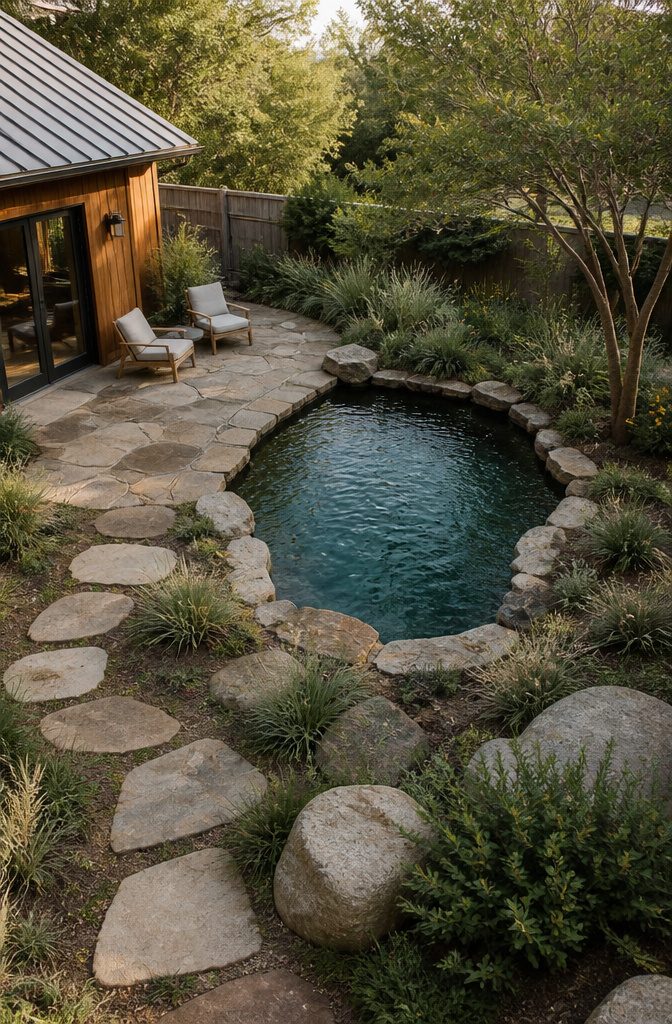
A plunge pool is the compact option that actually fits most real backyards: small, deep, and built for cooling off rather than laps.
Expect to spend $24,500 to $50,000, which sits well below the $50,000 to $120,000+ range of a full-sized installation, and the smaller water volume cuts both filling and maintenance costs over time.
I priced out a shipping-container conversion once, drawn by the modularity, and found the shell itself promising until the cutting, welding, and interior finish piled on.
Precast fiberglass shells ended up looking more practical for my timeline. They drop in fast, come shaped for seating, and skip the cure time of concrete.
The word "plunge" is honest about what you get. These pools run too short for swimming lengths, though water aerobics and low-impact workouts work fine.
For actual strokes, a lap pool is the better call. But on a tight lot where the alternative is no pool at all, the plunge pool keeps the option alive.
Lap Pools
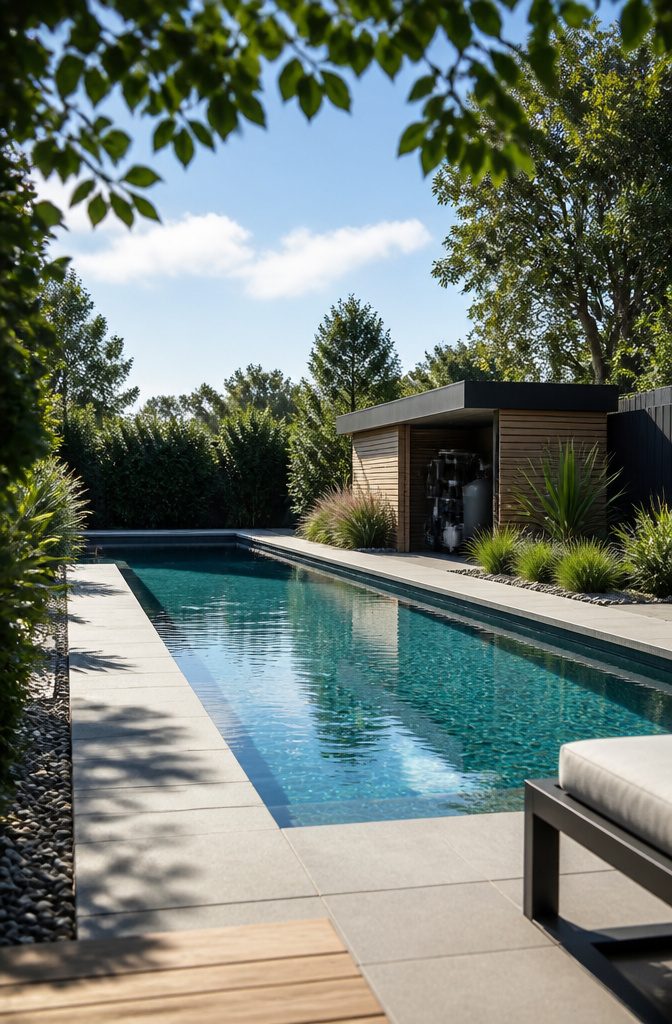
A 40-foot length is the practical floor for any lap pool you will actually swim in.
Shorter than that, and you spend half the workout turning around instead of stroking. Width is where most backyards fight back.
Standard lanes run about eight feet across, but my lot gave me five and a half. Rather than pour more concrete, I rigged a swim tether to a deck anchor and called it done.
The tether holds you in place against the current you create, so the pool functions like a treadmill. Cost ran about thirty dollars, and it stores on a hook when guests come over.
Above-ground lap pools have come a long way from the round kits you see at big-box stores in May.
Modular steel walls with stone-pattern liners, sunk partially into a slope and wrapped with a narrow deck, read as permanent from the street.
I looked hard at one from a company out of Wisconsin before deciding the look mattered less to me than the footprint.
What sold me on the in-ground route was the coping. A flat deck edge you can sit on makes the pool feel finished in a way that rolled steel rims never quite manage.
Integrated Spas
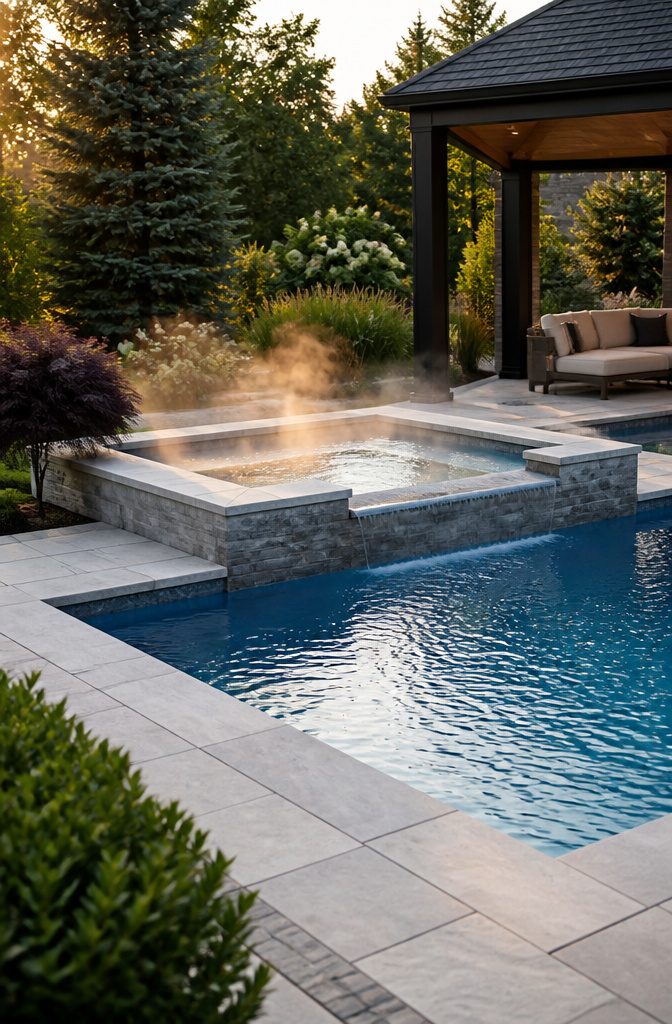
A spa built into the pool shell costs roughly $8,000–$15,000 as an add-on, and the real decision is whether it shares water with the pool or runs on its own loop.
Shared systems look cleaner, with one continuous spillover edge and no extra equipment pad cluttering the deck. Separate systems cost more upfront but let you heat the spa alone without warming thousands of gallons you are not using.
That distinction matters more than the brochure suggests. With a shared heater, the spa pulls from the same body of water, so bringing the spa to 102 degrees means the whole pool trends warmer too.
A dedicated gas heater on a separate spa loop heats only that smaller volume, fast enough that an October evening stops being theoretical.
The electric heat pump I looked at would have stretched that session to forty minutes of shivering before giving up.
Smart Pool Features
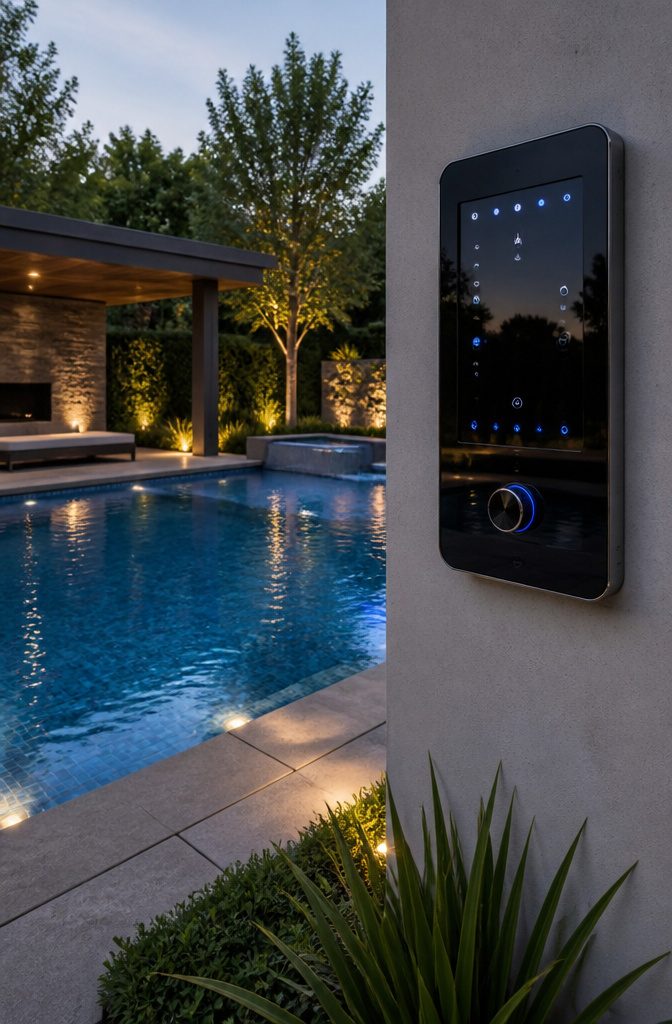
Smartphone automation for a pool sounded like a luxury until I spent a few weekends babysitting pH strips and heater timers.
The $1,200 panel I wired myself now handles temperature, LED color cycles, and chlorine dosing from an app, though I had to learn which alerts demand immediate attention.
A "pump flow" alarm at 2 a.m. usually means a leaf basket needs clearing, not a catastrophe, but a rapid pH swing gets me out of bed because chemistry waits for no one.
What the system still cannot do is judge whether the water looks right.
Cloudiness from a failing filter shows up to the eye before any sensor catches it, and the automatic feeder can only dose what I fill it with; running low on tablets mid-weekend means a manual trip to the supply store.
The pool runs itself until it doesn’t, and that boundary is where the savings in time and guesswork actually start to pay.
What It Costs
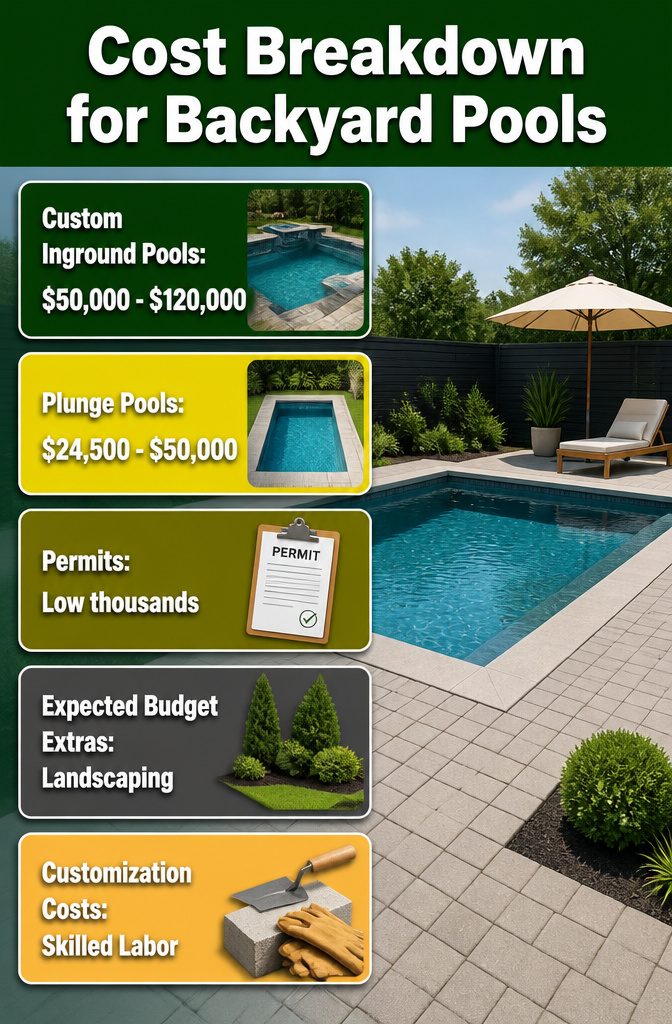
Custom inground pools run $50,000 to $120,000, and smaller plunge pools land between $24,500 and $50,000. Those ranges cover the shell and basic equipment, but the line items that actually blow a budget live in the details most people sketch in later.
For my own project, I budgeted for the pool itself and left decking and landscaping as a phase two. That was the mistake.
By the time the excavator left, I had spent enough that the surrounding patio had to shrink from poured concrete to pavers I could lay myself, and the planting plan got reduced to a strip of sod and two dwarf shrubs.
Permits added another layer I had not priced out separately; in my area they ran into the low thousands, but the real cost was the delay while the city found time to inspect.
Plunge pools can stretch to $50,000 once they are tiled and finished as a water feature rather than a simple plunge tank. The pre-fab fiberglass inserts sit at the lower end of that range and install faster, which saves on labor.
Custom concrete work with stone hardscaping climbs toward the top, and the difference is not just material. It is the weeks of skilled labor to fit the pool to an awkward yard or to match a specific aesthetic.
Keeping It Running
A backyard with pool design that looks great on paper falls apart fast if the water goes cloudy in July and the pump grinds to a halt in August.
I learned that the spring after my first winter, when opening the pool meant three weeks of algae shock instead of one, because I had skipped the late-fall phosphate treatment and left the cover on too tight.
Now the weekly routine takes about forty minutes.
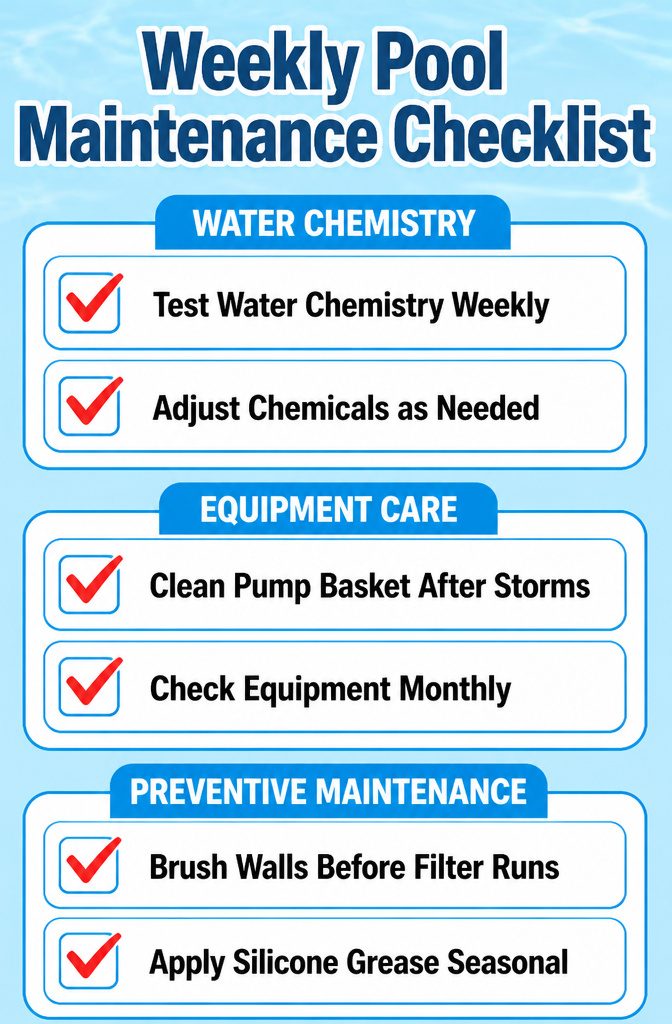
Water chemistry comes first: a $40 five-way test kit from the hardware store reads pH, chlorine, alkalinity, and stabilizer faster than I can drive to the pool store, and it has saved me a dozen $85 service calls for problems I could fix with half a bag of soda ash.
I test Sundays, adjust Mondays if anything is off by more than two tenths, and brush the walls before the filter runs that night.
Equipment checks happen monthly, not when something breaks.
The pump basket gets cleared after heavy storms. The O-ring on the filter lid gets a thin coat of silicone grease each season so it does not crack and suck air.
Those two small habits, added the year after my spring disaster, are what keep the water clear enough that I do not think about the pool between visits.
Staying Safe
A pool fence was the one part of backyard with pool design I tried hardest to talk myself out of.
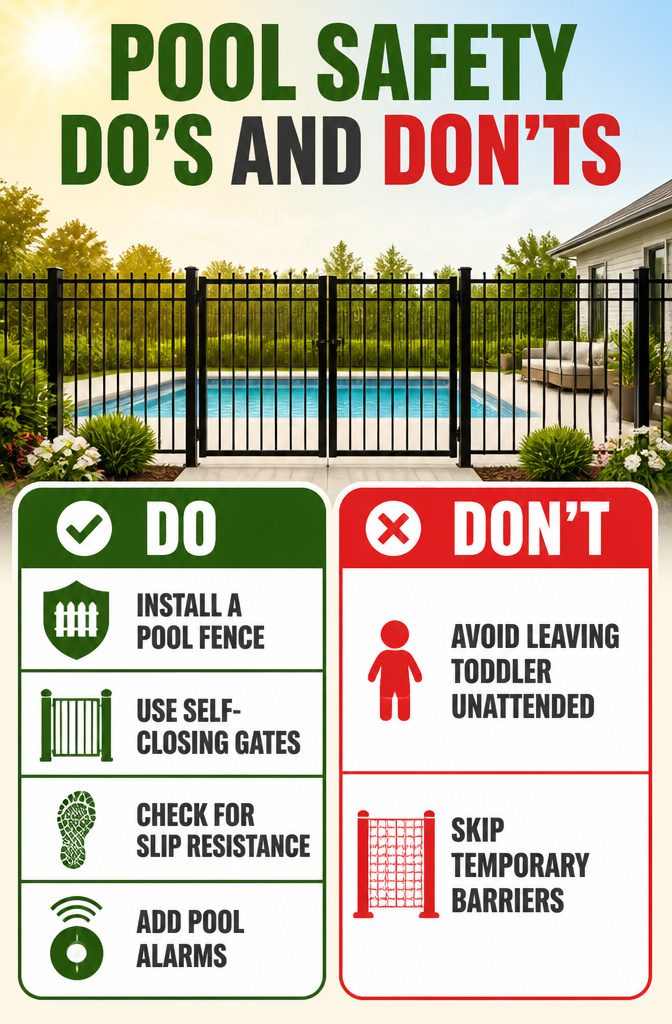
The code in my county requires a four-sided barrier at least four feet high, with self-closing and self-latching gates, and every contractor I met treated this as non-negotiable.
I pushed for three sides, hoping to save the view from the patio, but the inspector shut that down before the footing went in.
I spent $2,500 on a steel picket fence I initially resented every time I walked past it. Self-closing hinges and a magnetic latch I could reach from the pool deck added another line item I grumbled through.
Then a neighbor’s toddler wandered into their unsecured yard while they were inside, and the sound of that gate latching behind me became something else entirely.
The fence stayed out of my sightlines better than I expected, and the steel reads cleaner against the landscaping than vinyl would have.
For decking, I chose textured concrete over the stamped pattern I wanted. Slip resistance when wet mattered more than the look, and on mornings when the deck is slick with dew, I no longer question the trade.
Pool alarms exist in the same category: a code requirement in some jurisdictions, a recommendation in mine.
I added one anyway, a surface wave sensor that trips if anything heavier than fifteen pounds breaks the water. It has never sounded for anything but a wind-stiffened pool cover, and I have never been sorry for the backup.
Eco-Friendly Options
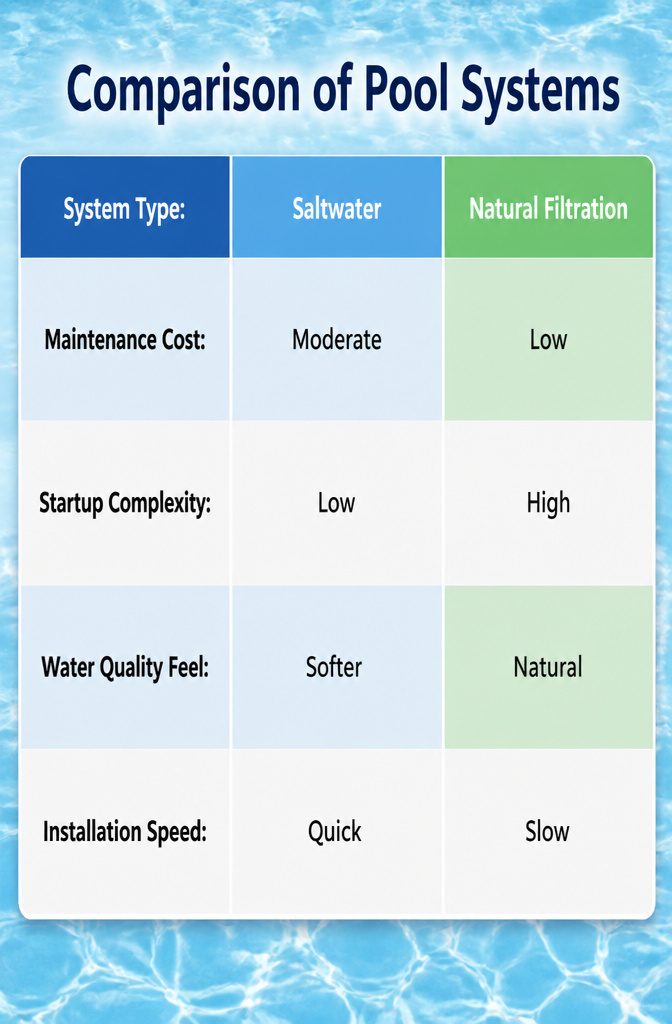
Saltwater systems came up early in my reading as the gentler alternative to traditional chlorine, and the softened water feel is something guests tend to mention within a few minutes of getting in.
What the brochures do not emphasize is the salt cell replacement, a cost I initially skipped past and later had to work into the budget. Those cells wear out predictable as brake pads.
Natural filtration through plants and gravel beds eliminates chemicals entirely, which sounds like the obvious win for anyone trying to cut back.
I spent a solid evening mapping where the regeneration zone would sit in my own yard before shelving the idea.
The footprint needed roughly doubled the pool’s surface area, and the startup complexity pushed well past a weekend timeline. For a few hundred dollars and two days of hands-on work, it was not the right fit.
Solar heaters and variable-speed pumps pair cleanly with either system, and rainwater collection handles the occasional top-off without tapping municipal supply.
The combination that actually survives a real budget tends to be saltwater plus a solar heater, accepting the cell replacement when it comes rather than front-loading the whole project into redesigning the yard.
Frequently Asked Questions
What are the most popular pool design ideas?
Modern, lagoon-style, freeform, classic rectangular, and geometric layouts are the most common styles homeowners choose.
The article emphasizes that placement matters as much as shape; a single vanishing edge toward the best view creates depth even on small lots, while sloped sites often work better with above-ground pools enclosed in decking.
The pool’s longest dimension should run toward whatever you actually want to look at, whether trees, open sky, or a slope.
How do I choose the best pool design for my backyard?
Base the decision on your available space, how you plan to use the water, and what you want to see from the house.
The article stresses sightlines above all: position the pool so it performs for the people who paid for it, not the neighbors, which usually means pointing the longest dimension toward a view you actually look at rather than back at the house.
Budget, slope, and whether you need laps versus cooling off determine plunge pool versus lap pool versus full-size installation.
Are there pool design ideas for small yards?
Plunge pools, lap pools, and spools are built specifically for tight lots. A plunge pool runs $24,500 to $50,000, well below full-size installations, and uses less water and maintenance over time.
Lap pools need at least 40 feet of length to be usable; below that, a swim tether can turn a shorter pool into a stationary workout.
Even a freeform shape shrunk to curve around existing trees keeps the option alive where a standard rectangle would not fit.