
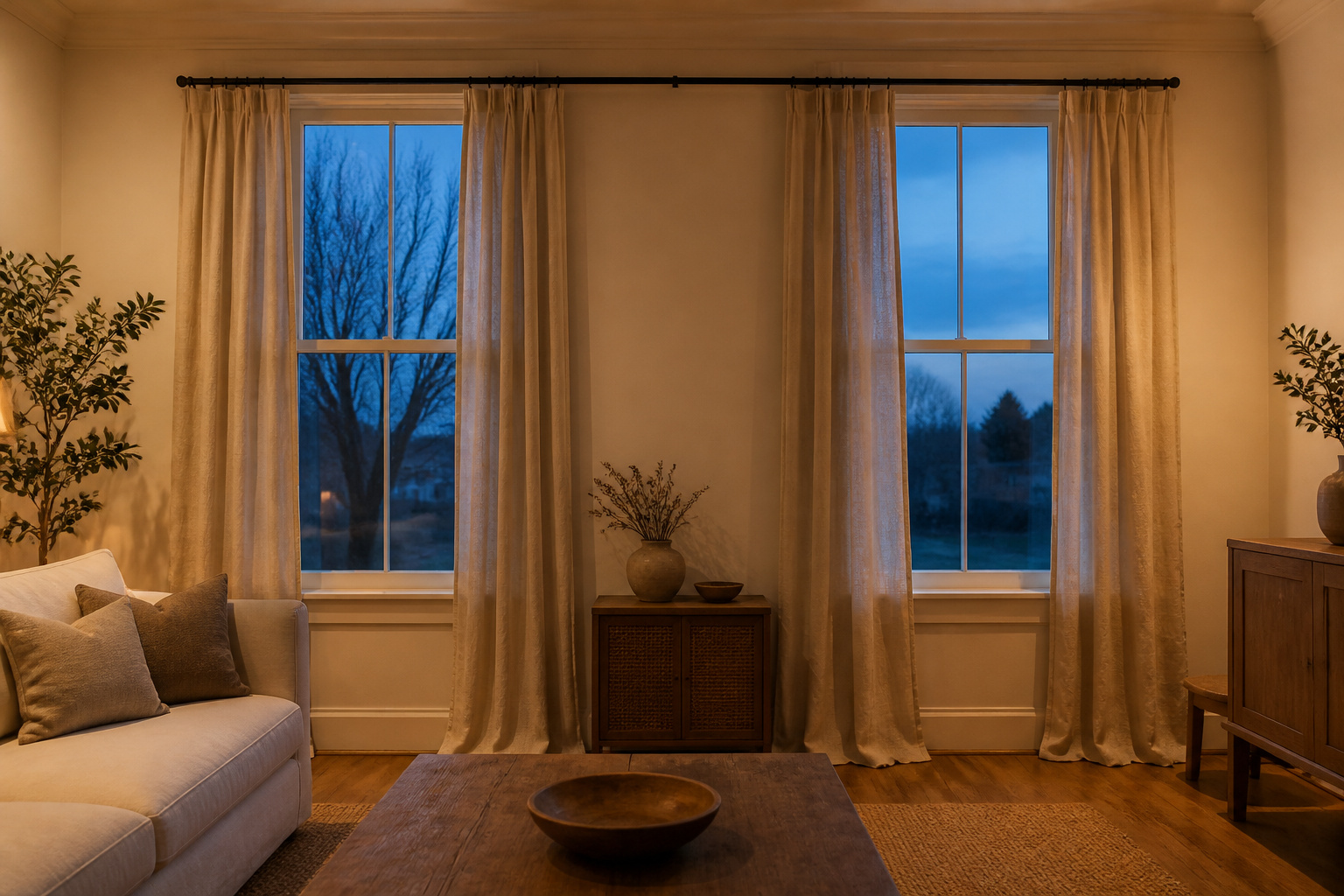
Curtains for a living room with two windows work best when you treat the pair as one unit rather than dressing each frame separately.
The common mistake is measuring per window and ending up with panels that block glass even when pushed back, or rods that sit too low and shorten the room.
A standard 9 x 12 foot painter’s drop cloth, cut in half, gives you matching panels for about fifteen dollars total, with a factory hem that holds up to daily use.
Drop Cloth Curtains
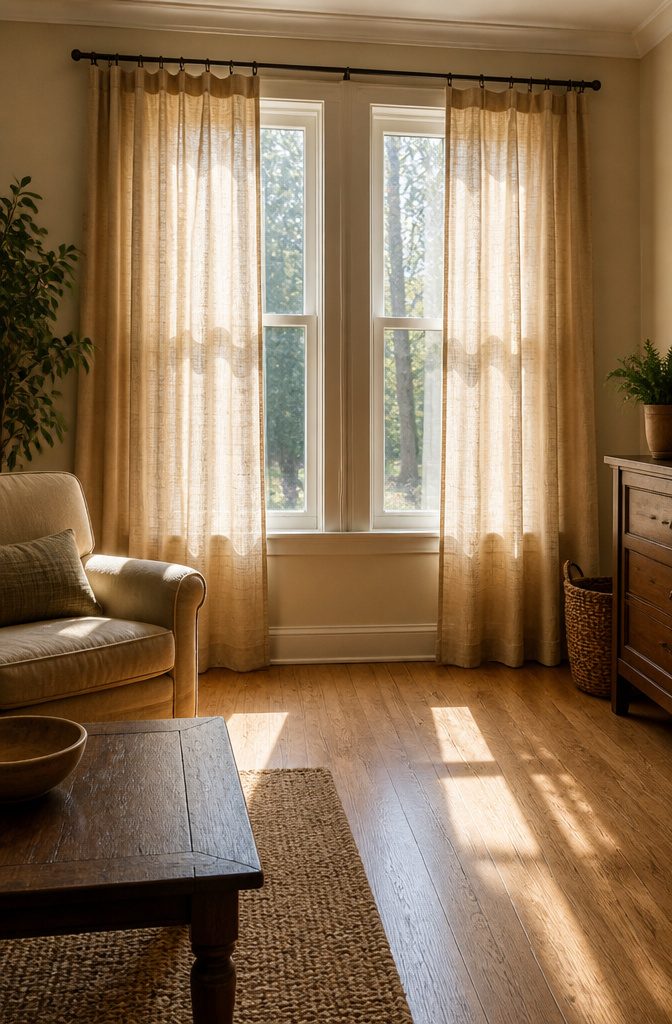
Drop cloth curtains started as a workshop shortcut and became a style staple for good reason.
A standard 9 x 12 foot painters drop cloth runs about fifteen dollars at any hardware store, and the heavier cotton weave holds up to daily pulling and sunlight better than most budget fabrics sold for actual curtains.
The 6 x 9 size works for smaller windows or layered cafe panels, while the 10 x 15 covers wide picture windows or can be cut and hemmed for a pair of matching panels.
The neutral tan or off-white shade reads as intentional in farmhouse, industrial, or even minimalist rooms, and the faint grid lines from the factory finish look like subtle texture rather than construction residue.
Hemming is optional; a straight tear along the weave gives a clean fringe edge that stops at the length you want, and clip rings thread through the existing hem channel without sewing anything.
For two windows in a living room, one 9 x 12 cloth cut in half makes matching panels that hang at a consistent height and keep the room from looking pieced together.
The fabric takes fabric dye if you want gray or navy, though the original color hides dust and pet hair better than anything I have tried.

Elevate Your Windows: Add a farmhouse flair to any space with our Drop Cloth Curtains. Our ring top curtains, with an attached valance, will bring a warm and inviting ambience to your home as bedroom drapes or living room curtains

Elevate Your Windows: Add a farmhouse flair to any space with our Drop Cloth Curtains. Our ring top curtains, with an attached valance, will bring a warm and inviting ambience to your home as bedroom drapes or living room curtains

🟢 HOME DECOR ESSENTIALS: LinenZone Window Scarfs Seamlessly Create New and Exciting Look for Every Room in Your Home! Available as Small Size 144 Inch Window Scarf, Standard 216 Inch Window Scarf, 288 Inch Extra Long Window Scarf and Even Longer 360 Inch Window Scarf Valance for Design and Style to Match Any Living Room Decor.
Blackout Curtains
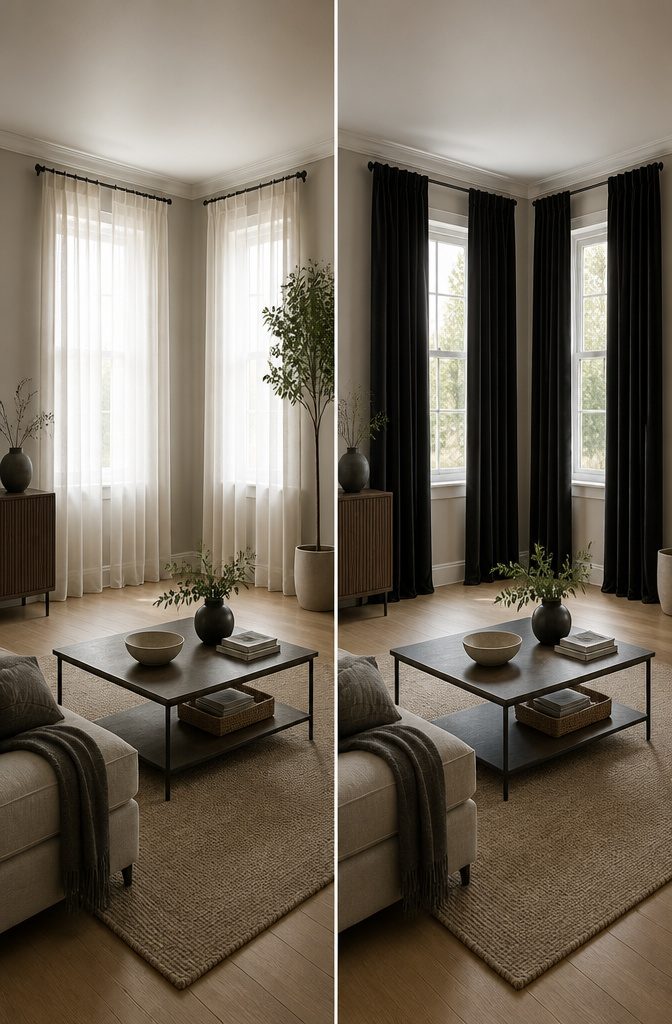
Blackout curtains matter most in a living room with two windows when the light hits from different angles, which happens more often than people expect.
The second window usually faces a different direction, so morning glare from one side turns into afternoon washout from the other.
A standard curtain on a single window might handle one problem, but two windows need fabric that actually blocks light rather than just softening it.
The trade-off is immediate and visual. Blackout lining kills the airy look that makes a living room feel open, and two windows worth of heavy fabric can read as a solid wall if you are not careful.
I have seen rooms where the blackout panels looked fine in the store but turned the space into a cave once both windows were dressed.
The fix is treating the two windows as one unit: run a single rod wall to wall, or at least wider than each frame, so the dark panels stack mostly on empty wall rather than covering glass.
Cost runs higher than standard curtains because the lining adds material and weight. You will also need sturdier brackets, especially with two windows pulling the rod in two directions.
For renters, the weight can be the real problem; cheap tension rods sag or slip under blackout fabric, and drywall anchors in a rental might not hold.
If you need the sleep or the screen glare is unbearable, the heaviness is worth it. For a living room used mainly in the evening, sheers with blackout shades behind them split the difference better.

Functional Curtain Dimensions: Includes 2 panels measuring 84 inches in length and 52 inches in width each, providing 104 inches of combined coverage. Features 8 silver metal grommets designed for smooth operation on rods up to 1.6 inches in diameter.

Rich Linen Blend Fabric: 20% flax linen is blended in the polyester curtain panels. Compared to 100% linen fabric, the polyester softens linen and helps linen to wash better, wrinkle less, and retain color-fastness; the linen keeps the curtains light and airy which allows the curtains to flow nicely in a subtle summer breeze without any stuffy feeling.

Pair Sold: Include 2 natural linen curtains, each light filtering semi sheer curtain measures 52" W x 84" L (104" wide total). Each light filtering curtain has 8 silver metal grommets at the top for curtain rods less than 1.6" in diameter. Easy to hang and glides smoothly.
Linen Curtains
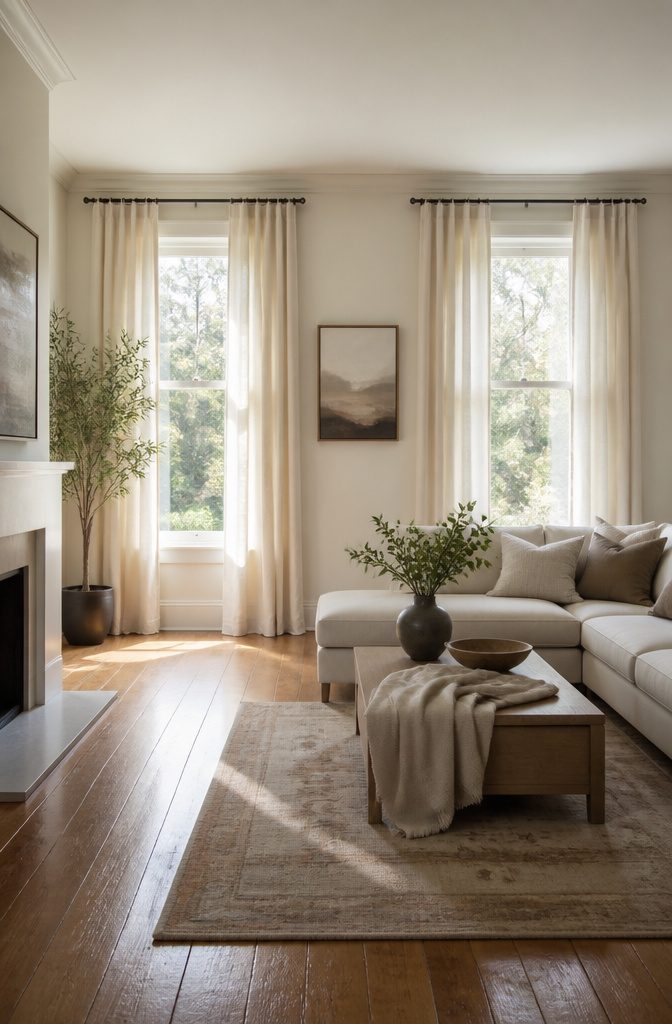
Linen curtains carry a texture you notice up close without demanding attention from across the room.
The weave has a slight slub, irregular enough that light passes through in soft bands rather than flat sheets, which means two windows side by side look dressed but not heavy.
In a casual living room, that reads as relaxed; in something more formal, the same fabric looks intentional rather than underdone.
The material settles into folds that hold their shape without looking starched. After a few weeks of hanging, the bottom edge relaxes into a gentle break against the floor rather than pooling or hovering.
The color shifts slightly where the linen bunches on the rod, creating stripes of depth that synthetic weaves struggle to copy.
For two windows, matching panels keep the wall unified, but the texture itself does enough work that you skip extra layers. Linen filters afternoon sun into something usable; you still see the window shape, still get warmth on your shoulder.
It is not privacy fabric after dark, so plan for that if your living room faces a street. A lining fixes it but costs the translucency that makes linen worth choosing in the first place.
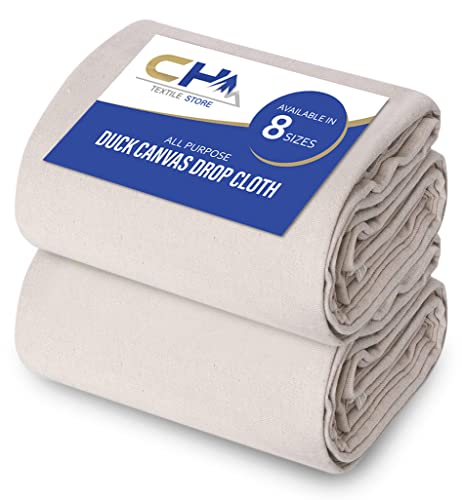
Heavy Duty Canvas Drop Cloth: Our professional grade canvas drop cloths are made of premium cotton canvas fabric that has double stitched seams. The pack offers 2 packs of 6’ x 9’ feet, of paint drop cloth that is ideal for protecting furniture paint, floor covering, or being used as drop cloth curtains. It Provides you With a stress-free experience for both indoor and outdoor use.

Premium Cotton Canvas Material : Salt Earth drop cloths are made with premium quality thick cotton canvas material which provides excellent protection against paint spills, dust and can absorb any liquid on your furniture, walls, floors making your life easier. It consists of double stitched hems and seams on the sides to prevent it from ripping and tearing.
Heavy Duty Canvas Drop Cloth: Our professional grade canvas drop cloths are made of premium cotton canvas fabric that has double stitched seams. The pack offers 2 packs of 9’ x 12’ feet, of paint drop cloth that is ideal for protecting furniture paint, floor covering, or being used as drop cloth curtains. It Provides you With a stress-free experience for both indoor and outdoor use.
Velvet Curtains
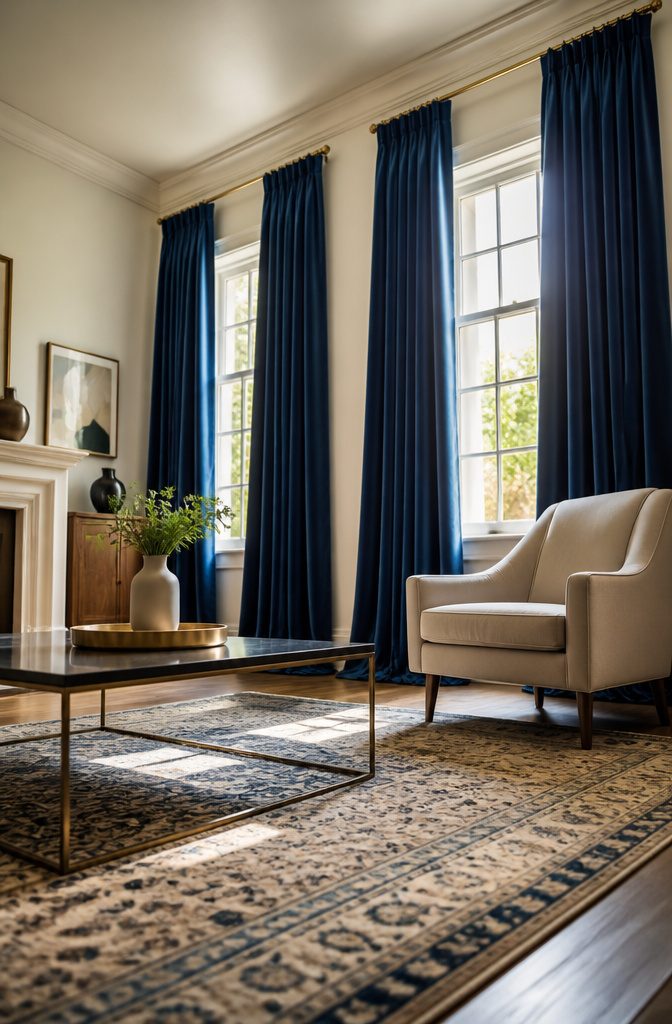
Velvet curtains bring a warmth that flat weaves rarely match, especially in a living room where two windows frame the main seating area.
The fabric catches light differently across the day, turning from deep and saturated in morning sun to something softer and more dimensional by evening. That depth makes a room feel finished in a way that thinner materials don’t.
The weight works best when the rest of the room stays relatively quiet. A velvet panel flanking each window reads as intentional; the same panels against busy wallpaper or competing patterns start to feel like costume.
For two windows, match the panels exactly rather than trying to vary them. Asymmetry in velvet looks like a mistake, not a choice.
Cost keeps most renters away, and rightly so.
Good velvet starts higher than linen or cotton, and the cheap synthetic versions pill within a season of sun exposure. If the budget is tight and the project is this weekend, another fabric will serve longer.
Where velvet earns its place is in a room that needs the insulation, both visual and literal. The pile deadens street noise and drafts in older windows, and that practical benefit justifies the splurge more than the look alone.
Hanging them demands a sturdier rod than lighter curtains need.
The fabric pulls downward in a way that flimsy hardware shows immediately. Plan for that upgrade in the total cost, or the sag becomes the thing you notice instead of the drape.

SIZE & MATERIAL:Set includes 2 panels blackout curtains(52" Wide by 84" Long). Each panel has 8 grommets.The interior diameter of hole is 1.6 inch.It's easy to hang. Curtains are made by quality faux linen.

MULTIPLE HANGING: Sold per pair, including 2 window panels - Panel measures: 52 x 84 - inches | Set measures: 104 x 84 - inches, with 3 curtain top hanging options (Back tab & Rod pocket & Pleated) for your personalized style. Each panel sewn with 4" rod pocket (7 back loops), 2" bottom hem and 0.8" side hem, specialized fitting the curtain rods up to 3
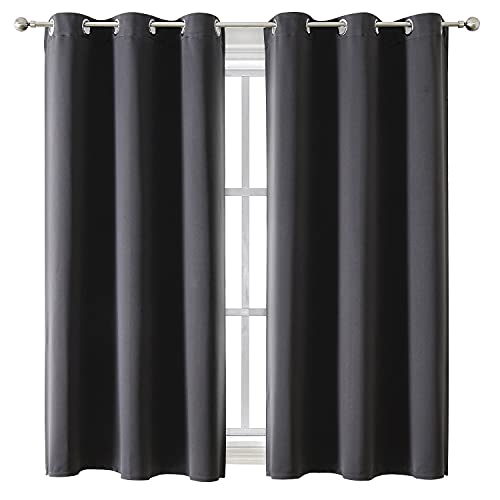
SET DETAILS: 2 charcoal gray curtains per package. Each panel measures 42 inch wide by 63 inch long with 6 silver metal grommets (1.6 inch inner diameter) on top, easy to install and slide.
Sheer Curtains
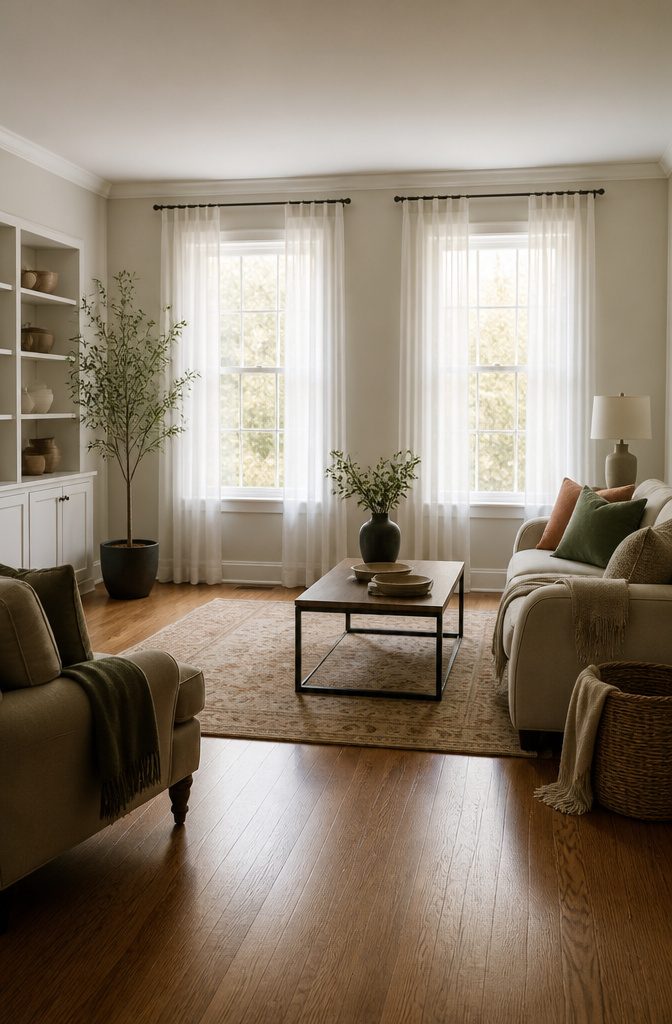
Sheer curtains filter daylight into something you can actually live with, spreading it across the room without the glare that makes you squint at your phone.
In a living room with two windows, they give you the same treatment on both walls so the light stays even, not lopsided.
Privacy is partial: someone walking past can see shapes and movement, not details, which is enough for a third-floor apartment and not enough for a ground-floor unit facing the sidewalk.
What convinced me, reading through a dozen of these setups, is that sheers almost always need a partner layer.
Alone they do nothing for night privacy and nothing for temperature. They work hung behind a heavier curtain on a double rod, or over a roller shade, or flanking a window where the blind does the actual blocking.
The pairing that keeps coming up is sheers plus blackout panels, the kind you draw across after dark. Without that second layer, you are choosing between light and privacy instead of having both.


Heavy-Duty Metal Structure Design: These curtain rod brackets are crafted from premium thickened iron metal with enhanced hardness and sturdiness. Solid integrated metal construction delivers excellent load-bearing capacity, not easy to bend or break, ensuring long-lasting durability for indoor and outdoor use.
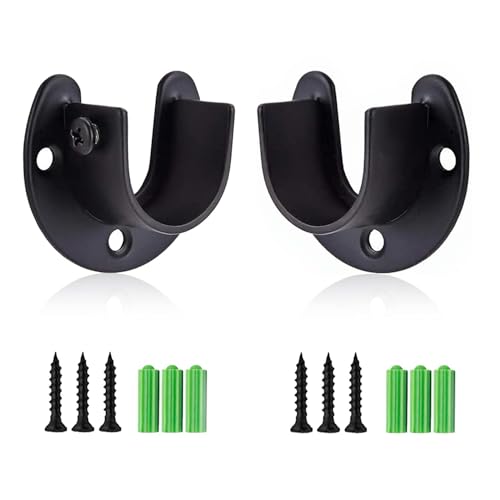
* Excellent Quality - Those heavy duty closet rod holder constructed of solid stainless steel, thick and rust-resistant makes It's long-lasting to use. Able to hold a maximum diameter of 1 Inch rod.
Custom Curtains
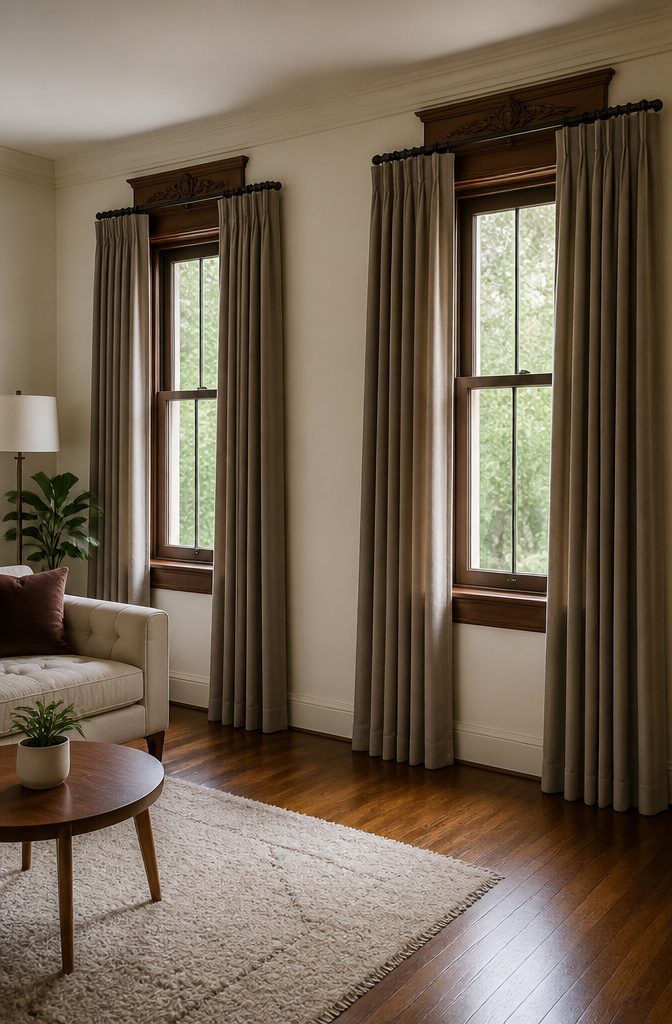
Custom curtains only make sense for a living room with two windows when the windows are genuinely odd. Bay windows, windows set at different heights, or anything pre-1940 often has framing that ready-made panels won’t clear.
For standard side-by-side windows in a typical drywall opening, the math is simple: two panels per window, four total, and the big-box stock size usually lands within an inch of right.
What convinced me, reading through a dozen project accounts, was how rarely the "custom" label meant better construction. Most local workrooms sew the same grommet tops and rod pockets you’ll find at Target, just sized to your exact width.
The real value is in lining that actually blocks light and hems weighted to hang straight, details that mass-market panels skip to keep the box flat.
For a rental or a first home you’ll sell in five years, that upgrade rarely pays back.
Ready-made falls apart at the returns. If you need a 108-inch drop to brush the floor properly, or your rod sits higher than the standard 84-inch panel allows, you’re suddenly hunting a "custom" solution anyway.
Measure first, then decide. The mistake most people make is assuming custom means fancy; half the time it just means "long enough to look intentional."

Elevate Your Windows: Add a farmhouse flair to any space with our Drop Cloth Curtains. Our ring top curtains, with an attached valance, will bring a warm and inviting ambience to your home as bedroom drapes or living room curtains

🟢 HOME DECOR ESSENTIALS: LinenZone Window Scarfs Seamlessly Create New and Exciting Look for Every Room in Your Home! Available as Small Size 144 Inch Window Scarf, Standard 216 Inch Window Scarf, 288 Inch Extra Long Window Scarf and Even Longer 360 Inch Window Scarf Valance for Design and Style to Match Any Living Room Decor.

Elevate Your Windows: Add a farmhouse flair to any space with our Drop Cloth Curtains. Our ring top curtains, with an attached valance, will bring a warm and inviting ambience to your home as bedroom drapes or living room curtains
Rod Pocket Curtains
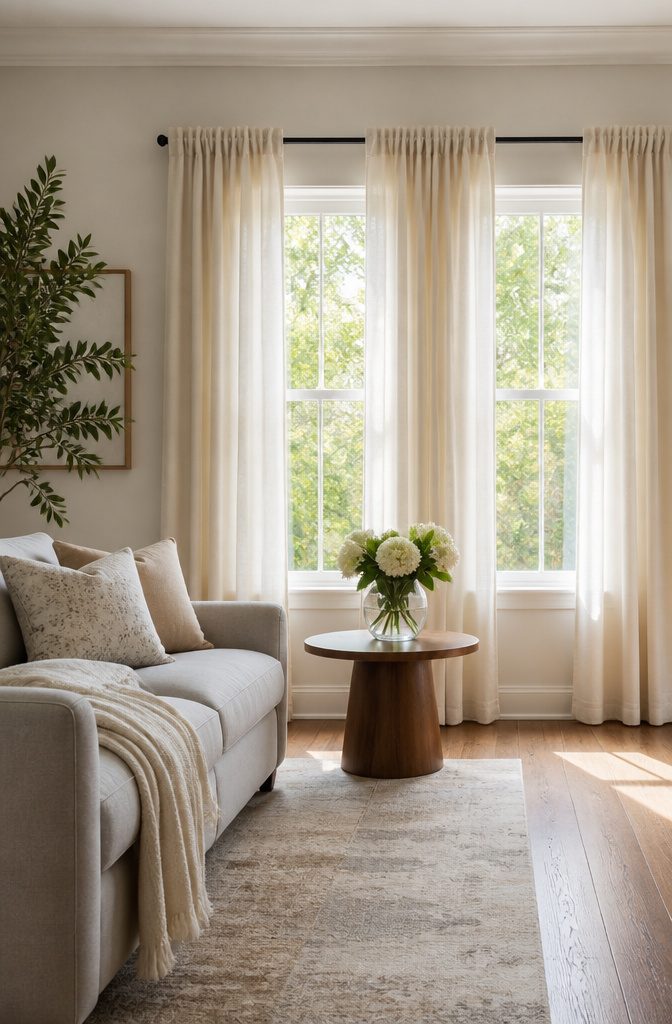
Rod pocket curtains slide onto the rod through a sewn channel at the top, which means no rings, clips, or grommets to buy separately.
The fabric bunches naturally into soft, even gathers that look more relaxed than the crisp folds of pinch pleats or the rigid rows of grommets.
That gathered header also sits slightly forward on the rod, so the curtain stacks a little fuller and hides more of the wall between the two windows if you are trying to make them read as one wider unit.
Almost any curtain rod works with this style, from basic white tension rods to heavier decorative ones, since the pocket itself carries the weight.
The catch is that you need to buy a rod diameter that actually fits the pocket, not just one that looks right on the bracket.
A rod too thick will strain the stitching and slide badly; too thin and the pocket sags in loops.
Most ready-made rod pocket curtains list the maximum rod size on the tag, and it is worth checking before you check out.
For two windows, rod pockets are forgiving if your rods are not perfectly level. The gathers hide small height differences that would show with a flat panel or a rigid top treatment.
The tradeoff is daily use: opening and closing them means sliding the whole fabric tube along the rod, which is slower than rings on a track.
In my own reading, that friction is why rod pockets suit living rooms where the curtains stay mostly decorative and the blinds do the real light control.

BGment Faux Linen Curtains: This set includes 2 camel linen-like curtains, camel color, each measuring 52 inch wide 84 inch leng. With 8 silver grommets, they easily fit rods less than 1.6 inches in diameter for quick and hassle-free installation.

Modern Farmhouse: Elevate your home decor with our charming Linen Button Window Curtain. These linen curtains are perfect for a farmhouse styled home with the modern color block design, pleating, and coconut husk button details.

Light Filtering Semi Sheers: Made with loosely woven fabric, these open weave curtains allow most amount of light into a room, reducing summer time heat and harsh sunlight on furniture and floors, while still providing certain privacy. Compared with the standard sheer curtains, these linen textured sheers are more opaque in their coloring to lessen the transparency
Grommet Top Curtains
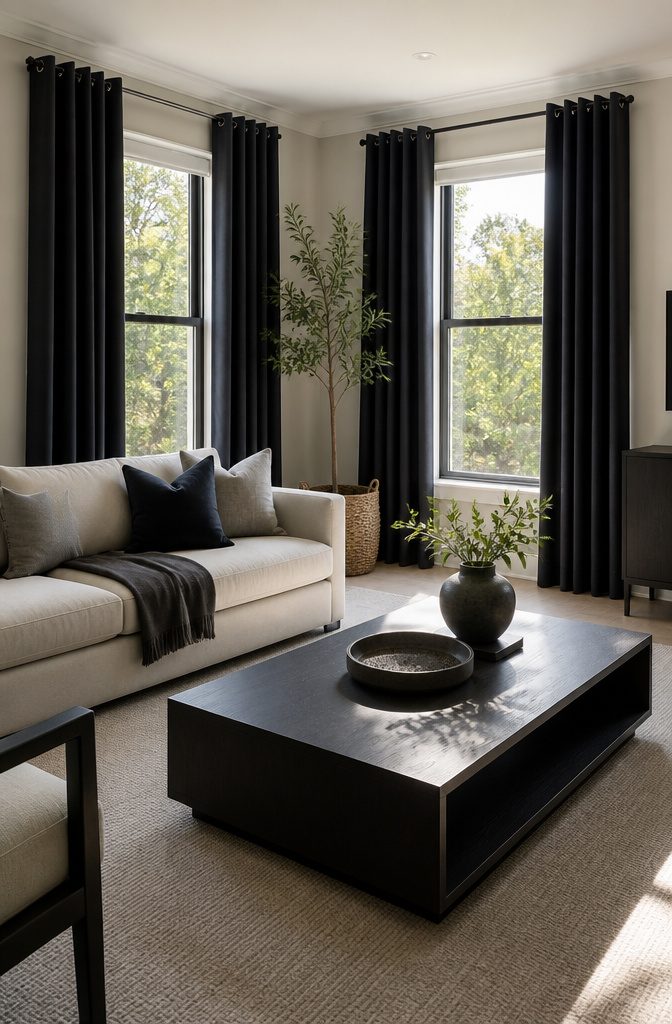
Grommet top curtains give a living room with two windows a clean, contemporary line that reads intentional rather than fussy.
The metal rings punched through the fabric top let the panels glide along the rod with almost no resistance, which matters more than it sounds when you are opening and closing two windows daily.
A 1-inch rod is the practical ceiling for most grommet sets.
Anything thicker and the rings bind or the fabric bunches instead of sliding. I learned that swapping a decorative 1.25-inch rod for a standard one after the grommets caught every single time.
When open, the panels collapse into deep, even folds that stack back at about one third of the flat width. For two windows, that means planning enough wall space beside each frame so the fabric does not block glass.
In a tighter room, the stack can overlap the adjacent wall slightly, but the look turns sloppy if the folds crush against a corner or a neighboring window’s stack.
The spacing between your two windows decides whether grommets are the right call, or whether a style with a slimmer stack profile makes more sense.

Heavy Duty Canvas Drop Cloth: Our professional grade canvas drop cloths are made of premium cotton canvas fabric that has double stitched seams. The pack offers 1 pack of 9’ x 12’ feet, of paint drop cloth that is ideal for protecting furniture paint, floor covering, or being used as drop cloth curtains. It Provides you With a stress-free experience for both indoor and outdoor use.

1. Versatile Floor and Furniture Protection: More than just for painting, these durable plastic sheet protect floors, furniture, carpets, ceilings, wardrobes, and even cars from dirt and dust. Use them as furniture covers, rainproof outdoor covers, or to safeguard windows from weather damage

Ultimate Protection for Painting & Renovation - Perfect for professionals and DIYers, this canvas tarp shields your floors, furniture, and surfaces from paint spills, dust, dirt, and debris. An essential addition to your painting supplies, this drop cloth is ideal for home renovation and decoration projects of any scale.
Measuring for Two Windows
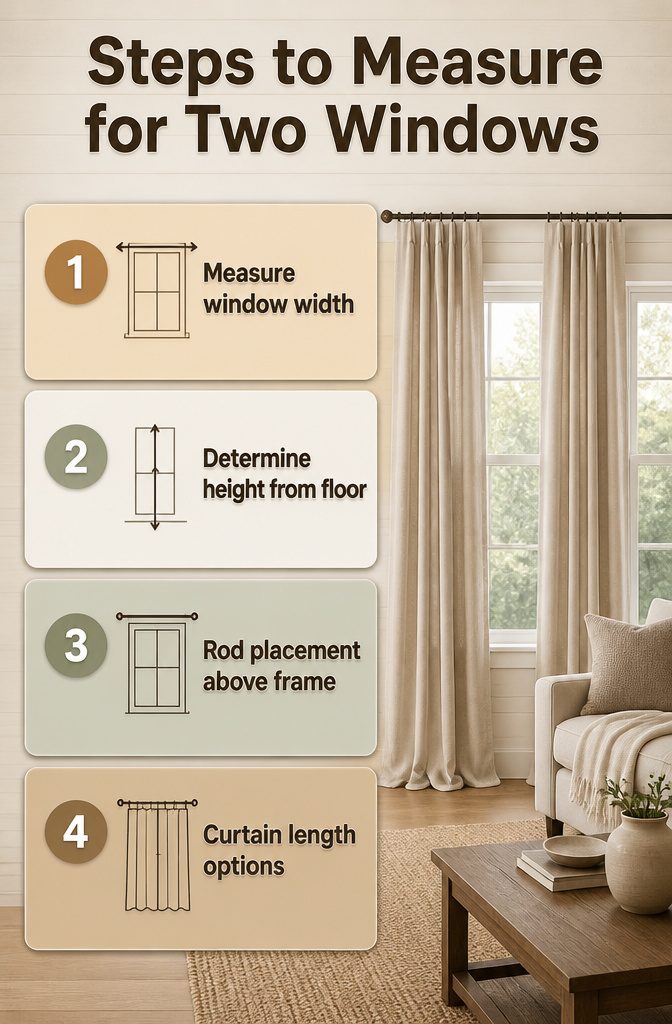
- Width comes first, and the rod should extend past the frame on both sides so the curtains stack clear of the glass when open. I learned this the hard way watching a friend’s install hug the window exactly, the fabric blocking half the daylight even when pushed back.
- Height is measured from the floor to where you will mount the rod, not to the top of the frame. For an 8-foot ceiling, 95–96 inch panels are the practical choice; with 9-foot ceilings, 108 inches gives you the lift without looking short.
- The rod itself goes high enough above the frame that the panel hangs from near ceiling line, which reads as taller walls. A little puddle on the floor is fine, but hem or use hem tape if you want them to just kiss the floor; anything hovering 6–12 inches above reads as a mistake.

Pair Sold: Each package includes 2 panels of blackout curtains. Each panel measures 40"W x 84"L, with a pair measuring 80"W x 84"L. Each panel has 6 anti-rust silver grommets(1.6 inch inner diameter) which would fit most standard curtain rods
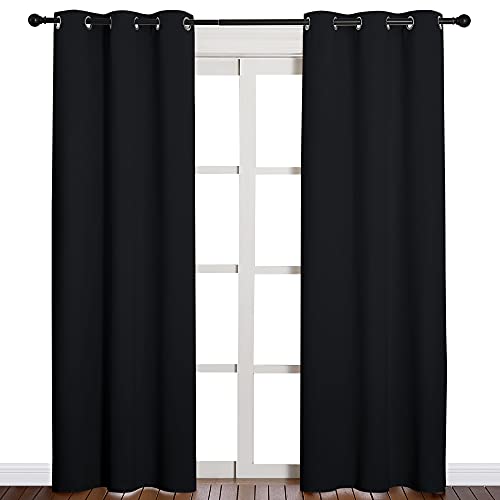
READY MADE: Set includes 2 BLACKOUT PANELS of 42" wide x 84" length with 6 grommets top each. Quality fabric without liner feels soft and heavy.
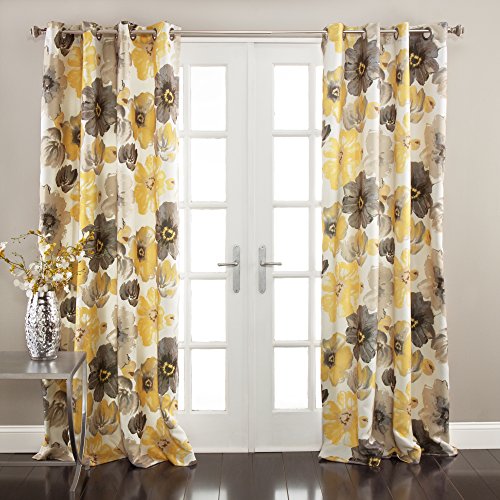
Bold Florals: The charming design of our Leah Light Filtering Curtains feature large, colorful blooming flowers that will brighten any room in your home with the feeling of spring. Add to your bedroom, dining room, home office or living room decor.
Hanging Curtains Wider and Higher
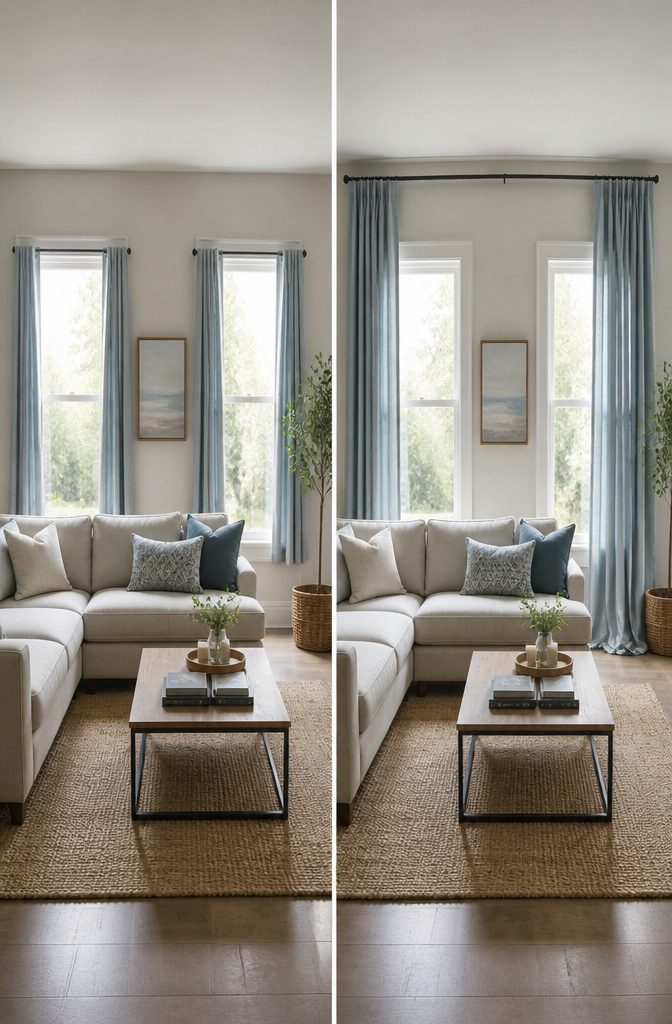
The fastest way to make two living room windows look larger is to hang the rod 6–12 inches wider than each frame on both sides.
That extra span lets the curtains stack against the wall instead of blocking glass, so more light enters and the wall reads as one continuous plane rather than two punched holes.
Rod choice matters more than most people expect. A slim profile, something in the 3/4-inch to 1-inch range, costs less and keeps attention on the fabric rather than the hardware.
For a no-sew drop cloth project, curtain clips threaded onto that slim rod are the simplest path: clip the fabric, hang, and adjust. No sewing, no grommet press.
Ceiling height sets your length.
With standard 8-foot ceilings, 95–96 inch panels usually reach the floor with a slight puddle. Nine-foot ceilings call for 108 inches.
The one look to avoid is the high-water curtain floating 6–12 inches above the floor; it shortens the room visually. If a baseboard heater sits below the window, a roman shade is the cleaner fix instead.
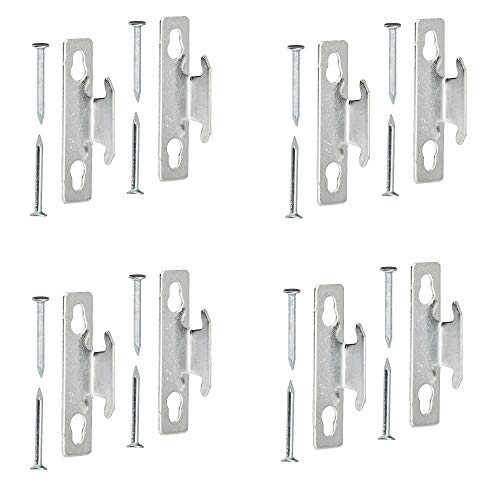
1 case of 4 Packs, 4 Count Total

【PRODUCT LIST】You will receive 4 pcs universal plastic self adhesive curtain rod brackets with screw, the curtain pole brackets measure about 3.15 x 1.89 x 2.36 inch. Suitable for all kinds of curtain rod, towel rod or shower curtain poles diameter about 0.6'' to 1.5''. Sufficient quantity to meet your daily use.

Adjustable: This curtain rod bracket is best used for rods with a maximum diameter of 1 inch (the notch of the bracket is slightly larger than an inch, this is for easy installation and use, but you don’t have to worry about the rod slipping off, because our design has Screws to fix the pole) . Adjustable length: Extends from 4.8 to 6.2 inches out from the wall
Curtain Length
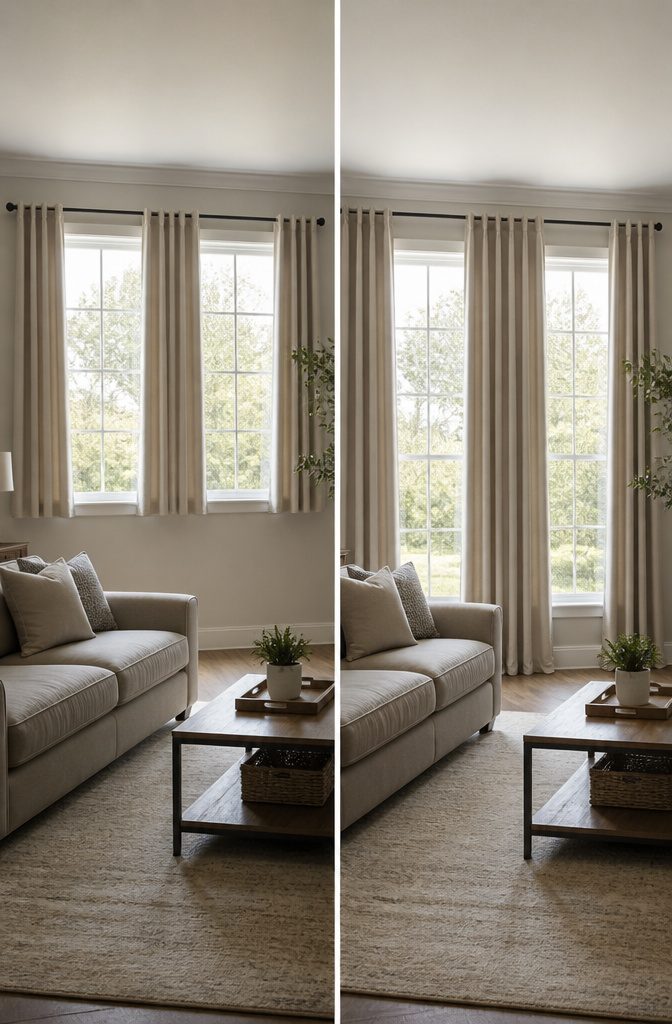
Floor-length curtains read as finished in a way that anything shorter rarely does, especially in a living room where two windows frame the main seating area.
The hem should just kiss the floor or break by half an inch; that slight fold at the bottom catches light and gives the fabric weight without looking sloppy.
Puddling, where the extra fabric pools on the floor, works best with heavier materials like velvet or a lined linen, and it needs a few extra inches to look intentional rather than like a measuring mistake.
In my own space, I tried puddling with a lightweight cotton and spent a year watching it collect dust and get kicked into corners every time someone walked by.
The effect was dramatic in photos, but the reality was more nuisance than elegance.
For a weekend project on a real budget, the clean break at the floor wins. It moves well, vacuums easily, and you are not recutting panels because the cat decided the puddle was a bed.
DIY Drop Cloth Curtains
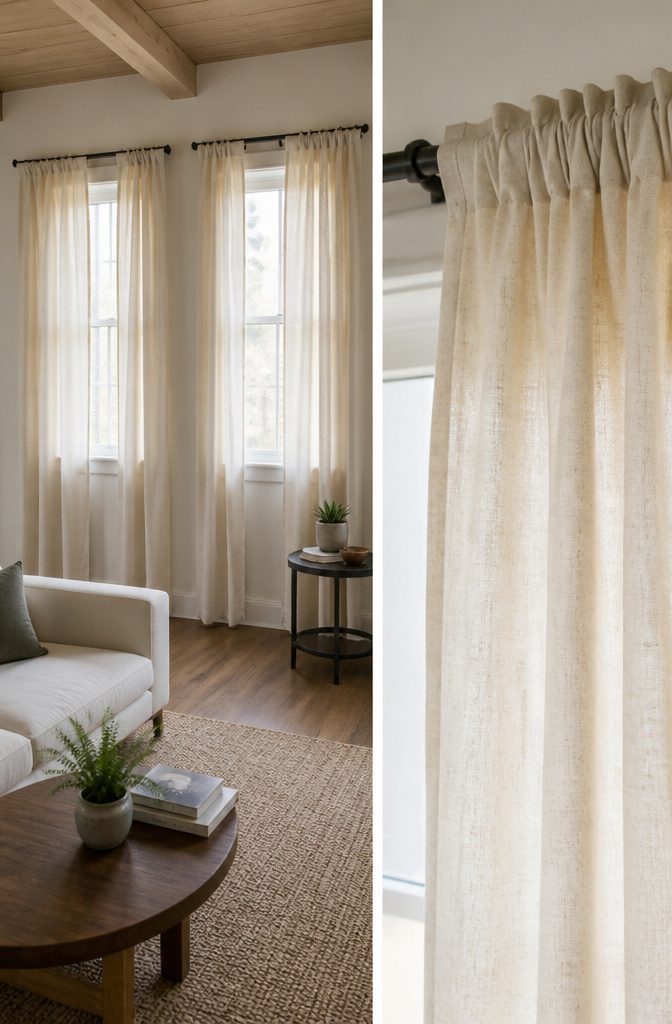
Drop cloth curtains solve the problem of two mismatched living room windows without a sewing machine.
A standard 6-by-9-foot painter’s drop cloth runs about $12 at hardware stores and already has hemmed edges, which means the no-sew version really is just curtain clips and a rod.
Clip the fabric at even intervals, thread onto the rod, and hang. The 9-foot length gives enough fabric to hang higher than the window frame and still kiss the floor, which makes a standard 8-foot ceiling feel taller.
For two windows, buy individual cloths rather than cutting one down; the factory hems hold better than any fold-over clip job. The mistake I keep seeing is using the 4-foot width sideways to save money.
It covers the glass but leaves the stackback looking skimpy, and with two windows the imbalance doubles. Spend the extra eight dollars per panel.
The canvas softens after a wash, and the neutral color plays well against bolder furniture without fighting for attention. Small rods, the kind that barely show, let the fabric do the work and cost less than the decorative versions too.
Layering Curtains
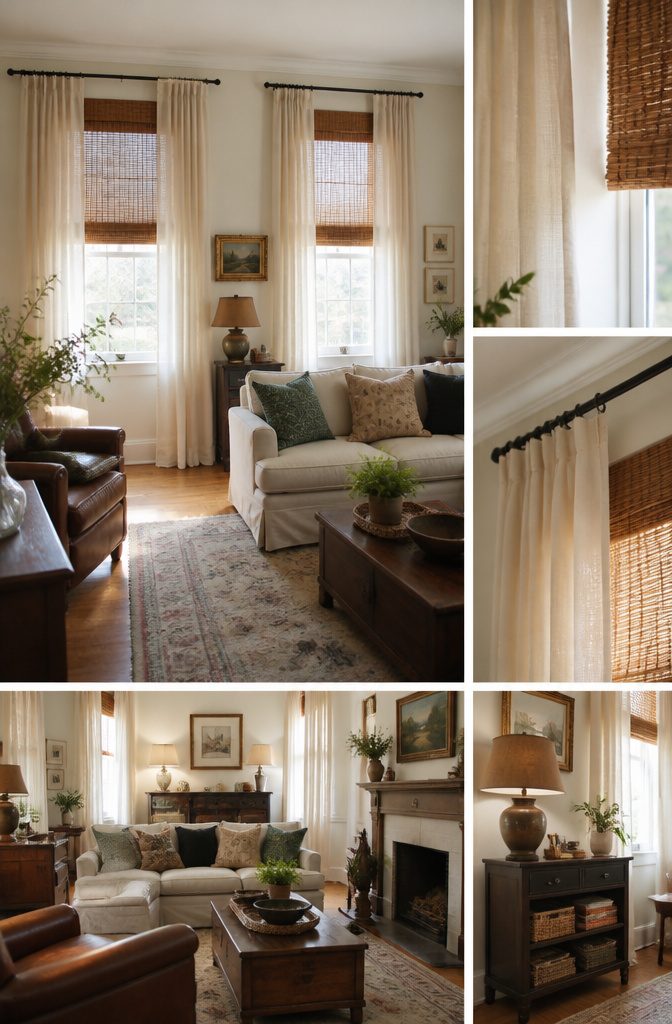
A single set of curtains over two windows can read flat, especially when the wall between them is narrow.
Layering fixes that. I started pairing curtains with shades after seeing how much dimension the combination added to a room with limited architecture.
The shades handle privacy and light filtering, and the curtains frame the whole wall as one unit rather than chopping it into two separate rectangles.
For two windows, the trick is choosing a shade that reads as one continuous layer across both openings.
Bamboo shades work well here because their texture shows even when the curtains are drawn, and they stack small enough to stay out of the way.
I have used small dowel rods with stationary curtains in tighter setups where full operable panels would fight each other at the center. The shades do the daily work; the curtains stay put and add softness.
The cost stays reasonable if you build it in stages. A basic blackout curtain panel like the Aruba at $29 gives you the drape, and you can add the shade later when the budget loosens.
The layered look works best when the shade mounts inside or just at the window frame, and the rod extends past both windows so the curtains hang as one wide statement.
That overlap in the middle is what makes two windows feel intentional instead of accidental.
Frequently Asked Questions
How do I hang curtains correctly?
Mount the rod 6–12 inches wider than each window frame on both sides so curtains stack against the wall instead of blocking glass.
For height, place the rod near the ceiling line and use 95–96 inch panels with 8-foot ceilings or 108 inches with 9-foot ceilings. A slim 3/4-inch to 1-inch rod keeps attention on the fabric rather than the hardware.
What length should my curtains be?
Curtains should kiss the floor or break by about half an inch for a clean, finished look. With standard 8-foot ceilings, 95–96 inch panels work; 9-foot ceilings need 108 inches.
Avoid anything hovering 6–12 inches above the floor, which shortens the room visually. Puddling extra fabric on the floor works only with heavier materials like velvet or lined linen.
Can I make my own curtains?
Yes, drop cloth curtains require no sewing. A standard 6-by-9-foot painter’s drop cloth costs around $12 at hardware stores and already has hemmed edges.
Clip the fabric at even intervals, thread onto a rod, and hang. For two windows, buy individual cloths rather than cutting one down so the factory hems stay intact and both panels match.