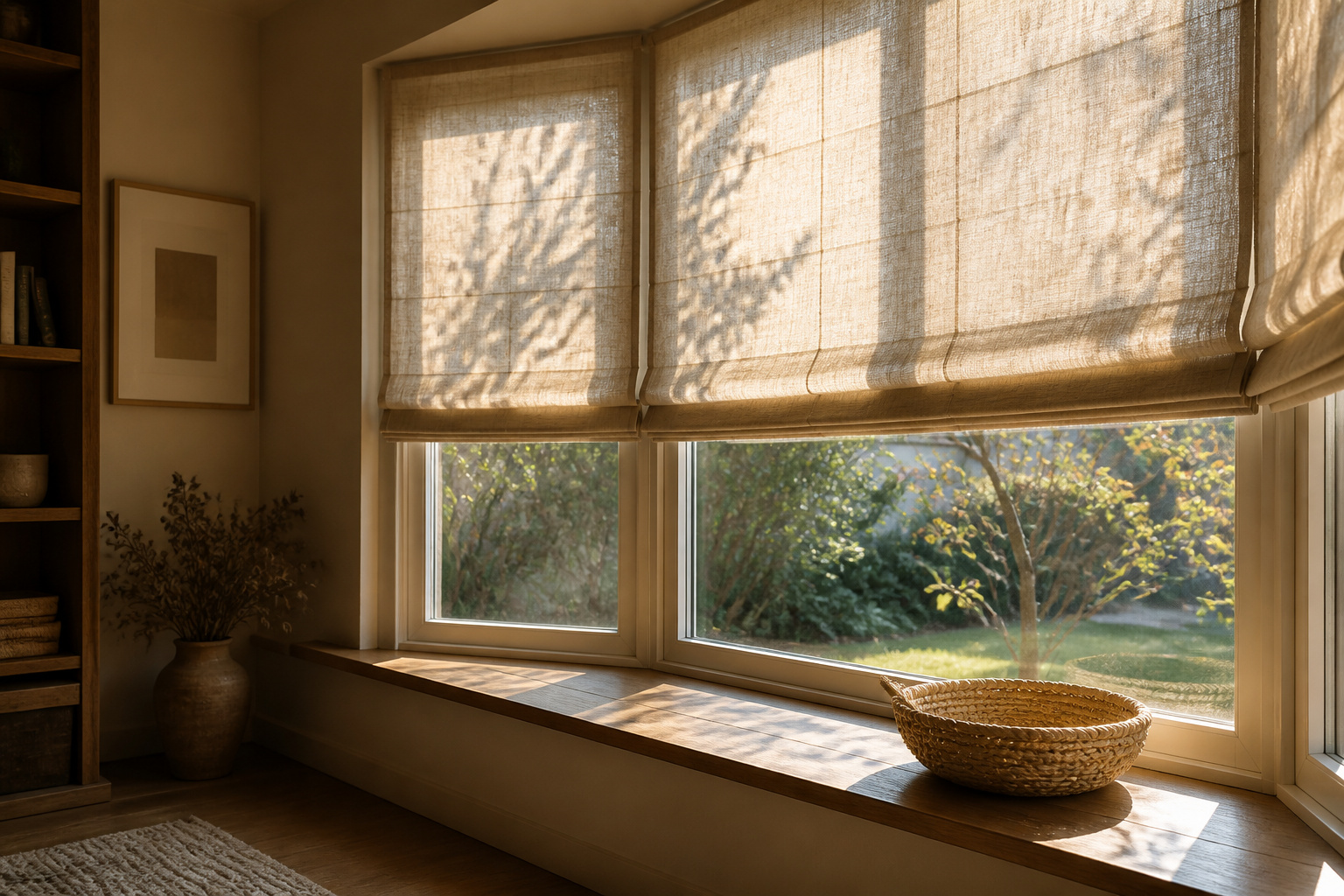
Natural linen roman shades are window coverings sewn from undyed or barely processed flax fiber, left in its raw oatmeal or grayed cream state.
The slubbed, irregular texture that defines linen is exactly what makes these shades divisive: the same light-catching unevenness reads as either organic warmth or plain messiness, and the fabric wrinkles in every position, permanently.
What saves them is durability; linen resists UV damage two to three times better than cotton, which matters when the material sits folded in direct sun for hours daily.
What Natural Linen Roman Shades Actually Are
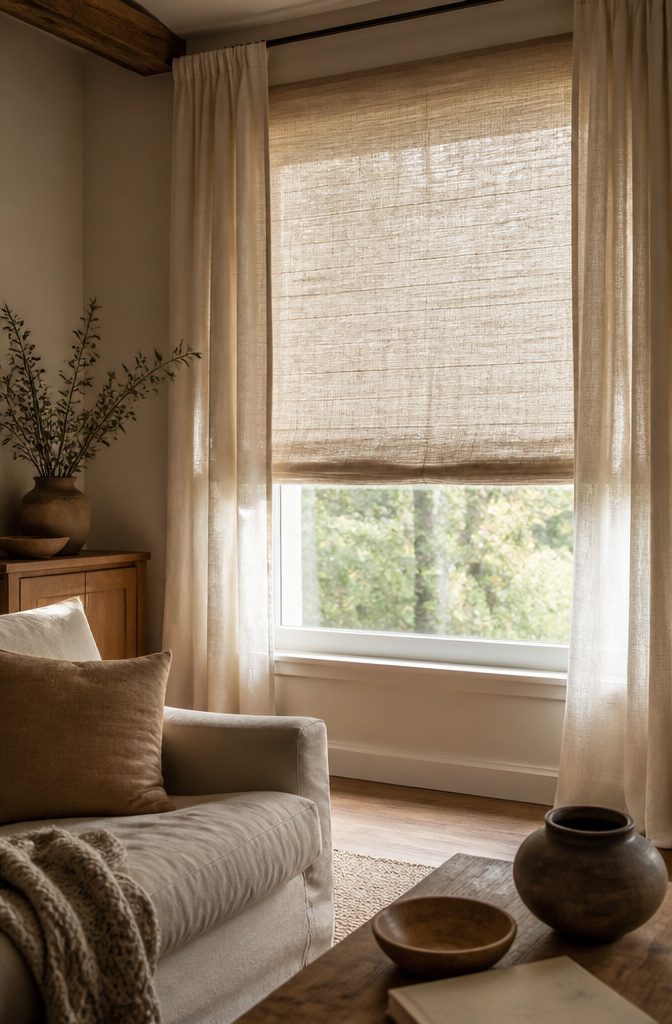
Natural linen roman shades are Roman shades sewn from linen left in its undyed or barely processed state.
The fabric comes from flax, a plant fiber that spins into the slubbed, slightly irregular texture people either love or find too imperfect for a window treatment.
That texture is the whole point. Linen does not lie flat or read as uniform; the weave shifts under light, and the color carries the soft oatmeal or grayed cream of the fiber itself.
For some windows, especially ones that already face a garden or get strong morning sun, that living quality is exactly what draws the eye. For others, the same unevenness looks messy.
Linen is two to three times stronger than cotton and resists UV damage better, which matters more for shades than for curtains because the fabric sits folded in direct light for hours each day.
The question is whether you can live with the rumple.
Linen wrinkles. It wrinkles when raised, when lowered, and in the folds that stay after a week in one position.
If your tolerance for imperfection is low, the durability and the light-filtering warmth will not outweigh the crease that catches your eye every time you walk past.

This roman shade features a beautifully textured linen blend fabric in a soft white tone creating a natural look and feel, while the lightweight fabric lets the right amount of light into your home for a bright, yet soft and airy touch

PRIVACY + LIGHT FILTERING (NOT BLACKOUT) – Softens sunlight and provides daytime privacy. At night with interior lights on, silhouettes may be visible (common for light-filtering shades).
Flat Roman Shades
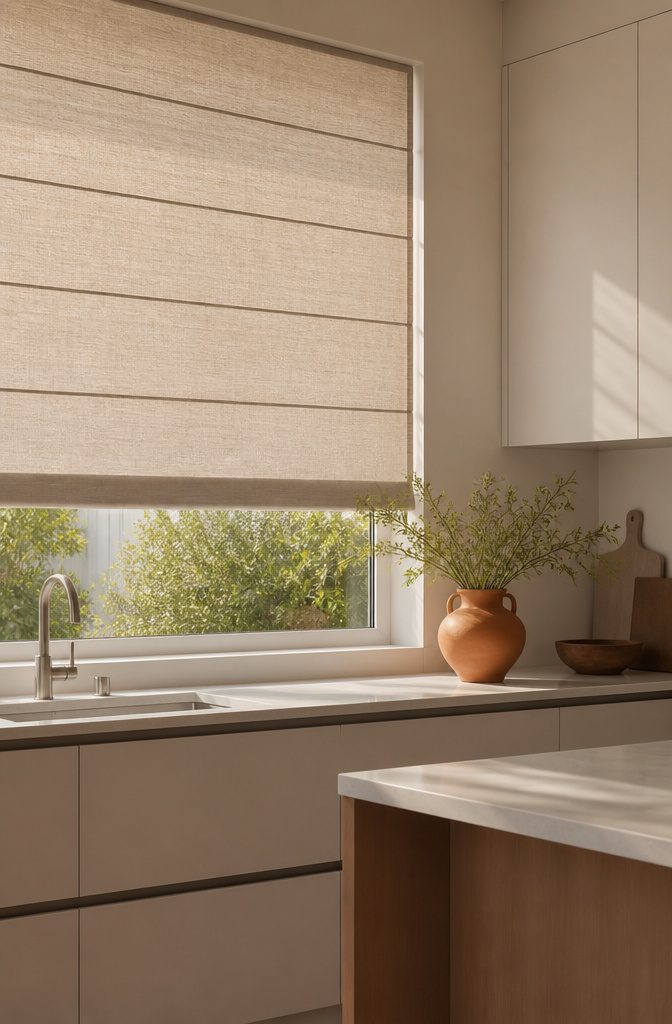
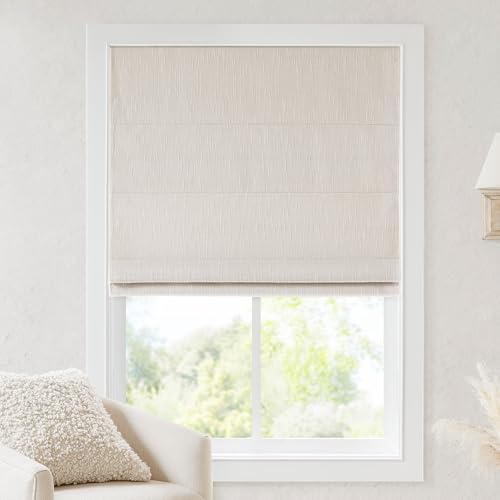
Flat Roman shades keep their panels completely flat when lowered, so the fabric itself does the talking. No cascading folds, no relaxed swag, just clean horizontal lines and the weave right there in front of you.
That simplicity is exactly why this style shows off linen’s texture more directly than any other; nothing competes with the slubs and the way the light moves across an organic fiber.
The minimal profile suits modern spaces where restraint reads as intentional rather than unfinished. In my own searching, the flat style kept coming up as the default choice for anyone trying to avoid a traditional window-dressing look.
Lighter to medium-weight linen works best here. Heavy fabric fights the structure, buckling instead of lying crisp.
The shade needs to obey the rods or rings behind it, and a stiff or thick weave will remind you every time you lower it that you chose presence over discipline.
If your linen sample feels like upholstery weight, move up to a cascade or relaxed style that can handle the bulk.

True to size - Refer to our sizing guide image for your perfect fit. SIZE: 27"W x 64"H. Inside mount requires shade 0.5" shorter in width, while outside mount requires shade 4" wider than your window size
True to size - Refer to our sizing guide image for your perfect fit. SIZE: 33"W x 64"L. Inside mount requires shade 0.5" shorter in width, while outside mount requires shade 3" wider than your window size

CORDLESS & MAGNETIC DESIGN: Featuring a cordless magnetic lift system, this roman shade offers easy, smooth operation with enhanced safety. Effortlessly adjust the shade to your desired height. Secure magnets and lightweight linen fabric hold it firmly in place, allowing you complete control over light and privacy with flexibility and stability.
Cascade Roman Shades
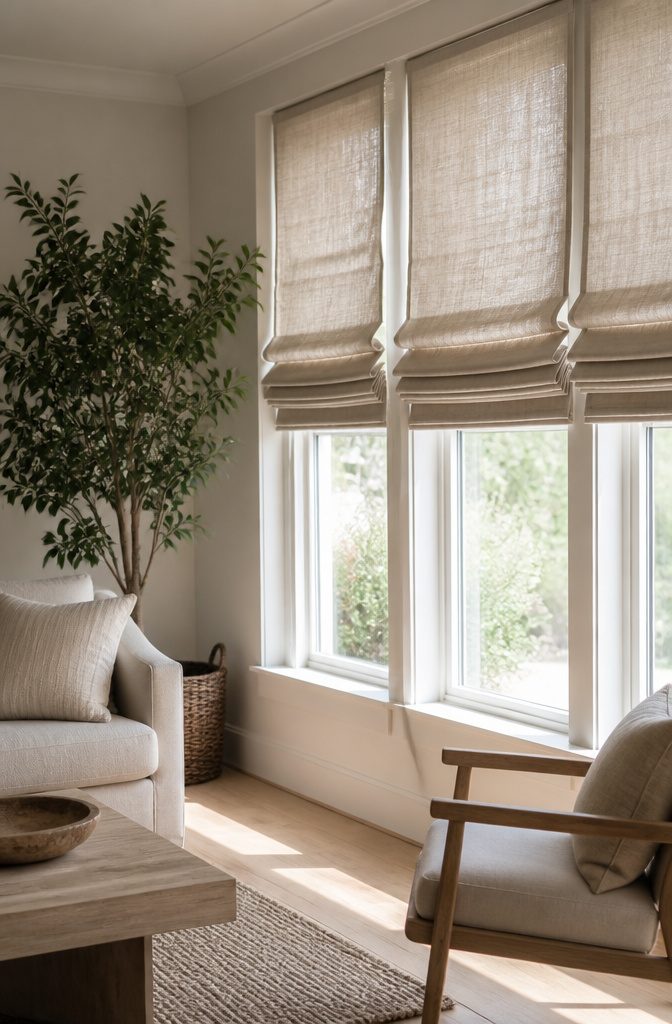
Cascade Roman Shades fall in graduated overlapping folds rather than stacking flat, which gives the window more depth and shadow throughout the day.
The aluminum dowels sewn to the back keep each fold crisp, and linen’s natural stiffness does some of that work too; the fabric doesn’t rely entirely on the hardware to hold its shape.
That structure comes at a cost in yardage. The waterfall effect needs more fabric than a flat Roman, so the price climbs and the finished shade reads as more traditional, almost formal.
For a weekend project with a few hundred dollars, this is where budget and style trade off. The linen’s texture still shows, but the shade itself makes a bigger statement than the fabric alone.
I would skip this style in a small rental kitchen where every dollar needs to stretch toward light and privacy, but in a living room where the window is the focal point, the extra depth is worth the extra material.
The dowels do the shaping, but linen’s body keeps the folds from collapsing once the shade is raised partway, which is the position most shades live in.

【Light Filtering ROMAN SHADES】Made from 80% polyester & 20% Linen, supported by a fabric valance in front and flocked fabric behind, it has a soft and comfortable hand.70% blackout lets in light but not views. Gently diffuses natural light, creating a soft, comfortable ambiance while maintaining daytime privacy. Ideal for the living room, door, office or bedroom.

Ready-Made: Package includes 1 panel magnetic linen door curtain + pole accessories + free sticky strap. The door curtain is finished with sticker for easy to install. The back of the door curtain is also designed rod/pole pocket, to meet your various needs.
True to size - Refer to our sizing guide image for your perfect fit. SIZE: 34"W x 64"L. Inside mount requires shade 0.5" shorter in width, while outside mount requires shade 3" wider than your window size
Aventura Roman Shades
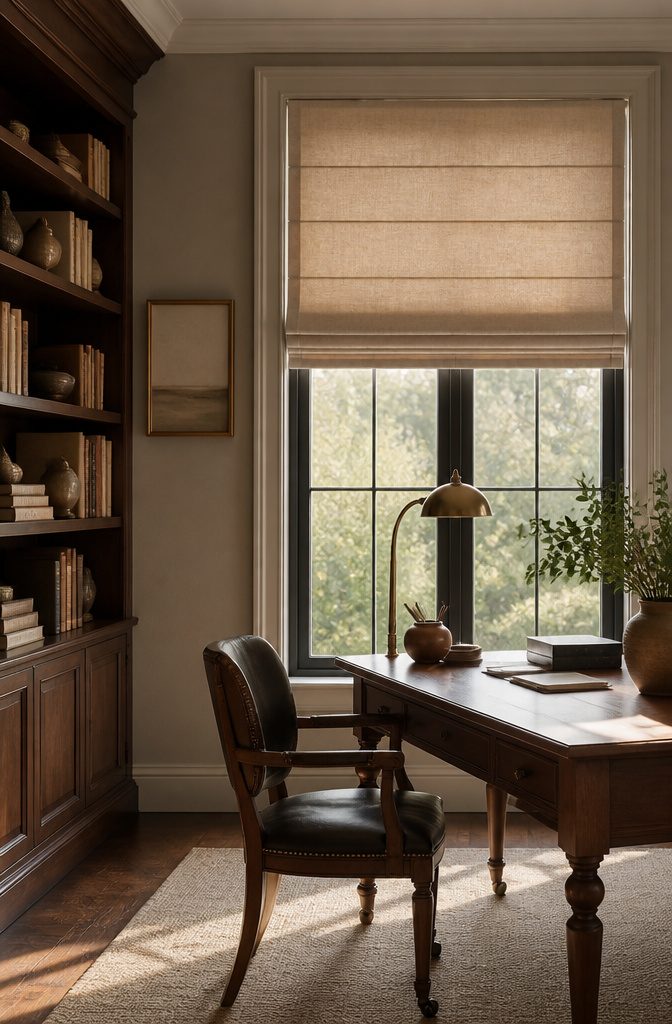
The Aventura style carries the clean lines and measured spacing you would expect from a well-cut jacket. Each fold is engineered to stack at the same depth, creating a column of fabric that reads as intentional rather than gathered.
The look borrows directly from tailored menswear, where structure signals quality, and it arrived in the shade world only recently as manufacturers tried to import that same crisp authority into windows.
Linen complicates the promise. The fiber softens with sun and gravity, and an Aventura shade lives or dies on its ability to hold a crease.
A cotton or synthetic backing can slow the relaxation, but pure linen without support will lose its architecture faster than the style can justify.
The gamble is real: you buy the shade for the precision, yet the material wants to become something looser. For a renter planning to take the shade along in two years, this may not matter.
For someone installing it as a permanent fixture in a room where the lines need to stay sharp, the cost of that backing or the shorter lifespan of the look itself belongs in the budget from the start.

No-Drill Installation:Joydeco no drill roman shades adopt spring tension fixation, which causes no wall damage and only fits inside mounting. No professional installer required, and anyone can finish the whole installation in just 10 seconds with only 2 simple steps — easy to install
This roman shade features a beautifully textured linen blend fabric in a soft white tone creating a natural look and feel, while the lightweight fabric lets the right amount of light into your home for a bright, yet soft and airy touch

No Drill Blinds: LazBlinds patented technology No Tools-No Drill system allow it no need to drill any holes on your window frame, great for Renter, Landlord, and Home Buyer. Easy to Install in 30 seconds with no tools-no drill, screws, or brackets. And it can afford maximum 30kg. Fit All Kinds of Walls, like woodiness metope, tile marble, concrete wall and rough tile.
Relaxed Roman Shades
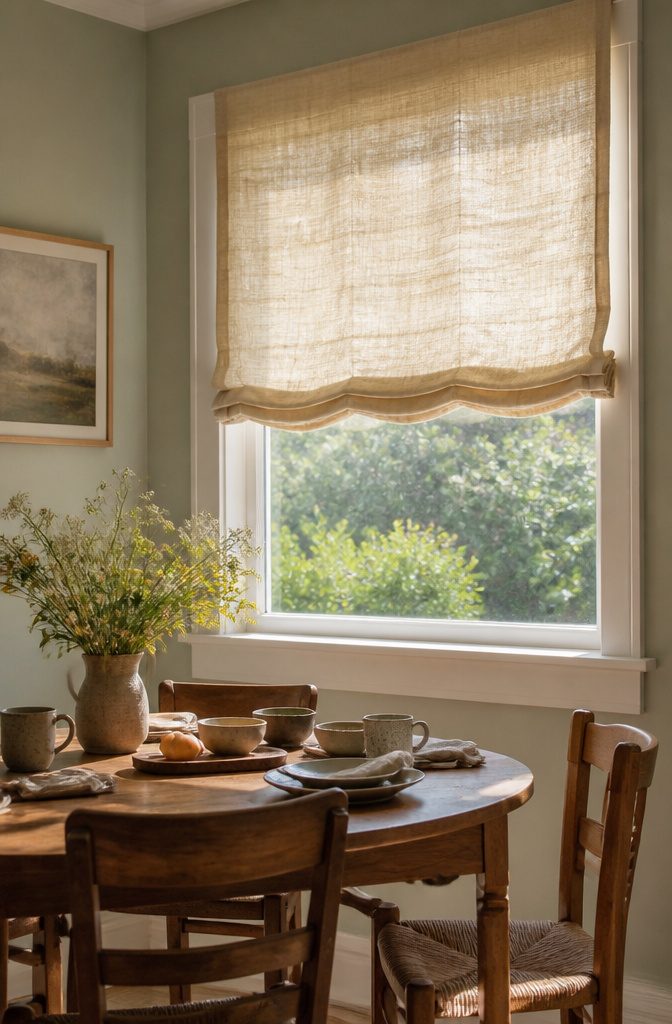
A relaxed Roman shade hangs with a gentle curve along the bottom, the fabric left to drape rather than pulled taut into a straight edge.
Linen’s natural willingness to wrinkle becomes the point here, not a flaw to fight. The soft, unstructured line reads as casual elegance in the right room, though it can look merely sloppy in a very formal space.
This style needs dressing, adjusting the pleats each time you raise or lower it, so it works best where it will mostly stay put as a decorative layer.
The lived-in drape suits coastal, farmhouse, or any room where you want the window to feel relaxed rather than buttoned-up.
Add a lining if you need the shade to hold some shape and give you privacy; the lining adds weight that helps the folds settle into something intentional rather than crumpled.
In my own searching, the shades that convinced me were the ones that leaned into linen’s slubs and soft light glow instead of pretending it could deliver a crisp, synthetic finish.
That reframing, from "wrinkled" to "textured," is what makes or breaks whether you will be happy with these long-term.

【Our Strengths】HOSTOON has over 20 years of experience in window shade manufacturing. Every product passes rigorous testing and fine adjustment during production for reliable
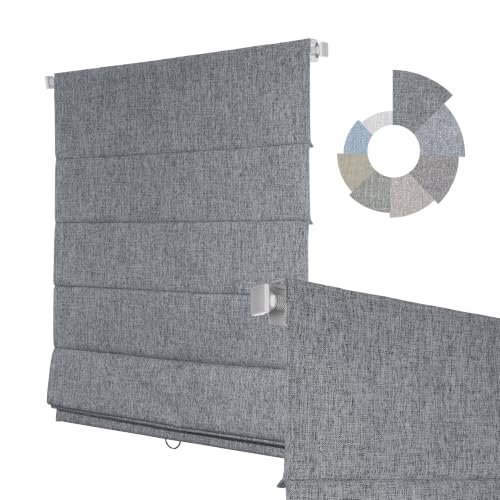
【Our Strengths】HOSTOON has over 20 years of experience in window shade manufacturing. Every product passes rigorous testing and fine adjustment during production for reliable
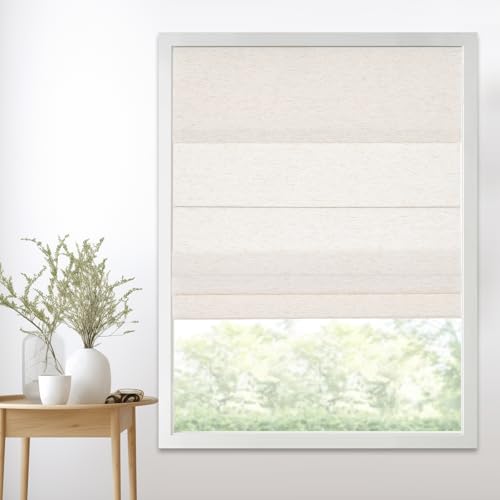
【How to choose the correct size】For example,your window size is 23”W x 72”H.INSIDE MOUNT:Window Width is Blind width. Blind Width=23"; Blind Height>=72".OUTSIDE MOUNT: Plus at least 4" is blind width and height, Blind Width=23"+4"=27"; Blind Height=76".【Pls Note】If you choose standard size,we won't take deduction,if you choose custom size,for inside mount,we will take 0.276" deduction on width,if you don't need the deduction,pls tell us.
Tulip Roman Shades
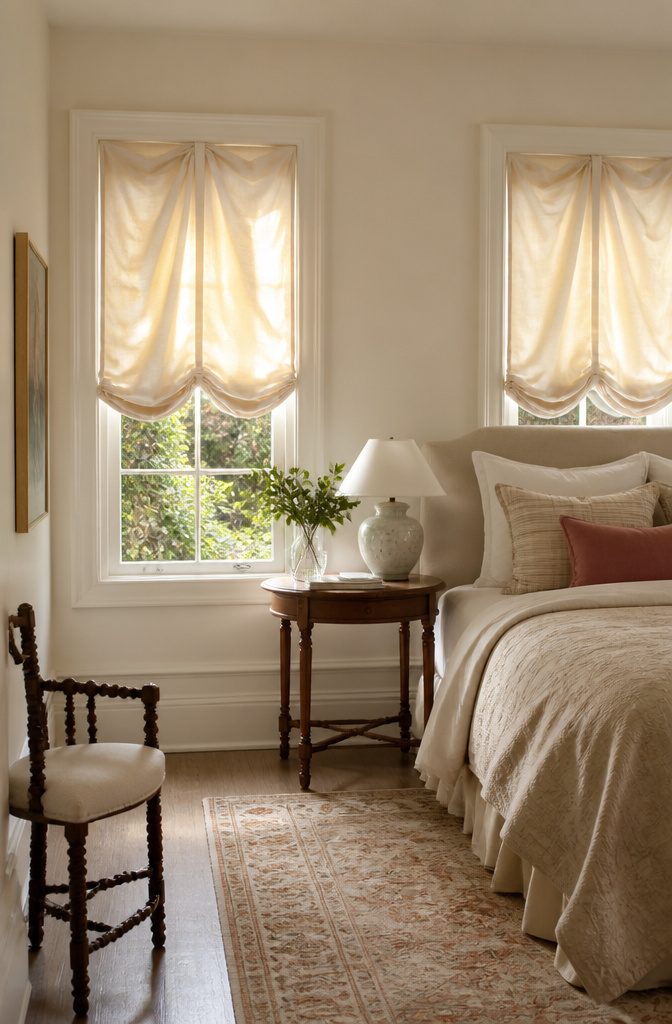
Tulip Roman Shades gather the fabric upward so the bottom flares outward like an upside-down flower in bloom.
The silhouette is plush and almost playful, but that shape comes at a cost: this style uses more fabric yardage than any other Roman shade, and linen’s price per yard makes the total hit noticeable.
The fullness that gives the tulip its charm can swallow a small window whole. In a guest bath or a narrow laundry room, the gathered bulk crowds the glass and reads heavy rather than romantic.
This is a style built for windows with breathing room, where the flare has space to open without brushing the sill or the trim.
Construction matters even more than scale. The shaping depends on precise internal rings and balanced lift lines hidden inside the folds; uneven spacing or a sagging cord route turns the shade from flower to failed craft project.
After watching a friend’s DIY attempt pool at the bottom in lopsided ruffles, I would not try this without a workroom that has built them before. The linen deserves the investment, but only if the build matches it.
This roman shade features a beautifully textured linen blend fabric in a soft white tone creating a natural look and feel, while the lightweight fabric lets the right amount of light into your home for a bright, yet soft and airy touch

① Linen Roman Shades: Discover the beauty and versatility of Roman Shades. Soft and luxurious, they add a touch of elegance to any room. Perfect for both formal and casual settings. A good choice for doors, french doors, sliding doors, kitchen windows, bathroom windows, bedroom, etc.
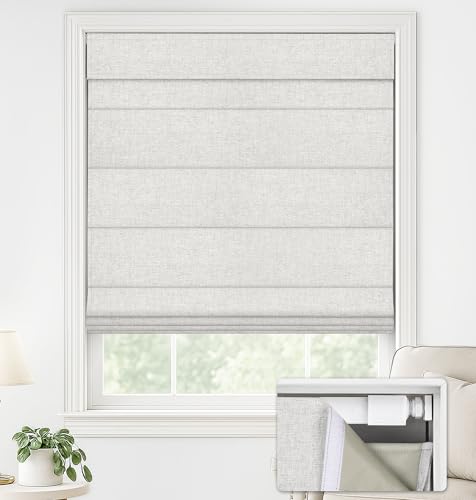
【For inside mount】order the exact width of your window frame. If your frame is 29", buy 29". No deduction – we make it to your exact size
Pleated Roman Shades
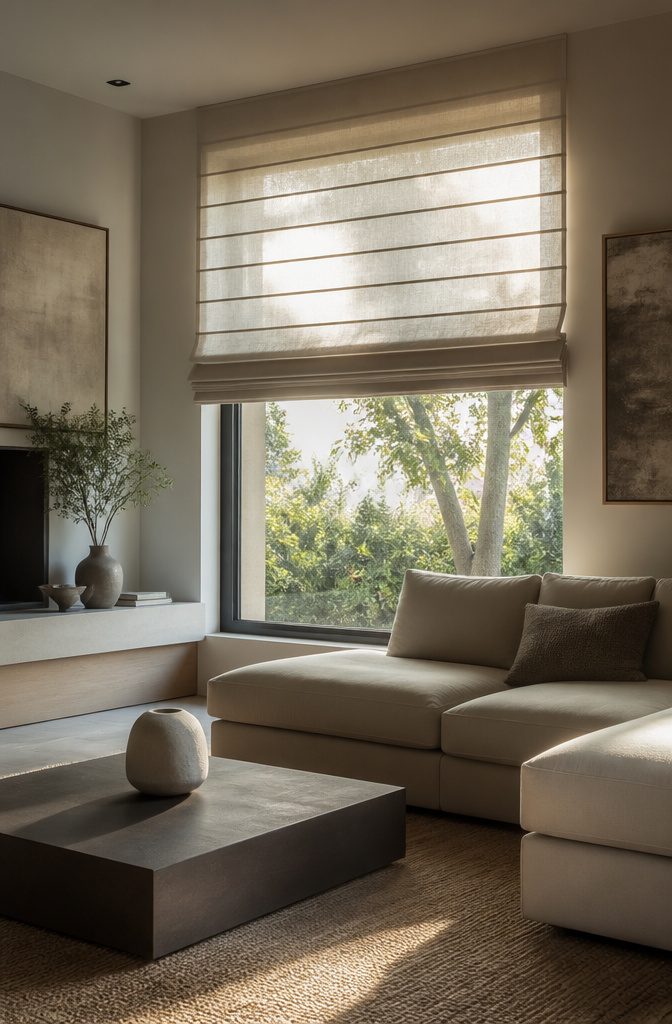
Sharp, regular accordion folds define the pleated Roman shade, and that precision is where linen fights back.
The fabric’s natural slubs and weave variation catch light unevenly across machine-perfect pleats, so the folds read as mismatched even when they are not.
I noticed this first on a sample swatch held to the window: the same fold depth looked deeper where the linen was denser, shallower where it thinned.
The fix is structural, not stylistic. A linen blend or bonded linen holds the crease memory that pure linen lacks, and the added fiber or backing smooths out the visual noise of slub variation.
Bonded linen in particular, with its thin poly layer fused to the back, takes a press and keeps it.
You lose a little of the raw, airy drape that makes linen appealing, but for this specific style the trade is worth it.
Pure linen pleated shades tend to look handmade in the wrong way, like a home ec project, while the blended version reads intentional.
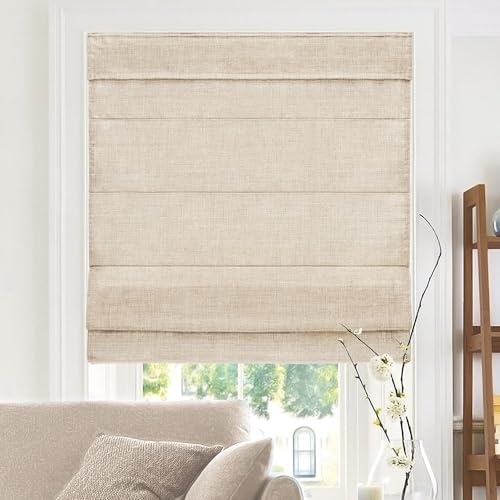
PRIVACY + LIGHT FILTERING (NOT BLACKOUT) – Softens sunlight and provides daytime privacy. At night with interior lights on, silhouettes may be visible (common for light-filtering shades).

PACKAGE INCLUDES: 1-piece tie up curtain. Made of linen texture fabric. Extremely soft to touch., imported.

[Multi-Purepose]:Joydeco blackout roman shades block 100% of sunlight and UV rays, providing excellent insulation to keep rooms cool in summer and reduce heat loss in winter. Highly durable and easy to clean, they’re perfect for bedrooms, nurseries, living rooms, kitchens, and offices—helping you create a consistently comfortable environment.
100 Percent Linen and When It Works
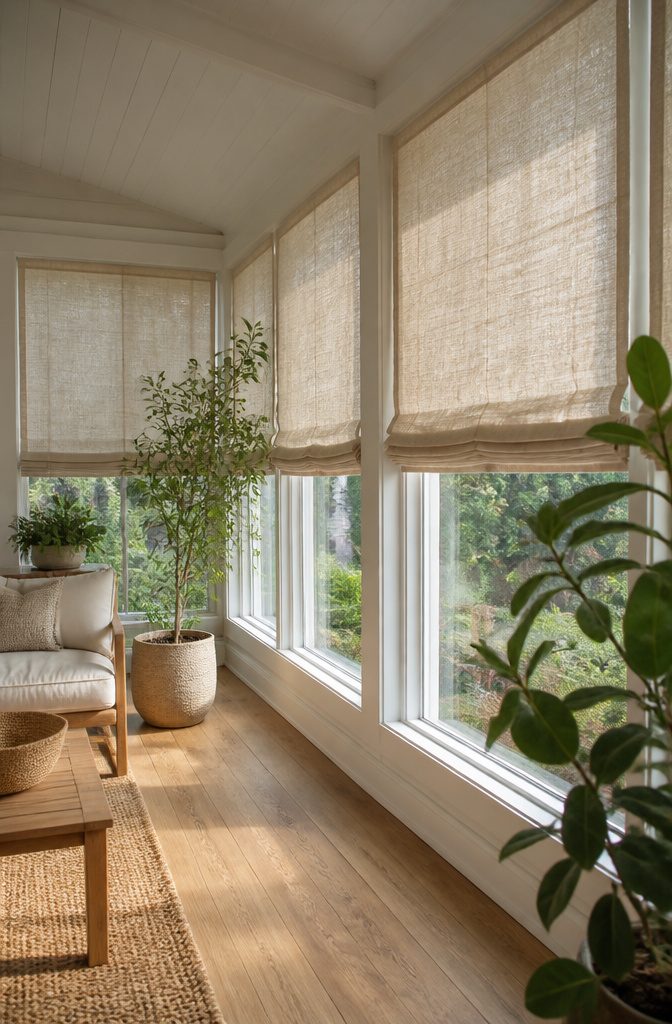
Pure linen carries the most pronounced texture of any shade fabric, and that slubbed surface is exactly what draws people to natural linen roman shades in the first place.
The fiber is highly breathable, which matters more than I expected once I started leaving shades unlined in rooms that catch afternoon sun. Air moves through the weave instead of pooling against the glass.
The same properties that make linen breathable also make it naturally resistant to mold and mildew.
In humid months, that matters. What surprised me was how much linen wrinkles, and how quickly.
The folds of a flat roman shade will never stay crisp like a cotton blend. Within a week of hanging, the face fabric softens into lines that look either relaxed or messy, depending on your tolerance.
For temperate climates where insulation is less urgent than air circulation, unlined 100 percent linen makes sense.
The temperature regulation still helps, just lightly. The UV resistance is stronger than cotton, so the color holds longer than you’d guess from something so plainly natural.
The wrinkling, though, is the dealbreaker for some rooms and the entire point for others. I lean toward accepting it in spaces that already feel a little undone, and avoiding it anywhere that needs to read as finished.
PRIVACY + LIGHT FILTERING (NOT BLACKOUT) – Softens sunlight and provides daytime privacy. At night with interior lights on, silhouettes may be visible (common for light-filtering shades).
PRIVACY + LIGHT FILTERING (NOT BLACKOUT) – Softens sunlight and provides daytime privacy. At night with interior lights on, silhouettes may be visible (common for light-filtering shades).
PRIVACY + LIGHT FILTERING (NOT BLACKOUT) – Softens sunlight and provides daytime privacy. At night with interior lights on, silhouettes may be visible (common for light-filtering shades).
Linen Blends and What You Gain
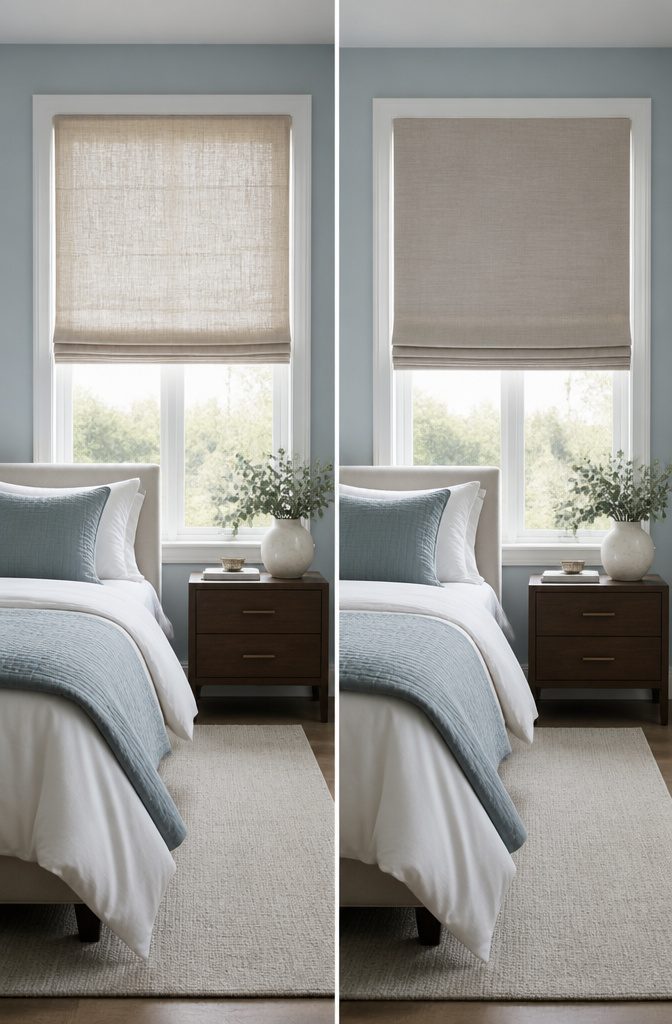
Pure linen wrinkles the moment you look at it, which is why most ready-made natural linen roman shades are actually blends. The label might still say "linen," but the fiber content tells the rest of the story.
A linen-cotton mix keeps more of that breathable, airy quality cotton lovers already know. It still creases, just not with the same theatrical immediacy of 100% linen.
Linen-rayon was the surprise for me: the drape turns softer and more fluid, and the price drops enough to make a full set of shades feasible on a starter budget.
The trade is that rayon weakens faster under sun exposure, so east-facing windows wear it harder than north ones.
Linen-polyester stabilizes the weave against the wrinkling that drives most people to steam their shades weekly. For rentals or a first home where you are already juggling a dozen maintenance items, that stability matters more than fiber purity.
Blends are the practical compromise, not a lesser choice. They let the texture read as linen from across the room while forgiving the habits of a household that does not have a full-time laundress.
PRIVACY + LIGHT FILTERING (NOT BLACKOUT) – Softens sunlight and provides daytime privacy. At night with interior lights on, silhouettes may be visible (common for...
Linen Sheers and Filtered Light
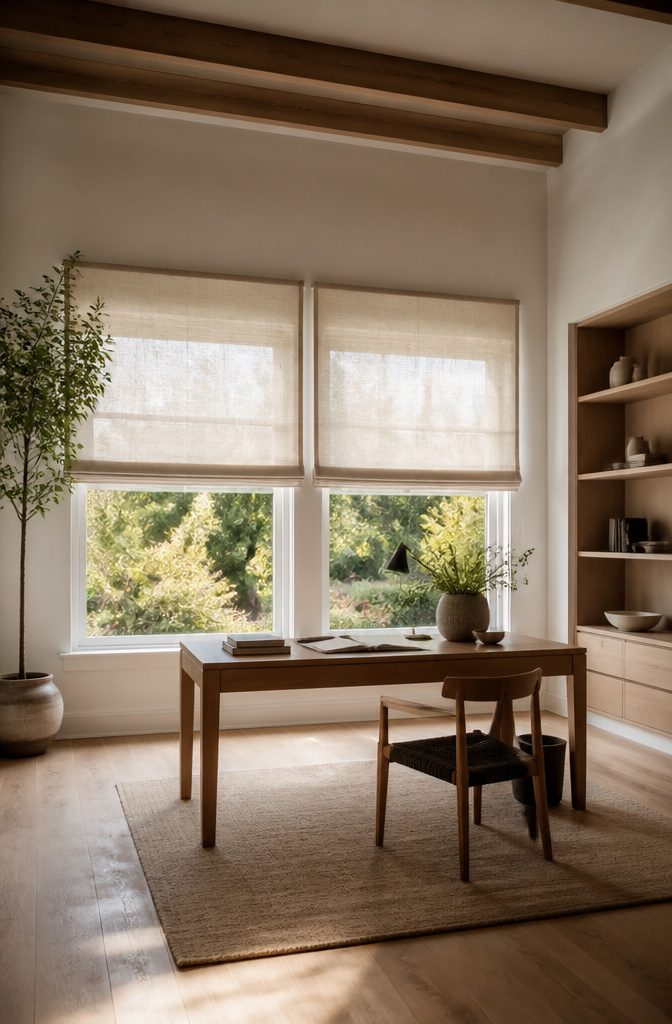
Loose-weave linen Roman shades filter sunlight into something you actually want to sit in.
The threads are spaced wide enough that the fabric reads as a solid panel from across the room, yet daylight pours through in a softened, even wash.
The glare that makes a south-facing kitchen unusable at 3 p.m. drops to a manageable glow, and the oatmeal or ivory tone of undyed linen warms that light on its way in.
What you get is afternoon light that looks like morning light.
Privacy is the trade.
After dark, the weave turns nearly transparent from outside. A sheer linen shade alone works for a third-floor studio or any room where the windows face a wall, but for a street-level bedroom you’ll want to layer.
A simple curtain panel on a separate rod, drawn only at night, solves this without fighting the shade for space. The combination gives you filtered daylight when you want it and actual coverage when you need it.
A 100% linen sheer is the most delicate option, and the texture is what you’re paying for.
Blends exist, but they tend to flatten into a generic scrim. If the shade is the only window treatment in the room, linen’s subtle irregularity is worth the extra care.

【Light Filtering ROMAN SHADES】Made from 80% polyester & 20% Linen, supported by a fabric valance in front and flocked fabric behind, it has a soft and comfortable hand. 70% blackout lets in light but not views. Gently diffuses natural light, creating a soft, comfortable ambiance while maintaining daytime privacy. Ideal for the living room, door, office or bedroom.

[No-Drill Installation]:Joydeco no drill roman shades adopt spring tension fixation, which causes no wall damage and only fits inside mounting. No professional installer required, and anyone can finish the whole installation in just 10 seconds with only 2 simple steps — easy to install
[No-Drill Installation]:Joydeco no drill roman shades adopt spring tension fixation, which causes no wall damage and only fits inside mounting. No professional installer required, and anyone can finish the whole installation in just 10 seconds with only 2 simple steps — easy to install
Patterned Linens and the Restraint Required
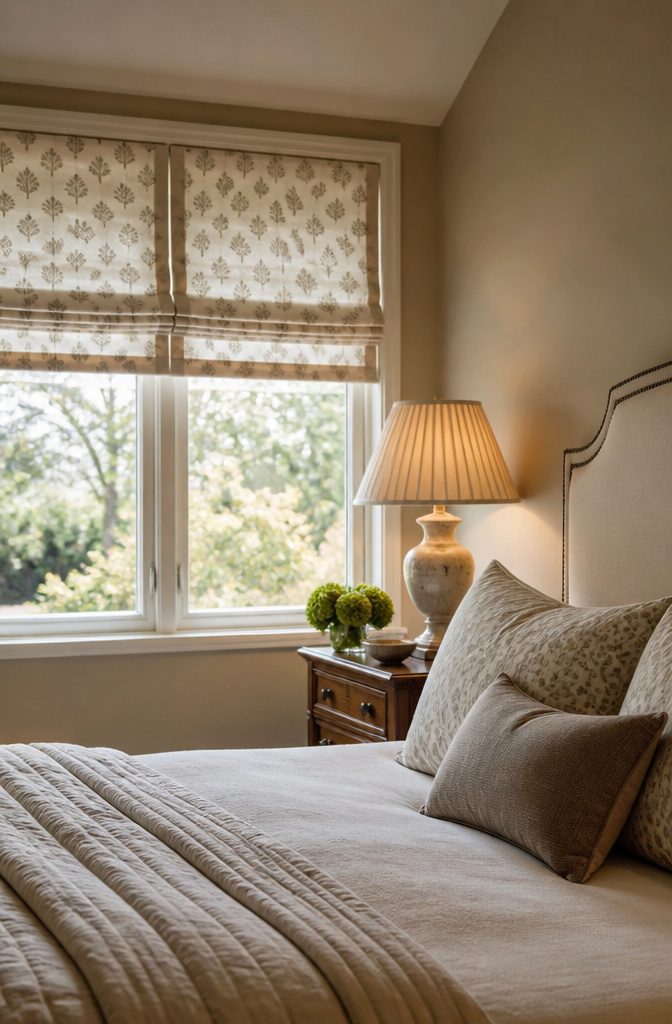
Printed, embroidered, or slub-weave patterns on a linen base can turn a quiet window into the room’s loudest voice. I learned this ordering samples for a guest room where I wanted something warmer than plain flax.
The small-scale floral I chose first looked charming in the swatch, but scaled up across thirty inches of folded shade, it fought the shade’s own horizontal lines and turned busy fast.
Small repeats or tone-on-tone textures read as depth, not decoration, and they let the Roman folds stay the architectural feature.
Bold geometrics or high-contrast prints compete with the shade’s structure instead of supporting it. If the pattern draws the eye before the fold geometry does, the shade loses what makes it a shade rather than a flat panel.
Texture weaves, a subtle stripe, or an embroidered edge give the linen interest without that competition. The restraint costs nothing extra; it just requires picking the quieter option when both are priced the same.
Inside or Outside Mount
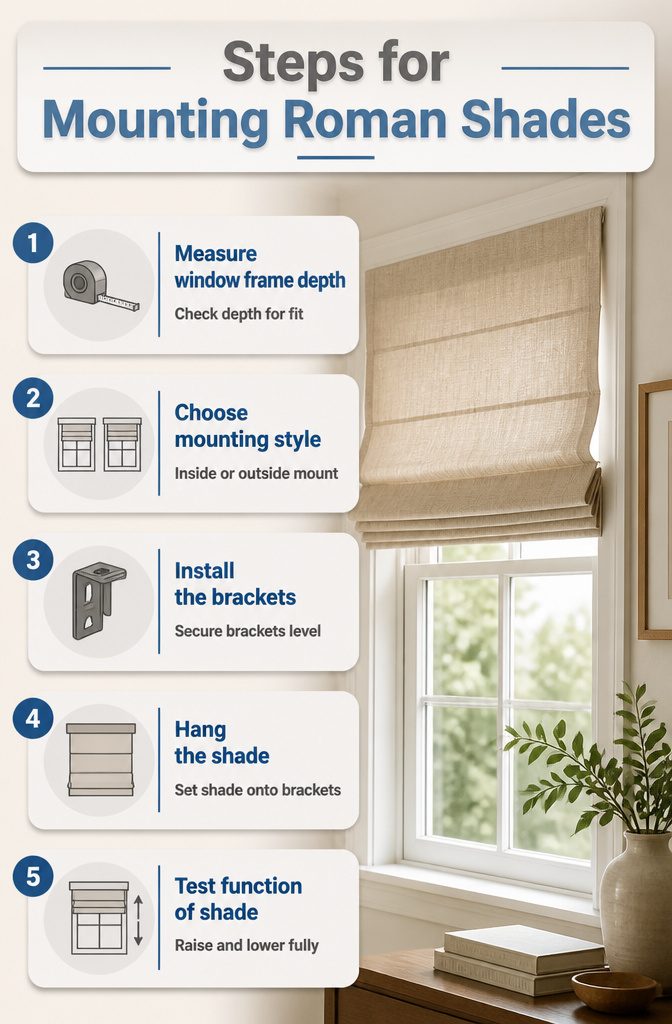
Mounting style changes what a natural linen roman shade actually does in the room.
Inside mount sits within the window frame, keeping trim visible and lines crisp. Outside mount overlaps the frame, covering more glass and forgiving windows that are not quite square.
The measuring gap matters more with linen than with thinner fabrics. Linen has body; it takes up depth just folded on the stack, and over months it settles and shifts slightly.
An inside mount demands exact frame depth to keep the shade from projecting into the room or catching on cranks and locks.
Outside mount skips that fight entirely. The shade hangs where you place it, and a quarter-inch variance in your measurement does not throw the whole install.
For renters with older windows or first-time installers working alone, outside mount buys you room to be imperfect. Inside mount is the cleaner look, but only when the window cooperates.
What I Got Wrong About Wrinkles
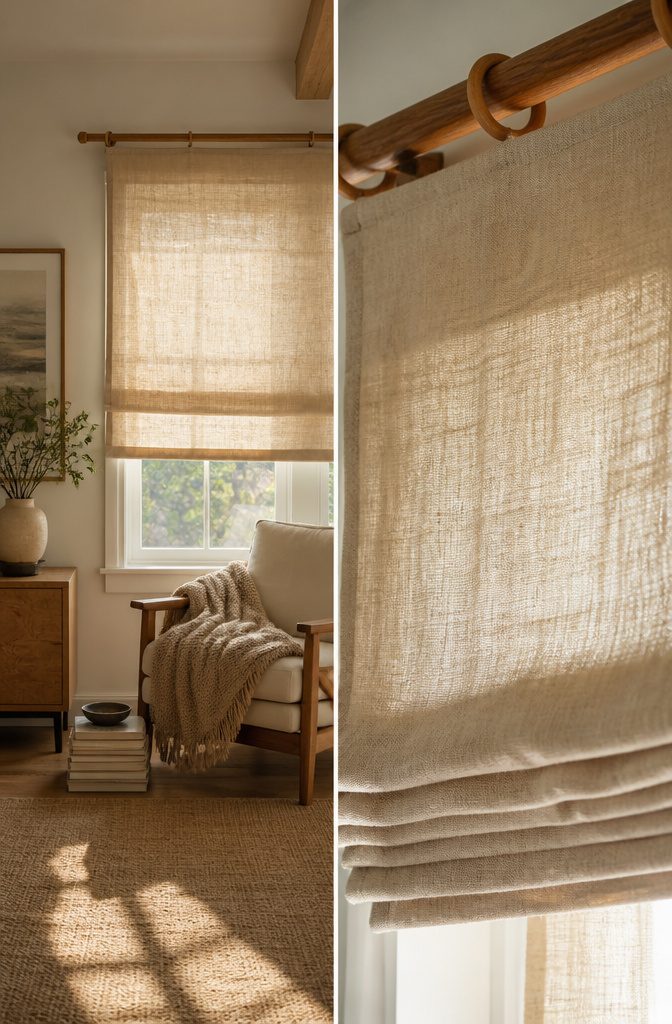
Linen Roman shades will never hang with the glass-smooth face of a polyester shade, and the first set I ordered taught me that the hard way.
The folds looked soft when they arrived, but two days of ordinary raising and lowering left random creases across the flat panels that no amount of finger-pressing would fix.
Steam helps temporarily, which I learned after borrowing a garment steamer and running it along the shade back, but by the next morning the linen had settled back into its own remembered shape.
The real choice is accepting that texture or choosing a different fabric entirely. If you stay with linen, construction details control how the wrinkling reads from across the room.
A proper lining, almost always recommended, adds weight and structure so the folds drape evenly rather than collapsing into sharp, accidental creases. A weighted hem keeps the bottom edge from curling or riding up.
Adequate fullness in the fabric cut, rather than stretching linen tight to save yardage, lets the shade relax into softer, more intentional-looking folds. I would not order unlined linen again for any window I pass daily.
Why Linen Beats Synthetic for the Long Run
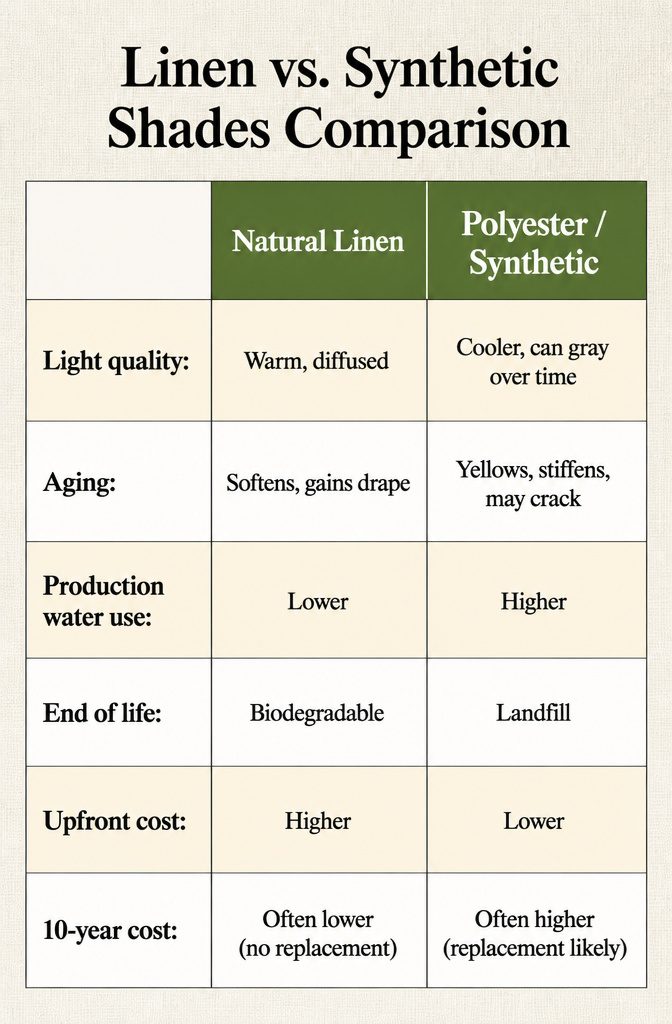
Synthetic roman shades usually cost less upfront, but that gap shrinks once you live with them a while. Polyester fibers stiffen and turn brittle under repeated sun exposure, while the resins that hold their shape can yellow in south-facing windows.
Linen does the opposite: the fibers relax and soften with each raise and lower, and the light coming through stays warm rather than taking on the gray cast typical of plastic-based weaves.
The sustainability difference is hard to ignore once you are replacing shades instead of washing them.
Flax, the plant behind linen, needs little irrigation compared to the water load of petroleum-based fiber production. At the end of its life, a linen shade biodegrades; a synthetic one sits in landfill.
Here is how the two stack up over a decade:
| Attribute | Natural Linen | Polyester / Synthetic |
|---|---|---|
| Light quality | Warm, diffused | Cooler, can gray over time |
| Aging | Softens, gains drape | Yellows, stiffens, may crack |
| Production water use | Lower | Higher |
| End of life | Biodegradable | Landfill |
| Upfront cost | Higher | Lower |
| 10-year cost | Often lower (no replacement) | Often higher (replacement likely) |
The replacement cycle is what closes the price gap. A synthetic shade that looks tired after five or six years costs you twice: once for the new shade, once for the reinstall.
Linen, kept clean and out of direct afternoon sun where possible, often stretches past ten without looking spent.
When to Call a Professional
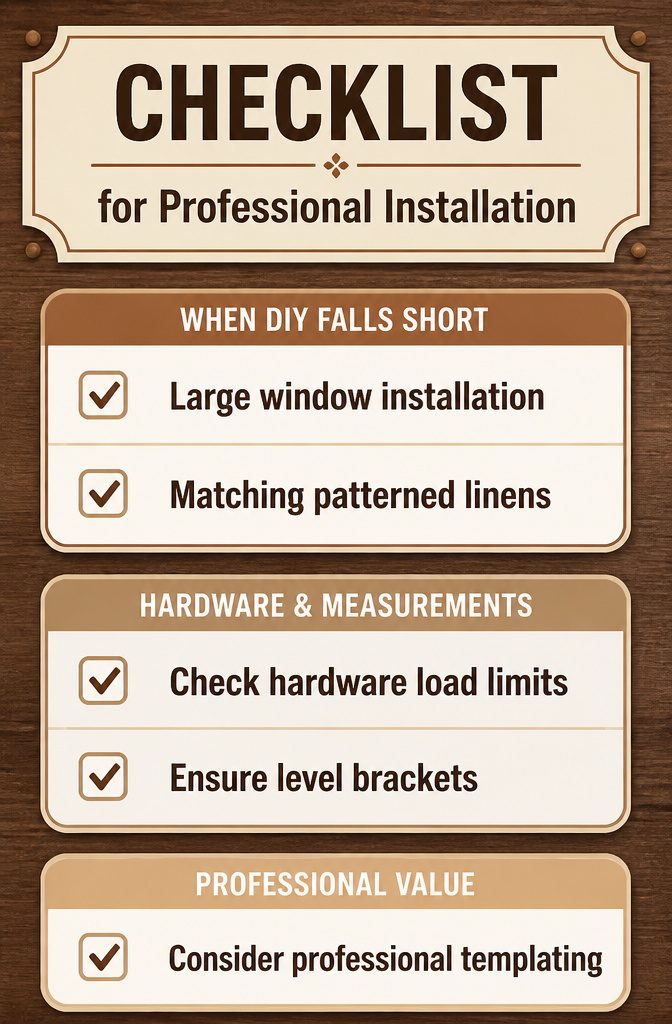
Large windows are where DIY with natural linen roman shades starts to fall apart.
Anything over about 48 inches wide means the shade lifts its own weight in fabric, and the cord system you buy off the shelf was not engineered for that load.
I have watched a handmade flat shade bow across a 72-inch living room window after three months because the ribs were spaced for a 36-inch model and the linen kept pulling.
Patterned linens are another stopping point.
Matching a repeat across two or three shades on one wall looks simple until you are on a ladder trying to align the motif at the left edge of the second shade with the motif at the right edge of the first.
A professional orders extra fabric and templates the pattern placement before cutting, which is not a skill you pick up from a weekend tutorial.
Tulip and Aventura styles with their curved lower rails and multiple lift points are genuinely fussy hardware. The brackets have to sit level to within an eighth of an inch or the shade hangs lopsided and the folds stack unevenly.
Inside mounts with less than an inch of clearance at top or sides are the same problem compressed: there is no room to hide a mistake.
What you pay a pro covers templating the window exactly, specifying hardware rated for the finished weight, and installation that still sits flat in six months.
The labor usually runs more than the linen itself, sometimes double. That money goes to someone who has already ruined enough shades in training that yours does not join them.
Frequently Asked Questions
Is linen a good fabric for Roman shades?
Yes. Linen is two to three times stronger than cotton and resists UV damage better, which matters because shades sit folded in direct light for hours each day.
The fiber also breathes and resists mold in humid months. The trade is that it wrinkles constantly, so the fabric suits people who want texture over a glass-smooth finish.
Do linen Roman shades wrinkle?
Yes, linen wrinkles when raised, when lowered, and in the folds that stay after a week in one position.
Professional construction helps control how that texture reads; a lining adds weight so folds drape evenly rather than collapsing into sharp, random creases. Steam helps temporarily, but by morning the linen settles back into its own remembered shape.
How do you make Roman shades look professional?
Precise measurements, quality construction, and expert installation are what separate a polished shade from a homemade one.
For large windows or styles like Tulip and Aventura, a professional orders extra fabric, templates pattern placement before cutting, and specifies hardware rated for the finished weight.
The labor usually runs more than the linen itself, but the shade still sits flat in six months.
Are Roman blinds classy?
Yes, Roman blinds are considered a timeless, sophisticated choice and a favorite among interior designers.
They offer the clean lines of a blind with the softness and texture of fabric, fitting styles from modern minimalist to classic traditional. In linen, they read as bespoke rather than off-the-shelf.