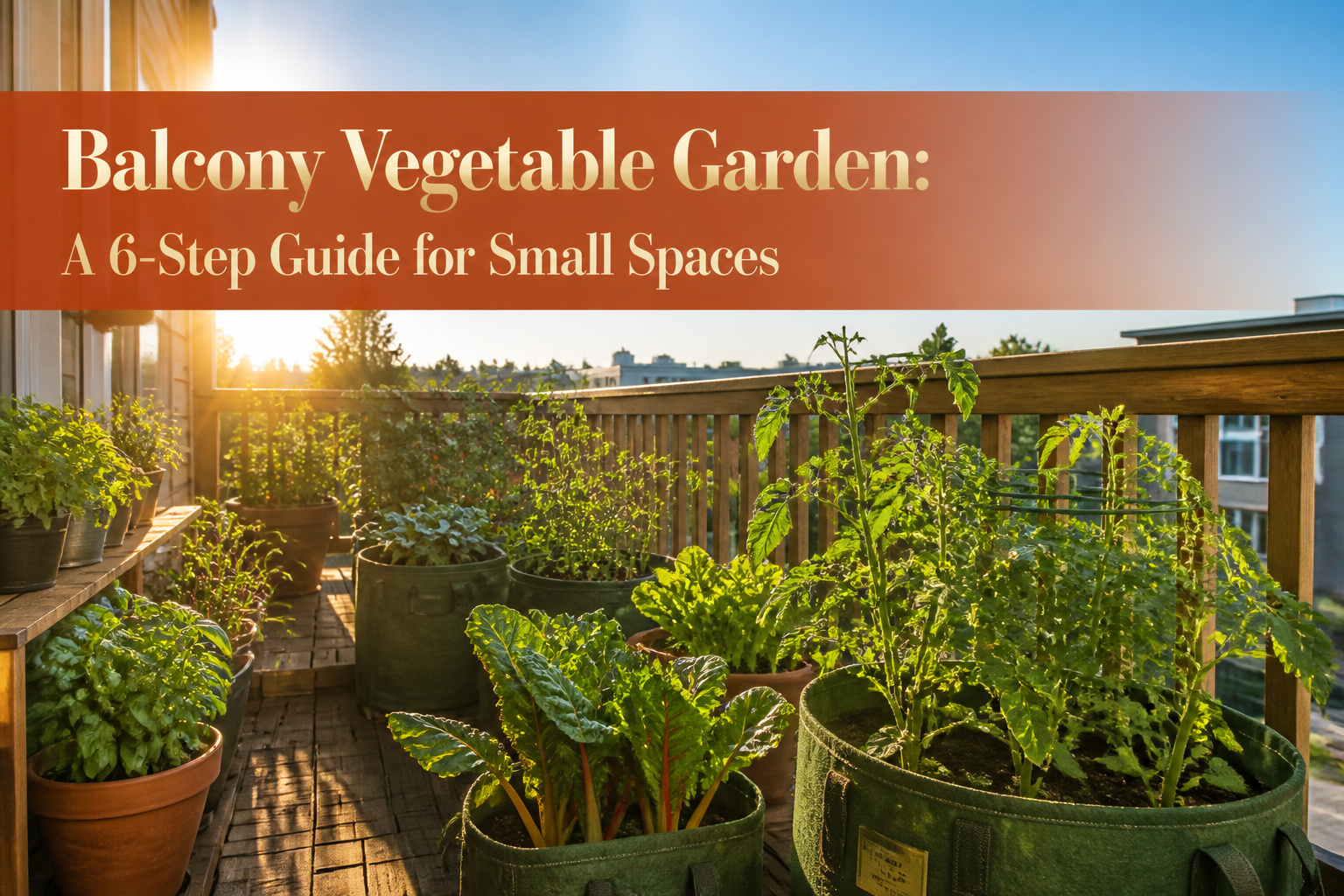
A balcony vegetable garden is a food-growing setup built entirely in pots and planters on an apartment or condo balcony, limited by sun hours, weight capacity, and wind rather than by ambition.
Most residential balconies only support 40–60 lbs per square foot, which means a single 15-gallon container of wet soil can push or exceed that limit before you have grown anything at all.
I learned that the hard way after tracking shadows for a week and still misplacing my first tomato by two hours of light.
Assessing Your Balcony Space
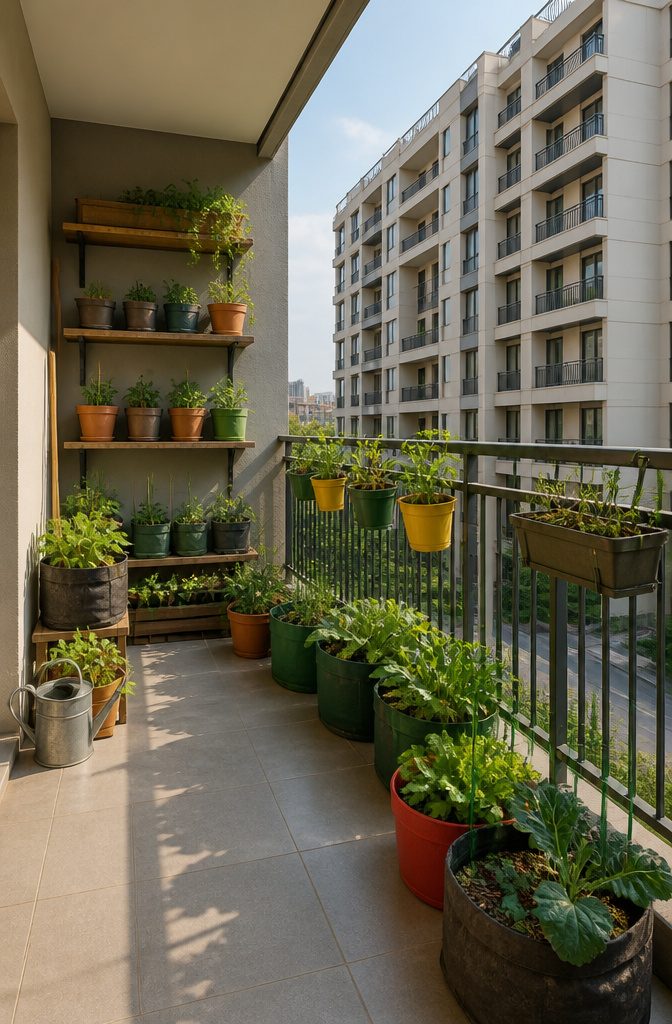
Most vegetables want six to eight hours of direct sun, and a balcony above the ground floor rarely delivers that without a fight. Upper floors, overhangs, and neighboring buildings can shave off hours right when the light is strongest.
I spent a week timing shadows with my phone, checking the balcony at 8 a.m., noon, and 4 p.m., and the pattern I thought I knew shifted by almost two hours once I actually tracked it.
South-facing and west-facing balconies tend to perform best; north-facing ones are the hardest to make work.
Most residential balconies are engineered for 40–60 lbs per square foot, which sounds generous until you picture a 15-gallon container of wet soil pushing 80–100 lbs.
Place the heaviest pots near the load-bearing wall, not the outer edge, and verify the limit with building management before you buy anything. Wind is the third factor nobody mentions until their first tomato plant is horizontal.
My own balcony gets sun all afternoon but also wind that would shred a lightweight fabric grow bag without protection, so the container choice matters for structure too.

Balcony Rail Planter: Rectangular outdoor planters was designed to maximize inside growing space allowing dirt and roots to grow strong and deep.This special design can be hung on the balcony, window, garden,railing, anywhere in the room,also can be used as desktop.


Space-Saving : This strawberry planter maximizes your gardening space by stacking 5 layers to grow more plants in a compact area. The strawberry tower planter is ideal for patios, balconies, or indoor use
Choosing Containers That Last
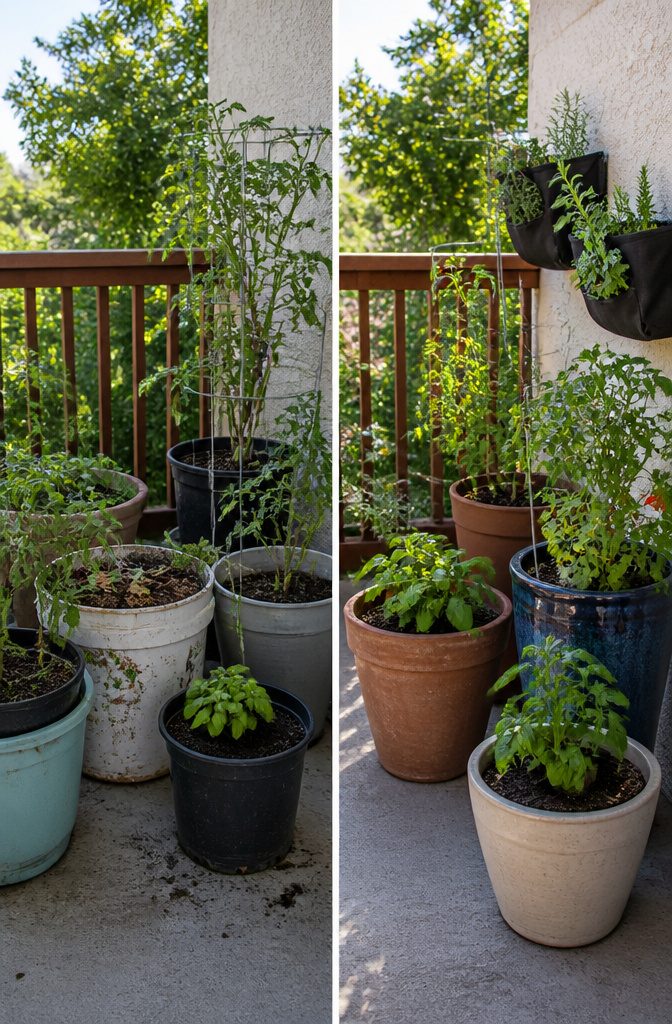
Container size is a root space and water-retention equation, not a matter of matching your balcony furniture. Too small, and roots get cramped, soil dries out within hours, and plants underperform dramatically.
A full-size tomato needs 5 gallons minimum, 10–15 recommended. Peppers and cucumbers want the same 5-gallon floor, though cucumbers stretch to 10 gallons if you have the room.
Lettuce, spinach, and green onions ask only for 6 inches of depth; a window box handles them. Zucchini is the hungry one here, demanding 10 gallons at minimum and preferring 15 or more.
Weight matters on a balcony with a load limit you probably do not know. Terra cotta is beautiful and heavy; ceramic or glazed pots add even more mass and better insulation for roots.
Plastic is lightweight and cheap, but the thin-walled ones crack in their second season, and I stopped buying them after losing three tomatoes to a split pot on a hot July afternoon.
Fabric grow bags air-prune roots beautifully and drain fast, though that same breathability means they dry out faster than hard containers.
Whatever you choose, drainage holes are non-negotiable. Water pooling at the bottom rots roots before you ever see yellow leaves.
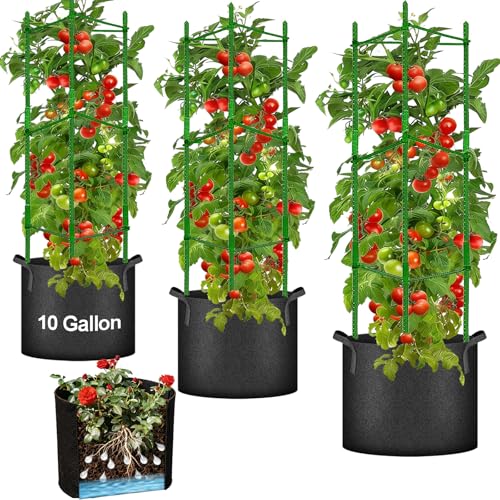
【Package Specification】 : Moirsunt's tomato planter set has 3 three-layers plant support cages, 3 grow bags and 1 use manual. The tomato cages are composed of 27 steel core Stakes, 27 connecting arms and 18 connecting pipes. These three complete sets will help you to train and support the upward growth of the plants and easy movement for different places.

(5Pack 10 Gallon)300GSM Reinforced Fabric: Thickened nonwoven fabric ensures 3+ year durability. Breathable design prevents root rot with 30% faster drainage vs plastic pots.

300G thickened non-woven fabric: Heavy duty felt, tear resistant-durable and reusable for several planting seasons. BPA free, no lead-safe for vegies and fruit. Ensure good ventilation for roots to breathe and better drainage to prevent excessive moisture
Mixing Soil That Drains
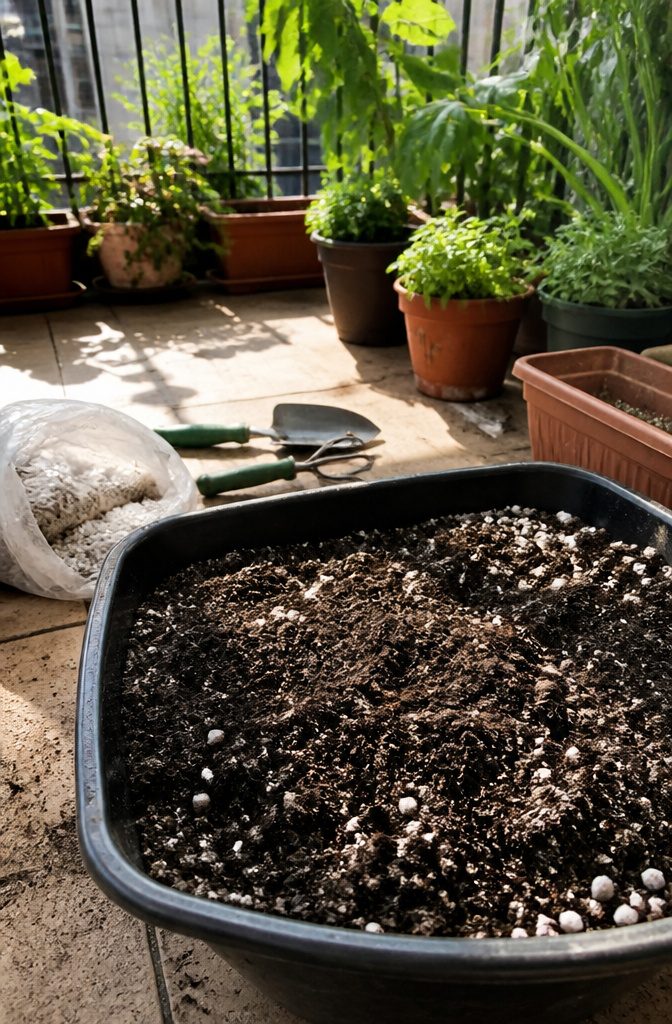
Regular garden soil turns into concrete in a pot.
I learned that in 2019 with two pepper plants that never made it past July. The stuff compacts under watering pressure, squeezes out every air pocket roots need, and sits there wet until the roots suffocate in anaerobic muck.
Containers have no surrounding soil to buffer moisture or moderate temperature, so the medium has to handle everything itself.
The mix that actually works is one-third potting mix, one-third finished compost, and one-third perlite or coarse vermiculite.
The compost feeds soil biology and provides nutrients; the perlite keeps the structure open so water moves through instead of pooling. Skip the garden soil or topsoil entirely, even if it looks fine in the bag.
Weight matters on a balcony. In containers larger than ten gallons, replacing part of that bottom third with expanded clay aggregate lightens the load without sacrificing drainage.
Each spring, pull off the top three to four inches of spent medium and replace it with fresh compost. Every two or three years, dump the whole container and start over, because compressed soil structure does not recover.

Sturdy Fabric Material: Our Non-Woven fabric grow bags are crafted using high-strength weaving technology, which allows the planting bags to remain lightweight while possessing an impressive ability to bear weight.

DURABLE MATERIAL: Seedling Nursery Bags are made from fabric, which is sturdy, with strong air permeability. It's your good helper for gardening and planting

Package Includes --- 200 PCS 2.76 x 4.33” (7x11cm) empty plant grow bags, 1.4"diameter x 3.5" height with soil filling.
Selecting Seeds and Seedlings
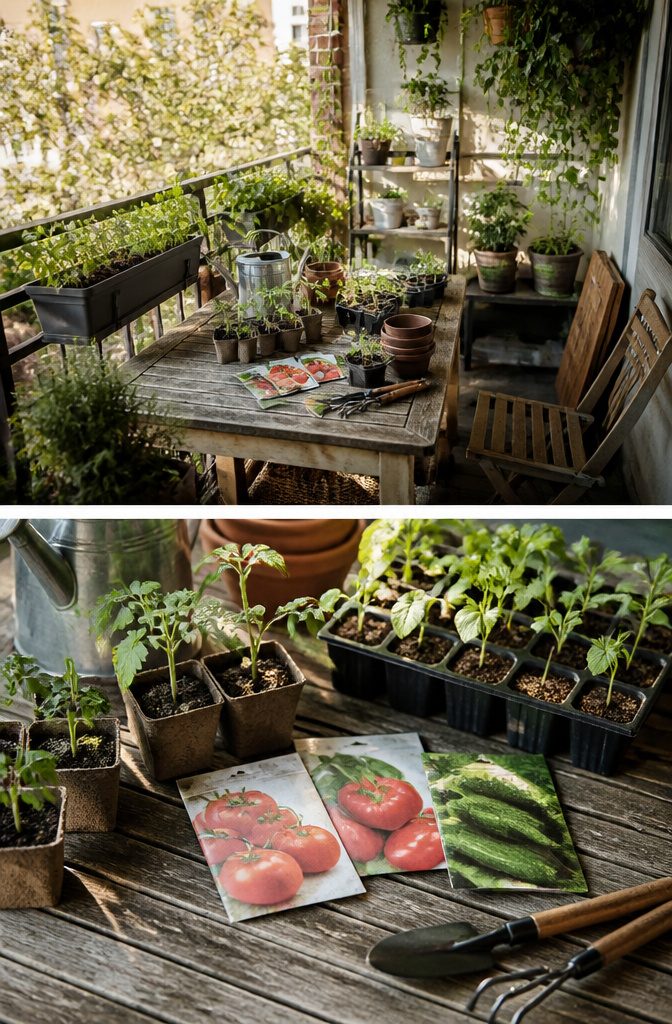
Seeds run about $2.99 for a packet of 20 tomato seeds, while a single seedling at a nursery or farmer’s market can cost anywhere from $1 to $5.
That math pushes most balcony growers toward direct-sowing for fast crops and buying seedlings only for the slow starters.
Cherry tomatoes, peppers, and cucumbers reward the patience of starting from seed but need eight to ten weeks indoors before they see a balcony. Lettuce, radishes, and herbs move fast enough that seeding straight into the container often beats transplanting.
The seed versus seedling choice also shapes your season. A tomato seedling bought in May skips the windowsill phase entirely and can fruit weeks sooner, which matters if your balcony only stays warm through September.
I have lost tomato seedlings to a late cold snap after rushing them outside, so the calendar still rules even when you buy maturity.
Heirloom seeds save and replant year after year, adapting to your conditions over time.
Hybrid seeds, usually marked F1, give consistent size and flavor for one generation only. For a small balcony where space matters more than seed-saving, the reliability of a hybrid often wins.

Package includes 2 black railing plant holders, each overall measures 8.6" / 22 cm dia. x 7.1" / 18 cm H; Inner size is about 8" / 20.4 cm top dia. x 6.7" /17 cm bottom dia. x 4.3" / 11 cm H. Suitable for rail width less than 2.2" / 5.6 cm, please measure your rail before purchase.

【Durable Material】Our plant support stakes are crafted from high-quality plastic, ensuring they withstand various weather conditions. These garden stakes provide reliable support for climbing plants like monstera and pothos, ideal for both indoor and outdoor use

Product Packaging: 1 set of chain trellies for climbing plant (includes 10 black stars, 10 black moons, 20 Metal Spring O Rings Clip, 6 traceless hooks, 6 traceless nails, 6 plastic-coated hooks, and 10 zip ties).
Planting and Watering Routine
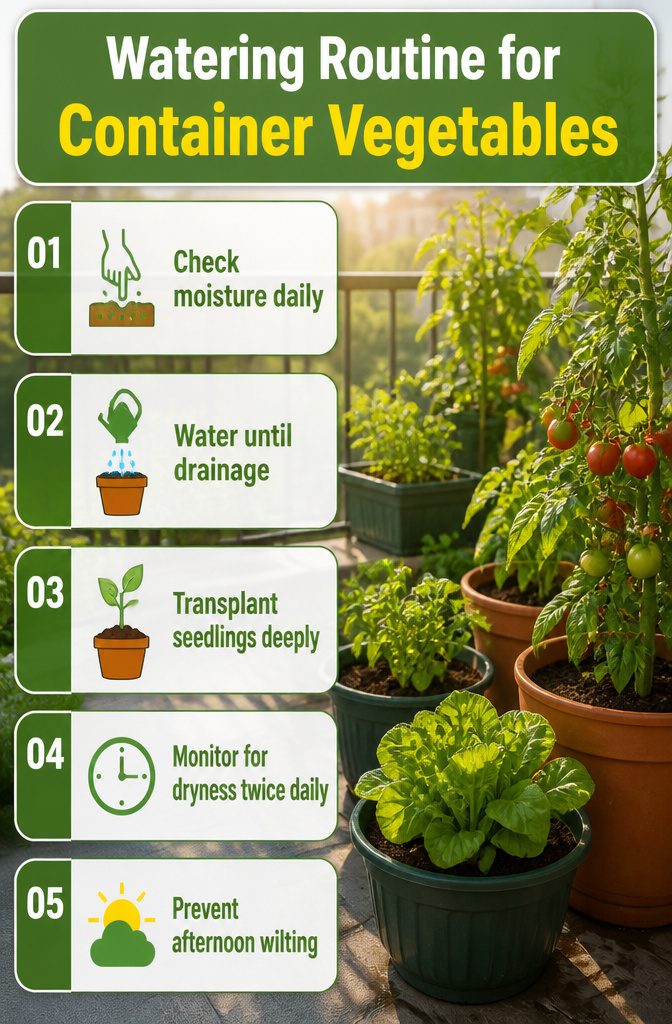
Container soil dries out faster than a backyard bed ever will, and that gap only widens in summer.
Push your finger 1–2 inches into the potting mix each morning; if it feels dry at that depth, water until it drains from the bottom.
Those first two weeks after transplanting, I set seedlings slightly deeper than they sat in their nursery pots, tamping the mix firm enough to remove air pockets without compressing it into mud.
Initial watering settles everything around the roots, so I follow up with another pass once the surface water disappears.
By July, my routine shifts to twice-daily checks. A container in full sun can go from moist to bone-dry in 4–8 hours when the wind picks up, and large pots sometimes need morning and evening watering both.
The morning check is the one that matters most; catching dryness before the sun climbs prevents the mid-afternoon wilt that sets growth back for days.

【Indoor & Outdoor Versatility, All-Season Smart Irrigation】:HEKIWAY Designed for year-round convenience, this automatic drip irrigation system works seamlessly both indoors and outdoors. During winter, simply charge it via the Type-C port to ensure continuous watering for your indoor plants—even in cold weather. In warmer seasons, the solar panel powers the system automatically, delivering worry-free, energy-efficient watering all day long

Hassle-Free Automatic Watering: This Solar Drip Irrigation System features 12 timer modes to automatically water your plants at preset intervals and amounts. Supporting up to 15 pots, it’s perfect for balconies, patios, and small gardens without faucets or fixed power supply. Enjoy your free time while your plants are taken care of.

Dual Power Options Solar & USB —— HEYRSUN automatic drip irrigation system works seamlessly both indoors and outdoors. This watering system is powered by the sun and supports USB charging for added flexibility. During winter or on cloudy days, simply charge via USB to keep your watering system running smoothly. No interruptions, no worries. Enjoy year-round plant care and make your irrigation system truly all-season ready.
Maintaining Through the Season
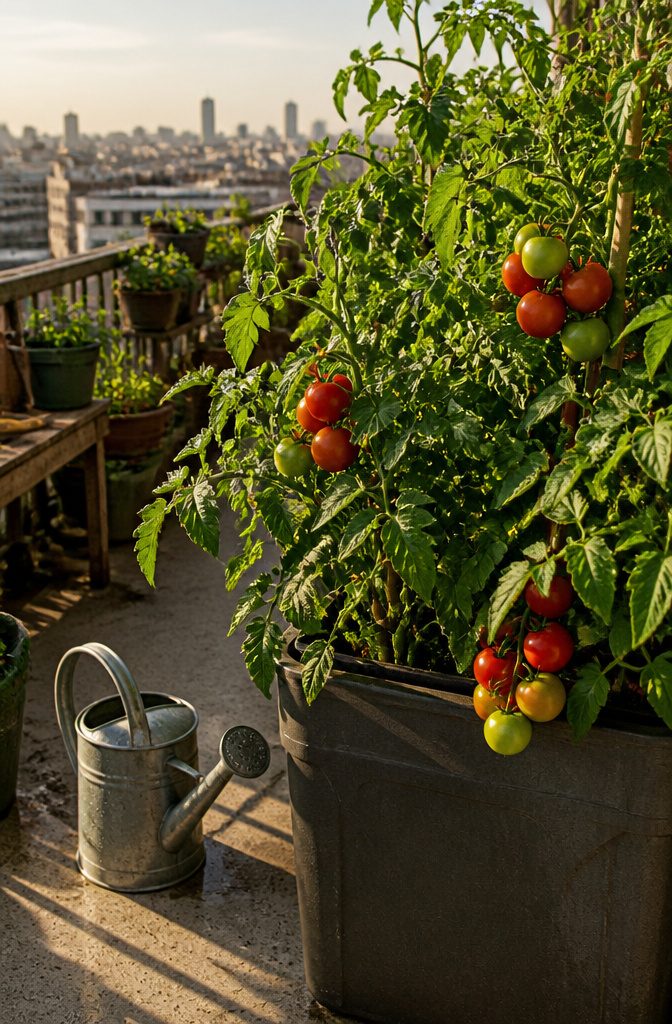
Container plants burn through nutrients faster than any in-ground bed, especially nitrogen and potassium that wash out with every watering. A quality compost mix gives you maybe four to six weeks of food, then the real work starts.
I feed with diluted fish emulsion or worm casting liquid every couple of weeks, and I keep a slow-release organic fertilizer in the rotation for baseline coverage.
The quick-release synthetics show results faster, but organic options are the ones I want touching food I will actually eat.
Watering rules from June do not hold by August. A cherry tomato in a five-gallon pot drinks twice what it did as a seedling, and afternoon sun that moved across the railing changes which corner dries out first.
I check weight now, not schedule. Lift the pot: light means drink, heavy means wait.
Pest checks were where I got sloppy. The basil looked fine from above, leaves still broad and green, but the undersides were speckled with pale green dots clustering at the stems.
Aphids. I had ignored the daily flip for two weeks, and by the time I saw them the colony had spread to the peppers.
A hard spray of water every morning for four days knocked them back without anything harsher. Now I turn leaves before I water, every single time.

【Premium & Durable】Made of high-quality plastic, this window box planter is sturdy, wear-resistant and durable. It can be exposed to light, wind, and sunlight for long periods of time, with a lifespan of decades. It is an excellent planter box for both indoor and outdoor.

【 Vertical Raised Garden Bed with Trellis】Perfect for home gardening lovers, this herb planter outdoor with 4 garden boxes let you plant vegetables, herbs, and flowers in separate plant bed while the 11-inch trellis supports climbing plants like tomatoes, strawberries, vines, and peppers. The balcony raised garden beds outdoor with legs creates an optimal environment for your plants to thrive.

Material: Hanging fence planter made of metal iron. Durable and lightweight. Balcony flower pots are not easy to rust or damage, and have a long service life
Sunlight Requirements by Plant
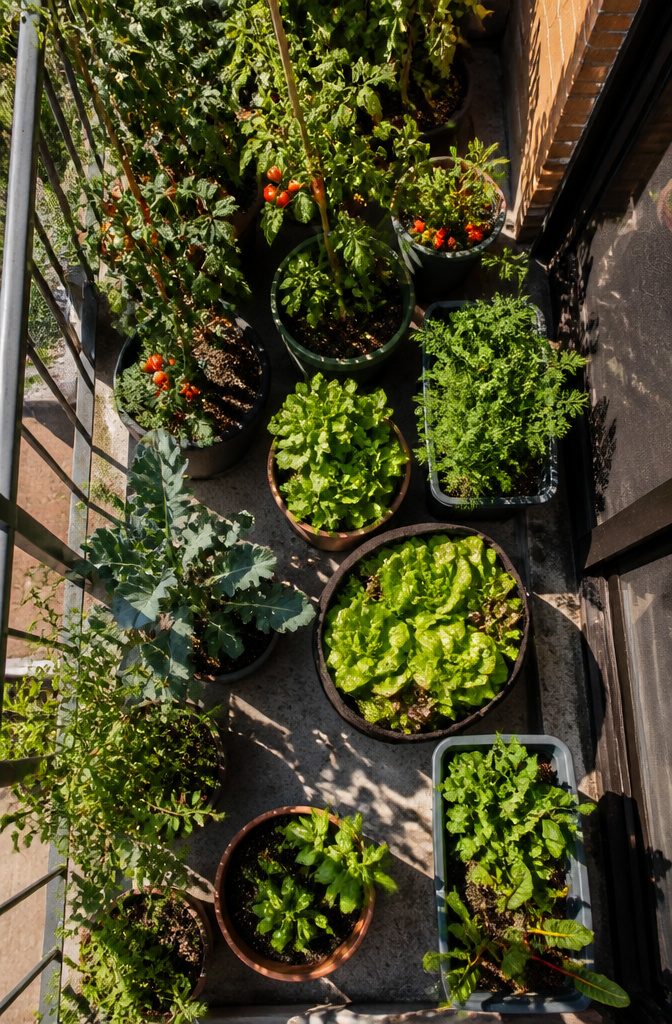
Most vegetables want 6 to 8 hours of direct sun to produce anything worth harvesting.
Drop below 4 or 5 hours and the math changes: you are now growing lettuce, spinach, parsley, mint, and radishes, crops that tolerate shade and still give you something to cut.
I mapped my balcony by standing out there with coffee at 8 a.m., lunch at noon, and again at 5 p.m., phone in hand, noting exactly where the sun hit and when it moved behind the building next door.
South- and west-facing balconies usually win here; north-facing ones fight an uphill battle.
Upper floors have an extra problem: overhangs and neighboring buildings can steal two hours of midday sun without you noticing until July, when your tomatoes stall and you wonder why.
A tool called SunCalc let me check the sun’s trajectory for my address before I bought a single seed.
It showed morning position, current angle, and where the light would drop at 5:24 p.m. that day. That let me place the tomatoes where the light lingered longest and tuck the herbs in the corners that shaded over by mid-afternoon.

🌼 Sturdy Fabric Material: Made of thickened Felt cloth material, a highly durable,fairly permeable, environmental-friendly, stylish pattern design, well depth, bags can stay upright when unfilled.
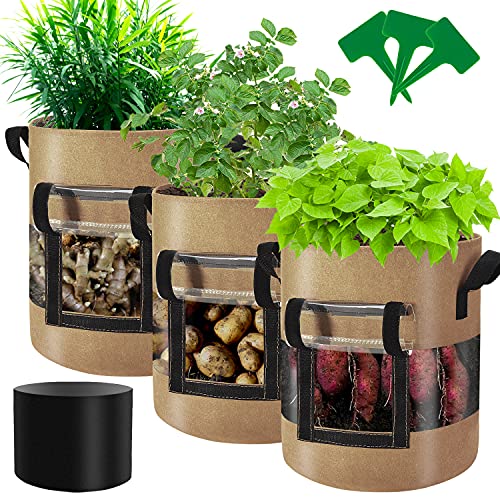
【360 Degree Visible Space& Harvest Window</strong>】Our 10 gallon fabric potato grow bags with 2 flaps have a convenient design for using transparent material. So that it’s easy to check the growing process of plant roots without digging clay. When the root fruit harvest, a large enough flap window in the root area will help you get the root fruit without damaging the plant.</p>

🌱【Durable, Tear-Resistant, Safe Material】Made from tough, tear-resistant, BPA-free fabric, T4U 10 gallon grow bags are built to withstand repeated use. The fabric grow bags are designed for longevity, garden bags for planting
Container Size Quick Reference
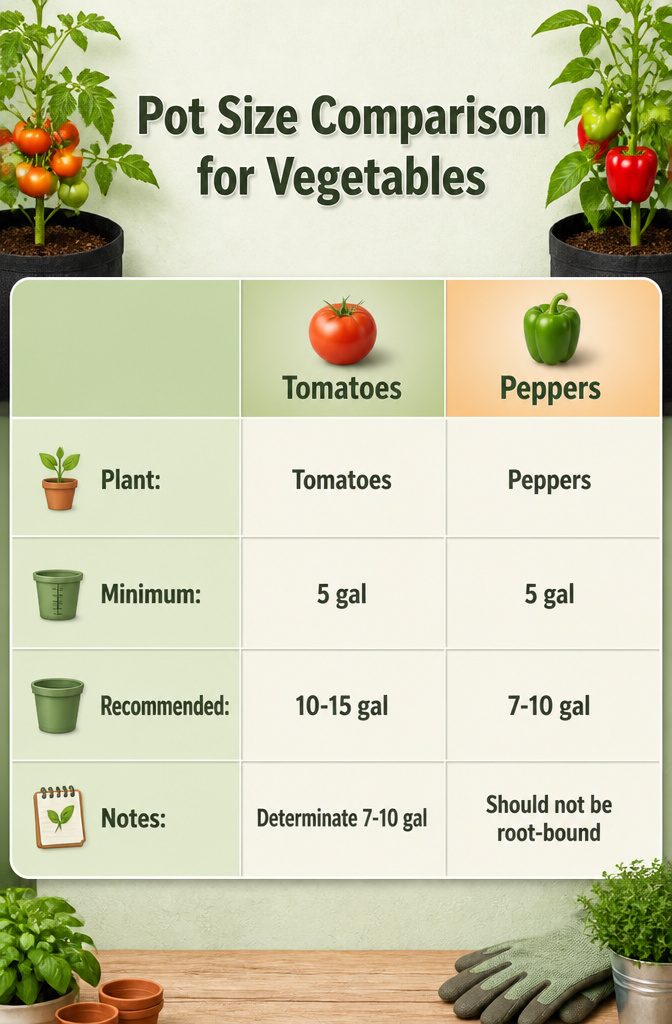
Mid-season, the pot size is usually the problem. A tomato that keeps wilting every afternoon or a pepper dropping blossoms probably ran out of root room weeks ago.
Five gallons is the floor for tomatoes, peppers, and cucumbers, not the comfort zone. I learned to read the early signs after losing a cherry tomato to heat stress in a container that looked generous on the nursery shelf.
Here is what the numbers actually look like when you are picking pots for a balcony run:
| Plant | Minimum | Recommended | Notes |
|---|---|---|---|
| Tomatoes (full size) | 5 gal | 10–15 gal | Determinate varieties can manage 7–10 gal |
| Tomatoes (determinate/bush) | 5 gal | 7–10 gal | Compact but still thirsty |
| Peppers | 5 gal | 7–10 gal | Root-bound plants drop flowers |
| Cucumbers | 5 gal | 10 gal | Vines outgrow small pots fast |
| Lettuce | 1 gal / 6 in deep | Window box or wide shallow pot | Shallow roots, quick turnaround |
| Herbs (basil, parsley) | 6 in pot | 8–10 in pot | Parsley wants depth; basil is more forgiving |
| Radishes | 8–10 in deep | 6 in diameter or wider | Fast crop, but crowding stunts bulbs |
| Strawberries | n/a | n/a | n/a |
Strawberries did not make it into the reference data I worked from, so that cell stays empty rather than guessed.
For everything else, the pattern is clear: the minimum keeps a plant alive, and the recommended size is what lets it produce instead of survive.
Fabric grow bags hit that recommended volume without the weight of ceramic, though they dry out faster and need water once, sometimes twice, on summer days.
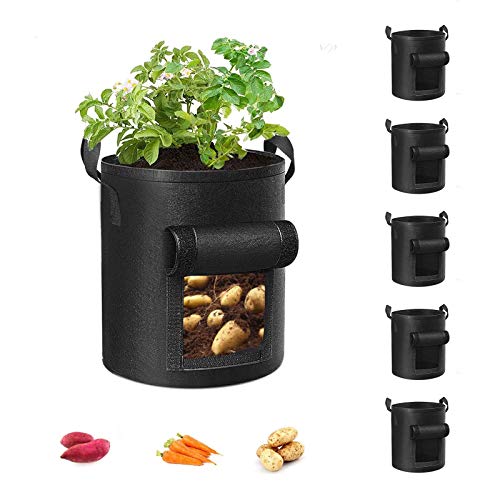
Durable Material: Made of 300g thick non-woven fabric that can be reused for more than 3 years.

【Good Root Growth】The seedling bag has good water absorption and air permeability. The root of the seedling can easily penetrate the seedling bag to prevent root rot and tangles, which is very beneficial to the growth of seedlings.

Superior Aeration and Drainage for Healthier Roots:Thick nonwoven fabric allows excellent airflow and water drainage to prevent overwatering and root rot promoting stronger plant growth
Watering and Fertilizing Schedule
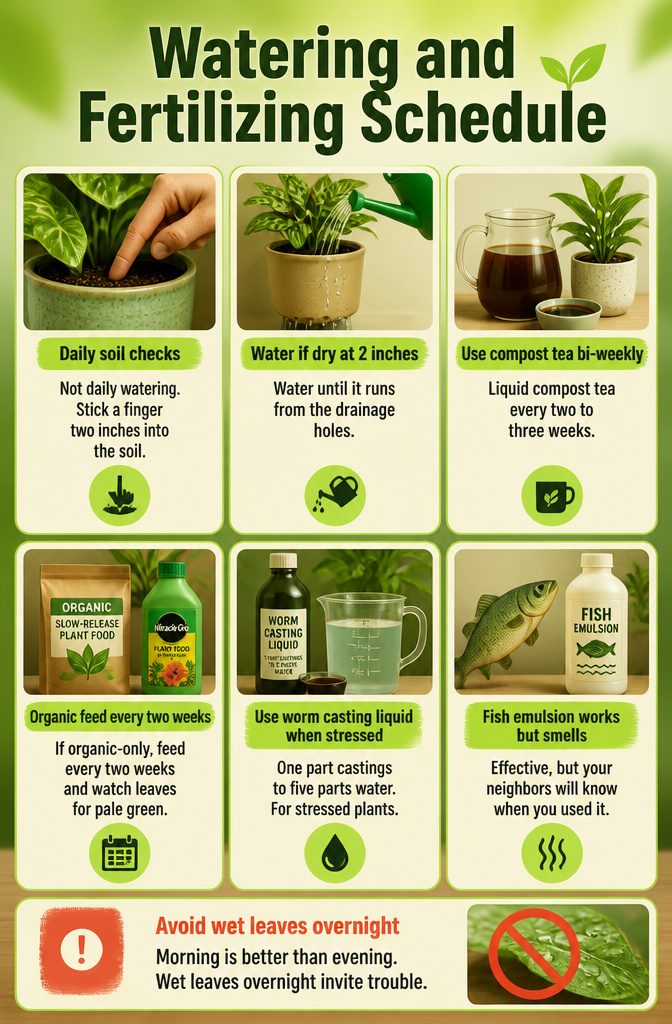
Container nutrients wash out faster than anyone expects, especially nitrogen and potassium, which leach with every watering. A quality compost mix gives you four to six weeks of initial nutrition, then the real work begins.
My routine starts with a daily check, not a daily watering.
Stick a finger two inches into the soil; if it feels dry at that depth, water until it runs from the drainage holes. Morning is better than evening, since wet leaves overnight invite trouble.
In July heat, that check might mean water every morning. In April or September, twice a week can be plenty.
For feeding, liquid compost tea every two to three weeks has been my steady practice.
I also keep diluted worm casting liquid on hand, one part castings to five parts water, for a gentler option when plants look stressed rather than hungry. Fish emulsion works too, though your neighbors will know when you used it.
The organic-synthetic question is worth settling early.
Slow-release organic feeds take months to break down, while synthetic options like Miracle-Gro show results in one to two weeks. I run both: organic as baseline, synthetic only when something flags and I need a quick recovery.
If you go organic-only, tighten your interval to every two weeks and watch leaves for pale green, the first sign nitrogen is running low.

15-SECTION NATURAL WOODEN LADDER:Crafted from 15 pieces of durable, natural wood, this wooden ladder plant trellis offers strong and rust-free support for your indoor and outdoor climbing plants. The smooth wood finish promotes healthy vine growth while adding a touch of natural elegance to your space.

Coloch set of 20 pack bamboo U trellis support measures: Length: 15.8 inches, Width:6 inches. The sufficient quantity can meet your demand and the size is suitable for a wide range of plants.

🌹2 in 1 Garden Trellis -- Our plant trellis can be configured into 2 types of trellising (panel trellis & plant cage), and you also can place 2 or most panels together to form a larger trellis panel or cage. Adjustable structure plant stakes can meet your different plant supports need.
Vertical Space and Wall Planters
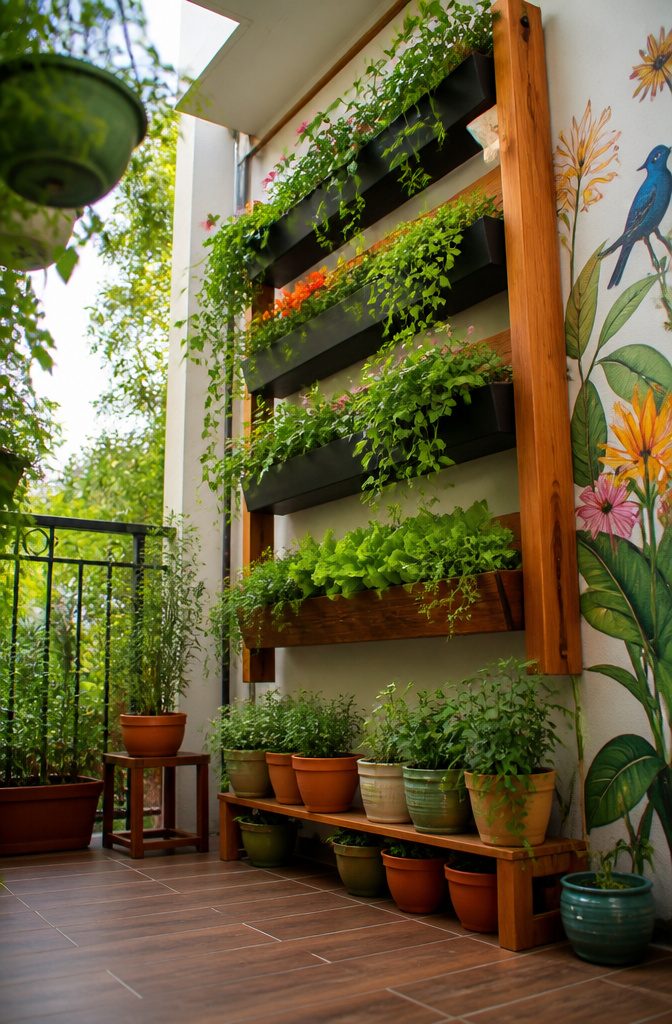
Hanging pots over the railing turned out to be the move that actually saved my balcony vegetable garden from becoming a single row of containers along the floor.
The metal rail on my last apartment let me hook planters both outward and inward, almost like a living wall of lettuce and herbs.
Lower rows do get more shade, so I rotated pots every few days or stuck shade-tolerant greens like arugula underneath.
Rail boxes and wall-mounted planters push the same idea further.
A 15-gallon container filled with wet soil can weigh 80–100 lbs, and stacking that weight vertically means you need to think about structure again. Most residential balconies are engineered for 40–60 lbs per square foot.
Keep heavy vertical setups near the load-bearing wall, not the outer edge, and swap ceramic for fabric grow bags where you can. Self-watering reservoirs help, especially on walls where rain runs off faster than it soaks in.
More volume still wins: shallow wall pockets heat up and dry out, so root space matters as much up there as it does on the ground.

💦Multi-Mode Automatic Timer for Easy Plant Care. The Solar Automatic Drip Irrigation Kits System supports two flexible watering modes. You can set a fixed local time from 0:00 to 24:00 for scheduled watering, or customize the irrigation interval ranging from 1 hour to 30 days in hour and day units. It allows you to set the watering duration (from 1 second to 60 minutes) to meet the needs of different plants. Perfect for busy, vocation and business people, the Solar Drip Irrigation System takes great care of your plants and keeps them from withering.

【Indoor & Outdoor Versatility, All-Season Smart Irrigation】:Designed for year-round convenience, this automatic drip irrigation system works seamlessly both indoors and outdoors. During winter, simply charge it via the Type-C port to ensure continuous watering for your indoor plants—even in cold weather. In warmer seasons, the solar panel powers the system automatically, delivering worry-free, energy-efficient watering all day long
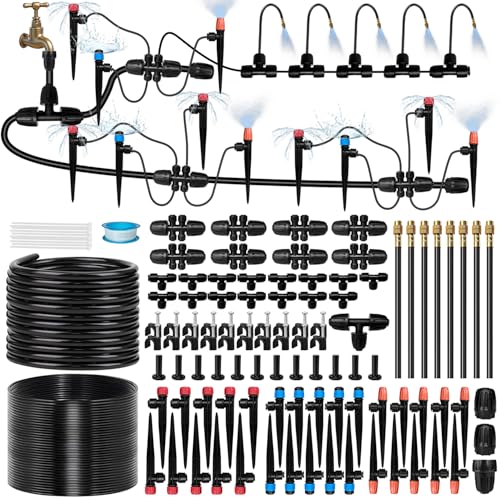
【Upgraded Tube Design & Water Saving】 Our garden watering system is upgraded to 1/2” diameter to support high water pressure. The 1/2” tee connector allows seamless splitting into 2 independent zones for customized watering schedules. By delivering moisture directly to root zones, this drip Irrigation system significantly reduces evaporation and runoff—saving more water compared to conventional sprinklers while eliminating the need for manual watering.
Companion Planting on a Balcony
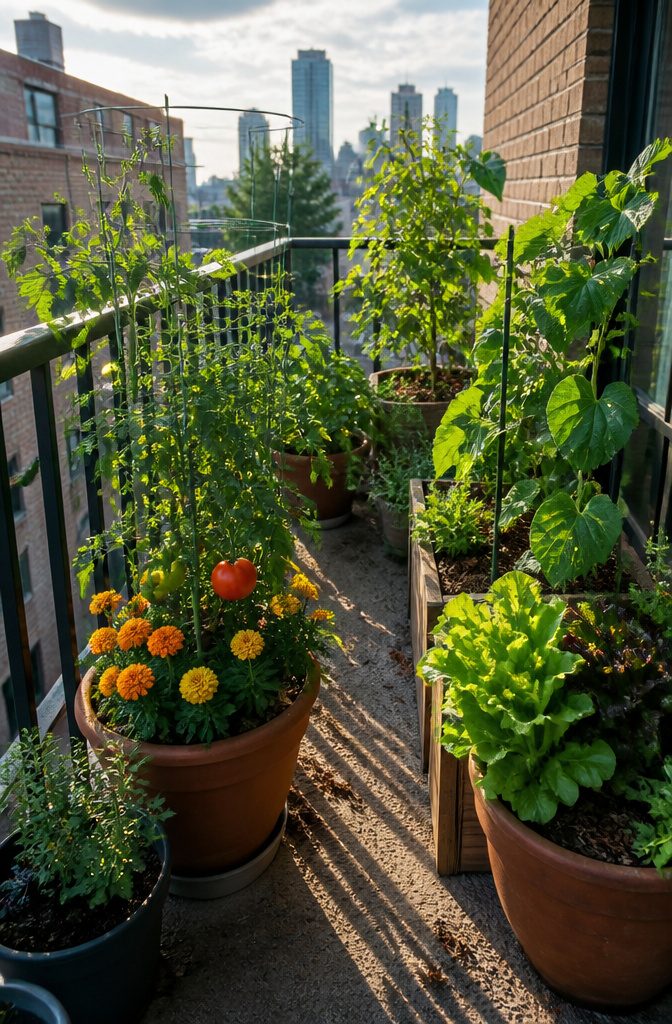
Tomatoes and basil share a container better than most roommates I have had, but the pairing that actually saved my crop one year was tomatoes with marigolds.
I had planted three cherry tomato vines in a long planter and watched aphids move in fast.
A gardening neighbor suggested marigolds as a border, so I tucked four small plants around the edge. The aphids backed off within two weeks, and the tomatoes kept producing through August.
In tight balcony quarters, companion planting works best when one plant stays low and the other climbs.
Lettuce seeded beneath pole beans gets afternoon shade once the beans grow, which keeps the leaves from bolting early. Nasturtiums spill over a pot rim and seem to confuse whiteflies that would otherwise attack kale.
The mistake I made was pairing two heavy feeders, peppers and eggplant, in one large container. Both wanted the same nutrients at the same time, and neither produced well.
Now I keep those in separate pots and let their companions be something leafy and less demanding, like spinach or arugula that matures fast and gets pulled before the main crop needs the space.
Frequently Asked Questions
What vegetables can I grow on my balcony?
Tomatoes, peppers, cucumbers, lettuce, spinach, radishes, green onions, herbs, and zucchini all work well in containers.
Leafy greens and herbs tolerate partial shade; fruiting crops like tomatoes and peppers need more sun. Match the plant to your light hours rather than forcing a full-sun vegetable into a shady corner.
How much sunlight do my plants need?
Most vegetables need six to eight hours of direct sun to produce well.
Drop below four or five hours and you should shift to shade-tolerant crops like lettuce, spinach, parsley, mint, and radishes. South- and west-facing balconies usually deliver the strongest light; north-facing ones are the hardest to make work.
What size containers do I need for my plants?
Full-size tomatoes need at least five gallons, preferably ten to fifteen.
Peppers and cucumbers want five gallons minimum, with cucumbers stretching to ten if you have room. Lettuce and spinach only need six inches of depth.
Zucchini is the heaviest feeder here, demanding ten gallons at minimum and preferring fifteen or more. The minimum keeps a plant alive; the recommended size lets it produce.
How often should I water my balcony garden?
Check soil moisture each morning by pushing your finger one to two inches into the mix; water until it drains from the bottom whenever it feels dry at that depth.
By midsummer, containers in full sun may need watering twice daily. Morning checks matter most, since catching dryness before the sun climbs prevents growth setbacks from mid-afternoon wilting.