Window blinds for bedroom use are coverings chosen specifically to manage sleep, privacy, and light at the glass.
The catch is that no single type does all three well; blackout roller shades seal out dawn but give up insulation, while cellular shades trap heat yet stack thicker at the top.
Hunter Douglas’s Duette line, with its nested honeycomb Architella build, is what most people picture when they want both temperature control and darkness.
1. Blackout Roller Shades
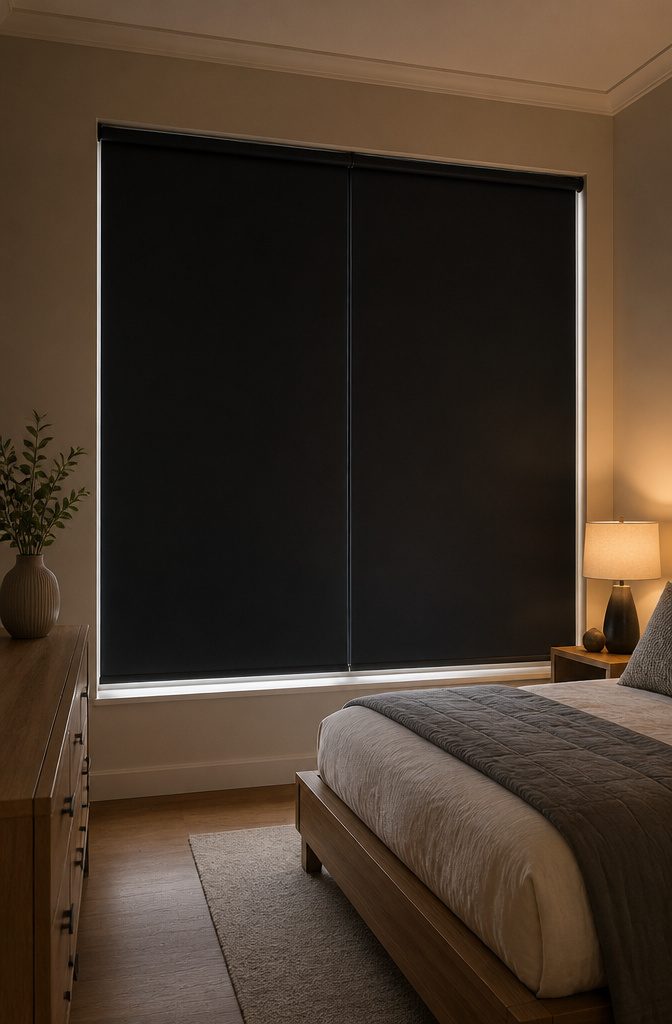
Blackout fabrics block most light through the shade itself, which is why blackout roller shades are a top pick for sleep.
The fabric does the heavy lifting, but the edges are where darkness breaks down. Tiny gaps along the sides can create a faint halo of light that undermines the whole point.
An outside mount with extra overlap fixes most of this, and side channels or light-block strips finish the job.
The payoff is a sleek, minimal look that sits close to the glass without the bulk of layered treatments. Rollers keep the wall line clean, so the room still feels open when the shade is up.
Cellular shades add insulation and noise softening, but if the priority is maximum darkness with the least visual weight, rollers win.
The trade is: you give up the honeycomb’s thermal padding, and you have to be deliberate about blocking those leaks. For renters who might take them along, the simpler hardware helps too.
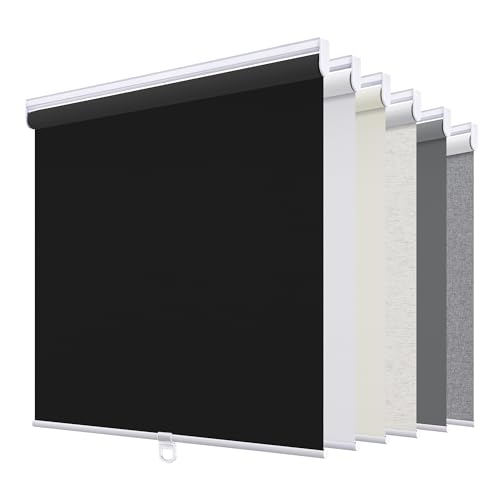
【Product Details】: Blind Size: 23"W x 72"H, Fabric Size: 22"W x 72"H. Fabric is 100% blackout. Feeling soft and smooth.Note: Fabric width is 1" narrower than total width.Our cordless roller blind fabric is of high quality, more durable and fade resistant than the inferior fabrics on the market.

【Excellent Material】:Blind Size: 23"W x 72"H, Fabric Size: 22"W x 72"H. Fabric is 100% polyester material fabrics with reinforce thermal insulated coating, feeling soft and smooth. No burrs, strong wear resistance, and easy to clean.Our blackout blinds block 100% of sunlight and UV rays. The thermal backing reduces the loss of room heat and against cold through the windows in winter and summer, helping to reduce your energy bills.

【Product Details】: Blind Size: 25"W x 72"H, Fabric Size: 24"W x 72"H. Fabric is 100% blackout. Feeling soft and smooth.Note: Fabric width is 1" narrower than total width.Our cordless roller blind fabric is of high quality, more durable and fade resistant than the inferior fabrics on the market.
2. Cellular Shades
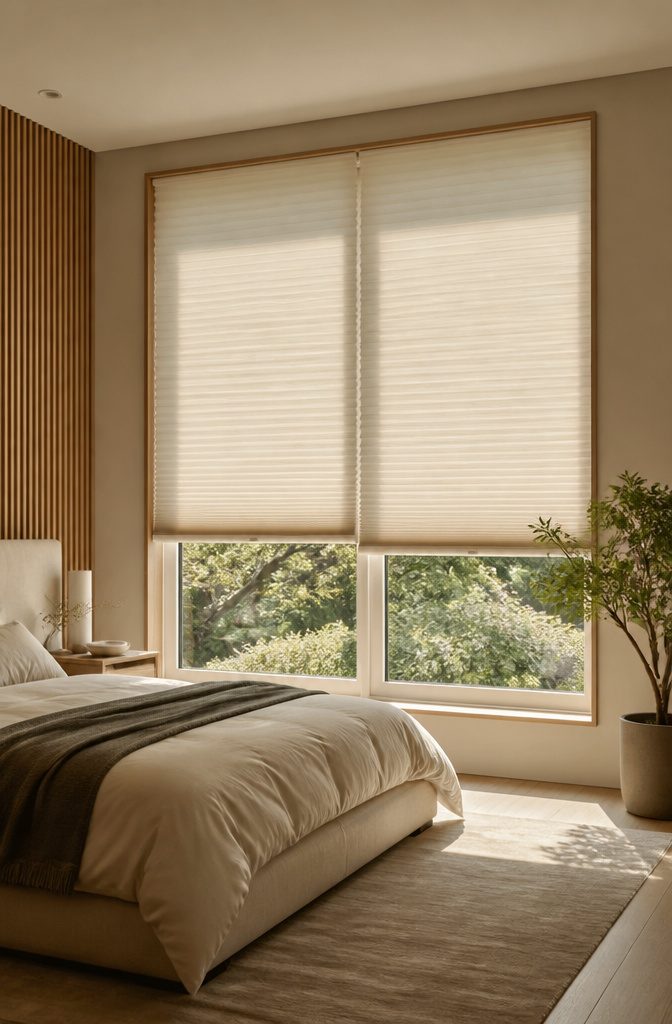
Cellular shades get their name from the honeycomb-shaped air pockets that run through each panel.
Those pockets trap air and add a layer of insulation right at the window, which is why they show up so often on lists of best window blinds for bedroom use.
The same construction that slows heat loss also softens outside noise, a combination that matters more than I expected before I started reading feedback from people in older buildings with single-pane glass.
Duette Honeycomb Shades by Hunter Douglas are the best-known example, and they have stayed a bestseller largely because the line keeps expanding to solve real problems.
The standard honeycomb works for moderate climates. If you are dealing with real temperature swings, the Architella construction nests one honeycomb inside another for more fabric layers and more dead air space between them.
Either way, blackout cellular shades are the configuration most people choose for a bedroom. The blackout fabric blocks light; the cellular structure handles the rest.
The tradeoff is bulk.
Cellular shades stack higher at the top of the window than a flat roller does, so they can eat into your glass area when raised. For a room where you mostly keep them lowered, that rarely matters.

【ENVIRONMENTALLY FRIENDLY RECYCLABLE MATERIAL】Persilux blackout cellular shades is made from recycled materials, which is a great way to continue your eco-friendly lifestyle. Instead of using all new materials to create these blinds, you can have peace of mind that you're giving materials a new life (image 3).They come in multiple fabric colors as light filtering or blackout. Special honeycomb structure offers features such as energy saving & thermal insulation & noise reduction.

Motorized Cellular Shades with Remote: Smart cellular blinds can regulate the incoming natural daylight and sunlight to control the indoor climate and save energy, by taking full advantage of the reflective and insulating properties, creating perfect atmosphere at any time of the day.

Drill-Free Installation, No Damage & High Stability: Feature a dual-spring tension mount system for fast 1-minute tool-free installation. No drilling, no tools and zero damage to window frames. Balanced double-side tension prevents sagging and supports up to 30kg, fitting wood, tile and concrete windows perfectly, ideal for renters.
3. Roman Shades
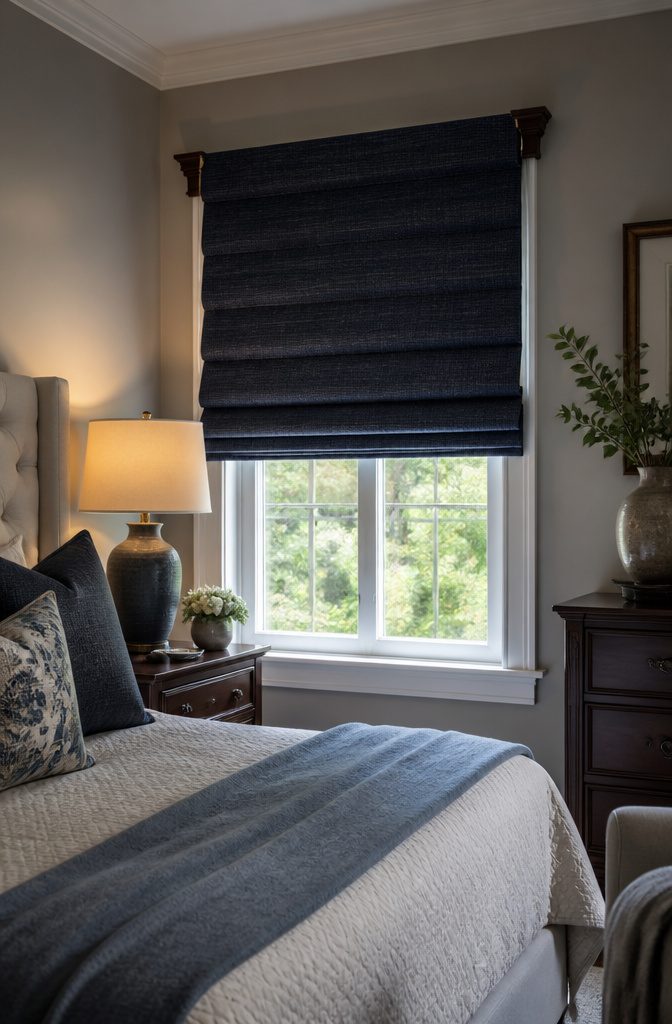
Fabric folds stacked in even rows give Roman shades their tailored, finished look, and a blackout-lined Roman shade lands somewhere between furniture and window treatment.
The lining blocks enough light for most sleepers while the folded fabric face still reads as soft and intentional, not utilitarian.
Nighttime privacy is where these earn their place in a bedroom. Unlike solar screens, which can turn nearly transparent after dark when a lamp is on behind them, a lined Roman shade stays opaque from either side.
The tradeoff is bulk: the stacked folds sit several inches deep at the top of the window when raised, so the headroom matters more than it would with a roller or cellular option.
For renters, the hardware is the sticking point. Most mount inside the frame and require drilling; the clean look depends on a precise fit, and a gap at the edge costs you both light and privacy.
If the window is out of square, that tailored stack will show it.

【Why we need to install light blockers for shades】Most blinds and blackout shades are made slightly narrower than the window frame to allow smooth raising and lowering. This design often causes light leakage from the sides. If your blackout blinds or shades still let in unwanted side light, this common side gap issue can reduce room darkening. ZSTARR light blocking strips are designed to help solve this problem and improve overall room darkening performance.

【Blackout Light Blockers】Window Blackout L-shaped strips are mainly installed on the side of curtains and blinds. Blocks light from entering from the sides of blackout curtains and sunshades, perfect for bedroom, home theaters, or nurseries.

【CUT AT HOME】 Keego Light blocking strips come in a range of lengths and can be trimmed to fit your windows size. Just cut them with sturdy kitchen scissors or a hacksaw. Standard size: 58.5" x 1.2" x 0.9". Made of light absorbing PVC plastic material.
4. Faux Wood Blinds
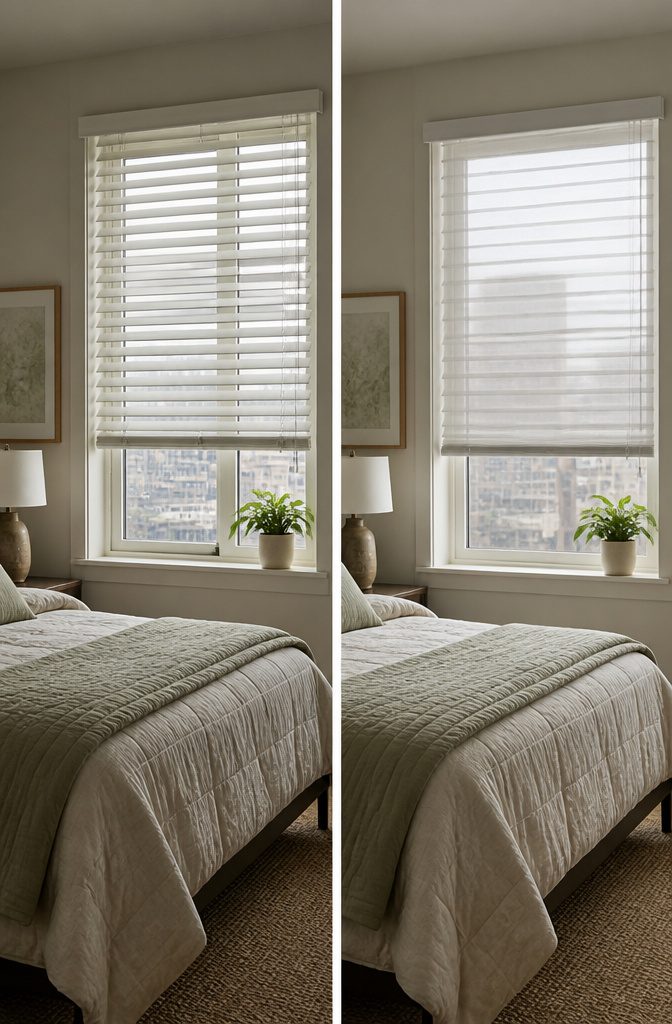
Faux wood blinds give you the look of real wood at roughly half the price, which is why they have become the default choice for anyone outfitting a bedroom on a tight timeline and a tighter budget.
The slats are PVC or a wood composite, so humidity from a bathroom down the hall or summer condensation will not warp them the way natural wood eventually does.
That durability matters more than it sounds like it would: bedroom blinds stay closed for eight or ten hours straight, and the repeated tilting open and shut wears on weaker materials.
The grain embossing has gotten good enough that, from across a room, most people will not spot the difference.
Up close, the weight gives it away; faux wood slats are heavier, so the ladder strings work harder and the lift can feel stiffer over time.
For a standard double window, that extra weight is a minor annoyance. For anything wider than about 48 inches, it becomes the reason to look at other options.
Color choice is where the budget appeal really shows. White and off-white are plentiful and cheap; anything resembling a stained oak or walnut finish tends to cost nearly as much as real wood and rarely looks as convincing.
Stick to white or cream if you want the best value, and treat the blinds as a background layer you will replace in five or six years rather than a forever investment.

Custom Motorized Cellular Shades: Our smart cellular shades are available in 100% blackout or light filtering, with a choice of single cell or double cell; double cell provides better light blocking, thermal insulation, and noise reduction

[Size Reminder] Width: We will cut 3mm(1/8in)by default when producing the product size you choose to ensure a perfect fit with the size you choose.Customized size--Choose from our size list if you know what you need, or opt for custom sizing by providing your window dimensions.We’llle-check dimensions before crafting your Honeycomb shades. We'll double-confirm the size for a worry-free ordering experience

【Top Down Bottom Up Cellular Shades】 Sunfree top down bottom up cellular blinds are tested for lifting and pulling down before they are delivered to the customer, ensuring that each shade can be pulled easily and smoothly. Three types of opening and closing are available to meet the needs for light, and privacy. The honeycomb shades are suitable for living rooms, bedrooms, and offices.
5. Designer Screen Shades
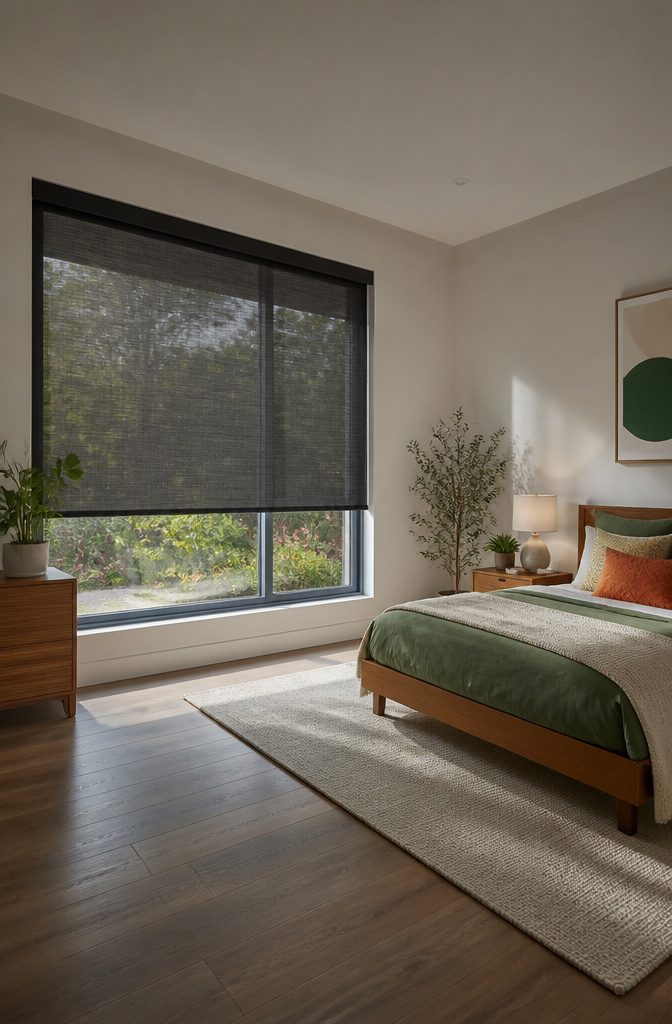
Screen shades occupy a narrow but useful spot in the bedroom blind lineup. The weave is open enough to preserve your view of the outdoors while filtering the UV rays that fade upholstery and damage skin.
If your bedroom faces a garden, a skyline, or any view you paid for and do not want to lose, this is the tradeoff that keeps it.
The fabric names tell part of the story: Abyss in Volcanic Ash, Omni in Carbon.
These are dark, tightly woven screen materials that cut glare without turning the room into a cave. Laptop work or morning television becomes easier on the eyes, and your furniture lasts longer without the bleached-out look sun damage brings.
What screen shades do not do is block light. For total darkness you would need a second fabric on the same roller cassette, paired as a blackout layer that drops independently.
That dual system costs more and matters more in a city bedroom than one overlooking quiet trees. Where the view is the point, a single screen shade keeps the window working for you rather than against you.

① LUXURY LINEN ROMAN BLIND: Crafted from premium linen fabric—breathable, naturally durable, and with a subtle organic texture that adds warm, relaxed elegance to bedrooms, living rooms, or dining rooms. This soft-yet-structured shade instantly elevates any window space.

【Light Filtering ROMAN SHADES】Made from 80% polyester & 20% Linen, supported by a fabric valance in front and flocked fabric behind, it has a soft and comfortable hand. 70% blackout lets in light but not views. Gently diffuses natural light, creating a soft, comfortable ambiance while maintaining daytime privacy. Ideal for the living room, door, office or bedroom.

PRODUCT: The Lined blackout woven woods roman shades are made of bamboo which will accentuates the beauty of the natural woven materials and block about most of light. The bamboo shade provide 100% privacy and is intended for indoor use. Shades roll up evenly and all shades come with 6inch matching valance.
6. Day/Night Shades
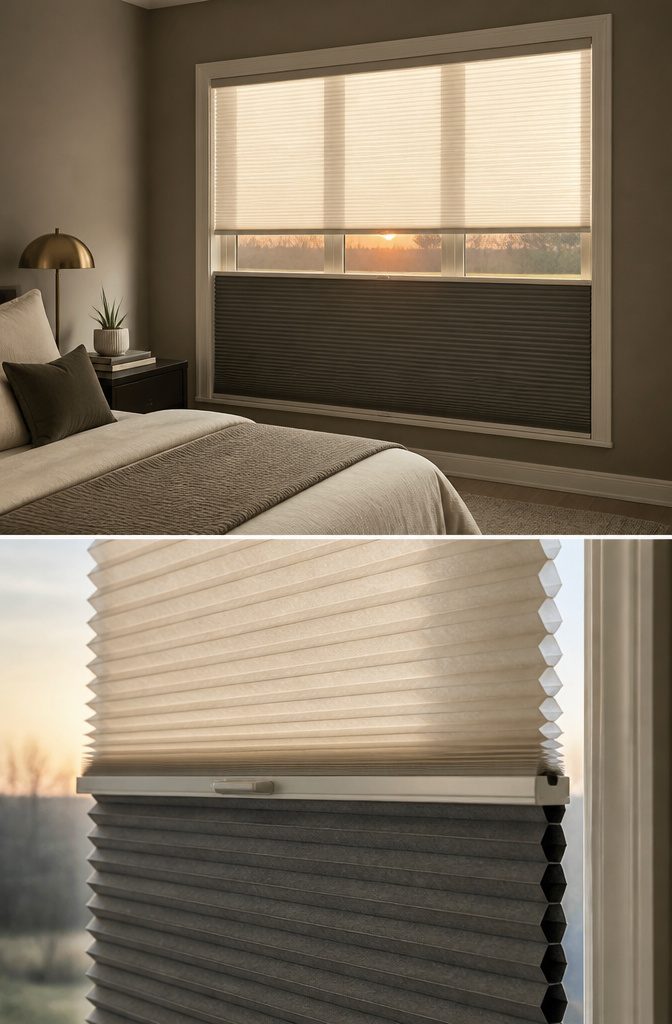
A day/night cellular shade puts two fabrics on one headrail: a light-filtering panel up top and a blackout panel below. The bedroom shifts with the hour without any layering or swapping hardware.
I first noticed how this mattered when reading about south-facing bedrooms that roast by afternoon.
Drop the blackout panel at night for sleep, then raise it in the morning and let the light-filtering layer soften the glare while you are still in pajamas with coffee.
No second rod, no tension between roommates who disagree on curtains.
The same headrail accepts top-down/bottom-up operation, which changes the logic again. Lower the shade from the top and daylight enters above eye level while the blackout panel stays across the middle of the glass, preserving privacy from the sidewalk.
This is the configuration that wins on street-facing bedrooms where you want the room to feel like a retreat during daylight hours too.
The downside is bulk.
Two cellular panels plus the hardware stack higher in the window than a single blackout shade, eating more of the glass when raised. Measure that stack height against how much window you are willing to lose.
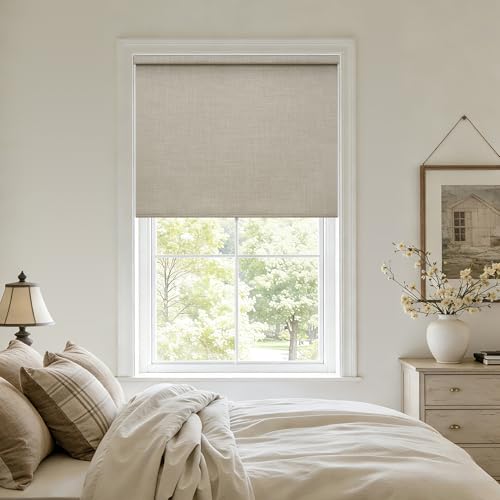
Cordless & Safe by Design: Our cordless shades feature a smooth, free-stop system. Adjust them easily-just push up or pull down to your desired height, and they remain securely and quietly in place. With no loose cords to manage, the design reduces risks and maintains a clean, uncluttered aesthetic, making it ideal for households with children and pets. Experience effortless daily control and enjoy a tidier, more peaceful atmosphere

100% Blackout for Better Sleep & Privacy: Block out over 99% of sunlight and harmful UV rays with these blackout roller shades. Perfect for bedrooms, nurseries, and media rooms, creating a dark, private, and comfortable environment anytime.

【Excellent Material】:Blind Size: 23"W x 72"H, Fabric Size: 22"W x 72"H. Fabric is 100% polyester material fabrics with reinforce thermal insulated coating, feeling soft and smooth. No burrs, strong wear resistance, and easy to clean.Our blackout blinds block 100% of sunlight and UV rays. The thermal backing reduces the loss of room heat and against cold through the windows in winter and summer, helping to reduce your energy bills.
7. Cordless and Motorized Options
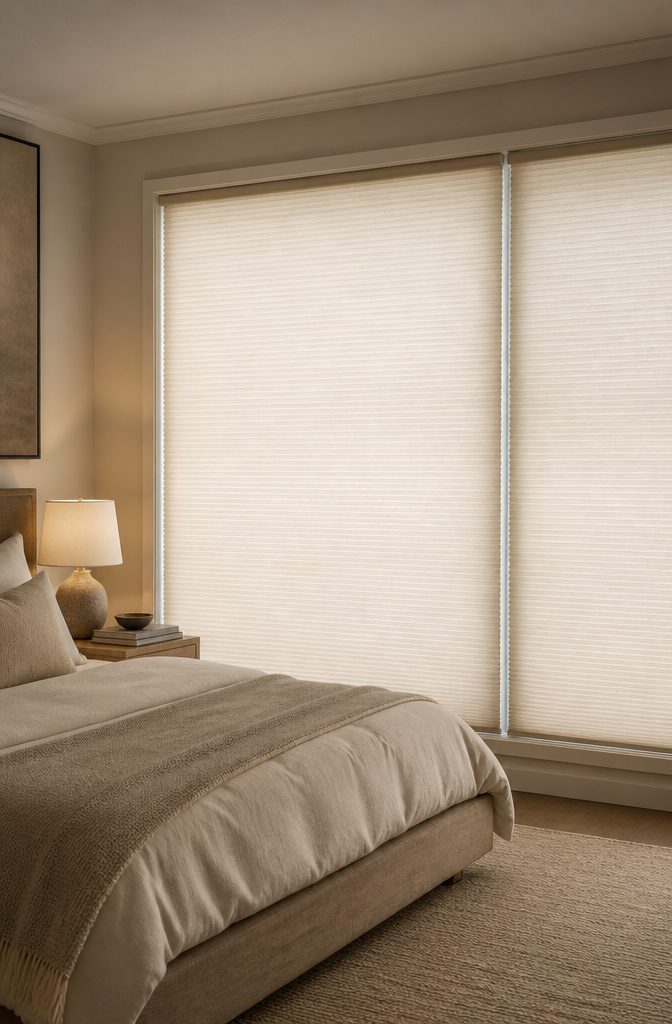
The morning after I installed cordless cellular shades in my daughter’s room, I realized I’d been living with a hazard I no longer had to think about.
No dangling cords means nothing to loop or tangle, and for renters who can’t swap out every window treatment a landlord installed, that peace of mind comes cheap.
Motorized blinds take the same safety logic and add convenience that actually changes how you use them.
Modern motors run quiet enough for 2 AM adjustments without waking a partner, and you can save a favorite position so the blind travels only the distance you need.
The real payoff is scheduling: blinds that rise with your alarm, or close at sunset, so the room does the work of building a sleep routine while you brush your teeth.
If your bedroom already has 2 to 2½ inch horizontal blinds with standard corded lifts, replacing the whole setup is wasteful. iBlinds kits retrofit that existing hardware with Z-Wave automation, which means smart scheduling without hauling the old blinds to the curb.
The installation is DIY, the blinds stay put, and the bedroom gets the same automated closing you’d pay far more to build from scratch.

Inside Mount ONLY. For better internal installation, a standard 3/8 inch deduction is made to the width for a proper INSIDE MOUNT fit. The actual blind size is 21 5/8" W x 36" H, perfect for window 22" W x 36" H. The unique spring rod can extend 1 inch in total, allow the blind to fit for window size W21.7-22.6 X H36".

Important Inside Mount Measuring Instructions: This cellular shade is the exact size - no deductions are made. Measure the width across the top, middle, and bottom of window. Ensure your window measures 36.25" to 37" wide for a 36" wide cellular shade. This allows proper fit with minimal light gaps. Measure the height from the top of the window to the windowsill on the left, middle, and right of the window. The largest measurement will be the height you order.

Blinds width will 2/5" narrower for a snug internal installation. Actual Blinds Size is 35 3/5" x 64" H. Choose the size SAME or CLOSEST to your window width for INSIDE mount. For Example, if your windows are 30" wide, order 30" or slightly less for internal installation. For OUTSIDE mount, we recommend order (2-4)inch wider than your window width for better coverage. For Example, if your windows width is 30", order size 34" would be okay for outside mount.
Blackout vs. Room-Darkening
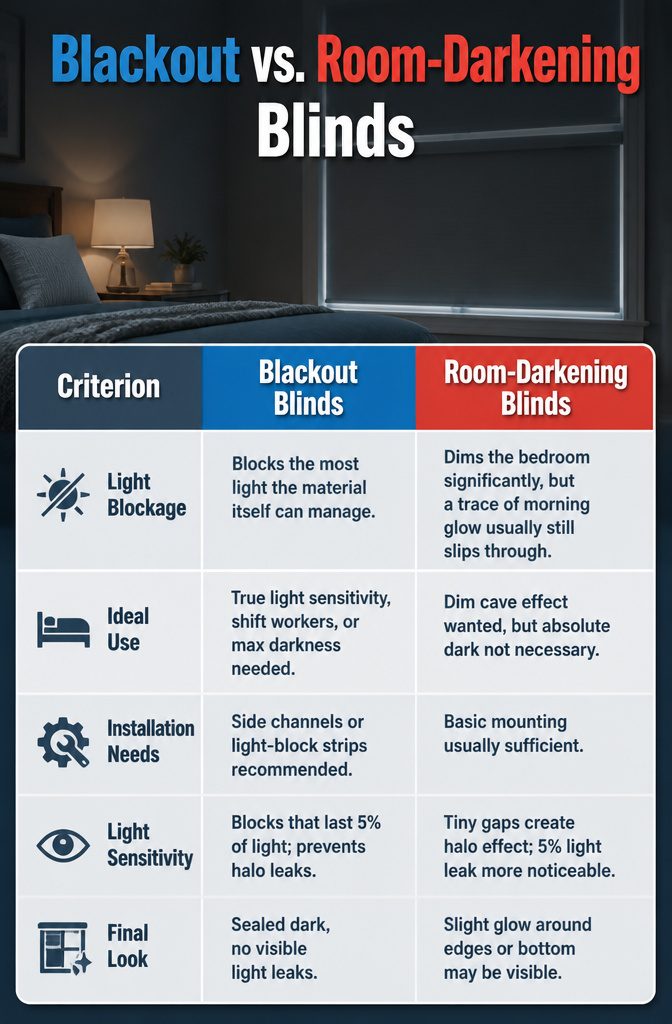
Room-darkening fabric dims the bedroom significantly, but a trace of morning glow usually still slips through.
Blackout fabric, by contrast, blocks the most light the material itself can manage. What separates a decent sleep from a broken one is often that last 5% of light leaking past the edges.
Tiny gaps at the sides of a mounted shade create a faint halo effect around the frame, enough to register on eyelids tuned to darkness.
An outside mount with extra overlap helps, and side channels or light-block strips tighten the seal. Without them, even blackout fabric performs closer to room-darkening.
For shift workers or anyone sensitive to dawn light, the difference matters. Room-darkening suits those who want a dim cave but do not need absolute dark, maybe because a hallway nightlight already breaks it.
Blackout wins for true light sensitivity, though the hardware to seal it adds steps and cost to a weekend project.
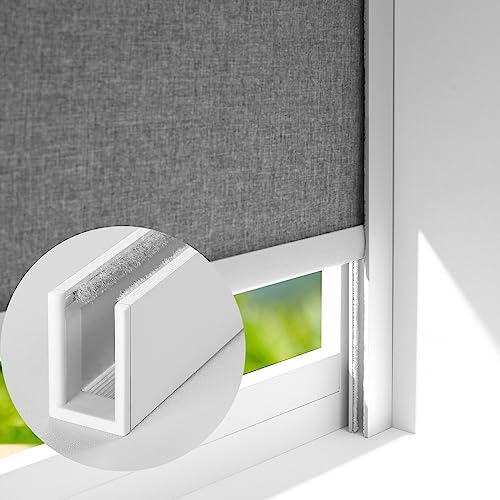
【Why we need to install light blockers for shades】Most blinds and blackout shades are made slightly narrower than the window frame to allow smooth raising and lowering. This design often causes light leakage from the sides. If your blackout blinds or shades still let in unwanted side light, this common side gap issue can reduce room darkening. ZSTARR light blocking strips are designed to help solve this problem and improve overall room darkening performance.

【Why Install Light Blockers for Shades】Most blinds/shades are narrower than windows to avoid fabric rubbing, often causing annoying side light leaks. If your blinds or shades are always leaking some annoying light, then we suggest you install WINSMAR light blocking strips.
Privacy After Dark
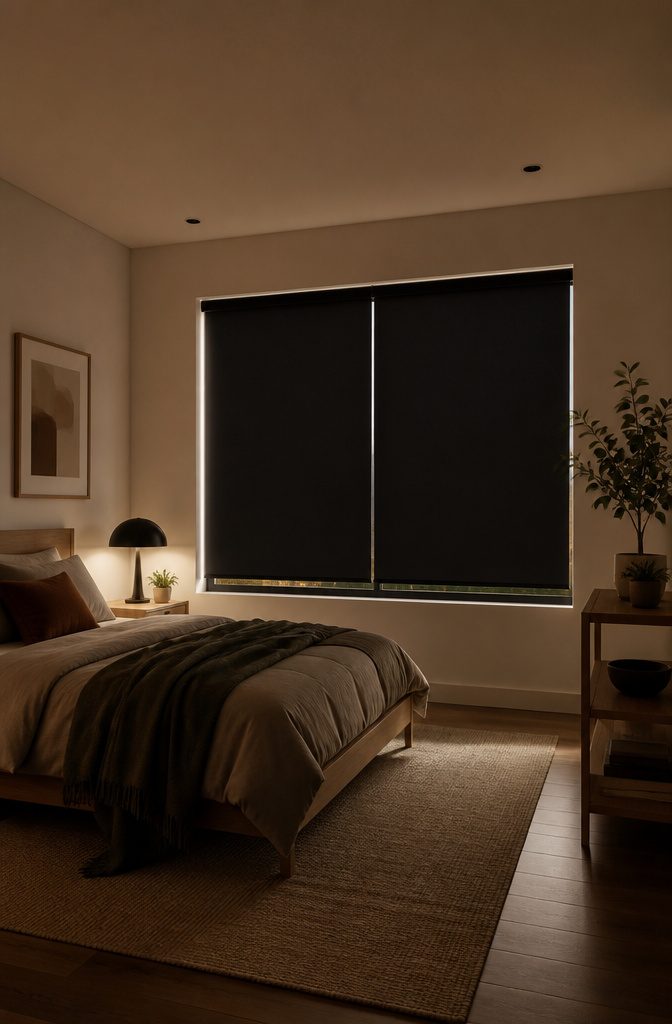
Street-facing bedroom windows turn into fishbowls the minute a lamp clicks on. From the sidewalk, even standard curtains can silhouette every movement, and the wrong blind leaves you lit up like a stage.
Three options actually solve this. Blackout roller shades give the cleanest seal; the fabric rolls flat against the frame with no gaps for a streetlight or a neighbor’s porch bulb to leak through.
Room-darkening cellular shades run a close second, and their honeycomb channels add a layer of structure that blocks sightlines even if the fabric itself is slightly lighter.
Lined Roman shades work too, but only when the lining is substantial and the folds stack tight; a thin liner or loose fit at the sides creates stripes of visibility after dark.
Solar screens are the ones to skip for a bedroom.
During daylight they cut glare beautifully, but after sunset they flip transparent. With interior lights on, they become a one-way mirror pointed straight at you.
For renters in city blocks or first-floor units, the roller or cellular route removes that nightly decision of whether to live in darkness or live on display.

How to Order Inside Mount: Each cellular shade is produced at the exact size you order. For an inside mount, order the shade width 1/4" to 1/2" narrower than the window opening width. IMPORTANT: This shade fits windows measuring 35-1/4" to 35-1/2" wide for inside mount.

How to Choose Your Size: Measure your window's exact width. If your measurement exactly matches one of our sizes (e.g., 30" or 30 1/2"), choose that precise size. If your measurement falls between two sizes, always round DOWN to the nearest smaller size. For example: 30 7/8" wide → choose 30 1/2", 30 1/8" wide → choose 30"

【Two Installation Options Included】These cellular shades come with both standard drill-mount hardware and no-drill installation accessories. Choose the method that best suits your window frame and actual installation needs. Suitable for inside or outside mounting for a neat built-in look or wider light-blocking coverage
Insulation and Noise
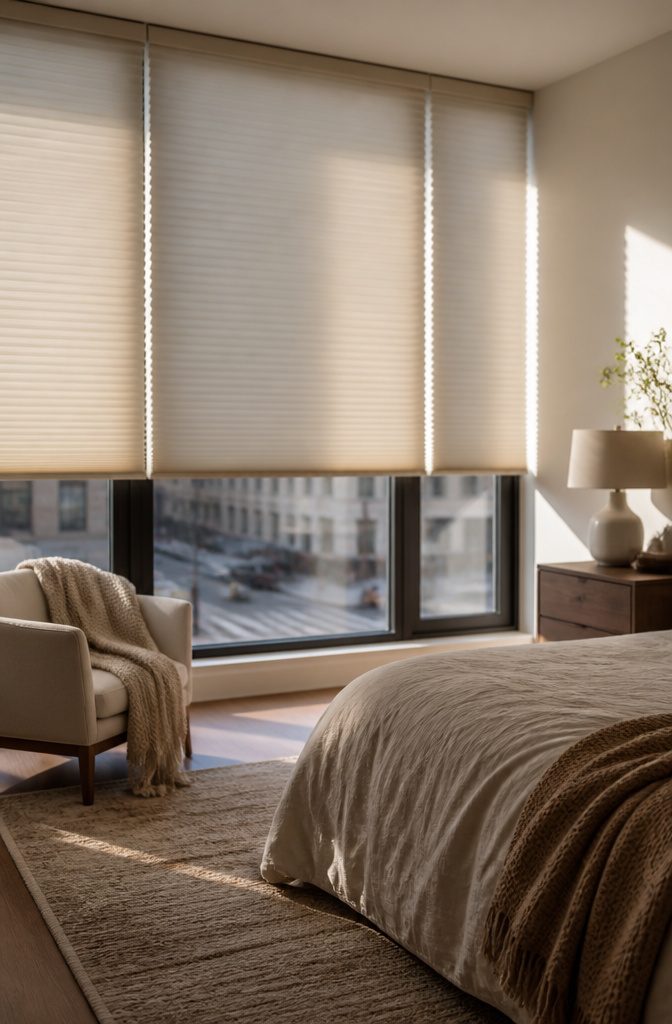
The bedroom above my garage turned into a sauna every July until I swapped the mini blinds for cellular shades with a double-cell construction. The honeycomb pockets trap air in layers, and that still air does the actual insulating.
Compared to flat roller shades or slatted faux wood, the cellular structure adds a measurable buffer against the glass, which in an extreme climate means the HVAC isn’t fighting the window all afternoon.
Noise follows the same logic.
Traffic from the street below used to cut through the old aluminum blinds like they weren’t there. The cellular fabric, especially in a double-cell or the honeycomb-within-honeycomb build, softens that transmission.
For renters dealing with thin windows, layering the shade with lined drapery or adding side channels to seal the edges gets you closer to real sound dampening without replacing the sash.
The side channels also matter for temperature: any gap at the edge is a thermal leak, which is why the U-shaped designs that overlap the frame edge outperform a shade that just hangs there.

PRODUCT: The Lined blackout woven woods roman shades are made of bamboo which will accentuates the beauty of the natural woven materials and block about most of light. The bamboo shade provide 100% privacy and is intended for indoor use. Shades roll up evenly and all shades come with 6inch matching valance.
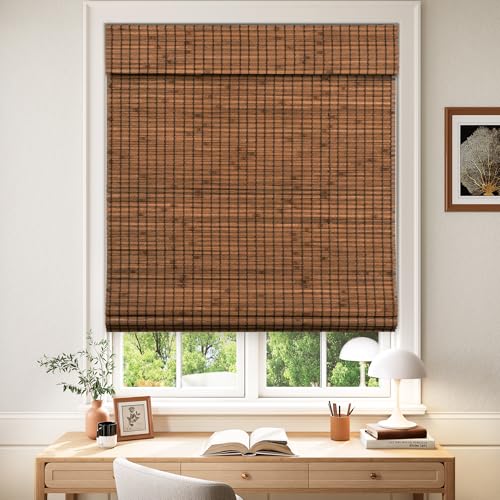
100% Total Blackout Upgrade: Enjoy complete darkness for better sleep. LazBlinds upgraded shades have a blackout fabric layer sewn on the back to fully block sunlight, offering total privacy. Perfect for bedrooms and nurseries

【For inside mount】order the exact width of your window frame. If your frame is 26", buy 26". No deduction – we make it to your exact size
Measuring to Stop Light Leaks
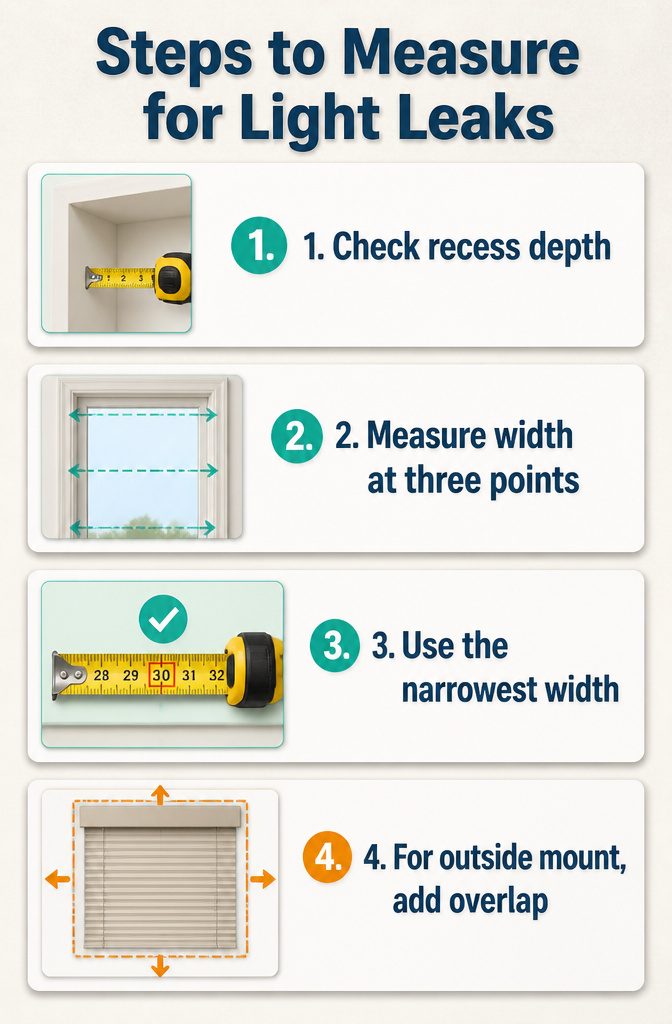
An inside mount only works if the window frame is deeper than the blind’s bracket, so check that recess depth before you pull out the tape measure.
Once you know the frame can hold it, measure the width at three points: top, middle, and bottom.
Window frames settle unevenly, and a measurement taken only at the top can leave a gap at the sill that lets in morning light.
Use the narrowest of those three numbers for your final width. The blind will sit flush against the sides it fits and leave the smallest possible crack at any wider spot.
For an outside mount, the logic flips: add 2 to 3 inches of overlap to each side and above the frame so the fabric or slats extend past the opening entirely.
That extra coverage blocks the light that otherwise sneaks around the edges.
Frequently Asked Questions
What are the best blinds or shades for bedrooms?
Blackout roller shades and blackout cellular shades are the top picks for sleep.
Roller shades win when you want maximum darkness with the least visual weight, while cellular shades add insulation and noise softening. Both block light effectively if you seal the edges with an outside mount and overlap.
Do blackout blinds make the room completely dark?
Blackout fabrics block most light through the shade itself, but the edges are where darkness breaks down.
Tiny gaps along the sides can create a faint halo of light. An outside mount with extra overlap and side channels or light-block strips finishes the job.
Which bedroom window treatments offer the most full privacy at night?
Blackout roller shades, room-darkening cellular shades, and lined Roman shades provide reliable nighttime privacy.
Blackout rollers give the cleanest seal; cellular shades add structure that blocks sightlines; lined Romans stay opaque from either side. Skip solar screens alone for bedrooms, since they turn nearly transparent after dark when interior lights are on.
What’s the difference between room-darkening and blackout for bedrooms?
Room-darkening fabric dims the bedroom significantly, but a trace of morning glow usually still slips through.
Blackout fabric blocks the most light the material itself can manage. For shift workers or anyone sensitive to dawn light, that last 5% of light leaking past the edges is what separates decent sleep from broken sleep.
How do I measure bedroom windows to minimize light leaks around the shade?
For an inside mount, check that the window frame is deeper than the blind’s bracket, then measure the width at three points: top, middle, and bottom.
Use the narrowest of those three numbers for your final width. For an outside mount, add 2 to 3 inches of overlap to each side and above the frame so the fabric extends past the opening entirely.