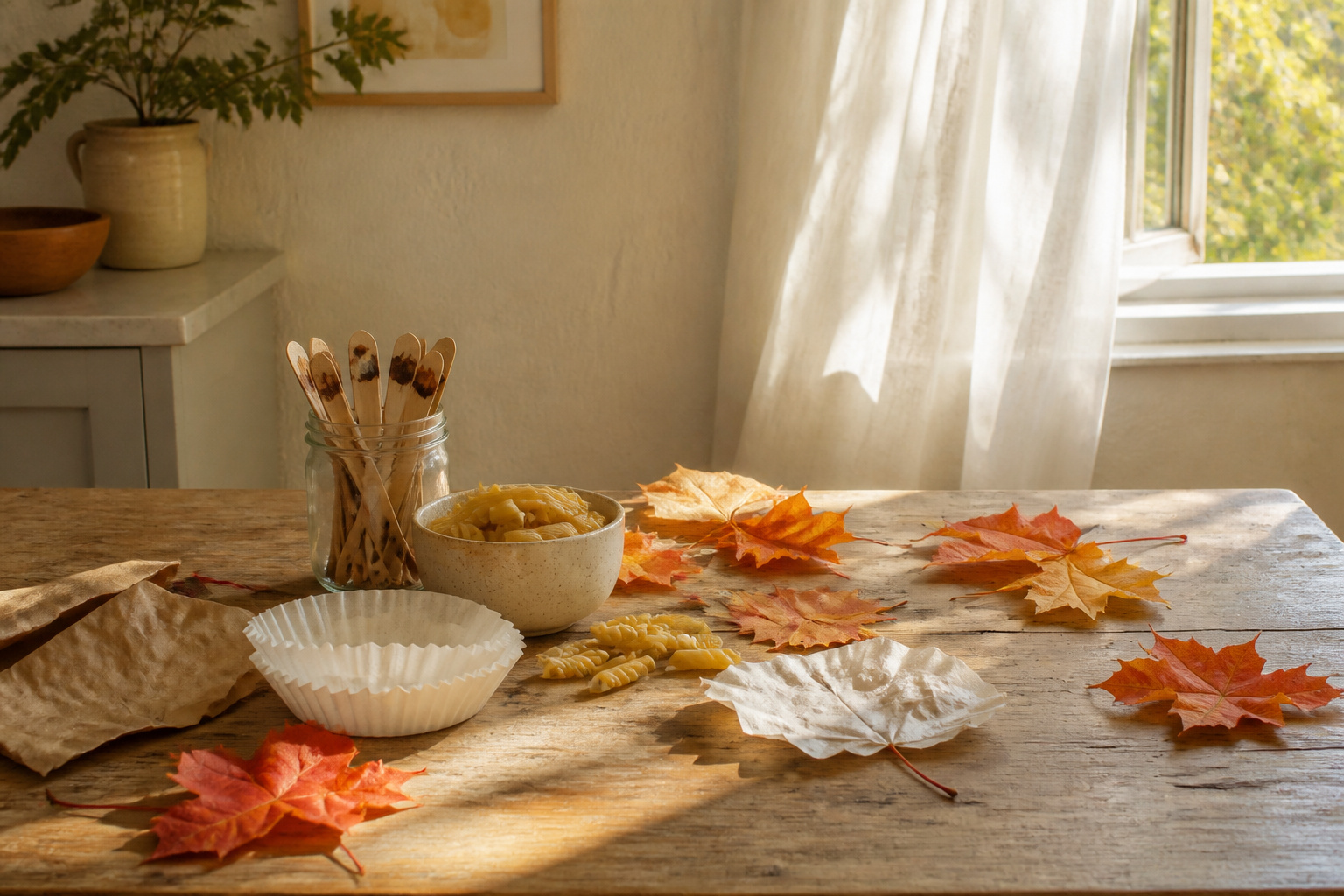
Fall crafts for kids work best when the materials are already in the house and the cleanup does not require a vacuum.
The twenty projects below all run on pasta, paper bags, coffee filters, and leaves from the yard, with no specialty supplies.
A plastic fork dipped in brown paint stamps convincing tree bark in four parallel lines, which keeps even wiggly three-year-olds at the table longer than a brush would.
1. Sunflower Noodle Craft
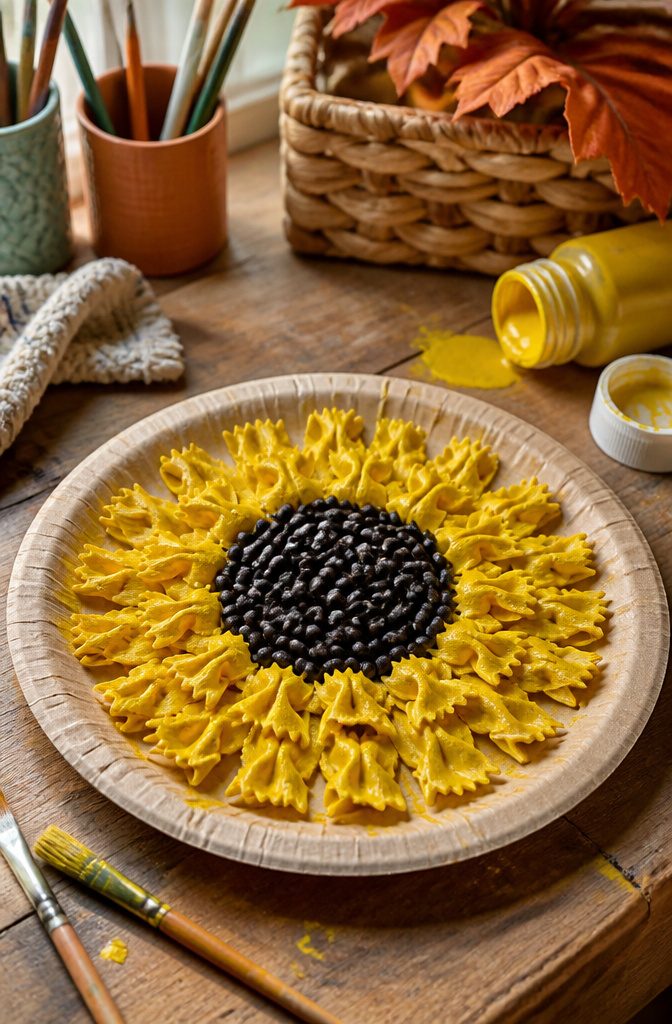
A paper plate or cardboard circle gives the pasta something to grip while the glue dries, which matters more than you’d think with toddlers involved.
Uncooked noodles get a coat of yellow paint before they go down, arranged in a ring around a darker center the child fills with black beans or black macaroni.
The finished flower carries that late-summer harvest feel, bridging August gardens into September craft tables.
Toddlers can manage the gluing with help, though the noodle arrangement itself is forgiving enough that crooked rows still read as petals. The sensory payoff comes after everything dries.
Kids run fingers over the ridges, which is half the point of using a material that is not paper. Sources flag this as an easy starter project, and the supply list backs that up.
Paint, glue, pasta, a plate. Most households already own three of the four.
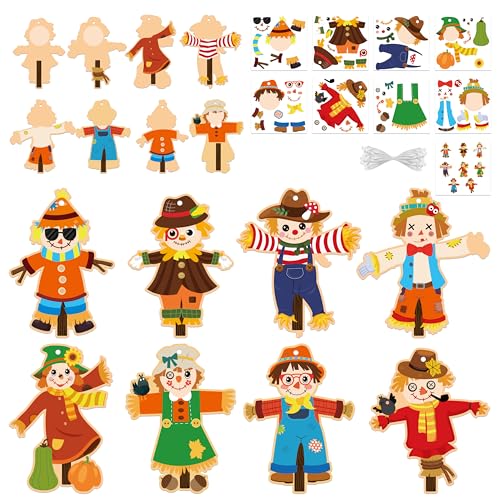
DIY Fall Scarecrow Craft: Our Fall Scarecrow Craft Kit includes 123 pieces, providing everything needed for a fun and engaging craft activity. The set contains 40 fall scarecrow cards in 8 different styles, 40 matching scarecrow stickers, 42 white ribbons, and an example of a finished product.

BRUSH + FINE DUAL TIP: Switch easily between detailed lines and expressive strokes with a 1 mm fine tip and a flexible 1–5 mm brush tip. These water-based acrylic paint markers are ideal for lettering, sketching, coloring, illustrations, and DIY art projects.

DUAL TIP FOR PRECISE & CREATIVE WORK: Each acrylic paint marker features a 1 mm fine tip for detailed lines, writing, and outlining, plus a 1–5 mm dot tip for bold dots, patterns, decorative accents, and creative designs. Easily switch between precision details and eye-catching dot art with one versatile marker.
2. Fork Printed Tree Craft
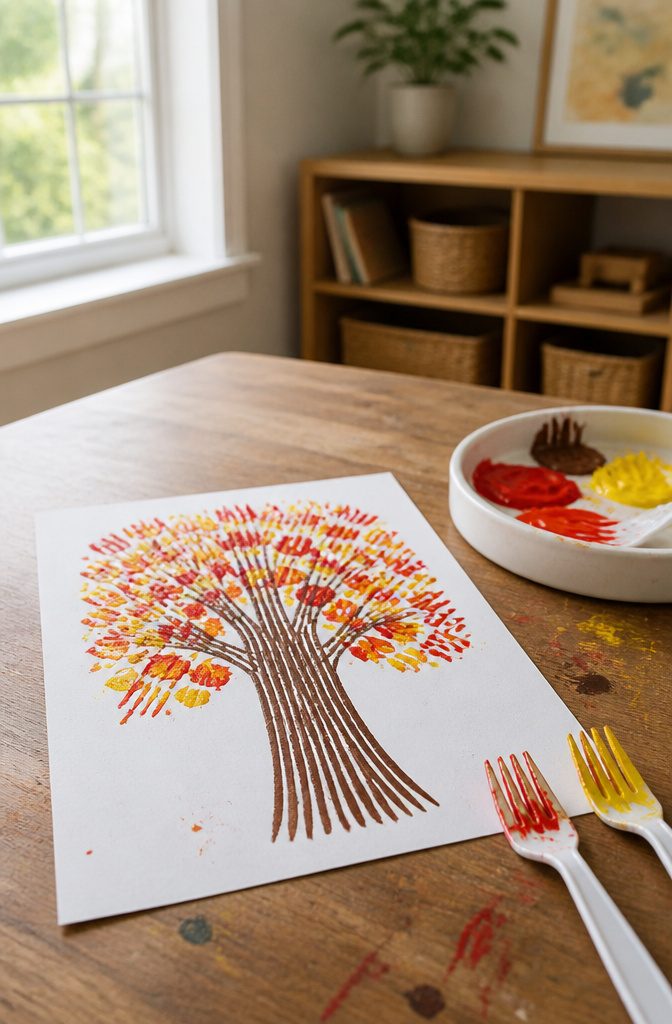
A plastic fork dipped in brown paint makes the most convincing tree trunk I’ve found for preschool-aged hands.
The tines stamp four parallel lines at once, so a few presses down the page give you bark texture without any brush control.
I switch to red and yellow paint for the canopy, and the kids use their fingers to dot leaves around the fork-printed branches.
The sensation of the fork tines dragging against paper keeps even wiggly three-year-olds at the table longer than a brush would.
This craft works best after a walk to look at real fall foliage.
The kids notice how oaks hold their leaves while maples drop, and they come back wanting to paint every color they saw. Finger paint handles the blending for them; orange happens naturally where the red and yellow overlap.

SCULPT, SHAPE, AND ELEVATE - Light and fluffy yet firm enough to hold shape, this modeling paste adds dramatic dimension and bold texture to cards, canvas, mixed media, and DIY crafts.

🎨 MODELING PASTE FOR TEXTURE ART – Create raised textures, sculpted details, and dimensional effects on canvas. Thick white acrylic modeling paste designed for texture art, textured canvas painting, and mixed media projects.

Rich, Opaque Color – POSCA’s high-quality water-based pigment delivers smooth, consistent color with rich, opaque coverage that layers beautifully without streaking
3. Alphabet Pumpkins
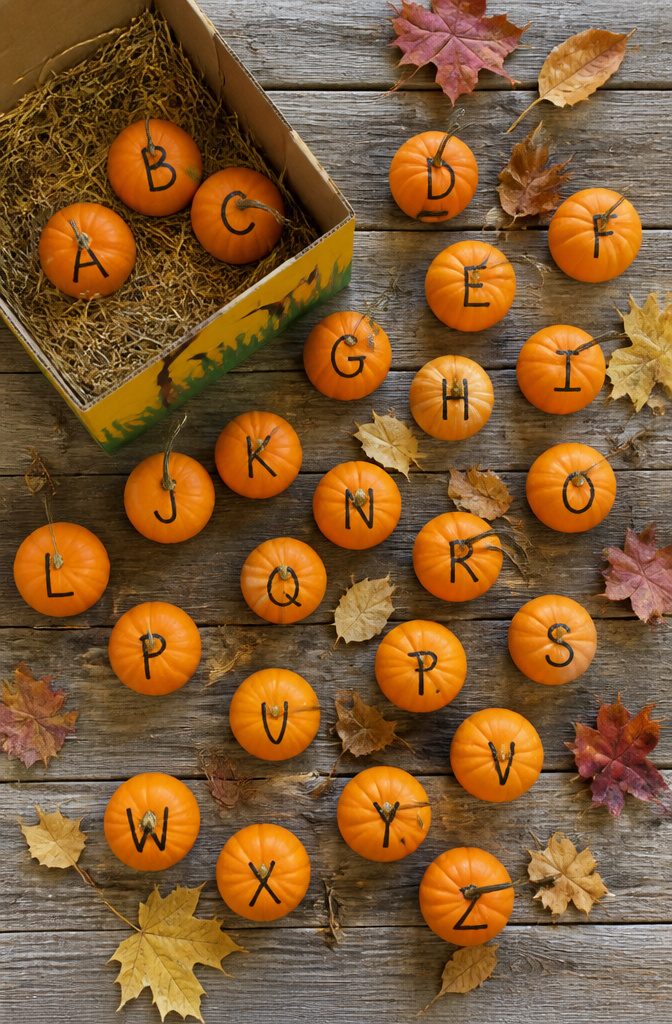
Mini pumpkins with a Sharpie-drawn letter on each ridge turn the grocery store produce section into a spelling set that costs about five dollars.
The curved surface forces preschoolers to trace the shape with a finger before they guess, which seems to help the letter stick better than flat flash cards ever did at that age.
Paper pumpkin cutouts and stick-on letters work the same way if the real thing feels too precious to let a three-year-old drop repeatedly.
The seasonal hook matters more than I expected.
A child who ignores the alphabet magnets on the fridge will suddenly care whether the "P" pumpkin comes before the "S" pumpkin when both are sitting in a cardboard patch they helped paint.
Keep the letters lowercase until they have uppercase down cold; most early readers see lowercase ten times as often and the shapes are harder to memorize.
For letter recognition alone, one pumpkin and a basket of letter stickers lets them decorate and name as they go.
Move to spelling once they know about half the alphabet by sound. The activity dies quickly if you ask them to spell words with letters they have not learned yet, so match the pumpkin pile to where they actually are.

GREAT FANTASY PUPPETS: WATINC hand puppets are great for kids to pretend, role play their favorite characters, and start an exciting party game together.

16 Safari Animal Paper Craft Projects — Create 16 animals including Lion, Tiger, Giraffe, Elephant, Dog & Cat using paper bags, plates, rolls & straws. Instructions included. No experience needed

4. Scarecrow Craft
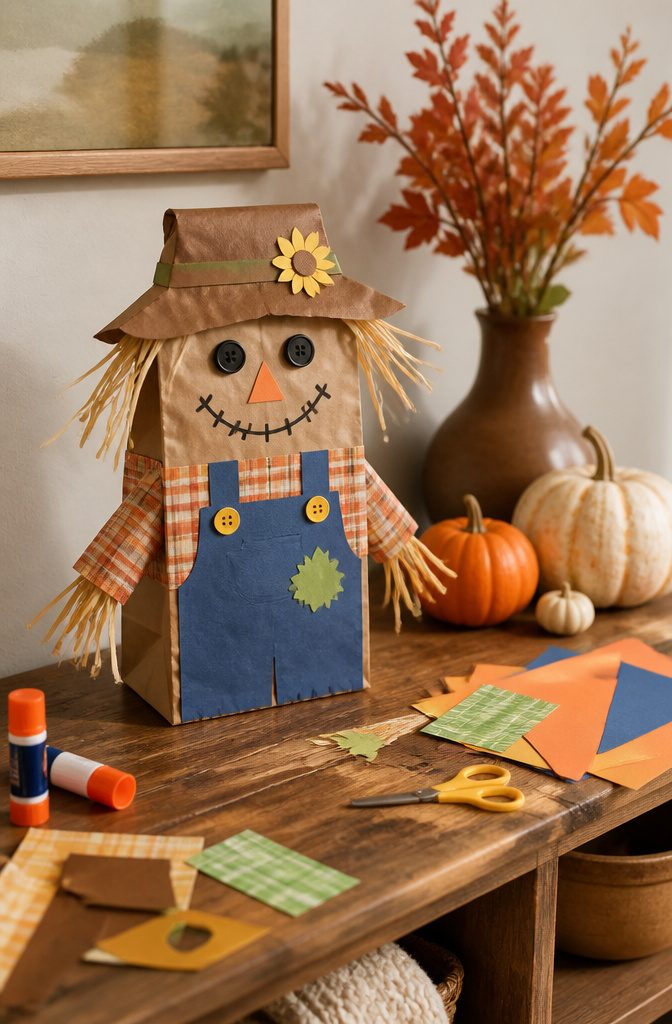
A scarecrow built from a brown paper lunch sack still wins for speed when the weekend is short and the kids are underfoot.
Crumple a sheet of newspaper or a paper towel, stuff it into the bag, fold the top over twice, and staple each side.
Construction-paper hats, button eyes, and a marker-drawn smile glue on fast, and the finished figure sits on a shelf through October without shedding hay across the living room.
For something sturdier, craft sticks glued into a flat body take fabric scraps better and survive actual play.
Hay or yarn hair works on either version; toddlers manage the paper-bag route with help holding the stapler, while early elementary kids can cut their own clothing patches and thread yarn through punched holes for a stitched look.
The harvest theme runs through both builds without needing a farm visit.
A paper-bag scarecrow in particular reads as classic fall craft across every source that lists them, and the materials land under a few dollars if the scrap bin is already half full.

Package Contents: this Christmas tree ceramic DIY painting kit includes 24 white ceramic Christmas tree crafts (6 styles, 4 each), 24 sets of watercolor paints, 24 pointed brushes and 24 flat brushes, and 24 individual sticky bag packages, which you can pack in transparent OPP bags; These blank ceramic Christmas tree allow you to create your own Christmas decorations

5. Apple Tree Name Craft
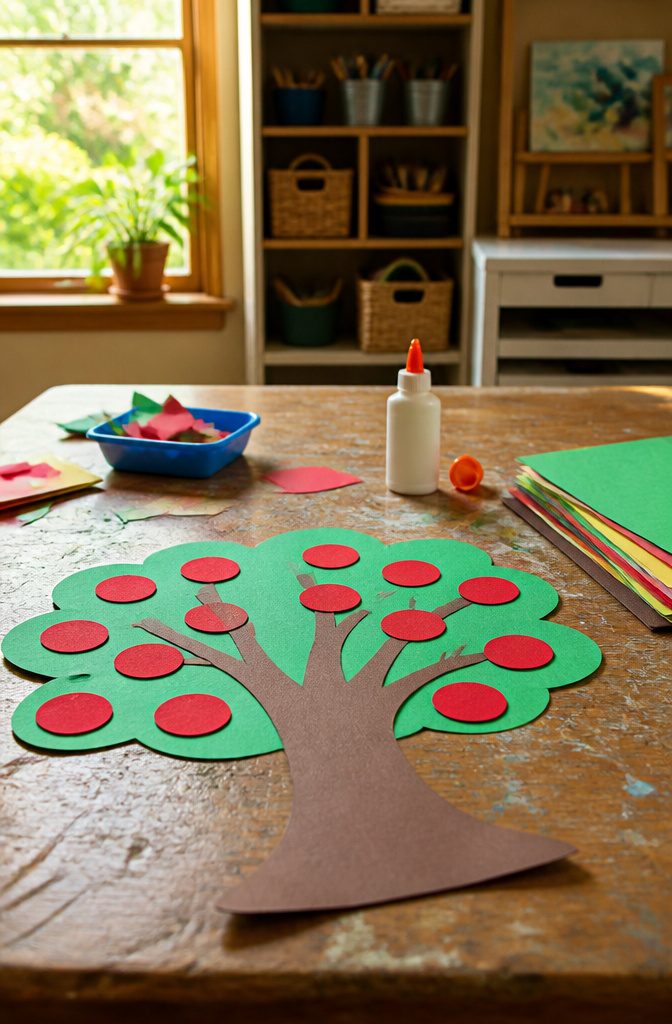
The name recognition piece matters more than the finished tree looking perfect. A preschooler gluing red circles to construction paper is building something they can read back to themselves, and that sticks.
Construction is straightforward. A brown paper trunk runs up the left side of a sheet, green paper torn or cut for the canopy, then red circles or stickers become the apples, each one carrying a letter in marker.
Glue them in order and the child has mapped their own name onto a tree. Fine motor work hides inside the picking and placing; identity work hides inside the sequence they now recognize.
Age lands squarely at preschool, roughly three to five, when name spelling is still a puzzle worth solving.
The child can write their own letters if the skill is there, or an adult can label the apples while the child handles the placement. Either way, the hands stay busy and the letters stay personal.
Where this craft earns its place is that overlap.
Most fall projects hit one goal, sensory or seasonal. This one pairs the small-muscle control of peeling stickers and dotting glue with the early-literacy moment of seeing your own name in order, attached to something you built.

INCLUDE. Our Halloween Pumpkin Decorating Includes Tattoo stickers,foam stickers with printing, 30 ml 8 big tins of pigments,3 brushes, Decorative accessories: 10 red hair balls, 2 white gauze bandages, dot glue, eyes. Instruction sheet included.
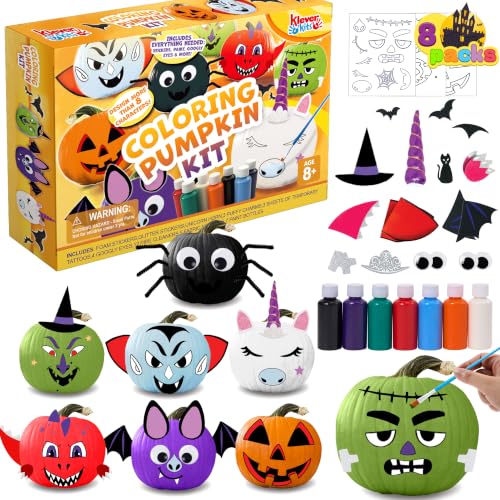
SUPER VALUE PACK. Our Coloring Pumpkin Kit includes Foam Stickers, Glitter Stickers, Unicorn Horn, 3 charms, 3 sheets of temporary tattoos, 4 Amusing Wiggly eyes, 12 pipe cleaners, 5 fabric flowers, 20 paint tubes, 3 brushes.

【Halloween Pumpkin decorating kit】- Each pack include 40 sheets Halloween pumpkin decorating stickers, each sheet can make 2 pumpkin faces total 80 Halloween Pumpkin Decorating Faces.
6. Coffee Filter Leaves
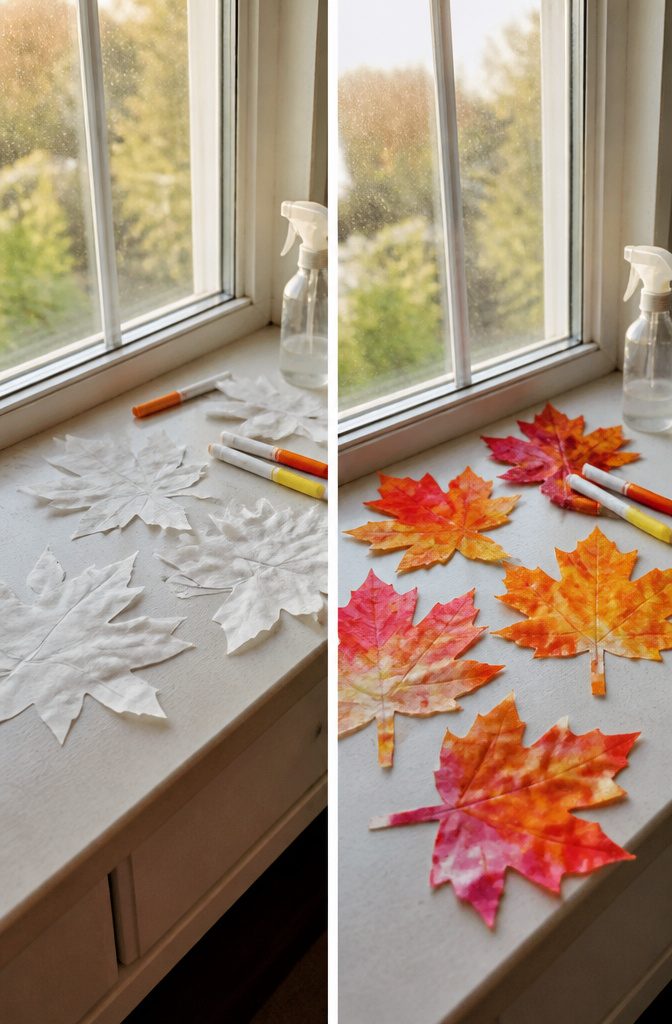
Coffee filter leaves start with the cheapest supply in the kitchen and end up looking like something from a watercolor class.
Flatten a basket-style filter, fold it in half, and cut a rough leaf shape; the exact outline barely matters since the edges feather once water hits.
Color the filter with washable markers, heavy in some spots and light in others, then lay it on an art tray and spray with water until the pigment begins to run.
The color diffusion is half the point for kids old enough to notice it happening, and toddlers are usually just as happy pushing the marker around and watching the bleed.
The wet filter looks muddy; the finished leaf only reveals itself once it dries, which takes longer than the actual making.
Tape the dry leaves to a window and the late-afternoon light turns them into something that reads as stained glass from across the room.

【Halloween Craft Kits for kids 】This poke art and crafts kit includes 700 fabric squares,Pumpkin*6,1Craft cord,2 poke-in sticks,a poke-in pad,kids can make their own halloween arts crafts set!DIY Pumpkin Craft Kits for kids ages 4-8+,perfect for developing early crafting skills


Fall Craft Kit: 40-Piece Bulk in one set. Includes 40 pre-cut black frames (12 charming designs), 1000 tissue paper squares (1.96*1.96inches, 10 vibrant colors), 10 transparent adhesive sheets, and 2 rolls of ribbon (black, white, 32.8feet each), and instructions. Great for large groups, classrooms, or Thanksgiving events
7. Fall Puffy Paint Crafts
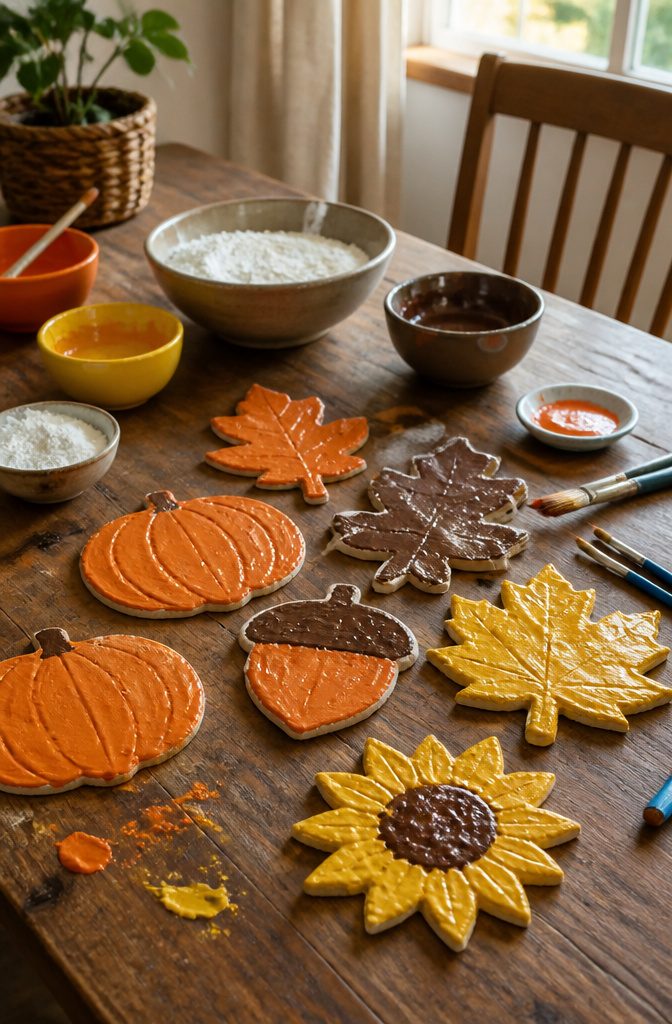
Puffy paint made from pantry staples delivers a texture flat poster paint cannot touch. The basic batch mixes flour, salt, water, and tempera paint into something resembling smooth pancake batter.
Kids spread it thick onto paper cut in pumpkin or leaf shapes, then the real payoff happens: either air-drying overnight or a quick blast in the microwave causes the paint to puff into a soft, raised surface that begs to be touched.
The dimensional result catches light and casts tiny shadows, which makes autumn shapes look almost sculptural against the paper.
Microwaving requires adult handling every time, since the plate heats and the paint needs watching to stop before it browns or cracks. Air-drying is safer for younger hands to manage solo, though patience becomes part of the lesson.
The salt gives a subtle sparkle under lamplight that reads as frost on a pumpkin stem.
Flour keeps the body light and airy once dry, nothing like the density of real clay. Cleanup runs easier than acrylics, but the mixing bowls still need a soak before the residue hardens into cement.
Ages four and up get the most from it, the ones old enough to squeeze a bottle and feel the difference between wet puff and dry.
Toddlers tend to overwork the surface, smoothing away the very texture that makes this worth the mess.


WORKS ON ALL YOUR FAVORITE SURFACES - This acrylic paint set works on watercolor paper, wood, canvas, and more ideal for greeting cards, art journals, collages, and gifts.

Rich, Opaque Color – POSCA’s high-quality water-based pigment delivers smooth, consistent color with rich, opaque coverage that layers beautifully without streaking
8. Paper Loop Sunflower Craft
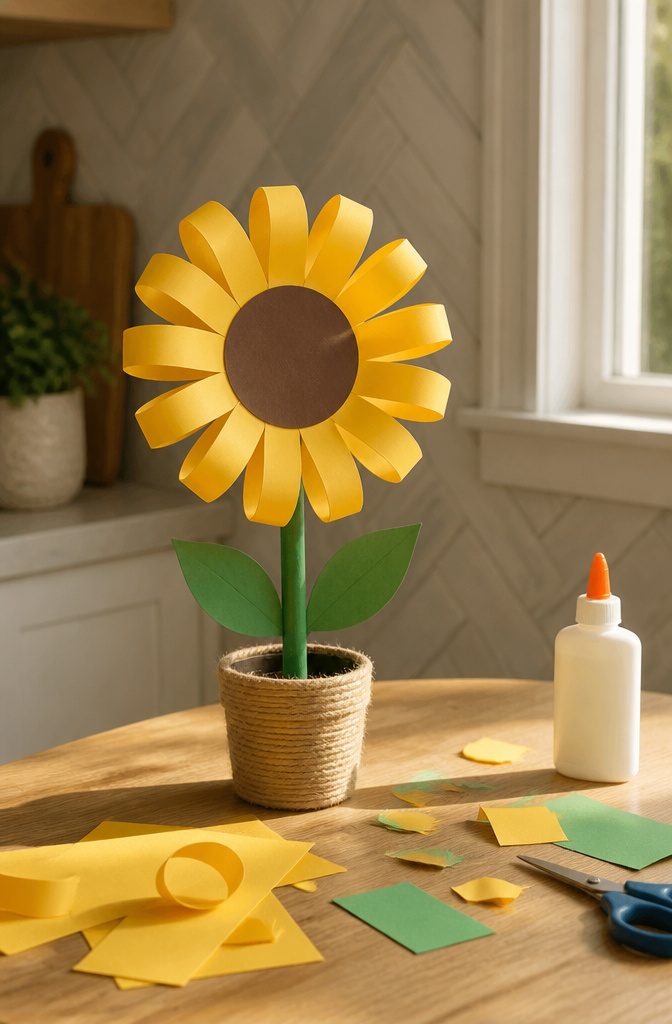
Yellow construction paper cut into strips becomes the petals here, each end looped and glued to form a gentle arc that stands away from the center.
A brown paper circle anchors them in the middle, and the whole thing reads as a sunflower without needing anything from the pantry.
This is the paper-only alternative to the noodle version, which means no drying time and no pasta pieces rolling under the fridge later.
Preschoolers still building scissor skills can manage this one because the cuts are straight across standard-width strips, nothing curved or intricate.
The gluing is repetitive in a satisfying way, loop after loop, and the finished flower has that dimensional pop that makes kids want to carry it straight to the refrigerator door.
Some directions add black beans or sunflower seeds to the center for texture, though the plain brown circle holds up fine on its own if you are out of seeds or working with a child who still puts small objects in their mouth.

SUPER VALUE PACK. Our Halloween scratch cards come in 72 pieces with 18 cute designs such as pumpkin, bat, spider, monster, cat and a lot more!

Colorful Gift Bags – 24 Pack: Includes 24 gift bags in 6 rainbow colors (red, orange, yellow, green, blue, purple). These vibrant party favor bags are great for birthdays, baby showers, classroom events, weddings, or retail use

9. Noodle Pumpkin Craft
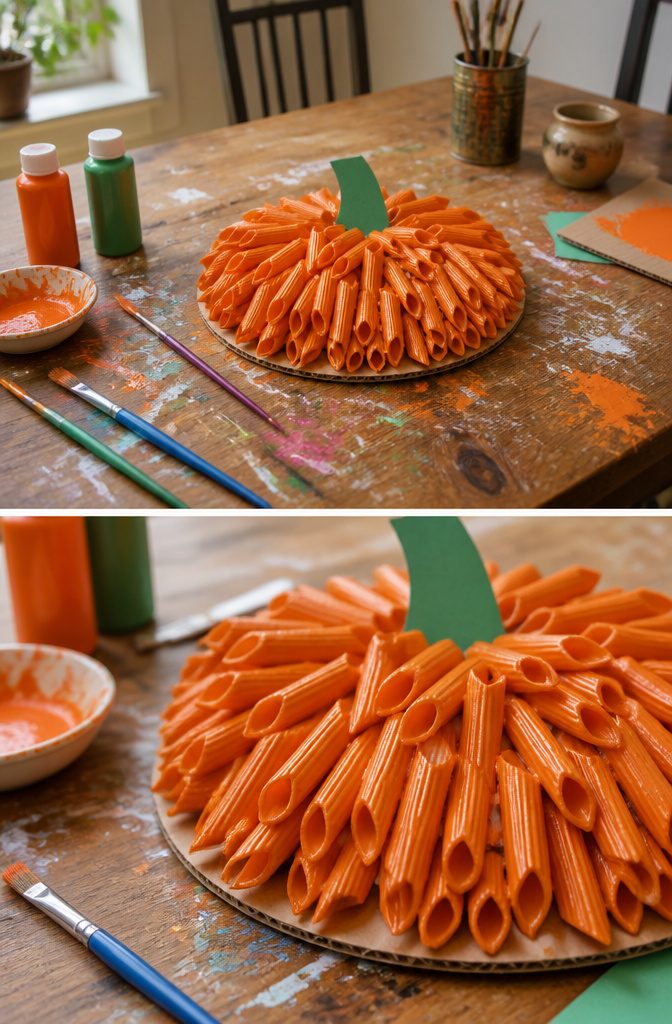
Dry pasta takes paint differently than paper or wood, and that slightly uneven absorption is what gives these pumpkins their charm.
I set out uncooked noodles, orange acrylic paint, and cardboard rounds cut from old shipping boxes, then let my youngest go to work coating each piece.
The ridges hold brush marks in a way that reads as texture rather than mistake, which matters when the artist is still working on staying inside the lines.
A green paper stem glued at the top finishes the shape without requiring any cutting skill from small hands.
White glue holds well enough for display if you give it overnight, though tacky glue speeds that up if patience is running low.
This pairs cleanly with the noodle sunflower craft for an afternoon pasta session.
The same materials cover both projects, and the tactile element, the clatter of noodles in a bowl, the drag of a brush across a curved surface, keeps kids engaged through two sittings.
Age four and up manages the painting; younger ones can sort pre-painted noodles by size if you want them included.
10. Apple Tree Cotton Ball Painting
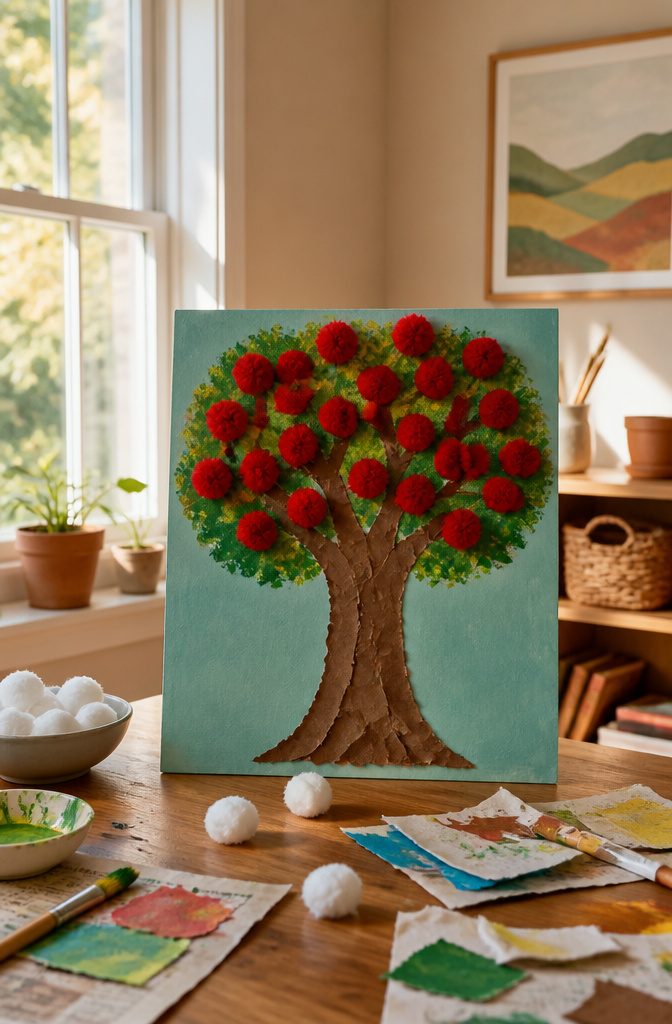
Cotton balls clipped into clothespins make a cleaner dabber than a brush for toddlers still figuring out grip control.
The cotton holds enough red paint to stamp round apple shapes without dripping down the trunk, and the clothespin gives small hands something rigid to squeeze.
I have watched kids abandon regular brushes within minutes; the cotton texture keeps them pressing longer, which is half the point at two or three years old.
Brown paper torn into a trunk or a simple drawn tree sets up the target. Green paint on more cotton dabbers fills the leaves, though the sources I found skip that step and go straight to finger-painted apples.
Either way works. The sensory piece matters here: the squish of saturated cotton against paper is its own reward, and the clothespin means fingers stay mostly clean until the red apple phase begins.

SUPER VALUE SET. 16 Packs Pumpkin Decorating Craft Kit Stickers in 16 Design Faces. Including Jack-o-Lanterns, Witch, Warlock, Vampire, Bat, Zombie, Skeleton, Ghost, Cat, etc.

COMPLETE CRAFT KIT -- This craft kit includes materials to make 4 beaded pumpkins. Each set comes individually wrapped. Create customized Halloween decorations!

Great Value Set: The 332PCS Halloween foam pumpkins crafts set included 200 pcs Halloween Foam Stickers, 40pcs Halloween Foam Craft Pumpkins(8 kind of pumpkin), 24pcs wiggle googly eyes, 10pcs expression stickers, 12pcs accessory stickers, 40pcs Black Cords and 6 Color Pens (Black, Red, Purple, Green, Blue, Orange) in a paper box.
11. Fingerprint Fall Tree Craft
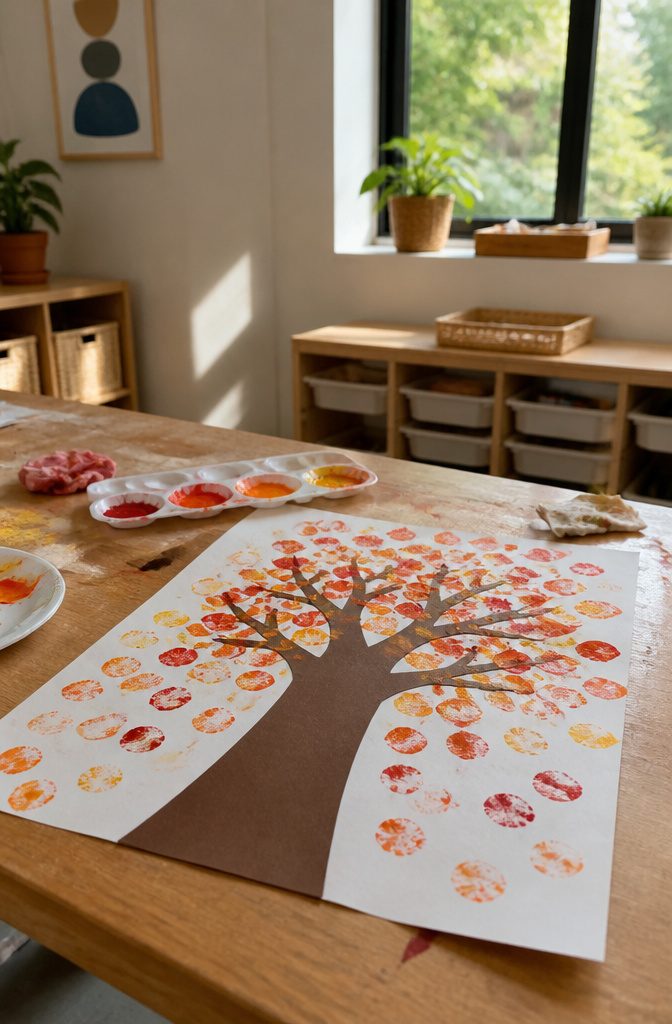
Finger-painting leaves onto a tree trunk is one of those projects that sounds messier than it actually is. Brown construction paper cut into a trunk shape, or even a quick marker outline, gives kids a structure they understand immediately.
My nephew was two when he did his first version, and the dots he stamped with his index finger were mostly orange and entirely off the branches, but he talked about that tree for weeks.
Red, yellow, and orange washable tempera paint in shallow dishes keeps the setup manageable. Paper plates work if you do not have dishes you want back.
The real win here is body involvement: a brush would give cleaner results, but the memory lives in the finger, the pressure, the choice of where to press next.
Older kids can layer colors for depth; younger ones tend toward one enthusiastic shade and a lot of it.
Washable paint matters more than brand; the cheap bottles from the craft store rinse out fine if you hit them before they dry.
A damp stack of washcloths nearby handles most of the mid-project cleanup. The mess peaks at about five minutes in, when they remember they have a nose.
12. Leaf Hedgehog Craft
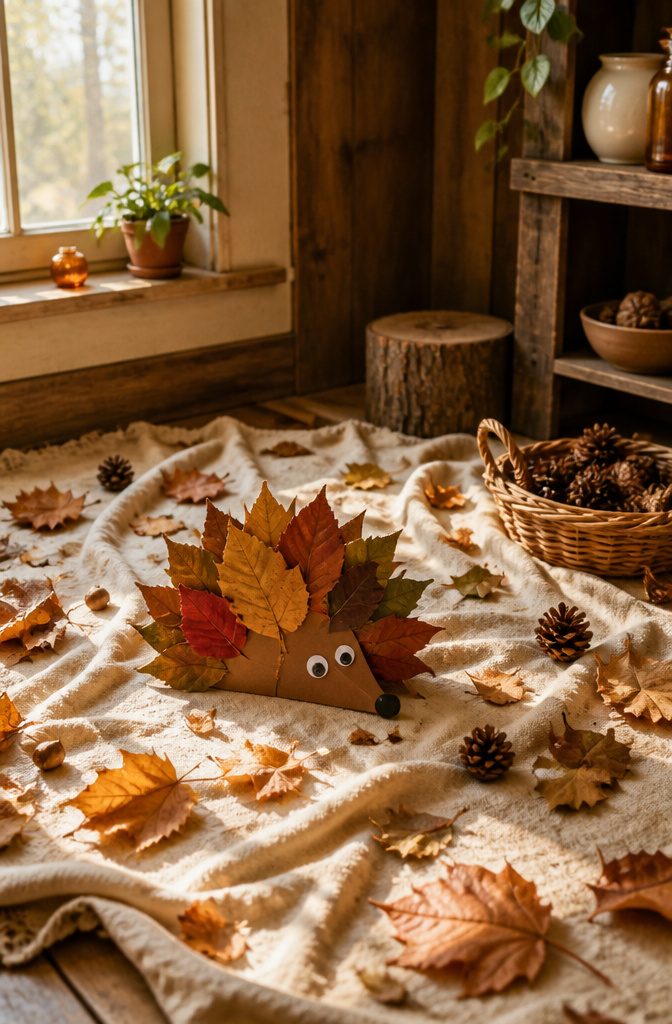
Leaf hedgehog crafts pair well with a neighborhood walk to gather materials first.
A brown paper oval or a flattened cardboard tube becomes the body, and real leaves pressed flat for a day stick on better than fresh ones that curl and crack.
White glue brushed across the back of each leaf, pressed from the center outward, keeps the spines lying flat. Googly eyes and a black marker nose finish the face.
This one works for ages four and up.
Preschoolers manage the gluing and placement fine; the only trouble spot is leaves tearing when handled too roughly. Paper leaf cutouts are the backup, though they lose the texture and the point of using what you found outside.
If you do collect, avoid the crispy brown ones already on the ground in late season. Leaves with a little bend left in them flatten best under a book overnight.
The outdoor collecting matters more than I expected. Kids who would rush through a walk slow down for the right-shaped leaf, and the craft becomes an extension of the trip rather than something done at a table in isolation.
13. Apple Threading Craft
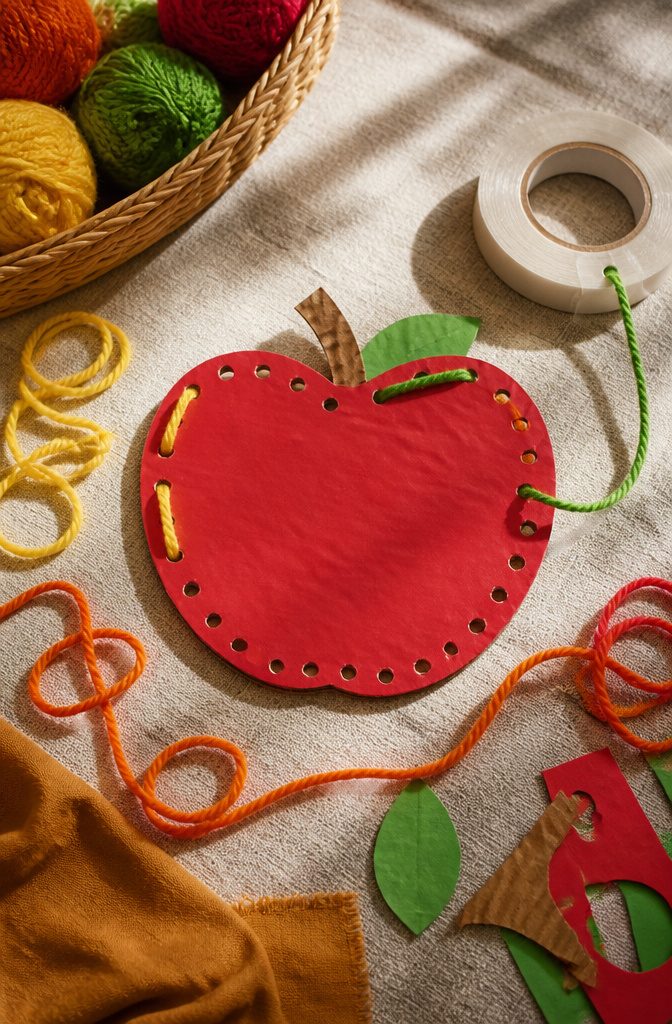
Threading activities build the small muscles in a child’s fingers that they’ll need later for tying shoes or buttoning shirts, and an apple shape turns that practice into something seasonal.
I like this one because it keeps preschool hands busy for a solid stretch without demanding constant supervision.
The setup is simple enough. Punch holes around the perimeter of a cardboard or foam apple cutout, then offer yarn with a taped end or a pipe cleaner for lacing through.
The taped yarn end stiffens just enough to thread, though a pipe cleaner holds its shape better for younger kids still frustrated by floppy material.
There’s a practical life skill buried in the repetition, not just fine motor work. The motion mirrors what they’ll eventually do with shoelaces, drawstrings, and buttons.
I’ve seen sources mention plastic lid variations with tissue paper and glue, but for a weekend project with a real budget, the basic cardboard or foam version holds up cleaner and stores flat until next fall.
14. Pumpkin Seed Counting
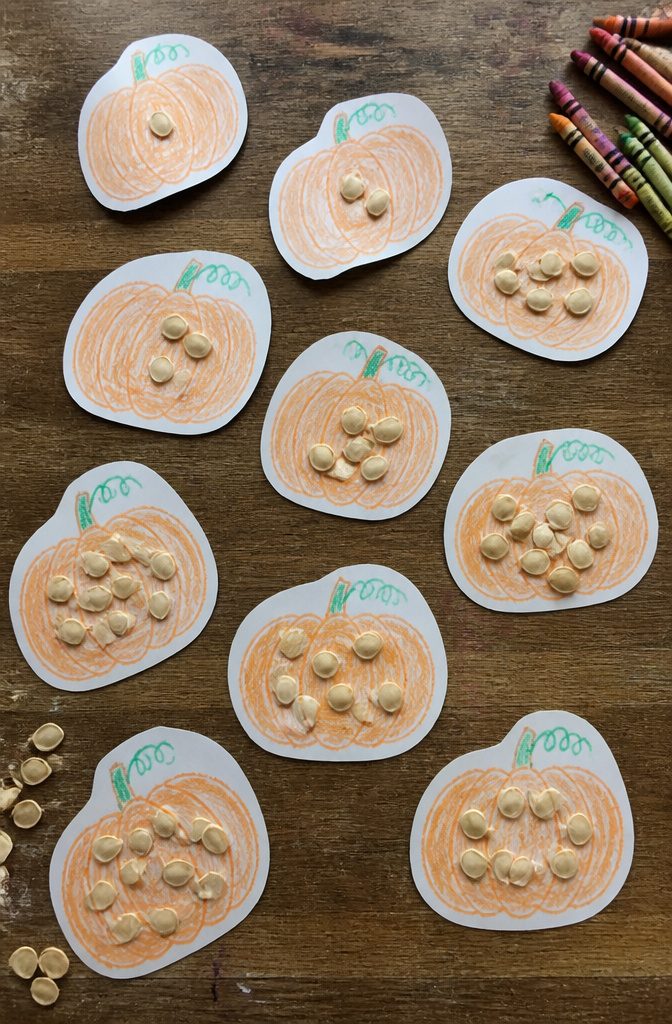
Pumpkin guts are the last thing most of us want to deal with after carving, but the seeds inside are worth the mess.
Once they’re roasted or simply dried overnight on a paper towel, they become the cheapest math manipulatives you’ll find all season.
A sheet of paper with ten hand-drawn pumpkins, each labeled 1 through 10, is all the structure you need. Preschoolers place the matching number of seeds onto each pumpkin, which builds one-to-one correspondence and numeral recognition without feeling like homework.
The seeds are small enough that counting them takes real concentration, but large enough that small fingers can manage the work.
This works best with kids roughly ages 3 to 5, though you can push the numbers higher for a kindergartener who’s ready.
The educational piece is straightforward: children see that the symbol "7" means an actual quantity, not just a shape. Using something they pulled from a pumpkin themselves makes the abstraction stick.
The only real limit is damp seeds. Any moisture left on them will smear marker lines and turn paper to mush, so dry them thoroughly before the game begins.
15. Leaf Fall Tree Craft
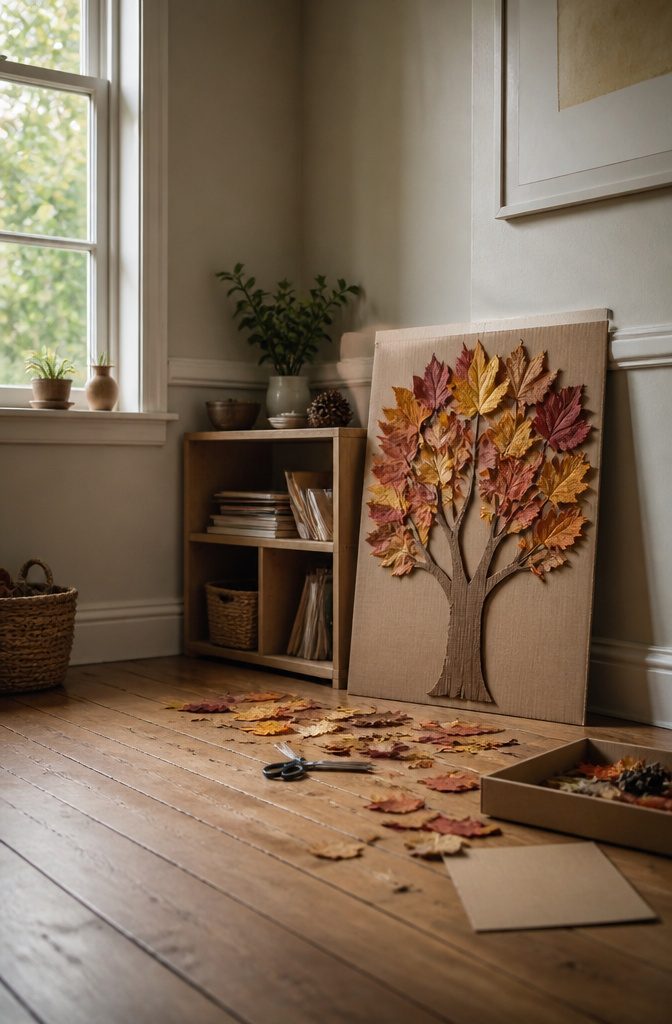
A leaf fall tree craft stands apart from paper cutouts because the leaves are the real thing, collected and pressed before they crumble.
The trunk and branches come from cardboard or thick paper drawn or cut into shape, and the leaves get attached with ordinary white glue or a glue gun if the kids are old enough to handle the heat.
Timing matters more than most projects. Leaves need to be gathered while they are still pliable and relatively flat, before the first hard frost or a week of wind turns them to fragments.
Pressing them inside a heavy book for two to three days flattens the curl and dries them enough to glue without rotting. Skip the pressing step and the leaves will lift off the page within a week.
This one works for a wide span of ages. Preschoolers can sort leaves by color and press them down, while older children arrange by size to build depth.
The cardboard base can take watercolor or oil pastel underneath the leaves, so the background reads as sky or ground rather than bare brown.
The finished pieces hold up well enough to pin to a corkboard or tape to a door, though they are not archival; expect a season of color before the reds mute to dust.
16. Pasta Owl Craft
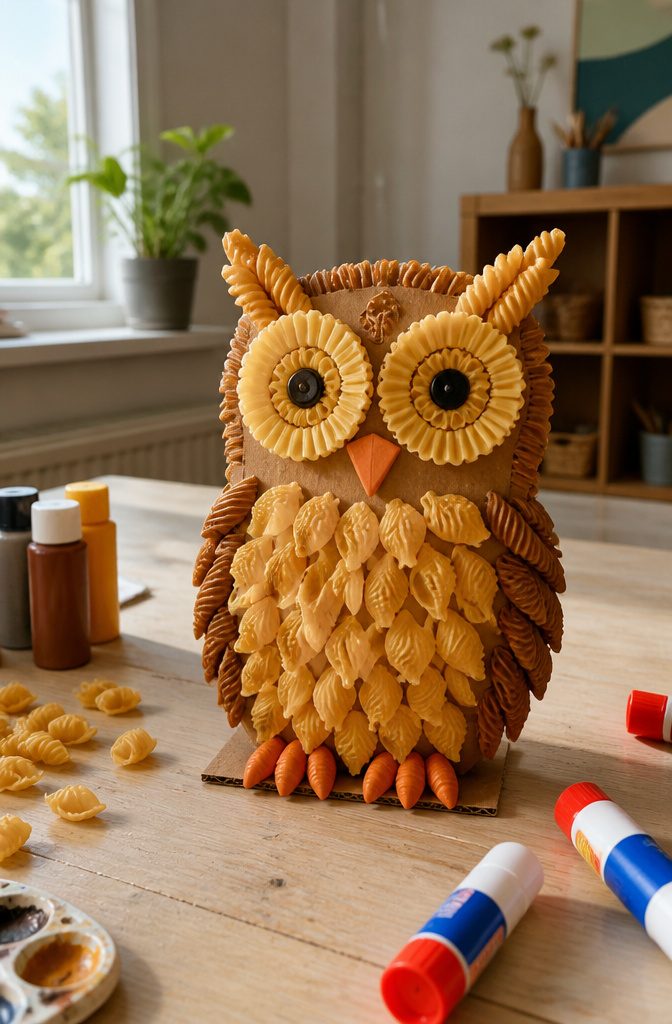
Rotini curls press into cardboard like layered feathers, and two jumbo shells become wide owl eyes once the glue dries.
This pasta owl sits somewhere between the simpler noodle crafts and a project that actually keeps older preschoolers busy for twenty minutes.
Shells, elbows, bow ties, and a single wagon wheel for the belly each need their own dab of glue, so a four-year-old gets real practice sorting shapes while an adult steadies the cardboard base.
I would skip the spray sealant some tutorials suggest and just use thick tempera paint straight onto the dry pasta.
The ridges on rotini hold color better than flat noodles do, and the shell eyes look almost tufted once you add orange paint inside the curve.
A paper plate works as backing if you are out of cereal-box cardboard, though it warps under too much glue.
17. Apple Stamping Craft
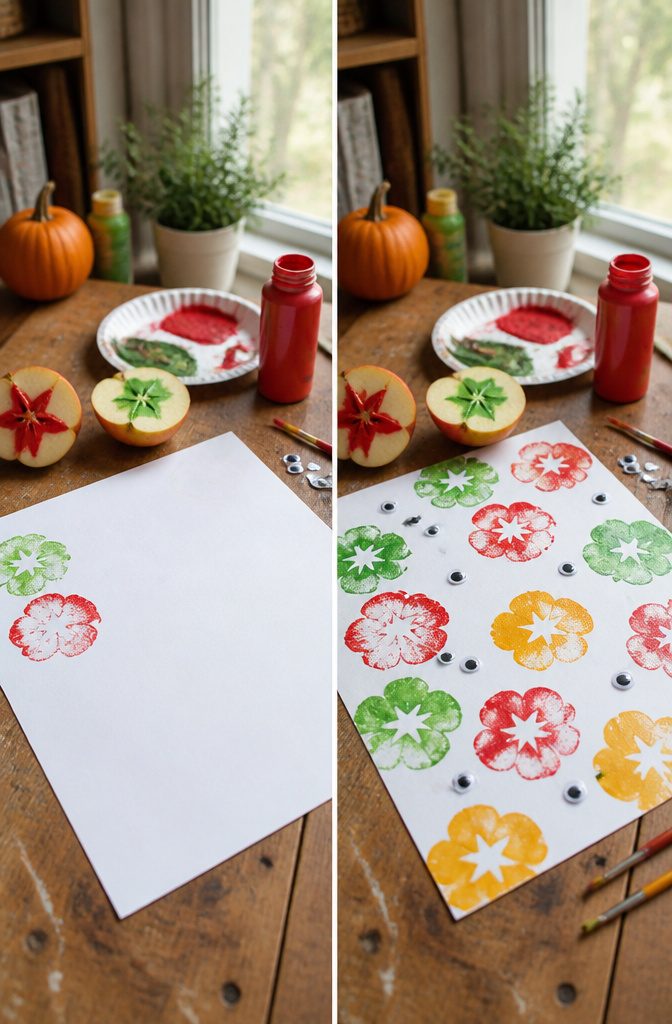
Crosswise slices through the apple reveal a near-perfect star in the core, which is the whole reason this craft outlasts every other potato-stamp idea from preschool.
A halved apple dipped in paint and pressed to paper prints that star clear enough that kids notice it without prompting, and the lengthwise cut gives a simpler oval for filling in patterns when the star gets too busy.
The materials stay minimal: any apple firm enough not to crumble, craft paint, and paper. Googly eyes stuck onto wet paint turn the prints into little creatures, which most kids under ten treat as the real finish line.
A paper plate ring glued with dried prints becomes a wreath, though that step waits on patience most three-year-olds do not have.
I have watched this project span ages from toddlers who just want to thump paint to early-elementary kids building actual AB color patterns across the page.
The apple holds up longer than you would expect, maybe a dozen stamps before the edges soften too much. The star cut works best with Galas or Fujis, something with a tight core; softer apples collapse before the pattern sets.
18. Candy Corn Noodle Craft
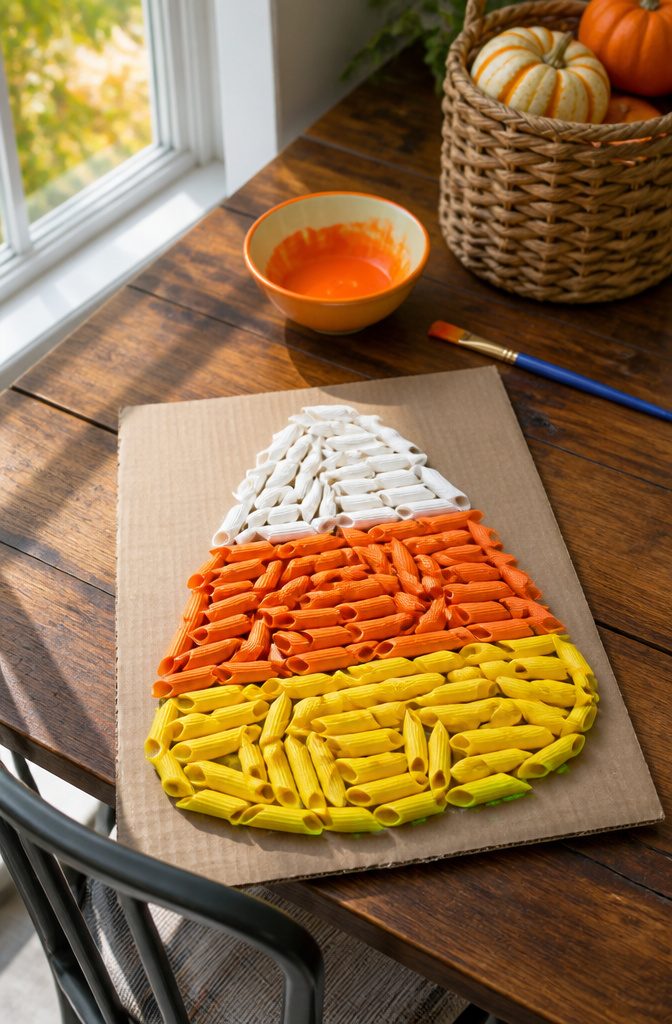
Candy corn’s three-color stripe is what sets this noodle project apart from the usual single-shade pumpkin or leaf.
You need uncooked pasta, acrylic paint in white, orange, and yellow, and either glue for a collage or string to hang the finished pieces.
The stripe pattern matters: white at the tip, orange in the middle band, yellow at the base, and the paint needs to dry between colors or the edges bleed into a muddy smear.
I have watched that happen when a six-year-old got impatient and painted wet-on-wet; the result looked like a traffic cone, not candy.
This one works for ages four and up. Younger kids can manage the yellow base coat while an adult handles the finer white tip, or you skip the precision entirely and call it abstract.
The seasonal hook is obvious, since the candy shows up in bowls from late September through Halloween, and kids recognize the pattern before they can name it.
For display, a dab of school glue on construction paper holds them flat, or you thread yarn through the hollow center of penne or rigatoni to make a garland that swings when the heat kicks on.
19. Fall Color by Code
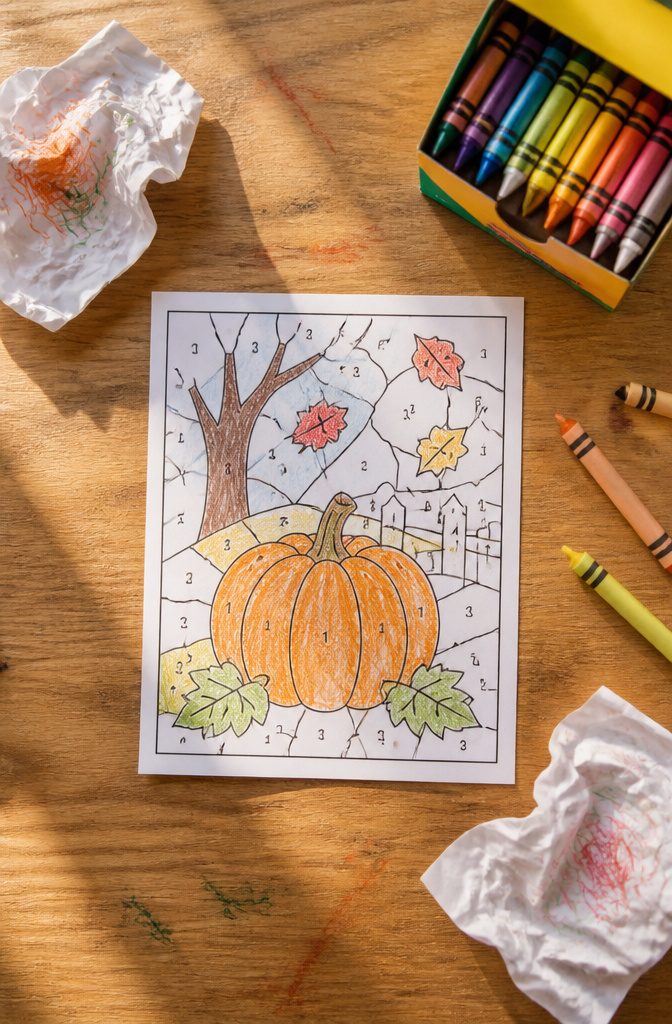
Printed sheets and a fresh box of crayons make color-by-code pages one of the calmer entries in a fall craft lineup.
The child matches each numbered section to a color key, or solves a simple addition problem to learn which crayon to use.
My own preference runs to the math-based versions for early elementary ages, around five to eight, since the quiet seat work actually builds something while the glue and glitter projects dry on the kitchen table.
Markers work faster, but crayons forgive a slip outside the line. The educational hook is straightforward: number recognition, letter matching, or single-digit arithmetic wrapped in a leaf or pumpkin outline.
I have noticed that after a morning of leaf collecting and paint mixing, both child and adult need the reset that a sit-down page provides.
The activity requires no setup beyond hitting print, which matters when the weekend hours are already half spent and the grocery run still looms.
20. Apple Seed Counting Puzzles
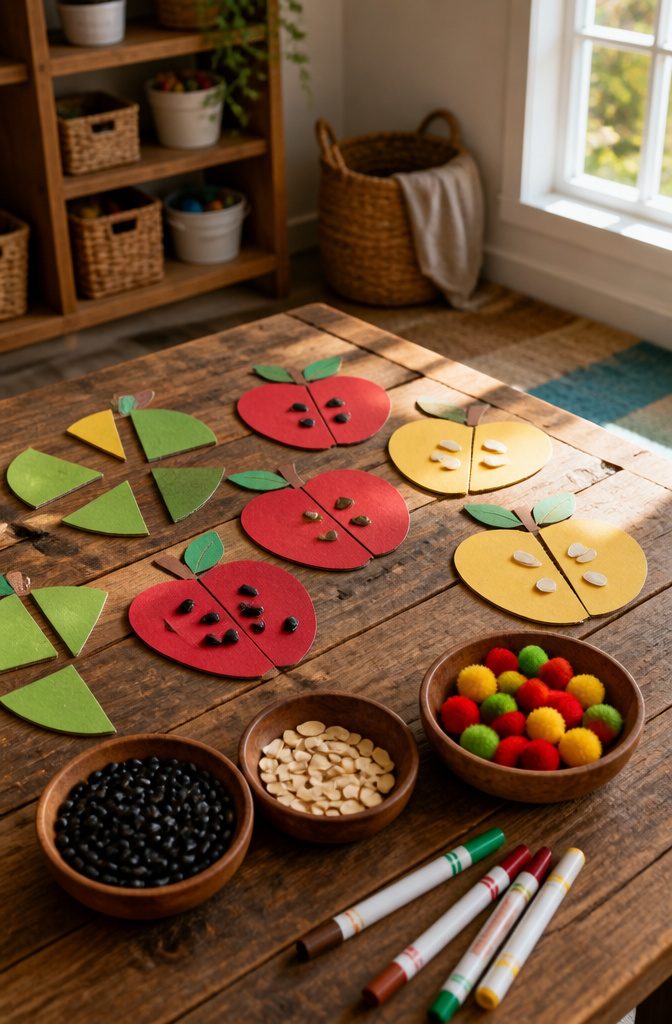
Apple seed counting puzzles work best with felt or thick cardstock cut into simple apple shapes, each one sliced into numbered wedges.
Preschoolers match the numeral on a wedge to the correct pile of seeds, snapping the pieces back together when the count lines up.
Black beans, actual apple seeds saved from snack time, or small black pom-poms all read as "seeds" to a four-year-old, though beans are easier to handle and less likely to roll under the couch.
The math lands differently here than with loose counting activities.
Because the puzzle only completes when the number matches the seed pile, the child gets immediate visual feedback: a gap means the count is off, a flush edge means it is right.
Numbers stay under ten for most three- to five-year-olds, and the apple shape itself gives a seasonal hook without adding holiday clutter you will store eleven months of the year.
Felt holds up to repeated classroom or sibling use; paper works fine for a single rainy afternoon. Draw the seeds on if actual small objects frustrate your kid, but the tactile count is what makes this stick.
Frequently Asked Questions
What are some easy fall crafts for kids?
Twenty ideas for 2026 include sunflower noodle crafts, fork-printed trees, alphabet pumpkins, paper-bag scarecrows, coffee-filter leaves, puffy paint pumpkins, and apple stamping.
Most use supplies already in the house: paint, glue, paper, and pasta. The noodle sunflower ranks as the easiest starter project, needing only a paper plate, yellow paint, and uncooked macaroni.
What materials do I need for fall crafts?
Cardboard, acrylic paint, white glue, and uncooked pasta cover most projects in the list.
Natural items like pressed leaves and pumpkin seeds appear in the leaf hedgehog and counting activities. Many households already own three of the four basics for the noodle sunflower; coffee filters and cotton balls handle the rest.
Are these crafts suitable for toddlers?
Yes, several are built specifically for toddlers and preschoolers. The cotton-ball apple dabber uses clothespins so fingers stay mostly clean, and the fork-printed tree keeps wiggly three-year-olds at the table longer than a brush would.
The puffy paint recipe works best from age four up, since younger kids tend to smooth away the texture.