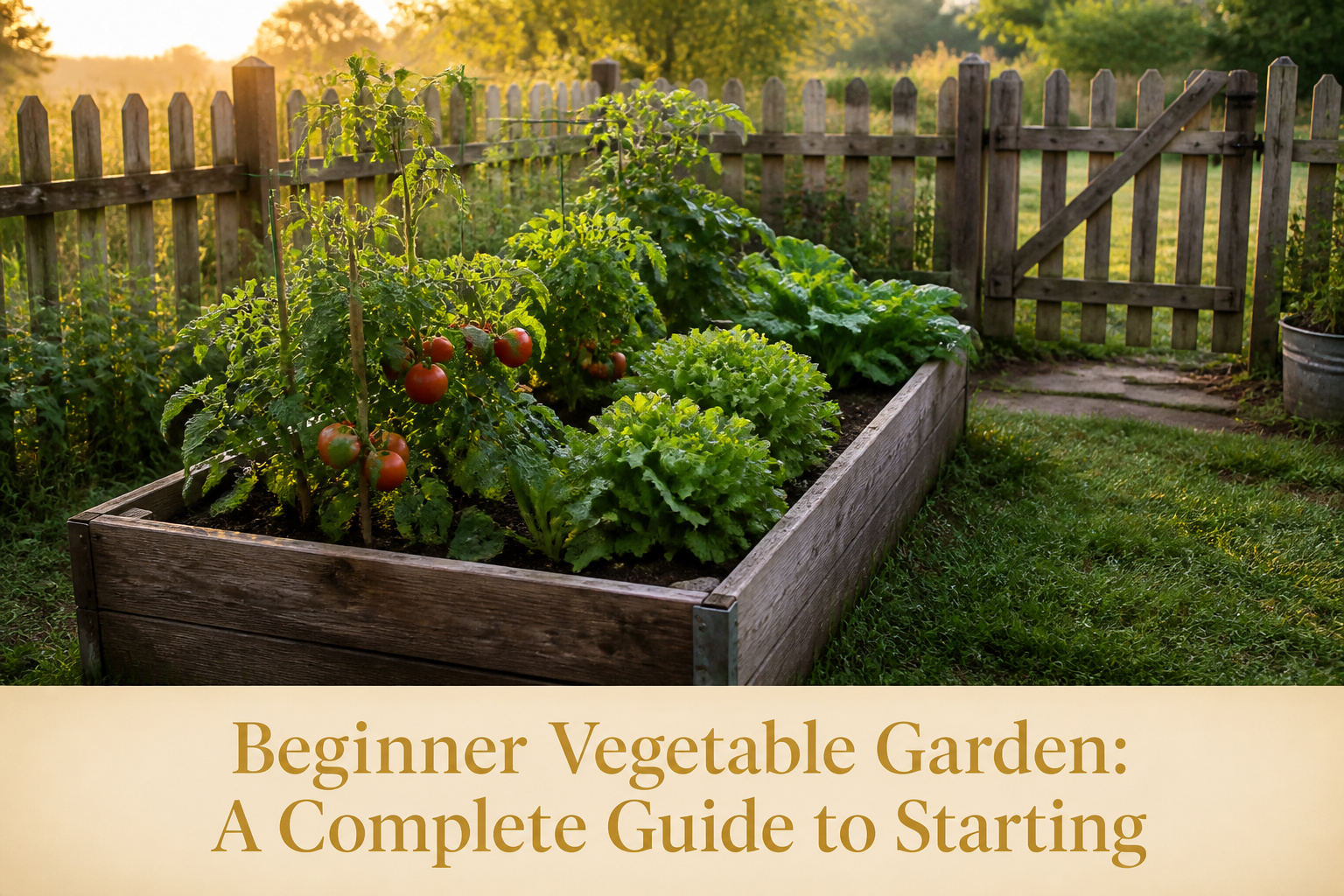
A beginner vegetable garden is a contained plot, usually one or two raised beds, where someone with no growing experience plants vegetables they will actually eat.
The catch is that most first attempts fail from too much space, not too little; a 4×8-foot bed stays weeded and watered, while a 12×12 plot turns to crabgrass by August.
I learned this after losing an entire in-ground season to scale I could not maintain. Starting small is not a compromise; it is the structure that lets the garden survive your learning curve.
Choose a Sunny Location
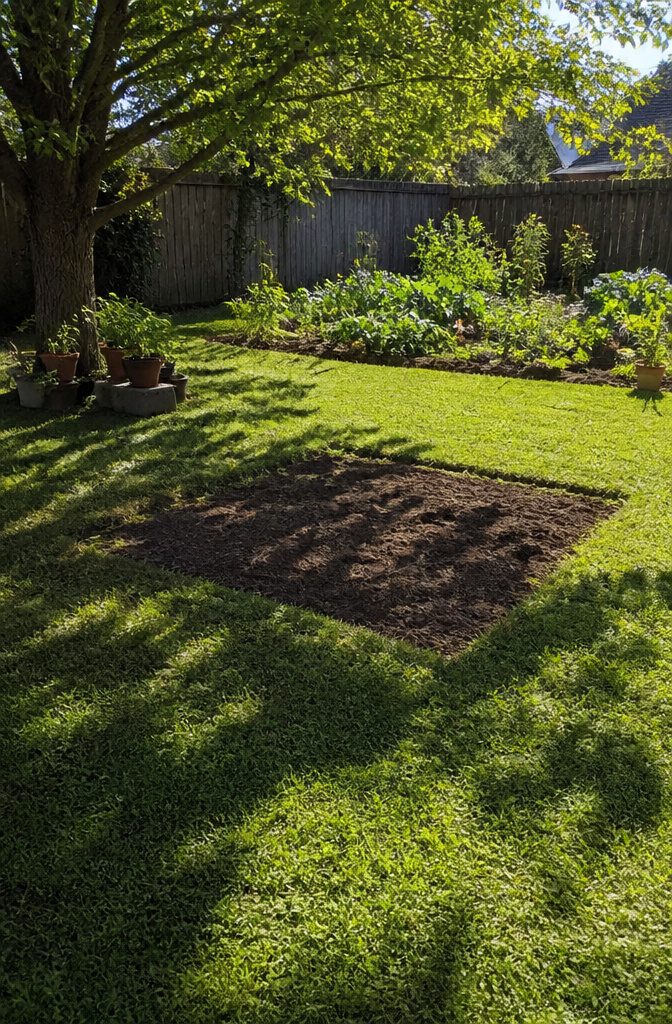
Most vegetables need 6 to 8 hours of direct sunlight daily to produce the sugars that make a tomato taste like something and a pepper grow to full size. Morning shade with afternoon sun works; the reverse does not.
I learned this the hard way after pacing my backyard at 7 a.m. with a folding chair, convinced I’d found the perfect spot. By June, that same patch sat in shadow from a neighbor’s oak by ten in the morning.
The tomatoes ripened pale and mealy. The lettuce, meant as an afterthought, thrived there instead.
Watch your candidate site through the whole growing season, not just the hour you happen to look. Trees leaf out.
Shadows shift. What reads as full sun in March often turns into partial shade by July, and vegetables will not forgive the difference.
Leafy greens can tolerate less, but if you are planting for tomatoes, peppers, or squash, six hours is the floor, not the suggestion.
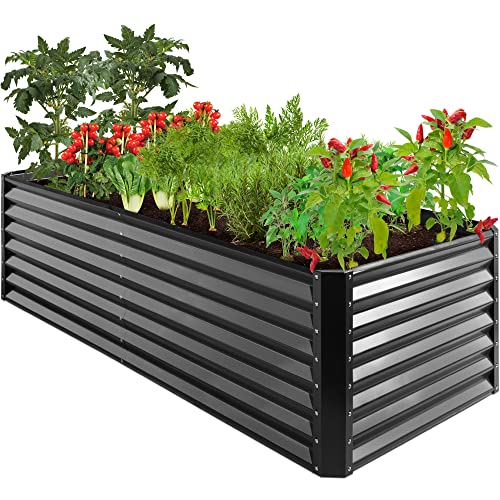
2FT GROWING DEPTH: 24-in. depth holds up to 478 gallons of soil, ideal for medium to deep-rooting plants and vegetables such as broccoli and beans; bottom panel not included

BEGIN YOUR GARDEN JOURNEY: This 8x4x1ft galvanized raised garden bed has all the needs in gardening! Thickened sheets and durable structure build a ideal environment for vegetables or plants. Also there are multiple sizes and colors you can choose to fit your gardens!

BEGIN YOUR GARDEN JOURNEY: This 8x4x1ft galvanized raised garden bed has all the needs in gardening! Thickened sheets and durable structure build a ideal environment for vegetables or plants. Also there are multiple sizes and colors you can choose to fit your gardens!
Prepare the Soil
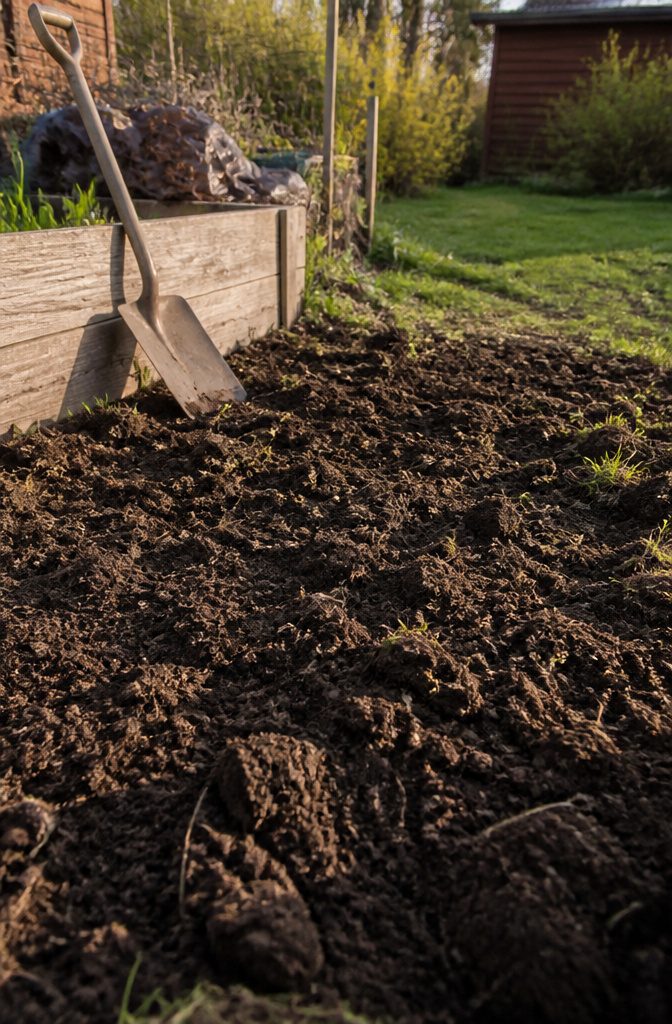
Grass and weeds will fight your vegetables for water and nutrients, so clearing them out comes first.
A shovel works fine for small plots; for larger areas, a sod cutter saves your back and the rental fee pays for itself in time.
Remove the top layer, shake the soil loose from the roots, and return it to the bed.
Whatever you miss will resurface, so lay cardboard or a tarp over the bare ground for a few weeks to smother anything still alive underneath.
Once the area is clear, add a two to three inch layer of compost and work it into the soil with a shovel or rototiller.
Compost gives sandy soil the body to hold moisture and lightens clay so roots can breathe. Well-rotted manure works too, and stables or farms within driving distance often give it away if you haul it.
The organic matter should go down at least a month before you plant, which means this step happens early or your spring timeline slips.
Drainage matters more than beginners think. If water pools after rain or the ground stays muddy for days, stop and build a raised bed with crushed stone underneath rather than fight soggy soil all season.
Root vegetables need room to grow downward. A 10-inch depth of loosened, amended soil keeps carrots and beets from forking or stalling against compacted ground.
I skipped the soil test my first year. The Extension guidance says the ideal pH sits around 6.5, with most vegetables tolerating 6.0 to 7.2, and I figured my compost would cover the spread.
It mostly did, but my tomatoes stayed pale and slow until mid-July, when a neighbor suggested the ground might be too acidic.
A $15 test later confirmed it. Now I test in fall, adjust over winter, and plant with some confidence instead of hope.

100% Natural Compost for Plants - Compost is a nutrient-rich, soil-like substance made from blending yard trimmings and plant residue, such as leaves and grass clippings. Together, they’re composted to make a growing medium that’s part fertilizer, part soil amendment. When mixed with garden soil, compost helps loosen soil, holds onto moisture, and provides essential nutrients for plants.

NUTRIENT-RICH GROWTH: Premium cow manure compost packed with nitrogen, calcium, and iron. This organic compost fertilizer enriches soil, boosts microbial life, and supports bigger vegetables, greener lawns, and thriving flowers.

Nutrient-Rich Organic Compost for Healthy Soil: Support stronger plant growth with this premium organic compost made from dairy cow manure. This all purpose soil amendment helps replenish essential nutrients often depleted after harvests, making it ideal for vegetable gardens, fruit trees, flowers, lawns and container plants.
Start With the Right Size
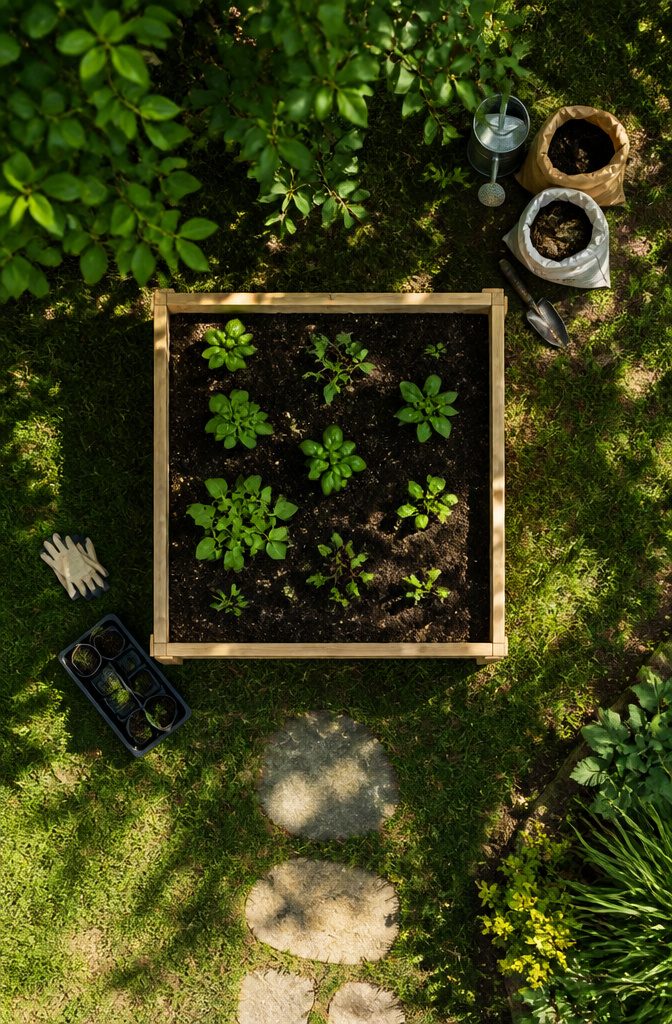
A 4×4 or 4×8 foot raised bed is the right starting point for a beginner vegetable garden.
That footprint gives enough room for three to five vegetable types with a few plants each, and you can reach every inch from the edge without stepping on the soil.
Small wins in year one because you can actually keep up with it. Weeds do not negotiate, and a bed you can weed in ten minutes on a July evening is one that gets weeded.
My own first attempt was a 12×12 in-ground plot, and by mid-August the crabgrass had won; I could not identify my tomato plants from the couch grass.
The peppers I had nursed from seed died of neglect while I was on vacation, because the scale made every chore an hour-long project.
I rebuilt the following spring with a single 4×8 raised bed, added a second the next year after that one stayed weed-free, and now run four beds three years later.
The expansion happened because the first one worked, not because I was recovering from failure.
It’s better to be proud of a small garden than be frustrated by a big one.
That means one bed, planted well, beats a quarter-acre of good intentions. You can always dig more ground next spring.

【35-45% Sun Shade for Healthy Plant Growth】 This garden shade cloth blocks about 35-45% of harsh sunlight while still letting enough light through. Perfect for vegetables, flowers, seedlings, tomatoes, and other plants that need protection without full shade.
【35-45% Sun Shade for Healthy Plant Growth】 This garden shade cloth blocks about 35-45% of harsh sunlight while still letting enough light through. Perfect for vegetables, flowers, seedlings, tomatoes, and other plants that need protection without full shade.
【35-45% Sun Shade for Healthy Plant Growth】 This garden shade cloth blocks about 35-45% of harsh sunlight while still letting enough light through. Perfect for vegetables, flowers, seedlings, tomatoes, and other plants that need protection without full shade.
Pick Easy Crops
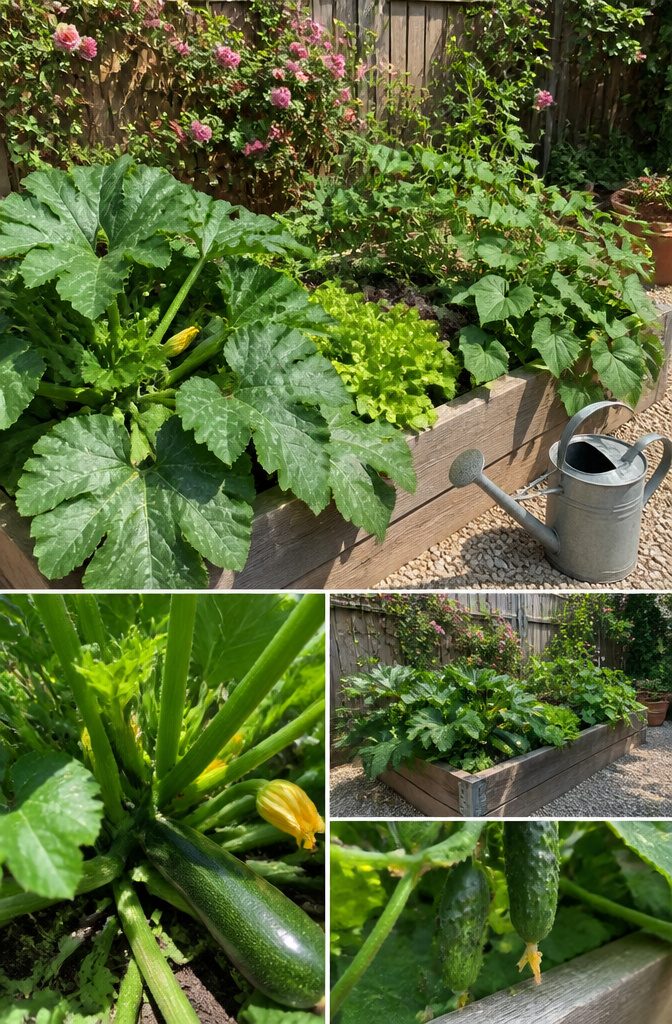
Lettuce was the first thing I ever planted, and the reason I stuck with gardening.
Loose-leaf varieties like Oak Leaf come up in days, and you can cut leaves while the plant keeps producing. That early reward matters when you are waiting on everything else.
Tomatoes taught me that "easy" depends on which kind.
Cherry varieties forgive cramped quarters and irregular watering in ways that big slicers never did for me. The first year I tried Supersonic, I finally understood why people reread this crop.
Zucchini, beans, and cucumbers all fall into the same trap: they grow fast enough to make you feel like an expert, then produce more than you can use.
Bush beans need no trellis. Cucumbers do better with one; Marketmore 70 has enough disease resistance that you might actually harvest before the vines collapse.
Carrots and radishes look simple on paper. In my first bed, they came up thick as grass because I could not bring myself to thin them.
Thinning is the work; the seeding is not. Chantenay carrots handle heavier soil, and Cherry Belle radishes mature so fast you can replant the same spot twice.
Swiss chard, beets, and garlic were crops I added later. Fordhook Giant chard keeps producing cut-and-come-again leaves through heat that kills spinach.
Beets give you greens and roots. Garlic sits in the ground all winter and asks almost nothing.
Peppers stalled on me for two seasons before I realized my mistake: I was planting them when the soil was still cool. Wait until nights stay reliably warm, or you are just parking a plant.

1.5 INCH CRUSHED LIMESTONE – Natural crushed limestone approximately 1.5 inches in size with an angular shape and gray, light gray and natural stone color variations.

Eco-Friendly Recycled Smart Gravel: Made in the USA from 100% recycled plastics to help reduce environmental waste and plastic pollution
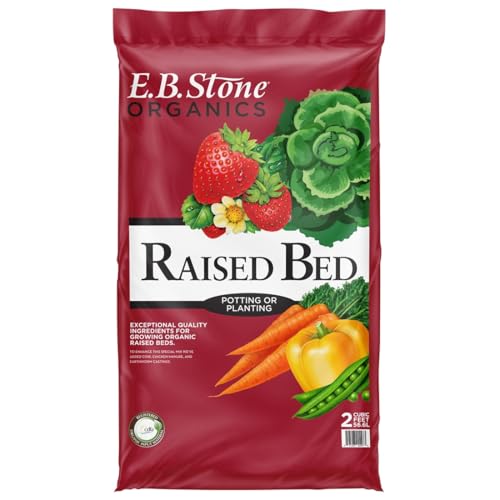
BUILT FOR RAISED BEDS - A rich, organic, ready-to-use garden soil blended specifically for raised beds, large containers, and vegetable gardens, no mixing required.
Plant at the Right Time
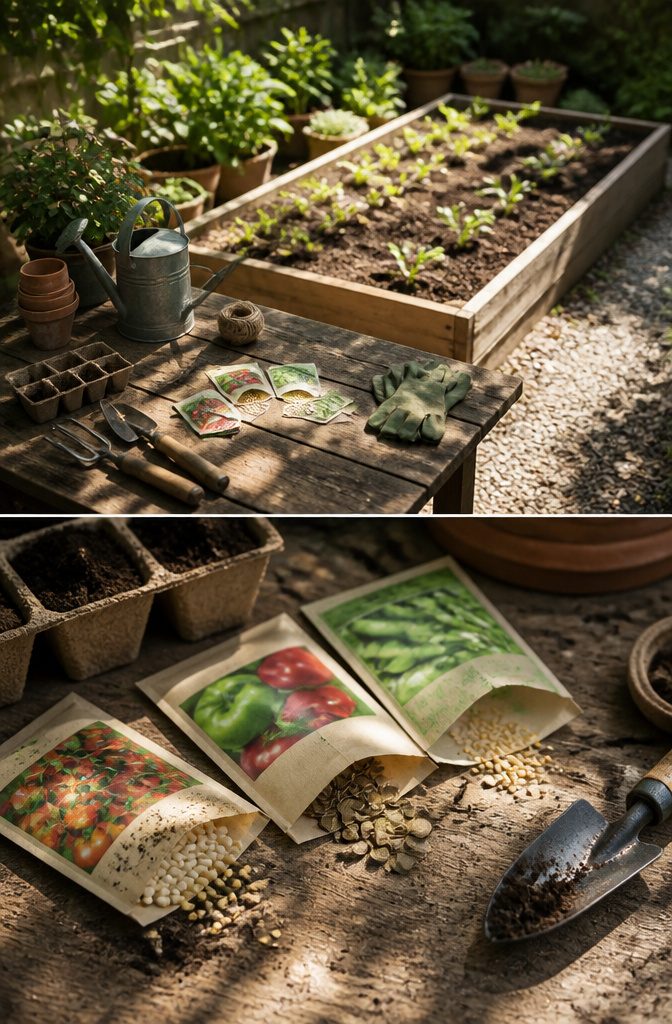
The average last spring frost date in your ZIP code is the number that matters most for a beginner vegetable garden, because it gates when warm-season crops like tomatoes and peppers can survive outside.
I learned this the expensive way. Memorial Day weekend felt safe, the nursery had full shelves, and I set out a dozen tomato transplants in ninety-degree sun.
A late frost arrived that Wednesday and killed every one. Frost dates are a guide, not a promise.
Cool-season crops, radishes and peas among them, tolerate chill and even improve for it.
Warm-season crops need settled soil and air before they go in. The mistake I repeated was treating radishes as a throwaway crop I could plant whenever a bed opened up.
A July sowing bolted straight to flower in the heat; I never harvested a single root. Succession planting works only if the crop matches the season you are in.
Plant something new almost every week, yes, but match the something to the temperature window. Late winter and early spring belong to cold-hardy greens and peas.
Midsummer through mid-fall is when you restart those same frost-tolerant crops, not when you squeeze in one more round of heat lovers that will not mature before the cold returns.
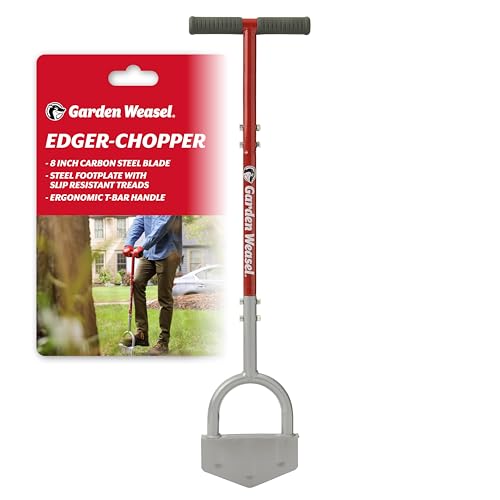
Crisp, Clean Edges - Create sharp defined borders along flower beds, driveways, and walkways using this manual lawn edger tool for a pro-level finish without gas or gadgets

Ideal Garden Edger: BlumeTrec lawn edger tool is designed to create crisp, clean edges along sidewalks, driveways, patios, walkways, and garden borders. Garden edger trims grass around flower beds, lawns, and landscaping areas with precision. The reinforced half-moon blade easily penetrates soil for smooth, controlled edging, allowing homeowners to maintain neat yard lines, define garden borders, and install plastic edging with ease, making everyday yard care simpler and more effective.

Product Composition: This is a 7 inch sprinkler head turf cutter, specifically designed to cut 7 inch diameter circles around sprinkler heads
Water and Maintain
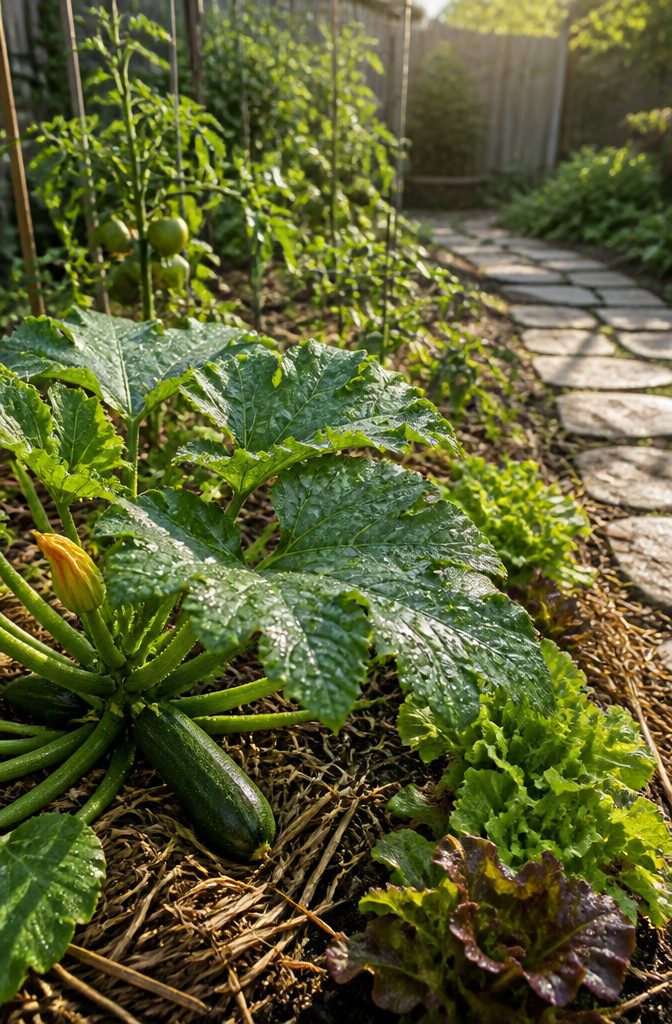
A beginner vegetable garden needs about one inch of water per week, either from rain or from you.
Early morning is the better time to soak it, since the leaves dry before evening and you lose less to evaporation than you would in the afternoon heat.
Late afternoon works if morning is not an option, but aim the water at the soil rather than the foliage so the plants do not sit damp overnight.
Mulch buys you margin. A two-to-three-inch layer of straw or shredded leaves slows evaporation and keeps the soil temperature steadier, which matters more than I expected when I started.
Weed seeds still germinate on top of it, but the ones underneath struggle for light, and the ones that do come through pull out easier than they would from bare ground.
I spent an evening pulling seedlings every few days and thought I had the rhythm down. Then a July heat wave hit while I was away for six days.
The zucchini leaves had gone from deep green to something closer to parchment, edges curling like rolled paper, and the stems were soft where they should have been firm.
They recovered with water and shade cloth, but the harvest that week was half what it should have been. A few minutes daily beats an hour of catch-up, and the garden does not pause for your schedule.
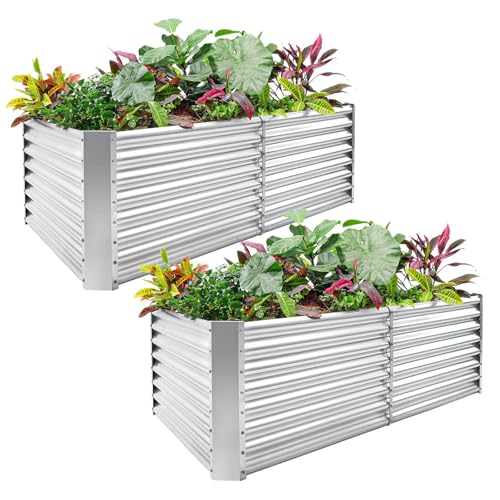
2 feet height: Compared with the ordinary 1-foot garden bed, this raised garden box has been improved in all aspects in terms of aesthetics, stable performance, and soil volume. It is time to replace the previous small planter box with a large raised planter box Now, it must be your better choice! ! !

SIZE: Thanaddo raised garden bed measure is 8x4x2 ft and provide ample growing space to increase your garden diversity. This large planter box give your garden more beauty with the advanced black.
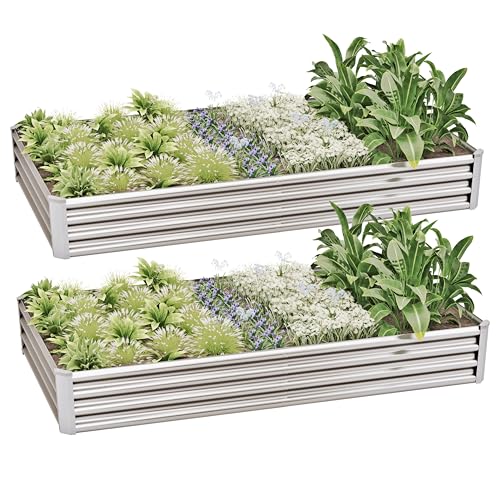
SIZE: kindder raised garden bed for gardening measure is 96"L x 48"W x 11.8"H. This planter box provide ample growing space to raise vegetables, flowers and plants.
Soil Types and What Changes Them
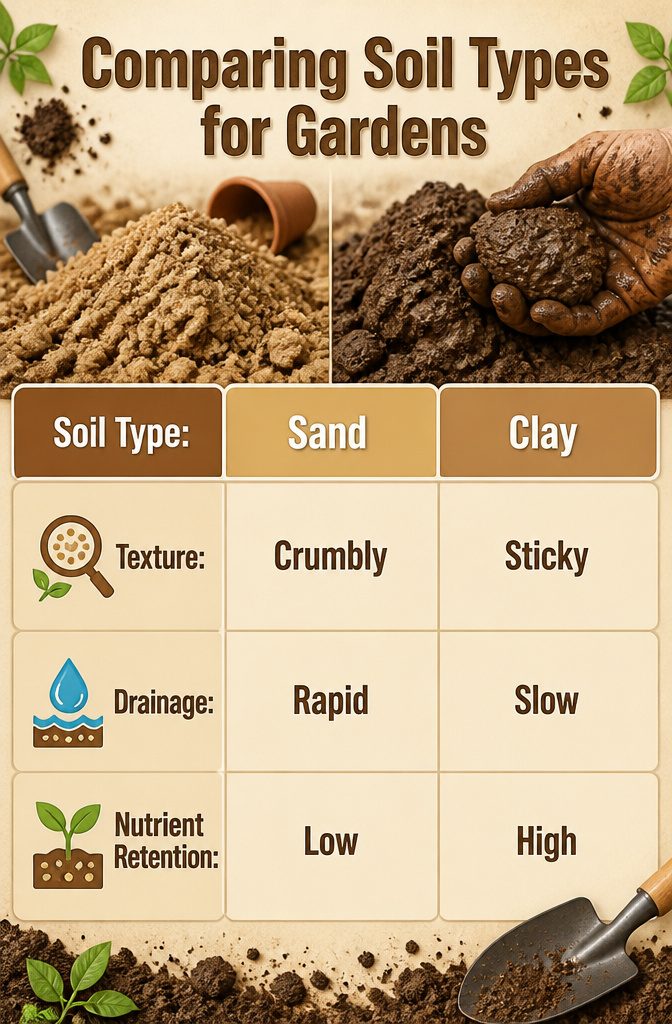
Soil tells you what it is if you give it a squeeze. Grab a handful of moist dirt from a few inches down and press it with your finger.
Sand falls apart like dry cake crumbs and won’t hold a shape at all. Clay forms a sticky lump that stays put, dense enough to make root growth a real fight.
Loam, the one you want, holds together briefly then crumbles like chocolate cake, the balance of sand, silt, clay, and organic matter that drains well and still feeds plants.
Each type comes with a trade. Sand drains fast, almost too fast, and nutrients wash through before roots can grab them.
Clay holds water until it drowns roots, then bakes hard enough to crack. Most backyard soil sits somewhere between the extremes, which is where compost comes in.
Spade in well-decomposed organic matter to about five inches deep. In sand, compost adds body and water retention.
In clay, it breaks up the structure so water can move through. Either way, skip the peat moss if you’re watching costs; homemade compost or well-rotted manure from a nearby stable does the same work for less.
A simple home soil test kit checks pH while you’re at it.
Most vegetables want right around 7, some a little higher, some lower. The reading doesn’t need to be laboratory perfect to tell you whether you’re in the right range or fighting your ground.
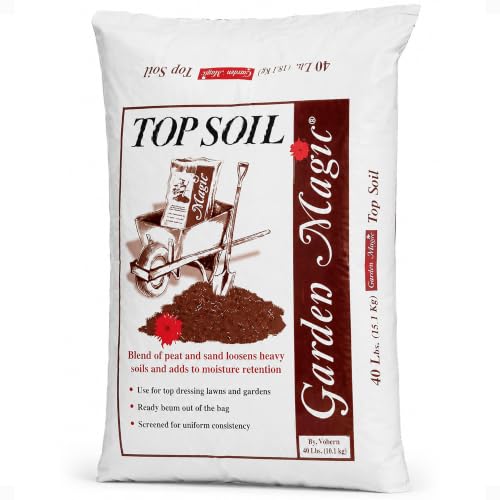
Ready-to-Use for All Planting Needs: This general-purpose potting soil is ready to use out of the bag, perfect for both indoor and outdoor planting without any extra prep

PREMIUM INGREDIENTS: This specifically crafted organic compost blend provides a lightweight potting mix that supports abundant growth of tomatoes and vegetables.
Sunlight and Shade Tradeoffs
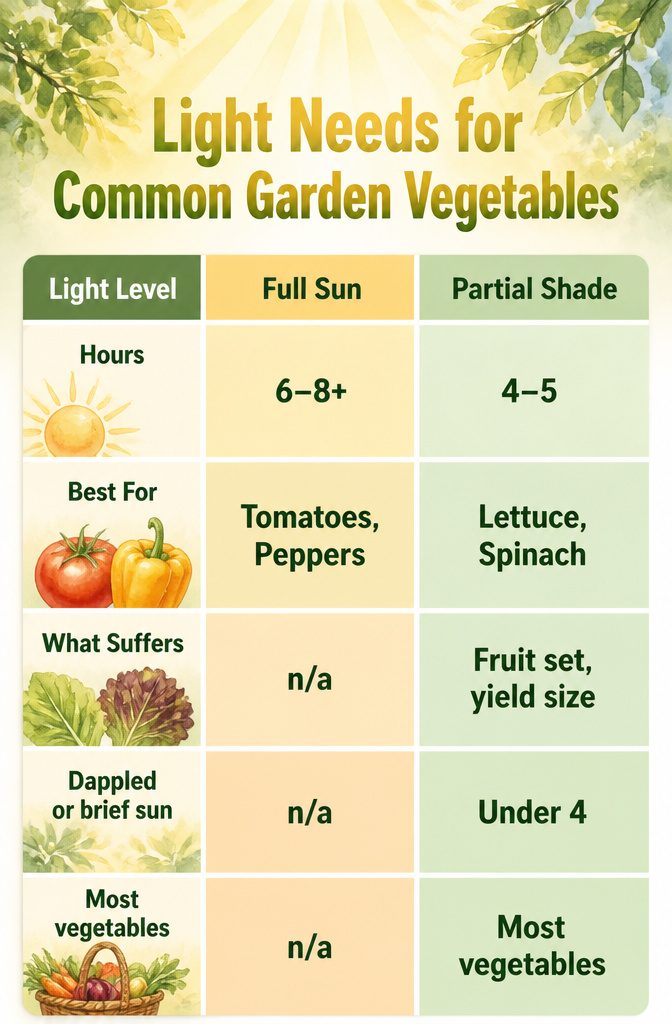
Five hours of direct light looks generous on paper until you watch a tomato plant stretch sideways hunting for more. Six to eight hours is the floor for anything you expect to feed you, not a target to flirt with.
I learned that the hard way when I tried to squeeze a bed against a garage wall that lost the afternoon sun. The peppers turned out small and took three extra weeks to blush red.
Leafy greens tolerate partial shade better than fruiting vegetables. Lettuce and spinach will keep producing with less light, though growth slows.
Root vegetables like beets and carrots fall somewhere in between; they need enough sun to swell the root but won’t abort if they get a little relief from late afternoon heat.
| Light level | Hours | Best for | What suffers |
|---|---|---|---|
| Full sun | 6–8+ | Tomatoes, peppers, corn | n/a |
| Partial shade | 4–5 | Lettuce, spinach, leafy greens | Fruit set, yield size |
| Dappled or brief sun | Under 4 | n/a | Most vegetables |
"Full sun" means direct, unbroken light during peak hours, not total daylight from dawn to dusk.
Morning shade with afternoon sun works better than the reverse. Watch your site for a full growing season before committing; a tree that leafs out in May can swallow hours you counted in March.

【35-45% Sun Shade for Healthy Plant Growth】 This garden shade cloth blocks about 35-45% of harsh sunlight while still letting enough light through. Perfect for vegetables, flowers, seedlings, tomatoes, and other plants that need protection without full shade.

Includes 2 watermelon plants, approximately 4 inches tall

Pink sunflower blooms: Pale petal edges and dark centers bring contrast to outdoor flower beds
Garden Size Compared
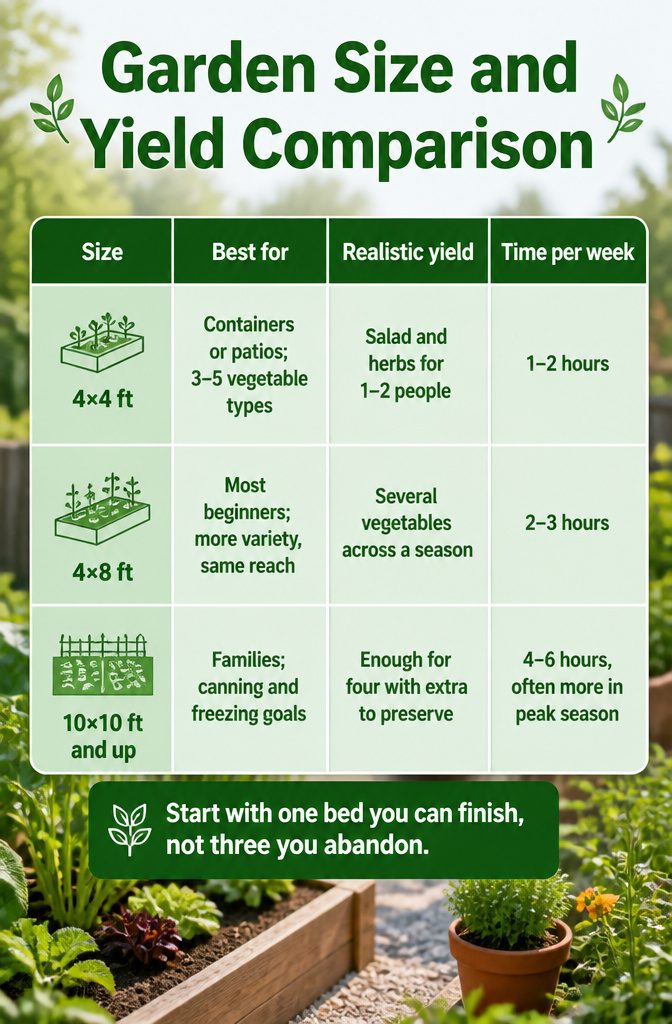
A 4×4-foot bed fits on most patios and still gives room for five or six plants, which is plenty when you are learning to water by eye and spot a cucumber beetle.
The step up to a 4×8-foot bed doubles your row feet without doubling the trouble, since both sizes keep every reach inside arm’s length from a path. Anything past that, and the math changes fast.
A 10×10-foot in-ground plot or a 12×24-foot garden sounds reasonable on paper, but sources describe those same spaces going weedy and half-harvested when life gets busy in July. Start with one bed you can finish, not three you abandon.
| Size | Best for | Realistic yield | Time per week |
|---|---|---|---|
| 4×4 ft | Containers or patios; 3–5 vegetable types | Salad and herbs for 1–2 people | 1–2 hours |
| 4×8 ft | Most beginners; more variety, same reach | Several vegetables across a season | 2–3 hours |
| 10×10 ft and up | Families; canning and freezing goals | Enough for four with extra to preserve | 4–6 hours, often more in peak season |
The mistake I keep seeing in guides is treating expansion as the reward for success.
In practice, adding a second 4×8 next year, once you know how long Saturday watering actually takes, beats digging a 10×16-foot plot that turns into a chore by August.

NATURAL 1.5" RIVER ROCK – Naturally rounded river stones approximately 1.5 inches in size with beautiful earth-tone shades of brown, tan, beige, cream and gray for an authentic natural stone appearance.

NATURAL 3/4" RIVER ROCK – Naturally rounded river stones approximately 3/4 inch in size with attractive earth-tone shades of brown, tan, beige, cream and gray.

Stable Rock Retention: Heavy-duty circular wire cages securely hold cobbles and decorative rocks, preventing soil erosion while creating firm vertical retaining pillars for outdoor spaces.
Fast Crops Against Slow Crops
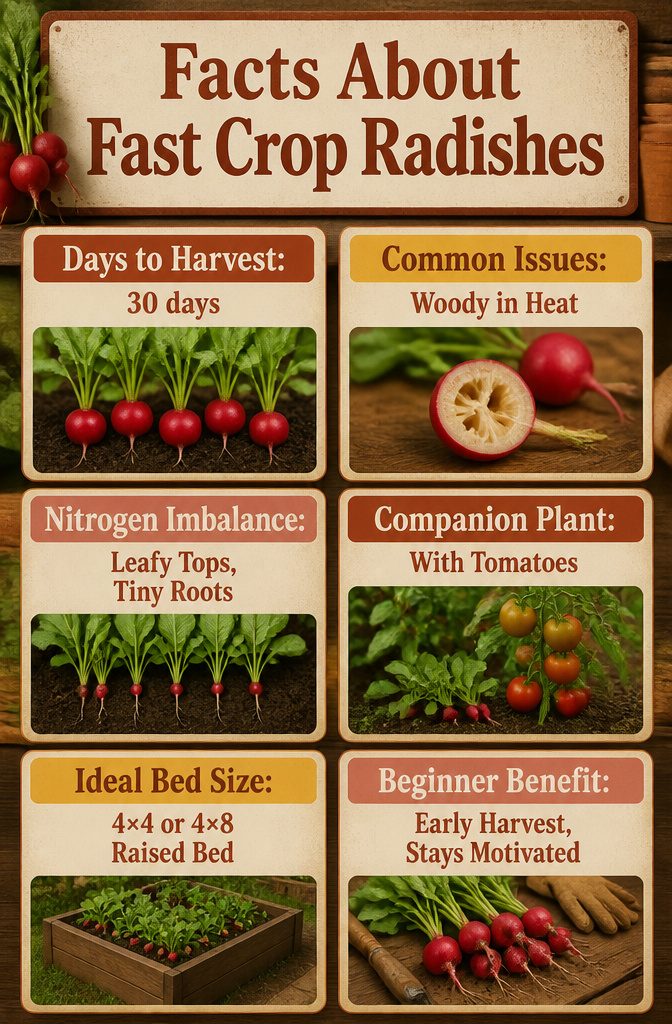
Radishes taught me the first real lesson of my beginner vegetable garden: not every fast crop is a sure thing.
They are ready in around 30 days, but heat turns them woody fast, and too much nitrogen in the soil gives you leafy tops with tiny roots underneath.
I spent years getting five good radishes at a time before I understood the balance.
That is exactly why I now plant radishes and tomatoes in the same bed. The tomatoes need 90 days or more, and the radishes fill the gaps while I wait.
The psychology of staring at a bed of slow-growing vines for three months wears a beginner down. Harvesting something, even something small, in the first month keeps the habit alive.
A 4×4 or 4×8 raised bed works well for this kind of mixed timeline.
Snap beans, zucchini, lettuce, and peppers fit the same pattern: some reward patience, others reward showing up next weekend. The mistake is planting only the slow ones and deciding gardening is boring before the tomatoes ever blush.

Profesional Contractor Grade 304 Stainless steel blade sod cutter 8" Stainless steel blade with razor sharp serrations made for sod & turf 5" handle 13" overall length ~Comes with a black nylon weave sheath

Faster, Cleaner Lawn Edging,No More Messy Borders: This manual lawn edger tool features a razor-sharp saw-tooth blade, making it the perfect edging tool for landscaping. Whether you need to edge driveways, sidewalks, patios, or flower beds, this half-moon edger lawn tool delivers smooth, clean cuts every time,no more jagged or uneven lines!
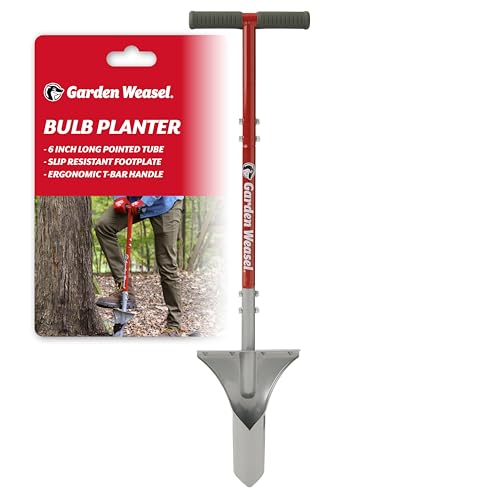
Effortless Bulb Planting - Step and press to create perfect 3.75" planting holes for bulbs, annuals, and perennials without kneeling, digging, or breaking a sweat in the dirt
Tools Worth Owning
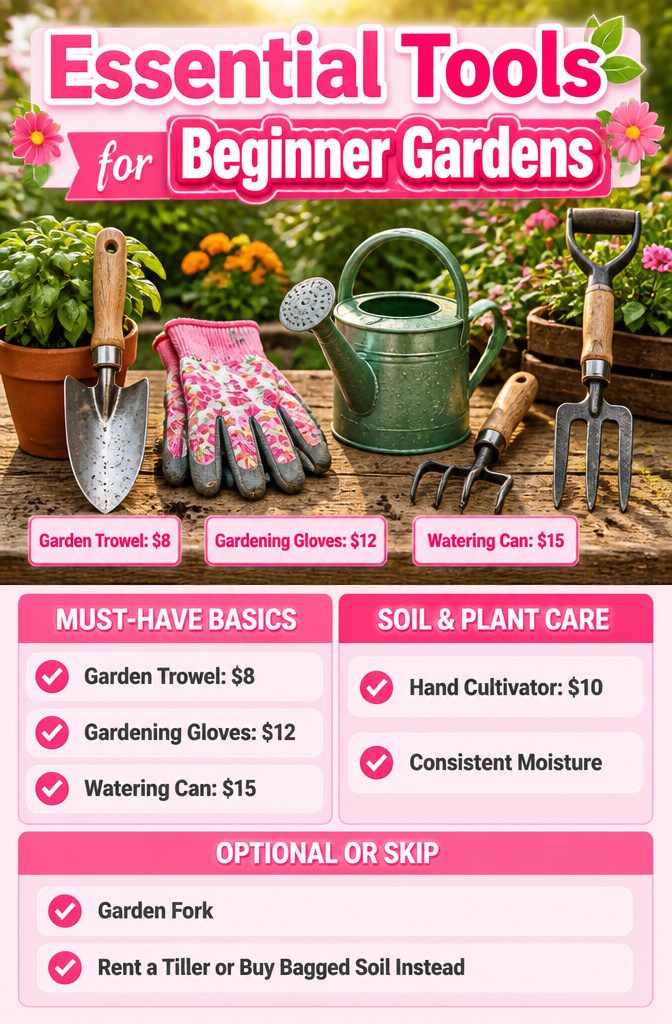
A beginner vegetable garden does not need much.
I started with a trowel, a pair of gloves, and a watering can, and those three still do most of the work. The trowel cost about $8 at a hardware store three years back; the gloves were $12, and the can was $15.
I have since added a hand cultivator for loosening soil between plantings, which ran another $10, and a short hose with a gentle spray nozzle for days when the watering can gets tedious.
Here is what actually gets used:
- Garden trowel for digging holes and transplanting seedlings. The same $8 tool still works; no need for the ergonomic grip models unless your hands already hurt.
- Garden gloves to protect against blisters and whatever lives in the soil. Cheap ones tear; the mid-range pair at $12 has lasted three seasons.
- Watering can or hose for consistent moisture. Young plants dry out fast, and a can gives you control in tight beds.
- Hand cultivator to aerate soil before planting and between rows. It is not strictly necessary, but it saves your wrists.
I also bought a garden fork early on, convinced I would turn whole beds by hand.
It sits in the garage now. For a small raised bed, a trowel and your hands do the same job with less backache.
The fork only makes sense if you are working ground-level soil that has never been loosened, and even then, most beginners will rent a tiller or buy bagged soil for a raised bed instead.
What Companion Planting Actually Does
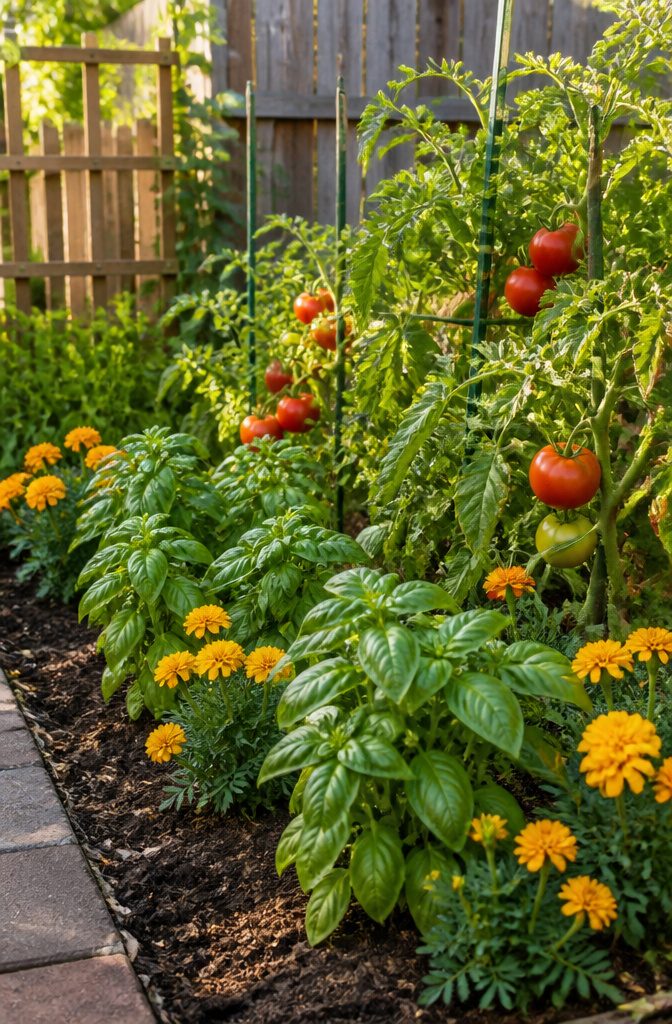
Companion planting sounds like a friendly concept, and some pairings do hold up under real use.
Basil planted near tomatoes seems to help productivity, enough that I keep doing it even if the mechanism is partly garden folklore. Onions repel enough pests to earn their spot as border plants.
Beans climbing corn stalks is the classic example everyone repeats, though in a small plot the timing gets tricky; the corn needs a head start or the beans smother it before the stalks harden.
The broader claims need harder scrutiny.
Companion planting is not a substitute for decent soil or adequate sun. Weed suppression and pollinator attraction happen, but they are side effects of dense planting in general, not magic from specific combinations.
I tried the tomato-basil pairing in three consecutive seasons and noticed healthier plants, yet I never ran a controlled bed without basil to confirm it was not just better compost that year.
The USDA notes it improves productivity and deters pests, which matches my experience enough that I still use it, but I no longer treat charts as scripture.
Some pairings are repeated so often they have become self-referencing lore. A beginner vegetable garden runs fine with a few trusted combinations and a healthy suspicion of anything that sounds too neatly symmetrical.
Frequently Asked Questions
What vegetables are easiest to grow for a beginner vegetable garden?
Lettuce, cherry tomatoes, zucchini, bush beans, cucumbers, and radishes are the most forgiving crops when you are starting out. Loose-leaf lettuce comes up in days and keeps producing if you cut leaves as needed.
Cherry tomatoes tolerate cramped quarters and irregular watering better than large slicer varieties. Radishes mature in about thirty days but need cool weather; plant them early because heat turns them woody.
How do I prepare my garden soil?
Clear out all grass and weeds first, then work in a two-to-three-inch layer of compost down to about five inches deep.
If water pools after rain, build a raised bed with crushed stone underneath instead of fighting soggy ground all season. Amend the soil at least a month before planting or your spring timeline slips.
When should I start a vegetable garden?
Plant cool-season crops like lettuce, peas, and radishes in early spring; put warm-season crops like tomatoes and peppers in only after your average last frost date and once nights stay reliably warm.
Frost dates are a guide, not a promise. Match every planting to the temperature window, because a July sowing of radishes will bolt straight to flower.
How big should my vegetable garden be?
Start with a single 4×4 or 4×8 foot raised bed, which you can weed in ten minutes and reach from every edge without stepping on the soil.
Small wins in year one because you can actually keep up with it. Add a second bed the next year after the first one stays weed-free; expansion works better than recovering from failure.
How often should I water my vegetable garden?
Give your garden about one inch of water per week, from rain or from you, and water early in the morning so leaves dry before evening.
Aim the water at the soil rather than the foliage. A two-to-three-inch layer of straw or shredded leaf mulch slows evaporation and buys you margin during heat waves.