Small space organization ideas in 2026 still come down to one tradeoff: the storage that looks best in a photo is rarely the storage you will actually use.
A lift-top coffee table beats hidden compartments because one motion clears the surface and opens the space beneath. That friction is what separates the ottoman that stores magazines from the ottoman that becomes a dumping ground.
Vertical Space
Wall-mounted shelves free up the footprint that bookcases demand, but the real gain is the line of sight they keep clear.
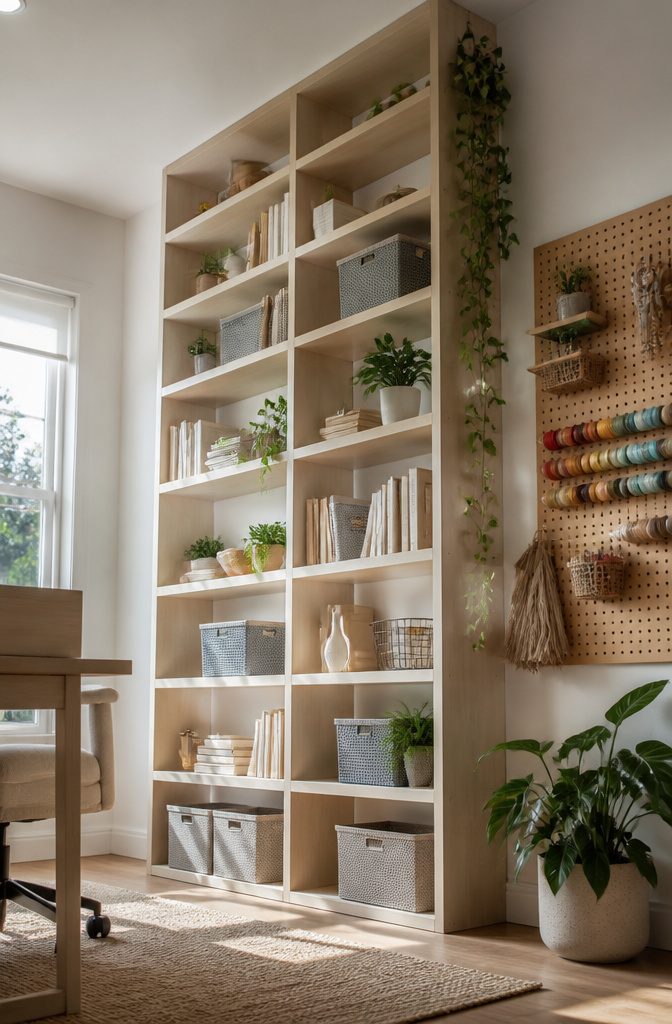
In my office, a storage wall built from IKEA’s ALGOT system, now called BOAXEL, runs floor to ceiling without the heaviness of solid cabinetry.
The mesh baskets and shelves let light through, which matters more than I expected in a room that gets about four hours of sun.
Pegboards sit in that same territory between tool and decor. One mounted above a desk catches craft supplies that would otherwise colonize every flat surface, and the arrangement itself becomes the visual interest.
For tighter spots, the Elfa Mesh Over the Door & Wall Rack in graphite costs somewhere around $20–40 depending on width, and it turns the back of a door into storage without hardware that angers a landlord.
Ceiling hooks carry the logic one step higher. Skis mounted against a stairway wall, bikes hung above a car in a single garage, these are things that would otherwise lean and slide and claim territory they do not deserve.
The hook itself is a few dollars; the floor space it buys back is the entire point.
Sturdy & Stable: These floating wall shelves mount securely with expansion screws for a stable hold. Solid plastic material delivers lasting sturdiness, supporting up to 13 lb (6 kg) per shelf. All edges are well-finished for safety and front/side lips keep your essentials secure

Keep Your Jewelry Tangle-Free and Always in Sight:With 70 thoughtfully placed hooks, this wall-mounted organizer gives every necklace, bracelet, and bangle its own spot, you'll never waste time untangling knots again. Instant calm, instant access

Floating Shelves for Wall Storage Set of 6 - The size of the WOPITUES floating shelves for wall is 16.5*6*0.6 inches. WOPITUES Floating Wall Shelves for Bathroom/Bedroom Set of 6 could give you extra storage space in the bathroom, bedroom, guest bathroom, kitchen, and living room. You can install our floating shelves for wall anywhere you like. Let’s make life simpler.
Storage Furniture
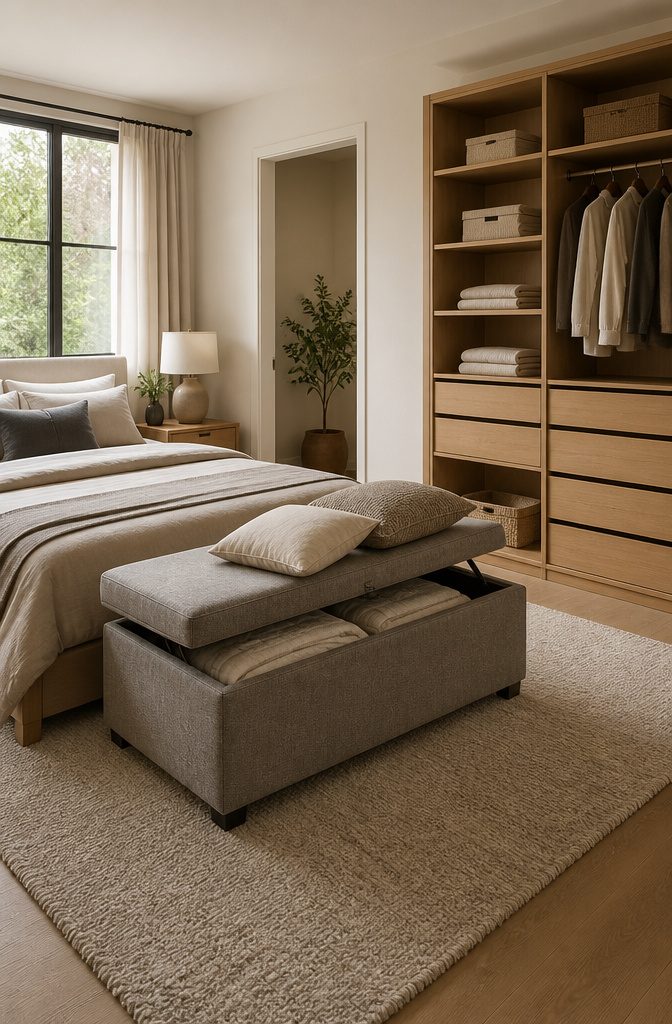
Storage furniture only earns its floor space if it actually gets used.
The ottoman in my last apartment looked clever until lifting the lid meant clearing everything off the top first. That friction turned it into a dumping ground for magazines I meant to recycle.
Beds with drawers underneath fix the access problem, though they work best when the drawers face the side rather than the foot.
Foot-facing drawers in a tight bedroom mean standing at the mattress edge to yank them open, which gets old fast.
Coffee tables with hidden compartments fall into the same trap: the storage is only as good as the daily hassle of reaching it.
A lift-top works better than a sliding panel, in my experience, because one motion clears the surface and opens the space beneath.
The IKEA PAX wardrobe system gets mentioned for kitchens as often as bedrooms, reconfigured as a pantry or appliance garage.
The modularity matters more than the label. You build shallow where floor space is tight and deep only where you have clearance to open the doors.
Storage benches in an entryway or at a bed’s foot earn their keep because the sitting happens first and the lid lifts second.
The sequence matters. Multifunctional pieces survive longest when the primary use stays effortless and the secondary use stays accessible, not the other way around.

AWARD WINNING: Winner of the 2026 Good Housekeeping Cleaning Awards recognizing excellence and innovation in home organization

Fit Narrow Door: Overall dimensions is 30" H and 13.7" W, small shoe organizer great for narrow or short doors like RV closet door, cabinet, cruise cabins, locker door and bi half door;
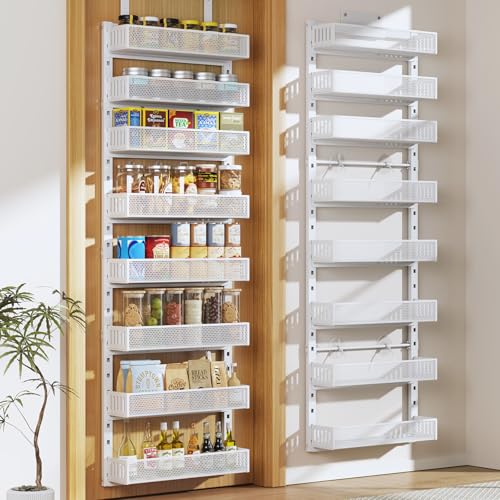
Dual Installation: Hang it over the door or mount it to the wall. Perfect for kitchens, pantries, bathrooms, bedrooms, nurseries, and laundry rooms.
Hooks
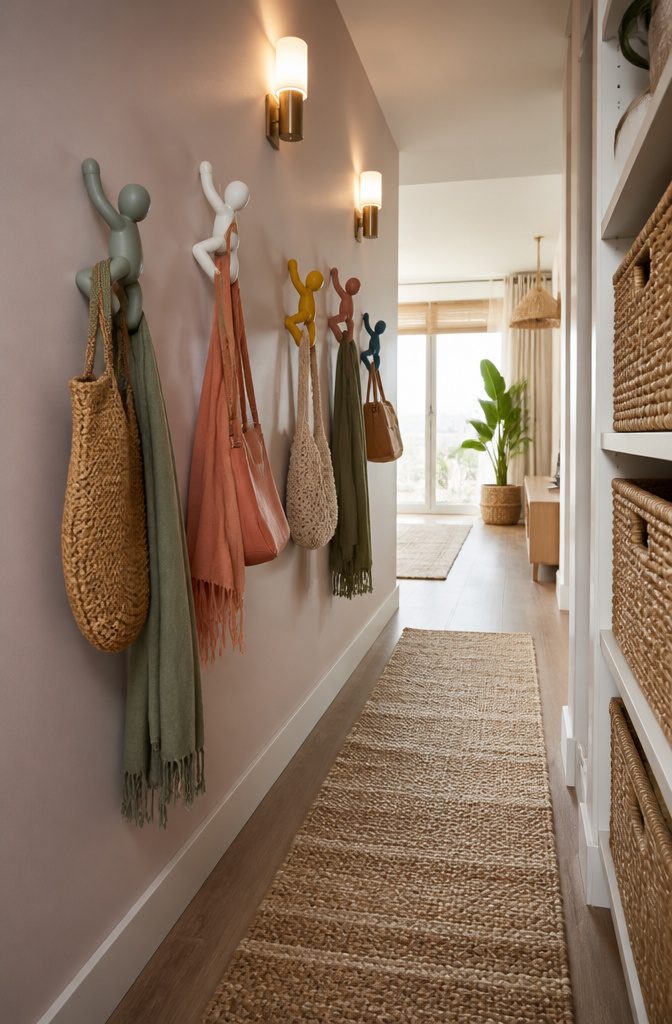
Wall hooks look like the easiest win in a small space until you have five jackets and a tote bag piled on a single stud because the others are in drywall.
Adhesive strips inside a closet door handle about three pounds each, which covers a silk scarf and little else.
For anything with seams and weight, you need the screw-in kind, and in a rental that means patching later or choosing your battles.
The FJANTIG Hooks come as a set of three, shaped like little human figures, and they solve the visual problem most hooks ignore.
A plain row of metal turns a wall into a laundromat; these read as sculpture until something hangs on them.
I would not mount them more than twelve inches apart. Any wider and bags overlap, jackets tangle, and you have recreated the chair you were trying to empty.
Placement is where most people stall. The back of a closet door works for bags you grab daily.
A stairway wall handles seasonal gear that needs to live somewhere between garage and living room. The mistake is treating every hook as permanent.
In a rental, weight limits are not suggestions; they are the point at which your landlord notices. A stud finder costs less than spackle, and using both beats explaining holes at move-out.

【All-In-One Desktop Organizer】Turn a cluttered desktop into an organized zone with this vertical pegboard organizer. This complete set features 2 pegboards, an open shelf top, 2 sliding drawers, and 5 hanging accessories (1 bin, 1 tray, 1 pencil holder, 2 hooks) for all your supplies.

One Organizer, More Possibilities: More than a basic pen holder, this desk organizer combines an adjustable bookend, side pegboard, six angled holders, a top tray, an open shelf, and a drawer in one compact setup. The open layout keeps keeps office and school supplies visible and sorted, organizes art and craft tools, and also works as a makeup organizer for makeup brushes, mascara, and nail polish

Clear Pegboard Cups - NEW Crystal clear design allows quick identification of contents, saves trips searching around, increasing convenience in daily life. Package includes 6 clear pegboard cups with seprate hooks. Note: the pegboard is not included!
Storage Containers
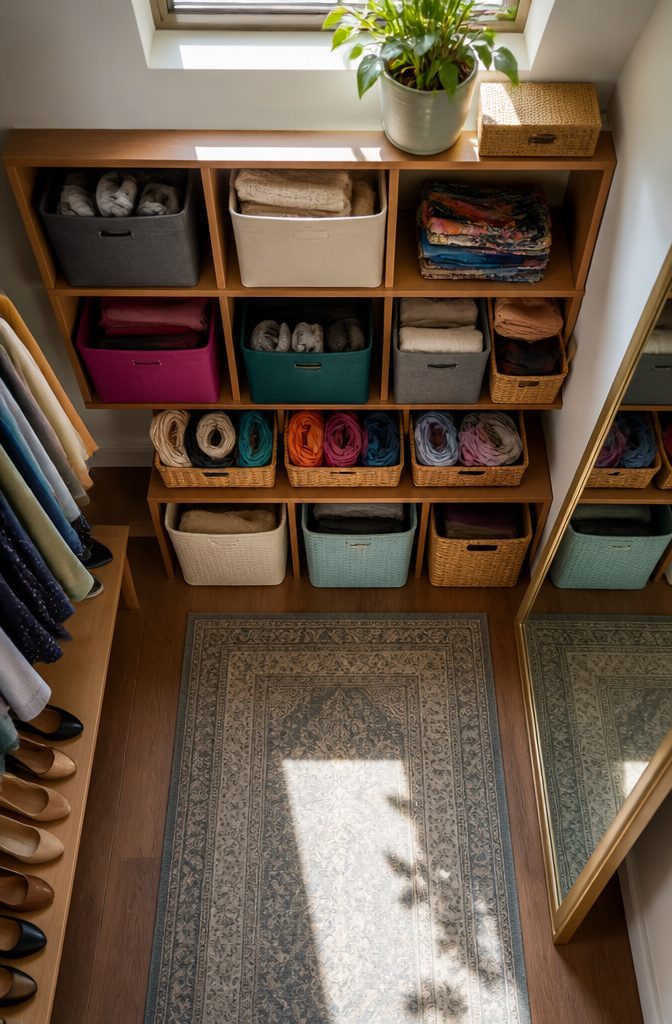
The IKEA OMMJÄNGE basket sits open on my closet shelf now, holding rolled scarves where a lidded bin used to hide them completely.
That swap came from a mistake I made early on: buying a six-pack of identical clear containers because the uniform stack looked clean in the store.
They fit the top shelf fine, but half of them sat empty under the bed because shoes and spare bedding need entirely different depths.
Buy containers for the spot, not the shelf. Under-bed bins need handles or wheels to pull past the bed frame, and see-through walls help when the label falls off.
Baskets work better for open shelves or anywhere the container faces the room, since a throw on top turns spare cables and takeout menus into something you do not have to think about.
Covered baskets from Target or Amazon run about the same as plastic but move easier when you need to clear the coffee table for takeout.
Bed risers buy another six to eight inches if you are really stuck. I have fit suitcases and off-season pots under there, though the comforter has to hang lower to hide the chaos.
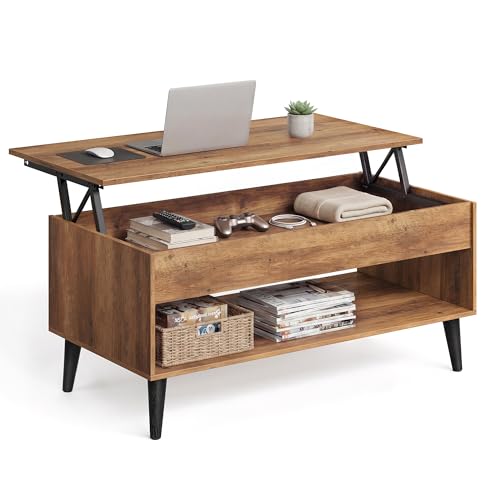
Versatile Mid-Century Charm: The refined finish and crisp lines give this center table a mid‑century modern vibe that fits beautifully in apartments, dorms, and other small spaces
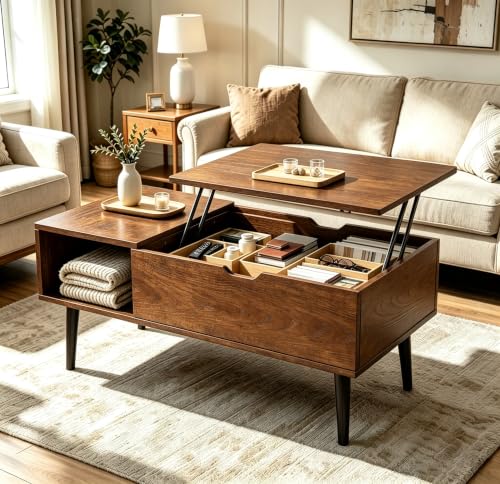
Lift Top Design: The tabletop smoothly lifts to 6.3 inches, transforming this coffee table into a versatile piece for everyday use. Whether you need a temporary dining surface, a convenient computer desk, or a raised workspace, the elevated floating design adapts to your needs while adding modern functionality to your living space

【MID CENTURY STYLE】 Elevate your living room with this mid century modern coffee table featuring an exquisite fluted texture and warm finish; distinctive slatted tambour doors of this walnut coffee table slide smoothly along curved edges to seamlessly conceal clutter and provide effortless access with retro sophistication
Magnetic Storage
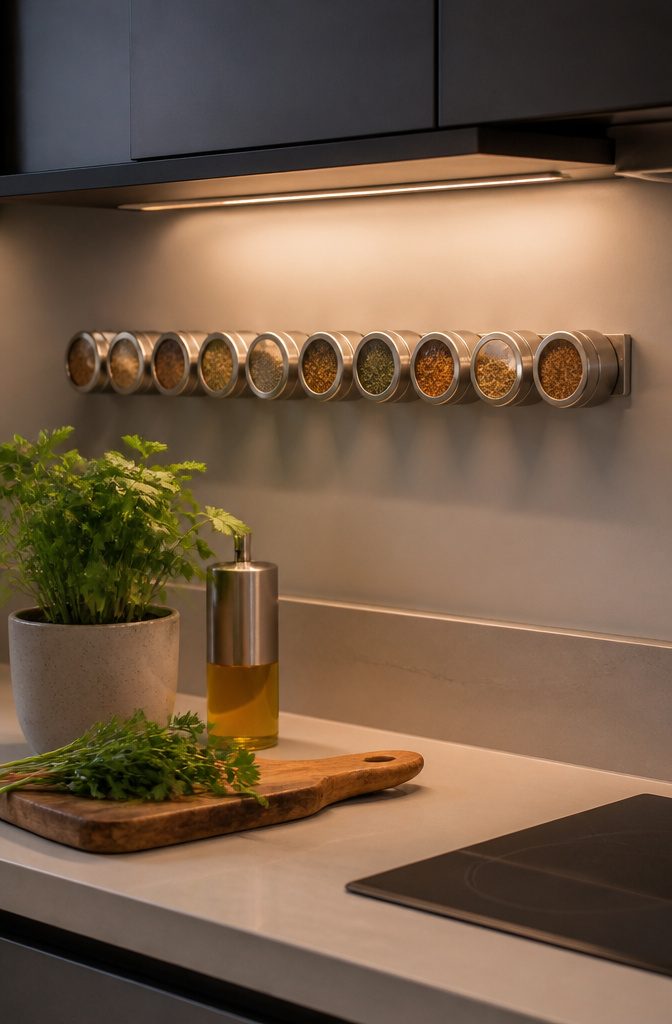
A magnetic knife rack mounted to the wall keeps the blade set within reach and the counter clear, but the real test comes months later when humidity loosens the adhesive.
The HULTARP from IKEA runs about the length of a standard chef’s knife set and holds well if you drill into studs; the strips that rely on sticky backing tend to peel paint when they finally let go, usually in a bathroom or near a stove where steam collects.
In a kitchen, spice tins with magnetic lids stick to the fridge side where the surface is actually metal, not the cosmetic panels some manufacturers use now.
Test with a refrigerator magnet before buying the whole system. Office supplies fare better on a mounted board than on a strip because paper clips and binder clips have uneven magnetic pull; one nudge and they slide.
A covered utility panel doubles as a bulletin board if the face is ferrous metal, though many newer breaker boxes are aluminum and will not hold a thing.
For bathroom items, the weight limit matters more than the magnet strength.
Tweezers and small scissors stay put. A full-size hair dryer does not, and the strip that looked tidy on installation becomes a line of fallen bottles by Wednesday.

[Full Bed Frame with Storage Drawer]: Comes with 4 Large drawers with rollers under the full bed frame, provides ample storage space for keeping your off-season clothing organized.

【Storage Headboard with Fast-Charging】The headboard is equipped with a built-in fast-charging socket, including 2 AC Outlets, a USB port and a type-C port, allowing you to charge various electronic devices within easy reach. 2-Tier storage shelf on the headboard can provide more storage space, making it convenient for you to place commonly used items such as magazines, phones, alarm clocks, etc.

YOUR BEDROOM, SMARTER – Four underbed storage drawers, a two-tier headboard shelf, built-in USB charging, integrated night light, and RGB LED lighting, all in one bed frame that does the work of several.
Kitchen Storage Racks
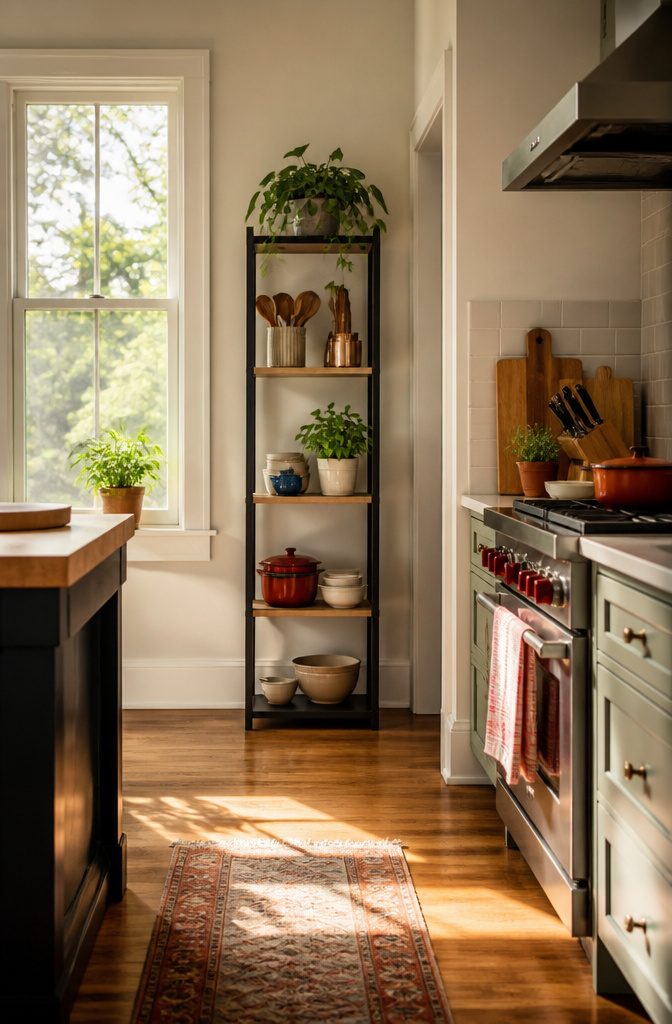
A kitchen island can hide the appliances and dinnerware that otherwise eat up every flat surface, but leave at least 36 inches of walk space on all sides or the island becomes a bumping hazard in a tight galley.
The Holme 44" Kitchen Island fits that math for some small kitchens and not others; measure your aisle before you order, not after it arrives.
Tiered racks over the stove or near the cooktop look efficient until a few months of frying shows you what they collect.
Grease settles on every horizontal rung, and the items sitting there need washing before you can use them. Better placement is against a wall away from the range, or accept that the rack itself becomes a monthly scrub job.
I would rather tuck a slim rack beside the refrigerator where splatter does not reach and only my own clutter slows me down.

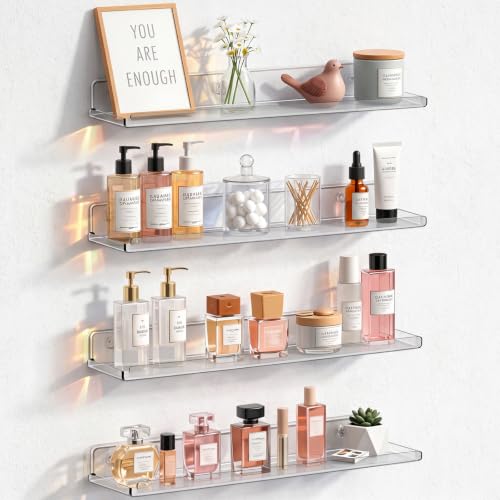
【SPACE SAVING & LOOK NEATER】 4 pack acrylic shelves for wall provide multi-layer storage, allowing you to utilize wall space more efficiently. You can conveniently store everything while keeping your room organized. It's a great space-saving wall organizer!

Storage & Decoration Solution: Corner shelves for wall fit into the corner and increase storage space. The modern wall shelf complements any decorating style, providing a display space where you can decorate the room with whatever you like while making more space

Ultimate Space-Saving Wall-Mounted Floating Desk: This innovative fold-down design transforms any empty wall into a instant workspace or shelf, perfect for small apartments, dorms, and home offices where every inch counts
Rolling Carts
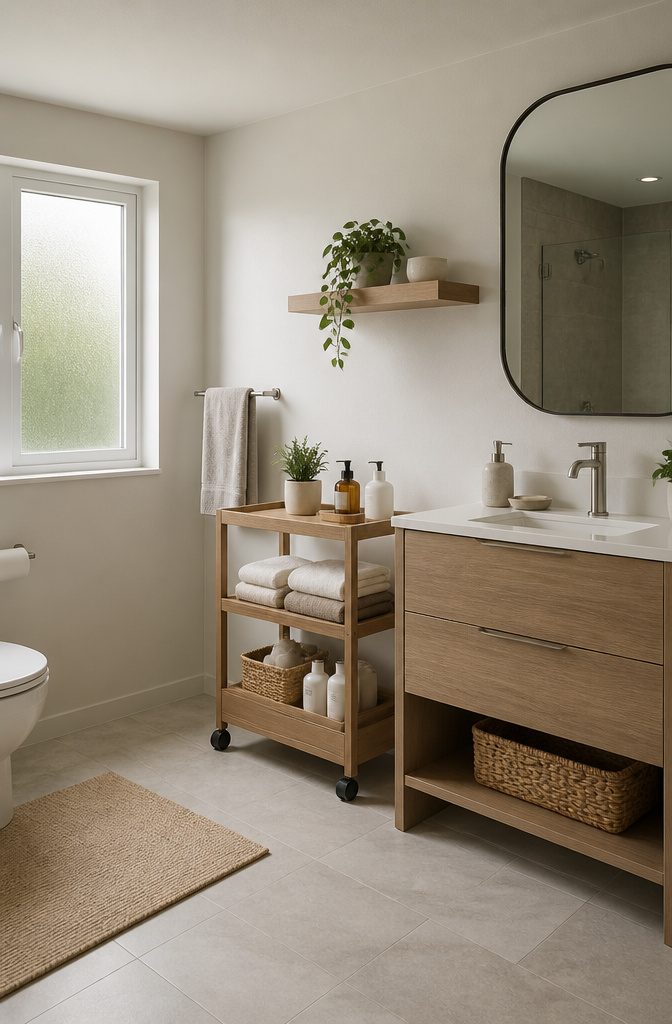
A rolling cart earns its floor space only when you actually move it.
The Yamazaki Home Tower Rolling Storage Cart fits the narrow gap between a sink and toilet, holding toilet paper and cleaning supplies you slide out when needed. Wheels matter most in spots too tight for a cabinet door to open.
The IKEA RASKOG cart has become the default choice for a reason, though that reason is often just that people recognize the name.
In my reading, the better test is whether the floor is level enough that the cart stays put.
A slight grade toward the stove or the shower means the cart drifts where you do not want it, and one leg of a weekend project becomes wedging a doorstop under a wheel.
Storage on wheels only flexes if the wheels lock, or if you have the patience to park it against a wall each time.
For renters, the cart wins over built-in shelving because it leaves with you. The limit is weight: load the bottom shelf heaviest, or the thing tips when you roll it across a threshold.

【 See It, Grab It, Go 】Turn wasted door or wall space into neat, easy-access storage with this purse organizer. Designed as an over the door purse organizer and purse organizer for closet, it helps keep handbags visible, off the floor, and ready to grab on busy mornings.

AWARD WINNING: Winner of the 2026 Good Housekeeping Cleaning Awards recognizing excellence and innovation in home organization

36-Pair Large Capacity:This Whitmor Over The Door Shoe Organizer has a 12-tier design, holding up to 36 pairs (fits sneakers, heels, shoes, short boots). Assembled size: 74"H x 21.7"W x 7.5"D (Height including hooks). It maximizes vertical door space, keeps shoes neat, and helps reduce floor clutter.
Above the Toilet
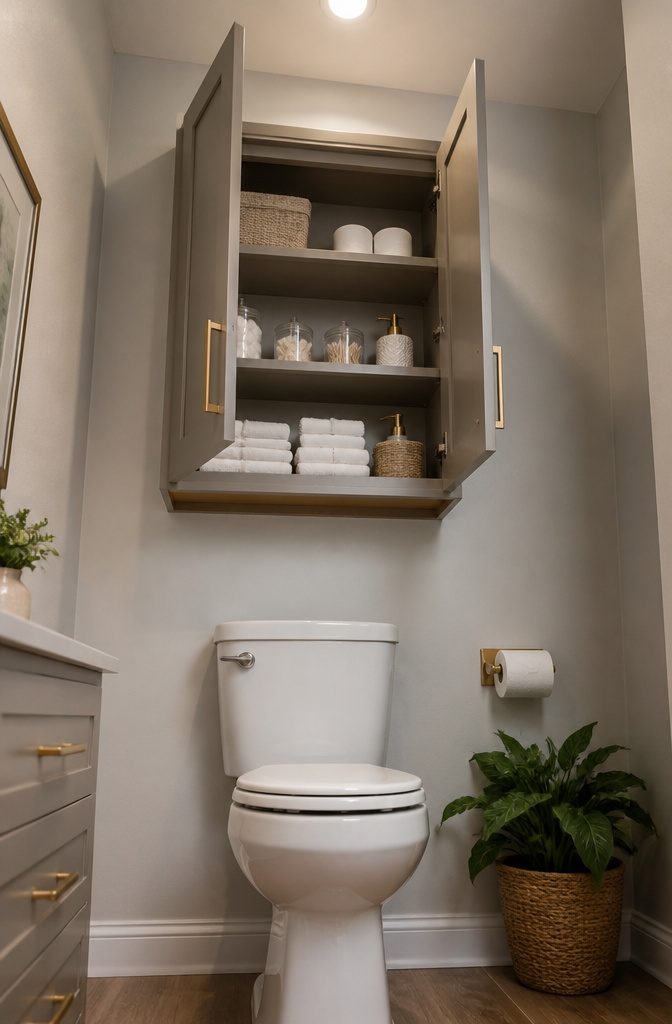
The space above a toilet looks like free real estate until steam from daily showers starts curling the edges of whatever you put there.
I learned that after watching a bamboo tray I loved turn gray and fuzzy along one corner, the side closest to the shower vent.
Wood shelves without a bathroom-grade finish are a moisture trap waiting to happen, and even painted MDF swells at the joint lines if your fan is underpowered or someone in the house takes long, hot showers.
Wall-mounted cabinets solve the humidity problem but create another one. Open the door too quickly and toothbrushes, contact lens cases, and half-used perfume samples slide straight into the toilet bowl.
The lip on a medicine cabinet shelf is rarely deep enough to stop anything. A friend of mine lost a phone that way, propped up charging on a ledge while she got ready for work.
The height above a standard toilet tank, roughly two feet to the underside of a shelf, also limits what fits.
Tall bottles of mouthwash or bulk shampoo sit awkwardly, and anything you use daily ends up either knocking against your forehead or migrating to the sink counter anyway.
I think the spot works better for backup stock, the things you reach for weekly rather than daily, stored in a solid cabinet with a soft-close hinge and a door that latches.

METAL PEGBOARD: Our peg board panels are made of high quality steel with a powder coated finish that is strong, scratch resistant and easy to clean. This is a favorite product for tool organizers, DIY enthusiasts, store owners and office workers.

METAL PEGBOARD: Our peg board panels are made of high quality steel with a powder coated finish that is strong, scratch resistant and easy to clean. This is a favorite product for tool organizers, DIY enthusiasts, store owners and office workers.

What You Will Get: the package comes with 4 pieces of peg board cups, 4 pieces of small pegboard baskets, 4 pieces of large pegboard baskets, and 12 pieces of matching metal hooks, sufficient quantities to meet your assortment and storage needs
Repurposed Storage
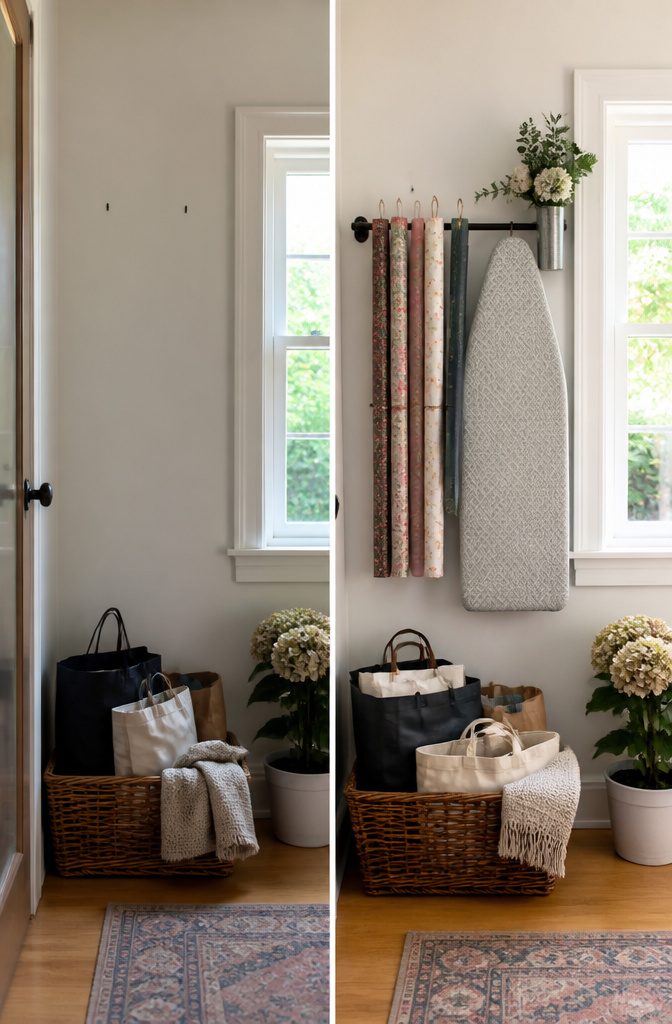
A curtain rod screwed to wall studs becomes narrow storage for rolls of wrapping paper, poster tubes, or the ironing board that never fits a closet.
The rod keeps them parallel and off the floor, though anything heavier than a few pounds bows the bar over months and the look is utilitarian, not hidden.
Garden hose holders mounted inside a cabinet door or on a pantry wall corral cords, reusable bags, or the hair tools that tangle in drawers; the spiral keeps coils from doubling back on themselves, which is the actual problem with most cord storage.
Dryer sheet holders flipped to a wall by the back door work as trash bag dispensers or mail slots, narrow enough to sit where a shelf cannot.
What lasts is hardware with a single job already built in: the hose holder was designed to grip something coiled, the rod to support weight along a span.
What fades fast is the clever label, the item that looks repurposed until daily use proves it was never meant for the stress.
The wrap paper slides, the mail slot jams, and the project becomes another thing to unmount. Pick the piece whose original function already solves the problem, not the one that merely resembles a solution.

4-IN-1 DUAL LIFT-TOP COFFEE TABLE: A 35.4"L x 19.7"W coffee table becomes a 35.4"L x 39.4"W dining top. Lift one side for laptop time, both sides for shared projects, or fully open it for meals and game night

3-in-1 Lift Top Design: This lift top coffee table works as a daily coffee table, raised workstation, shared work surface, or fully expanded table. The convertible tabletop gives you flexible surface space for reading, using a laptop, enjoying snacks, or relaxing from the sofa without needing an extra table

Lift-top Design: The tabletop of this coffee table can be effortlessly elevated to a comfortable height to create a spacious workspace or dining surface while you’re sitting on the sofa. The heavy-duty gas mechanism allows smooth and easy operation
Vacuum Bags
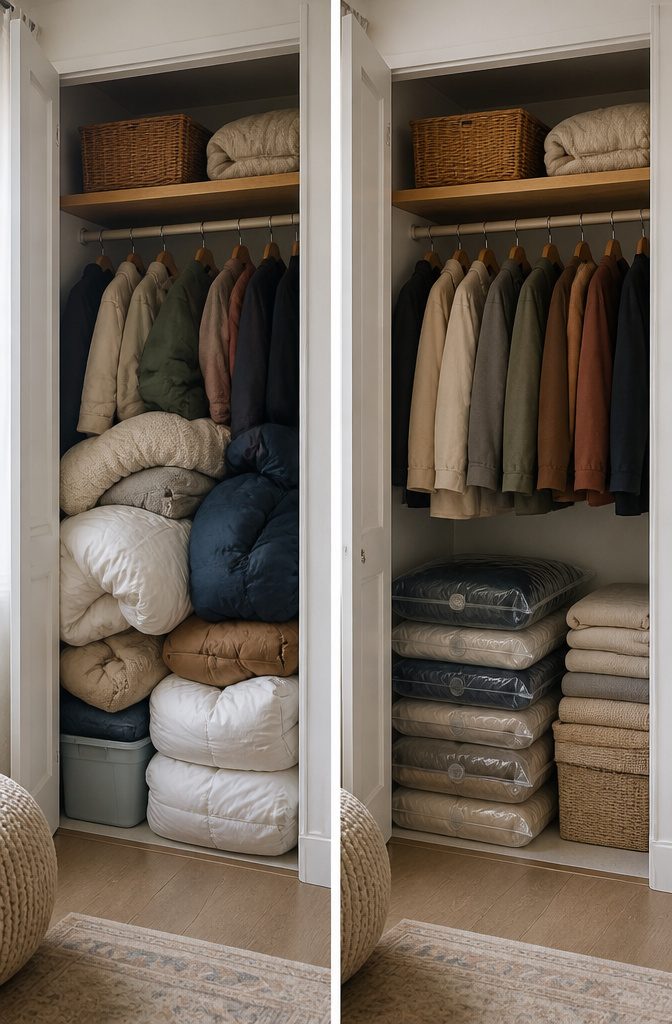
Comforters and puffy jackets eat up half a closet before you notice.
Vacuum storage bags pull the air out and flatten them to file-folder thickness, which is the only reason my own winter bedding fits on a single shelf instead of a storage unit I don’t have.
The Spacesaver Vacuum Storage Bags, 6-Pack holds seal reliably if you fill them to about two-thirds capacity and run the zipper track twice.
Overfill, or trust the seal on one pass, and you’ll find the bag soft again by March. The six-pack size matters because bulky storage is seasonal; you want enough bags to swap wardrobes without waiting to empty and reuse.
A handheld vacuum or the hose attachment on a standard upright works for suction.
The bags travel well too, which is where the real value shows: a down coat that swallowed a quarter of your suitcase becomes a flat packet you can layer under other clothes.

【4 Large Capacity Drawers】The upholstered bed frame comes with four spacious storage drawers underneath, providing ample space for bed sheets, accessories and off-season clothing. Each drawer has four smooth wheels that make them easy to pull in and out.

4 Oversized Drawers: The upholstered queen bed frame comes with four spacious storage drawers underneath, providing ample space for bed sheets, accessories and off-season clothing. Each drawer has four smooth wheels that make them easy to pull in and out

Integrated Footboard Storage: Declutter your room and utilize every inch of space efficiently. This queen bed frame incorporates two generously sized drawers at the foot, making it simple to store and access clothes, extra linens, or bedding. This design maximizes functionality, ensuring your sleep space remains neat and organized.
Decluttering First
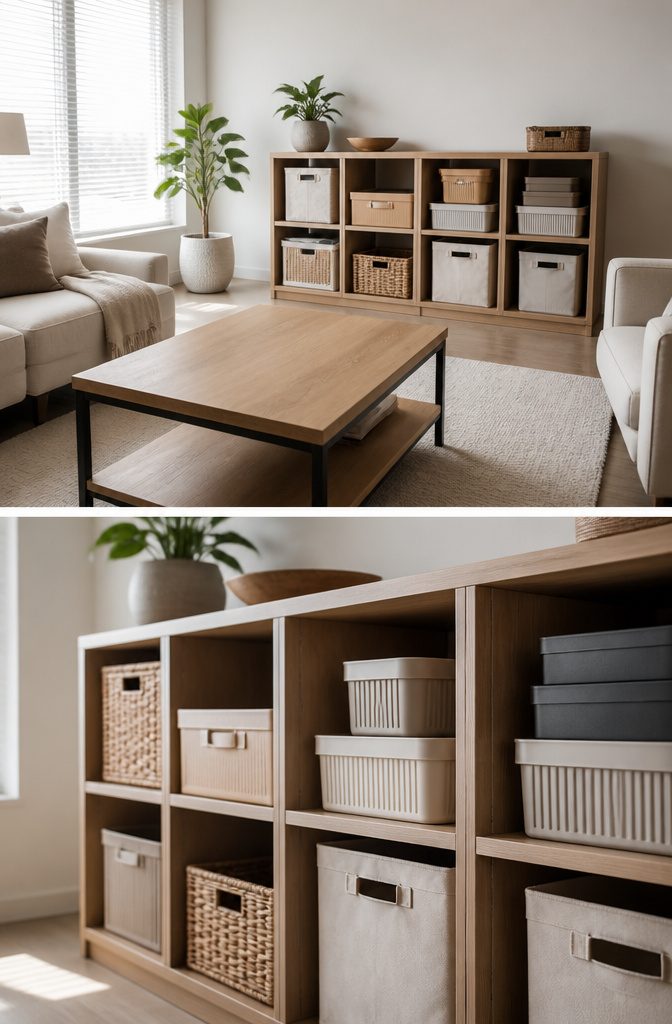
Small space organization ideas only work if there’s actually space to organize. The mistake I made in my first apartment was buying bins and drawer dividers before I touched a single thing I owned.
The bins sat half-empty while the clutter stayed, because I was trying to sort too much stuff into too little room.
The one-year rule is the filter that saves you from this. If you haven’t used it in twelve months, it goes.
Not to a maybe pile, not to the garage for later review. Out.
I held onto college notes for seven years after graduating, even though I never used my teaching degree. The fear of needing something someday is almost always stronger than the need itself.
Being ruthless means looking at every item and asking whether its job is already done by something else. That George Foreman grill I kept "just in case"?
The stove handled everything it did. It left, and I never missed it.
Skip this step and you end up with expensive storage systems packed with things you don’t use. The calm house you want lives on the other side of letting go.
Zones in One Room
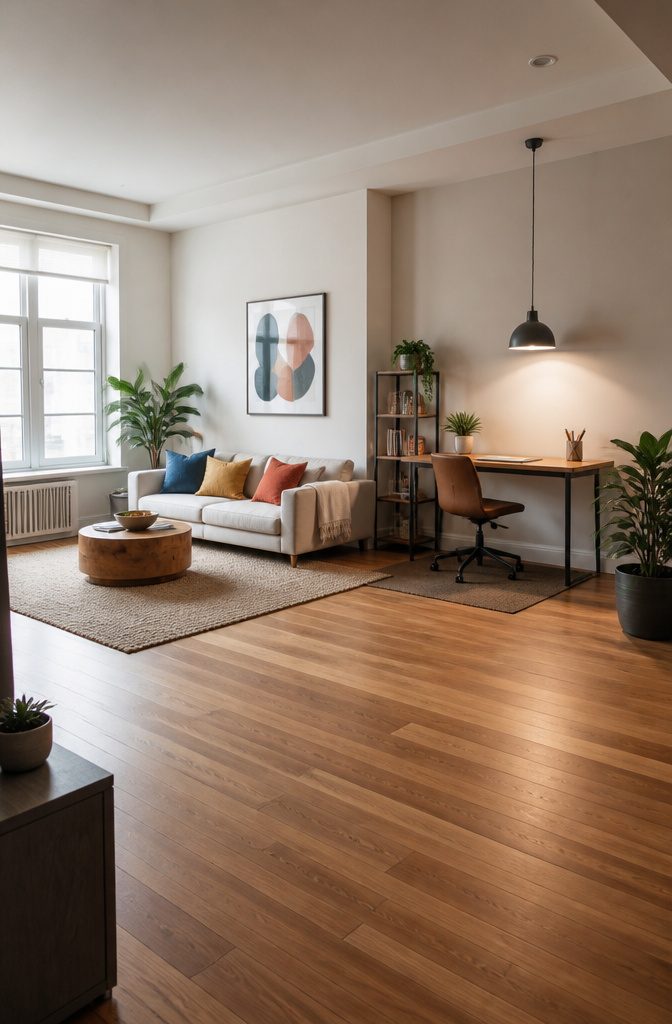
A single open room can collapse into chaos fast if everything shares the same floor. The trick is giving each function its own territory without building walls you do not own.
Visual markers that actually hold up are the ones you can see from across the room.
A rug under the sofa, a pendant light over the dining table, or a bookshelf placed perpendicular to the wall all read as boundaries even when they are only a few feet apart.
I have watched a secretary desk in a corner do the same job for an office zone; the drop-front closed, and the work disappeared.
Rolling carts help here because they move.
The IKEA RASKOG is small enough to tuck beside a sofa but holds enough to keep a project contained. When the zone is not in use, the whole thing rolls to the wall and the room breathes again.
The real test is whether the zone survives a busy week.
If toys drift to the sofa every night, the boundary was too subtle. A floor lamp and a basket are usually not enough; you need a change in height or a piece of furniture that stops the eye.
"The best approach I’ve found to organizing small spaces is to first live in them for a while before diving into any major changes. Doing this will help you understand how you naturally use these spaces on a daily basis."
What that means in practice: set up a rough zone with what you already own, use it for two weeks, then decide whether you need a cart, a rug, or just a stricter rule about what lands where.
Closet Depth
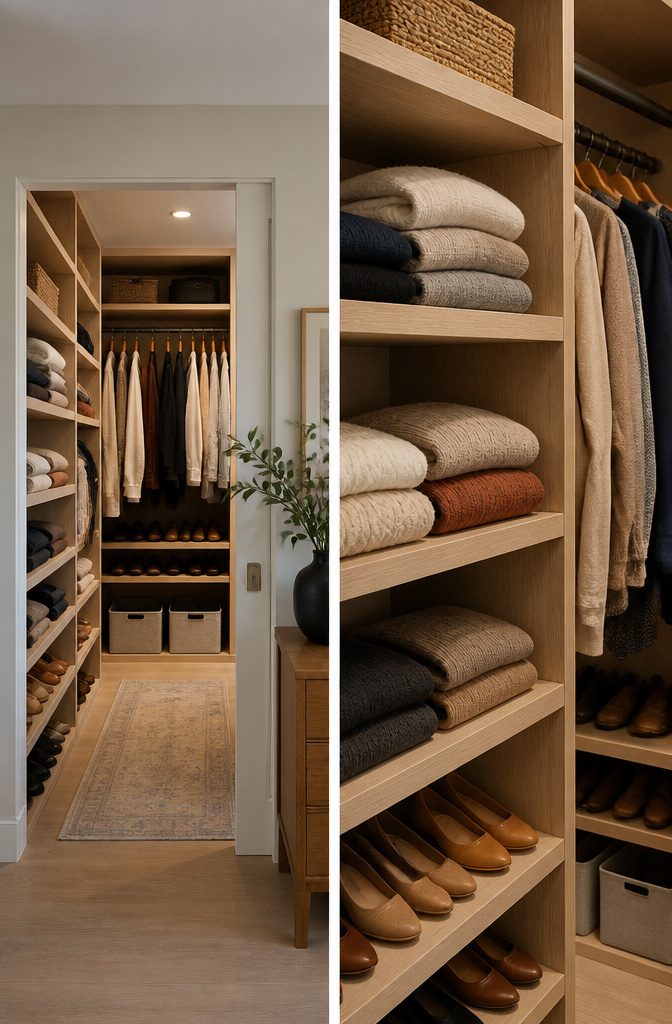
Closet depth matters more than square footage when you are trying to make a small space work. A 12-inch shelf fits folded shirts, shoes laid flat, and storage bins for accessories.
A 24-inch shelf holds two rows of hanging clothes or bulky sweaters stacked deep, but it also swallows floor space you might need for a dresser or traffic path.
The IKEA PAX system lets you mix the two depths in one run, which is how I would build it: shallow shelves on the return walls where they face each other across a narrow aisle, deep shelves only on the back wall where the extra inches do not pinch the walkway.
Under the bed is the other closet you already own. Bed risers lift a standard frame enough to slide suitcases, out-of-season clothes, or even spare pots and pans underneath.
Use bins with handles or wheels, because you will pull them out more often than you think, and a see-through lid saves you from opening three containers to find the boots.
If the bed skirt does not hide the storage, a slightly larger comforter hangs low enough to finish the job.
Storage That Looks Like Something Else
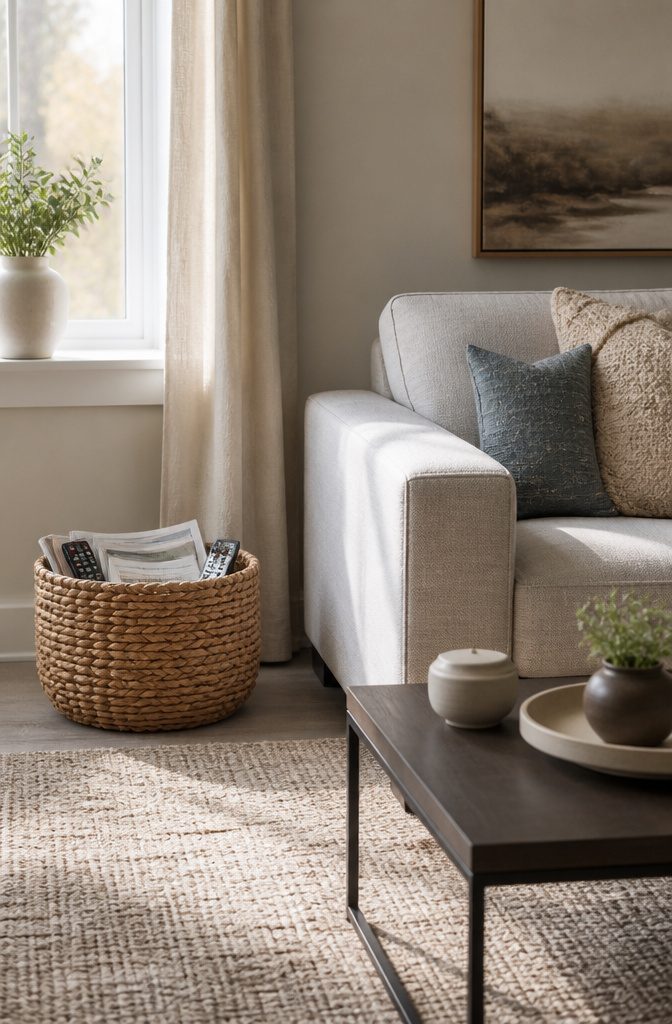
Baskets and bins that look like décor sound like the perfect fix until the lids start stacking up like a second layer of clutter.
I learned this the hard way after buying three matching woven bins for an open shelf: within a month they were crammed with cords, receipts, and one random glove each, and the tidy row looked worse than the mess it hid.
The rule is one concealed category per container, and nothing that doesn’t belong gets tossed in just because the lid closes.
The pieces that actually work are the ones sized for what they hold.
A shallow basket for coffee table remotes stays neat because it has no depth to swallow junk. A lidded bin meant for blankets becomes a problem when it is half-empty and the lid sinks; it looks like a broken ottoman.
Decorative storage earns its place when it is full enough to hold its shape and specific enough that you remember what is inside without checking.
Frequently Asked Questions
How can I maximize space in a small closet?
Use a mix of shelf depths. The IKEA PAX system lets you install shallow 12-inch shelves on return walls and deeper 24-inch shelves only on the back wall, so the extra inches do not pinch your walkway.
You can also fit a dresser or cube unit under hanging clothes to reclaim floor space that otherwise sits empty.
What are some creative storage solutions for small spaces?
Go vertical with wall-mounted shelves, pegboards, and ceiling hooks for bikes or skis.
Repurpose hardware like curtain rods for wrapping paper or garden hose holders for cords. Magnetic spice tins on the fridge side and vacuum bags for bulky bedding also reclaim space you already have but are not using.
What furniture is best for small spaces?
Choose pieces where the main use stays effortless and the secondary use stays accessible.
Storage benches at a bed’s foot or entry work because you sit first and lift the lid second. Beds with side-facing drawers beat foot-facing ones in tight bedrooms, and a lift-top coffee table opens faster than a sliding panel.