
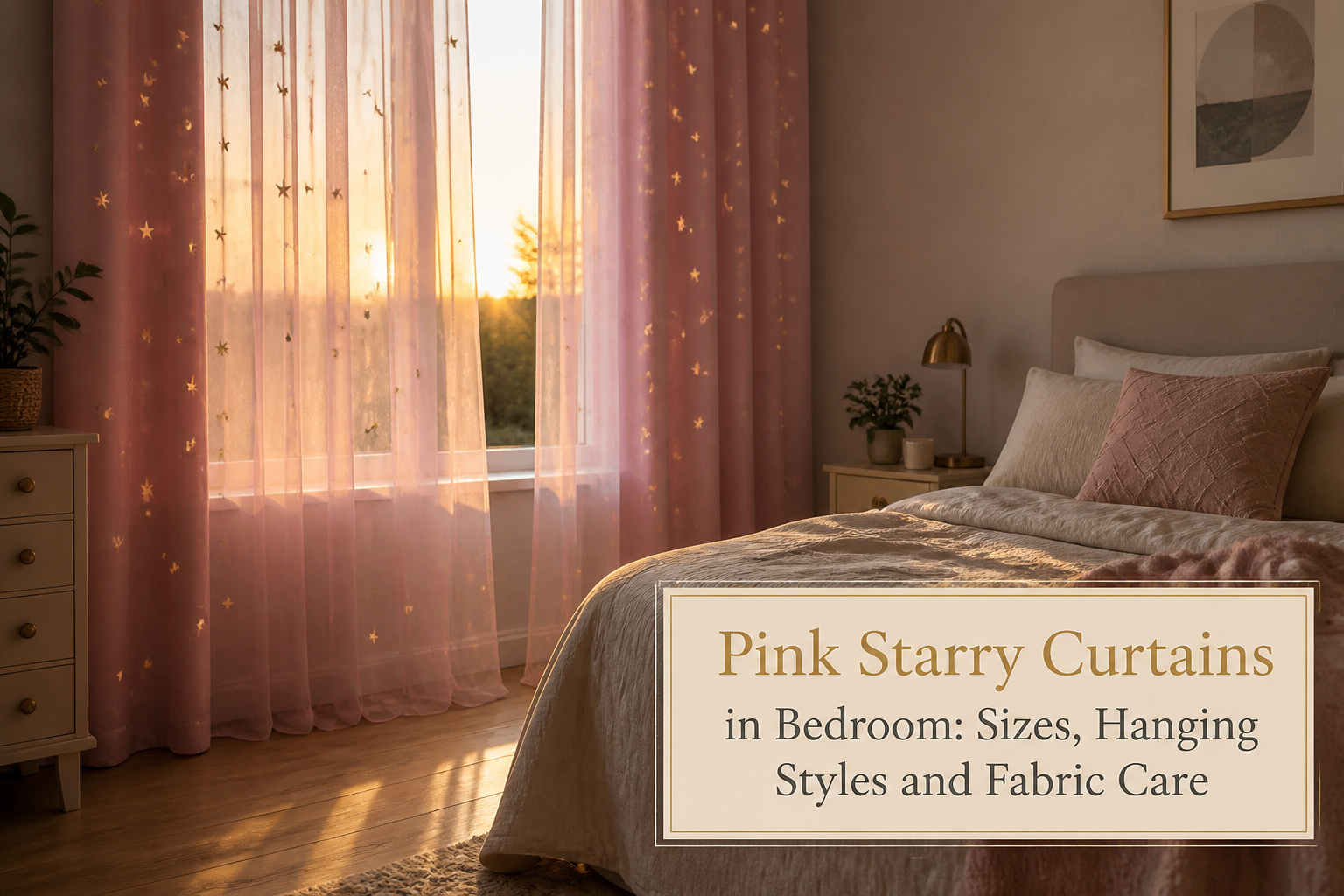
Pink starry curtains in bedroom windows are two-layer panels that pair a sheer tulle overlay with star-shaped cutouts over a solid blackout backing.
The catch is sizing: panels bought at exactly window width hang flat and let light pour through the gaps, while 1.5 to 2 times the width folds the fabric into pleats that actually block sun and frame the window.
Choosing the Right Size
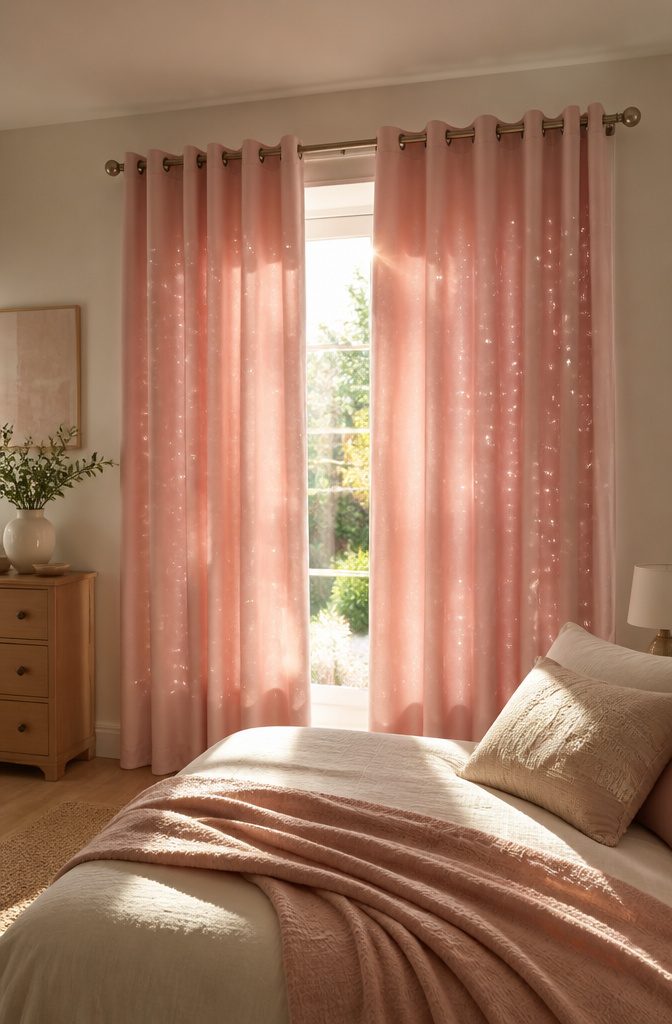
Panel fullness is what separates curtains that look like a flat sheet from ones that actually frame a window.
For the pink starry style to read as intentional rather than skimpy, the combined width of your panels should measure 1.5 to 2 times the actual window width.
I learned this the hard way on my first set, ordering panels that equaled the window exactly and ending up with gaps where the stars stretched flat and light poured through.
The math is simple once you know the trick.
Measure the window width inside the frame, then multiply. At 1.5x you get neat, regular folds that still look dressed.
Push toward 2x and the fabric stacks into deeper, richer pleats that also happen to block more light, since each fold creates another layer the sun has to pass through.
For a bedroom where those stars are meant to glow against darkness rather than wash out in midday sun, the extra fabric pays off.
Grommet headers, which most of these pink starry sets use, need that fullness to function right.
Too little width and the rings pull the panel taut so it can’t glide; the right ratio lets the fabric bunch softly and slide open without snagging.
When I remeasured and reordered at 1.8x width, the same rod and hardware suddenly worked the way it was supposed to.

Package Includes:Set of 2 pink curtains. Each panel measuring 40 inches in width and 63 inches in length. Designed with 6 metal grommets (1.6-inch inner diameter) at the top, these girls curtains facilitate easy installation and smooth sliding.

Product information: This blackout curtain measures 42x84 inches, 2 panels set. Each curtain panel is embedded with multiple rust proof silver white metal grommets.The inner diameter of the loop is 1.57 inches, Accepts curtain rods up to 1.5 inches OD

Size & Setup: 2 panels per set, each measuring 40" wide x 63" long. The sleek silver grommet top (1.6" inner diameter) delivers modern sophistication while enabling effortless glide and quick setup. Available in multiple sizes to fit various window dimensions. Perfect for kitchen, bathroom, living room, bedroom with a polished, contemporary look.
Hanging Style
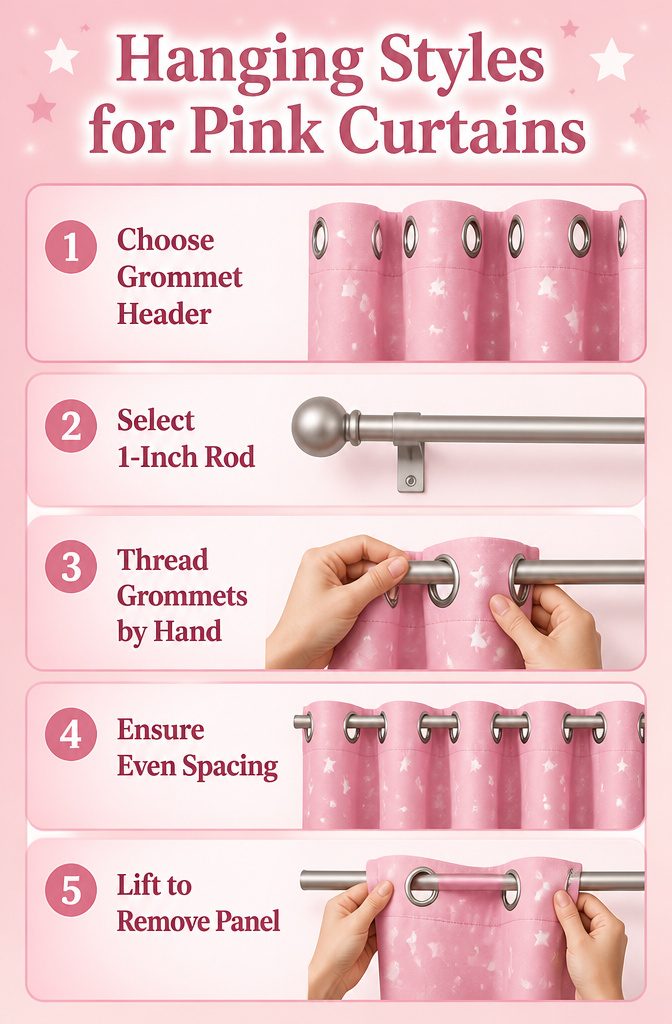
Grommet headers won out after I tried rod pockets on my first set of pink starry curtains.
The fabric bunched and the rod snagged every time I opened them, which turned a simple morning task into a two-handed tug. Metal grommets glide without catching, and the curtain slides back in one motion.
For anyone with small children in the bedroom, grommets eliminate cords, hooks, or anything a toddler could pull down; the panel stays on the rod unless you lift it off deliberately.
I hung mine on a standard 1-inch diameter rod, threading each grommet by hand in about five minutes.
No tools, no hardware beyond the rod brackets. The spacing between grommets, roughly six inches apart on my panels, keeps the fold even when the curtain is drawn.
If you are buying for a child’s room, check that the grommet rim is smooth; a rough edge will catch little fingers over time.

BLACKOUT FUNCTION: The main panel of our pink curtains for girls room is made of 3 layers, including 1 black light-blocking yarn in middle. They can block out 85% sunlight and insulate thermal for day sleeping. Precision fabric of our pink curtains makes them wrinkle free and heavy duty

UNIQUE DREAMY STAR DESIGN: Add magical sparkle to your space with the whimsical light patterns produced by our Tulle Overlay Star Laser Cut Out Blackout Curtains. Create a starry wonderland that is perfect for kids’ rooms, bedrooms, baby nurseries and living rooms.

Size:Our girls curtains measures 39x79 inch( 100x200 cm) long curtain,each package includes 2 curtain panels,you can choose window curtains based on your window size.
Length Advice
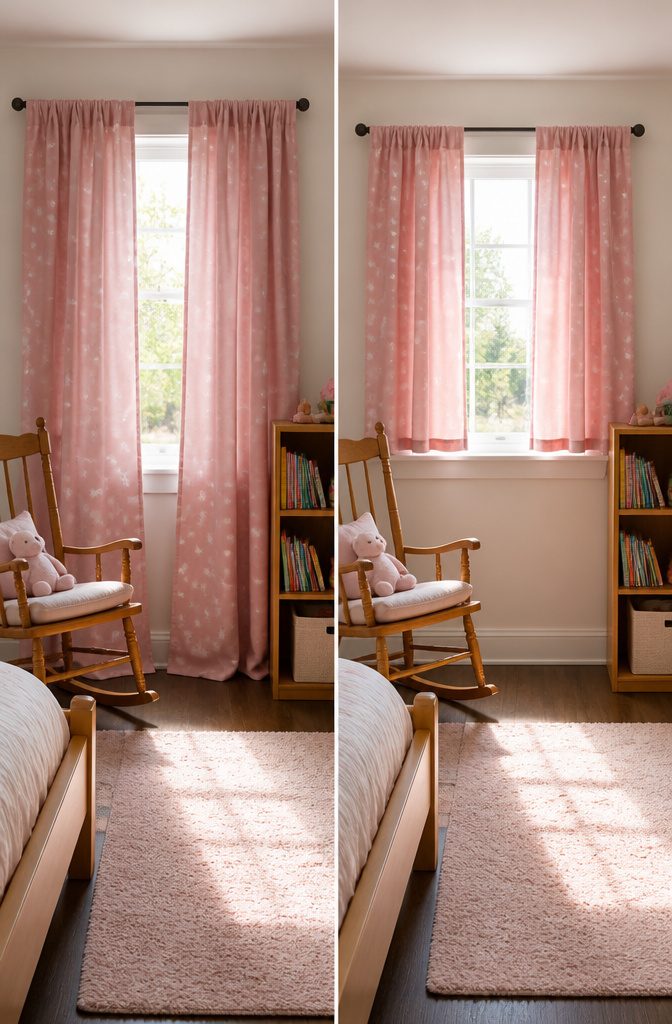
Floor-length panels give a room that finished, hotel-curtain look, but in a bedroom where a two-year-old is still figuring out stairs, the extra six inches of puddle on the carpet became a trip wire I stepped over myself more mornings than I care to count.
Sill-length stops at the bottom of the frame, so a toddler running full speed toward the window meets fabric, not a hem to tangle their feet.
The tradeoff is coverage: light bleeds in from below at sunrise, and the room reads more utilitarian than dressed.
In my own space, I kept the floor-length look on the blackout layer but ran the sheer tulle sill-length, which let me pull the heavy panel back out of traffic during the day without the room looking half-dressed.
Panel fullness still matters either way; 1.5–2 times the window width gives the folds that make cheap fabric look intentional, whether it stops at the sill or pools on the floor.

Package Includes: Set of 2 navy kids curtains; Each panel measures 42 Inch wide by 63 Inch long. Each star curtain panel has 6 silver metal grommets which inner diameter is 1.6 inch, comparable with most rods. Easy to hang, and slide smoothly.
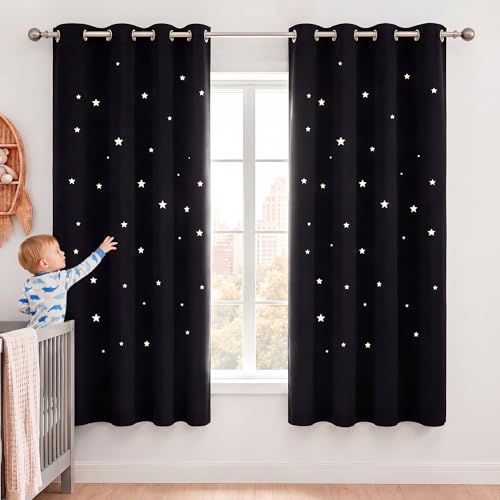
BASE INFORMATION: 1 piece laser-cut grey star curtain per package. Each blackout curtain measures 52" wide x 63" long. Adopting rust-resistant silver grommet design with 1.6-inch inner diameter, the curtain is easy to slide smoothly for installation.

Included: Two piece set 42 x 63 inch, total 84 inch width x 63 inch height with a 2.8-inch rod pocket can fit most window curtain rods
Layering Options
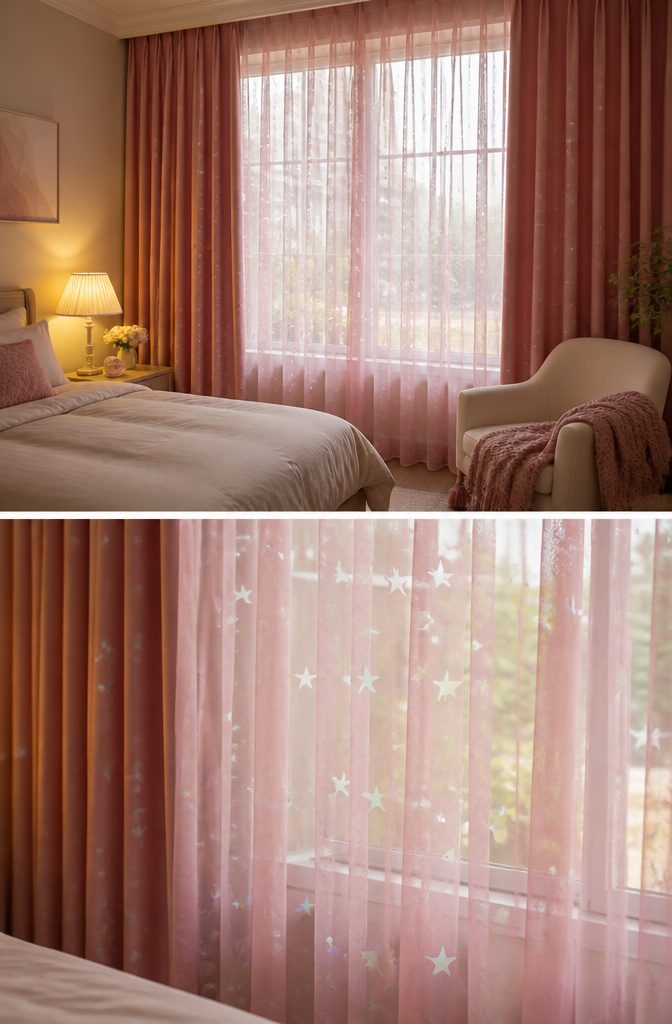
Sheer tulle layered over blackout panels changes how a bedroom feels from morning to night without swapping hardware.
The tulle stays down through the day, blurring the view inward while sunlight still comes through. I close the blackout layer only at bedtime, which means one set of curtains handles both jobs instead of stacking two rods.
The trick is header choice.
Grommet headers glide smoothly past each other, so pulling the blackout layer closed does not snag the tulle behind it. Hook systems or back-tab styles tend to bind when two layers share the same rod.
For fullness, the combined width matters more than either layer alone. I run 1.5–2 times the window width across both layers together, not each panel separately.
Less than that and the blackout gaps open when you draw them; more wastes fabric and crowds the rod. My own setup sits at about 1.6x, tight enough for privacy but still folding cleanly to the side.

Product information: This blackout curtain measures 52x84 inches, 2 panels set. Each curtain panel is embedded with multiple rust proof silver white metal grommets.The inner diameter of the loop is 1.57 inches, Accepts curtain rods up to 1.5 inches OD

Product information: This blackout curtain measures 66x95 inches, 2 panels set. Each curtain panel is embedded with multiple rust proof silver white metal grommets.The inner diameter of the loop is 1.57 inches, Accepts curtain rods up to 1.5 inches OD
Product information: This blackout curtain measures 34x63 inches, 2 panels set. Each curtain panel is embedded with multiple rust proof silver white metal grommets.The inner diameter of the loop is 1.57 inches, Accepts curtain rods up to 1.5 inches OD
Fabric Care
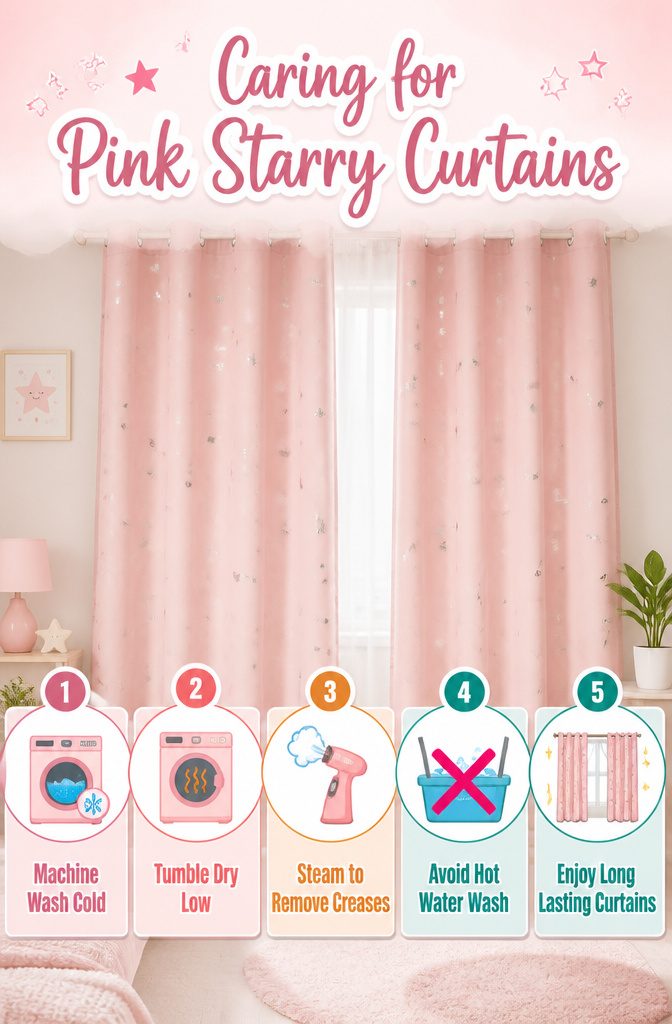
Most star blackout curtains are machine washable on cold and gentle cycles, and the pink starry panels I bought were no exception.
The tag was clear about tumble dry low or air dry, with a note to steam or warm iron on the reverse if the foil stars held creases.
I figured warm water would be fine for a light refresh, so I ignored the cold-water rule and ran them on a regular cycle.
The backing shrank just enough to pull the seams crooked, and two of the foil stars dulled where the warmer water lifted some of the finish.
The panels still hung, but they never laid flat again. Cold water is not a suggestion on these; it is the difference between curtains that last and curtains that sag at the corners.
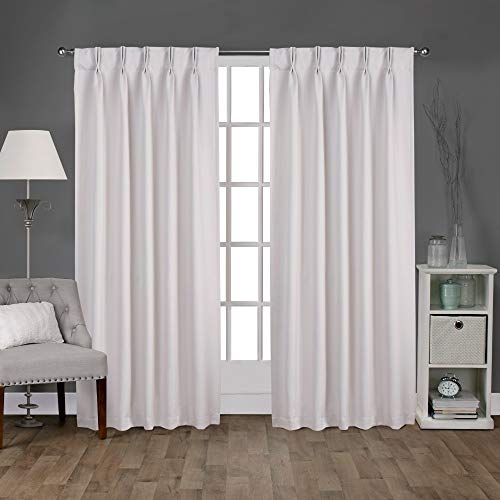
RICH SATEEN: The Exclusive Home Sateen curtain panels are woven in a rich, sateen twill in a neutral linen hue and room darkening blackout opacity. They feature a pinch pleat top and offer a luxuriously elegant look for your windows.

Superior Linen Blend Curtain: Crafted from high-quality linen blend fabric, these linen curtains feature a classic neutral linen shade. Compared to regular sheer curtains, this fabric is softer and offers greater durability, presenting a casual and natural look. With such a soft and refined texture, these elegant drape panels bring rustic freshness and delicate appeal to your windows

LUXURIOUS: The Exclusive Home Velvet Heavyweight Hidden Tab Top Curtains offer a luxurious look for your windows in any room. The light-filtering fabric filters light beautifully into your space while also adding color and texture to your decor.
Double-Layer Pink Star Blackout Curtains
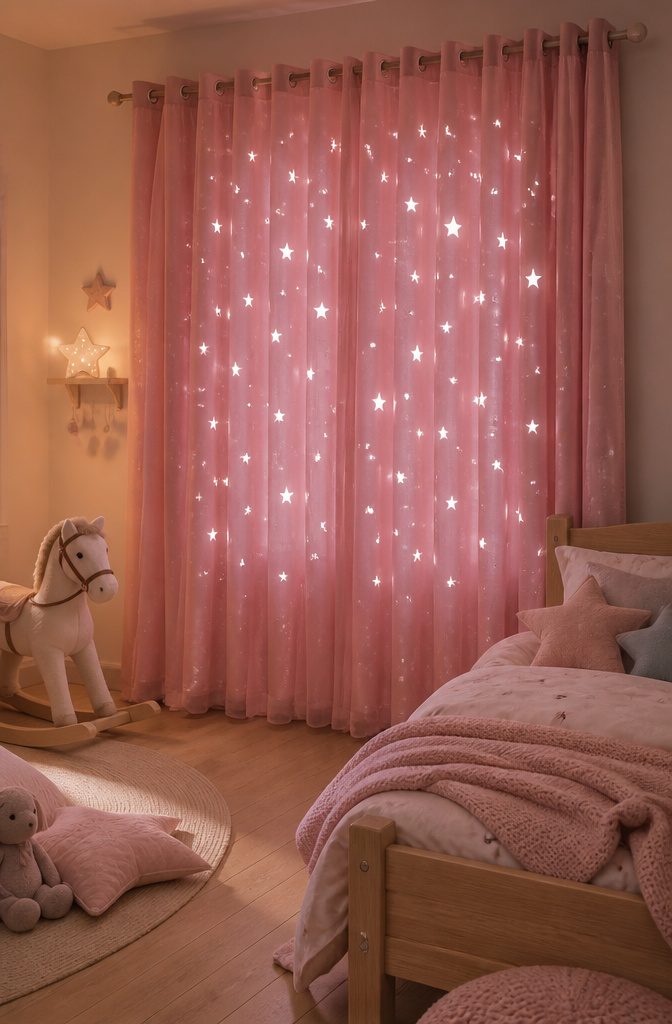
A double-layer pink star blackout curtain pairs a solid blackout base with a sheer tulle overlay that has stars cut clean through it. The laser-cut pattern is what you see in lines like UNISTAR and NICETOWN.
Light from the hall or a nightlight behind the curtain pushes through those cutouts and throws soft star shapes onto the wall or ceiling. The blackout layer underneath still does its job, so the room stays dark enough for sleep.
This style lands best in a bedroom where you want the ceiling to read like a night sky without giving up rest.
A nursery or a child’s room is the obvious fit, but the cutouts read playful rather than juvenile if the rest of the room stays simple.
The tulle layer faces the room, so the star shapes look crisp from inside and read as plain pink from the street.
For a renter, the effect is built into the curtain itself; no hardware, no holes in the plaster, no claim on the security deposit.

BASE INFORMATION: 2 panels laser-cut star curtains per package. Each blackout curtain measures 52" wide x 84" long. Adopting rust-resistant silver grommet design with 1.6-inch inner diameter, the curtains are easy to slide smoothly.

Room Darkening & Noise Reduction for Better Sleep: Block out 85%-99% of light with triple-weave blackout fabric (Darker color better for the shading Performance). Designed to reduce outside light and minimize distractions, helping you enjoy a more restful sleep without early morning sunlight or bright streetlights at night.

100% FULL BLACKOUT: Crafted from super-heavy innovative triple-weave fabric, these curtains are thick and dense enough to impede 100% of sunlight and UV rays. Without a stiff liner, they still turn day into night instantly, providing a pitch-black environment for sleeping or media rooms while remaining soft and drapeable.
Kids Star and Moon Embroidered Curtains
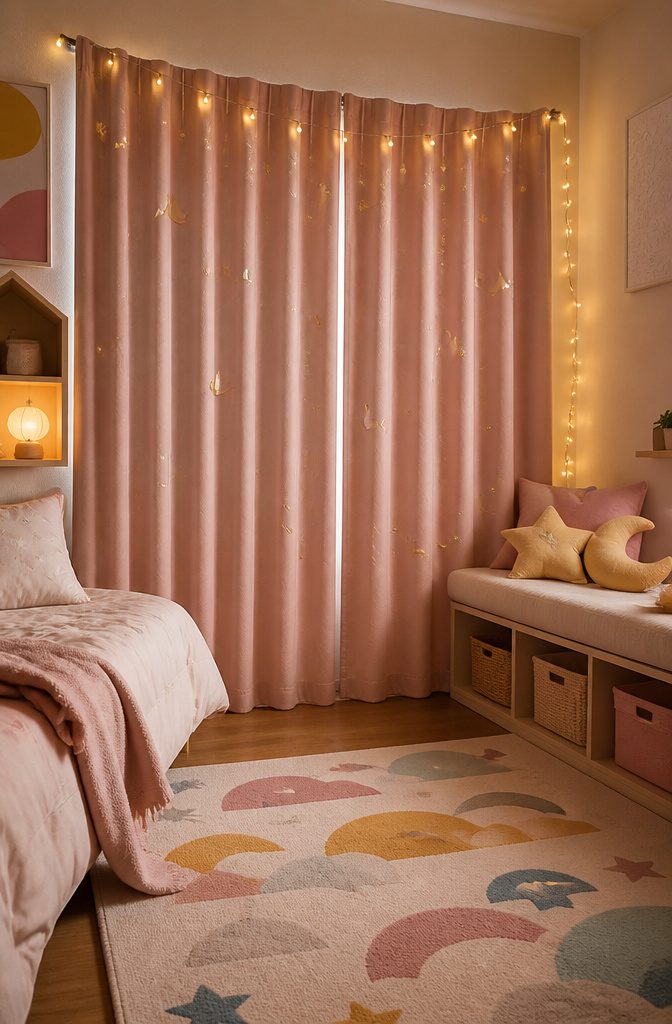
Kids star and moon embroidered curtains sit at the point where a child’s room still needs real darkness but the décor has moved past nursery prints.
The embroidery itself is raised thread, not foil or cutout, which means the stars stay intact through washing and no light leaks through the design itself.
That matters more than it sounds: cutout styles let pinpricks of daylight through each shape, while embroidery keeps the blackout layer continuous behind the stitched pattern.
The same motifs come in both blackout and light-filtering builds. Blackout versions block 85–95% of daylight and dull street noise by a few decibels; light-filtering ones soften morning sun without killing it entirely.
For a child who naps or a room facing a busy road, the heavier build wins. For an older kid who just wants the ceiling to glow pink at dawn, light-filtering is enough.
Machine washing works on either weight: cold water, gentle cycle, tumble dry low or air dry.
The star foil designs on cheaper sets can crack or peel; embroidery does not. That durability costs a little more upfront, but replacement curtains at sixteen months because the stars flaked off cost more.

DETAIL INFO: Package includes 2 pieces kids star curtains and 2 sheer tiebacks and 2 blackout tiebacks. Grommets top(1.6-inch inner diameter) curtain measures 52" wide per panel. Available length include 63", 84", 95".

PACKAGE INFORMATION: The package include 2 panels curtain come with 2 tiebacks. Each panel has both the 1 layer of tulle attached 1 layer of star curtain. Grommets top(1.6 inch inner diameter), each curtain measures 34 inches wide, more length for you choose.

ROOM DARKENING FUNCTION: The main panel of our light pink curtains is made of 3 layers, including 1 black light-blocking yarn in middle. They can block out 85% sunlight and insulate thermal for day sleeping. Precision fabric of our nursery curtains makes them wrinkle free and heavy duty
Thermal Insulated Cotton Linen Drapes
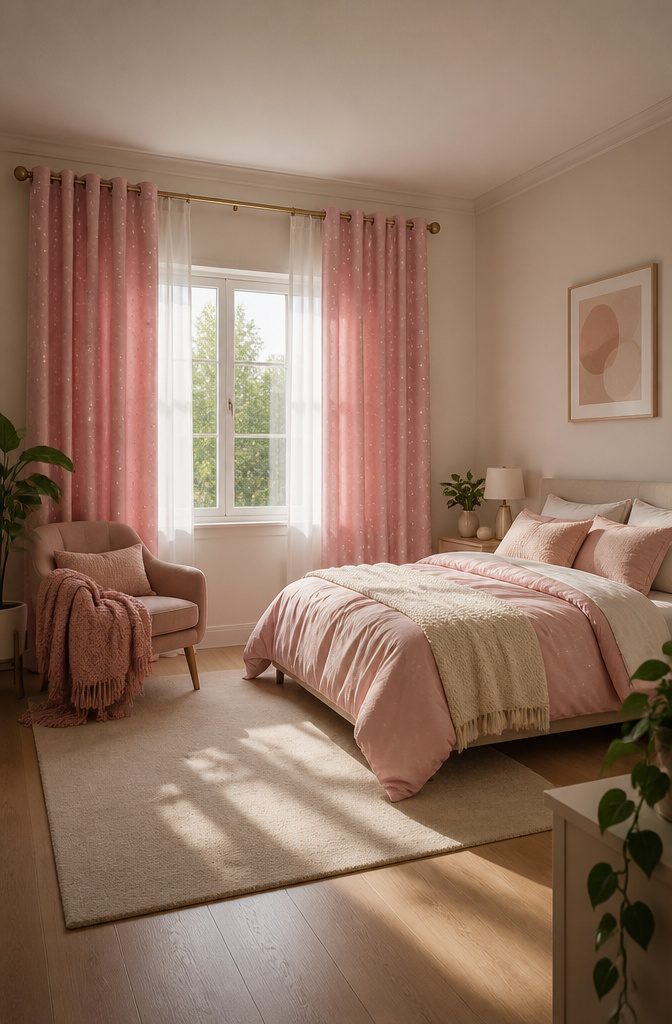
Double-layer construction with blackout backing does the real work for temperature control.
The gap between the pink face fabric and the dark lining creates a dead-air buffer that slows heat transfer through the window, which is where most bedrooms lose or gain degrees fastest.
Southern Living describes the mechanism simply: the layers prevent air from entering or leaving, so the room holds whatever temperature the HVAC has already paid for.
In my own place, the difference between hanging a single panel and these lined drapes was immediate and measurable. The wall beside the window stopped radiating cold in January and stopped baking in July.
The same weight that blocks thermal transfer also dulls sound. Ambient street noise drops by several decibels, enough that a neighbor’s early departure or late return becomes a faint note instead of a wake-up call.
The cotton-linen face fabric gives the pink star pattern a soft, hand-woven look that reads warmer than synthetic blackout panels.
That texture matters in a bedroom, where the goal is usually to calm the space down rather than announce a technical upgrade.
Machine wash cold on gentle, tumble dry low or air dry, and the lining stays intact through repeated cleaning.

Size & Quantity: Each pack contains 2 pieces, each 30" wide and 24" long, total width is 60", total length is 25.5" including 1.5" header. The 2" rod pocket fits most curtain rods and are easy to hang or slide.

PATTERN - No more sacrificing design for capability! The perfect marriage between Modern/Contemporary style and high functionality This simple yet stylish solid curtain instantly elevates any room Sold as a single panel

WELL DONE: Each package contains 2 blackout twinkle stars kids room curtain panels. Thread trimmed and wrinkle free, each panel is constructed with 8 anti rust grommets which fit well up to 1 1/2 inches curtain rods for easy installation and sliding
Custom Japanese Thicken Cotton Linen Blockout Curtains
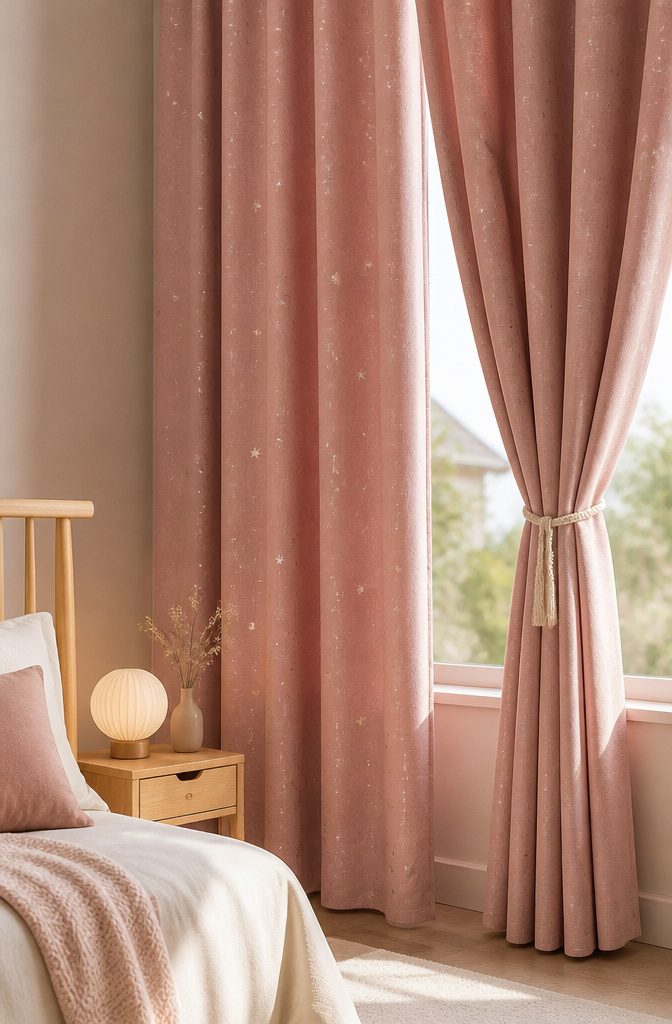
Custom Japanese thicken cotton linen blockout curtains sit at a midpoint between raw linen texture and the dense weave that actually stops light.
The cotton gives the fabric enough body to hang straight without the stiffness of pure blackout lining, and the linen adds that slightly irregular surface people reach for when they want a room to feel finished rather than furnished.
I priced these for a north-facing bedroom that gets brutal morning glare through cheap roller shades.
The custom sizing added roughly forty percent to the base cost, which felt steep until I remembered I would have paid almost as much for off-the-shelf panels plus a separate blackout liner and the hardware to layer them cleanly.
The single panel with built-in blockout meant one rod, one set of rings, and no gap where the two layers could shift past each other at 6 a.m.
The thicken weave works for bedrooms because it muffles sound slightly too, not enough to matter on a busy street but enough that rain on the window becomes background instead of event.
In a living room the same weight would probably feel heavy; there I would drop down to the lighter cotton-linen blend and accept some morning light.
For media rooms or nurseries the blockout density is the right call, though the star embroidery shows better with some ambient light behind it, so the pattern itself becomes a night-sky effect only after sunset.

Product information: This blackout curtain measures 34x63 inches, 2 panels set. Each curtain panel is embedded with multiple rust proof silver white metal grommets.The inner diameter of the loop is 1.57 inches, Accepts curtain rods up to 1.5 inches OD


High Quality Fabric: Blue Purple 3D Galaxy Blackout Curtain is made of 100% polyester, woven with three-layer construction, the middle layer of black yarns provides a better shading. It's unique, soft and heavy-duty.
Nordic Simple Modern Velvet Embroidery Curtains
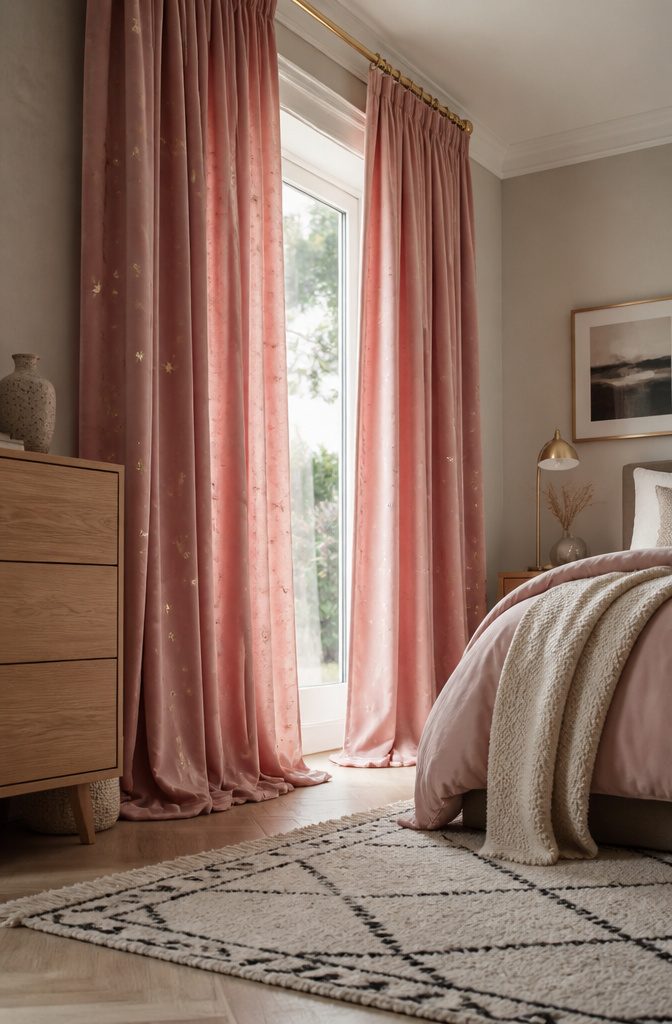
Velvet embroidery curtains carry weight in a way that thinner fabrics never will. The material pools at the floor differently, folds into heavier pleats, and blocks light through sheer density rather than coating.
In a bedroom already working with pink starry curtains, that weight becomes the difference between a print that reads childish and one that reads considered.
The blackout layer in custom velvet drapes sits inside the pile, not painted on the back. What convinced me, reading through a dozen product descriptions, is that embroidery on velvet has to be stitched before the blackout liner goes in.
The stars sit on top of the nap, catching lamplight, while the liner behind them does the actual work of darkening the room.
Order a sample and test the drape in your own hand before committing to width; velvet this thick needs a sturdier rod than the lightweight track you might have planned for.
The hanging style changes too. Rod-pocket velvet stacks into a thick column when open, swallowing more window frame than you expect.
Grommets let it fall cleaner but clang against the rod. For a bedroom, back-tab construction keeps the line smooth and the metal silent when you draw them at night.

RICH SATEEN: The Exclusive Home Sateen curtain panels are woven in a rich, sateen twill in a neutral linen hue and room darkening blackout opacity. They feature a pinch pleat top and offer a luxuriously elegant look for your windows.

RICH SATEEN: The Exclusive Home Sateen curtain panels are woven in a rich, sateen twill in a neutral linen hue and room darkening blackout opacity. They feature a pinch pleat top and offer a luxuriously elegant look for your windows.
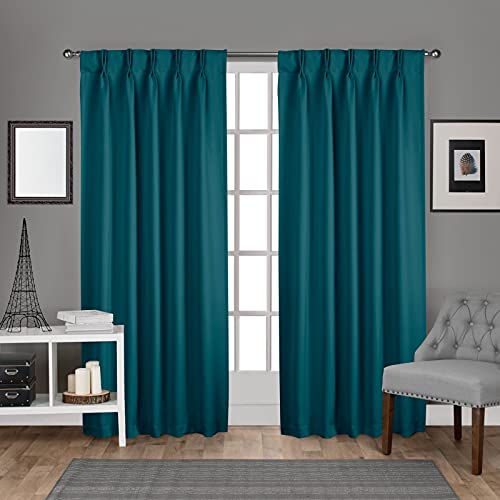
RICH SATEEN: The Exclusive Home Sateen curtain panels are woven in a rich, sateen twill in a neutral linen hue and room darkening blackout opacity. They feature a pinch pleat top and offer a luxuriously elegant look for your windows.
Blackout Benefits for Sleep
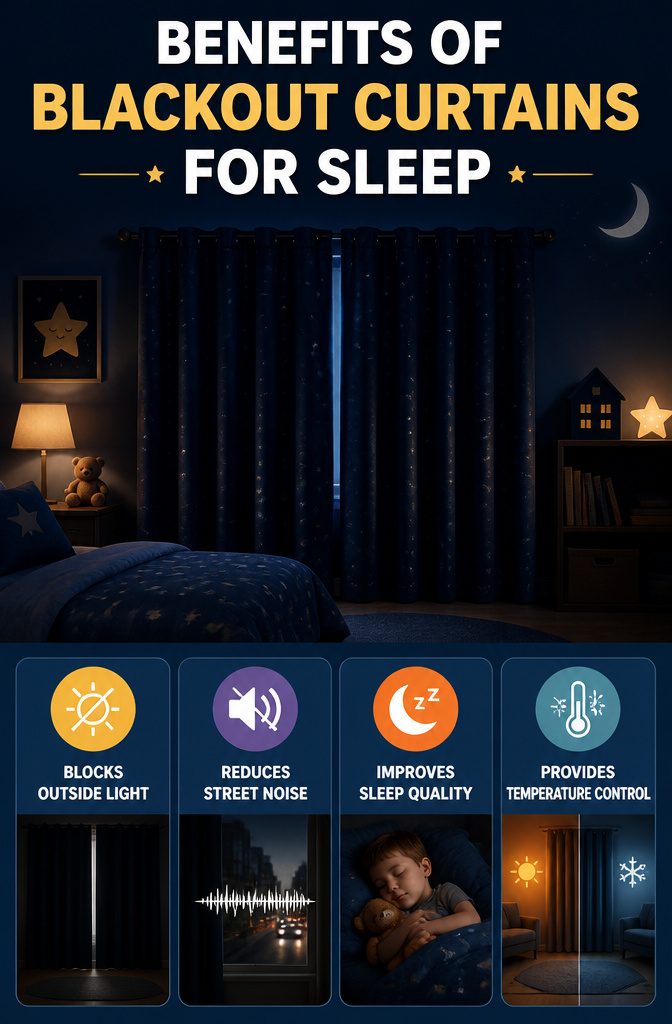
A dense blackout layer with thick stitching blocks enough outside light to keep a child’s room dark through early summer sunrises, and the same weight that stops light also muffles street noise by several decibels.
The cooler, quieter environment helps babies and toddlers fall asleep faster and stay asleep longer, which is why parents treating a bright bedroom usually see the biggest improvement in sleep quality rather than in looks alone.
Double-layer construction ranks highest for both heat blocking and noise reduction, so the pink starry print you chose for daytime charm still functions after dark.
The star motif matters less for sleep than the backing does: a thin decorative panel alone will not produce the same result. A true blackout lining is what turns cute curtains into a tool for better rest.
If the bedroom faces a busy road or sits under a streetlight, the noise dampening becomes as valuable as the darkness.
Many renters notice the difference on the first night, especially in older buildings with single-pane windows where the curtain adds a second buffer the glass cannot provide.
Design Coordination with Star Themes
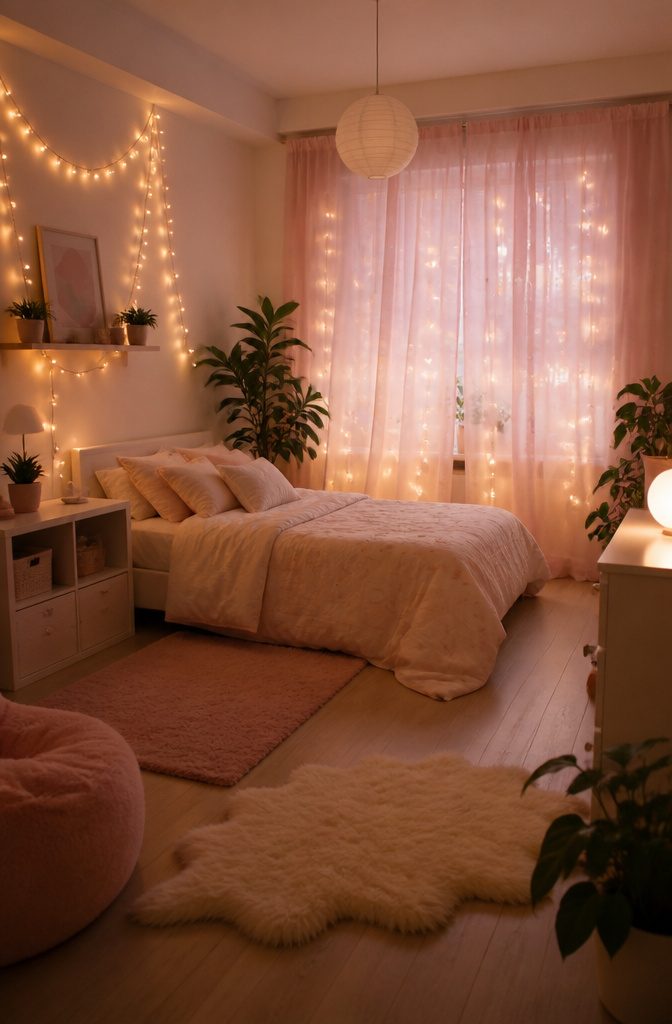
Fairy lights behind pink starry curtains can read as magical or cluttered depending on spacing.
The tulle layer on some blackout panels casts actual star-shaped light onto the wall when a lamp hits it from behind, which beats taping decals that peel by July.
Warm white strands, not color-shifting ones, keep the room from feeling like a concession stand.
Soft pinks and whites in bedding are the safer bet. My failed experiment: a slate-gray rug with a faint star motif that turned the whole corner cold against the blush curtain panels.
Pastel accents work better as small repeats, a throw or two pillows, not another competing pattern. Wall lamps angled to graze the curtain surface give the cutouts their dimension; straight-on ceiling light flattens them into polka dots.
Child Safety and Non-Toxic Fabrics
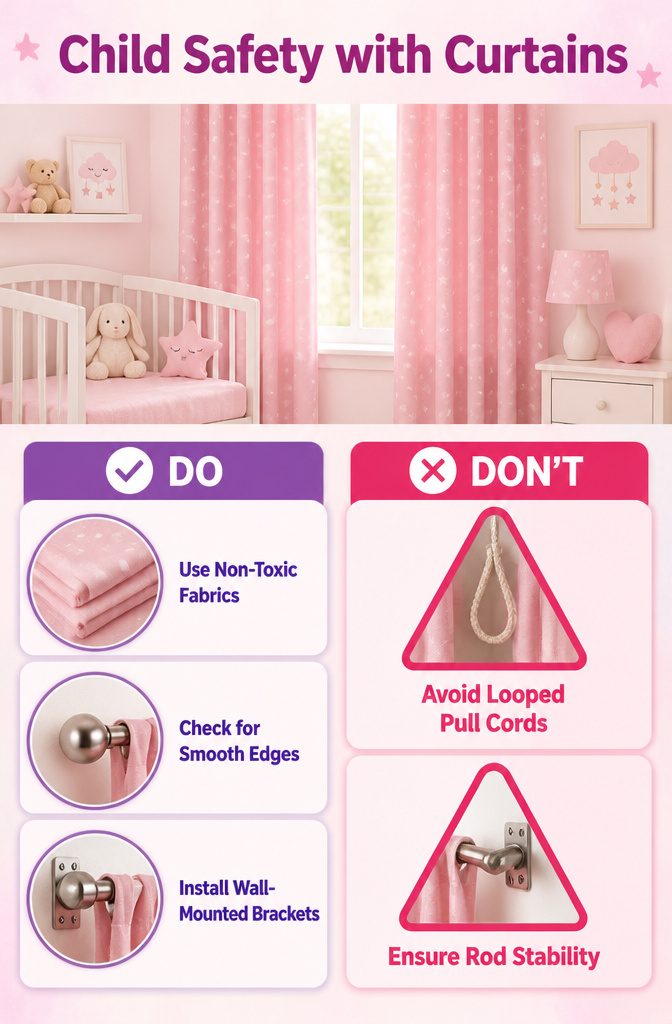
Pink starry curtains in a bedroom with a crib or toddler bed need the same scrutiny as any other textile that sits within reach of small hands.
The fabrics used in these styles are non-toxic, which matters more than most buyers realize until they catch a teething child mouthing the hem. No flame-retardant chemicals off-gassing near a sleeping area, no dyes that rub off on damp fingers.
The absence of cords is the other built-in safeguard. Looped pull cords on older curtain styles have been a documented strangulation hazard for decades, and the current designs skip them entirely.
A simple fabric tab or a ring that slides directly on the rod removes that risk without any extra step from the buyer.
What does require hands-on attention is the rod itself. A tension rod meant for lightweight sheers will bend or drop under the weight of lined blackout panels, and a falling rod with metal finials can do real damage.
Wall-mounted brackets with screws into studs or anchors rated for the load are the remaining piece. Check the fit by giving the installed rod a firm downward tug; if it shifts at all, the hardware is wrong for the weight.
Star Cutouts and Blackout Performance
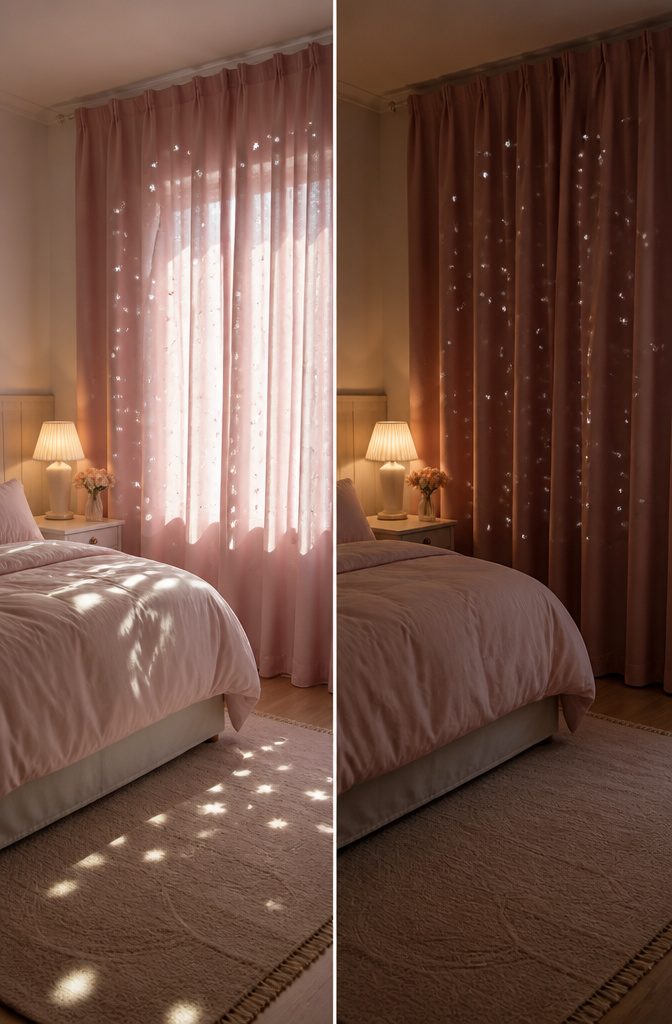
Pink starry curtains in bedroom setups with true blackout backing still dim a room enough for most sleepers, even with pinpricks of light slipping through the cutouts.
The star shapes themselves are punched or laser-cut through the face fabric, so daylight finds those exact paths.
In my own space, the difference between drawn and undrawn is dramatic, but a flashlight held behind the panel will trace every constellation onto the opposite wall.
The blackout layer underneath still blocks 85–95% of daylight, which matters more than the stars suggest at first glance. That remaining 5–15% enters only where the stars are, not as a general wash across the whole panel.
For a north-facing bedroom or someone who naps mid-day, the scattered points of light may actually register as pleasant, almost like a dim nightlight.
For a migraine sufferer or a day-sleeper who needs cave-darkness, the same effect becomes a problem worth solving with a secondary blind or a sleep mask.
The tradeoff is built into the design: the stars are the visual reason you bought pink starry curtains, and the light they let through is inseparable from that look.
A solid blackout panel in the same colorway would perform better but would not read as the same item at all.
Frequently Asked Questions
Are pink starry curtains safe and child-friendly?
Yes.
The fabrics are non-toxic, which matters when a teething child mouths the hem, and current designs skip looped pull cords entirely. Grommet headers slide directly on the rod, removing a documented strangulation hazard.
Just be sure the rod brackets are wall-mounted with screws into studs or anchors rated for the load; a tension rod meant for sheers will bend or drop under lined blackout weight.
Do star cutouts affect blackout performance?
Minor light passes through the star shapes, but the blackout layer underneath still blocks 85–95% of daylight. The remaining light enters only where the cutouts are, not as a general wash.
For most sleepers the scattered points register almost like a dim nightlight; for someone who needs cave-darkness, a secondary blind or sleep mask solves what the design itself cannot.
Can I wash pink starry curtains regularly?
Yes, machine wash cold on a gentle cycle, then tumble dry low or air dry. Warm water is where trouble starts: it can shrink the backing enough to pull seams crooked and dull foil stars where the finish lifts.
The tag means what it says, and the cold-water rule is the difference between curtains that last and curtains that sag at the corners.