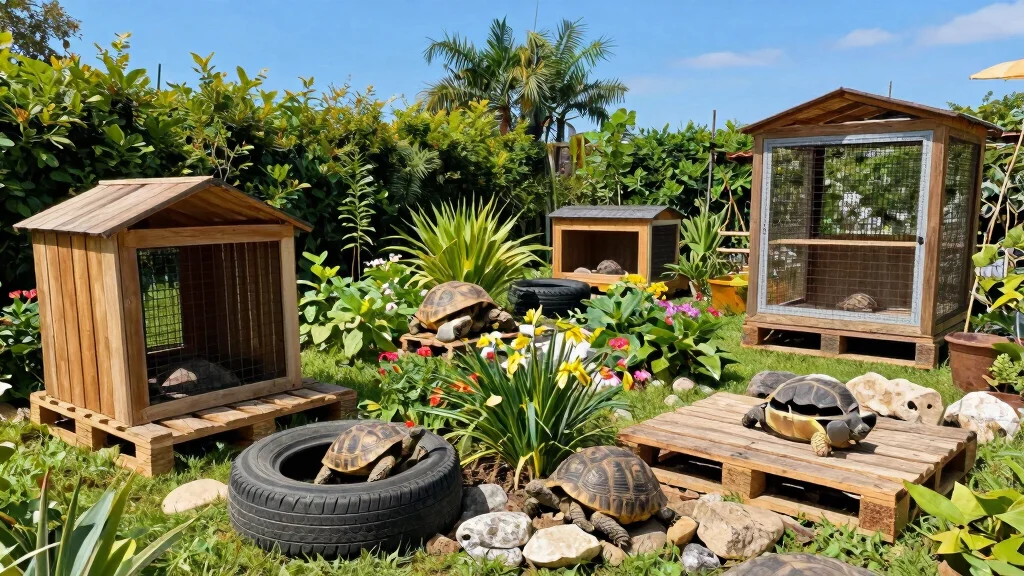
Creating a safe and secure outdoor tortoise enclosure is essential for any tortoise owner who wants to provide a happy habitat for their shelled friend. With so many different options out there, it can be overwhelming to figure out the best design to prevent escapes and protect against predators. That’s why I created this guide. I want to help you design a tortoise habitat that not only keeps your pet safe but also embraces sustainable gardening practices by using recycled materials.
If you’re a tortoise enthusiast, or someone who simply wants to create a thriving outdoor environment for your reptilian companion, you’re in the right place. You probably care about the well-being of your tortoise and want to ensure they have an enjoyable and secure space to roam. This post is packed with creative ideas that cater to your needs, whether you’re starting from scratch or looking to enhance an existing enclosure.
In this blog post, you’ll discover twelve innovative outdoor tortoise enclosure ideas that are both functional and environmentally friendly. From multi-layered garden beds to repurposed structures, these designs will inspire you to create a unique tortoise habitat that is protective and lush. You’ll learn how to incorporate elements like predator-proof fencing and suitable plants that not only keep your tortoise safe but also make the enclosure enjoyable for both you and your pet.
Key Takeaways
– Explore a variety of creative designs to keep your tortoise safe and secure in their enclosure.
– Learn how to use recycled materials effectively in tortoise habitat design to promote sustainability.
– Discover the importance of predator-proof fencing to protect your tortoise from potential threats.
– Find out which enclosure plants can enhance your tortoise’s environment and provide natural shelter.
– Get inspired by DIY tortoise pen ideas that allow you to customize your pet’s outdoor living space.
1. Multi-Layered Garden Beds
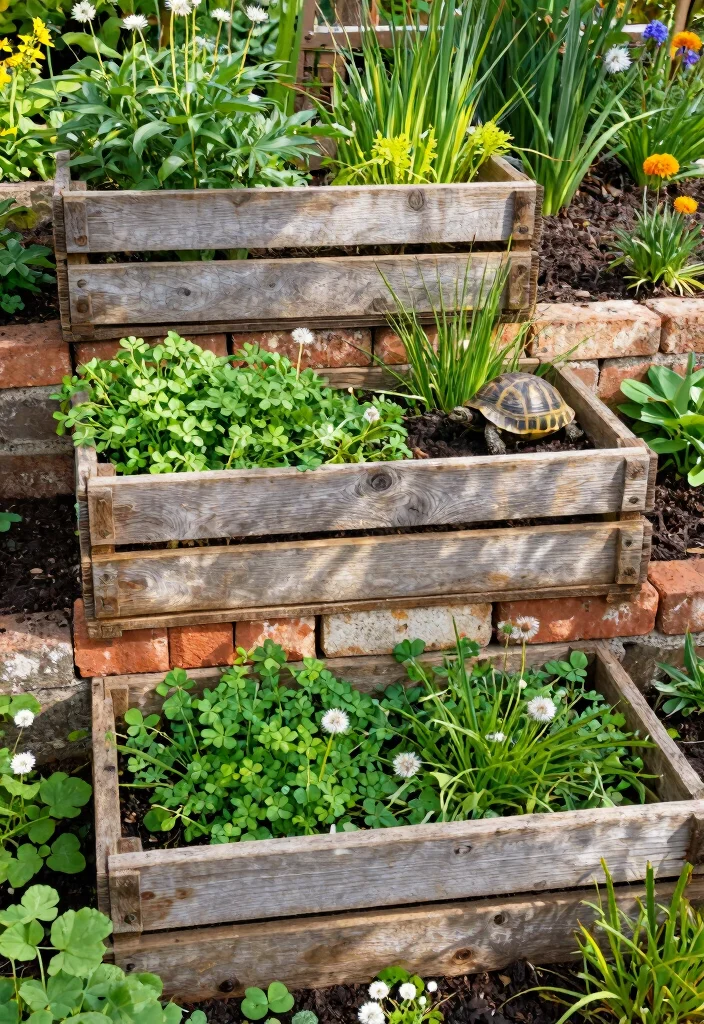
Creating multi-layered garden beds offers a vibrant and functional way to secure your tortoise while enhancing its habitat. This design incorporates materials like wooden crates and bricks, adding visual interest to your outdoor space. By building raised sections, you can introduce various soil types that support a range of plants for your tortoise to enjoy.
These layers not only act as barriers against escape but also provide essential shade and hiding spots. Including nutritious edible plants such as clover and dandelions will delight your tortoise and support its health.
Key steps to implement:
– Use untreated wood to avoid chemical risks.
– Incorporate local soil to boost biodiversity.
– Regularly inspect for pests to maintain a healthy garden.
This approach prioritizes your tortoise’s safety while enriching your garden’s ecosystem, creating a thriving environment for both.

Versatile Outdoor Pet Fences: Designed as a tortoise pet enclosure, this set of 8 fences allows you to create any size outdoor tortoise fence to safely contain your pets and provide them with a secure environment to play and rest

Outdoor pet fences:installation is simple and convenient,Pet Accessories

Enhanced mobility: provides a large exercise area for tortoises, physical activity and improving their overall health,outdoor pet fences,decorative garden fence
2. Recycled Tire Tortoise Habitat
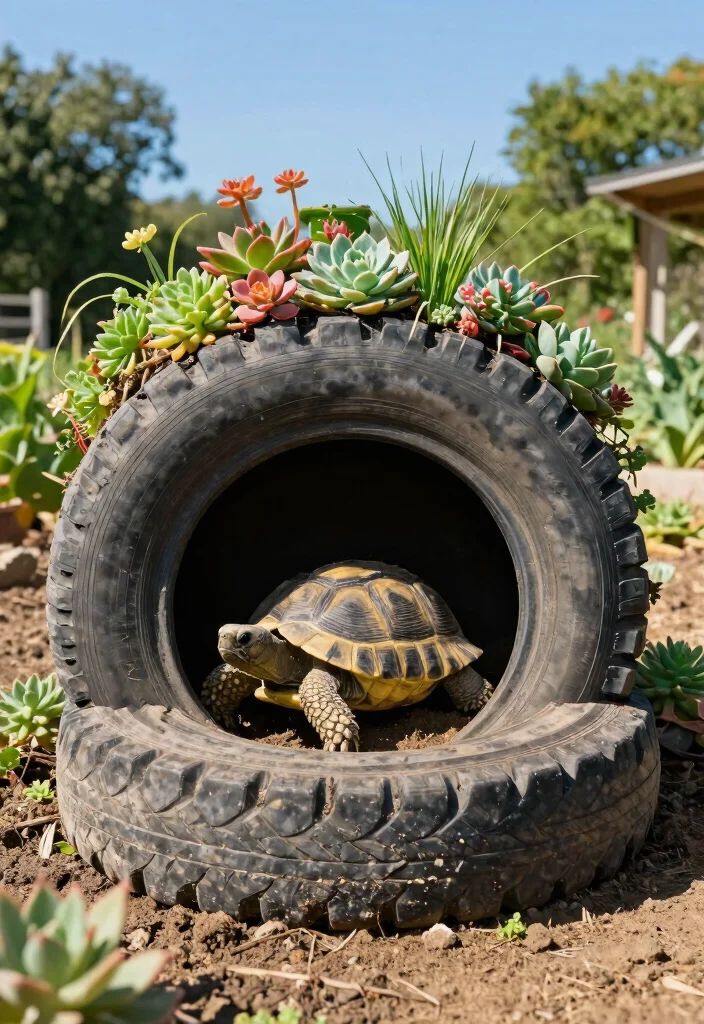
Transforming old tires into tortoise habitats is a clever and eco-friendly solution that provides a cozy retreat for your pet. By cutting tires in half and partially burying them, you create a stable, escape-resistant shelter that also offers shade from the sun.
The rubber retains warmth on cooler days and helps keep moisture for plants growing around the tire. Surrounding the tire with tortoise-friendly succulents and grasses turns the area into a beautiful garden setting.
Practical tips for success:
– Paint tires with non-toxic, UV-resistant paint for added protection.
– Ensure all edges are smooth and tires are clean before use.
– Place them in shaded areas to provide relief from heat.
This unique recycling project combines functionality and sustainability, offering a delightful habitat your tortoise will appreciate.

Ready-to-Use Formula: No mixing or extra steps required. Simply pour and plant - perfect for gardeners of all experience levels.

Reptile Substrate: Our reptile coconut soil has no pungent smell. Compared with tree bark, wood chips and other bedding materials, the fibers of coconut soil are very soft, which can create a suitable living environment for reptiles. No need to soak. Just open and use

Ready to Use, Right from the Bag: No prep required. This raised bed garden soil is packed with organic compost and nutrients, ready to use for quick and easy planting
3. Pallet Fencing with Climbing Plants
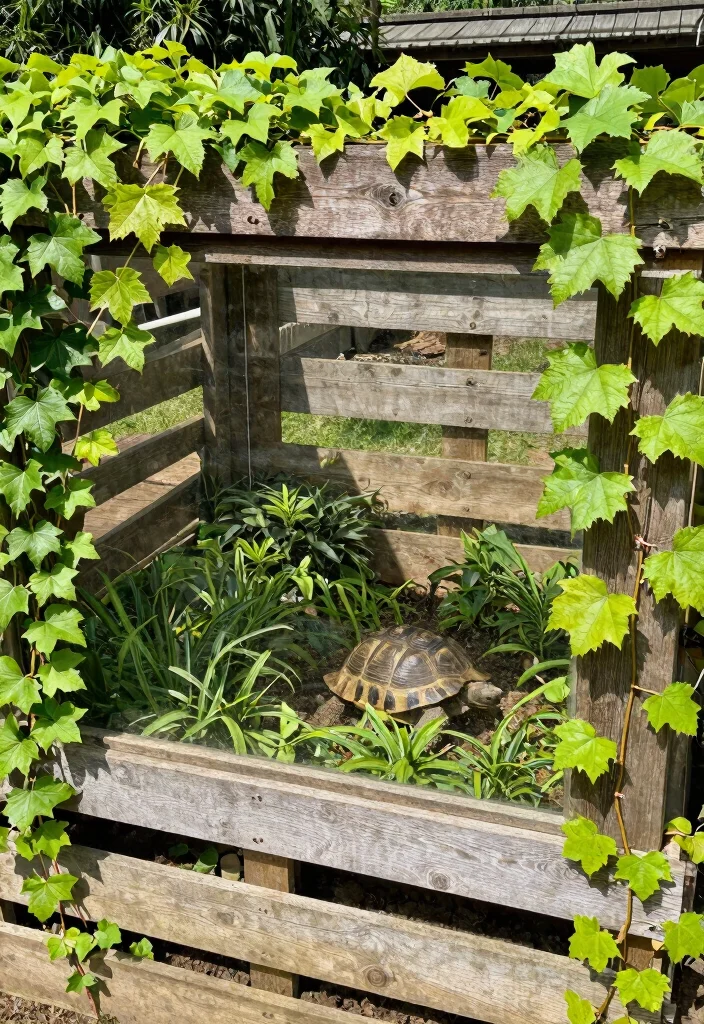
Using pallet fencing is an affordable and sustainable option to secure your tortoise enclosure. By repurposing wooden pallets, you create a strong boundary that protects your tortoise from predators while allowing for creative design.
The gaps in the pallets enable climbing plants to thrive, providing extra coverage and shade. Choosing non-toxic vines will not only beautify the area but also serve as natural camouflage for your tortoise’s habitat.
Essential tips to consider:
– Anchor the pallets securely to the ground to prevent movement.
– Combine climbing plants with ground cover for a lush look.
– Use safe, weather-resistant paint to enhance longevity.
This method secures your tortoise while adding charm to your garden, benefiting both your pet and the outdoor atmosphere.

Spacious Size & Versatile for Small Animals : Measures 49"L×37.5"W×15"H, with a roomy activity area and cozy hide. Ideal tortoise enclosure, turtle box, chameleon cage, reptile enclosure, and house for small animal like turtles, rabbits, quail, chicks.

TORTOISE HABITAT: The large tortoise enclosure house wooden is with dimensions of 40.2*20.87*16.1 inches and a door size of 9.6*7.5 inches, this tortoise habitat turtle enclosure provides ample space for raising multiple small animals, such as rabbits, tortoises, lizards, snakes, turtles, hamsters, and quail, making it a versatile indoor enclosure for breeders

【MULTI-SPECIES REPTILE HABITAT DESIGN】Spacious tortoise habitat and reptile enclosure designed for tortoises, geckos, bearded dragons, snakes, and other small reptiles. Provides a stable indoor-outdoor environment that supports natural behavior and comfortable daily living space.
How To Choose The Right Outdoor Tortoise Enclosure
Choosing the right outdoor tortoise enclosure is vital for your pet’s safety and comfort. A good enclosure keeps your tortoise secure from predators, prevents escapes, and offers a suitable habitat for them to thrive. Here’s how to make the best choice:
1. Size Matters
Consider the size of your tortoise when selecting an enclosure. A larger tortoise requires more space to roam and explore. Aim for a minimum of 10 square feet per tortoise. Remember, the more space, the happier and healthier your tortoise will be. You can always expand your enclosure as they grow!
2. Material Selection
The material of your enclosure plays a big role in durability and safety. Choose materials like wood, recycled plastic, or metal that can withstand weather conditions. Avoid flimsy materials that can easily break or be chewed through by your tortoise. Ensure any wood is untreated to prevent harmful chemicals from leaching into the soil.
3. Predator-Proofing Features
Your enclosure must be safe from predators. Look for features like tall fences and buried barriers to stop digging animals. Using predator-proof fencing is essential; opt for materials that are at least 3-4 feet high and buried about a foot underground. This helps keep your tortoise safe from curious animals.
4. Natural Shade and Shelter
Providing natural shade is crucial for your tortoise’s well-being. Enclosures should have shaded areas to prevent overheating. Use plants, structures, or even a DIY tortoise pen with a roof to create a cooler environment. Ensure your shelter is spacious enough so your tortoise can fit comfortably inside.
5. Ventilation and Drainage
Good ventilation prevents moisture build-up, which can lead to health issues. Your enclosure should allow for airflow while keeping your tortoise safe. Additionally, proper drainage is important to keep the area dry after rain. Consider placing rocks or gravel in low spots to enhance drainage.
6. Budget Considerations
Finally, think about your budget. Outdoor tortoise enclosures can vary greatly in price. Determine what features are most important to you, such as size and materials. DIY options using recycled materials can be cost-effective and fun. Don’t forget to factor in the cost of plants and enrichment items for your tortoise.
Pro Tip: Always research the specific needs of your tortoise species. Different species have varying habitat requirements. Tailoring your enclosure to their specific needs will enhance their quality of life and your enjoyment of having them as a pet. Take your time to plan and design a space that works for both you and your tortoise!
4. Repurposed Wood and Rock Structures
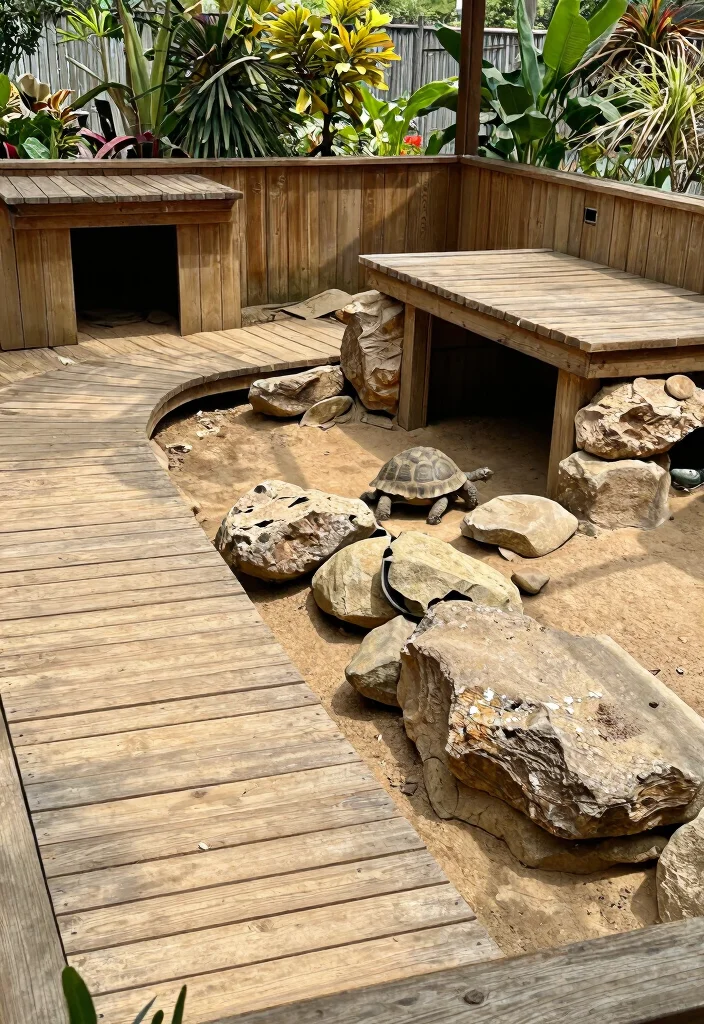
Constructing structures from repurposed wood and rocks creates a captivating environment for your tortoise, ensuring it remains protected from predators. You can use old wood planks to build shelters and arrange stones to form pathways and hiding spots.
These natural barriers are not only visually appealing but also effective in keeping your tortoise safe. They provide elevated basking areas and shaded spots for cooling down, enriching your tortoise’s habitat.
Helpful tips for building:
– Use a variety of rock sizes to create interesting terrain.
– Ensure any wood is untreated to prevent chemical exposure.
– Keep structures low for easy access for your tortoise.
This approach encourages exploration while ensuring a secure living environment, making it a fun space for your tortoise.
Fun fact: repurposed wood and rocks can cut costs for your outdoor tortoise enclosure by up to 60% while boosting safety. Elevate basking areas and create shaded hiding spots with reclaimed materials—practical, affordable, and totally wildlife-friendly.

Realistic terrarium décor – These terrarium plants not only add interest and color for your reptile terrarium, but also add much-needed and variety shade for species that are shy in open spaces. These reptile plants are great terrarium decor for gecko habitat,ball python terrarium,tortoise habitat and snake habitat. It’s also a great bearded dragon décor.

Dandelion live plant in a 4" pot, ready for planting in gardens, containers, or herb beds.
5. DIY Greenhouse Tortoise Enclosure
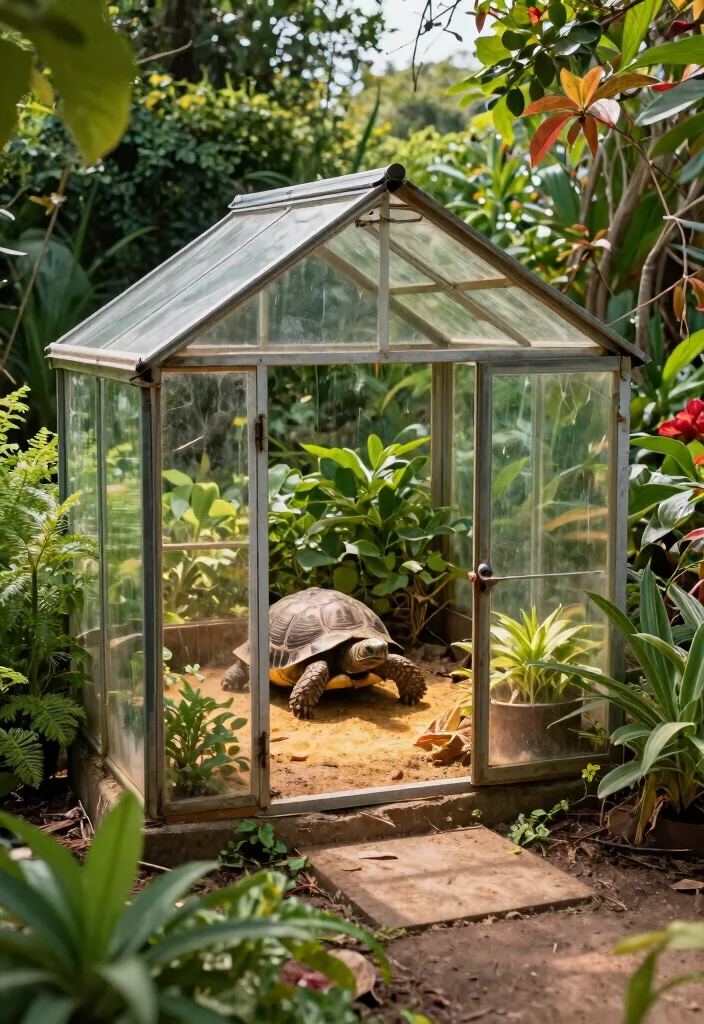
Constructing a DIY greenhouse enclosure is an innovative way to provide year-round comfort for your tortoise. Using recycled glass panels or clear plastic, you can create a spacious, sunlit area that also shields your pet from harsh weather conditions.
A greenhouse allows you to maintain ideal humidity and temperature, promoting your tortoise’s health. You can fill it with tortoise-friendly plants, ensuring a diverse diet throughout the seasons.
Key considerations for success:
– Ensure proper ventilation to prevent overheating.
– Position the greenhouse for optimal sunlight exposure.
– Choose durable materials safe for outdoor use.
This design offers a safe haven for your tortoise, nurturing its health and enriching its habitat.
Fun fact: A DIY greenhouse-style outdoor tortoise enclosure can boost year-round temps by 5–10°C with proper shading, using recycled glass panels and clear plastic. Pro tip: keep humidity around 60–70% and fill with tortoise-friendly plants for a thriving, sustainable diet.

Ideal Size & Dual-Zone Design: 46.45"L×19.7"W×17.52"H tortoise enclosure with divided activity and rest zones. Activity area for playing & sunbathing; elevated rest zone stays dry, serving as a cozy hide for small animals.

Easy setup: instantly create a secure space for your pets with this installation process, allowing you more time to enjoy your outdoor activities,outside enclosures for tortoises,enclosure for a tortoise

Tortoise pet enclosure--the material is tough and not easy to damage or break,outside tortoise fence
6. Secure Shade Structures
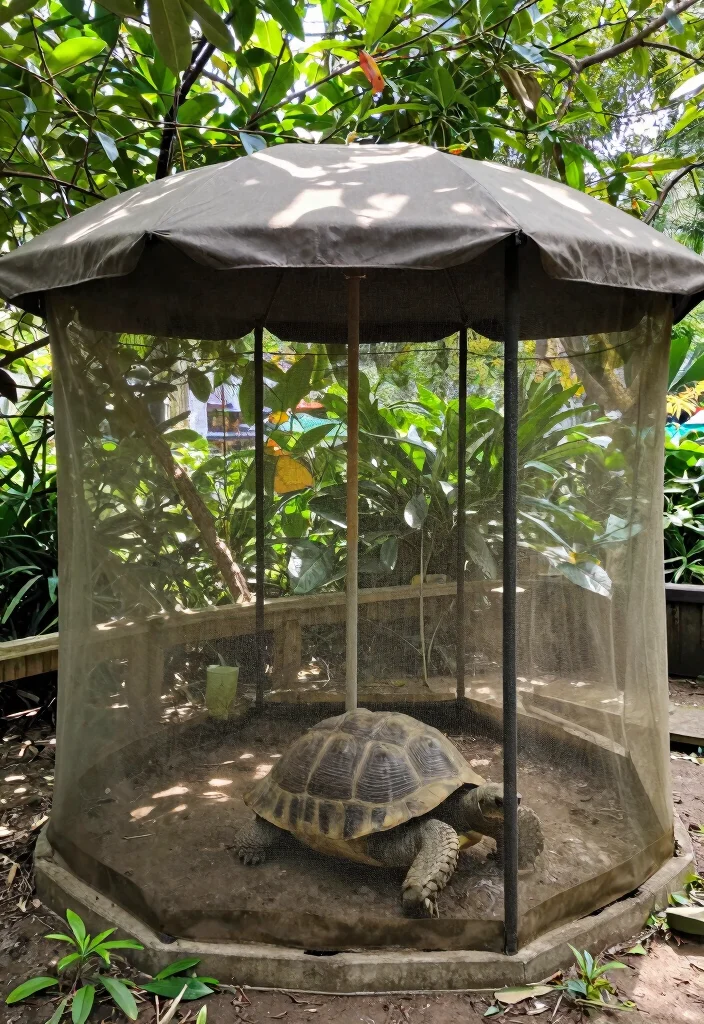
Creating shaded areas within your tortoise enclosure is essential for their comfort, especially during hot summer days. Consider using old umbrellas or lightweight tarps stretched over wooden frames to provide a cool retreat for your tortoise.
Shade structures help regulate your tortoise’s body temperature, reducing stress while allowing them to engage naturally with their environment.
Tips for effective shade solutions:
– Place the structures in sunny areas to maximize coverage.
– Ensure stability to withstand strong winds.
– Combine shade with native plants for added cover and food sources.
This straightforward solution guarantees a comfortable and safe environment for your tortoise to thrive.

Raised Garden Bed – Easily accessible raised beds are 20 inches tall, meaning no bending or kneeling. Soil fills right to the bottom. Great for growing deep root vegetables, herbs, fruit and flowers

● HARVEST: Miracle-Gro Organic Raised Bed & Garden Soil is guaranteed to grow more vegetables for a bigger harvest versus unfed plants (satisfaction guaranteed or your

Ready to Use, Right from the Bag: No prep required—this raised bed garden soil is packed with organic nutrients and ready to use for quick and easy planting
7. Natural Fencing with Native Plants
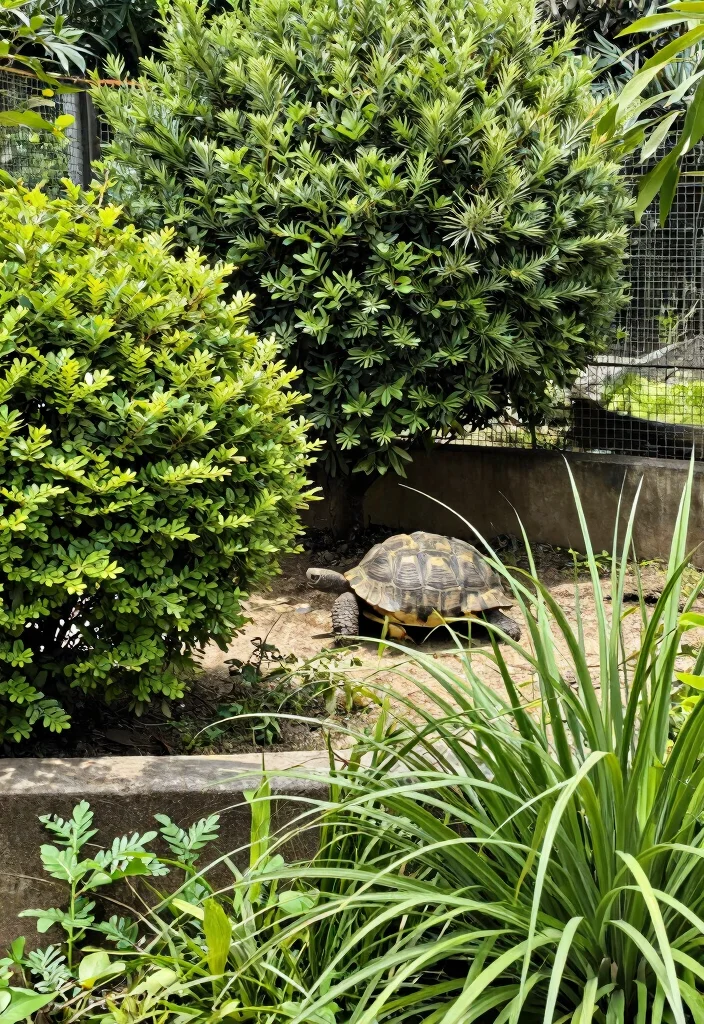
Using native plants to create a natural fence enhances security for your tortoise while boosting your garden’s biodiversity. Thick bushes or tall grasses form a beautiful and effective barrier against predators while providing additional food sources for your pet.
Native plants thrive in local conditions, making them low-maintenance and resilient against pests. They also attract wildlife, enriching the ecosystem around your tortoise’s enclosure.
Key tips for planting:
– Select non-toxic plants safe for tortoises.
– Space plants to allow for natural growth.
– Regularly prune to maintain visibility and security.
This method keeps your tortoise safe while enhancing the surrounding garden, fostering a harmonious outdoor setting.

Spacious Two-Tier Dual-Zone Habitat: Measuring 35.4"L x 20.5"D x 22.4"H, this large wooden tortoise habitat offers ample room for adult tortoises. A gentle non-slip ramp links the elevated basking spot and shaded resting area, forming gradual warm and cool zones so tortoises can freely move to self-regulate their body temperature.

Spacious Size & Versatile Use : Measures 49"L×37.5"W×15"H, with a roomy activity area and cozy hide. Ideal tortoise enclosure, turtle box, chameleon cage, reptile enclosure, and home for small animal like turtles, rabbits, quail, chicks.

DUAL-LEVEL LUXURY LIVING: Our wooden tortoise house elevates your pet's environment with a spacious, two-level design. The top level boasts a cozy sleeping area shielded within a charming wooden house and a balcony, while the expansive lower level offers ample activity areas, ensuring your tortoise enjoys both comfort and freedom.
8. Elevated Tortoise Platforms
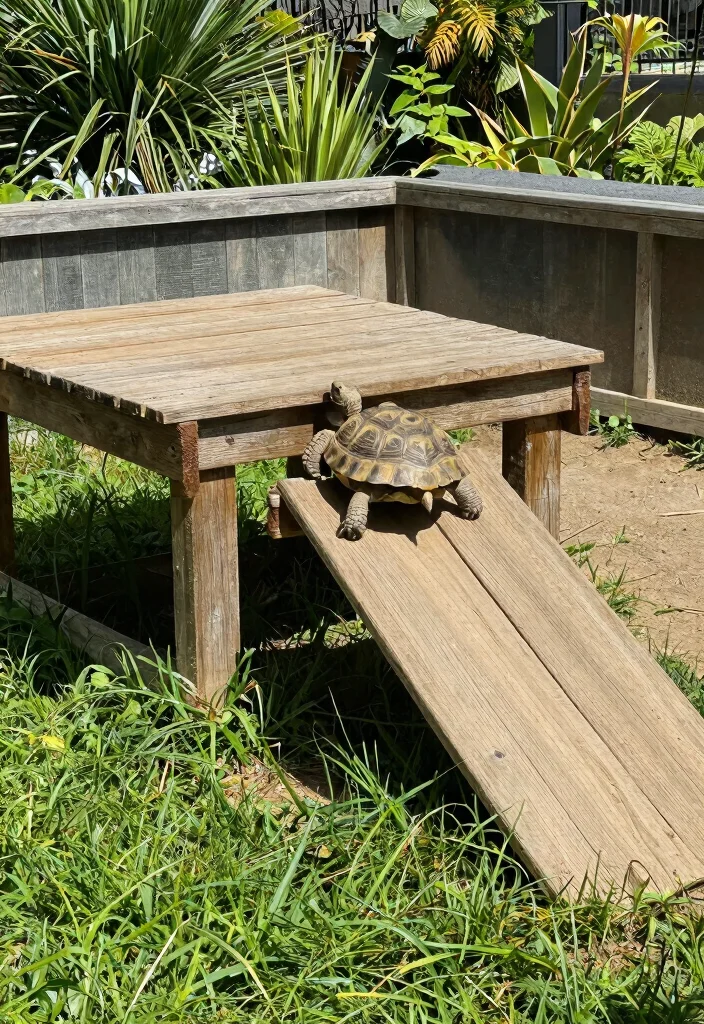
Adding elevated platforms within your tortoise enclosure introduces an exciting exploration option. Construct low platforms from reclaimed wood, allowing your tortoise to climb and bask safely at different heights without the risk of escape.
Elevation helps regulate temperature, as higher areas often become warmer, which is beneficial for your tortoise. This design encourages natural behaviors, promoting an enriched daily experience.
Important tips for platform construction:
– Secure platforms to prevent tipping.
– Surround with soft bedding or grass for safe landings.
– Design with your tortoise’s size in mind for easy access.
This idea not only creates interest in the habitat but also encourages physical activity, keeping your tortoise healthy and engaged.
Fun fact: Elevating a platform 6-12 inches off the ground can raise basking spots by 5-10°F, helping regulate temperature in your outdoor tortoise enclosure. Built from reclaimed wood, it’s budget-friendly, enriches daily exploration, and reduces escape risk.
9. Compost Pits for Nutritional Benefits
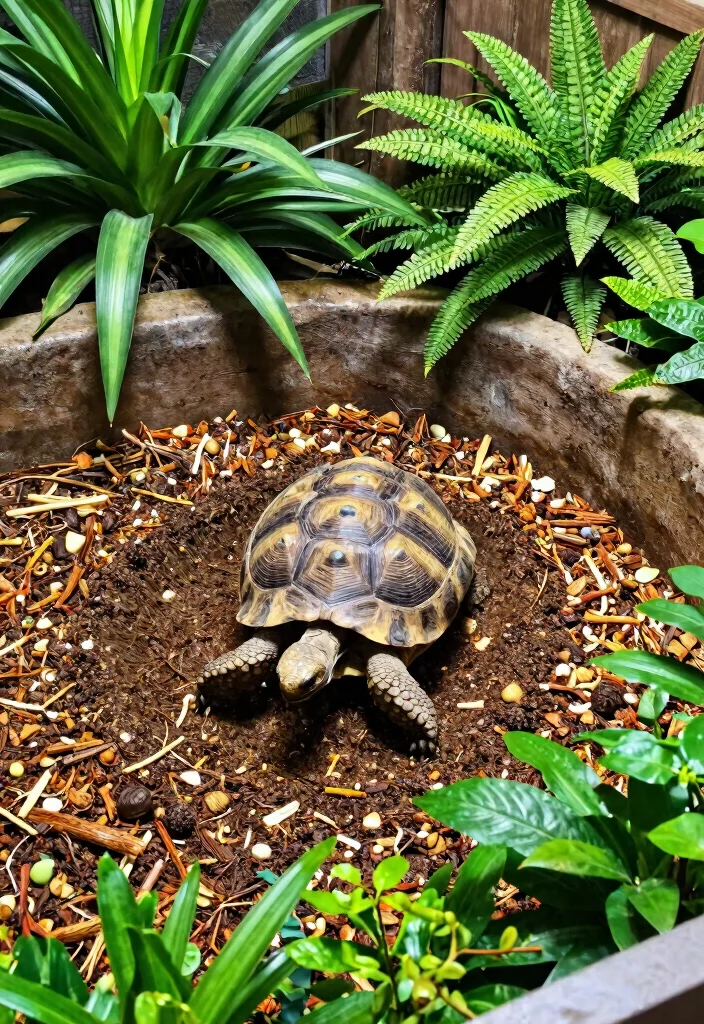
Incorporating a compost pit into your tortoise enclosure serves multiple purposes. It provides a natural source of nutrient-rich soil for tortoise-friendly plants while offering your tortoise a space to dig and explore.
Tortoises are natural foragers, and a compost pit encourages this instinctual behavior. The organic matter enriches the soil, promoting healthier plants for your tortoise’s diet.
Key tips for composting:
– Use organic materials safe for tortoises.
– Position the pit away from lounging areas to avoid odors.
– Introduce compost gradually to develop the ecosystem.
This idea benefits your tortoise while supporting sustainable gardening practices within their habitat.
10. Integrated Water Features
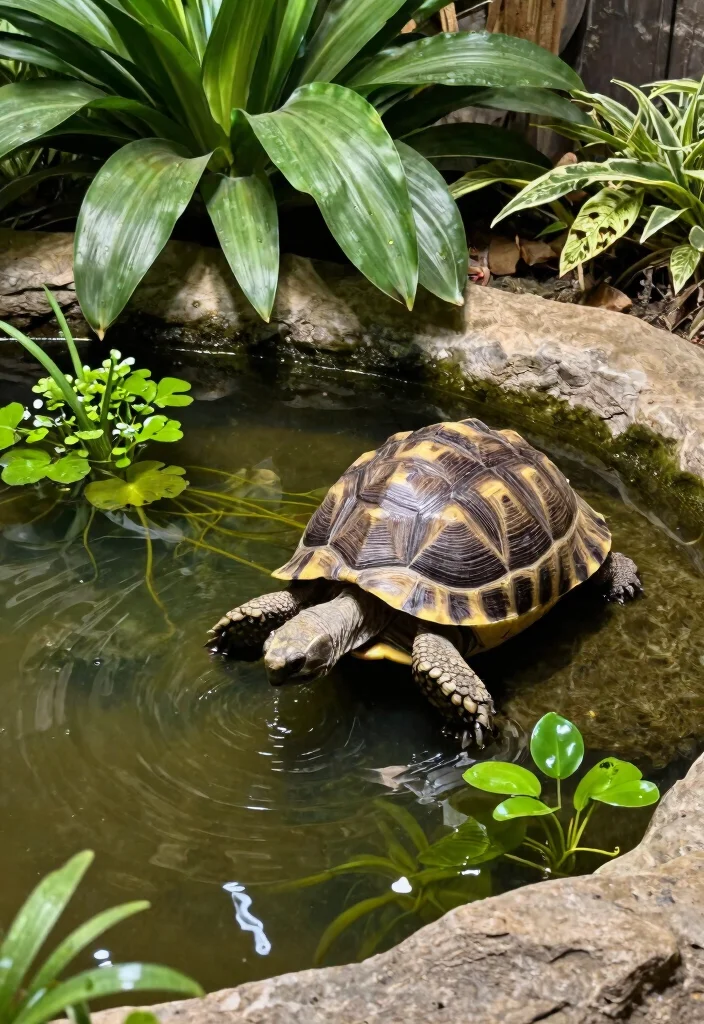
Adding small ponds or water features to your tortoise enclosure enhances both the habitat and the ecosystem. Use recycled materials to create a shallow pond, ensuring that the edges are gently sloped for easy access.
Water features promote hydration and provide natural humidity, both essential for your tortoise’s well-being. They also attract local wildlife, enriching the environment.
Tips for creating water features:
– Include aquatic plants safe for tortoises.
– Ensure the water is clean and shallow for safe navigation.
– Regularly check for algae and maintain water quality.
This idea not only beautifies the space but also enhances your tortoise’s interaction with nature.
11. Constructed Hideaways with Natural Materials
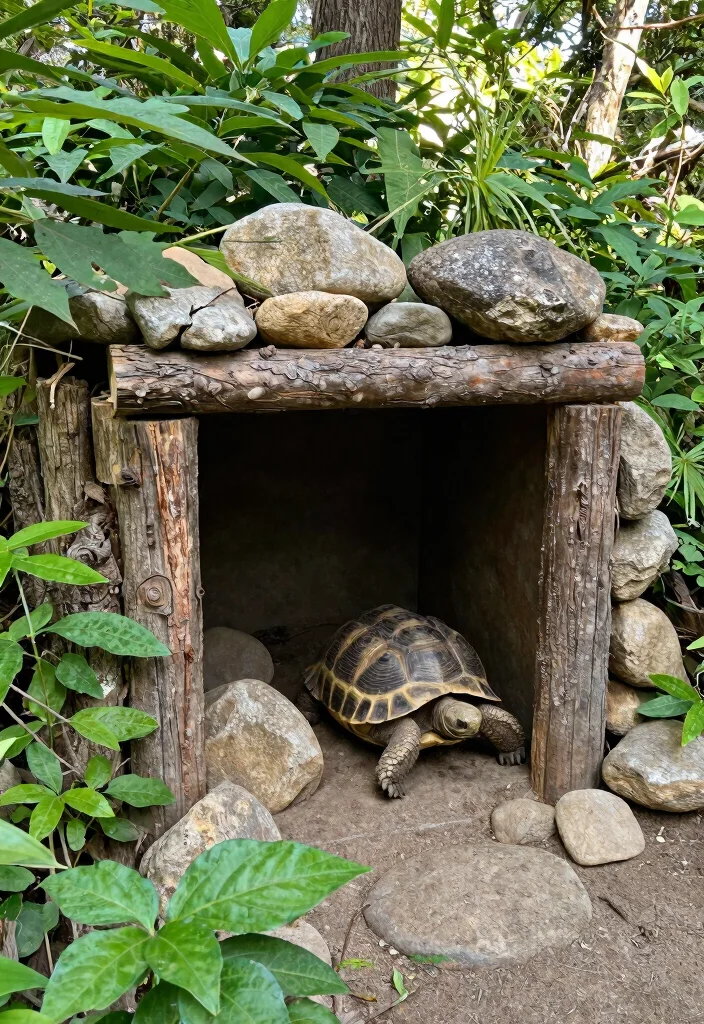
Designing hideaways using natural materials like logs and stones creates secure spots for your tortoise to seek refuge. By building small caves or tunnels, you provide shelter from sun and rain, improving your tortoise’s habitat.
Natural hideaways cater to the instinctual behaviors of tortoises, creating safe spaces that promote exploration and reduce stress.
Helpful tips for constructing hideaways:
– Ensure all materials are clean and free from chemicals.
– Place hideaways in various locations to encourage exploration.
– Regularly check to keep them safe and accessible.
This method offers comfort and security while encouraging interaction with their surroundings.
12. Customizable Enclosure Layouts
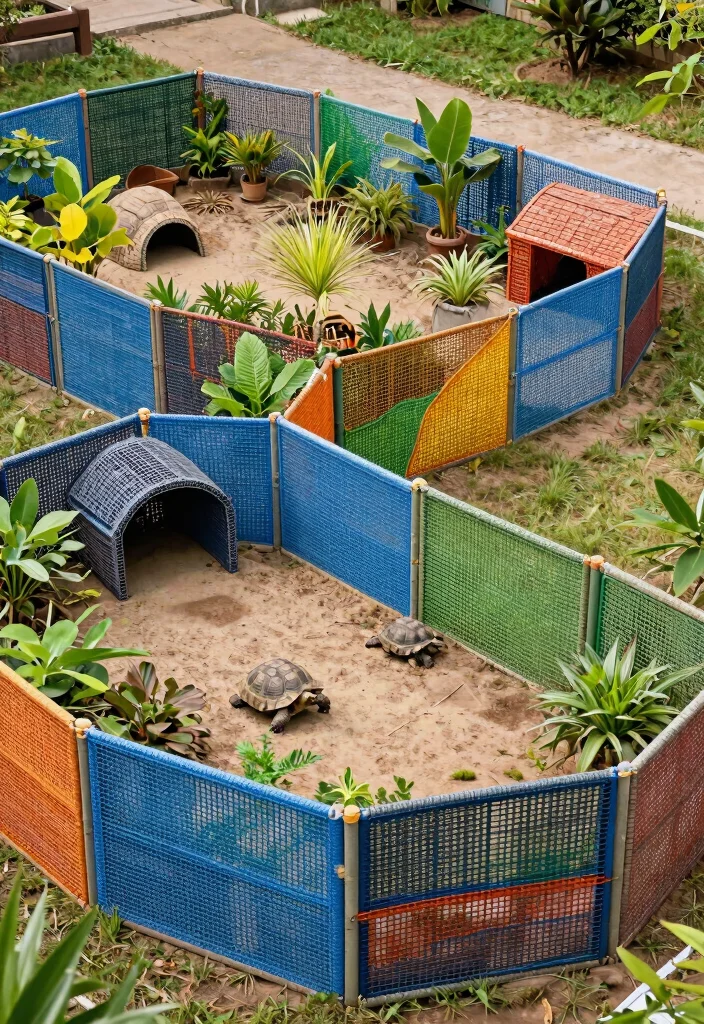
Consider creating customizable layouts for your tortoise enclosure that allow flexibility as your tortoise grows. Using modular fencing made from recycled materials lets you easily adjust the space to meet your pet’s changing needs.
This versatility enables you to rearrange plants and structures, keeping the environment stimulating and fresh. Adaptable layouts ensure that your tortoise enjoys a dynamic habitat.
Key steps for customization:
– Use lightweight materials for easy adjustments.
– Maintain a consistent layout while incorporating adaptable features.
– Add temporary barriers to create different zones for foraging or resting.
This approach keeps your tortoise’s habitat engaging and secure, ensuring their ongoing safety.
Conclusion
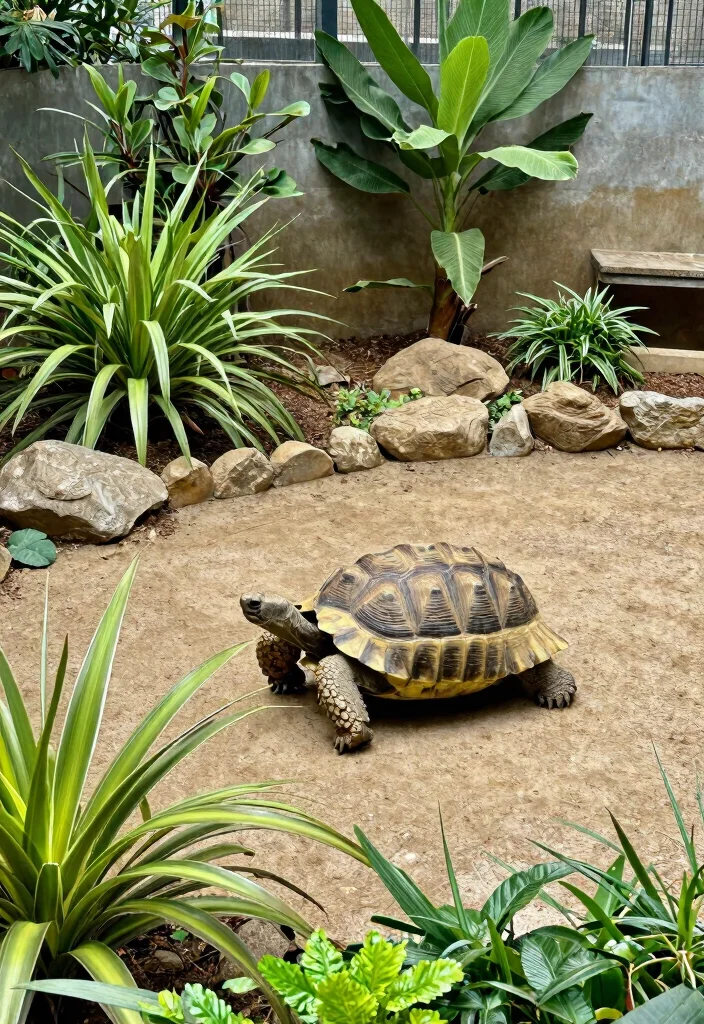
Creating an outdoor tortoise enclosure using recycled materials is a rewarding endeavor that benefits both your pet and the environment. These 12 ideas not only help keep your tortoise safe from escape and predators but also promote a thriving garden ecosystem. With a little creativity and effort, you can design a beautiful habitat that enhances both your yard and your tortoise’s well-being.
As you embark on this project, consider what works best for your space and your tortoise’s needs, ensuring a happy and healthy life for your shelled friend.
Frequently Asked Questions
What features make an outdoor tortoise enclosure escape- and predator-proof?
A well-built enclosure starts with a solid ground barrier. Bury predator-proof fencing 12–18 inches deep and extend it with a skirt so digging animals can’t tunnel in. Use small-mesh fencing such as hardware cloth or welded wire that your tortoise can’t push through, and add a rigid overhang or apron to deter climbers. Fit a sturdy, lockable gate with a weatherproof latch, and seal any gaps around the base of the fence. Create a sheltered daytime hide and a sunny basking spot, and keep the enclosure clean and well-drained to discourage predators. Regularly inspect for gaps, loose fasteners, or chew marks. All of this helps your outdoor tortoise enclosure stay predator-free.
How can I implement tortoise habitat design using recycled materials for an outdoor tortoise enclosure?
Plan first with a simple layout. For a tortoise habitat design using recycled materials, map out zones for grazing, shelter, water, and shade. Use reclaimed bricks or pavers for borders and paths, untreated reclaimed timber for frames, and repurposed metal or plastic containers as sheds or hides. Extend fencing with recycled hardware cloth or mesh. Avoid pressure-treated wood and toxic paints; seal wood with a non-toxic finish. Create a level base with gravel or crushed brick for drainage. Label sections and leave room to expand later. This approach keeps your outdoor tortoise enclosure sustainable and budget-friendly while showcasing thoughtful tortoise habitat design.
Which tortoise enclosure plants are safe and beneficial for an outdoor habitat?
Choose non-toxic, edible greens and grasses that tolerate sun and seasonal changes. Good options include grasses, clover, dandelion greens, kale, and endive. Plant a mix that also provides shade and browse. Avoid toxic plants like oleander, yew, foxglove, and rhubarb leaves. Always wash greens before feeding and introduce new plants gradually to avoid stomach upset. Using native tortoise enclosure plants where possible supports local ecology while giving your tortoise a varied, tasty foraging area.
How do I DIY tortoise pens that are easy to assemble and keep predators out?
Start with a modular panel system using recycled materials. Measure your space and design zones for grazing, shelter, and watering. Use hardware cloth or welded wire for walls and a ground barrier to deter digging. Install a secure gate with a latch and consider quick-connect posts for easy assembly and disassembly. Add a weatherproof shelter and a ramp to a basking area. Keep edges smooth and avoid toxic coatings for safety. This practical, hands-on approach makes DIY tortoise pens quick to build and hard for predators to bypass.
What are the best outdoor reptile shelters and microhabitats to extend the comfort of an outdoor tortoise enclosure?
Provide a mix of microhabitats: a sunny basking spot, a shaded retreat, and a burrow-like shelter your tortoise can retreat to during heat. Choose sturdy, weather-resistant outdoor reptile shelters made from safe recycled materials when possible. Elevate at least one shelter to improve drainage and prevent dampness, and include a shallow water feature or dish with a gentle ramp. Position shelters across the enclosure to offer varied sun and shade, and plant tortoise enclosure plants nearby for shelter and foraging. These shelters help extend the seasonality and security of your outdoor tortoise enclosure.
Related Topics
outdoor tortoise enclosure
tortoise habitat design
predator-proof fencing
DIY tortoise pens
sustainable materials
recycled garden projects
tortoise enclosure plants
outdoor reptile shelters
beginner friendly
easy DIY
pet safety
eco-friendly gardening