
A DIY Christmas tree pipe cleaner is a wire-and-fuzzy-craft project shaped into a tree silhouette, built by wrapping green pipe cleaners around a craft stick or skewer and adding beads for color.
The catch: the branches loosen over time unless you run glue along the back and let it dry overnight, a step most quick tutorials skip.
One craft stick, two to three pipe cleaners, and pony beads cover the basic build, with a total material cost low enough that a single bulk pack from the kids’ craft aisle supplies a dozen trees.
1. Basic Pipe Cleaner Christmas Tree Ornament
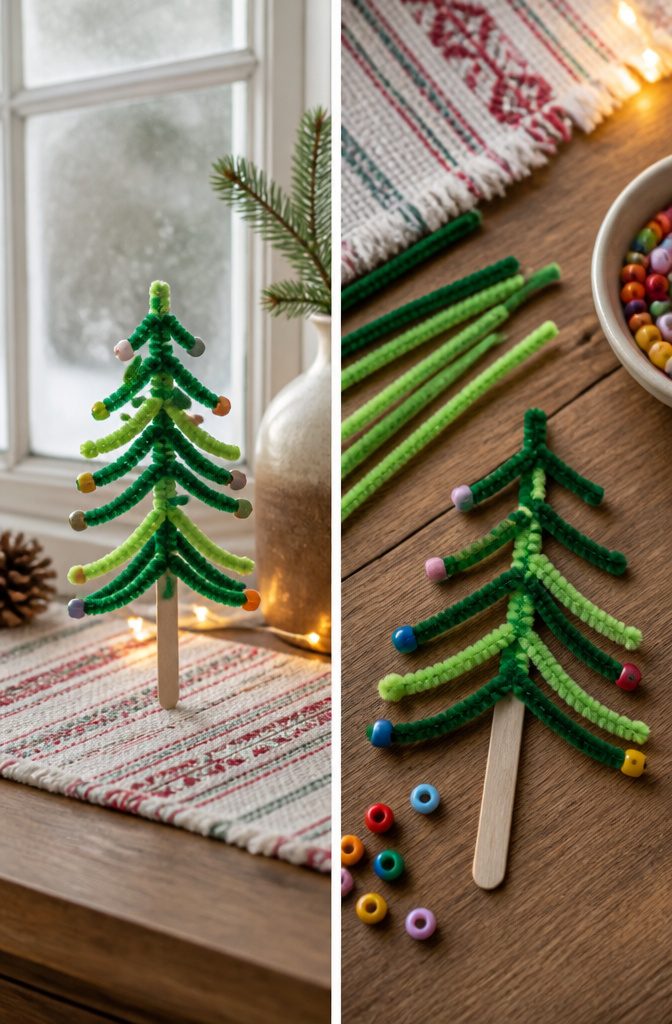
A basic pipe cleaner Christmas tree ornament starts with two to three green pipe cleaners, one craft stick, and pony beads.
Knot a piece of baker’s twine for hanging first, then feed the pipe cleaner through the loop and wrap it around the top of the craft stick, letting about 1–2 cm stick out on one side before trimming the other.
The second branch gets wrapped the same way but made a little bigger, and you keep building upward through four to five branches total, each one slightly larger than the last, to give the tree its shape.
Pony beads go on next, slipped over the pipe cleaner ends to look like ornaments.
The whole thing holds together fine on friction alone, though a line of glue along the back and an overnight dry will lock the branches in place if you want the ornament to last more than one season.
I’ve skipped the glue when I’m short on time and the trees still survived the tree, but the beaded branches do loosen faster that way.

Sufficient Quantity: You will receive a christmas pony beads, including 1500 Christmas pony beads and 150 chenille stems. Sufficient quantity can meet your decoration needs and easily create colorful Christmas decorations

MASSIVE SELECTION: This 1200pcs pony bead kit contains a wide assortment of colors including red, orange, pink, blue, green, yellow, purple, black, white, brown, gray, and more for endless creative possibilities.

Make 12 Pumpkin Beaded Kits: you will get 1560 pcs of orange pony beads and 60 pcs of chenille strips in orange and green, which can make 12 fall pumpkin crafts, meeting your fall craft activities and decoration needs
2. Pipe Cleaner Christmas Tree with Wooden Skewer
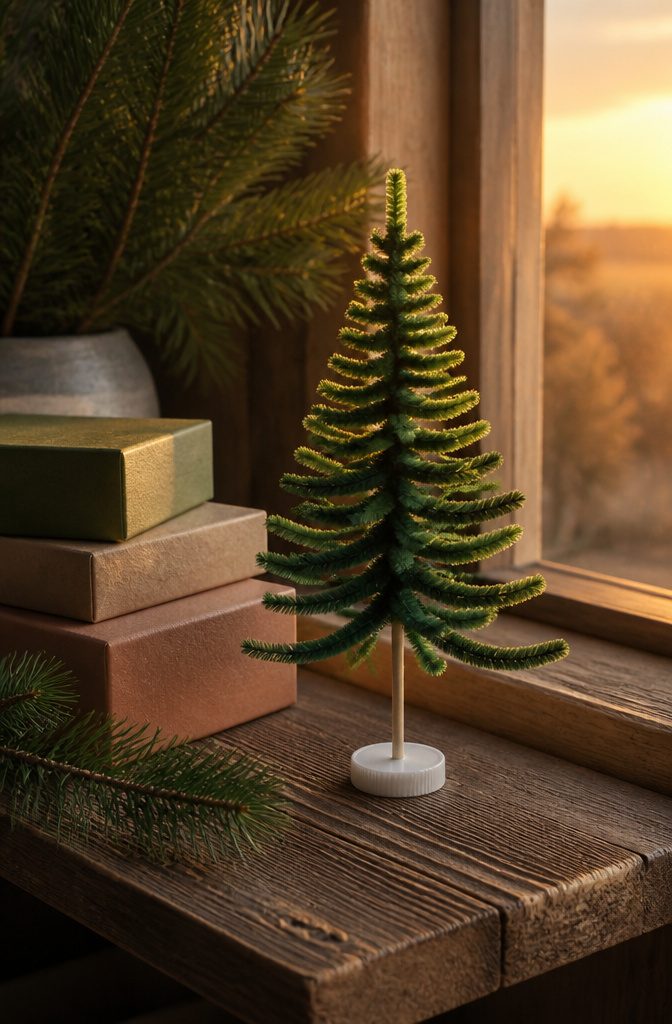
A wooden skewer changes this from a hanging ornament into something that sits on a shelf.
The skewer becomes the trunk, and a plastic cap from a bottle or container serves as the base, giving the whole thing a footprint instead of a loop.
Shorter pipe cleaners go near the top, longer ones toward the bottom. That taper is what sells the tree shape.
You wrap one end of each green pipe cleaner around the skewer so it stays put, letting the other end stick straight out horizontally to form branches. Layering different shades of green adds depth without extra work.
The freestanding structure means this version works anywhere flat, not just where a hook will reach.
My judgment: skip the beads and sequins unless you already own them. The silhouette carries most of the visual weight here, and a clean gradient of greens reads more sophisticated than cluttered decoration.

Excellent Material: These DIY plush twisted bars are great for family to play with. They are soft and safe, ensuring a fun and enjoyable experience

Versatile Craft Material: These green pipe cleaners are easy for a wide range of crafting projects, from making DIY flowers and decorations to creating fun arts and crafts

200 Pieces Pipe Cleaners, Christmas Glitter Pipe Cleaners, Pipe Cleaners Chenille Stem with 100 Pom Poms, Craft Pipe Cleaners for Creative Christmas Decoration Supplies Arts and Crafts Project
3. Pipe Cleaner Bubble Wands
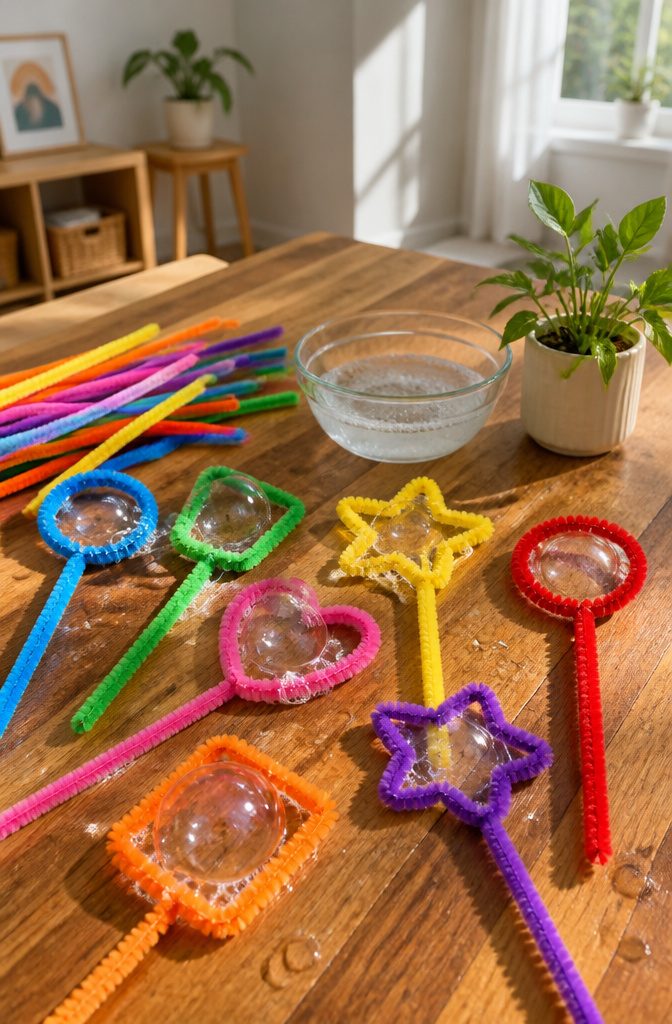
A batch of green pipe cleaners left over from tree ornaments can stretch into an afternoon activity kids actually use after the glue dries.
Bend one into a simple triangle with a trunk, or a star, or a candy cane; leave a few inches straight at the base for a handle.
The fuzz traps enough soap film to release bubbles bigger than the plastic wands that come in grocery-store bottles.
Dawn dish soap and warm water work fine. The ratio that held up best in our kitchen was roughly one part soap to six parts water, though hard water in your pipes might nudge that.
Pipe cleaner wands sag after a few dips, so a second layer twisted around the first keeps the shape stiff enough for small hands.
These are not keepsakes.
They rust at the joints and lose their fuzz after a wet afternoon. That is the point: they cost pennies, they ship flat to a cousin’s stocking, and when they wear out you twist new ones in five minutes.

Christmas Color: 8 colors, red, green, red with white, green with white, glitter gold, glitter sliver, glitter red, glitter green, 25 pieces of each color. There are many types of colors to meet your needs

DIY Christmas Trees Set: christmas tree craft kits include 400 pipe cleaners, moss green, army green, gold, brown 4 colors, 240 small colorful balls, 30 cardboard cones, 30 small wooden stakes, 30 wooden circular bases, 100 mini white snowflakes

🌈Pipe Cleaners Bulk: Our pipe cleaners craft includes 400 pieces of chenille stems in 20 bright assorted colors, each pipe cleaner measuring 6mm x 12 inches. These colorful craft pipe cleaners bulk are perfect for DIY crafts, art projects, classroom activities, holiday decorations and family creative fun.
Materials and What They Cost
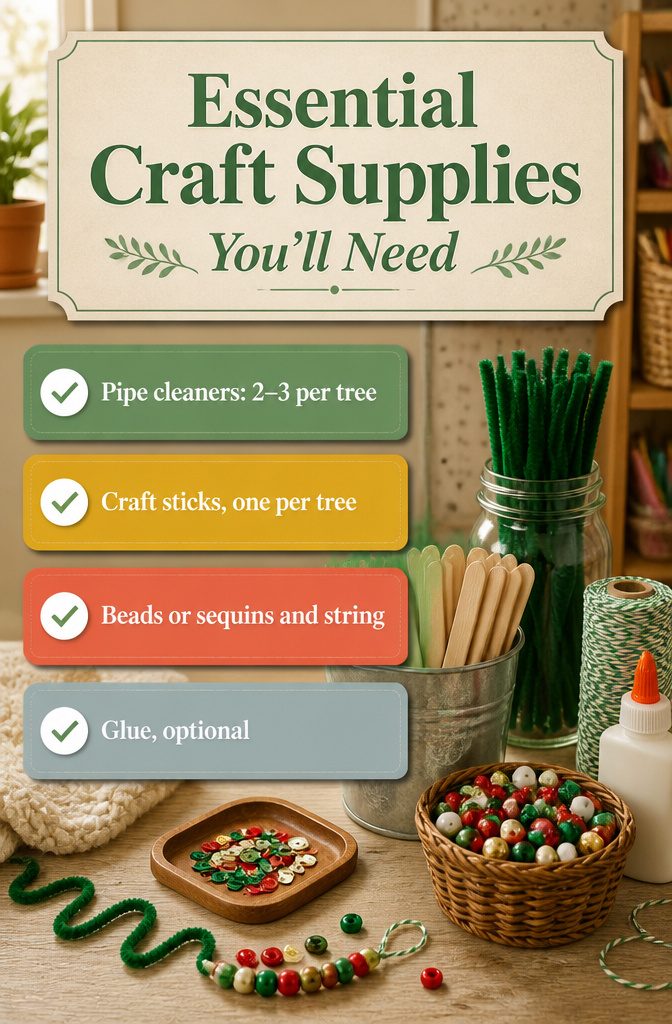
The supplies for these three projects overlap more than you might expect. A single trip to the craft aisle covers most of it.
- Pipe cleaners: 2–3 per tree, in green at minimum. The sources call for green specifically as the base color, though one adds beads or sequins in varied colors for the festive look. I read this as: green handles structure, everything else handles personality.
- Craft sticks, one per tree. These serve as trunks in the simpler designs. One source swaps in a wooden skewer and a small plastic bottle cap for trunk and base instead. The skewer gives a slimmer profile; the craft stick is sturdier for younger hands.
- Beads or sequins, and something to string them with. Pony beads are the common choice, though one mention of Hama beads suggests any small bead with a center hole works. Bakers twine handles the hanging loop.
- Glue, optional. Only one source lists it; the others rely on twisting and threading alone.
Where to find them is the gap most posts skip. Craft stores stock pipe cleaners year-round, but the color selection narrows after January.
Beads and craft sticks sit in the same kids’ craft aisle, often in bulk packs that cover a dozen trees. No need to hunt specialty retailers; the generic brands work fine here.

PACKAGE INCLUDES: 100 pieces of christmas bamboo toothpicks in 5 different designs, length 12cm / 4.77inch

AMPLE QUANTITY AND DIVERSE STYLES: Our package includes 100 4.7-inch Christmas tree toothpicks. With an abundant quantity, they are ideal for daily use or special events, meeting all your needs. Whether it's a small gathering or a large party, these cocktail sticks can fulfill your requirements and ensure you have enough to add charm to every drink and appetizer.

🎉 Festive Variety to Wow Your Guests: Includes 100 adorable 5.1-inch Christmas cocktail picks featuring 15 charming holiday designs. Perfect for jazzing up cocktails, appetizers, and party snacks — making every bite feel extra special and full of holiday cheer!
What Kids Get Out of This
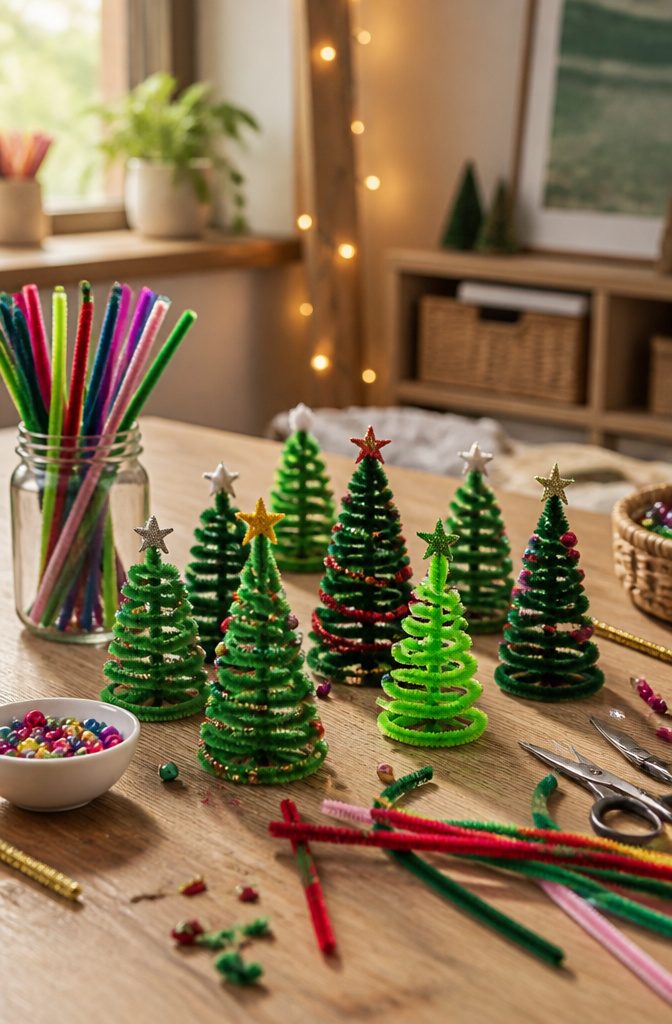
Twisting pipe cleaners into a Christmas tree shape forces small hands to work against the wire’s resistance, which builds the same fine motor control they will need for buttoning coats and holding pencils.
Threading beads onto the stems adds another layer: the eye has to guide the hand, and the hole in a pony bead is just wide enough to reward patience without forgiving sloppy aim.
The sources all land on this point, and they are right.
A preschooler who spends twenty minutes bending a green pipe cleaner into a triangle and then deciding whether to add three red beads or five gold ones is doing more than passing time.
They are making a hundred tiny decisions about color, balance, and their own taste, and the finished tree goes home in their pocket with their name on the tag.
What surprised me, reading through the comments and fair reports, was how long the engagement lasts.
The same child who abandons a coloring page in four minutes will sit with pipe cleaners through a whole Advent afternoon, reworking the shape until the trunk stands straight.
The material bends, but it also holds; that combination of forgiveness and structure is rare in craft supplies, and it keeps them at the table longer than paper or clay usually manage.
The motor practice is real, but the bigger draw seems to be the autonomy: the tree is small enough to be entirely theirs, and the beads let them decorate it without asking permission.

Turn outdoor downtime into bubble play: the pipe-shaped bubble blower helps create floating soap bubbles for backyard parties, picnics, beach days, and casual photos.


What You'll Get: Two Packs (40 total refill pads) of Scrubbing Bubbles Citrus Scent Flushable Fresh Brush Toilet Refill Pads
Colors and Add-Ons
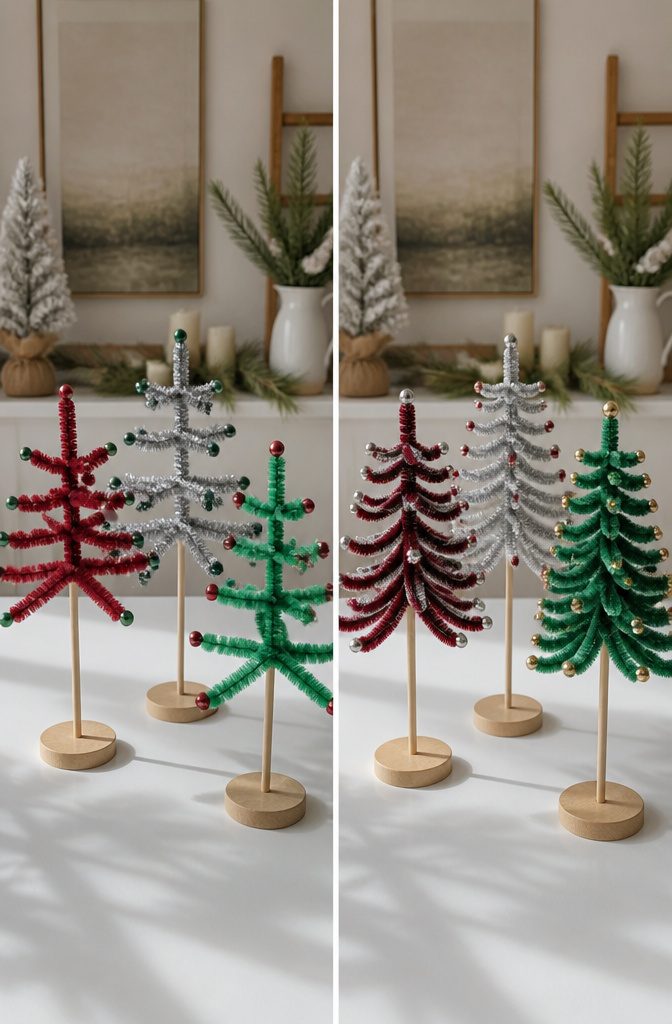
The same green twist that builds the basic tree handles every color in the pack.
Last year I swapped the standard emerald for a deep burgundy and silver mix that sat better against warm white lights, and the technique did not change at all.
Four to five branches, each wider than the last, still gives the right silhouette whether the pipe cleaner is matte or metallic.
Sequins and pony beads thread directly onto the branches before you wrap them around the craft stick, so they catch light at the tips where the pipe cleaner ends stick out one to two centimeters.
Twisting two colors together before shaping makes a garland effect without any extra material.
A thin line of glue pressed along the back of the finished tree holds everything in place for storage, though it is not necessary if the piece only needs to survive the season.
The wooden skewer base can stay natural or get wrapped in brown pipe cleaner to match whatever palette sits above it. That plastic cap base disappears under the tree either way.

Package Content: You will receive 1,500 round fall color pony beads and 150 chenille stems, which are sufficient in quantity and varied in color, and can meet your daily decoration or craft needs, adding a unique autumn charm to your handicrafts

Dark Green : There are 100 pieces dark green and 12 inch length pipe cleaners to finish your craft projects, such as trees,roses, flowers, more animals, vegetables etc.

Product Contents: You will receive 1500Pcs fall color pony beads and 150Pcs pipe cleaners, with quantity and variety of colors, to meet your daily decoration or needs, adding a unique autumn charm to your handicrafts
Frequently Asked Questions
What materials do I need for a pipe cleaner Christmas tree?
You need two to three green pipe cleaners, one craft stick, and pony beads for the basic ornament.
A wooden skewer and small plastic bottle cap replace the craft stick if you want a freestanding tree. Baker’s twine handles the hanging loop, and glue is optional for extra durability.
How do you make a pipe cleaner Christmas tree?
Wrap pipe cleaners around the top of a craft stick, letting about 1–2 cm stick out on one side before trimming the other. Build four to five branches total, each slightly larger than the last, to create the tree shape.
Slide pony beads onto the pipe cleaner ends for ornaments, and add a line of glue along the back if you want the piece to last beyond one season.
Can younger kids participate in pipe cleaner crafts?
Yes, though supervision matters because pony beads are small enough to pose a choking risk.
The twisting and threading motions build fine motor control, and the material’s mix of flexibility and structure keeps preschoolers engaged longer than paper or clay typically do. A craft stick trunk is sturdier for small hands than a wooden skewer.