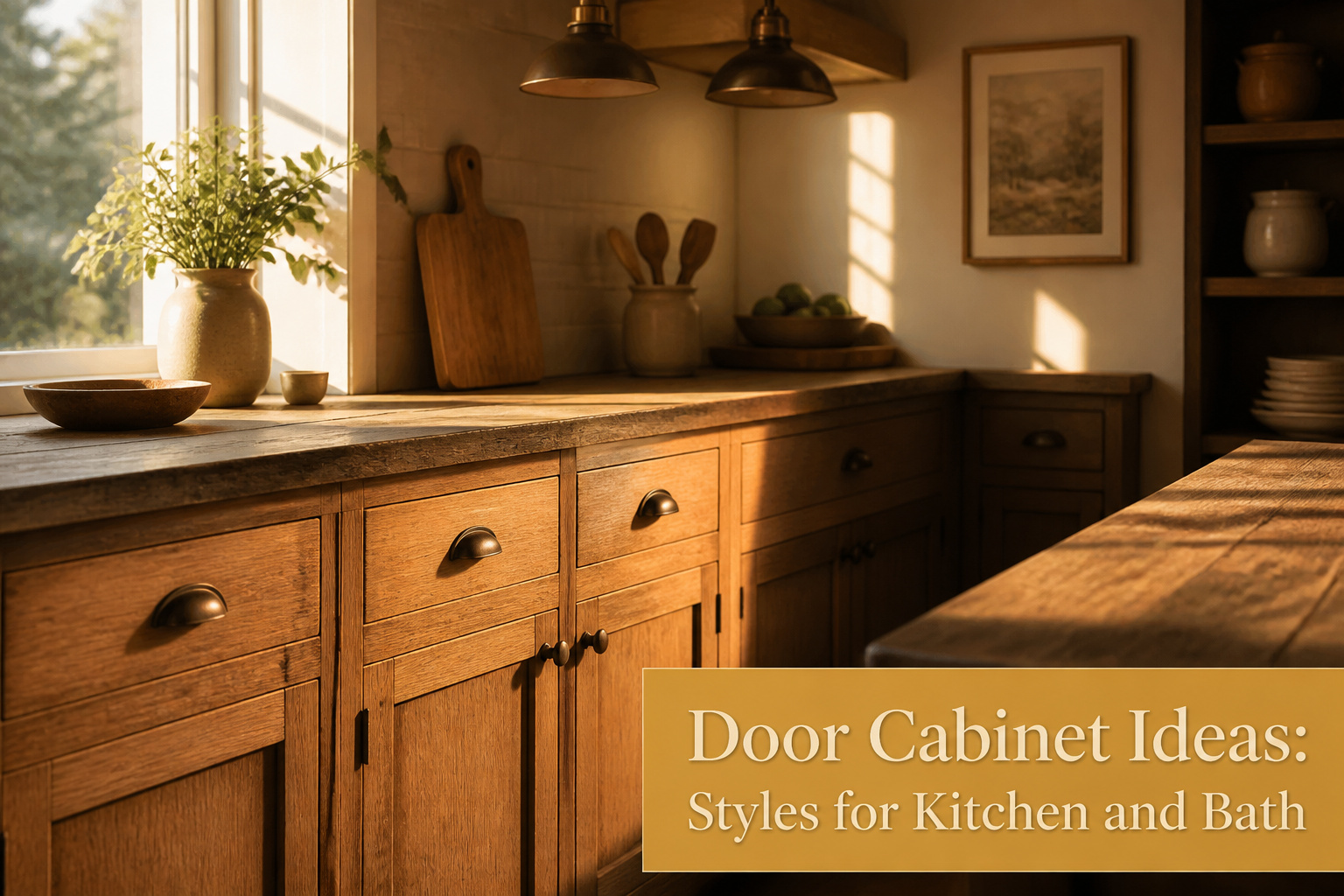
Door cabinet ideas are the style decisions that shape how a kitchen or bath looks and how much time you spend cleaning it.
The flat face of a slab door wipes down in one pass, while beadboard grooves need a microfiber cloth worked into each line every seven to ten days.
That same tension applies to cost: faux Shaker trim glued to plywood runs roughly half the material price of true five-piece joinery, though the corners may crack after a season of heat.
1. Shaker Cabinet Doors
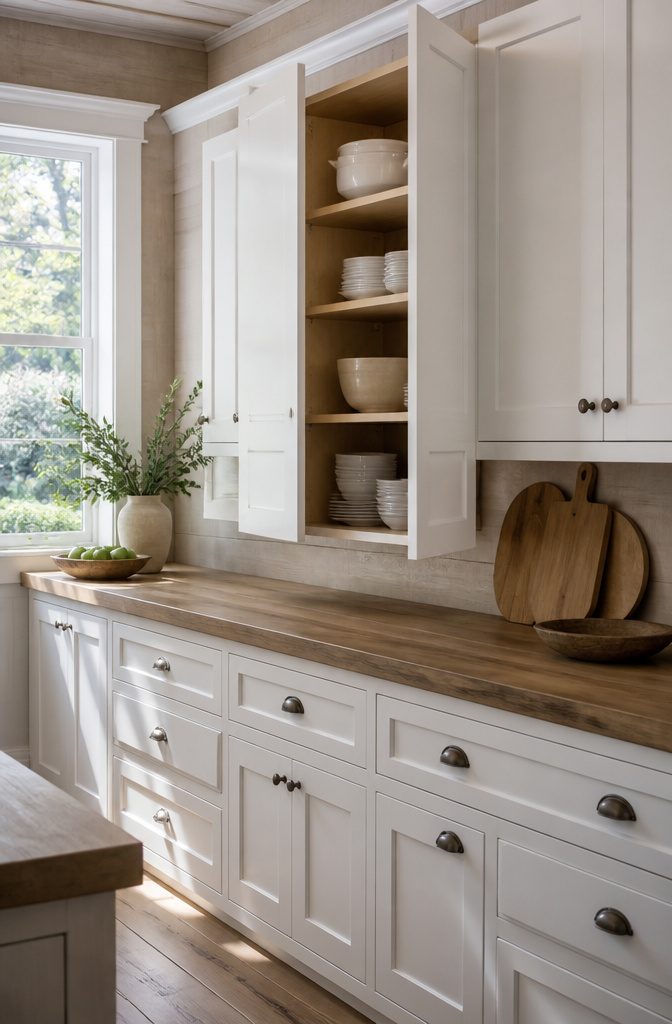
Shaker cabinet doors still earn their top billing in almost every roundup of door cabinet ideas for one simple reason: a five-piece build with a flat center panel and square frame reads as clean without reading as cold.
That balance survives in transitional kitchens, classic layouts, and even some modern ones where the surrounding lines are sharp enough to carry the look.
The downside is real maintenance.
Dust collects in the corners of that recessed panel, so the wipe-down needs to be more than a passing swipe across the face. Someone who cleans once a week on schedule will not notice; someone who lets grime build will.
For renters or anyone else who wants the shaker profile without the cost of replacement doors, the faux shaker route exists: applied molding on a flat slab, or peel-and-stick trim kits that sit on the existing surface.
The look holds from across the room and falls apart only on close inspection, which makes it a practical halfway point for a weekend project with a few hundred dollars in the budget.
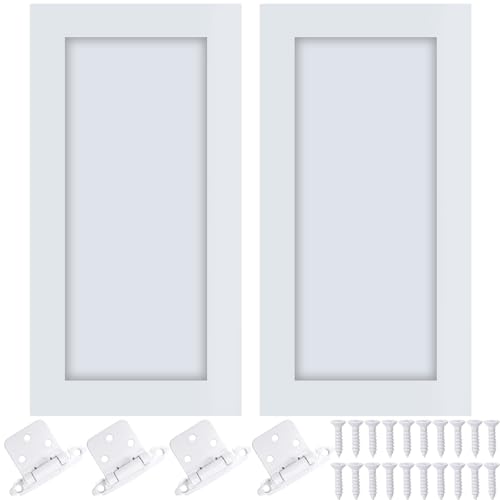
Complete Package: the package includes 2 white pine kitchen cabinet doors and 4 cabinet hinges, providing you with a convenient set for effortless installation; No need to source additional doors, sufficient for your cabinet door replacement upgrades

Click "Customize Now " and follow the steps to create your custom cabinet doors today!

Complete Package: the package includes 2 white pine kitchen cabinet doors and 4 cabinet hinges, providing you with a convenient set for effortless installation; No need to source additional doors, sufficient for your cabinet door replacement upgrades
2. Slab Cabinet Doors
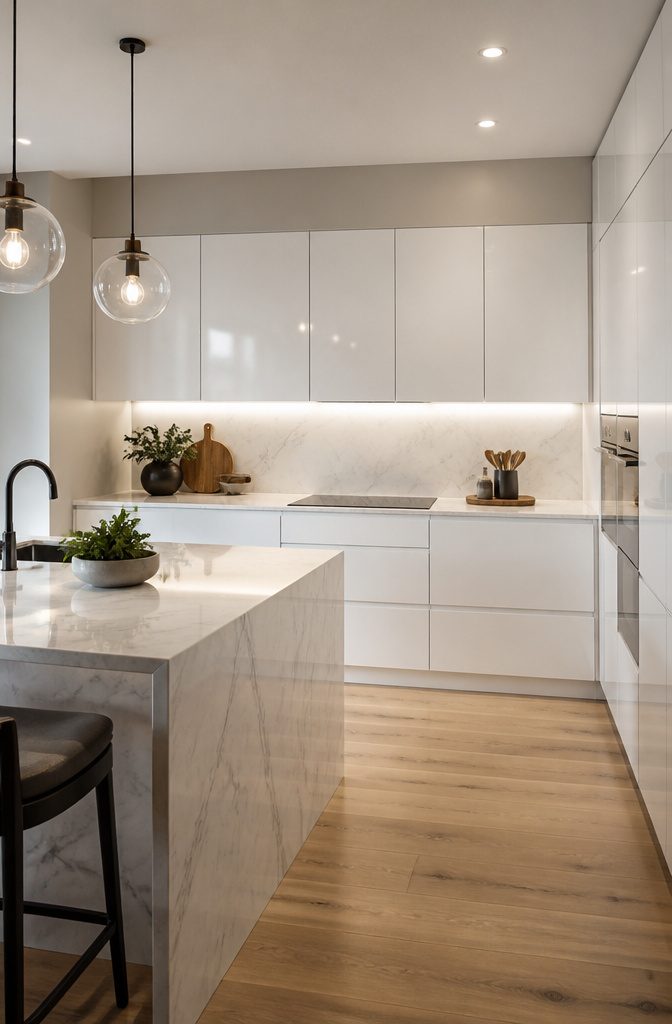
Slab cabinet doors are flat, smooth panels with no detailing, usually built from MDF or plywood.
That minimal, streamlined surface is why they show up so often in modern kitchen designs, and the flat face makes them the easiest style to wipe down since there are no grooves or panel edges catching grease or crumbs.
For a small kitchen, this simplicity does double duty: the unbroken planes read as more wall than furniture, which helps tight walls feel a little more open than crowded frame-and-panel doors would allow.
The tradeoff is texture, or rather the lack of it.
Slab doors offer less visual interest than routed or raised styles, though for some spaces that quietness is exactly the point. Best use cases stay straightforward: modern and contemporary kitchens where the goal is clean finish over ornament.

Premium Solid Maple Wood: Crafted from 100% solid maple for lasting durability. Smooth-sanded and splinter-free, ideal for painting, staining, or sealing. The perfect upgrade for high-end cabinet refacing or DIY projects

Complete Package: the package includes 2 unfinished pine kitchen cabinet doors and 4 cabinet hinges, providing you with a convenient set for effortless installation; No need to source additional doors

MEASUREMENTS: Measurements are EXACT. This replacement raised panel kitchen cabinet door measures 24-inches Wide, 12-inches high, and 3/4-inches thick
3. Raised Panel Cabinet Doors
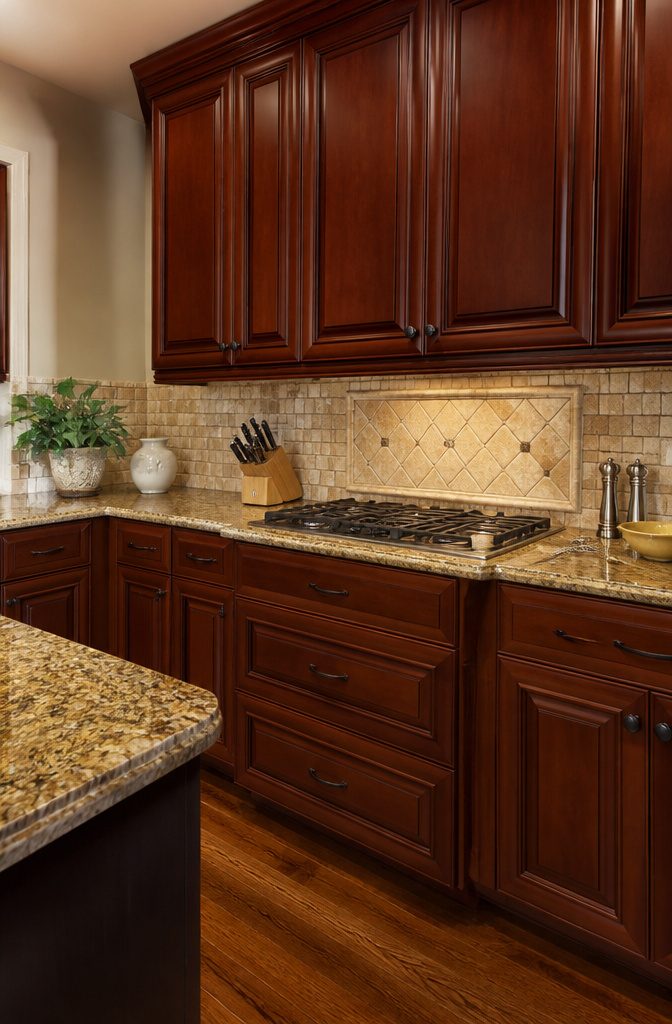
Raised panel cabinet doors carry a center panel that sits slightly higher than the surrounding frame, which builds shadow lines and visual weight across a kitchen wall.
That depth reads as traditional almost instantly, especially once crown molding or classic trim enters the same sightline. The style belongs in kitchens that are already leaning toward ornate hardware, thicker countertops, or furniture-like islands.
The detail comes with a cost in upkeep. Dust settles into the edges between panel and frame, and cooking grease finds those same grooves over time.
Simple slab doors wipe down in a single pass; raised panels need a cloth worked into each corner. For a high-use kitchen, that difference matters on a Tuesday night when cleanup speed counts more than architectural character.
More detailed styles collect dust and require more frequent cleaning – something to weigh before falling for the look in a showroom where every surface is already spotless.
I have lived with cabinets that looked beautiful at 10 a.m. and grimy by dinner. The raised panels were part of it, though not the whole story.
What convinced me, reading through a dozen kitchen accounts, is that homeowners who choose this style either accept the extra maintenance or pair it with a stricter cleaning rotation. Neither choice is wrong; only one fits a real weekend schedule.
MEASUREMENTS: Measurements are EXACT. This replacement raised panel kitchen cabinet door measures 12-inches Wide, 18-inches high and 3/4-inches thick

Made To Order In Two Weeks, In Your Custom Sizes

Made To Order In Two Weeks, In Your Custom Sizes
4. Beadboard Cabinet Doors
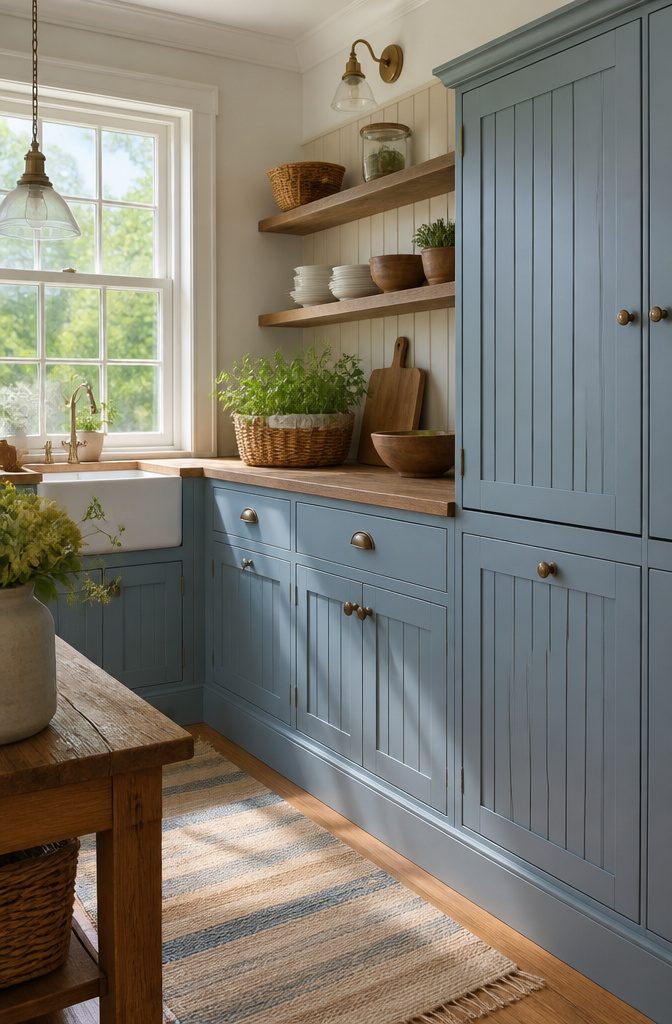
Beadboard cabinet doors carry a planked center panel with narrow vertical grooves running top to bottom.
That texture reads cozy and casual, which is why the style shows up so often in farmhouse kitchens, beach houses, and anything with a vintage lean. The grooves add warmth that a flat panel simply doesn’t deliver.
The catch is maintenance. Those same grooves collect dust more readily than a smooth surface, and in a kitchen that sees daily cooking, the buildup happens faster than you’d expect.
A quick weekly wipe with a microfiber cloth along each groove keeps things presentable; skip two weeks and you’re working a toothbrush into corners to break the grease-dust paste.
For a high-use kitchen, this is the trade you make for the look. The grooves need attention every seven to ten days if you want them to stay clean, not monthly when you remember.

【Refresh Your Space with Decorative Trim】 Give plain walls, mirror frames, cabinet edges, doors, and windows a polished look with this 10 FT peel and stick wall molding trim, measuring 0.39 in wide and 0.22 in thick. The pearl-style design adds subtle decorative detail to your home.

1.[Elegant Champagne Gold Finish] Features warm champagne gold tones with a satin metallic sheen, adding a touch of luxury to any space without the overwhelming gloss. Perfect for complementing teak, rattan, or terracotta materials.

Easy Application: Our product boasts a hassle-free installation with just three easy steps: cut, peel, and stick
5. Glass-Front Cabinet Doors
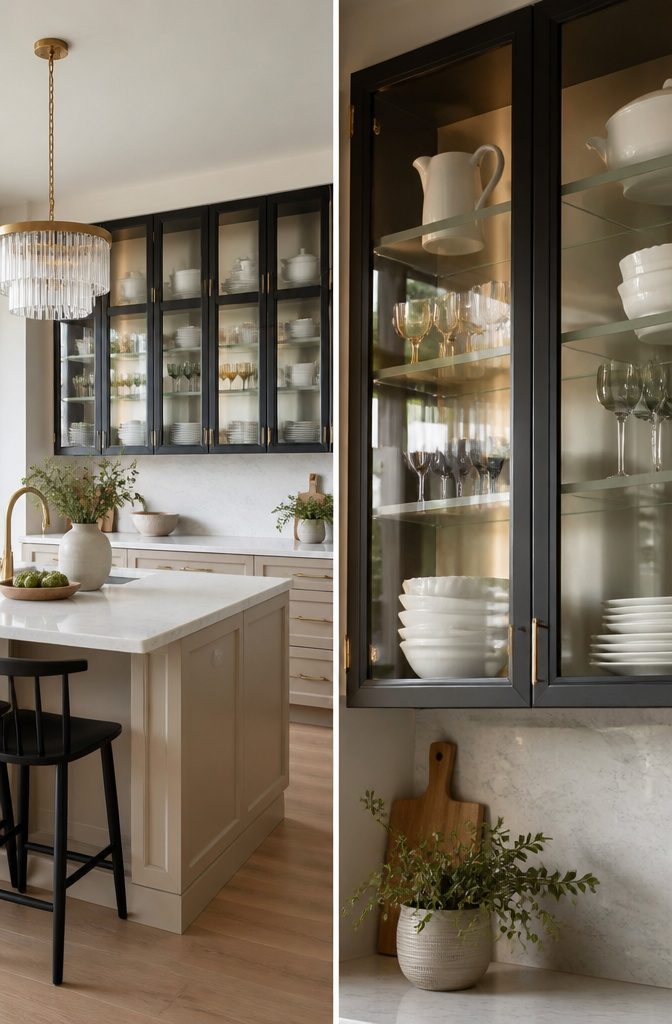
Glass-front cabinet doors frame a glass insert that lets you display what sits behind them, which is why they show up in so many upper-cabinet runs and open-shelf layouts looking to break up a wall of solid wood.
They lighten the room and make it feel more open, a trick that works especially well in smaller kitchens where flat panels alone still leave the space boxed in.
The catch is exactly what sold me on them in the first place: everything inside is visible.
These are not the doors for the cabinet where you cram Tupperware lids and half-empty spice jars. Behind mine, I keep a short stack of white ceramic plates, a few matching bowls, and nothing else.
The moment a cereal box or a rumpled dish towel slips in, the whole wall looks like a mess I meant to hide.
If the budget is tight, swapping just one set of doors for glass makes a noticeable difference without requiring a full redo.
Plexiglass cuts the cost further and is easier to work with than real glass if you are handling the cut yourself.

Complete Package: the package includes 2 white pine kitchen cabinet doors and 4 cabinet hinges, providing you with a convenient set for effortless installation; No need to source additional doors, sufficient for your cabinet door replacement upgrades


Slotted holes on cabinet hinge frame wing for easy adjustment
6. DIY Bifold Cabinet Doors
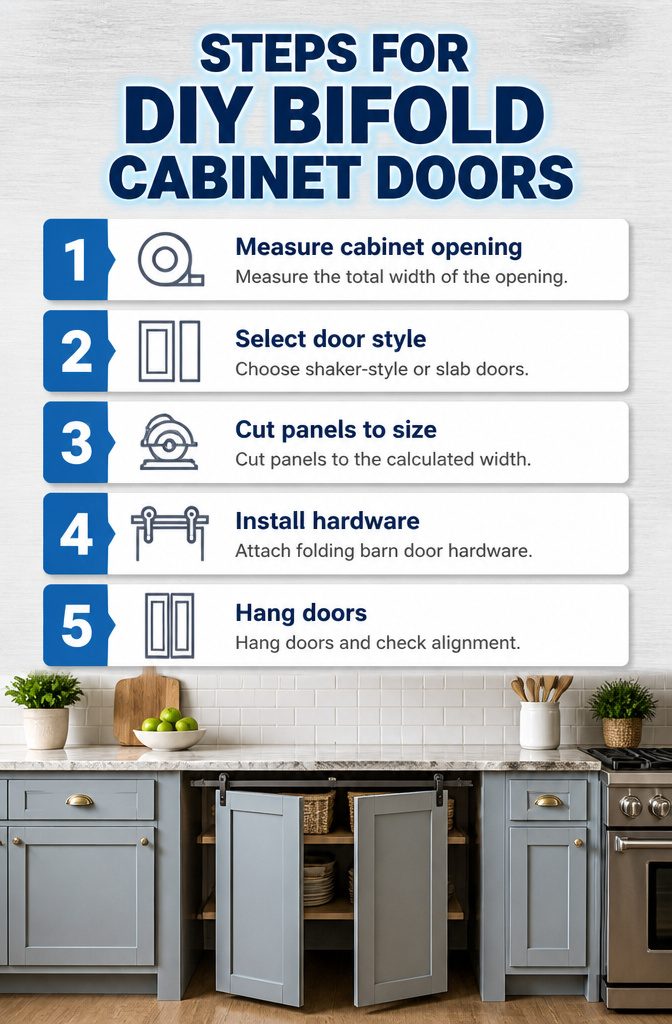
Bifold cabinet doors solve the swing problem in tight kitchens and baths where a standard door would block a walkway or collide with an appliance.
The hardware folds the door panels back on themselves, so the whole assembly needs only half the depth of a single panel to open.
Sources describe two workable builds: a shaker-style frame assembled with pocket holes, or a simpler slab door style that keeps visual weight low in already cramped rooms. Either can mount to folding barn door hardware sold online.
The hardware itself runs about $45–$65 for a standard 24-inch cabinet opening, depending on finish. I found mine through the same specialty retailers that stock barn door rollers for full-size doors; the miniature versions use the same wheel-and-track logic scaled down.
My first set taught me the measurement that matters: total panel width, not individual panel width. I built two 12-inch doors for a 24-inch opening and assumed that was the math.
The overlap needed for the hinge pivot eats an inch, and the track hardware needs clearance on the mount side. The doors hung crooked and scraped until I shaved the stiles.
Measure the opening, subtract the hardware manufacturer’s overlap spec, then divide by two. That is the number to build to.


【Sturdy and Stable】Cabinet door is made of high quality density board material, strong and sturdy, long time to use. Special surface treatment, smooth and full, easy to clean.

Complete Package: the package includes 2 unfinished pine kitchen cabinet doors and 4 cabinet hinges, providing you with a convenient set for effortless installation; No need to source additional doors
7. Wire Mesh Insert Doors
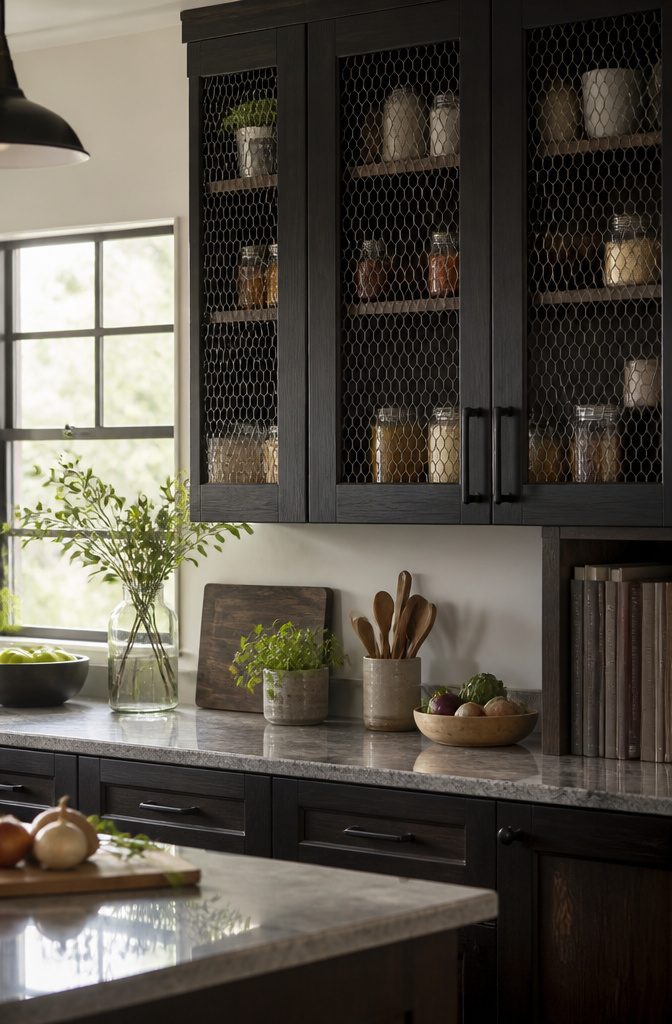
Wire mesh inserts give cabinets the partial concealment that solid doors deny and glass fronts refuse to offer. The grid breaks up visual clutter without hiding it completely, which reads as intentional rather than messy.
Pantries are the obvious win: you spot the cereal box at a glance but the jumble behind the door stays softened. Media cabinets need the airflow even more than the disguise, since electronics cook themselves in closed boxes.
The mesh itself comes in rolls from hardware stores and metal suppliers; brass, blackened steel, and plain galvanized are the finishes that usually sit in stock.
A glue gun is the only tool required for the install, which sounds improbable until you try it.
Cut the mesh to overlap the back of the door frame by half an inch, run a thick bead of hot glue around the inner lip, and press the edges in before the glue skins.
The bond holds because the mesh is light and the door never moves fast.
For a cleaner look, narrow strips of wood trim pinned over the edges hide the glue lines entirely, though that step does need a brad nailer or small finishing nails.
The look borrows from old pie safes and factory lockers, so it suits kitchens leaning utilitarian or baths where you want texture against tile.
Repeating it on every cabinet would tire the eye; two doors in a run of twelve is usually the right dose.

This cabinet door shown in Red Oak Select with a clear finish.
MEASUREMENTS: Measurements are EXACT. This replacement raised panel kitchen cabinet door measures 13.25-inches Wide, 29-inches high, and 3/4-inches thick

Made To Order In Two Weeks, In Your Custom Sizes
8. Cane Cabinet Doors
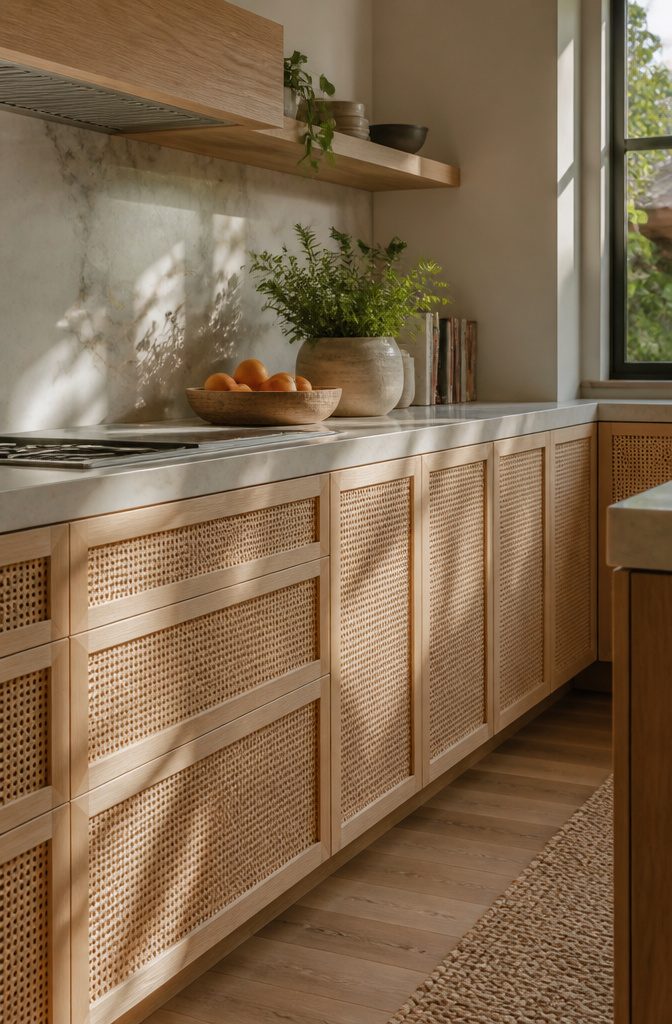
Cane webbing turns a standard cabinet door into something that reads modern and stays practical for anything that runs warm.
The open weave lets air pass through, which matters more than it looks like it would for routers, cable boxes, or a bathroom vanity where a hair dryer lives.
I have seen two ways to buy the material: web cane, which comes on the roll and gets woven strand by strand, and pre-woven sheet cane, which is one flat piece already finished.
The sheet version saves hours, but the tension you pull it to during install decides whether it still looks crisp six months later.
Glue and a few temporary nails across the back of the frame while the adhesive sets will hold it flat; skip that step and the center sags into a bowl shape once humidity shifts.
A properly sealed MDF or moisture-resistant plywood backing behind the cane protects the whole assembly in a bathroom, but the cane itself stays raw, so keep finishes away from the weave or it stiffens and cracks.

DIY Installation - Installation is a snap with our simple 3-step process: cut, peel, and stick. It's quick, effortless, and requires no special tools
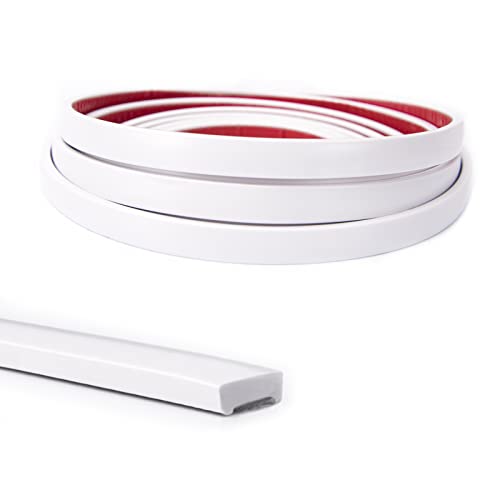
Artistic-Can be a frame or decoration for all backspalsh tiles and the edge.

Easy Installation: Installation is a snap with our simple 3-step process: cut, peel, and stick. It's quick, effortless, and requires no special tools
9. Rustic Industrial Doors
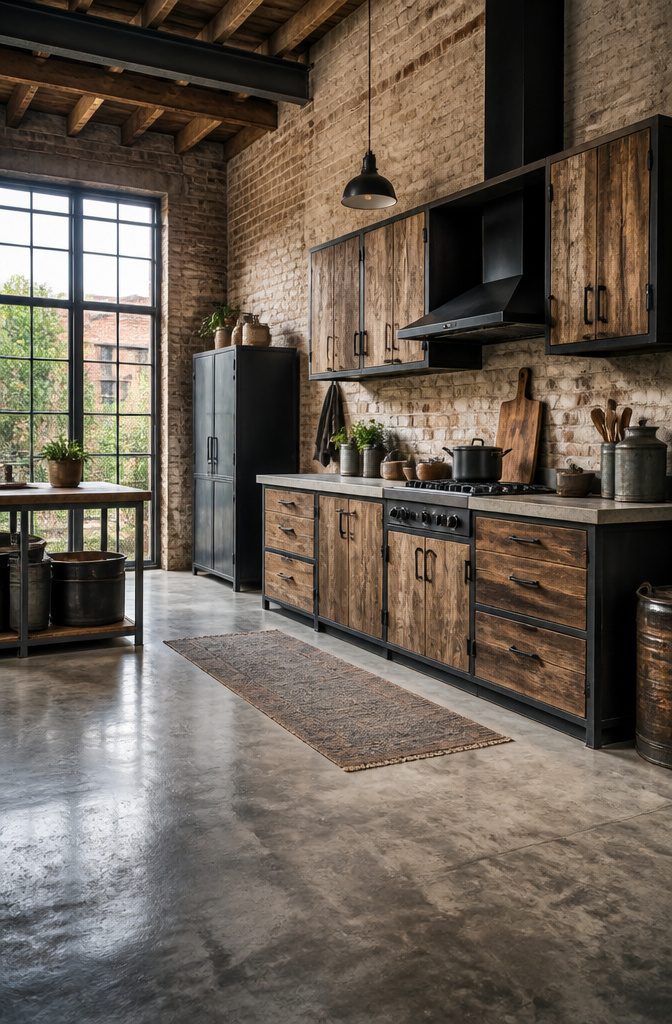
Wood and metal together read as rustic industrial when the balance is intentional, not accidental.
Reclaimed barn wood with clean steel reads curated; the same wood with ornate iron scrollwork reads country-fair. The trend, tracked across shelter magazines and Pinterest saves since 2019, leans toward the cleaner pairing now.
The metal elements that actually work on a cabinet door are narrower than people assume.
Pipe pulls in ½-inch or ¾-inch black iron sit flat against the wood and do not snag sleeves. Steel sheet backing behind a mesh or cutout panel adds weight but gives that found-object look without found-object dust.
Corner brackets, the L-shaped kind with visible screw heads, do the structural work of keeping a frame square while reading as decoration.
Weight is the part I underestimated on my first try. A steel-backed upper cabinet door pulled the hinge screws straight out of a standard particleboard frame after six months.
Standard hinges handle pipe pulls and corner brackets fine. They do not handle sheet steel on anything larger than a small vanity door without reinforcement, either a heavier hinge or a backer block inside the frame.
For renters, the lighter combination, wood plus pipe pulls, gives the look without the landlord conversation.
100% Solid Wood: Constructed of high-quality Maple wood, this cabinet door is strong and durable, and the surface is smooth and easy to clean
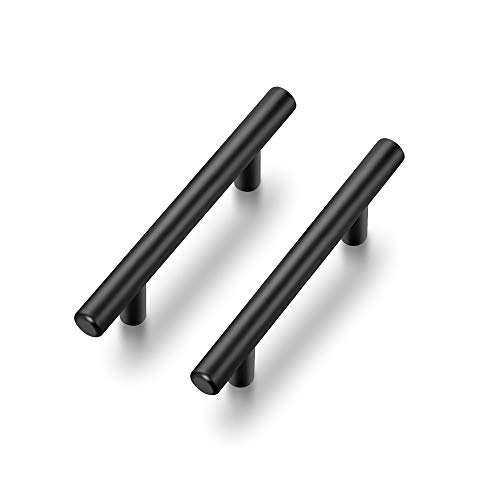
100-Day Evaluation: We believe you'll value the Ravinte handles. Experience their craftsmanship at your convenience, and if they don't meet your needs, we are here to assist

Smart Storage Layout: Thanks to eight built in wine racks, three pull out trays and three adjustable shelves, this kitchen pantry cabinet offers room for pantry foods, dinnerware, cookware, bottles and kitchen accessories, so the Kitchen stays tidy and clutter free. The layout is easy to understand, so everyone in the house can keep it tidy. Shelves and compartments can be repurposed as your household evolves over time. Open areas keep the items you use daily visible and within easy reach.
10. Faux Shaker Cabinet Doors
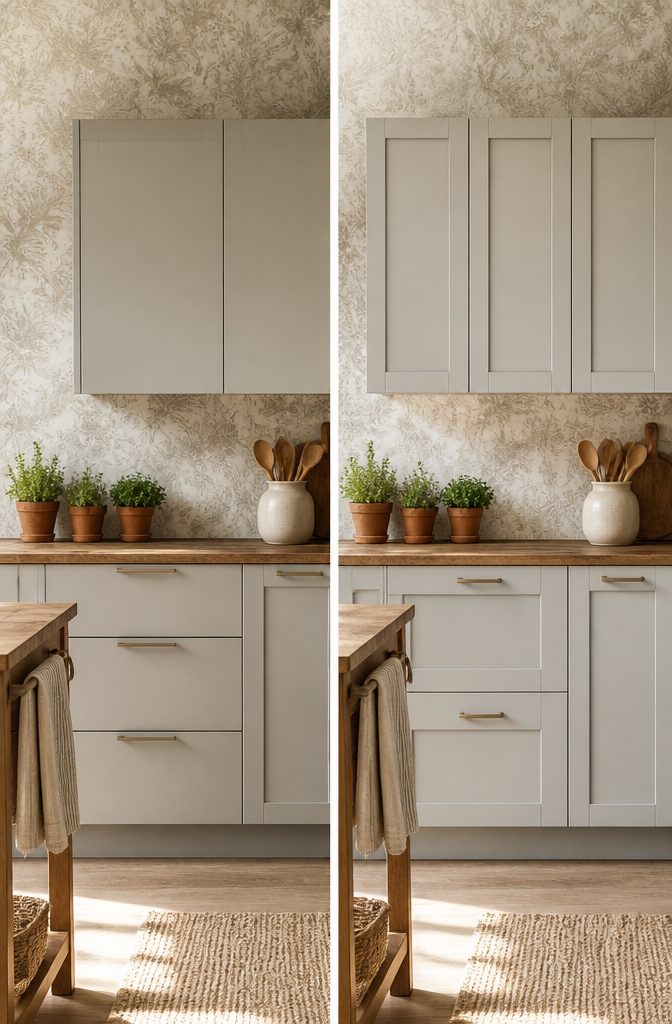
Lattice trim glued on top of a plywood panel gives you the Shaker look without the five-piece joinery.
The traditional build needs rails, stiles, and a recessed center panel cut to fit grooves in the frame. Faux Shaker skips all of that: one sheet, one strip of trim, glue and nails, and the door is done.
That difference is where the savings sit, roughly half the material cost and a weekend instead of a week of fine woodworking.
The compromise shows up after a couple of seasons. The trim sits on the surface rather than being recessed, so the shadow line is shallower and the corners collect dust the same way true Shaker frames do.
The bigger issue is movement: plywood and solid trim expand and contract at different rates, so the glue line can telegraph through paint or crack slightly at the mitered corners.
In a dry climate or a kitchen that sees real heat, that gap opens faster.
For a rental or a first kitchen refresh, the trade still works. The look reads as Shaker from across the room, and by the time the trim shifts, you’re usually ready for the next update anyway.

Complete Package: the package includes 2 unfinished pine kitchen cabinet doors and 4 cabinet hinges, providing you with a convenient set for effortless installation; No need to source additional doors

Complete Package: the package includes 2 unfinished pine kitchen cabinet doors and 4 cabinet hinges, providing you with a convenient set for effortless installation; No need to source additional doors

Complete Package: the package includes 2 unfinished pine kitchen cabinet doors and 4 cabinet hinges, providing you with a convenient set for effortless installation; No need to source additional doors
Materials That Hold Up
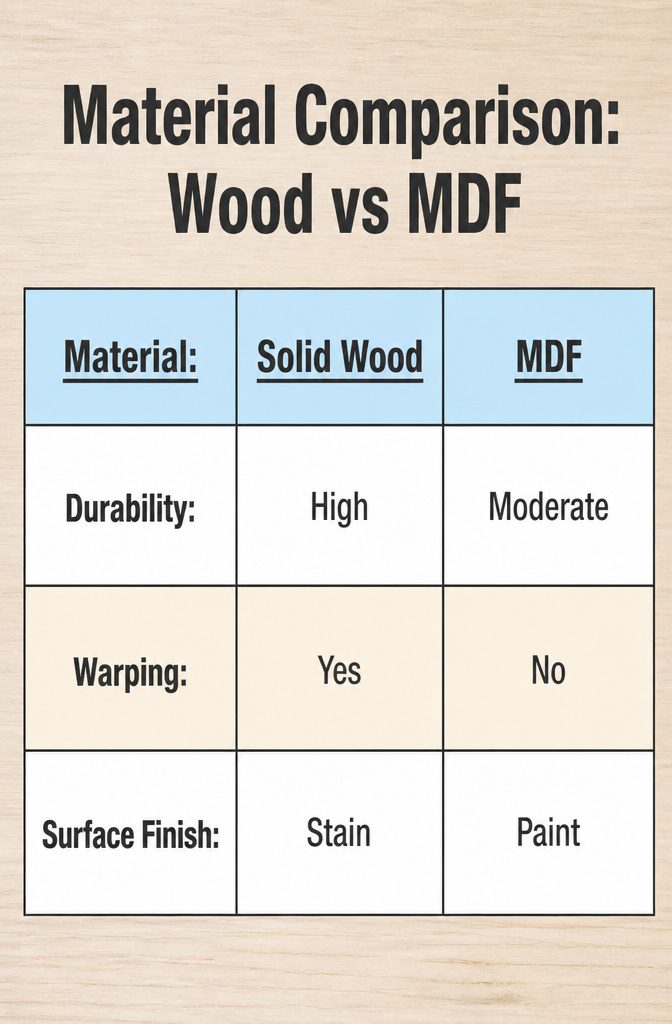
Solid wood still sets the standard for strength and stain-grade beauty, though the doors hanging in most kitchens today pair a hardwood frame with either an MDF center panel for painted finishes or a veneer panel for stain.
That hybrid build prevents the warping and cracking that comes from expansion and contraction across seasons, something pure solid wood fights no matter how well it is built.
MDF handles paint better than anything else I have worked with. The surface is already smooth and uniform, so brush marks and roller texture show less, and the crisp edges hold modern profiles cleanly.
It will not warp or crack the way solid wood can, though larger slabs still risk it unless the door is built in two pieces.
Thermofoil is where budget projects land, and for good reason. The vinyl wrap costs less and wipes clean easily, which matters in a bathroom or rental kitchen.
What convinced me to skip it for my own cabinets was watching a neighbor’s thermofoil doors peel at the corners after two summers of heat and humidity.
Solid wood and MDF let you repaint when the color tires you; thermofoil does not.
Cleaning and Maintenance Reality
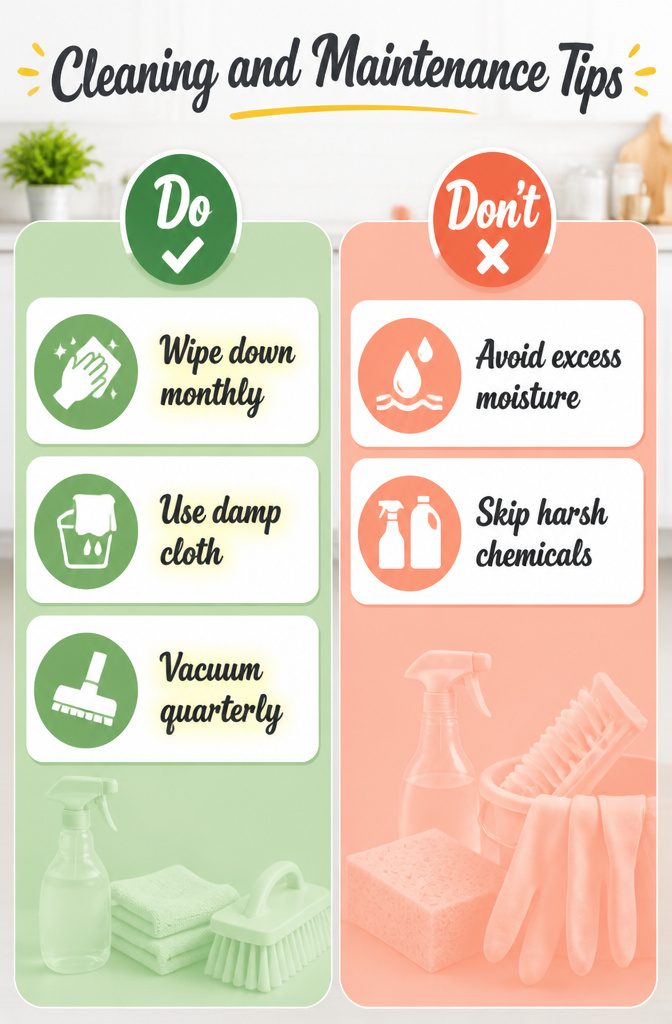
Slab cabinet doors stay clean with a monthly wipe-down. The flat surface gives dust nowhere to settle, so a damp rag takes care of cooking residue before it sets.
Beadboard and raised panel styles are another story entirely. Their grooves and edges trap grease and crumbs that a cloth just pushes around, which is why the vacuum brush attachment comes out quarterly in my house.
That narrow planked center panel with its vertical grooves looks charming in a farmhouse kitchen, but the texture that adds warmth also adds work.
Shaker doors sit somewhere between, their recessed panel catching less debris than beadboard but still needing attention at the seams.
For anyone choosing between styles, the real cost of detail is time spent with a crevice tool. Simpler designs reward renters and weekend renovators with lower upkeep, while ornate doors demand commitment.
Installation What I Have Learned
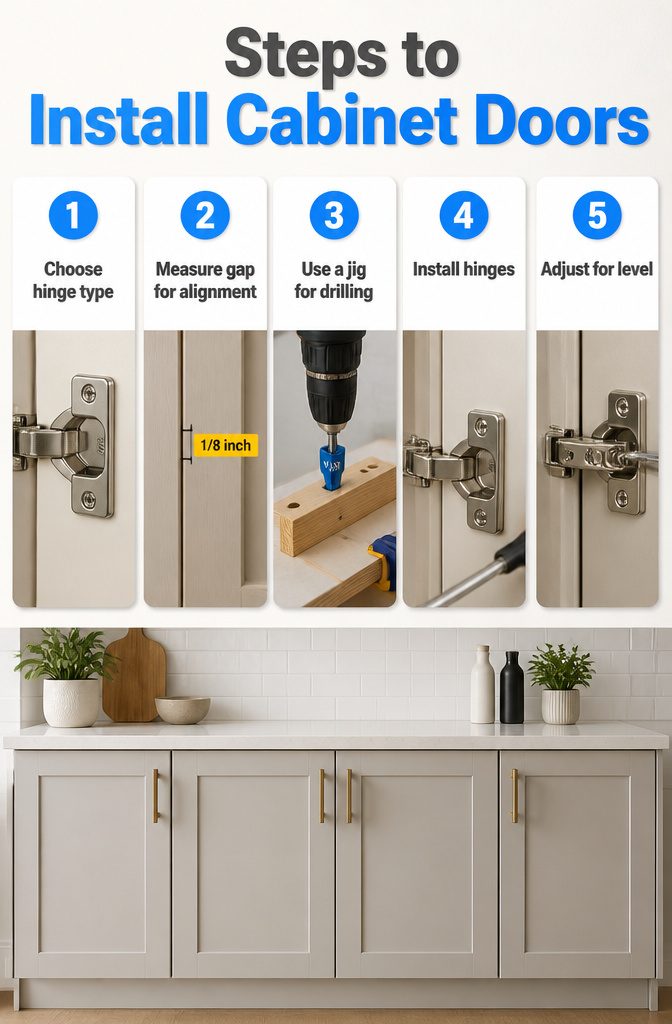
The concealed hinge is where most weekend installs fall apart, and the fix is cheaper than the mistake.
I buy Blum Clip-tops for everything now; the soft-close mechanism still works after two years of rental-grade abuse, and the mounting plate gives you lateral adjustment after the door is hung.
A cabinet door that looks straight at noon will sag by evening if the plate is off by a sixteenth, so the 1/8 inch gap rule is what I measure twice: 1/8 inch between the door and the frame, top and sides, before a single screw goes in.
I learned this after cutting a slab door down by 3/16 total, convinced I was being precise, and ending up with a gap wide enough to lose a pencil behind.
For consistent cup placement, a $25 VIX bit in a simple plywood jig beats any freehand mark. The jig is two drilled holes and a fence clamped flush; it takes longer to describe than to use.
The hinge sits 3–5 inches from each end of the door, depending on height, and the jig keeps that identical across a whole kitchen.
Without it, one door closes against its neighbor and the next one gaps open; the eye catches the error before the hand does.
Frequently Asked Questions
What are the most popular cabinet door styles?
Shaker, slab, and raised panel are the most popular cabinet door styles. Shaker doors balance clean lines with enough warmth for transitional and classic kitchens.
Slab doors dominate modern spaces with their flat, uninterrupted surface. Raised panel doors carry traditional weight and suit kitchens already leaning ornate with crown molding and furniture-like islands.
Which cabinet door style is best for small kitchens?
Slab and shaker styles help small kitchens feel more open.
Slab doors especially create an unbroken plane that reads as more wall than furniture, which keeps tight walls from feeling crowded. Shaker doors work too, though their frame adds slight visual weight that slab doors avoid.
What is the easiest cabinet door style to clean?
Slab cabinet doors are the easiest to clean because their flat face has no grooves or panel edges to catch grease and crumbs.
A single wipe with a damp rag handles monthly upkeep. Beadboard and raised panel styles trap debris in their grooves and corners, which turns a quick wipe into detailed work with a crevice tool.