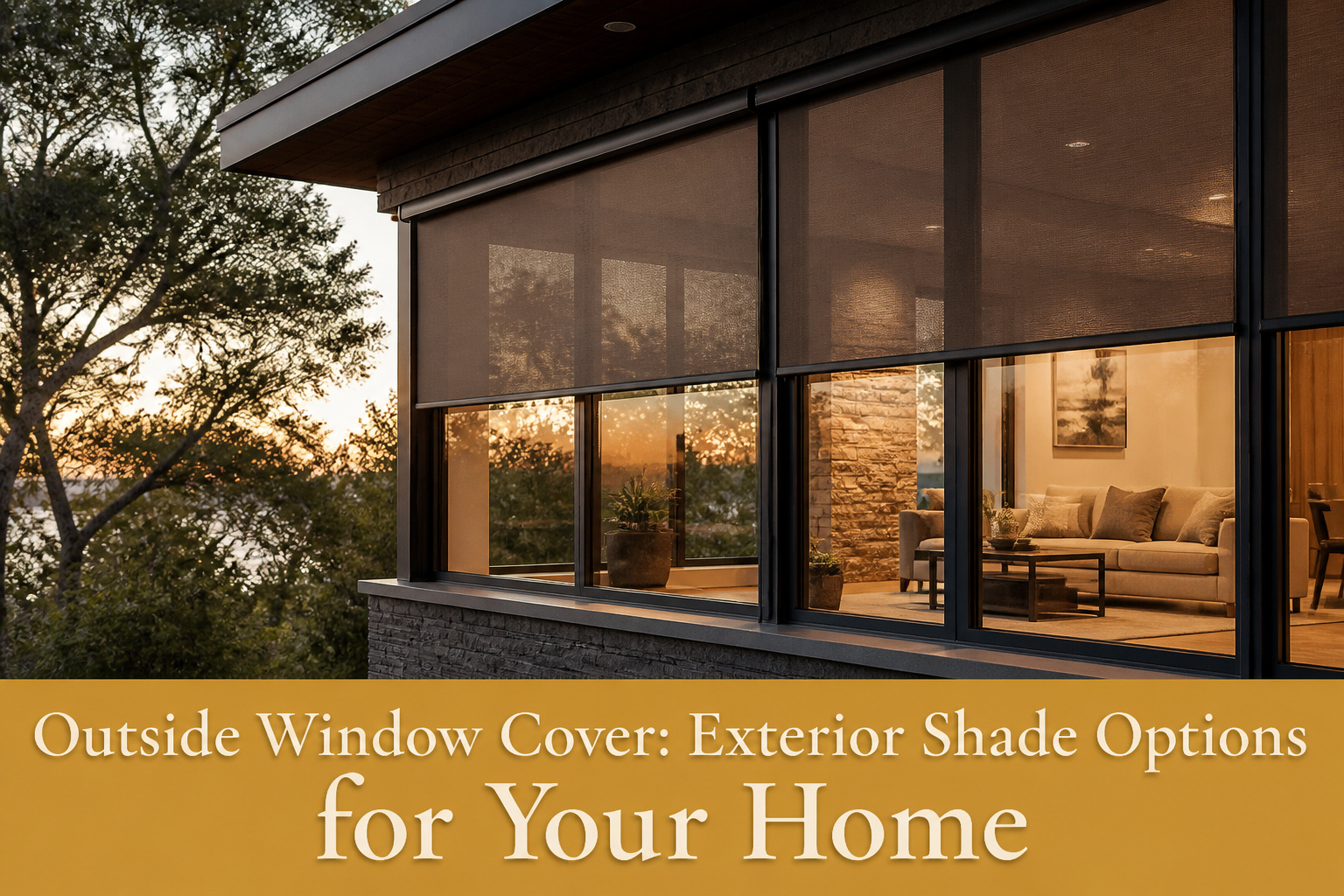
An outside window cover is an exterior-mounted shade built from solar screen fabric tight enough to block most sunlight and UV before it hits your glass, with small gaps left between threads so light, air, and daytime visibility still pass through. The critical condition is mounting location: hardware rated for wind load and moisture belongs outside, and using interior-rated parts there voids the warranty. Vertilux Solar Screen 3000 fabrics, specified for exterior roller shades and patio overhead mounts, are built to that standard; interior solar screen left outside would simply be an expensive mesh curtain.
What Outside Window Covers Actually Do
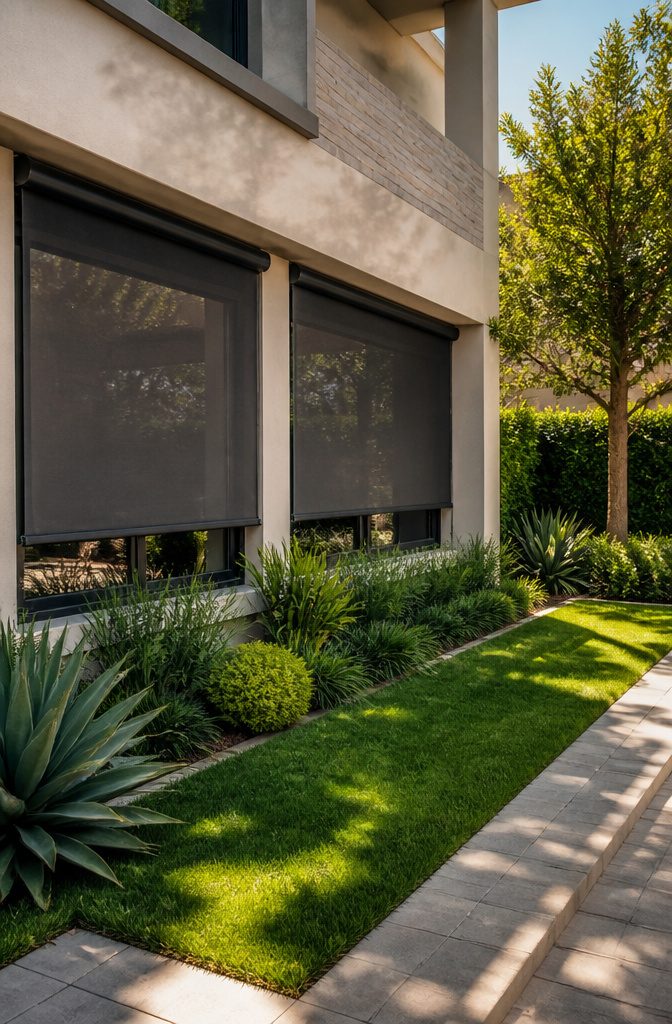
An outside window cover is not just an indoor shade moved outdoors. The ones built for exterior mounting use solar screen fabric woven tight enough to block most sunlight and UV rays, with small gaps left between the threads so some light, air, and daytime visibility still pass through. That weave is the whole mechanism: the sun hits the screen, not your glass, and the heat stays outside where you can deal with it.
Indoor shades filter light that has already entered your home. Exterior shades stop it before it gets there. They are also built to take weather, not merely tolerate a dusty windowsill. The difference matters in summer, when an interior blind still lets the greenhouse effect happen between the glass and the shade. Mounting outside breaks that cycle.
I spent a long time assuming the two were interchangeable until I read enough product listings to notice the warranty language. Exterior hardware is rated for wind load and moisture; interior hardware is not. The fabric itself carries the same distinction. A solar screen left inside would simply be an expensive mesh curtain.
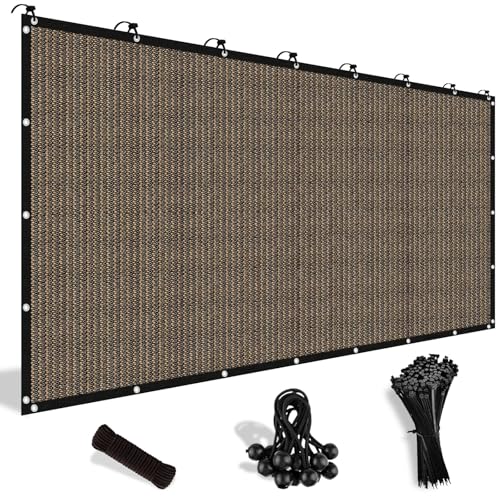
90% Sun Block: Shade&Beyond shade cloth with grommets provides 90% UV protection and resists UV fading. With excellent shading and heat insulation, you can get a shady retreat and keep your belongings away from the sun's harsh effects. By lowering the temperature under its shelter, these sunshades for patio always allow you to enjoy a cool and refreshing outdoor experience, making them ideal for patios, gardens, and more

BLOCK HEAT, KEEP THE VIEW: This black mesh sun screen blocks up to 90% of UV rays and solar heat. It keeps rooms up to 15°F cooler without losing your view. Ideal for outdoor window shades, these solar screens feature a non-fray bonded mesh that enhances durability. Lowers your interior temperature, sun exposure, and cooling costs year-round.

Reduces Heat & UV Exposure – Block up to 90% of the sun’s heat and glare before they enter your home with these solar window screens. By intercepting UV rays at the house windows, this solar screen mesh helps protect furniture, flooring or curtains from fading over time. You get a cooler, more comfortable space while preserving the longevity of your home’s interior.
Exterior Solar Shades
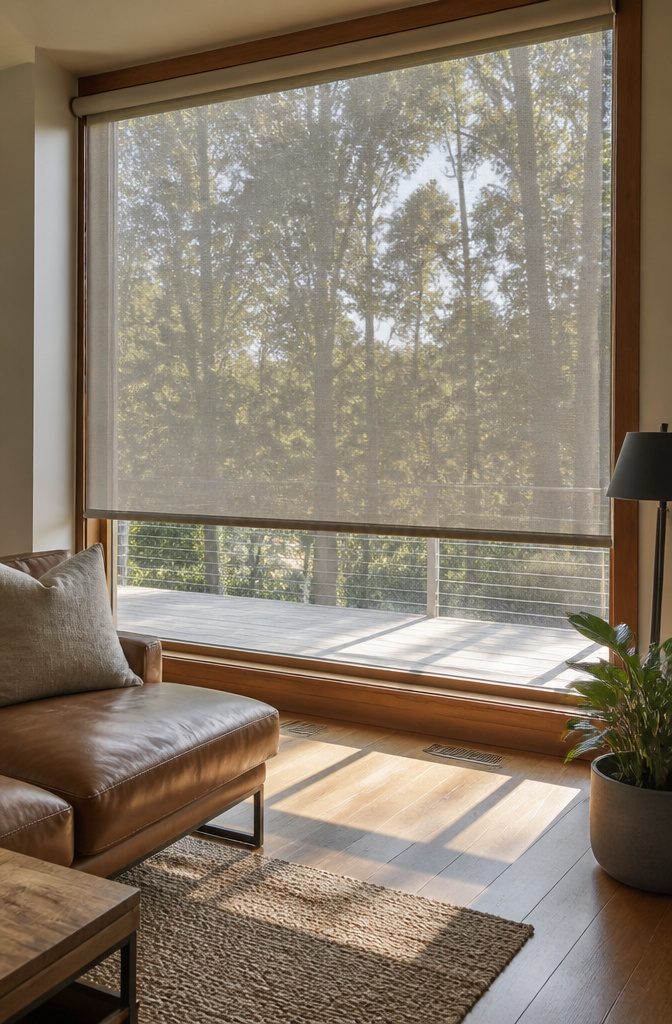
The woven fabric on exterior solar shades blocks most sunlight and UV while leaving small gaps that let you see through. Vertilux Solar Screen 3000 fabrics are built for this, and they hold up against weather for years on an exterior roller shade. The transparency tradeoff is the whole reason to consider them: you keep the view, you lose the heat, and the room behind the window stays cooler without going dark.
These matter most on windows that catch direct sun but face something worth looking at. A south-facing living room that overlooks a backyard, a kitchen window above a deck with a sightline to trees. Solid shades or shutters would block the glare but turn that wall into a blank surface. Solar fabric gives you the middle option.
The catch is that the same gaps work both ways. During daylight you see out; after dark, with interior lights on, the weave becomes more visible from outside. For a ground-floor bedroom or a bathroom facing the street, that privacy reversal might rule this option out entirely. For a second-story den or a patio door where the view is the point, the tradeoff lands differently.

【Upgraded Material】: The sturdy frame structure design provides stable support for outdoor roller shades, is not easily deformed and has excellent durability, providing the best protection for your home
【Upgraded Material】: The sturdy frame structure design provides stable support for outdoor roller shades, is not easily deformed and has excellent durability, providing the best protection for your home

【Seamless XL-Wide Solar】Yoolax Solar Motorized Outdoor Shade is the first on Amazon to offer extra-wide widths from 2 to 16 feet. With just a single shade, you can easily cover expansive spaces—perfect for large patios, porches, balcony, sunroom, or outdoor windows. Featuring the first built-in solar panel and rechargeable battery motor, it delivers a clean, cordless look and sustainable energy. You’ll never have to worry about charging or wiring—just effortless performance powered by the sun.
Patio Shades
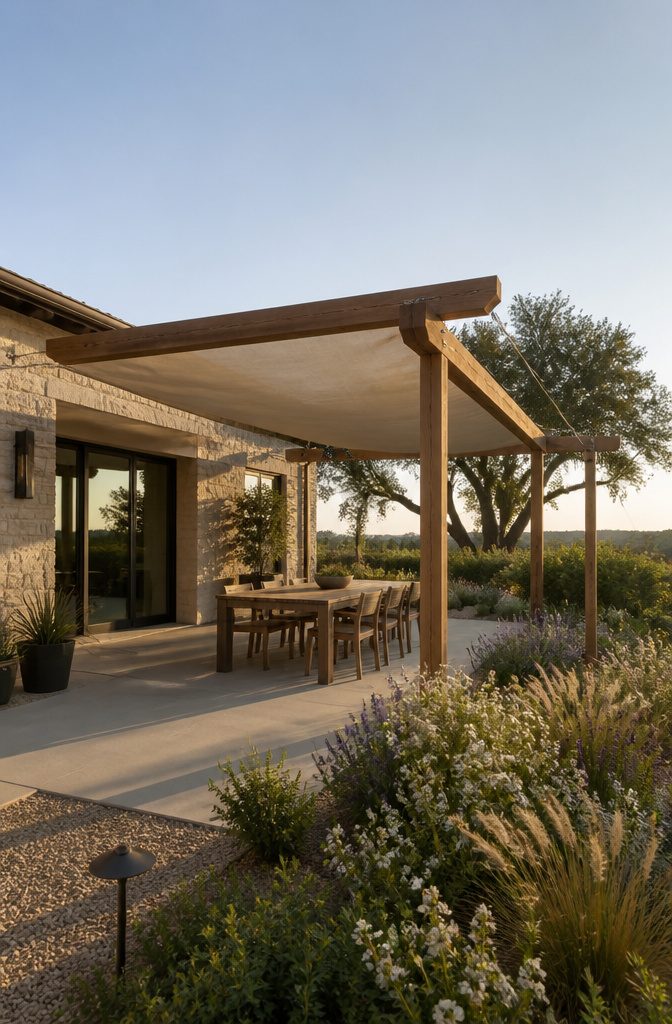
Patio shades solve a problem that vertical exterior shades do not: the sun beating down on horizontal surfaces where you actually sit. A pergola or covered deck still lets heat and glare through the open top, and by mid-afternoon the floor radiates warmth upward while the table becomes unreadable.
The mounting changes everything. These hang overhead or across open sides rather than against a wall, so the fabric and hardware carry the load without a building face to brace against. Wind becomes the real enemy. The fabric weight needs to handle gusts that a standard exterior roller shade, pressed flat to siding, never meets. Hardware choices matter more than the shade itself: cable guides, tension systems, or track-mounted options keep the material from flapping or tearing.
Vertilux Solar Screen 3000 fabrics, the kind used in custom exterior shades, are built for this kind of exposure. They block heat and UV without turning the space into a cave, and they hold up through years of weather. For a renter or a first-home owner working a weekend project, the key decision is whether the structure you have can support the tension these shades need. A pergola with 4×4 posts can handle it; a lightweight aluminum awning frame may not.

Window Film Kit --Window film tubes contain all the tools you need to install, saving money and time to make installation easier.

PROTECT YOUR CAR | SolarGuard is the warm-weather solution to protect your vehicle's interior from damaging UV rays that destroy your dashboard. Our automotive window sunshades fit XL size cars, SUVs and trucks (measures 41 x 70 inches).

FRONT-LINE SELLING POINT: Our outdoor roller shades for patio offer up to 90% UV block to protect your family and patio furniture from harsh sun rays, creating a cooler and more comfortable outdoor living space.
Outdoor Blinds
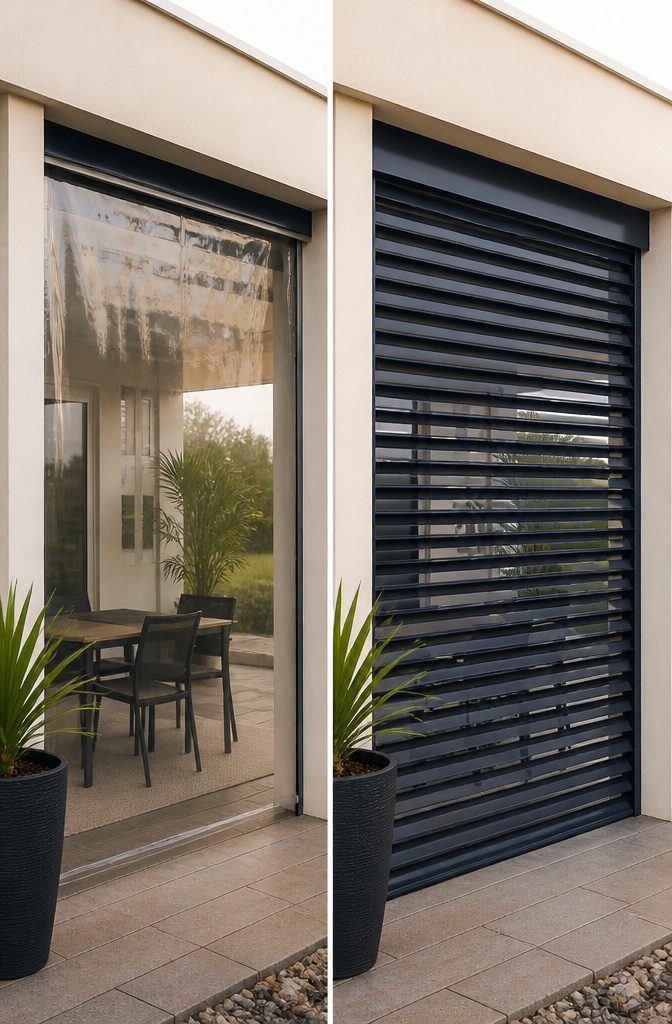
Slatted or solid outdoor blinds give you the privacy solar screens cannot. A twist of the tilt rod, a pull on the cord loop, or a tap on a motorized remote drops the slats shut and blocks the view from the street completely. That same adjustment lets you crack them open for afternoon light without exposing the room.
The tradeoff is real. These materials run heavier, built to take wind and rain, and that heft means less outward visibility even when open and almost no airflow compared with mesh. I spent one July evening in a friend’s enclosed patio with aluminum slats drawn against the neighbors; the seclusion was perfect, but the still air had us reaching for a fan within twenty minutes. Cord loops and motors add cost and maintenance, yet they are what make the system usable on a wide span. If your window faces a sidewalk or another building at close range, the seclusion wins. If you are after breeze and filtered light, this is the wrong tool.

Pad eye and snap hook are made of 304 stainless steel, smooth surface without burrs,corrosion resistant, sturdy.

Heavy Duty & Premium 304 Stainless Steel: Our shade sail hardware kit is crafted from high-quality 304 marine-grade stainless steel, delivering exceptional strength, durability, and corrosion resistance. Every component—from turnbuckles to wire ropes—is built to withstand harsh outdoor conditions, ensuring long-lasting, rustproof performance. The sleek silver finish is neutral and versatile, blending seamlessly with any patio, garden, or outdoor decor.

★【Basic Information】The Bungee Kit is a universal replacement for outdoor/indoor sun shades and roller blinds, it can prevent the rolling curtain from blowing away.
Custom Built Shades
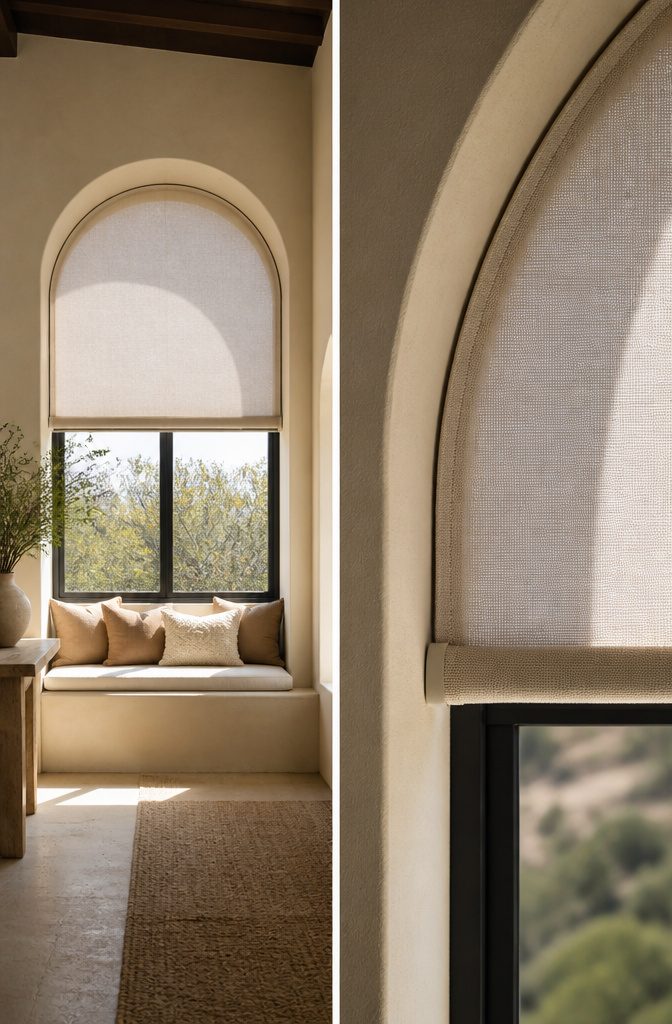
Custom built shades solve the problem ready-made boxes rarely address: a window that is not a rectangle. Arched tops, angled second-story dormers, or a run of casements spaced just far enough apart that a standard width gaps at the edges all push you toward made-to-measure. I spent an afternoon last spring trying to retrofit a pair of 34-inch solar shades onto a 31-inch kitchen window and ended with a light leak I could read by. Professional measurement is typical for a reason, and for anything beyond a simple rectangle, that reason is obvious.
The trade is time and money. Lead times run weeks, not days, and the base price climbs before you add motorization or color-matching to existing trim. For renters, that math usually does not work unless the landlord splits the cost or the window is truly odd. First-home owners mid-project should weigh whether the clean fit is worth pausing the rest of the exterior work. In my case, the made-to-measure shade on the arched living room window still looks right five years later, while the off-the-shelf bedroom pair sags slightly at one end. That gap is where custom earns its markup.

【Upgraded Material】: The sturdy frame structure design provides stable support for outdoor roller shades, is not easily deformed and has excellent durability, providing the best protection for your home

KEEP YOUR PATIO COOL: Artpuch roll-up shade can lower outdoor temperatures by up to 15°F, creating a refreshing retreat on hot days. By blocking heat and sunlight, it helps reduce energy costs for heating and cooling—so you can relax and enjoy your patio in total comfort
【Upgraded Material】: The sturdy frame structure design provides stable support for outdoor roller shades, is not easily deformed and has excellent durability, providing the best protection for your home
Materials That Survive Outside
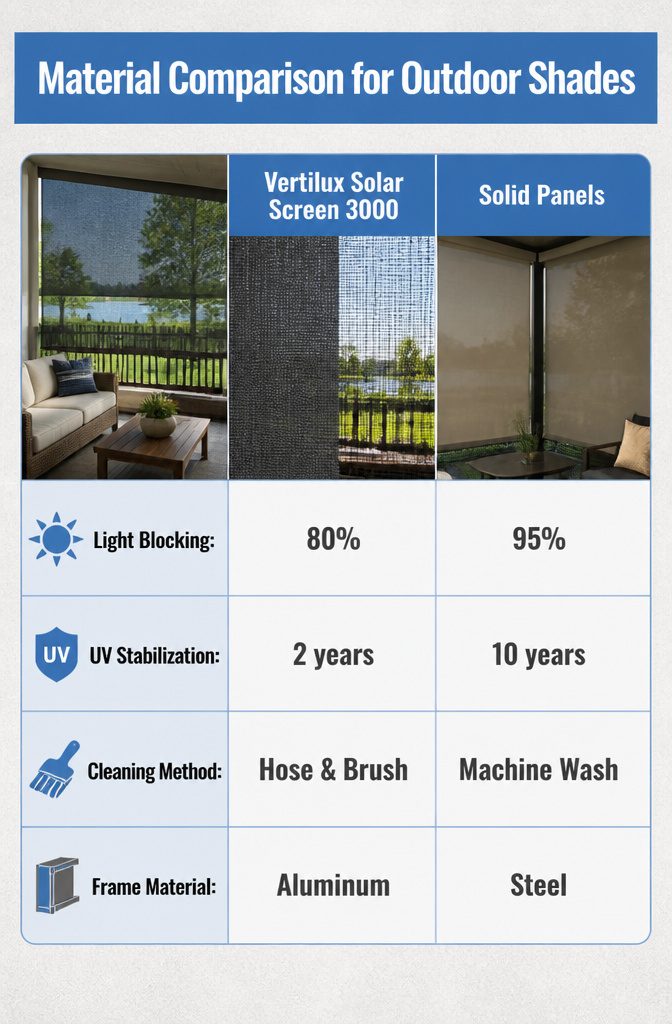
Solar screen fabric and solid panels split the difference on what outside window covers actually do for you. Vertilux Solar Screen 3000 fabrics let the breeze through while cutting glare and heat, which matters when your patio sits in afternoon sun and you still want to see the yard. Solid materials block more light but trap more air, and in humid summers that stillness under the shade can turn into a mildew problem.
UV stabilization keeps the color from going chalky after two seasons, not ten. Heat-set dimensional stability means the fabric does not sag between washings. Speaking of which, the cleaning reality is a hose and a soft brush. Machine washing destroys the coating that gives the fabric its shape; I learned that the hard way with a set of interior solar shades I assumed were the same thing.
Frames run aluminum, steel, or vinyl-clad. Aluminum does not rust but wobbles in wind on spans over six feet. Steel holds straighter and costs more upfront. Vinyl-clad options hide the metal inside a plastic skin that looks cleaner from the street but can split at the screws after a few freeze-thaw cycles.

BLOCK THE SUN, NOT YOUR VIEW: Enjoy the outdoors without sacrificing your view. Our Thermo-Weave sun screens block up to 90% of harmful UV rays and sun heat while allowing visibility. Ideal for outdoor window shades, these screens feature a Non-Fray bonded mesh that enhances durability for year-round use.

Reduces Heat & UV Exposure – Block up to 95% of the sun’s heat and glare before they enter your home with these solar window screens. By intercepting UV rays at the house windows, this solar screen mesh helps protect furniture, flooring or curtains from fading over time. You get a cooler, more comfortable space while preserving the longevity of your home’s interior.

Solar Screens for Windows Exterior – Tired of the extra heat and glare coming through your window or patio enclosure in the afternoon? Phifer’s 90% solar window screens feature a unique woven screen mesh that reduces both heat and light, providing effective sun shade. Enjoy a cooler, more comfortable space without sacrificing natural light.
What I Gained and What I Gave Up
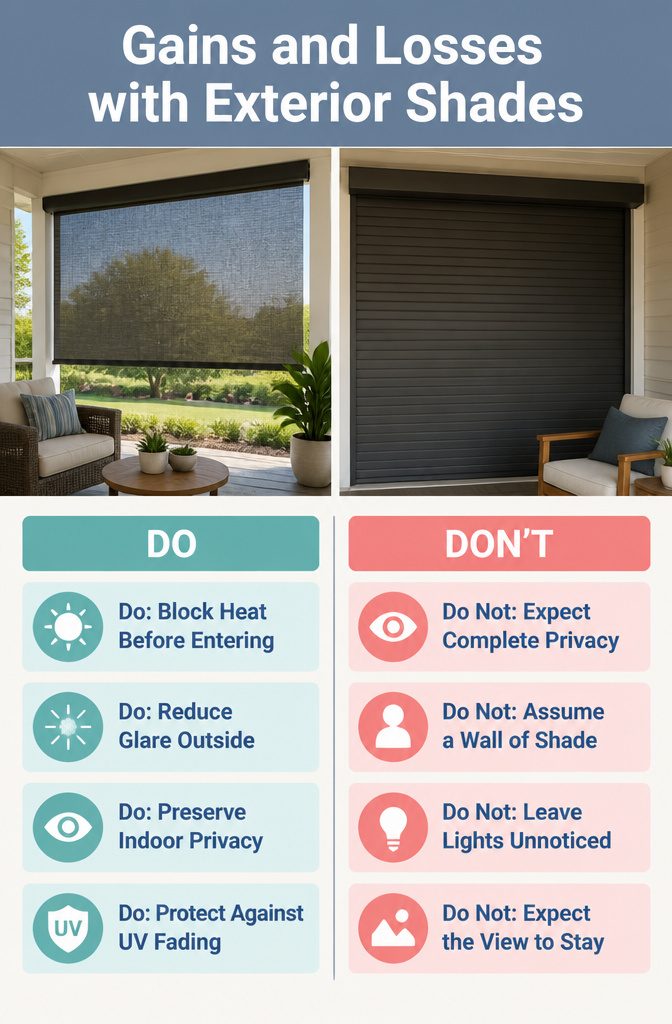
The real payoff of an outside window cover shows up in summer afternoons when direct sunlight hits the glass and the AC starts cycling every twenty minutes. Blocking that heat before it enters the house, rather than fighting it with blinds drawn inside, keeps rooms cooler and cuts the load on your cooling system. The woven material stops most UV rays too, which matters more than people think; a year of unfiltered sun can fade hardwood floors and upholstered furniture in the path of a south-facing window.
Glare reduction is the quieter benefit. Sitting on a patio with the sun at eye level makes screens unreadable and conversation squint-heavy. Exterior solar shades fix this while still letting you see through the small gaps in the weave, so the view stays intact. That same openness is the tradeoff though. During daylight hours, someone standing outside can see in if interior lights are on. Solar shades are built for heat and glare, not for privacy after dusk.
Outdoor blinds solve this by closing off the view entirely, but they take the scenery with it. You gain the ability to leave lights on without an audience, and you lose the transparency that makes solar shades feel like a slight adjustment rather than a wall. For renters or first-home owners weighing one weekend project against another, this is the choice that actually matters: whether your priority is keeping the outside visible or keeping the inside private.

【Seamless XL-Wide Solar】Yoolax Solar Motorized Outdoor Shade is the first on Amazon to offer extra-wide widths from 2 to 16 feet. With just a single shade, you can easily cover expansive spaces—perfect for large patios, porches, balcony, sunroom, or outdoor windows. Featuring the first built-in solar panel and rechargeable battery motor, it delivers a clean, cordless look and sustainable energy. You’ll never have to worry about charging or wiring—just effortless performance powered by the sun.
【Seamless XL-Wide Solar】Yoolax Solar Motorized Outdoor Shade is the first on Amazon to offer extra-wide widths from 2 to 16 feet. With just a single shade, you can easily cover expansive spaces—perfect for large patios, porches, balcony, sunroom, or outdoor windows. Featuring the first built-in solar panel and rechargeable battery motor, it delivers a clean, cordless look and sustainable energy. You’ll never have to worry about charging or wiring—just effortless performance powered by the sun.

UV & PRIVACY PROTECTION: Engineered with 220 GSM HDPE fabric, Shade&beyond exterior roller shades effectively block 90% of harmful UV rays while reducing solar heat gain and maintaining privacy
How These Mount and What That Costs You
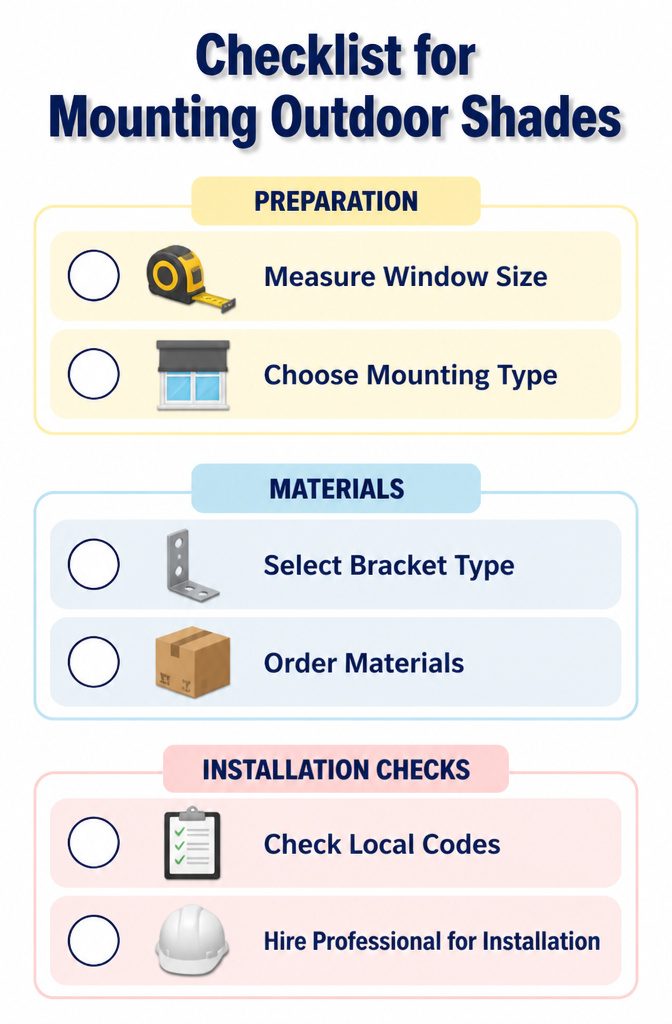
Custom-built outside window covers and ready-made units attach to your home in fundamentally different ways, and that difference shows up in your weekend schedule and your budget. A custom install typically means surface-mounted brackets on siding or fascia, with the cover sitting proud of the wall by several inches. Ready-made options from big-box stores often ship with universal brackets designed for the same surface mounting, though the hardware quality varies enough that I’ve seen neighbors swap out the included lag bolts before the first season ends.
Recessed mounting, where the cover sits inside the window frame or soffit cavity, demands exact measurements and usually calls for a pro. The bracket types change completely: you’ll need L-brackets or channel mounts sized to your specific wall material, whether that’s vinyl siding, stucco over sheathing, or bare CMU block. Motorized units almost always need a licensed electrician if you’re running line voltage rather than solar or battery, which adds labor cost and permitting time that manual crank or pull-cord versions skip entirely.
What convinced me, reading through a dozen manufacturer specs, is how few of them detail the actual mounting sequence. They list bracket compatibility and weight limits, but the step-by-step varies by wall condition in ways that make professional installation worth considering for anything larger than a standard double-hung opening. For a renter, surface-mounted manual shades with removable brackets remain the only realistic path; anything else risks your security deposit and probably violates your lease.

【UV Protection】Continuous exposure to the sun will cause high room temperature, aging furniture, and sunburn on the skin. Sun blocking window film that can block 99% of UV and 80% of IR.It can perfectly solve this problem, and you will have a feeling of visibly cooler after use. It can also save your air-conditioning electricity bill. The free tools are inside of the paper tube
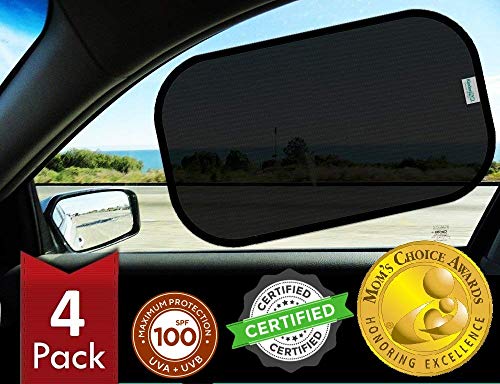
Certified UV Protection: Lab tested and proven to blocks 99.79% UVA & 99.95% UVB to help protect passengers from harsh sun exposure and glare during daily drives and road trips making this window shade a must have car necessities & a baby travel essential

UV & PRIVACY PROTECTION: Engineered with 220 GSM HDPE fabric, Shade&beyond exterior roller shades effectively block 90% of harmful UV rays while reducing solar heat gain and maintaining privacy
Frequently Asked Questions
What are exterior window shades?
Exterior window shades are outdoor coverings mounted outside your windows to block sunlight, reduce heat, and filter UV rays before they reach the glass. Unlike interior shades, they stop solar heat at the building envelope rather than managing it once it has already entered your home. They are built with weather-rated hardware and fabric that can handle wind, moisture, and temperature swings.
How do solar shades differ from regular exterior shades?
Solar shades use a woven fabric with small gaps between threads that let you see through while still blocking most sunlight and UV rays. Regular exterior shades made of solid material cut visibility entirely. That transparency tradeoff is the defining difference: solar shades keep the view intact while cutting glare and heat, but they do not give you the full privacy of a slat or panel that closes off completely.
Can exterior window shades improve outdoor living spaces?
Yes. Patio shades and exterior solar shades both block harsh sunlight and reduce radiant heat on decks, pergolas, and covered sitting areas. Overhead patio shades in particular stop the sun from heating horizontal surfaces like floors and tables that would otherwise radiate warmth upward and make the space uncomfortable by mid-afternoon.