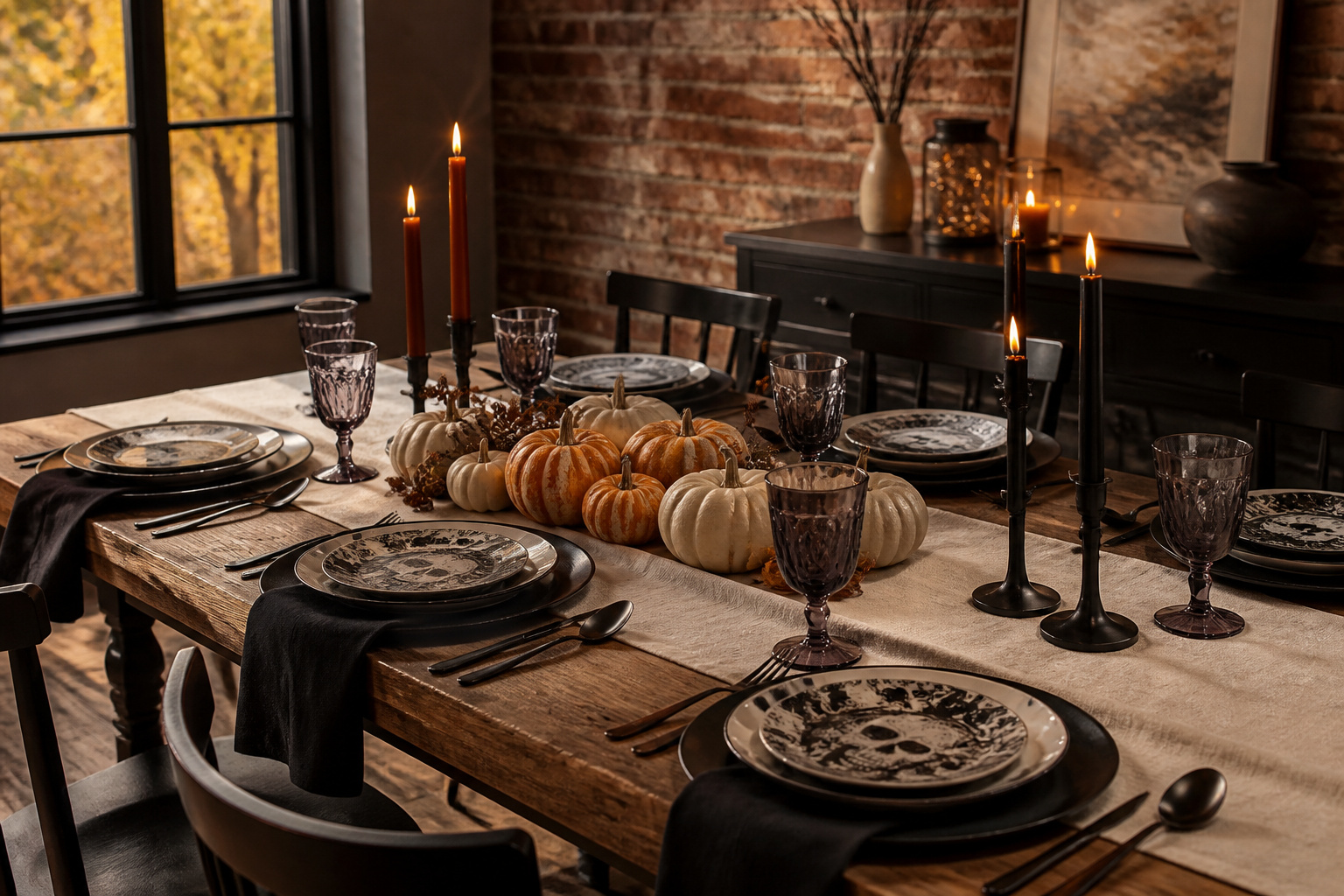
Halloween dinner decorations are the table settings, centerpieces, and lighting choices that turn an ordinary October meal into something theatrical.
The difference between a table that reads as spooky and one that reads as cheap usually comes down to finish consistency under candlelight: mixing satin and gloss black flatware made one of my place settings look accidentally mismatched once the sun went down.
A full setting for eight ran me about $63, but only because I reused matte black salad plates I already owned and bought skull-accent dinner plates on clearance for $28.
Spooky Table Settings
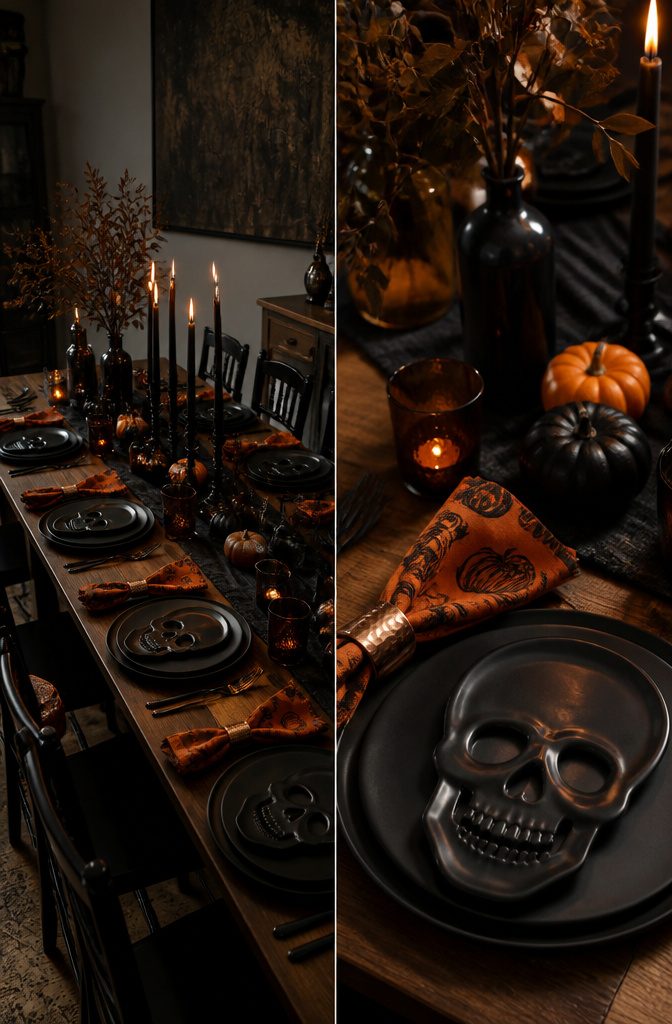
Skull-shaped plates work best as accents, not a full stack.
Three years ago I picked up four dinner plates with a subtle raised skull pattern at a Tuesday Morning clearance for $28, then paired them with matte black salad plates I already owned.
The pumpkin-themed napkins cost $12 for a set of six at a grocery store endcap in early October, and I pressed them into triangles with a $3 copper napkin ring from a hardware store bin.
The mistake came from the flatware. I found matte black forks on sale and thought they’d echo the plates, but under candlelight the forks read as charcoal while the plates pulled true ink-black.
The two finishes fought each other in a way daylight hid completely. Now I keep a single finish rule for anything that sits under flames: satin with satin, gloss with gloss, never both.
A full place setting for eight ran about $63 once I mixed new pieces with what I already had. The skull plates go back in the cabinet after Halloween; the black salad plates stay in rotation year-round.

Perfect American Greetings party supplies for a Halloween celebration.

Inclusive and Ample Quantity: the vintage Halloween plates set includes an ample supply of plates with 8 distinct, classic Halloween designs; This pack provides enough plates to cater for a party or a large family; You can enjoy the convenience of having plenty plates at a variety of occasions

Package Includes: you can get 4 different gothic ceramic plates, from dark roses to retro bats, suitable for Halloween parties, diameter 20.5 cm, whether daily dining or holiday decoration, it can be easily controlled, the style and quantity meet your needs
Pumpkin and Skull Centerpieces
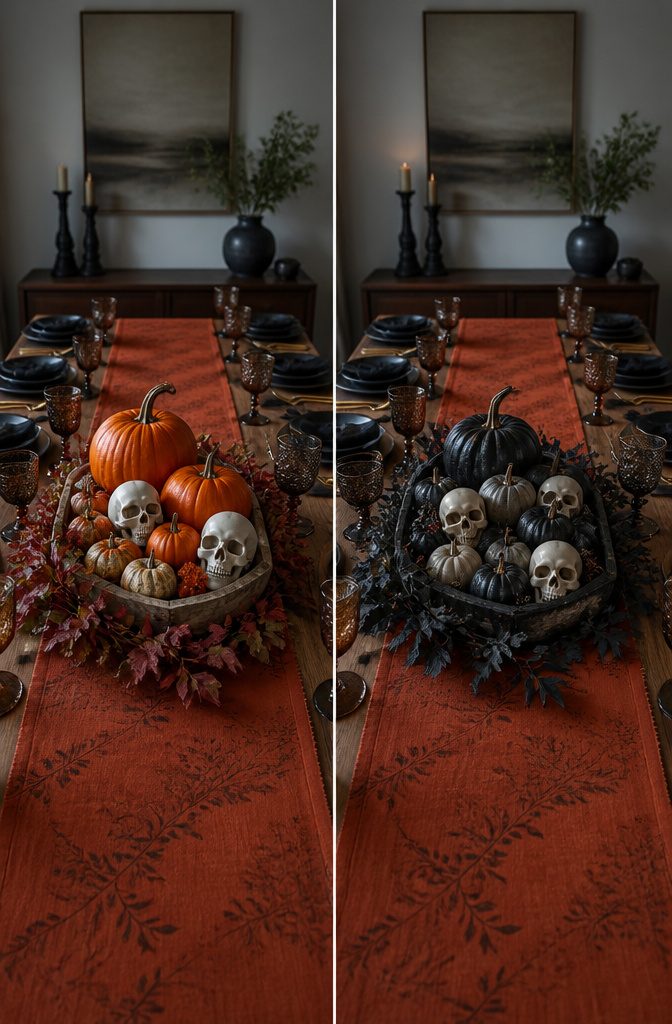
Real pumpkins look better on the table until they don’t. A medium-sized sugar pumpkin I set out one year rotted through the bottom overnight and left a stain that never fully lifted from the linen runner underneath.
Artificial pumpkins cost about the same per piece at craft stores after Labor Day, and the weight difference is the only giveaway; foam versions sit lighter on a candlestick or stack, which is actually useful if you’re balancing them on something narrow.
Skulls shift between two completely different decorations depending on the light. In daylight, bone-white resin reads as anatomy-lab creepy, the kind of thing that makes a brunch guest pause with her mimosa.
After dark, under a single tea light or orange bulb, the same skull hollows out and turns theatrical, almost friendly in its cartoonishness.
I keep mine in the center during afternoon setup, then move the smaller ones out toward individual place settings once the sun drops, where the shadows do the work instead of the detail.

Package Includes—An assortment of twenty four (24) individual Hefty ECOSAVE compostable utensils, including 8 spoons, 8 knives, and 8 forks

40 PCS SILVERWARE SET: Including 8 dinner knives, 8 dinner forks, 8 dinner spoons, 8 salad forks, and 8 teaspoons, nice basics for a family of 8. Comfortable in the hand, beautiful on the table, this versatile and stylish 40-piece set is pleasing to the eye with a modern appeal that is perfect for both party-appropriate and everyday occasions

【❤Black and White Face Body Paint Makeup】UCANBE professional face paint set contains white face paint, black cream face paint and 3pcs painting brushes. The white paint is a cream-to-powder WHITE FOUNDATION, with velvety consistency that glides on like cream yet settles down to matte finish. The black paint is oil-based greasepaint, but with a semi-matte finish. 3pcs of paintbrush together serves for both large area painting and small detailed lining painting.
Themed Place Cards and Menus
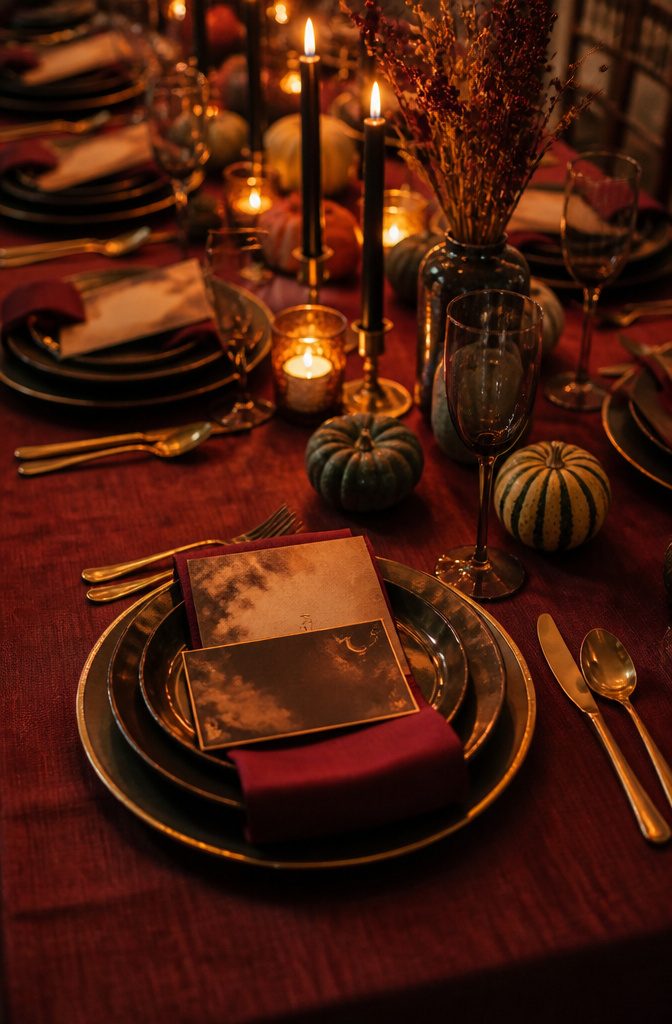
Hand-lettering a dozen place cards takes about forty minutes once the layout is settled, which is longer than most people budget for a single dinner.
Printing them from a template costs maybe six minutes plus the time to find a font that does not look like a generic party store flyer.
Last year I tried to split the difference, printing the names and then tracing over them with a metallic gel pen to fake the hand-done look.
The ink sat on top of the printed layer and smudged across every card before the first guest arrived.
Cardstock from the craft store bin does not always take pen the way it takes printer toner, and that is a test worth running on a scrap corner three days out, not while the oven is on.
The menu cards ran into the same problem reversed.
I had tested the paper for the printer, so the text came out clean, but the watercolor wash I brushed behind each entree name feathered at the edges like cheap paper towel.
The fix was moving to a heavier 110-pound stock and doing the wash first, letting it dry overnight, then feeding those sheets through the printer the next morning.
The extra day of drying is non-negotiable; even then, some printers grip textured paper badly and leave roller marks. Mine did on two of eight tries, which is why I now print one extra of everything.

Napkin Rings Set: You will receive includes 6 styles Thanksgiving napkin rings set of 12 in total, sufficient quantities and various styles can meet your use and replacement needs easily, and you can also share with your family and guests

Package Contents: you will receive 12 pieces of fall napkin rings, which are exquisite in workmanship and nice in quality for you to decorate your dinner table; The quantity is adequate for your daily use and replacement

12 Pack a Set: you will receive 12 pumpkin metal napkin rings, the diameter of the inner circle is 1.6 inch which is the perfect size for most table linens; Decorate your napkins, add some elegance to your table, and makes your food look more delicious
String Lights and Candle Ambiance
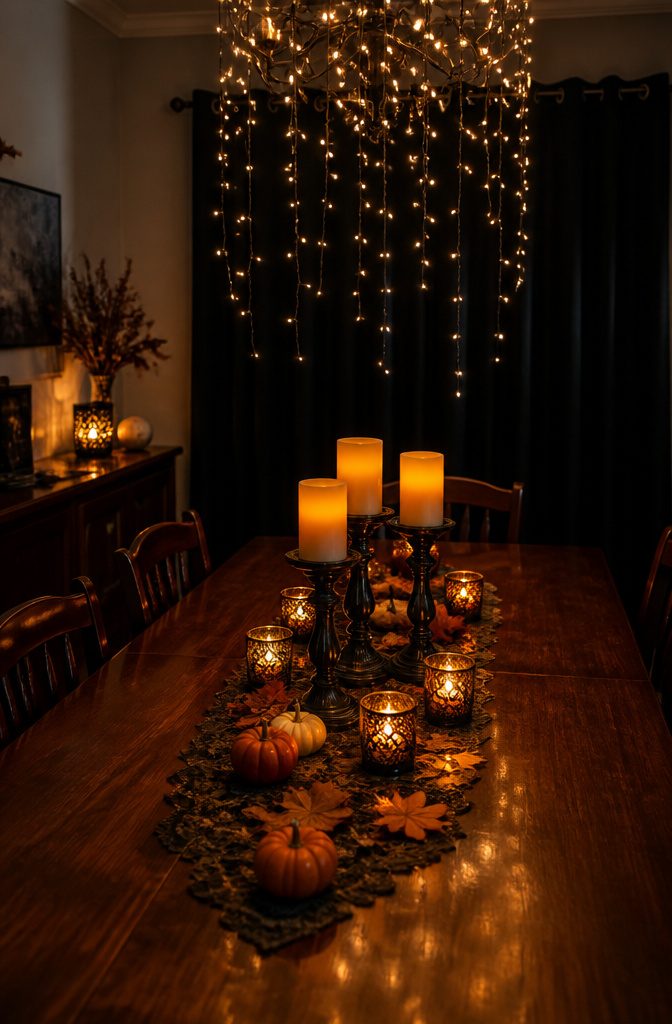
Draping string lights over a table sounds effortless until the math catches up. I ran a strand of warm-white LEDs along the center beam of my dining area, then looped a second set around the window frame behind the chairs.
Together they pulled just under three amps, well within the circuit’s limit, or so I thought. The breaker tripped mid-dessert because that same circuit already carried the overhead fixture and the kitchen outlets.
The wattage lives on the breaker, not the outlet. I had added instead of totaling.
Battery candles won out at the table itself once I counted actual guests. Twelve people, elbow width, passing bowls, reaching for wine.
Real flame at that density meant watching wax, watching sleeves, watching every movement instead of talking. The battery pillars flicker convincingly now, and the ones with timers handle their own on-off cycle.
I still use real tapers on the sideboard where no one lingers, but the dinner table stays electric. The string lights, rewired to a dedicated plug on a different breaker, still arc overhead.
The mistake cost me ten minutes of darkness and one cold pie. The fix costs nothing if you check the panel first.

Quantity: Package includes 12 pcs small artificial pumpkins. You can choose to display these small realistic pumpkins on their own or combine them with other pieces to create an autumn vignette. This pack of 12 orange faux pumpkins will bring a more festive look to your home decor. From your front porch to your kitchen island, these faux pumpkins will make a fun addition to any space and will keep the dull days at bay.

Quantity: Package includes 24 pcs Harvest White Mini Artificial Baby Boo Pumpkins in 2 sizes. You can scatter these mini pumpkins around your home for your special Thanksgiving, a Halloween party or a fall-themed party.

Design: Our Halloween Floral Picks feature a classic Gothic-style design, combining pumpkins and candies in a striking orange-and-black color scheme. Whether you use them to decorate your living room, bedroom, dining table, or windowsill, they effortlessly create a mystical Halloween atmosphere
Autumn Floral Arrangements
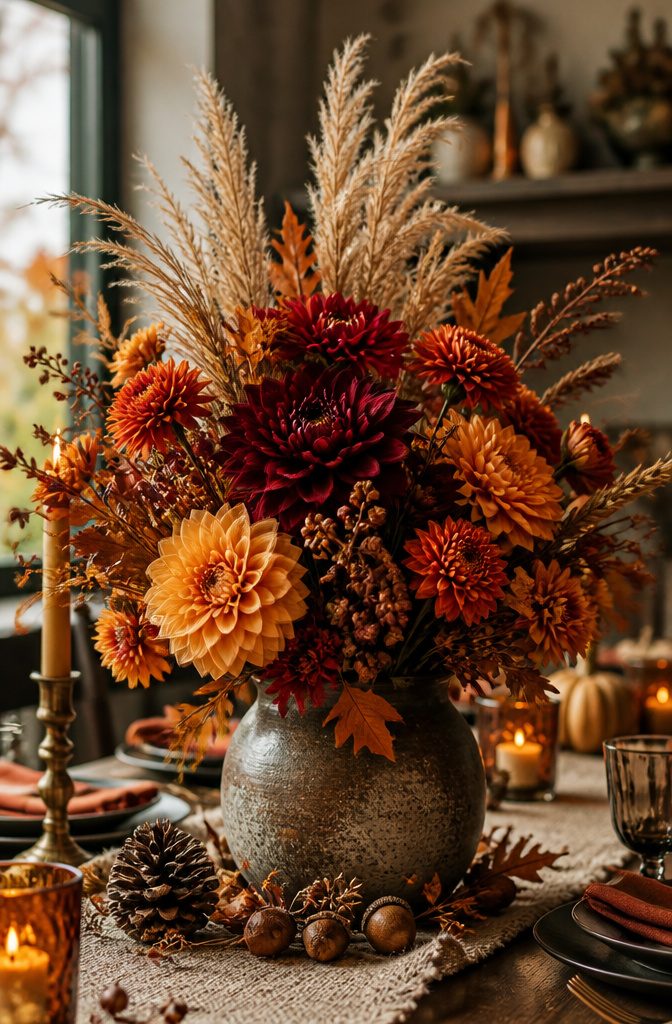
Deep reds, burnt oranges, and mustard yellows in a floral arrangement read as autumn first and Halloween second, which is exactly why they work for a dinner that needs to last through conversation.
I buy mine at the farmers market three blocks from my apartment when I can get there before eight on Saturday morning. The stems are cheaper, sturdier, and two days fresher than anything shipped to my door.
Last October I slept through my alarm and arrived at nine thirty to find the good dahlias gone. What remained were dried grasses and a few bleached seed heads from a vendor who usually sells wreaths.
I bought two bundles for six dollars, cut them to vase height with kitchen shears, and tucked in the last sad orange mums from a bucket marked down.
The grasses outlasted every bloom I have ever ordered online. Dried material does not droop by dessert, and that matters more than perfection for a table where people actually sit and pass plates.
Now I start with grass or wheat stems as the backbone, add three to five focal flowers, and stop.
The arrangement looks intentional without reading as florist work, and if someone knocks it reaching for the potatoes, six dollars is a replaceable loss.

Halloween table runner 20 x 80-Inch, black lace, spider web and eye-catching openwork to dress your halloween holiday table

Premium-Grade Durability : The Fall table runner Crafted from 100% spun polyester with precision stitching, this piece boasts a luxuriously soft yet robust construction. Expertly engineered to shield your tabletop from heat damage, unsightly scratches, and accidental spills—marrying long-lasting performance with refined quality

Halloween Table Runner Material: This Black table runner is made of polyester, with unique lace spider web design and exquisite edge, not easily loose thread,our table runner is soft, durable, and reusable.
DIY Painted Pumpkins and Ghostly Figures
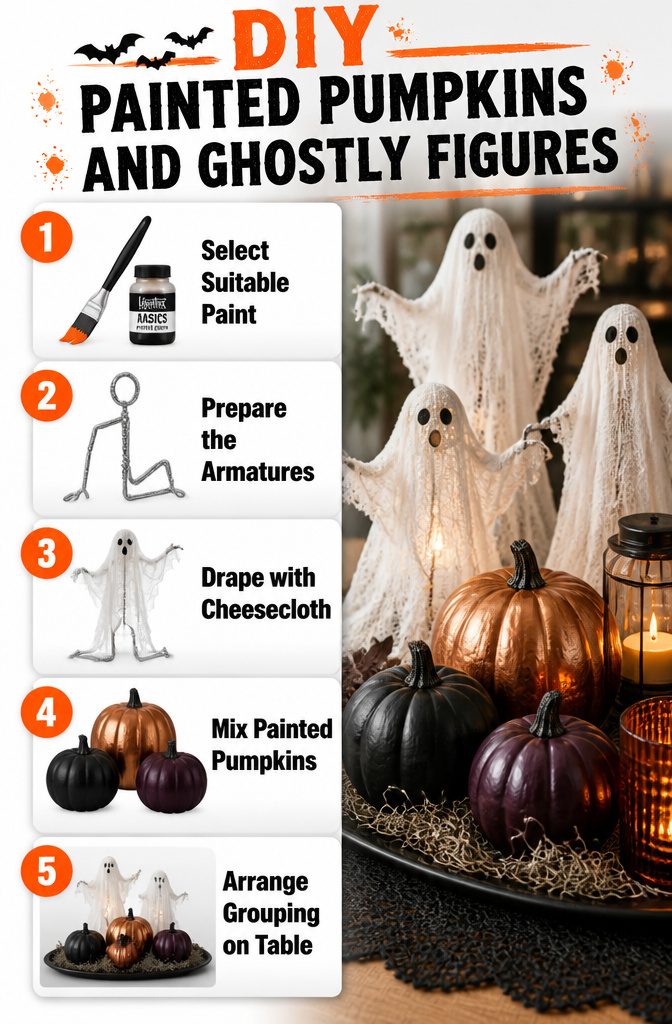
Acrylic paint on pumpkins looks festive for exactly one night if you choose the wrong formula.
The dollar-store brand I grabbed first, a matte craft acrylic with a crow on the label, flaked off where the stem met the shoulder before dinner even started.
Switching to Liquitex Basics saved the project. That thicker, more flexible film held through three Halloweens now, including one where a centerpiece pumpkin sat outside in dew.
For the ghost figures, cheesecloth over wire armatures took about two hours from first bend to final drape. The wire was standard 16-gauge aluminum from the hardware aisle, easy to shape into bent-kneed poses with needle-nose pliers.
Two layers of cheesecloth, soaked in diluted white glue, stiffen into something you can pose and repose. One layer looks too transparent under candlelight; three looks like laundry.
The painted pumpkins work best in small groupings, mixing one metallic copper with two matte blacks or deep plums.
The ghosts need height variation to read as figures rather than lumps, so some armatures stand eight inches and others climb to fourteen.

Contents Include: you will receive 4 white ceramic Halloween appetizer plates with 4 different dancing skull prints, easily adding fun to your Halloween table; The playful skull designs bring a festive atmosphere to Halloween parties, costume dinners, or gatherings

💀 HALLOWEEN SET FOR 50 GUESTS - Package includes 50 paper dinner plates(9"), 50 paper dessert plates(7"), 50 luncheon napkins (3ply, unfolded 13*13"/folded 6.5*6.5").

Large Capacity Set: You will get 50 pcs halloween skull round plates, plenty enough to meet your halloween spooky dessert party needs. The capacity size is about 9", which is able to hold a variety of food and provide plenty of space for your delicious treats. They are perfect for serving cakes, snacks and other types of hearty dinners
Themed Table Runners and Linens
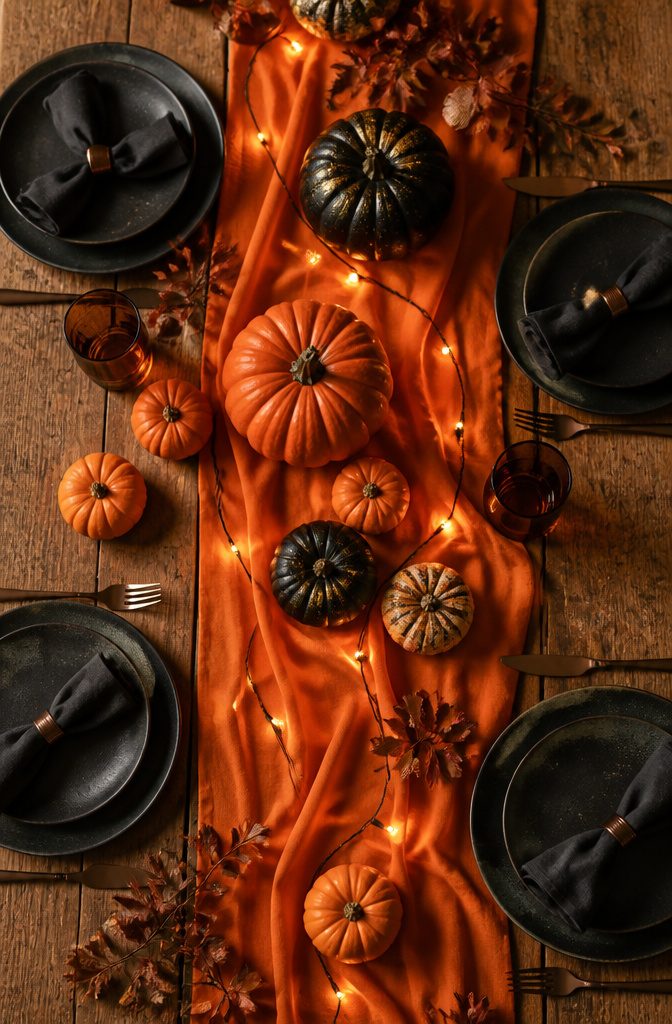
Orange polyester table runners look cheap under warm LED bulbs, which is a problem because most Halloween linens are orange polyester.
The fabric shifts somewhere between tangerine and bubblegum once the lights dim, and by then the table is already set.
I learned this the hard way with a runner that looked perfect in the afternoon and like a craft-store clearance aisle by seven.
Now I test fabric swatches against my actual bulbs before the night.
A six-inch sample held under the pendant or the taper candle I plan to use tells me everything. Cooler LEDs need deeper rust or burgundy to read as Halloween; warmer ones can handle a brighter orange.
For renters, a $12 linen or cotton runner in charcoal or plum works harder than seasonal polyester, stores flat, and never clashes with the bulb temperature you already own.

Matte Velvet Finish: Achieve salon quality nails, No need UV lamp or tools required, achieving stunning results without complex techniques. Our high-pigment matte creates a velvety-smooth, waterproof finish that stays all day.
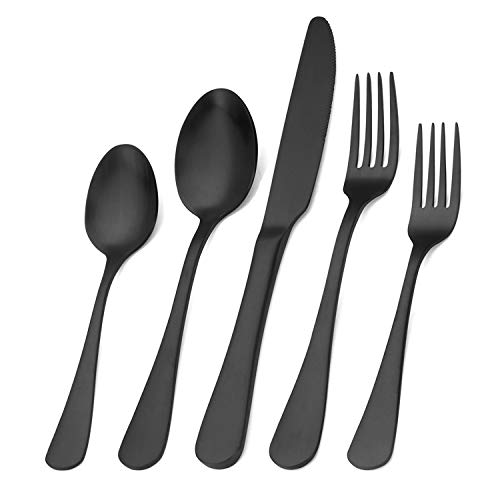
【20 PCS FLATWARE SETS SERVICE FOR 4】:This silverware set includes 4 dessert fork, 4 dessert spoons, 4 dinner forks, 4 dinner spoons, and 4 dinner knives,It can satisfy most family of 4 people

High Quality : Our 18/0 stainless steel flatware set will not bend, break or get damaged by heat. The thickness of the knife is <b>4mm</b> and other pieces are <b>2mm</b>. The solid and durable construction will perfectly prevent the utensils from snapping even when used for hard applications. It is also designed to provide firm grip for children and adults alike.
Color Schemes That Hold Together
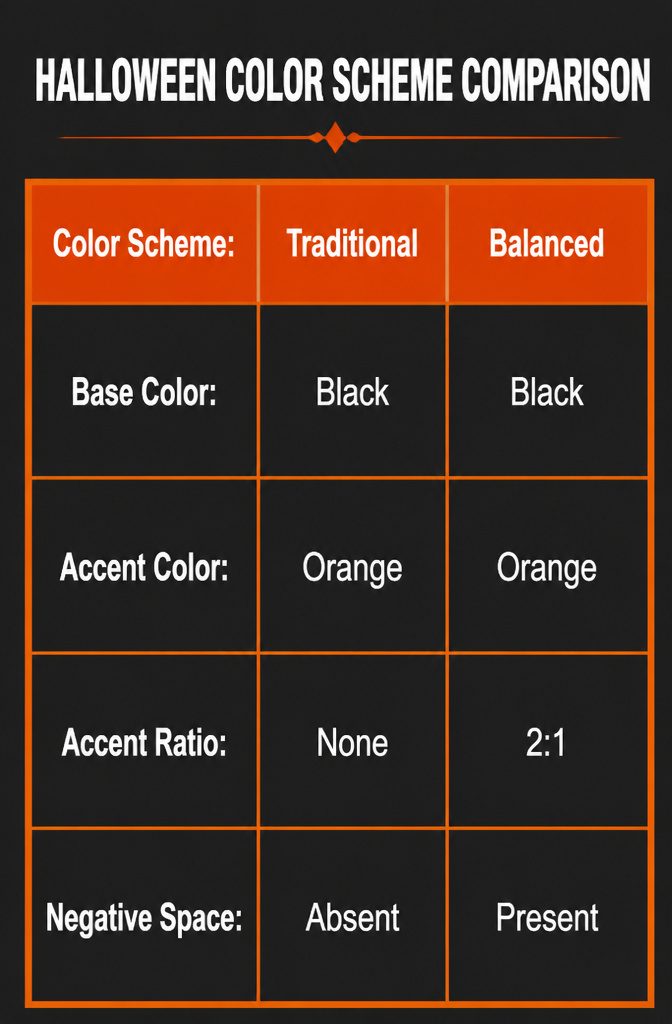
Orange, black, and purple together read like a Halloween store exploded. The first year I set a table with all three, every plate looked like it was shouting at the guests.
Second year I pulled back and the whole thing went flat, like someone had washed the color out with a cheap filter.
The balance that finally worked was two parts black base, one part orange accent, purple as a pinch.
Black tablecloth and matte plates ground the table so the eye has somewhere to rest. Orange shows up in the taper candles and one small runner detail, not the plates themselves.
Purple comes in only where light hits it: a single wine glass, the underside of a napkin fold, the shadow side of a painted mini pumpkin.
Purple and orange share a warmth that turns muddy fast if they touch directly.
Keeping them separated by black or by negative space fixes this. A purple glass at a black-and-orange place setting reads intentional; a purple plate under an orange napkin reads like a discount bin.
Linens are where renters especially should spend their money.
A good black cloth survives every holiday, and the orange or purple layers over it can be paper, fabric scraps, or even ribbon. The ratio stays the same whether the accent costs eight dollars or eighty.

What you'll receive: This package contains 12 fall napkin rings which are 1.4 inches. Sufficient quantity is suitable for a family dinner, and it is also suitable for enjoying Thanksgiving dinner with many friends. The 1.4" diameter ring is a good size and works well with various napkins.

Rich Amount to Use: the package that you will receive includes 12 pieces of thankful napkin rings in 8 styles in total, sufficient quantities and various styles can meet your use and replacement needs easily

Different quantity to choose: we provide you 2 different quantity to choose, namely, 6 pieces and 12 pieces , you can choose according to your actual needs, enough quantity to meet your party decorative needs in daily life
Lighting Choices and Placement
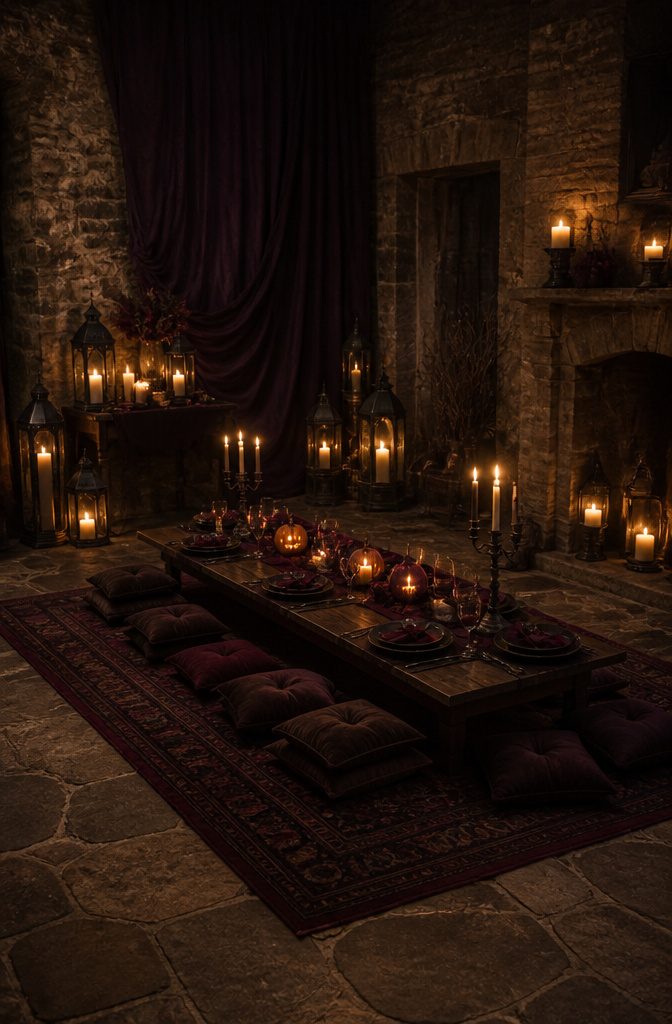
Candles give the best light for a Halloween dinner, but the placement takes more thought than most guides admit.
Tapers in the center of the table put flame at eye level, which flatters faces and casts the long shadows that make the room feel theatrical. The catch is heat.
After twenty minutes, guests leaning forward feel it on their hands and forearms. Move anything taller than six inches to the ends of the table or to a sideboard, where people can appreciate the flicker without negotiating around it.
Tea lights in hollowed mini pumpkins work for the middle of the table precisely because they sit low. The pumpkin walls block the draft that would blow them out, and the small flame does not throw enough heat to matter.
I have stopped using glass votive holders for this; the pumpkin itself is the point, and the glass just means more washing.
Fairy lights strung through a branch centerpiece look better in photographs than they function in practice. The cord has to reach an outlet, and rental dining rooms rarely have them where you need them.
Battery packs solve this, but the cheap ones die mid-dinner and the better ones cost enough that you notice. Lanterns with LED candles inside are the compromise I keep returning to.
No cord, no heat, and the ones with frosted glass read as real flame from across the room. The ones with clear glass do not; the pinpoint diode underneath gives itself away.

Complete pumpkin decor Set–This 16-piece autumn decor set includes warm and charming artificial plastic pumpkins(4 orange,4 red, and 2 yellow),2 berries and 4 leaves.The color palette and textured details perfectly capture the festive mood of autumn,making it a charming addition to your home for Thanksgiving, Halloween,or seasonal gatherings

The halloween decorations come in 8pcs black eucalyptus stems artificial flowers and 4pcs fake pumpkins,perfect for adding festival atmosphere to your Halloween party.

Premium Quality: The Artgar orange artificial pumpkins come in a set of 8, offering quality craftsmanship and vibrant orange color, perfect for adding a festive touch to your Halloween, Thanksgiving, and fall decor
DIY Materials and Time
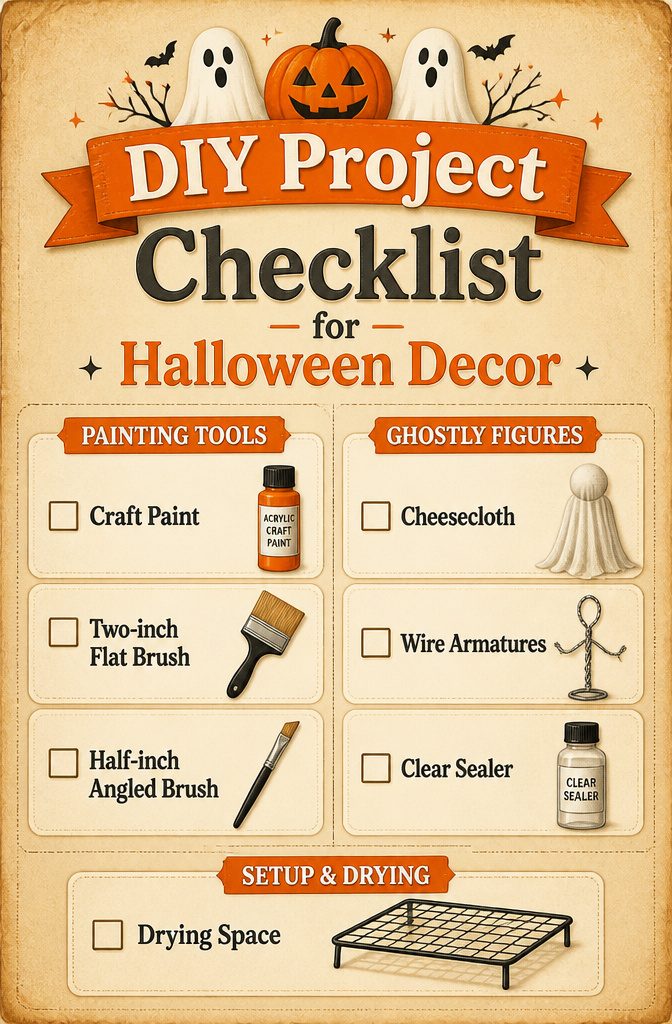
Hand-painted pumpkins and ghostly figures sound like a Saturday afternoon project until you factor in drying time.
Acrylic craft paint goes on fast, but each coat needs two to four hours before you can handle it, and white paint over orange pumpkin skin takes three coats minimum to stop looking peach.
A flat two-inch brush covers the broad surfaces; a half-inch angled brush handles the eyes and mouths that sell the expression.
The ghostly figures, whether painted mason jars or cut cardboard, need the same patience. Spray primer helps, yet it adds a trip to the garage and a weather check.
By the time you have base coats, detail work, and a clear sealer that keeps the paint from chipping when someone bumps the centerpiece, you are looking at Sunday evening, not Saturday night.
My honest take: start Thursday. Paint after dinner, let the first coat dry overnight, and finish Friday so Saturday stays free for the actual table setup.
The one time I squeezed it into a single day, I set wet ghosts on paper towels that stuck to the backs and tore the finish.

Spiderweb Table Runner: 2 pieces black table runner each measures 18x72 inches(45x182cm).Great ideal for Halloween party table decorations for the reception.

High Quality Halloween Decor Table Runner: Halloween Linen Table Runner made of premium durable fabric, brings spooky fun charm to your holiday home decor. Reusable, wear-resistant and colorfast with zero fading over long-term use. It easily amplifies festive Halloween atmosphere for trick or treat parties, while protecting your table from scratches, oil stains, hot marks and daily wear.

🕸️ 🕸️ Happy Halloween ! this lace table runner features spider web, full Hallowen atmosphere, perfect for home party table decorations or creating spooky Halloween scene in haunted house.
Frequently Asked Questions
How can I decorate my dinner table for Halloween?
Use themed tableware, centerpieces, and ambient lighting to create a festive atmosphere. Build around a black base with plates or linens you already own, add skull or pumpkin accents as focal points, and keep all metallic finishes matching under candlelight.
A full place setting for eight can run about $63 when you mix new seasonal pieces with year-round staples.
What are some DIY Halloween decoration ideas?
Painted pumpkins and cheesecloth ghost figures over wire armatures are solid projects that personalize your table.
For pumpkins, use a flexible acrylic like Liquitex Basics rather than cheap craft paint that flakes off; white over orange skin needs three coats minimum.
Ghosts take about two hours from first wire bend to final drape, using two layers of cheesecloth soaked in diluted white glue so they stiffen into poseable shapes.
What color scheme should I use for Halloween dinner decorations?
Use two parts black base, one part orange accent, and purple as a pinch rather than equal thirds.
Black tablecloth and matte plates ground the eye, orange shows up in candles or small runner details, and purple appears only where light hits it, like a single wine glass or napkin underside.
Orange and purple share a warmth that turns muddy if they touch directly, so keep them separated by black or negative space.